Irrevocable Benefit Formula
Description








Get your form ready online
Our built-in tools help you complete, sign, share, and store your documents in one place.
Make edits, fill in missing information, and update formatting in US Legal Forms—just like you would in MS Word.
Download a copy, print it, send it by email, or mail it via USPS—whatever works best for your next step.
Sign and collect signatures with our SignNow integration. Send to multiple recipients, set reminders, and more. Go Premium to unlock E-Sign.
If this form requires notarization, complete it online through a secure video call—no need to meet a notary in person or wait for an appointment.
We protect your documents and personal data by following strict security and privacy standards.

Make edits, fill in missing information, and update formatting in US Legal Forms—just like you would in MS Word.

Download a copy, print it, send it by email, or mail it via USPS—whatever works best for your next step.

Sign and collect signatures with our SignNow integration. Send to multiple recipients, set reminders, and more. Go Premium to unlock E-Sign.

If this form requires notarization, complete it online through a secure video call—no need to meet a notary in person or wait for an appointment.

We protect your documents and personal data by following strict security and privacy standards.
Looking for another form?



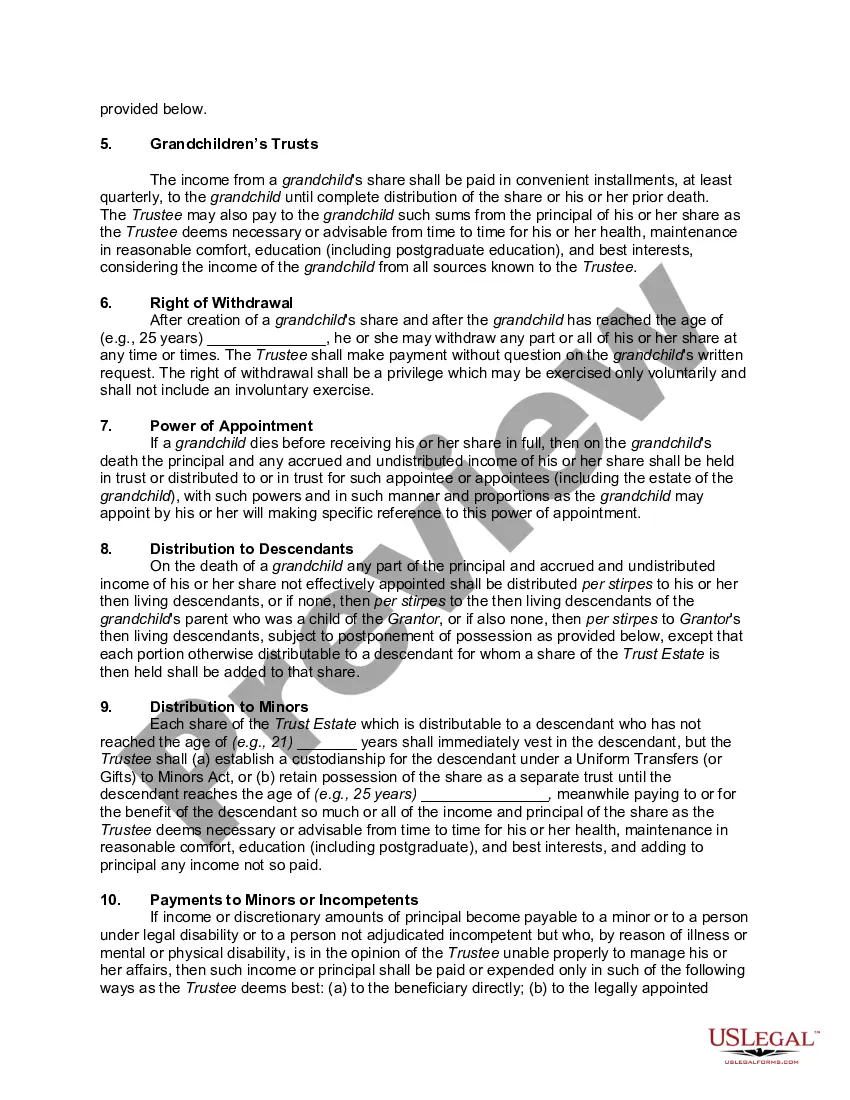
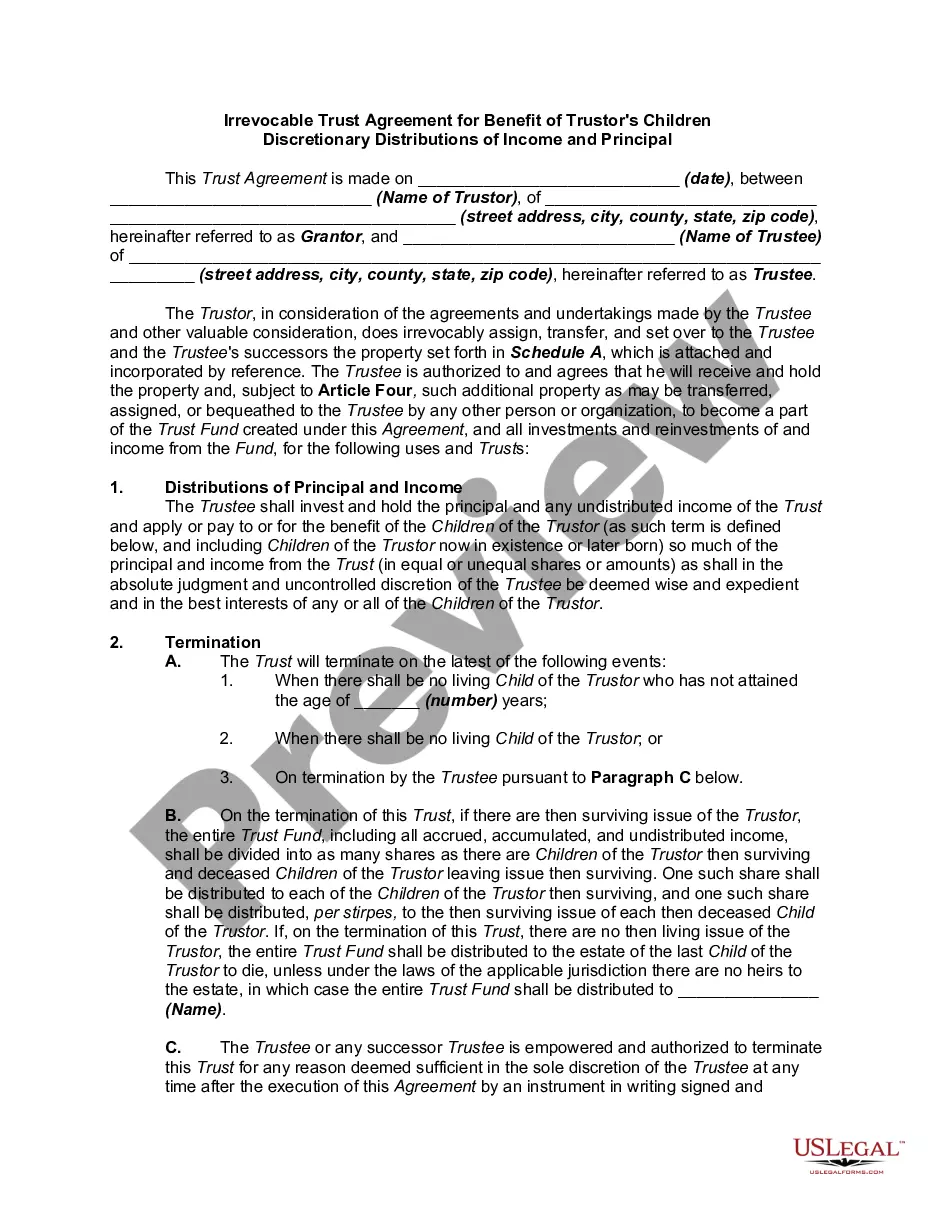
How to fill out Irrevocable Trust Agreement For Benefit Of Trustor's Children And Grandchildren?
Creating legal documents from the ground up can frequently feel somewhat daunting. Some situations may require extensive research and significant financial investment.
If you’re looking for a simpler and more budget-friendly method to produce the Irrevocable Benefit Formula or any other documentation without unnecessary obstacles, US Legal Forms is always accessible to you.
Our online library of over 85,000 current legal forms addresses nearly every dimension of your financial, legal, and personal concerns. With just a few clicks, you can swiftly obtain state- and county-specific templates meticulously crafted by our legal professionals.
Utilize our platform anytime you require a dependable service through which you can easily locate and download the Irrevocable Benefit Formula. If you’re a returning user and have previously registered with us, simply Log In to your account, choose the form, and download it immediately or access it again later in the My documents section.
US Legal Forms boasts an impeccable reputation and over 25 years of experience. Join us now and turn form completion into a straightforward and efficient process!
- Review the document preview and descriptions to confirm that you have located the form you are seeking.
- Ensure the form you select complies with the regulations and laws of your state and county.
- Choose the most appropriate subscription plan to acquire the Irrevocable Benefit Formula.
- Download the document. Then complete, sign, and print it out.
Form popularity
FAQ
The irrevocable beneficiary provision is a critical aspect of life insurance policies. It ensures that the named beneficiary cannot be changed without their consent, providing them with a guaranteed benefit upon the policyholder's passing. This feature can be crucial for estate planning, as it protects the beneficiary's rights and secures the intended financial support. Understanding the irrevocable benefit formula helps you make informed decisions about your financial future.
Filing a tax return for an irrevocable trust involves completing IRS Form 1041. This form requires information about the trust's income, deductions, and distributions. It is essential to correctly report income generated by the trust to ensure compliance with tax regulations. Utilizing the irrevocable benefit formula can help you navigate the complexities of trust taxation.
One drawback of naming an irrevocable beneficiary is the lack of flexibility; once named, you cannot change this designation without the beneficiary's consent. This can limit your options if your circumstances change. Additionally, the irrevocable benefit formula may result in potential tax implications for the beneficiary, making it essential to consider their financial situation. Thus, it's wise to consult with a financial advisor to understand the full impact of your decision.
To obtain an irrevocable trust, you typically need to work with a legal professional who specializes in estate planning. They can help you draft the trust document, ensuring it aligns with the irrevocable benefit formula you wish to implement. After creating the trust, you'll need to fund it with assets, which may require additional steps, such as retitling property. Platforms like uslegalforms can provide the necessary documentation and guidance to streamline the process.
An irrevocable beneficiary holds specific rights that cannot be altered without their consent. They have the right to receive the benefits as stated in the policy or trust, ensuring they are protected under the irrevocable benefit formula. Additionally, they may have rights related to notifications about any changes to the policy or trust that could affect their benefits. This protection makes it crucial for you to choose the right irrevocable beneficiary.
The point of naming an irrevocable beneficiary is to ensure that the benefits from a policy or trust go directly to that individual, without the possibility of changes. This designation provides a level of security for the beneficiary, as they are guaranteed to receive the benefits. The irrevocable benefit formula helps in estate planning, as it can reduce estate taxes and simplify the transfer of assets. By using this formula, you create a clear intention for asset distribution.
To determine if your beneficiary is irrevocable, review the policy documents or contact your insurance provider for clarification. If the beneficiary designation states that they cannot be changed without consent, they are irrevocable. Understanding this aspect can help you manage your estate planning more effectively, especially when considering the irrevocable benefit formula.
Choosing an irrevocable beneficiary can provide peace of mind, as it guarantees that the specified individual or entity will receive the benefits. This is particularly useful in situations involving divorce or estrangement, where you want to ensure that your wishes are upheld. Using the irrevocable benefit formula in this way can strengthen your financial planning.
A beneficiary can be changed at any time, while an irrevocable beneficiary has a fixed status that cannot be altered without consent. This distinction is important because it impacts how benefits are distributed upon your passing. Understanding this difference is crucial when creating your estate plan and utilizing the irrevocable benefit formula effectively.
When determining the beneficiary percentage, consider how you want to divide the benefits among multiple beneficiaries. You can allocate percentages that total 100%, ensuring that each beneficiary receives their fair share. This clarity helps ensure your wishes are implemented according to the irrevocable benefit formula.