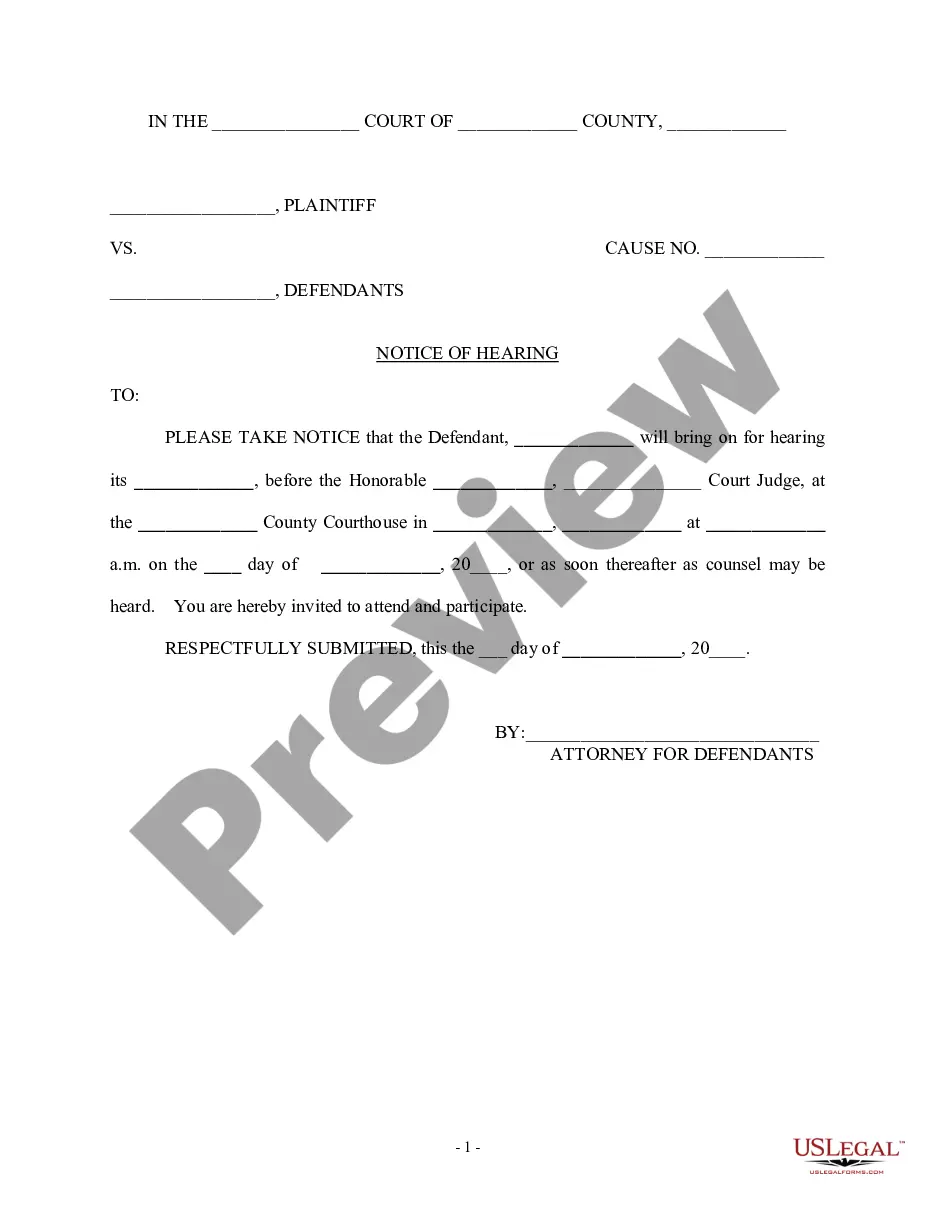
Civil Court Hearing Process
Description
Get your form ready online
Our built-in tools help you complete, sign, share, and store your documents in one place.
Make edits, fill in missing information, and update formatting in US Legal Forms—just like you would in MS Word.
Download a copy, print it, send it by email, or mail it via USPS—whatever works best for your next step.
Sign and collect signatures with our SignNow integration. Send to multiple recipients, set reminders, and more. Go Premium to unlock E-Sign.
If this form requires notarization, complete it online through a secure video call—no need to meet a notary in person or wait for an appointment.
We protect your documents and personal data by following strict security and privacy standards.

Make edits, fill in missing information, and update formatting in US Legal Forms—just like you would in MS Word.

Download a copy, print it, send it by email, or mail it via USPS—whatever works best for your next step.

Sign and collect signatures with our SignNow integration. Send to multiple recipients, set reminders, and more. Go Premium to unlock E-Sign.

If this form requires notarization, complete it online through a secure video call—no need to meet a notary in person or wait for an appointment.

We protect your documents and personal data by following strict security and privacy standards.
Looking for another form?








How to fill out Notice Of Hearing?
Creating legal documents from the ground up can sometimes be somewhat daunting.
Certain cases may require extensive research and considerable expenses.
If you seek a simpler and more affordable method of preparing the Civil Court Hearing Process or any other paperwork without hassle, US Legal Forms is always accessible.
Our online repository of over 85,000 current legal documents encompasses nearly every facet of your financial, legal, and personal affairs.
Before diving straight into downloading the Civil Court Hearing Process, keep these suggestions in mind: Review the document preview and details to confirm that you’ve located the document you need. Ensure the template you select meets the regulations of your state and county. Opt for the appropriate subscription plan to acquire the Civil Court Hearing Process. Download the form, then complete, authenticate, and print it. US Legal Forms enjoys a solid reputation and boasts over 25 years of expertise. Join us now and simplify the document execution process!
- With just a few clicks, you can quickly obtain state- and county-specific templates meticulously crafted by our legal experts.
- Utilize our website whenever you need dependable and trustworthy services to easily locate and download the Civil Court Hearing Process.
- If you’re familiar with our website and have previously established an account with us, simply Log In, find the template, and download it, or re-download it anytime in the My documents section.
- Not registered yet? No problem. Registering takes minimal time, and you can start exploring the catalog.
Form popularity
FAQ
The three most common civil cases are tort claims, contract breaches and landlord/tenant issues. Tort Claim - An act committed by one person that causes harm to another. Tort cases can take many different forms, and can relate to a person's personal safety, safety of their property, and financial security.
Timeline of How to File a Lawsuit Step 1: File a Complaint. Plaintiff files a complaint and summons with the local county court. ... Step 2: Answer Complaint. ... Step 3: Discovery. ... Step 4: Failing to Respond to Discovery. ... Step 5: Conclusion of Lawsuit.
More specifically, federal courts hear criminal, civil, and bankruptcy cases. And once a case is decided, it can often be appealed.
The person who commences a civil lawsuit is called the plaintiff. The person against whom the suit is brought is the defendant. In some cases, there may be more than one plaintiff or defendant.
Write and file an answer. The ?answer? is your written response to the claims made against you. You must file an answer with the court that issued the summons or citation. If you fail to answer, you could lose the case without ever having the opportunity to tell your side of the story.