Lessee And Lessor Difference
Description
Get your form ready online
Our built-in tools help you complete, sign, share, and store your documents in one place.
Make edits, fill in missing information, and update formatting in US Legal Forms—just like you would in MS Word.
Download a copy, print it, send it by email, or mail it via USPS—whatever works best for your next step.
Sign and collect signatures with our SignNow integration. Send to multiple recipients, set reminders, and more. Go Premium to unlock E-Sign.
If this form requires notarization, complete it online through a secure video call—no need to meet a notary in person or wait for an appointment.
We protect your documents and personal data by following strict security and privacy standards.

Make edits, fill in missing information, and update formatting in US Legal Forms—just like you would in MS Word.

Download a copy, print it, send it by email, or mail it via USPS—whatever works best for your next step.

Sign and collect signatures with our SignNow integration. Send to multiple recipients, set reminders, and more. Go Premium to unlock E-Sign.

If this form requires notarization, complete it online through a secure video call—no need to meet a notary in person or wait for an appointment.

We protect your documents and personal data by following strict security and privacy standards.
Looking for another form?







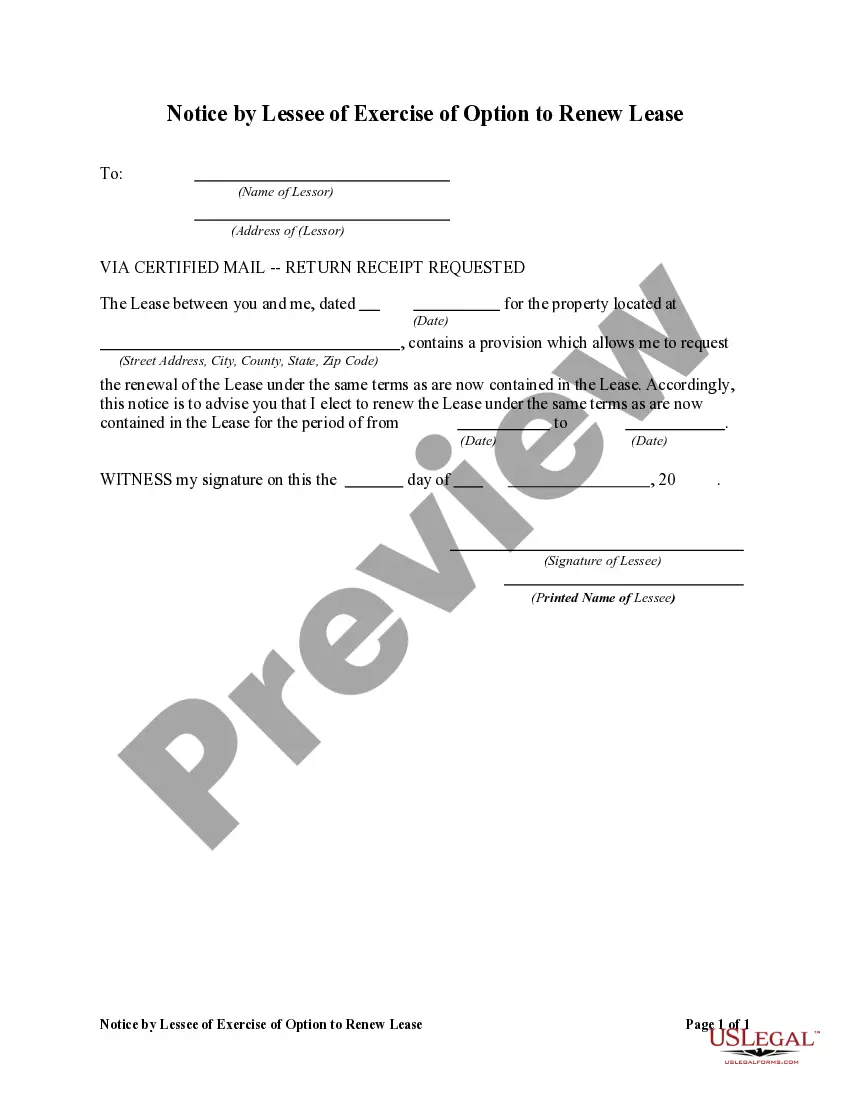
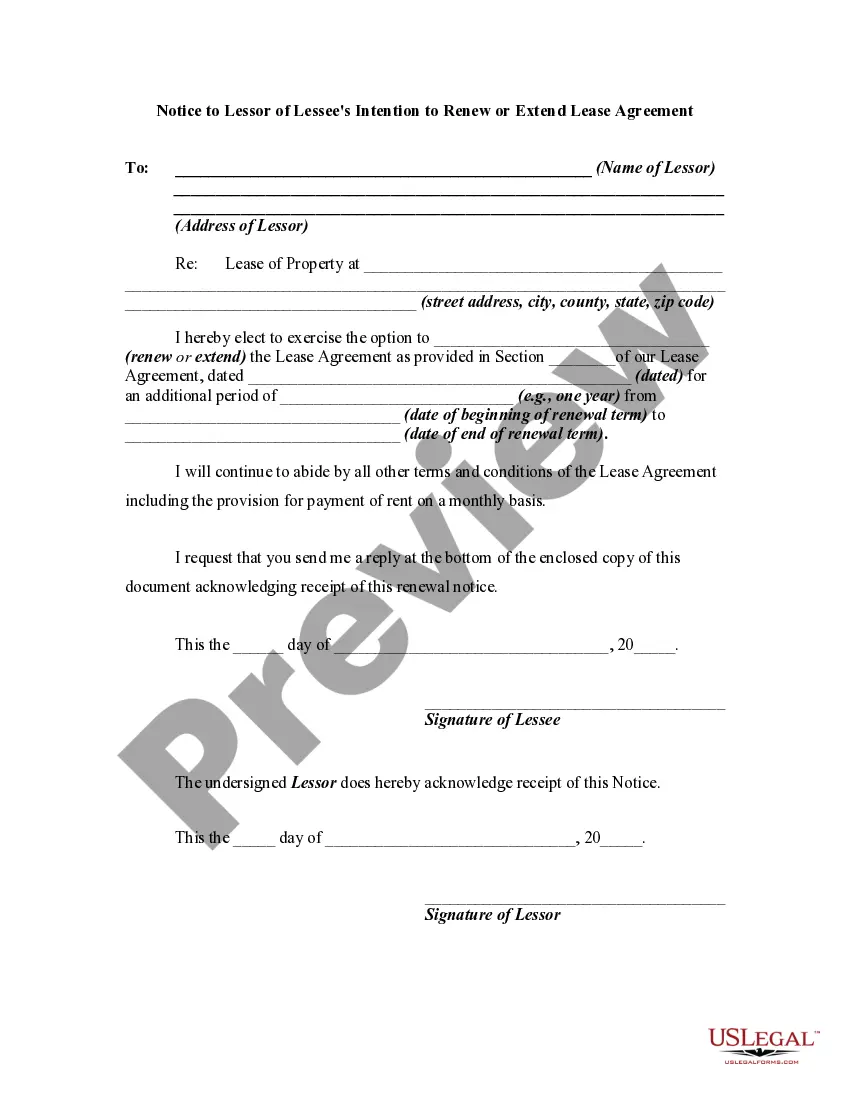
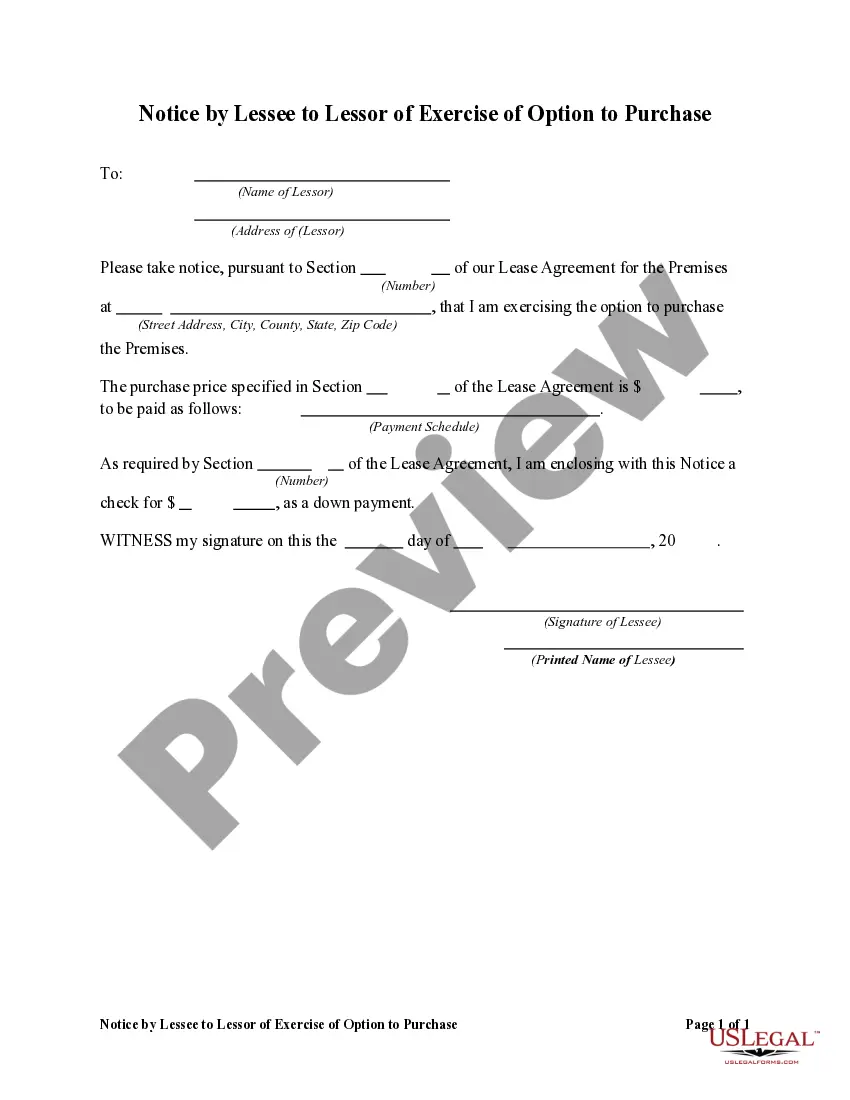
How to fill out Notice By Lessee To Lessor Of Exercise Of Option To Renew Lease?
Creating legal documents from the ground up can frequently be somewhat daunting.
Certain situations might necessitate numerous hours of investigation and a significant amount of money spent.
If you are seeking a more straightforward and cost-effective method for preparing the Lessee And Lessor Difference or any other documents without the hassle of navigating complex procedures, US Legal Forms is readily available to assist you.
Our online repository of over 85,000 current legal forms encompasses nearly every facet of your financial, legal, and personal affairs. With just a few clicks, you can quickly acquire state- and county-specific templates meticulously crafted for you by our legal professionals.
Review the form preview and details to ensure you have located the document you need. Verify that the template you select meets the standards of your state and county. Select the appropriate subscription option to purchase the Lessee And Lessor Difference. Download the file, then complete, sign, and print it out. US Legal Forms boasts a flawless reputation and over 25 years of expertise. Join us today to simplify and streamline your document processing!
- Visit our site whenever you require dependable services through which you can effortlessly find and download the Lessee And Lessor Difference.
- If you are familiar with our website and have previously created an account with us, simply Log In to your account, find the template, and download it immediately or access it again later in the My documents section.
- Don’t have an account? No issue. Setting it up is quick and straightforward, allowing you to browse the catalog easily.
- Before proceeding to download the Lessee And Lessor Difference, please adhere to these suggestions.
Form popularity
FAQ
Consider a car rental scenario where you rent a vehicle. In this case, you (the person renting the car) are the lessee, and the car rental company is the lessor. This example highlights the lessee and lessor difference, emphasizing the relationship and obligations between both parties involved in the lease agreement.
A lessee is someone who leases or rents property, while a lessor is the person or business that owns the property and offers it for lease. For instance, if you rent an apartment, you are the lessee, and the landlord is the lessor. Understanding the lessee and lessor difference can help clarify your rights and responsibilities in a leasing agreement.
The lessee and lessor difference can be summarized in terms of ownership and obligations. The lessor provides the asset for lease, while the lessee pays to use that asset. This relationship entails specific legal rights and responsibilities for both parties that you should understand to avoid disputes. To ensure proper documentation, consider the resources available at US Legal Forms.
In a lease agreement, the owner is the lessor. This party retains title to the property and allows the lessee to use it for a defined period. Understanding the role of the lessor is crucial when entering into a rental contract. For thorough lease agreements and resources, explore US Legal Forms.
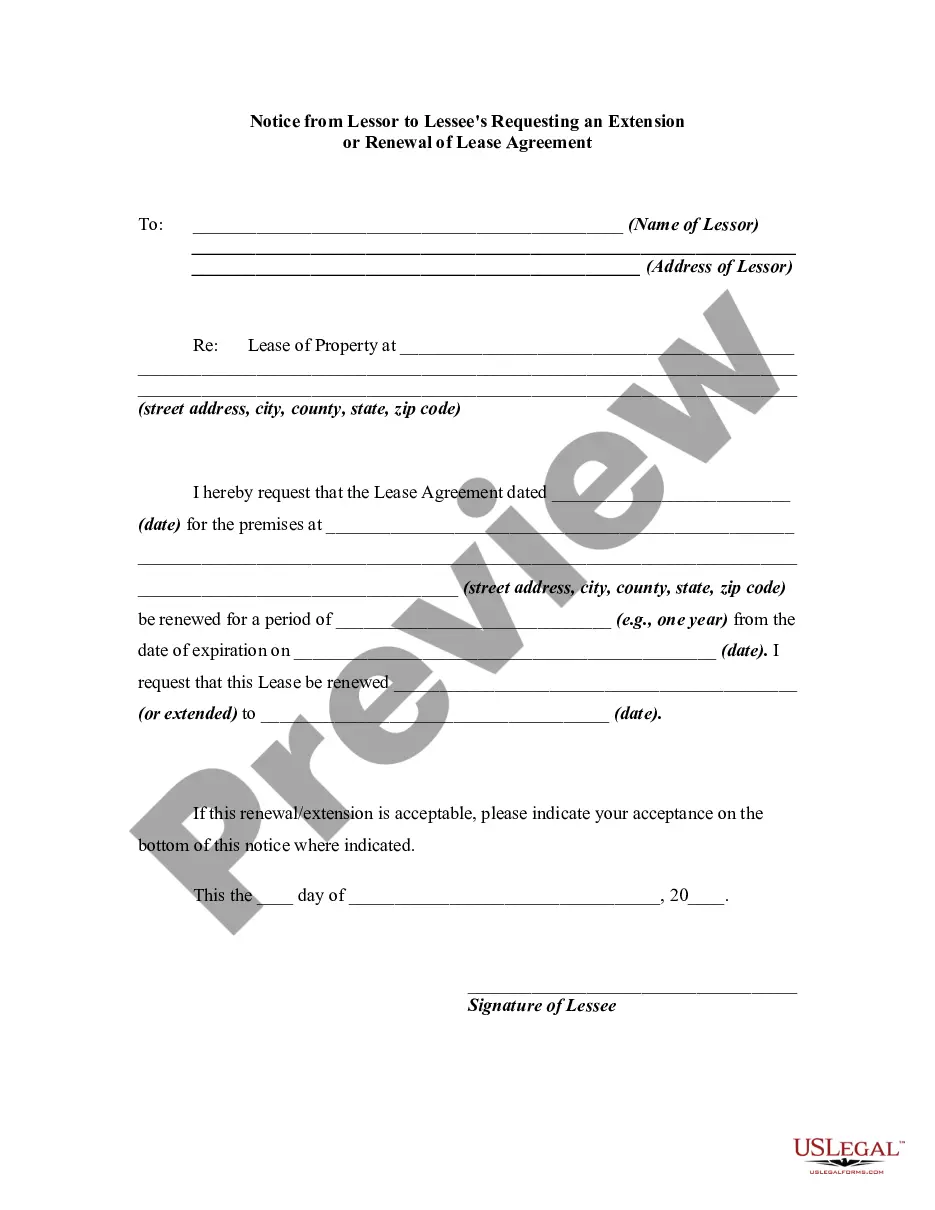
The lessee and lessor difference lies in their roles within a lease agreement. A lessor is the party that owns the property and grants the lease, while a lessee is the individual or entity that rents the property for a specified time. Understanding this distinction helps clarify the responsibilities of each party. If you have specific concerns about lease agreements, consider using US Legal Forms for reliable templates.
The main difference between a lessor and a lessee lies in ownership and rights. The lessor owns the asset and grants the lessee the right to use it for a defined period. Meanwhile, the lessee is the party that pays for the right to use the asset. Understanding the lessee and lessor difference is key to navigating lease agreements effectively.
Yes, a lessor is typically the owner of the asset that is being leased. The lessor retains ownership while allowing the lessee to use the asset under specific conditions. This distinction is an important part of the lessee and lessor difference, as it highlights the respective rights and responsibilities associated with ownership.
The agreement between the lessor and the lessee is typically a legal contract outlining the terms of the lease. This contract specifies the duration of the lease, payment terms, and responsibilities of each party. Understanding this agreement is crucial when exploring the lessee and lessor difference, as it defines their relationship and expectations.
The role of the lessee is to use the leased asset in accordance with the terms of the lease agreement. The lessee is responsible for making regular payments to the lessor and maintaining the asset in good condition. Recognizing the lessee and lessor difference is essential for both parties to understand their roles and avoid any conflicts.
Leasing is evaluated by the lessor based on several factors, including the creditworthiness of the lessee, the value of the asset being leased, and the terms of the lease agreement. The lessor conducts a thorough assessment to minimize risks and ensure profitability. Understanding the lessee and lessor difference helps clarify the responsibilities involved in the lease.