Generation Skipping Trust Form With 2 Points
Description







Get your form ready online
Our built-in tools help you complete, sign, share, and store your documents in one place.
Make edits, fill in missing information, and update formatting in US Legal Forms—just like you would in MS Word.
Download a copy, print it, send it by email, or mail it via USPS—whatever works best for your next step.
Sign and collect signatures with our SignNow integration. Send to multiple recipients, set reminders, and more. Go Premium to unlock E-Sign.
If this form requires notarization, complete it online through a secure video call—no need to meet a notary in person or wait for an appointment.
We protect your documents and personal data by following strict security and privacy standards.

Make edits, fill in missing information, and update formatting in US Legal Forms—just like you would in MS Word.

Download a copy, print it, send it by email, or mail it via USPS—whatever works best for your next step.

Sign and collect signatures with our SignNow integration. Send to multiple recipients, set reminders, and more. Go Premium to unlock E-Sign.

If this form requires notarization, complete it online through a secure video call—no need to meet a notary in person or wait for an appointment.

We protect your documents and personal data by following strict security and privacy standards.
Looking for another form?









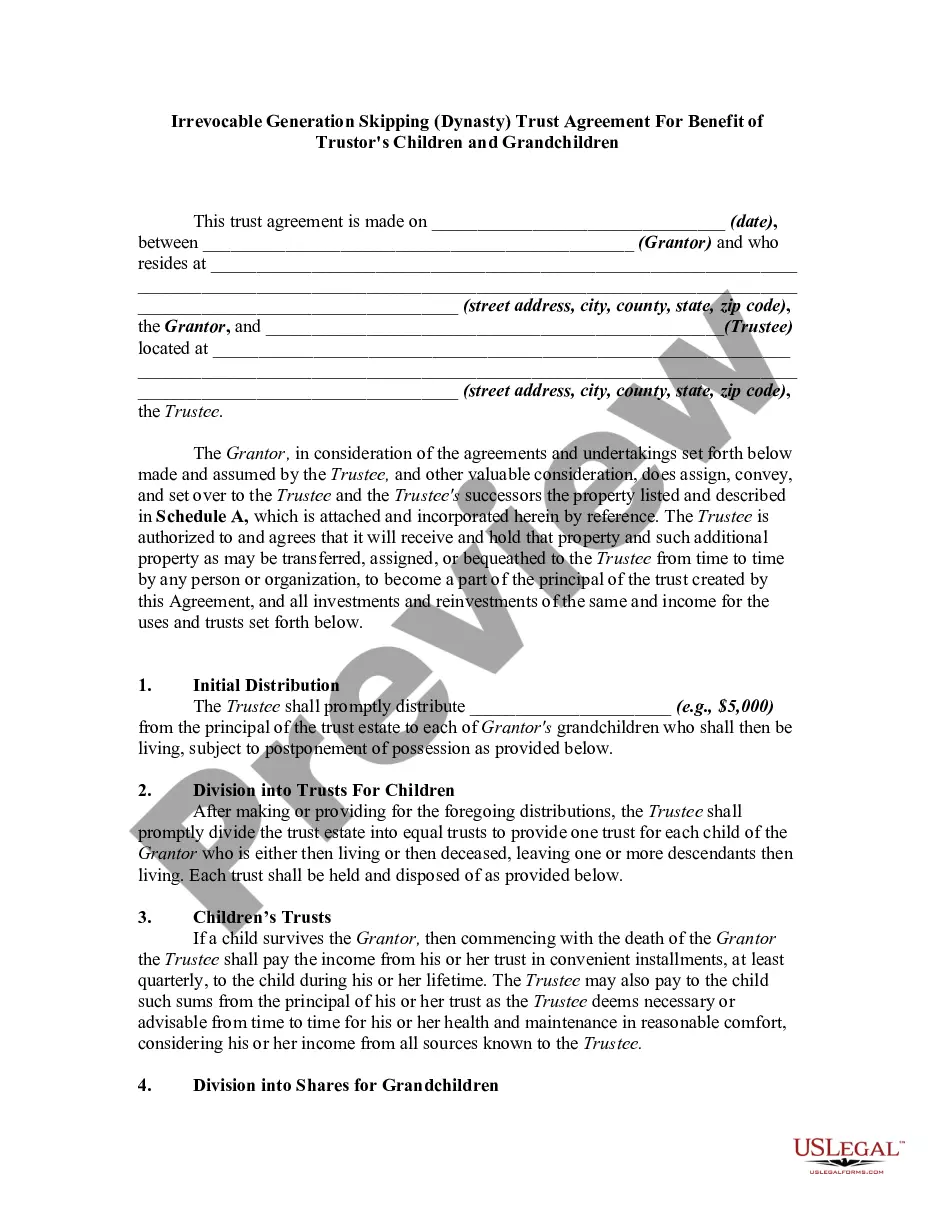
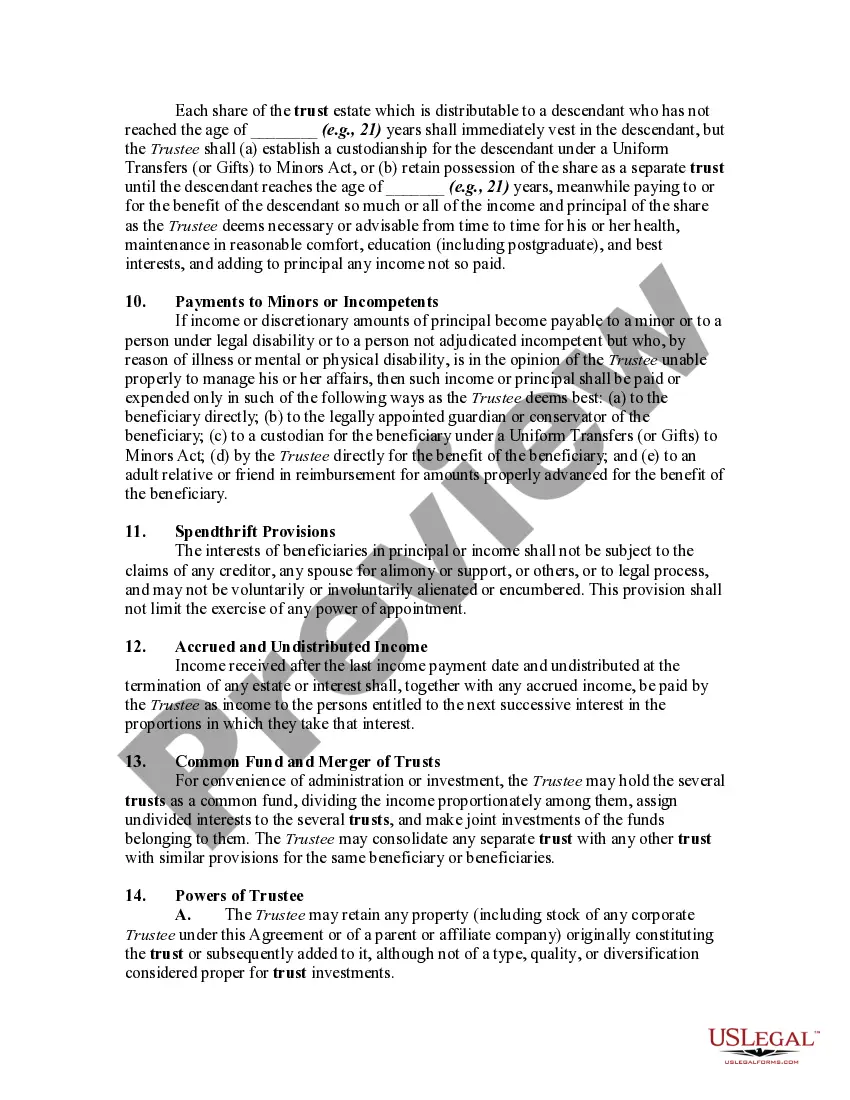
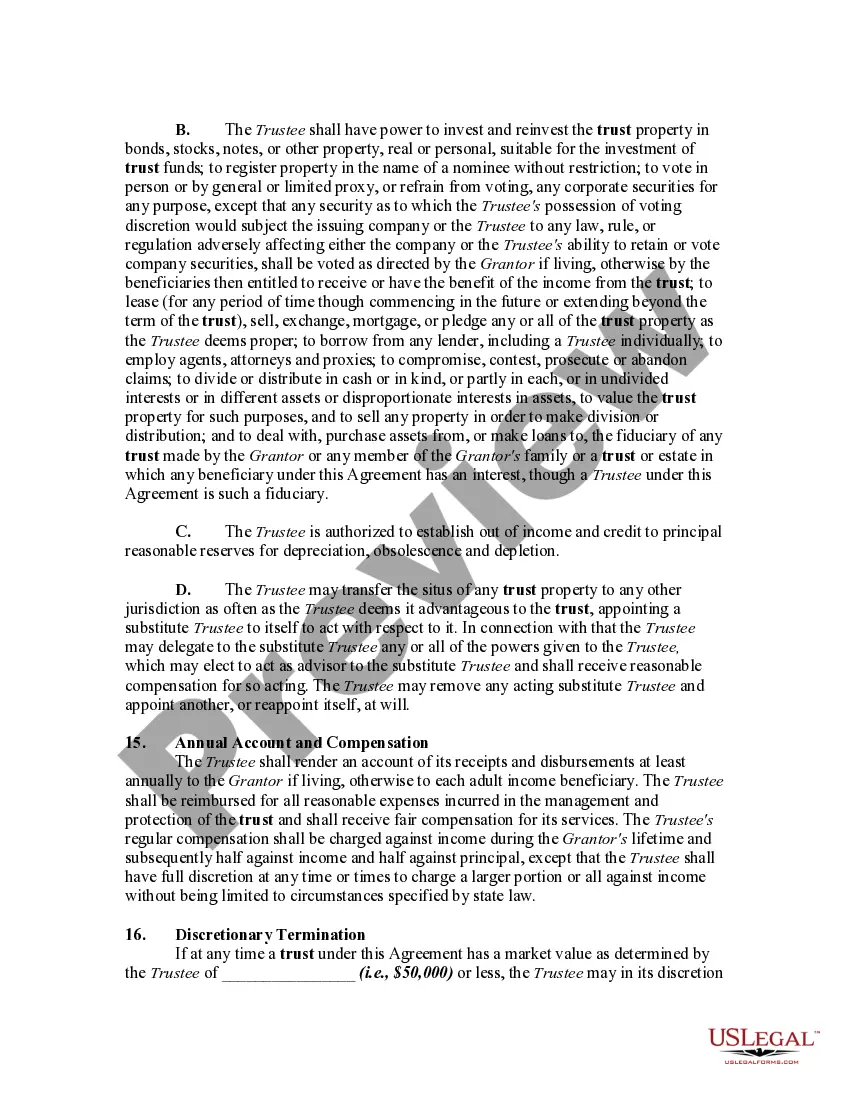
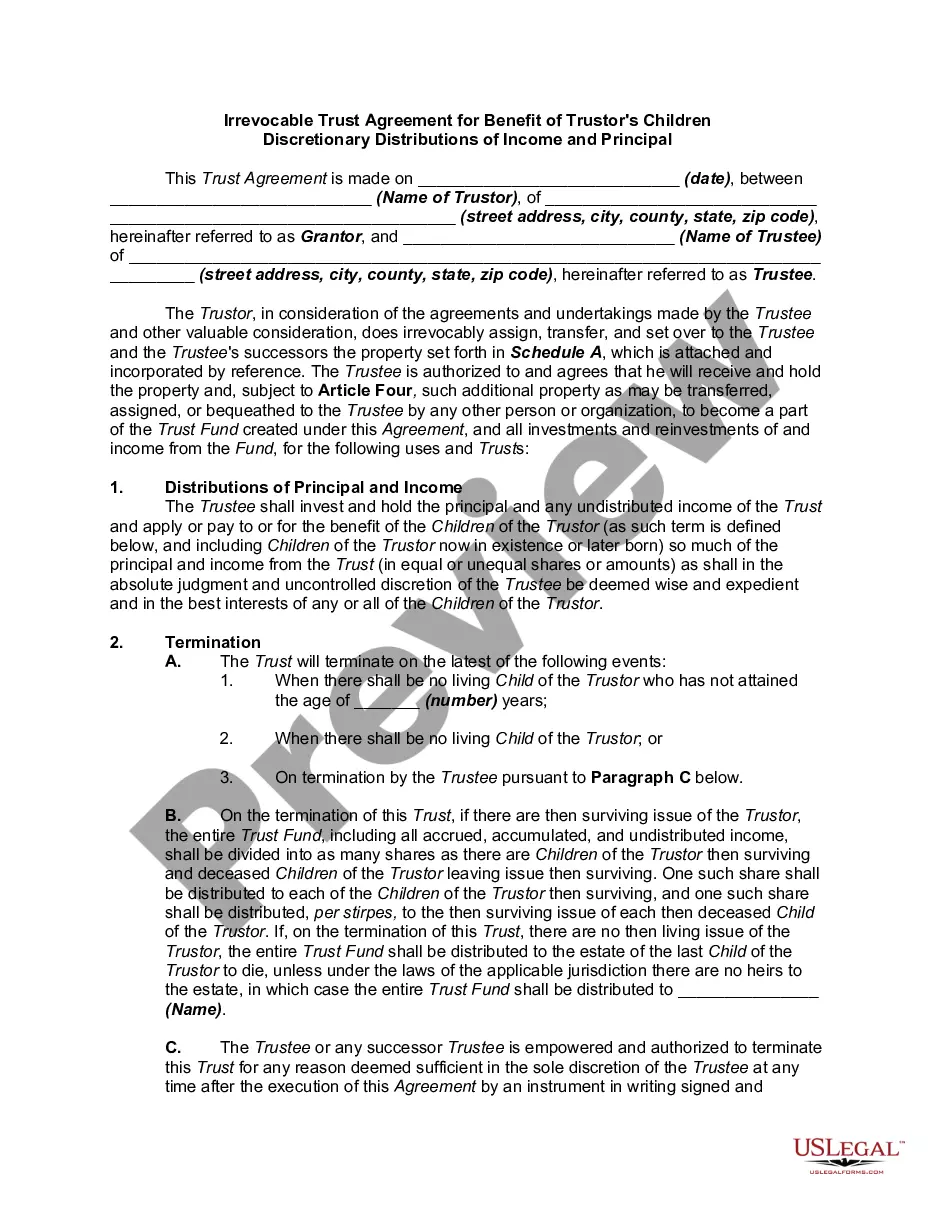
How to fill out Irrevocable Generation Skipping Or Dynasty Trust Agreement For Benefit Of Trustor's Children And Grandchildren?
It’s clear that transforming into a legal expert doesn't happen instantaneously, nor can you determine how to swiftly create a Generation Skipping Trust Form With 2 Points without possessing a set of specialized competencies.
Assembling legal documents is an extended process that necessitates specific education and expertise. So why not entrust the development of the Generation Skipping Trust Form With 2 Points to the professionals.
With US Legal Forms, one of the most comprehensive collections of legal documents, you can find everything from court records to templates for office communication. We understand how vital compliance and adherence to federal and local laws and regulations are. That’s why, on our site, all templates are location-specific and current.
You can retrieve your forms from the My documents tab at any point. If you’re a current client, you can simply Log In and find and download the template from the same tab.
Regardless of whether your forms are for financial, legal, or personal reasons, our website has you covered. Try US Legal Forms today!
- Locate the form you require using the search bar located at the top of the page.
- Preview it (if this option is available) and read the accompanying description to determine if the Generation Skipping Trust Form With 2 Points is what you need.
- If you require a different form, restart your search.
- Sign up for a free account and select a subscription option to purchase the form.
- Click Buy now. Once the payment is processed, you will have access to the Generation Skipping Trust Form With 2 Points, which you can complete, print, and send to the necessary individuals or organizations.
Form popularity
FAQ
The inclusion ratio for a generation-skipping trust defines how much of the trust's value is subject to estate taxes when the assets move to the beneficiaries. It plays a critical role in determining the tax implications of your estate. Understanding this ratio can help you effectively plan for taxes using the Generation skipping trust form. This knowledge ensures you make informed choices that align with your estate planning objectives.
A GST trust offers several advantages, including the potential to pass wealth to grandchildren or later generations without incurring heavy estate taxes. It allows for greater control over asset distribution, which can be appealing to many families. However, the cons include tax complexities and the initial setup costs for the Generation skipping trust form. Weigh both the benefits and challenges carefully to determine if it aligns with your financial goals.
In a generation-skipping trust, the trust itself is typically responsible for paying taxes on any income generated. However, if the trust distributes income to beneficiaries, those individuals may also need to account for taxes on their personal returns. Understanding the tax responsibilities associated with the Generation skipping trust form is crucial, as it can affect your overall estate planning. Consulting with a tax advisor can prevent misunderstandings down the road.
A generation-skipping trust (GST) is a legally binding agreement in which assets are passed down to the grantor's grandchildren?or anyone at least 37½ years younger?bypassing the next generation of the grantor's children.
The Form 706-GS(D-1) is used by trustees to report certain distributions from a trust that are subject to the generation-skipping transfer tax (GSTT). A skip person is someone related to the transferor by blood, marriage or adoption, who is one or more generations below the transferor.
Skipping a Generation For example, if you skip the living parent (your child) and leave an inheritance directly to your grandchild. It can happen unintentionally, as when an inheritance is in a trust for your child, and your child dies after you, but before receiving the full amount in the trust.
A generation-skipping trust removes one step from the estate tax equation by transferring assets directly from grandparent to grandchild (or great-grandchildren, other younger descendants, or unrelated individuals who are at least 37-1/2 years younger than the grantor, collectively known as "skip persons").
A generation-skipping trust (GST) is a legally binding agreement in which assets are passed down to the grantor's grandchildren?or anyone at least 37½ years younger?bypassing the next generation of the grantor's children.