Generation Skipping Trust File For 529
Description




Get your form ready online
Our built-in tools help you complete, sign, share, and store your documents in one place.
Make edits, fill in missing information, and update formatting in US Legal Forms—just like you would in MS Word.
Download a copy, print it, send it by email, or mail it via USPS—whatever works best for your next step.
Sign and collect signatures with our SignNow integration. Send to multiple recipients, set reminders, and more. Go Premium to unlock E-Sign.
If this form requires notarization, complete it online through a secure video call—no need to meet a notary in person or wait for an appointment.
We protect your documents and personal data by following strict security and privacy standards.

Make edits, fill in missing information, and update formatting in US Legal Forms—just like you would in MS Word.

Download a copy, print it, send it by email, or mail it via USPS—whatever works best for your next step.

Sign and collect signatures with our SignNow integration. Send to multiple recipients, set reminders, and more. Go Premium to unlock E-Sign.

If this form requires notarization, complete it online through a secure video call—no need to meet a notary in person or wait for an appointment.

We protect your documents and personal data by following strict security and privacy standards.
Looking for another form?









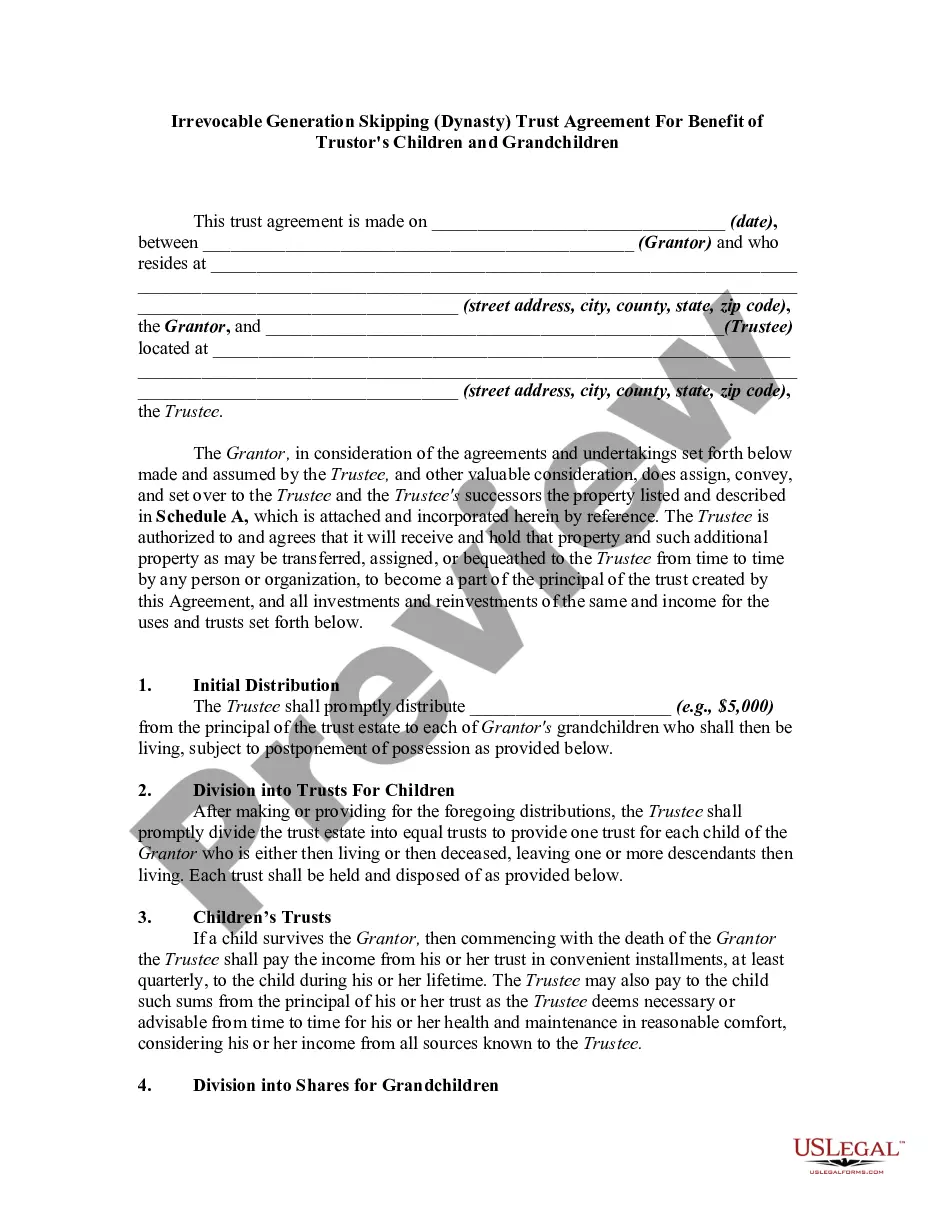
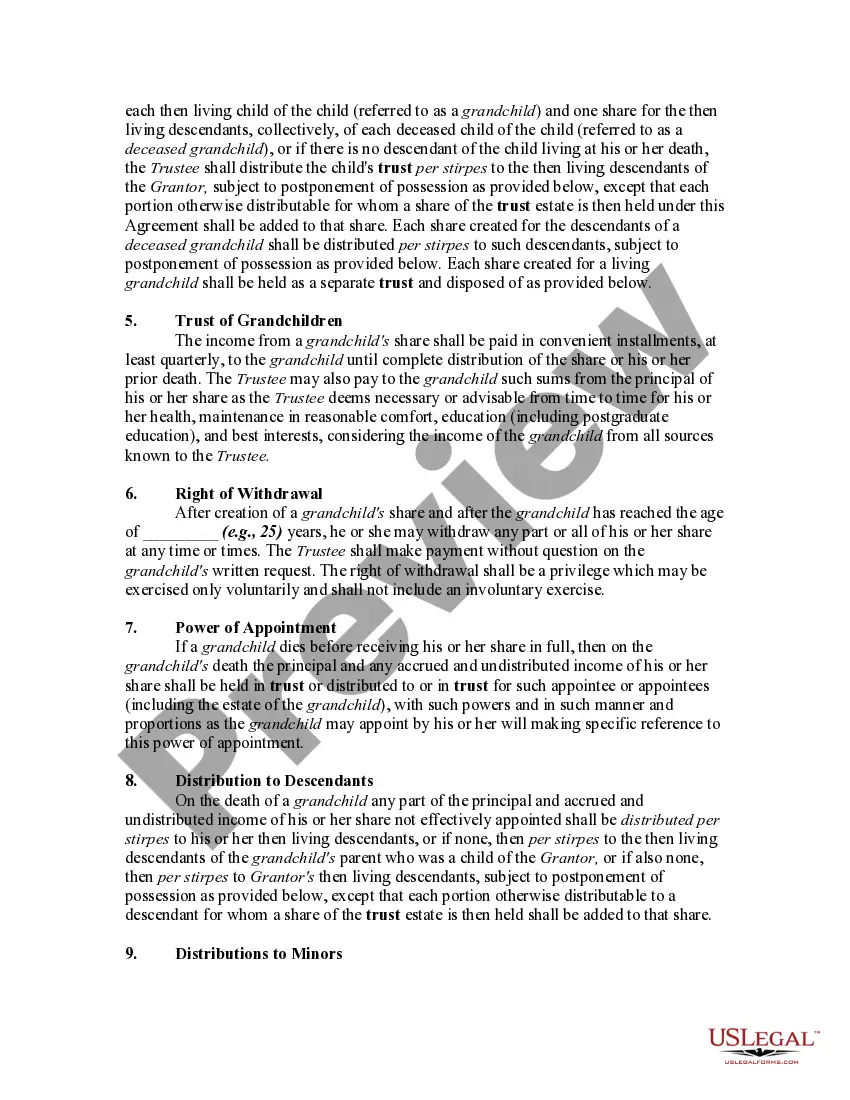
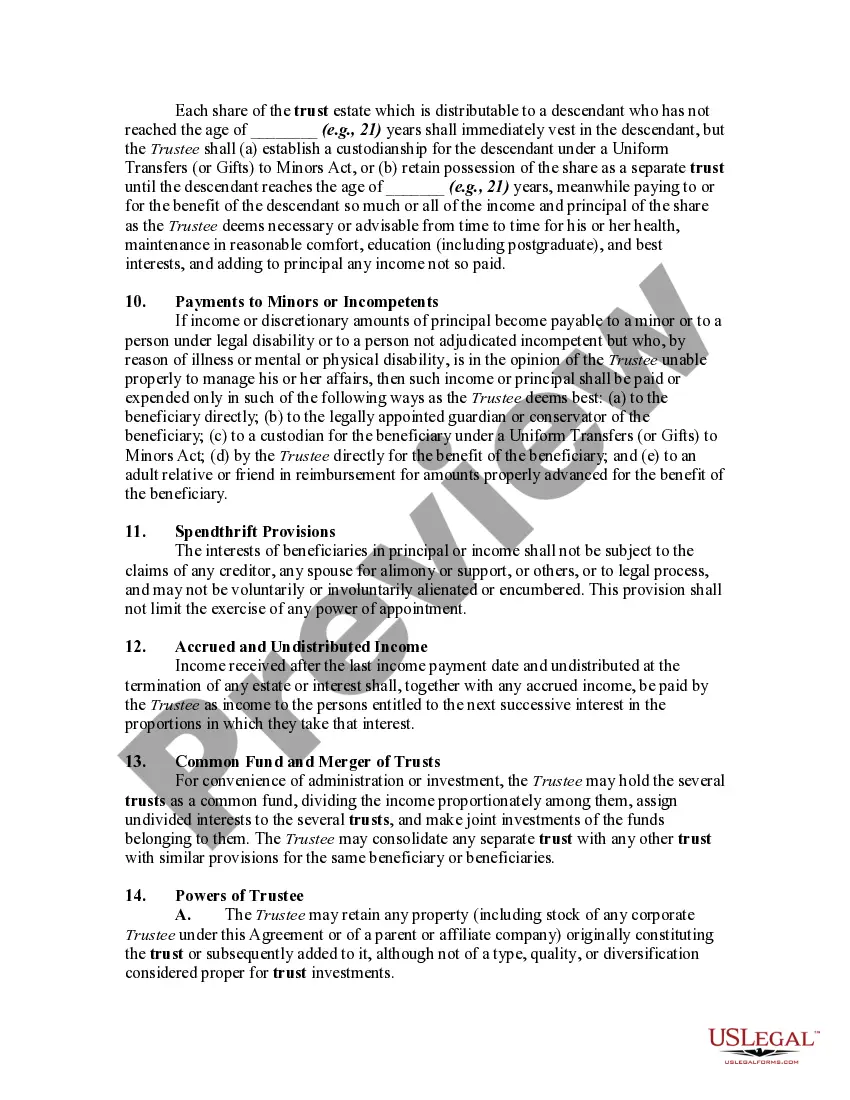
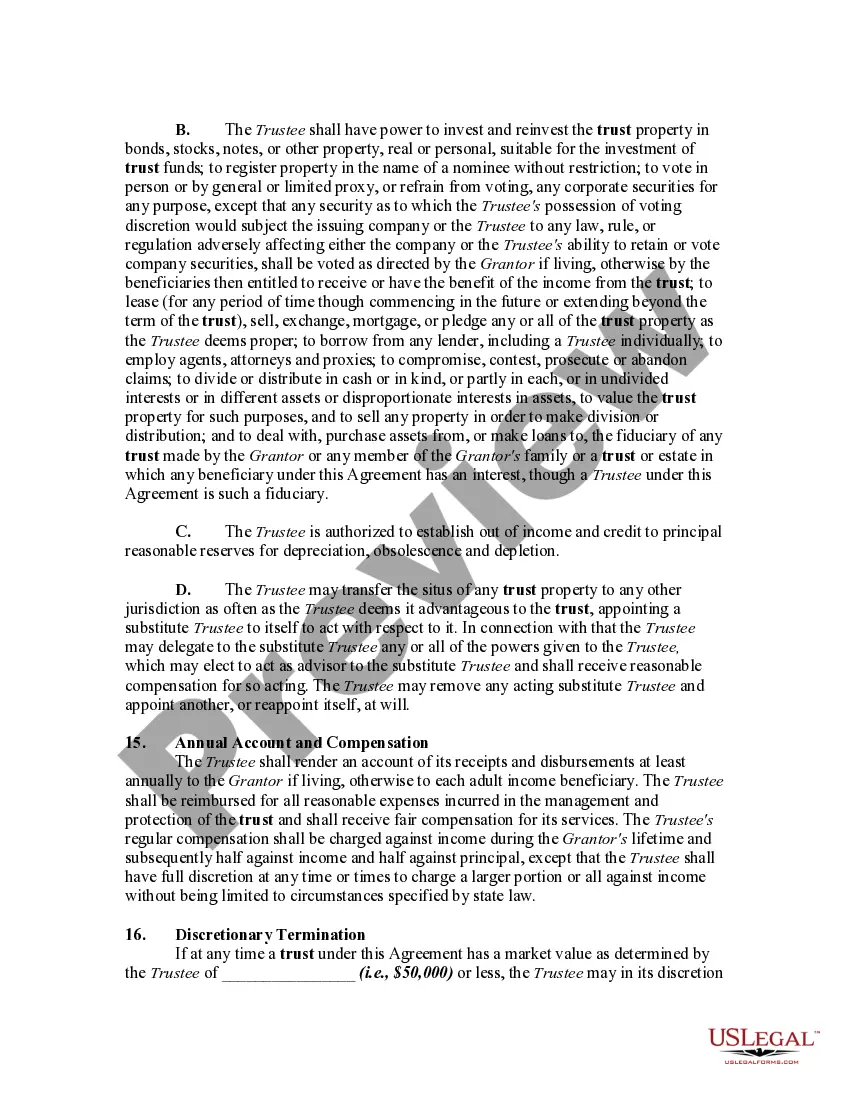
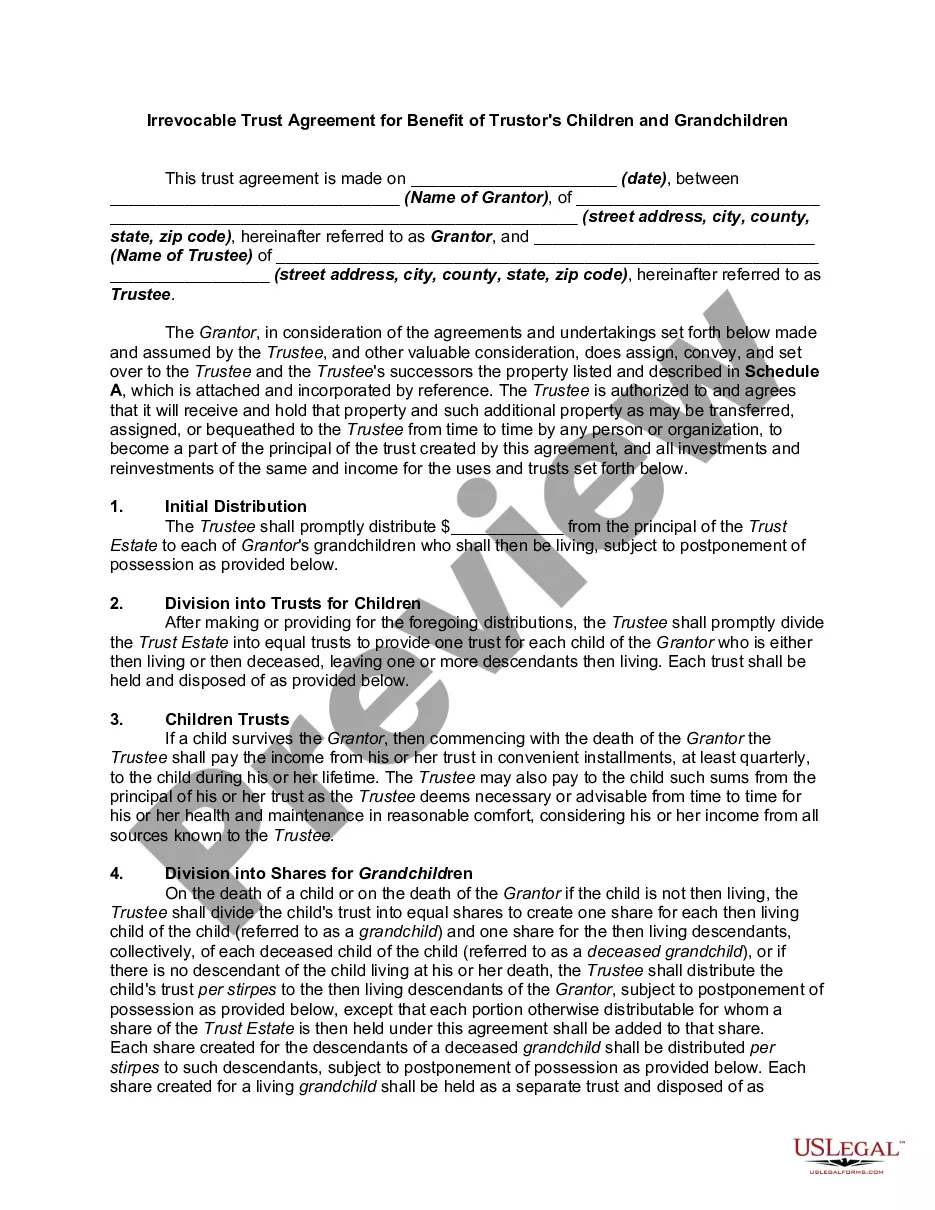
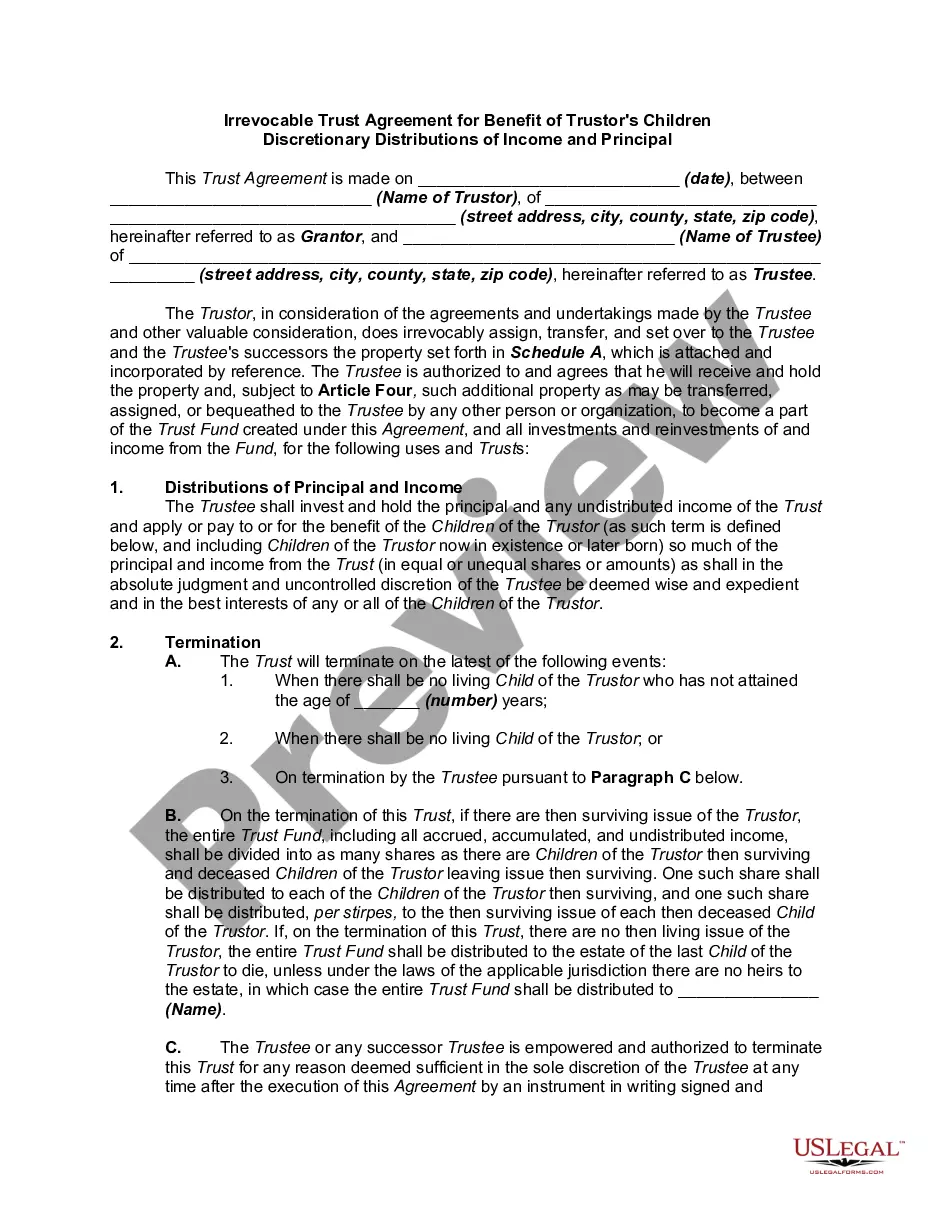
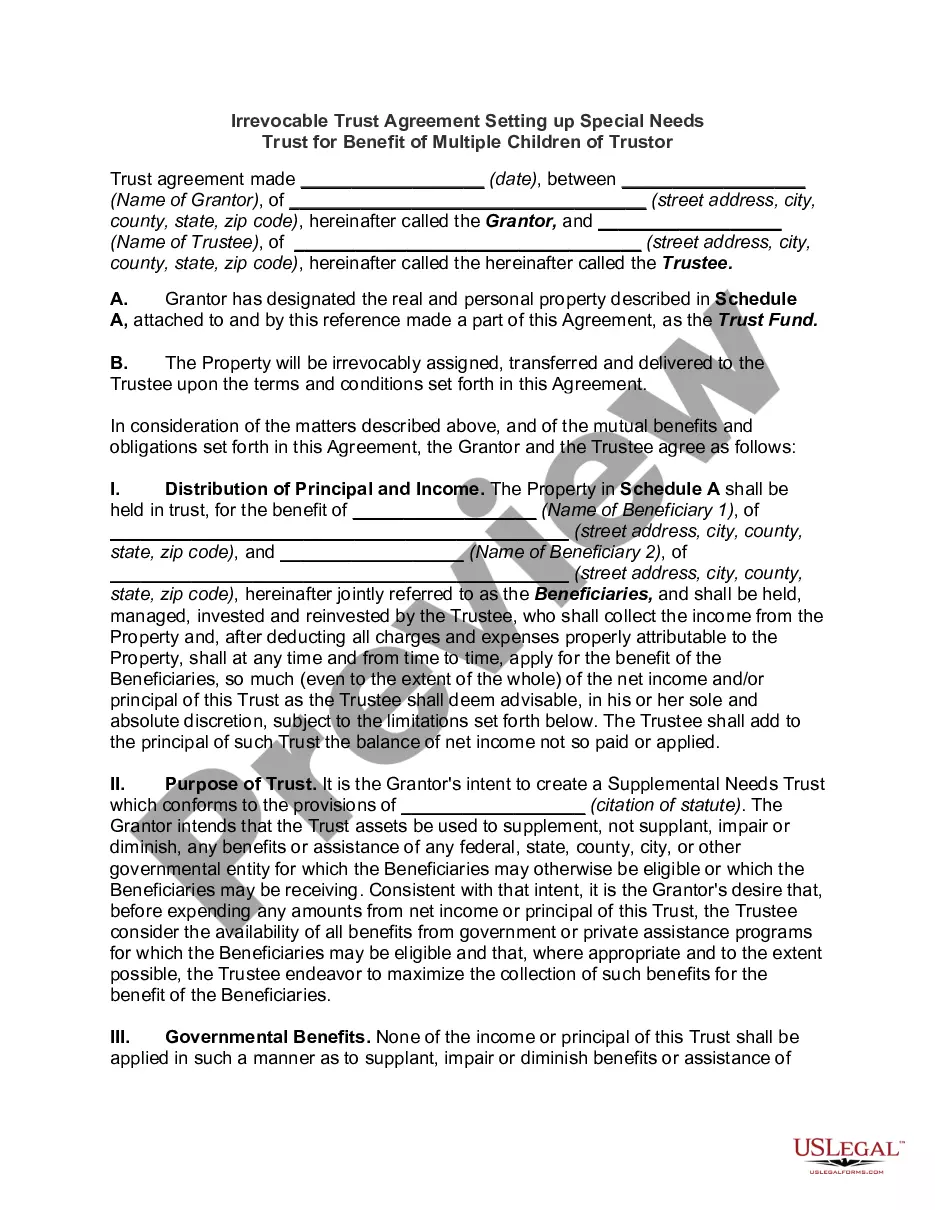
How to fill out Irrevocable Generation Skipping Or Dynasty Trust Agreement For Benefit Of Trustor's Children And Grandchildren?
It’s clear that you can’t turn into a legal expert instantly, nor can you understand how to swiftly prepare Generation Skipping Trust File For 529 without possessing a specialized skill set.
Drafting legal documents is a labor-intensive task that necessitates a specific level of education and expertise. So why not entrust the creation of the Generation Skipping Trust File For 529 to the specialists.
With US Legal Forms, one of the most extensive collections of legal templates, you can find anything from court documents to templates for internal corporate communication. We recognize the significance of compliance and adherence to federal and state laws and regulations.
Click Buy now. Once the transaction is completed, you can download the Generation Skipping Trust File For 529, fill it out, print it, and send it or mail it to the necessary individuals or organizations.
You can revisit your forms from the My documents tab at any time. If you’re an existing customer, you can simply Log In, and locate and download the template from the same tab.
- Here’s how you can initiate your journey on our website and obtain the document you need in just a few minutes.
- Identify the form you require by utilizing the search bar at the top of the page.
- Preview it (if this option is available) and read the accompanying description to determine if Generation Skipping Trust File For 529 is what you seek.
- Re-initiate your search if you require a different form.
- Establish a free account and select a subscription plan to purchase the template.
Form popularity
FAQ
A 529 plan does not set a limit on how much any one person can contribute to the plan in a given year. However, money that a grandparent contributes is considered a gift, meaning gift taxes can apply.
The Generation Skipping Transfer Tax and 529 Plans Like other financial gifts, when a grandparent contributes to a grandchild's 529 plan, the amount will count against their lifetime exemption. If their total gifts exceed the lifetime exemption, the gift tax is a 40% flat tax.
Generation Skipping Transfer Tax and 529 Plans Gifts, such as 529 contributions, made to a ?skip person? (i.e., grandchild) are subject to a flat 40% GST tax in addition to gift taxes.
Skipping a Generation For example, if you skip the living parent (your child) and leave an inheritance directly to your grandchild. It can happen unintentionally, as when an inheritance is in a trust for your child, and your child dies after you, but before receiving the full amount in the trust.
After they are finished paying for college for the first child, the parents should change the 529 plan beneficiary to the next child attending college. Grandchildren, nieces, nephews or anyone else with future education costs may be also named as a designated 529 plan beneficiary.