Dynasty Trust Disadvantages For 500 Years
Description


Get your form ready online
Our built-in tools help you complete, sign, share, and store your documents in one place.
Make edits, fill in missing information, and update formatting in US Legal Forms—just like you would in MS Word.
Download a copy, print it, send it by email, or mail it via USPS—whatever works best for your next step.
Sign and collect signatures with our SignNow integration. Send to multiple recipients, set reminders, and more. Go Premium to unlock E-Sign.
If this form requires notarization, complete it online through a secure video call—no need to meet a notary in person or wait for an appointment.
We protect your documents and personal data by following strict security and privacy standards.

Make edits, fill in missing information, and update formatting in US Legal Forms—just like you would in MS Word.

Download a copy, print it, send it by email, or mail it via USPS—whatever works best for your next step.

Sign and collect signatures with our SignNow integration. Send to multiple recipients, set reminders, and more. Go Premium to unlock E-Sign.

If this form requires notarization, complete it online through a secure video call—no need to meet a notary in person or wait for an appointment.

We protect your documents and personal data by following strict security and privacy standards.
Looking for another form?


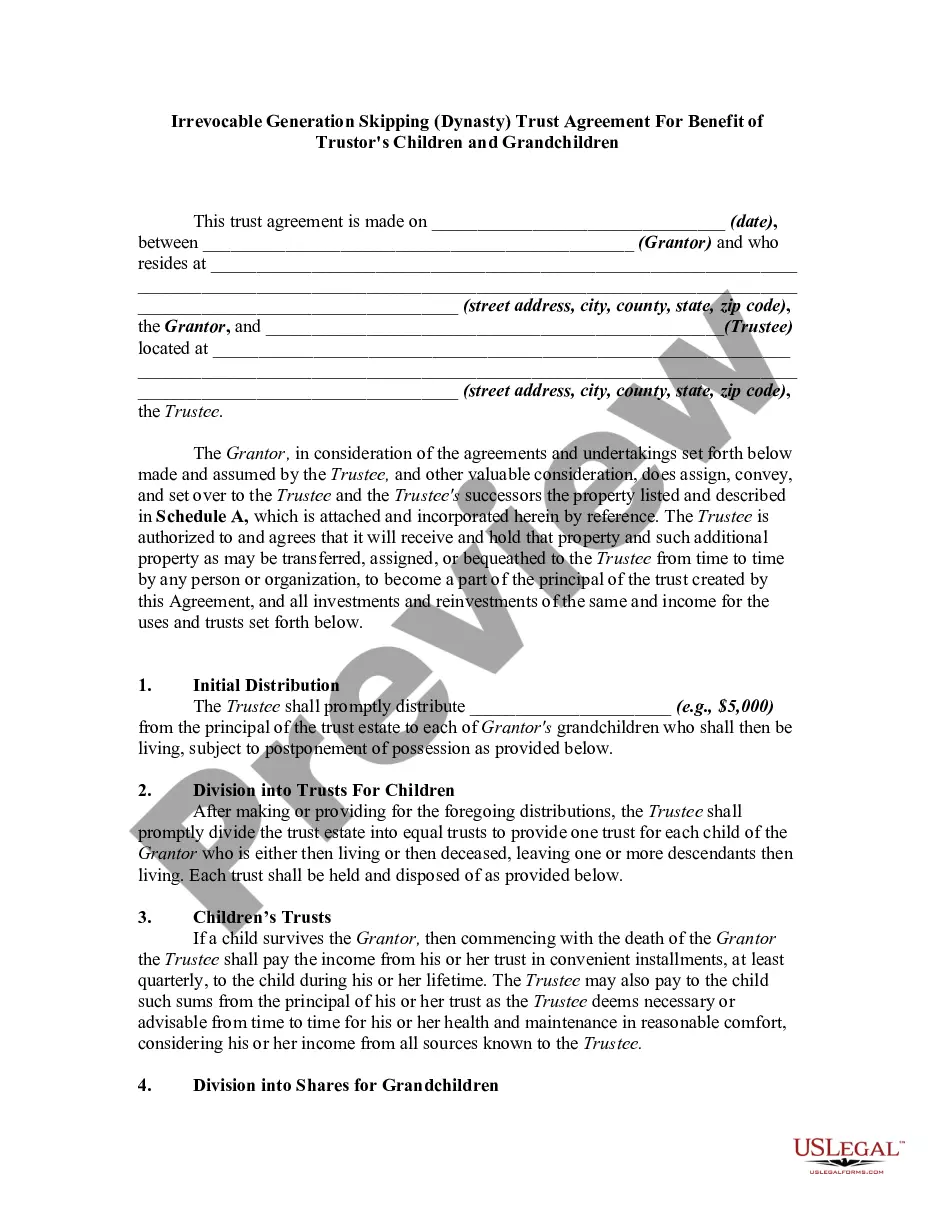
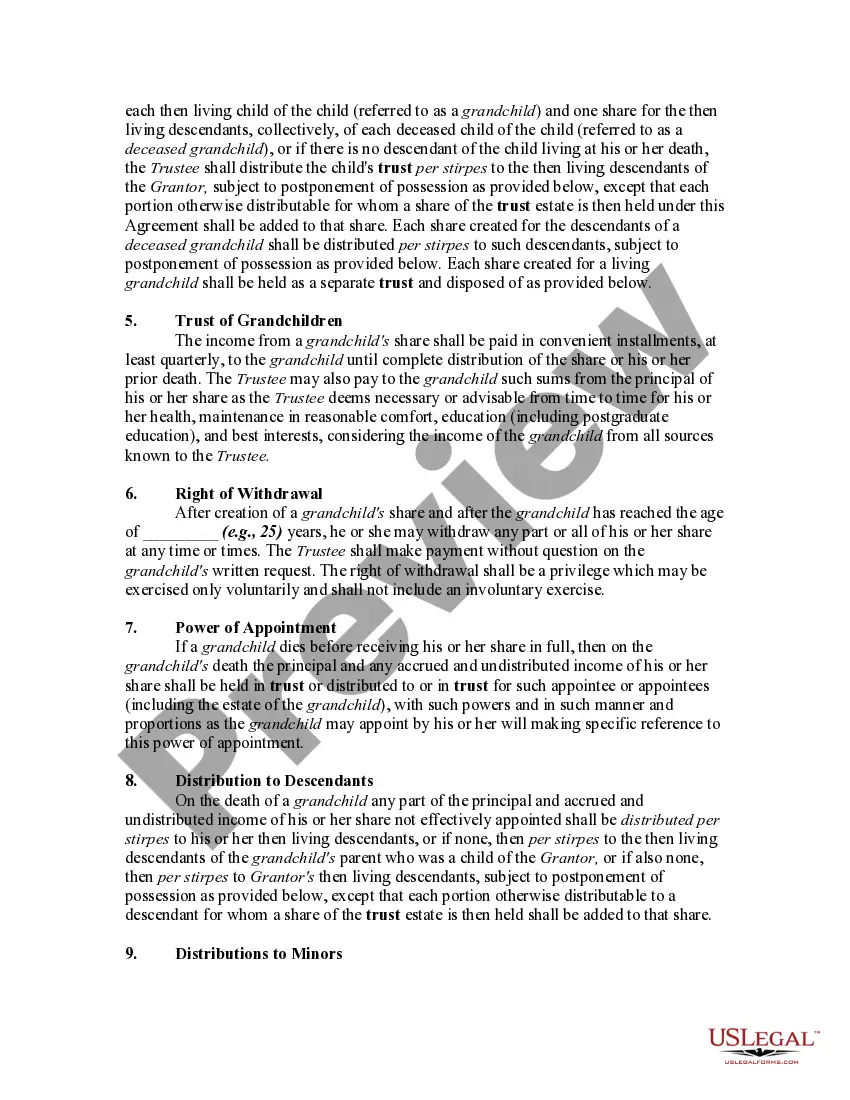
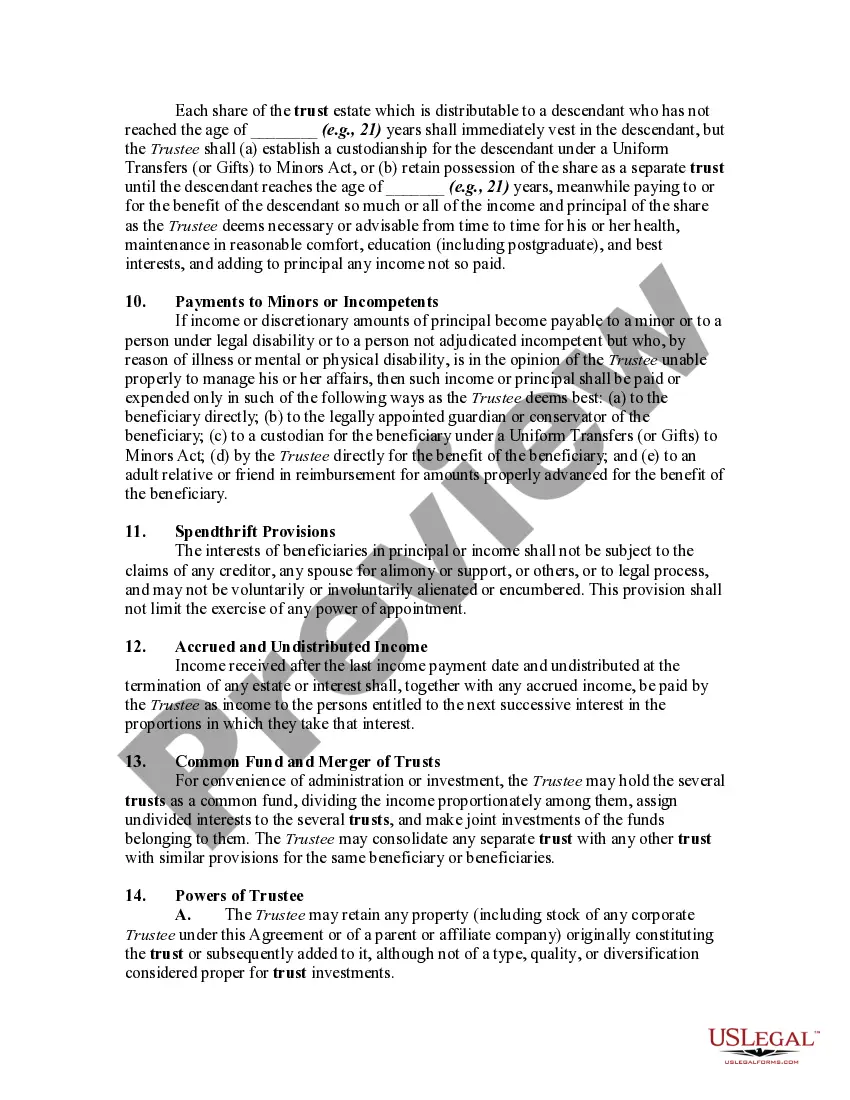
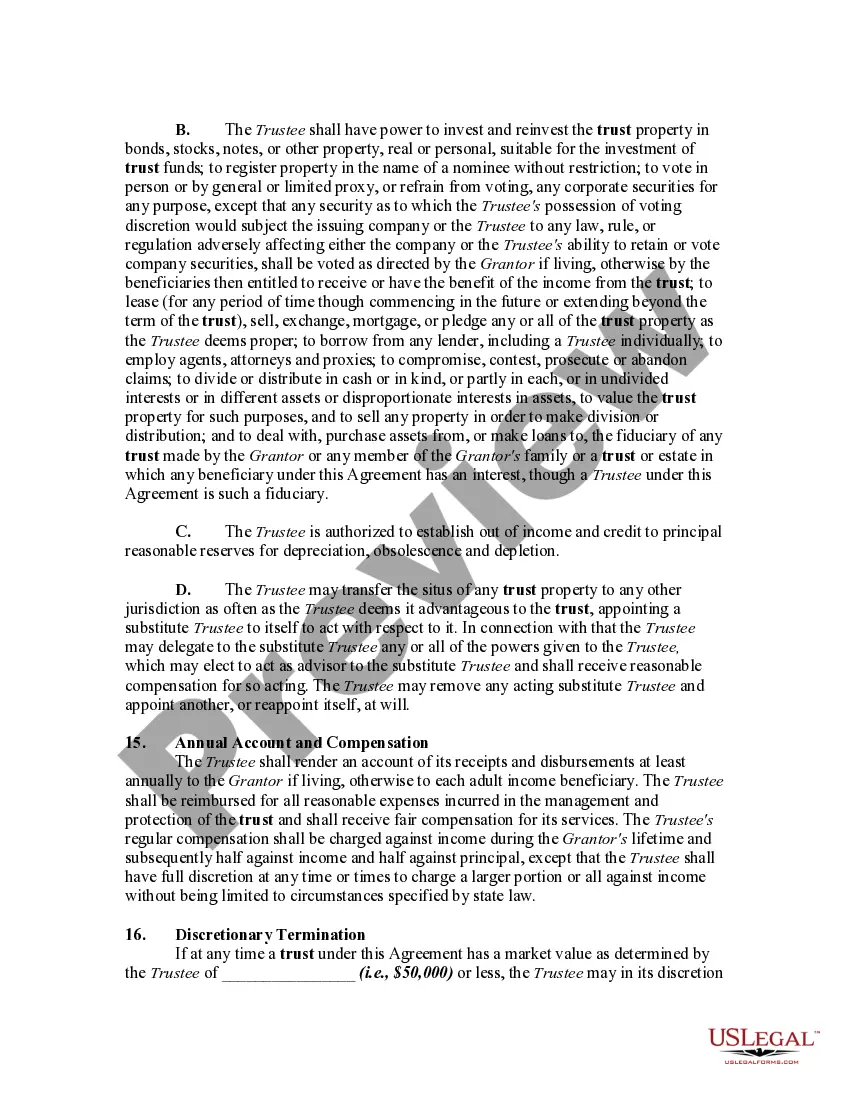
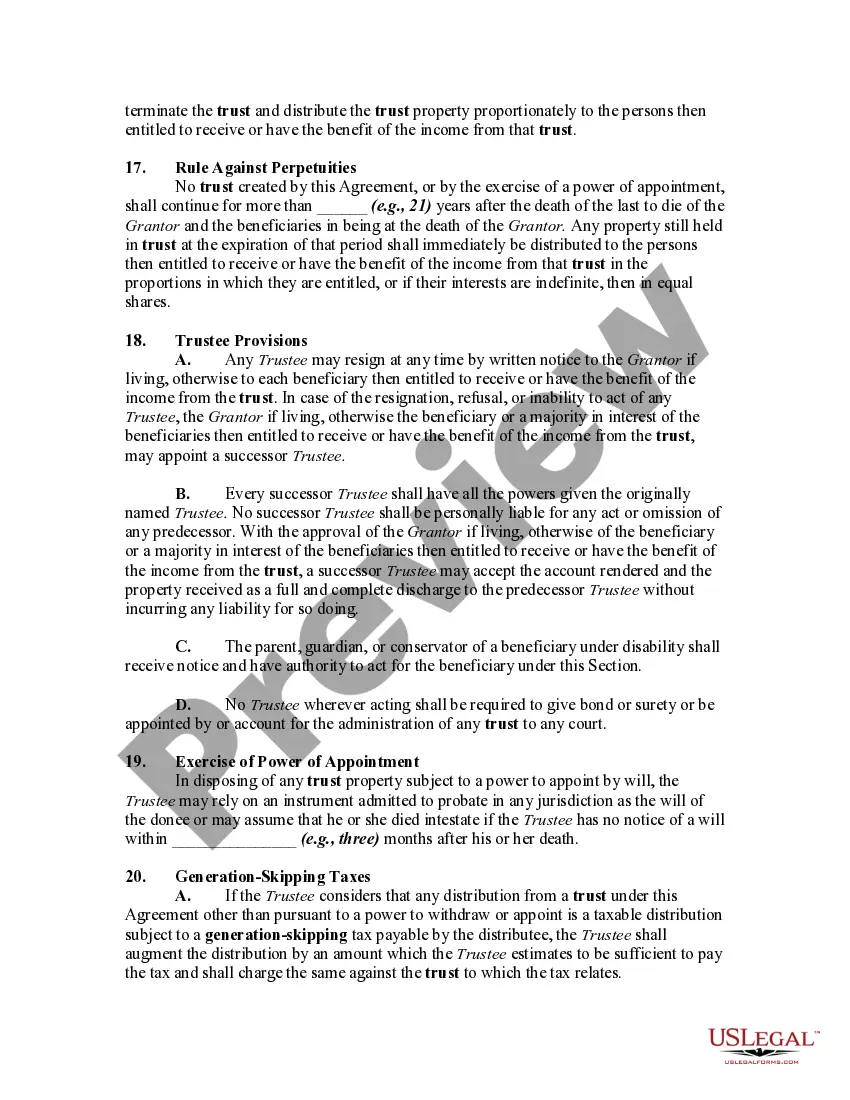
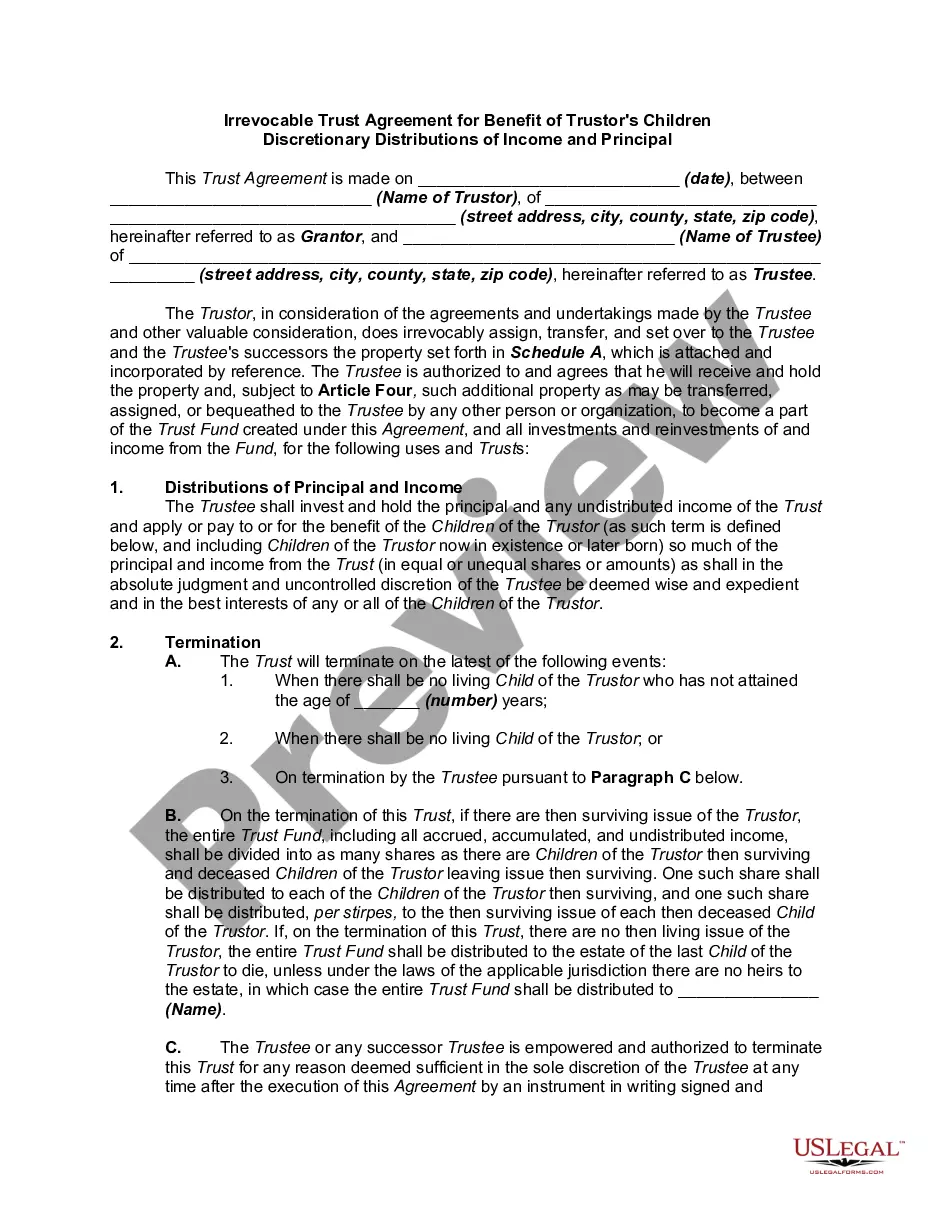
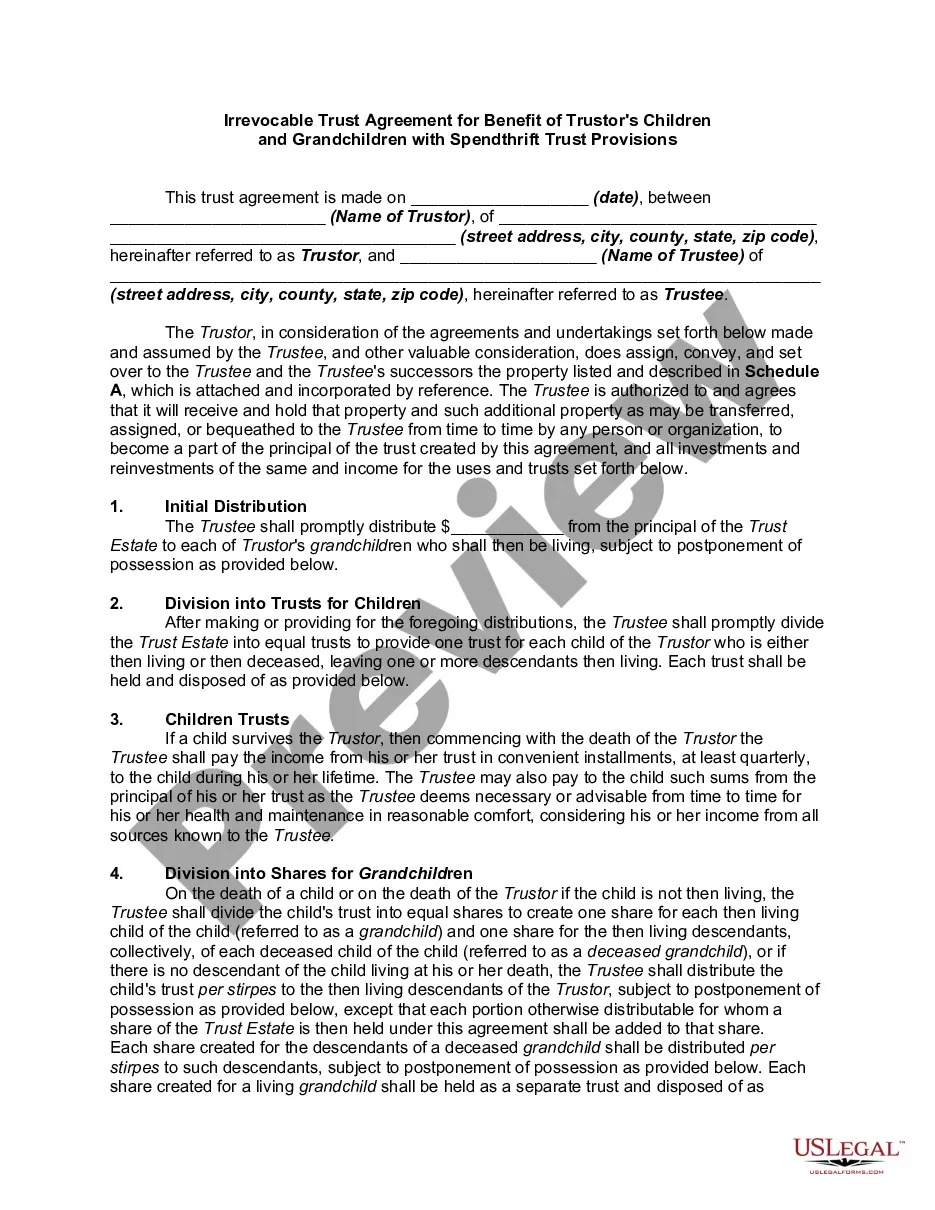
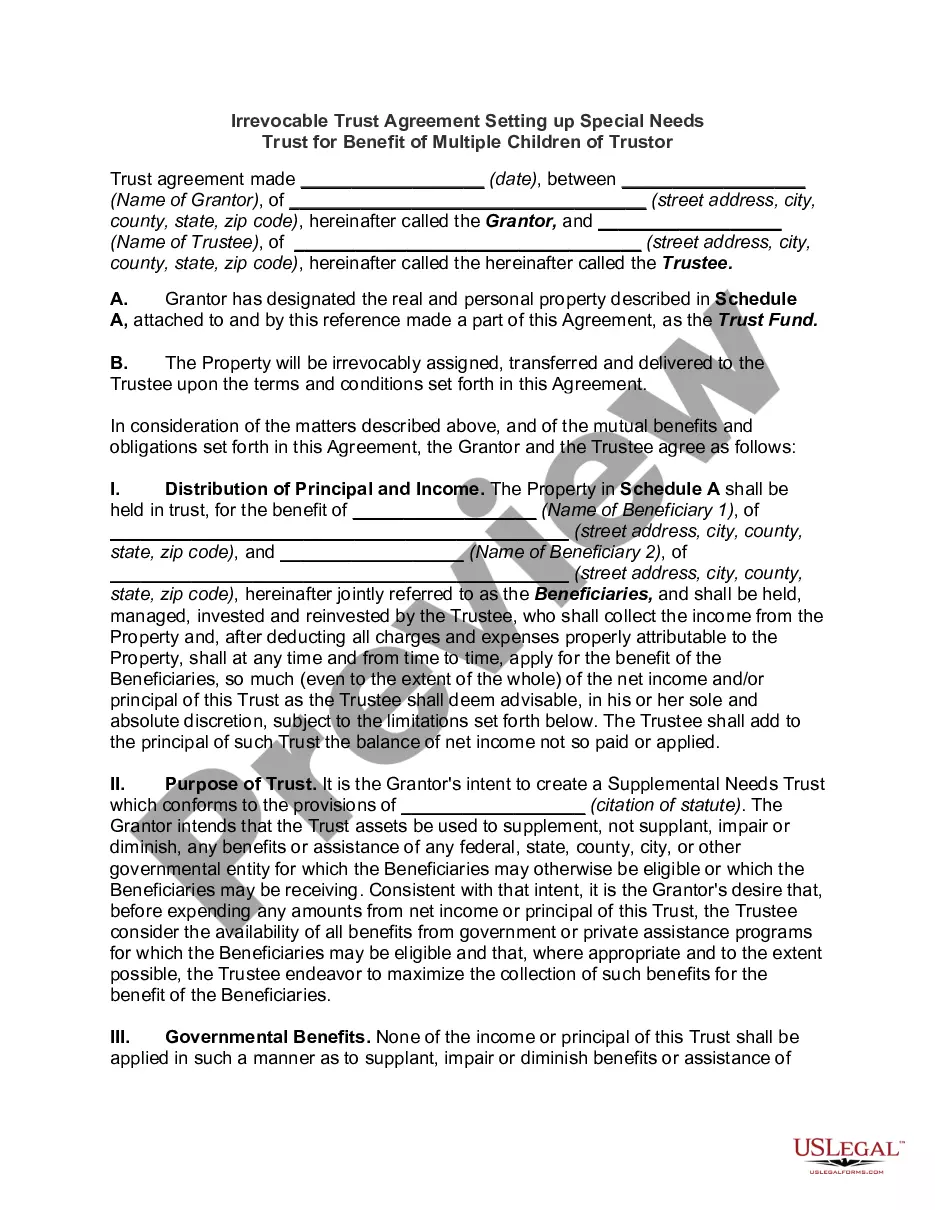
How to fill out Irrevocable Generation Skipping Or Dynasty Trust Agreement For Benefit Of Trustor's Children And Grandchildren?
Finding a go-to place to access the most current and appropriate legal templates is half the struggle of working with bureaucracy. Discovering the right legal documents needs precision and attention to detail, which is the reason it is crucial to take samples of Dynasty Trust Disadvantages For 500 Years only from reputable sources, like US Legal Forms. A wrong template will waste your time and hold off the situation you are in. With US Legal Forms, you have very little to be concerned about. You can access and view all the details about the document’s use and relevance for the circumstances and in your state or county.
Take the listed steps to finish your Dynasty Trust Disadvantages For 500 Years:
- Utilize the catalog navigation or search field to find your sample.
- Open the form’s description to ascertain if it suits the requirements of your state and county.
- Open the form preview, if available, to make sure the form is definitely the one you are looking for.
- Return to the search and locate the appropriate template if the Dynasty Trust Disadvantages For 500 Years does not match your requirements.
- When you are positive about the form’s relevance, download it.
- If you are a registered customer, click Log in to authenticate and gain access to your picked forms in My Forms.
- If you do not have an account yet, click Buy now to get the template.
- Pick the pricing plan that suits your needs.
- Proceed to the registration to finalize your purchase.
- Complete your purchase by selecting a transaction method (bank card or PayPal).
- Pick the file format for downloading Dynasty Trust Disadvantages For 500 Years.
- Once you have the form on your device, you may alter it with the editor or print it and complete it manually.
Remove the headache that accompanies your legal paperwork. Explore the comprehensive US Legal Forms catalog to find legal templates, check their relevance to your circumstances, and download them on the spot.
Form popularity
FAQ
What is the 21-year rule? Family trusts created during someone's lifetime are deemed to dispose of their property every 21 years. Although the trust is deemed to have disposed of property for tax purposes, an actual disposition typically does not occur.
Since the trust is designed to continue and retain most assets for an indefinite period after its creators die, a dynasty trust often pays mainly income only to the beneficiaries. This income to your family can be eaten up by high legal and trustee fees, legal disputes, and misbehaving trustees.
While dynasty trusts offer many benefits, such as long-term asset protection and tax efficiency, there are also potential challenges that individuals should be aware of, including the complexity of setting up and managing the trust, restrictions on the transfer of assets, and the possibility of family disputes.
After 21 years of a trust being in effect, it is like the trust sold all the assets at fair market value and realized the capital gains. This can result in a significant taxable event if not planned for properly. If the value of the property and assets have gone up significantly, the tax bill may be high.
Under the Income Tax Act, trusts are generally deemed to dispose of their property 21 years after their creation. The trust is considered to have sold all its assets at once, and all the unrealized gains on the trust property are taxed. So, while trusts can remain in effect for a long time, they can't last forever.