Affirmative Defense Terms For Assault
Description
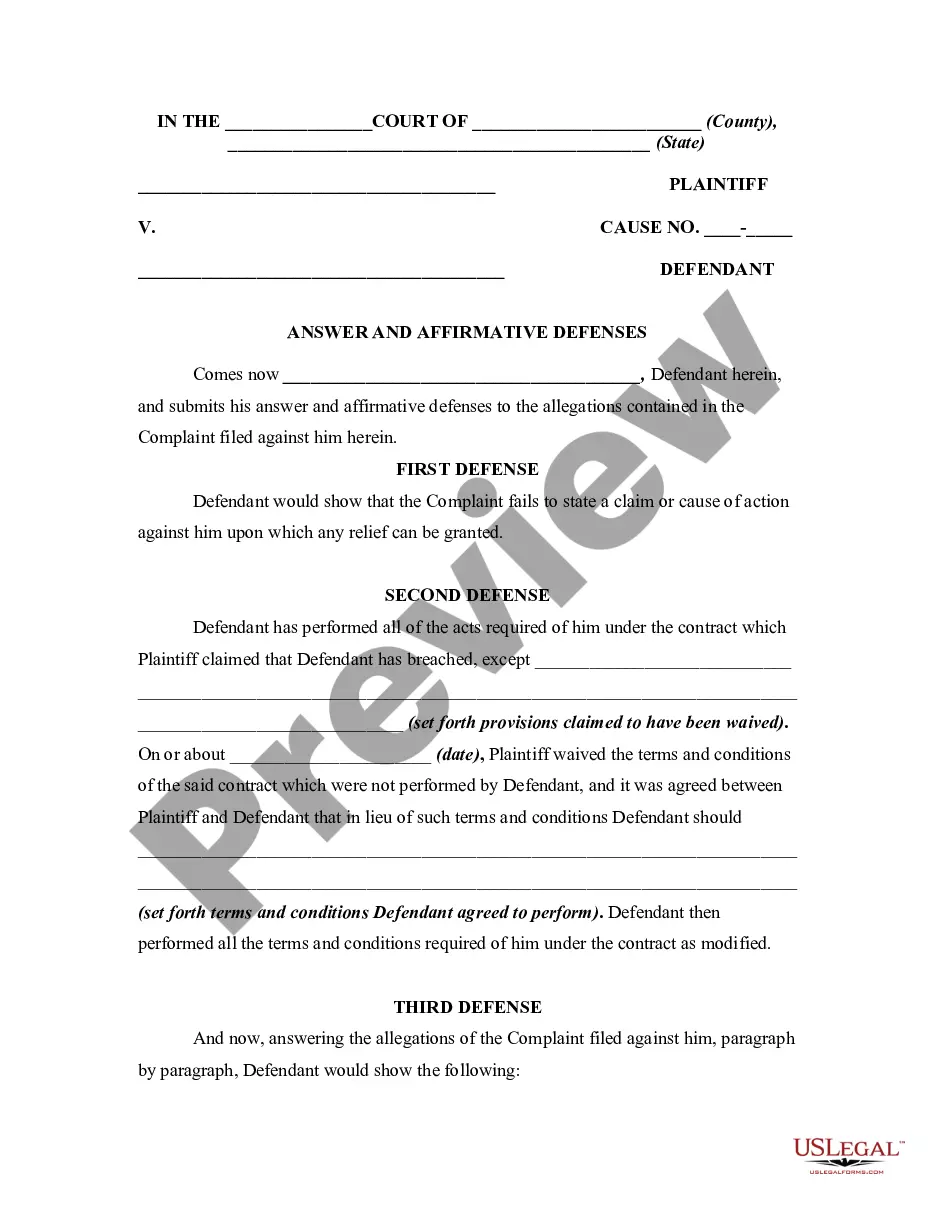
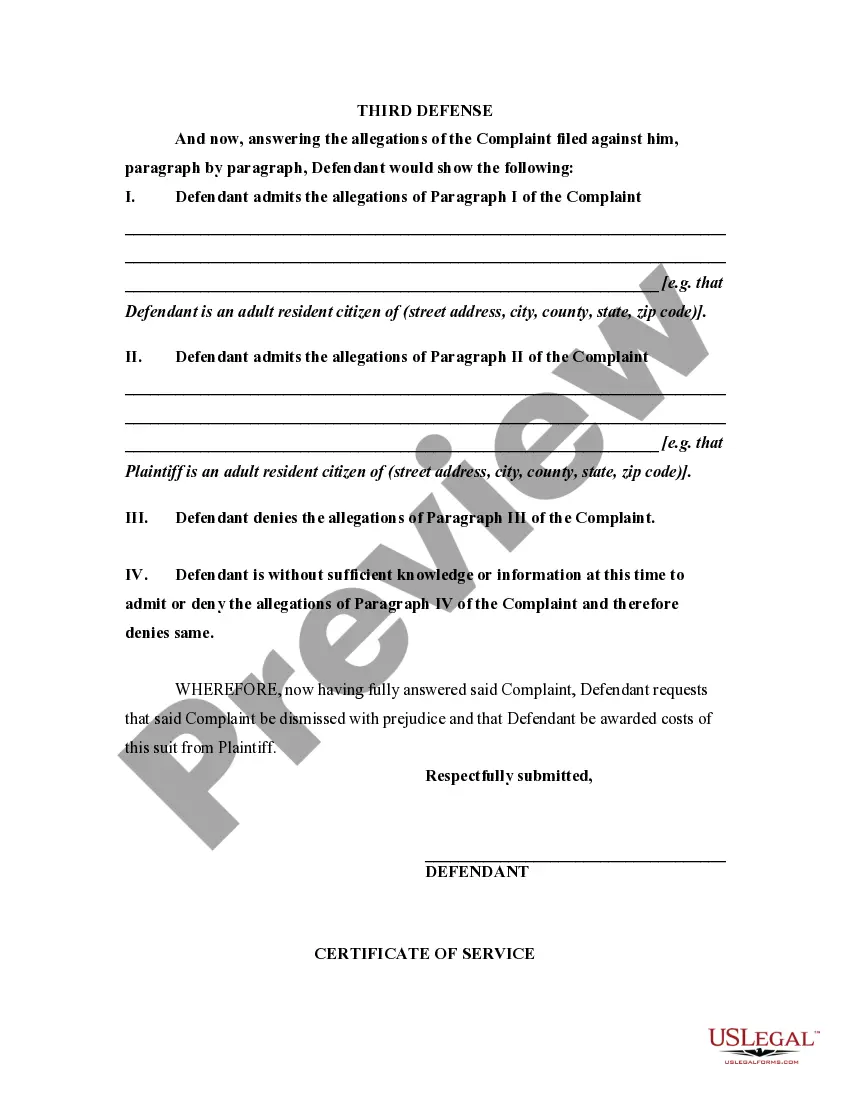
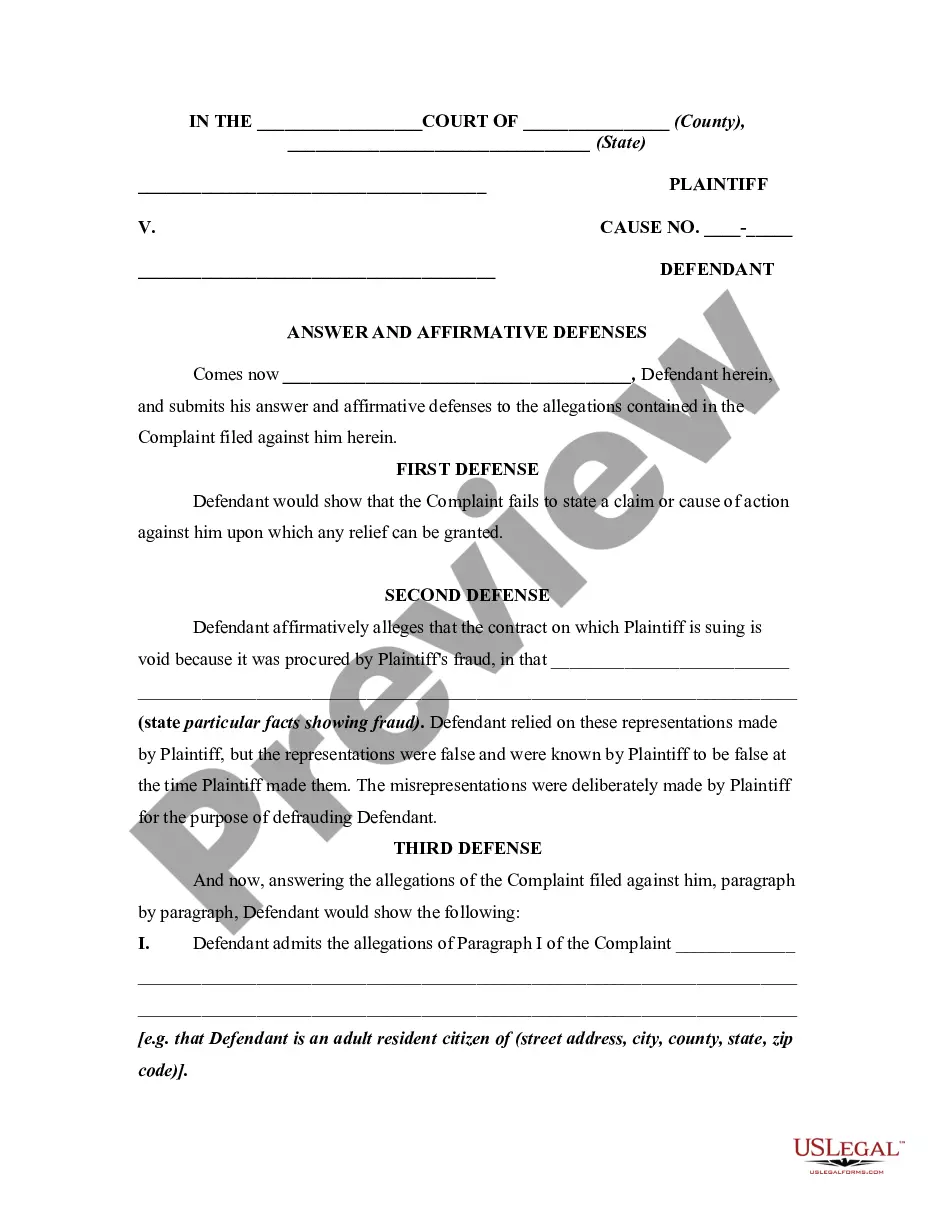
Get your form ready online
Our built-in tools help you complete, sign, share, and store your documents in one place.
Make edits, fill in missing information, and update formatting in US Legal Forms—just like you would in MS Word.
Download a copy, print it, send it by email, or mail it via USPS—whatever works best for your next step.
Sign and collect signatures with our SignNow integration. Send to multiple recipients, set reminders, and more. Go Premium to unlock E-Sign.
If this form requires notarization, complete it online through a secure video call—no need to meet a notary in person or wait for an appointment.
We protect your documents and personal data by following strict security and privacy standards.

Make edits, fill in missing information, and update formatting in US Legal Forms—just like you would in MS Word.

Download a copy, print it, send it by email, or mail it via USPS—whatever works best for your next step.

Sign and collect signatures with our SignNow integration. Send to multiple recipients, set reminders, and more. Go Premium to unlock E-Sign.

If this form requires notarization, complete it online through a secure video call—no need to meet a notary in person or wait for an appointment.

We protect your documents and personal data by following strict security and privacy standards.
Looking for another form?






How to fill out Answer By Defendant In A Civil Lawsuit Alleging The Affirmative Defense Of The Cause Of Action Being Barred By Waiver Of Terms Of Contract By Plaintiff?
Locating a reliable source for the most up-to-date and pertinent legal samples is a significant part of navigating bureaucracy. Identifying the appropriate legal documents requires exactness and meticulousness, which is why it is essential to source Affirmative Defense Terms For Assault exclusively from credible providers, like US Legal Forms. An incorrect template will squander your time and delay your current situation. With US Legal Forms, you can have peace of mind. You can access and verify all details regarding the document’s applicability and significance for your issue and within your state or region.
Consider the following actions to finish your Affirmative Defense Terms For Assault.
Eliminate the stress that comes with your legal documentation. Explore the comprehensive US Legal Forms repository to discover legal samples, assess their applicability to your case, and download them immediately.
- Utilize the catalog navigation or search option to find your template.
- Review the form’s details to confirm it meets the criteria of your state and locality.
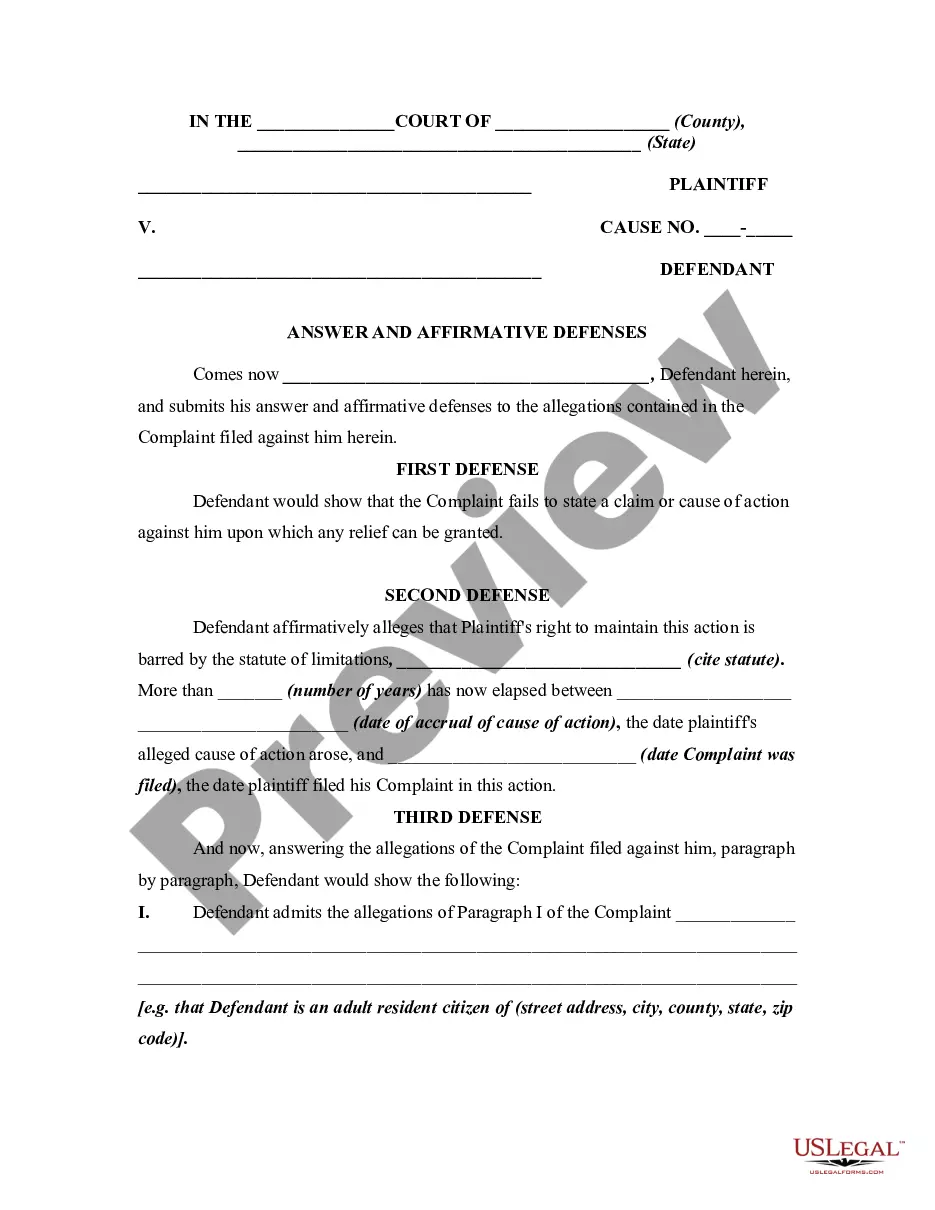
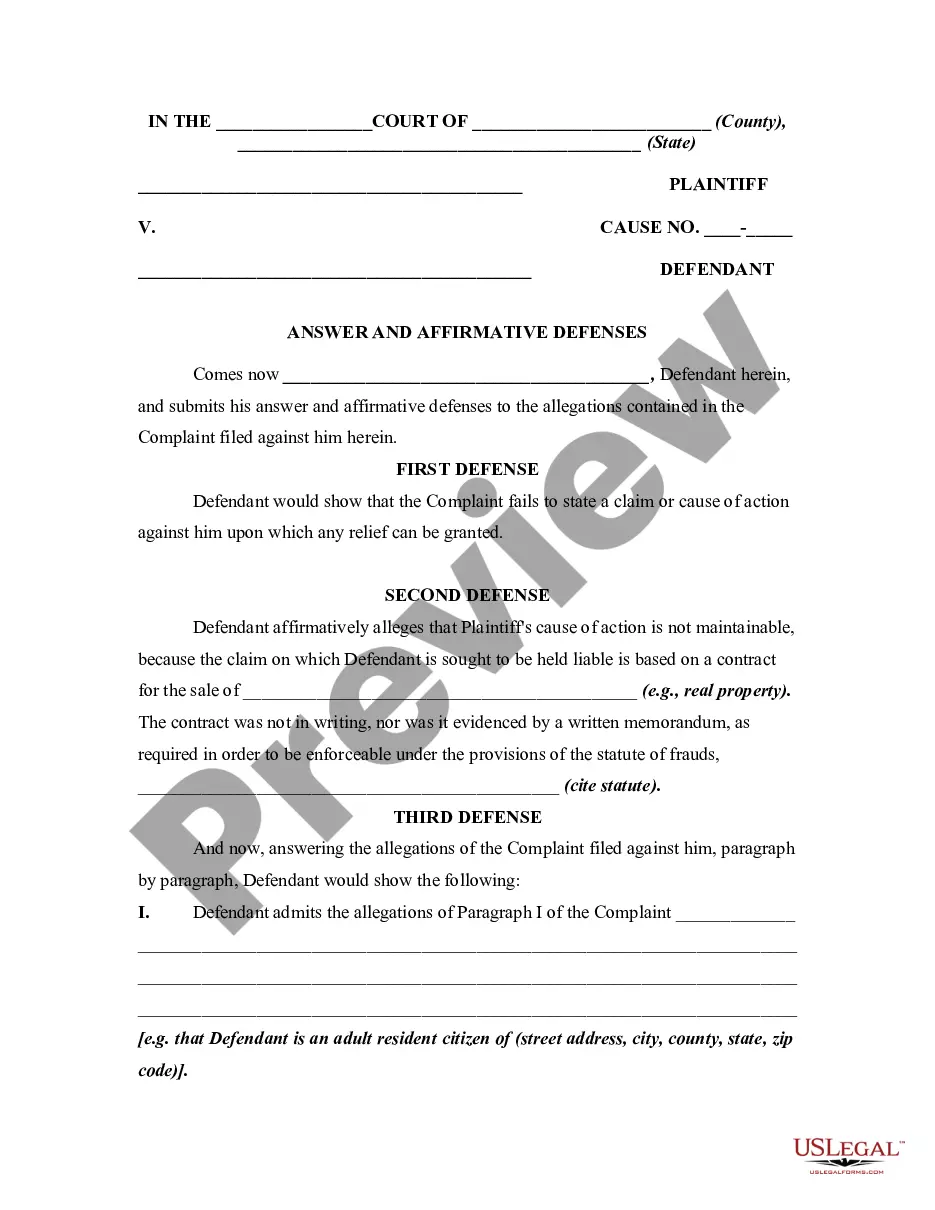
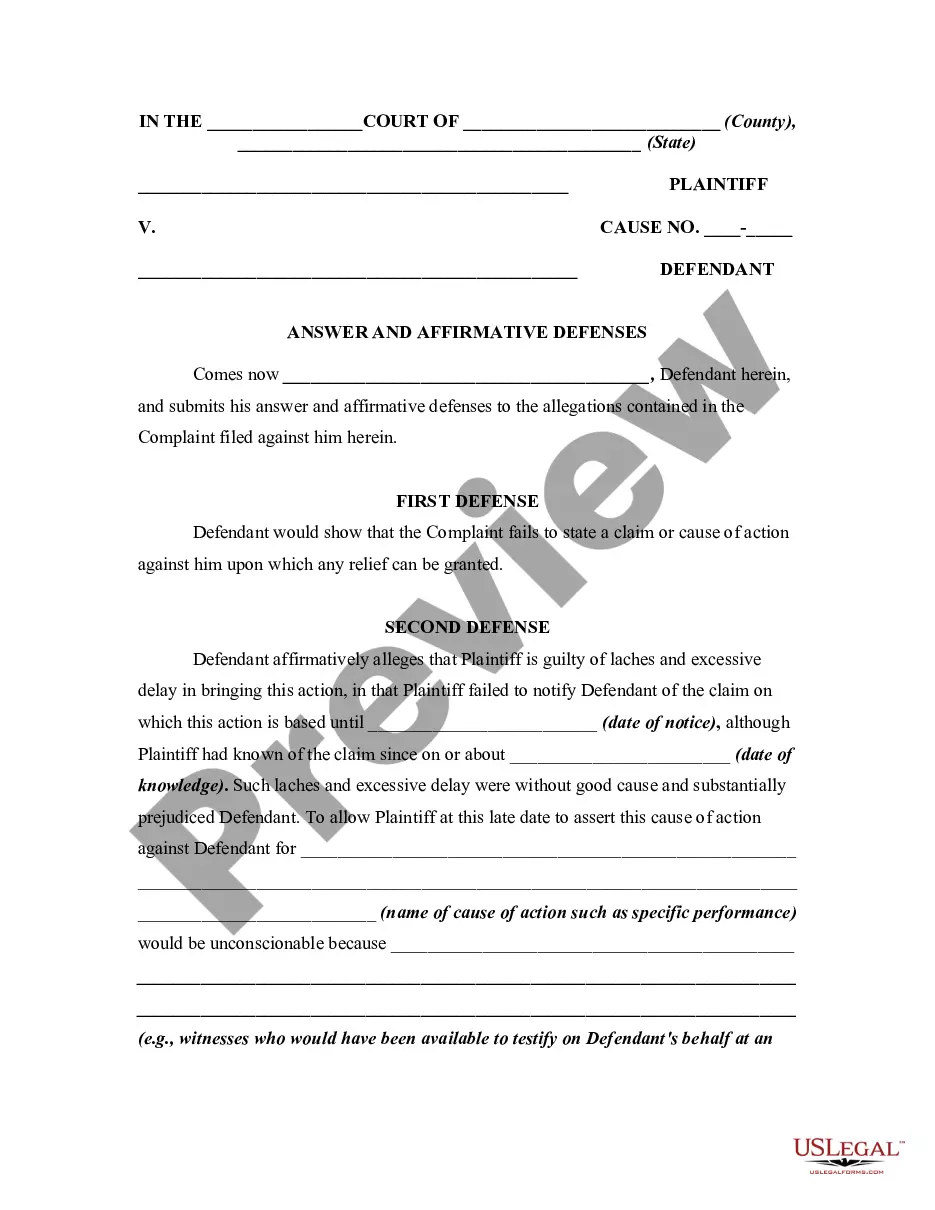
- Examine the form preview, if available, to ensure it is indeed the document you need.
- Return to the search to find the correct template if the Affirmative Defense Terms For Assault does not suit your specifications.
- Once you are confident about the form’s relevance, download it.
- If you are a registered user, click Log in to verify your identity and access your chosen forms in My documents.
- If you have not created an account, click Buy now to acquire the form.
- Select the pricing option that suits your requirements.
- Complete the registration to finalize your acquisition.
- Conclude your transaction by choosing a payment method (credit card or PayPal).
- Choose the document format for downloading Affirmative Defense Terms For Assault.
- After obtaining the form on your device, you may modify it with the editor or print it and fill it out manually.
Form popularity
FAQ
Asserting an Affirmative Defense: An Example First, find the elements of the defense you want to assert. Statutes and appellate cases are good resources for this. Then, state any facts in your own case that make up the elements of that defense.
When arguing an affirmative defense, a defendant must meet the ?preponderance of the evidence? burden of proof ? a much lower standard. Subsequently, the burden of proof shifts back to the prosecution who must disprove the affirmative defense raised beyond a reasonable doubt.
In the vast majority of cases, the defendant/respondent bears the burden of proof regarding the claimed affirmative defense.
Examples of affirmative defenses include: Contributory negligence, which reduces a defendant's civil liability when the plaintiff's own negligence contributed to the plaintiff's injury. Statute of limitations, which prevents a party from prosecuting a claim after the limitations period has expired.
Affirmative defense?Examples On [Date], after making the contract and the alleged breach, and before this action was commenced, defendant paid to the plaintiff the sum of [specify amount], which was accepted by the plaintiff in full satisfaction and discharge of the damages claimed in the petition.