Civil Action Lawsuit For Credit Card Debt
Description
Get your form ready online
Our built-in tools help you complete, sign, share, and store your documents in one place.
Make edits, fill in missing information, and update formatting in US Legal Forms—just like you would in MS Word.
Download a copy, print it, send it by email, or mail it via USPS—whatever works best for your next step.
Sign and collect signatures with our SignNow integration. Send to multiple recipients, set reminders, and more. Go Premium to unlock E-Sign.
If this form requires notarization, complete it online through a secure video call—no need to meet a notary in person or wait for an appointment.
We protect your documents and personal data by following strict security and privacy standards.

Make edits, fill in missing information, and update formatting in US Legal Forms—just like you would in MS Word.

Download a copy, print it, send it by email, or mail it via USPS—whatever works best for your next step.

Sign and collect signatures with our SignNow integration. Send to multiple recipients, set reminders, and more. Go Premium to unlock E-Sign.

If this form requires notarization, complete it online through a secure video call—no need to meet a notary in person or wait for an appointment.

We protect your documents and personal data by following strict security and privacy standards.
Looking for another form?
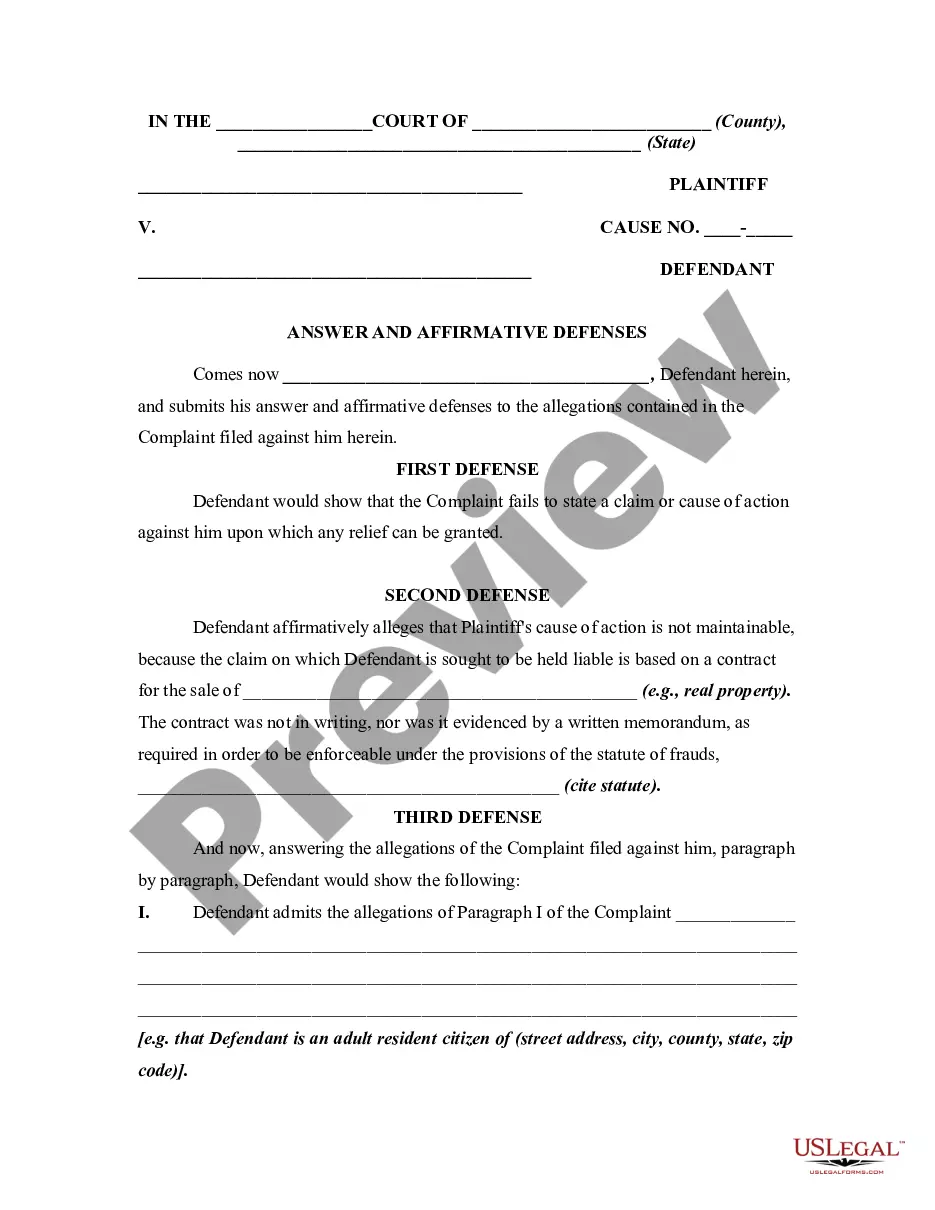
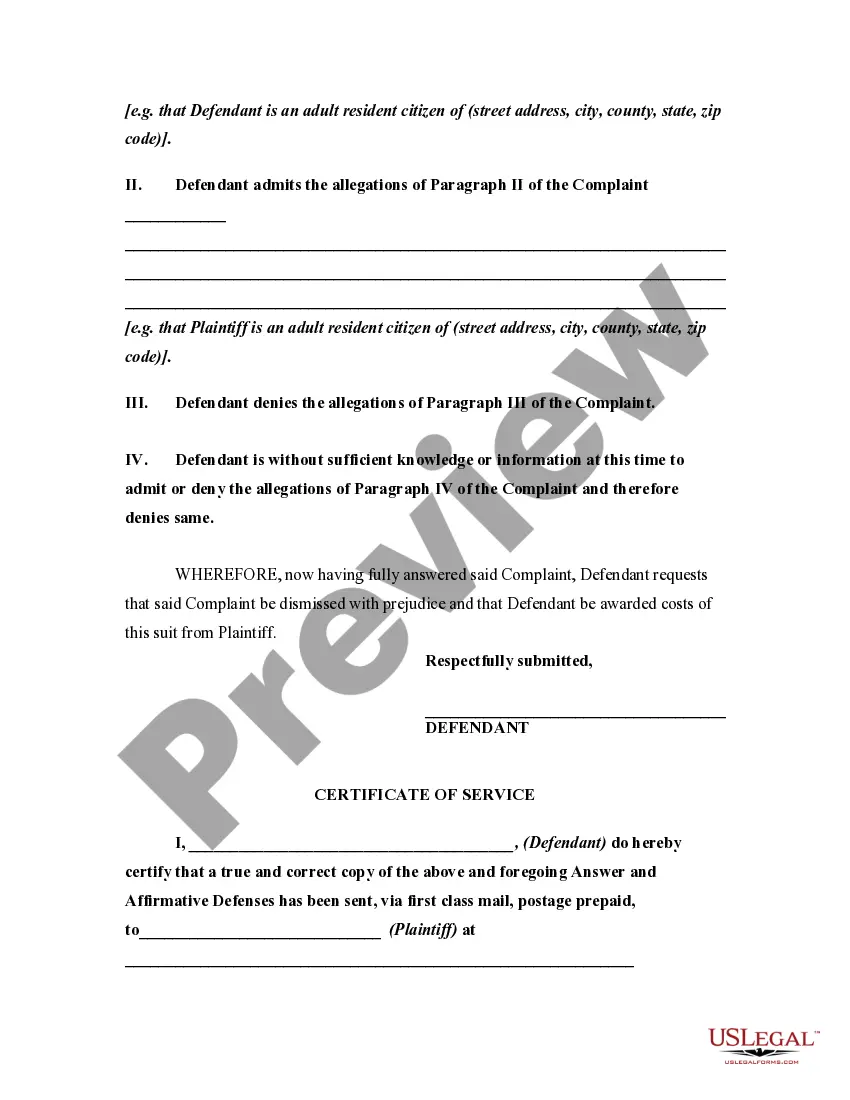
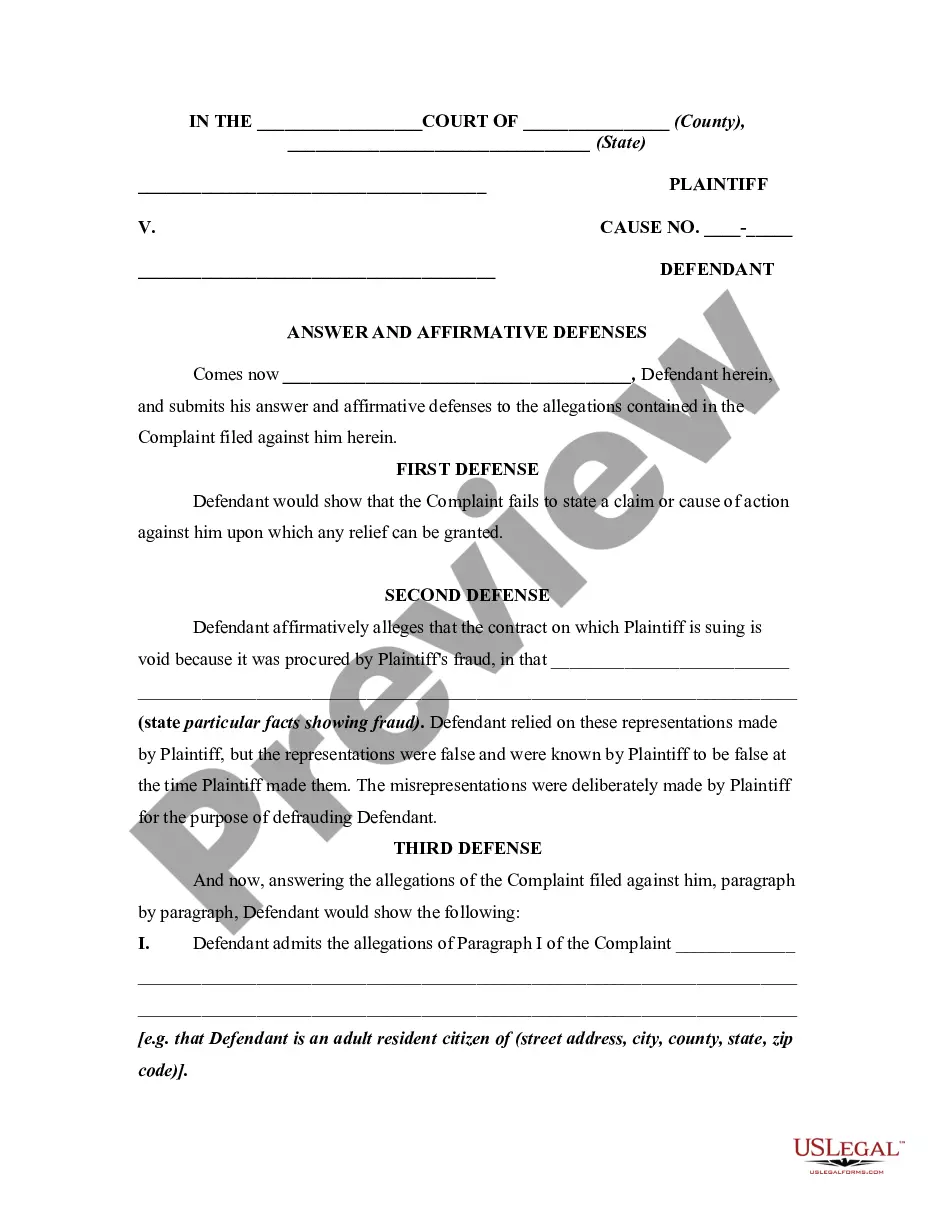
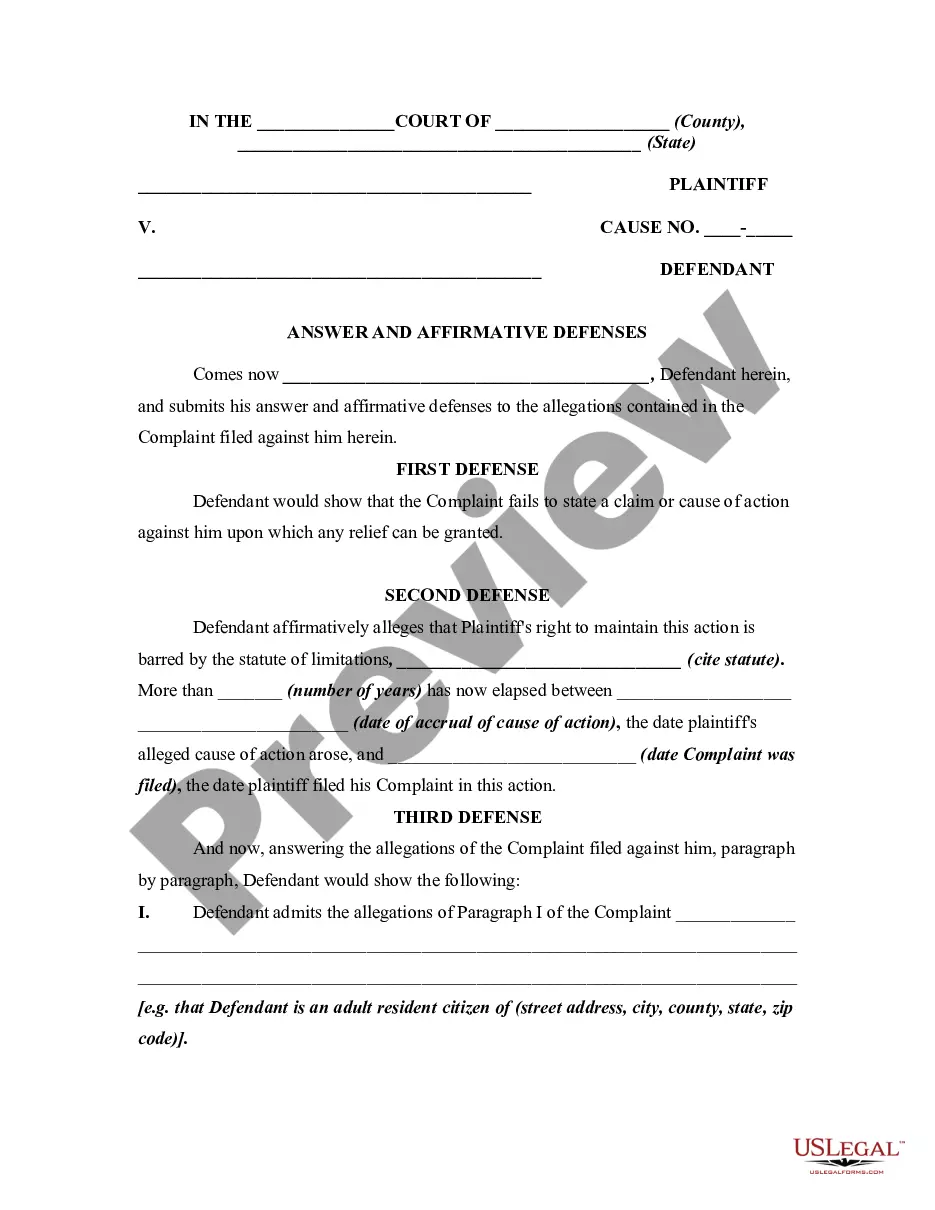
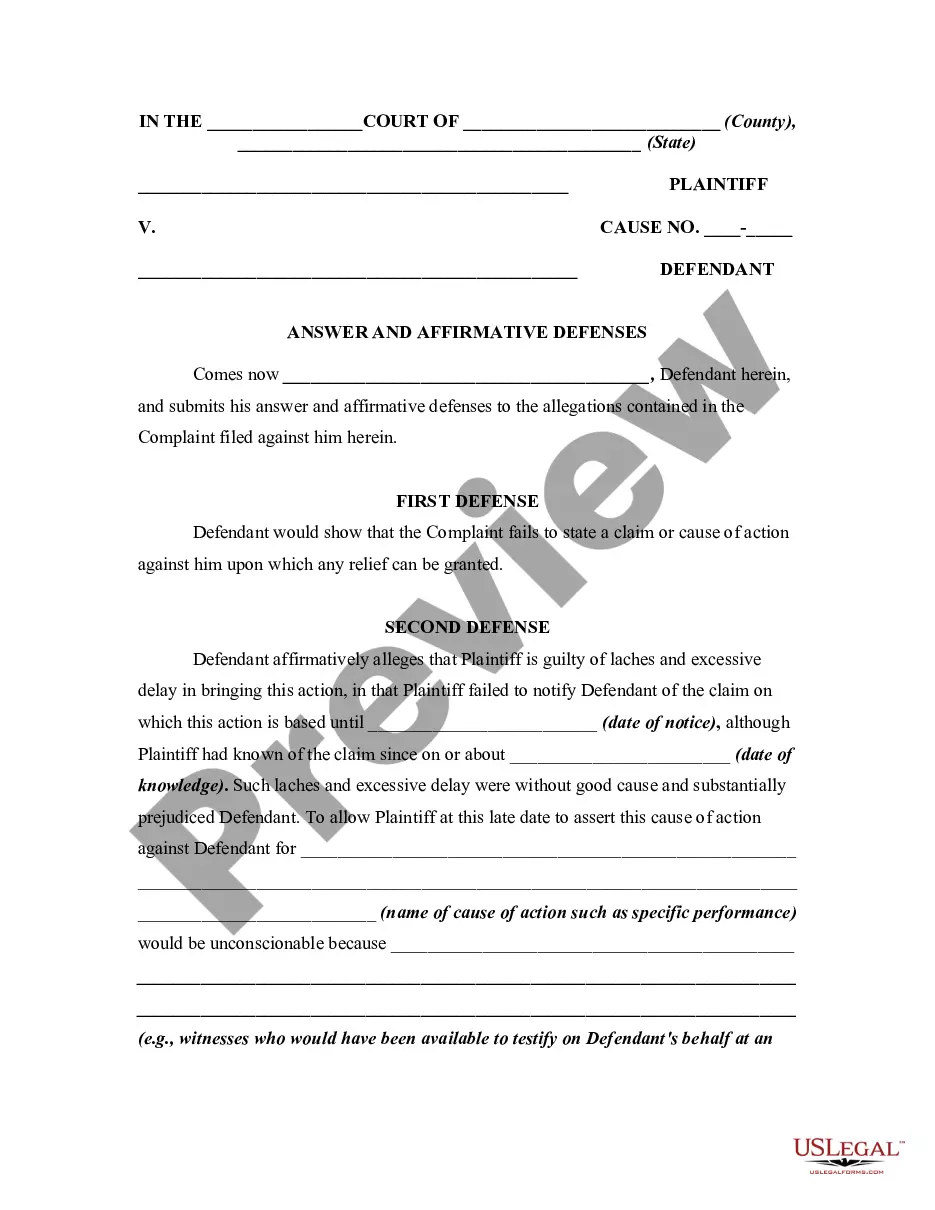
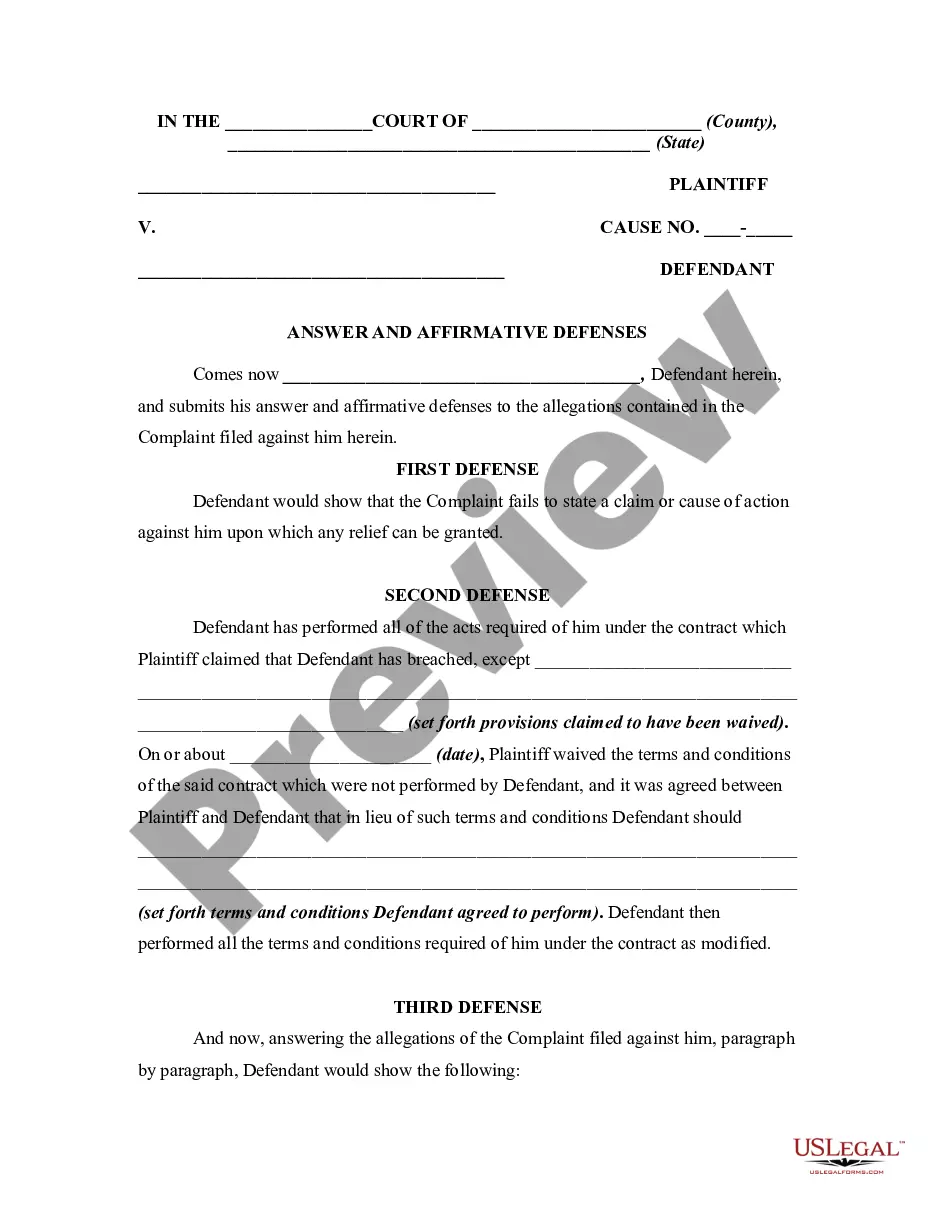
How to fill out Answer By Defendant In A Civil Lawsuit Alleging The Affirmative Defense Of The Cause Of Action Being Barred By The Appropriate Statute Of Frauds?
- If you're a returning user, log in to your account and access the document you need by clicking the Download button. Ensure your subscription is active; renew if required.
- For first-time users, begin by checking the Preview mode and form description. Confirm that the selected document aligns with your legal needs and jurisdiction.
- Should you find discrepancies, utilize the Search feature to locate the appropriate template that fits your criteria before proceeding.
- Purchase the necessary document by clicking the Buy Now button and selecting your desired subscription plan. You will need to create an account to utilize the full library.
- Complete your transaction by entering your credit card information or using your PayPal account for payment.
- Finally, download your form and save it to your device. You can also revisit it anytime in the My Forms section of your profile.
By utilizing US Legal Forms, you can benefit from a comprehensive collection of legal forms that exceeds offerings from competitors while also gaining access to premium experts for any assistance you may need.
Start your journey now by visiting US Legal Forms and gain control over your legal documentation today!
Form popularity
FAQ
Typically, a debt becomes uncollectible after a certain period, known as the statute of limitations, which varies by state. For a civil action lawsuit for credit card debt, this period usually ranges from three to six years, depending on your location. This timeline is crucial for determining your options and potential defenses against creditors. Consulting with legal experts or using platforms like US Legal Forms can provide insights tailored to your specific circumstances.
The 777 rule refers to specific regulations that limit how debt collectors can operate. In the context of a civil action lawsuit for credit card debt, understanding these rules can help you recognize what actions are permissible. Knowing your rights under this rule can empower you against aggressive collection tactics. Consider using resources like US Legal Forms to navigate your situation effectively.
Deciding whether to settle a debt or go to court in a civil action lawsuit for credit card debt depends on your circumstances. Settling can lead to a more manageable outcome and save time and legal fees. However, going to court may be necessary if you believe you have a strong defense. Always weigh your options carefully, and consider consulting resources from US Legal Forms for guidance.
Responding to a lawsuit for credit card debt requires prompt action. You should file an answer with the court within the stipulated time frame, which allows you to present your side of the case. In your response, clarify any inaccuracies and state any defenses you may have. US Legal Forms offers templates and resources to help you prepare an effective response.
Writing an answer to a civil action lawsuit for credit card debt involves responding to each claim made by the plaintiff. Start by clearly stating your name and the case number, then address each point in the complaint. It is important to provide a defense for any allegations you dispute and include any relevant facts. Using a platform like US Legal Forms can guide you through this process and ensure your answer meets legal requirements.
Defending against a credit card lawsuit requires a clear understanding of your rights and the legal process. You can challenge the validity of the debt, dispute incorrect information, or find errors in the lawsuit paperwork. Additionally, U.S. Legal Forms offers templates and guidance to help you craft a solid defense strategy tailored to a civil action lawsuit for credit card debt. Taking proactive steps can increase your chances of a favorable outcome in court.
The 777 rule is a guideline that helps individuals understand their rights when dealing with debt collectors. It mandates that collectors must provide verification of the debt within seven days of initial contact, and borrowers can dispute the debt within that timeframe. Understanding this rule can significantly impact how you approach a civil action lawsuit for credit card debt, as it ensures you are informed and prepared. If you believe your rights were violated, consider using the resources on the U.S. Legal Forms platform to navigate your situation effectively.