Afirmative Defense
Description
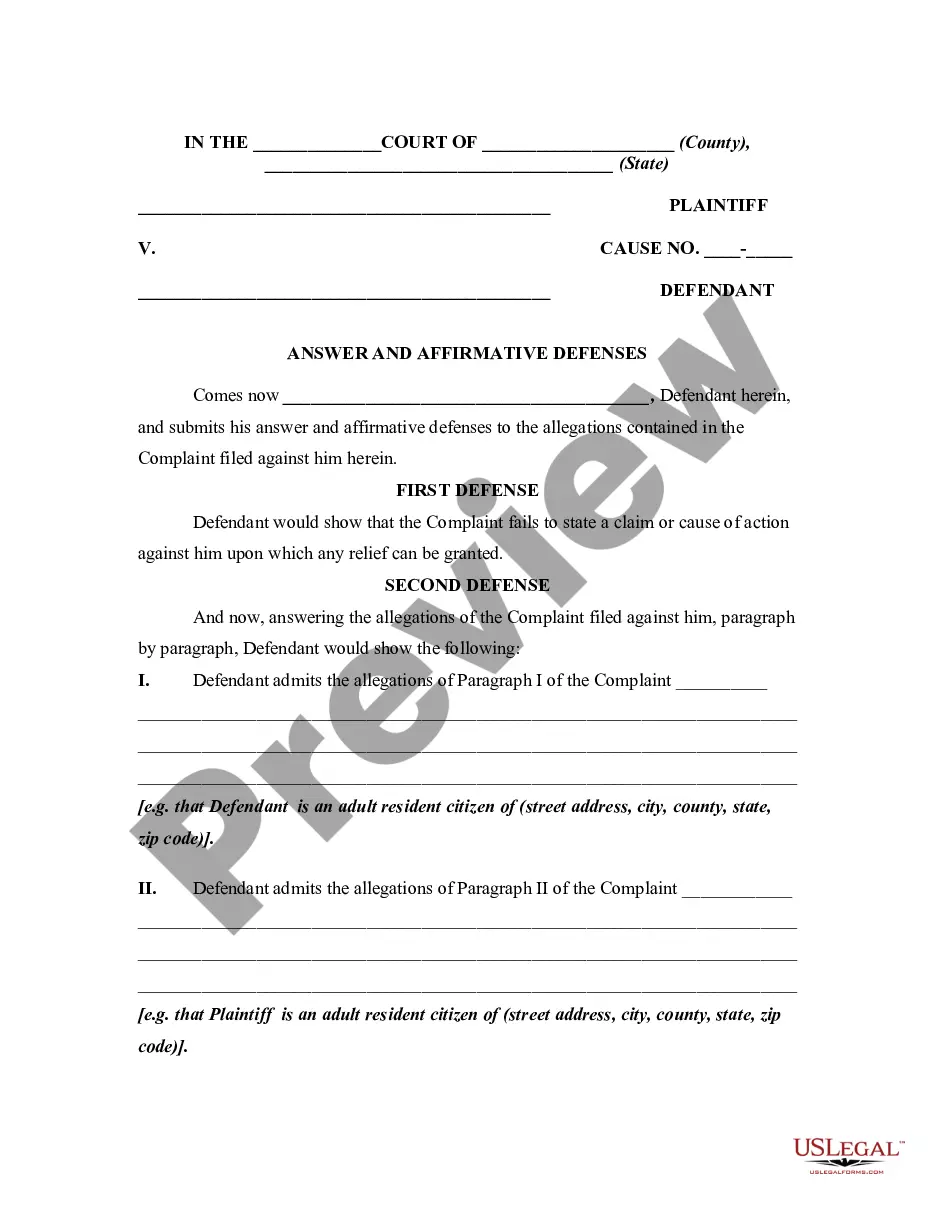
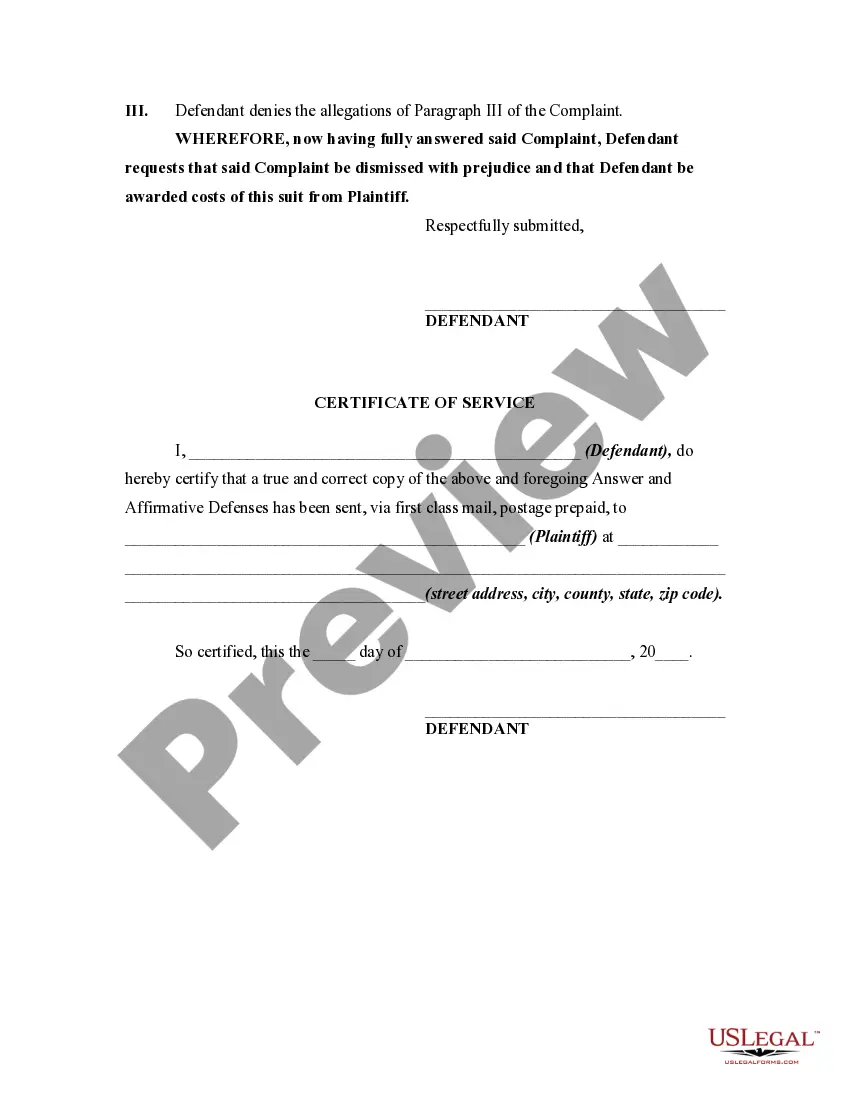
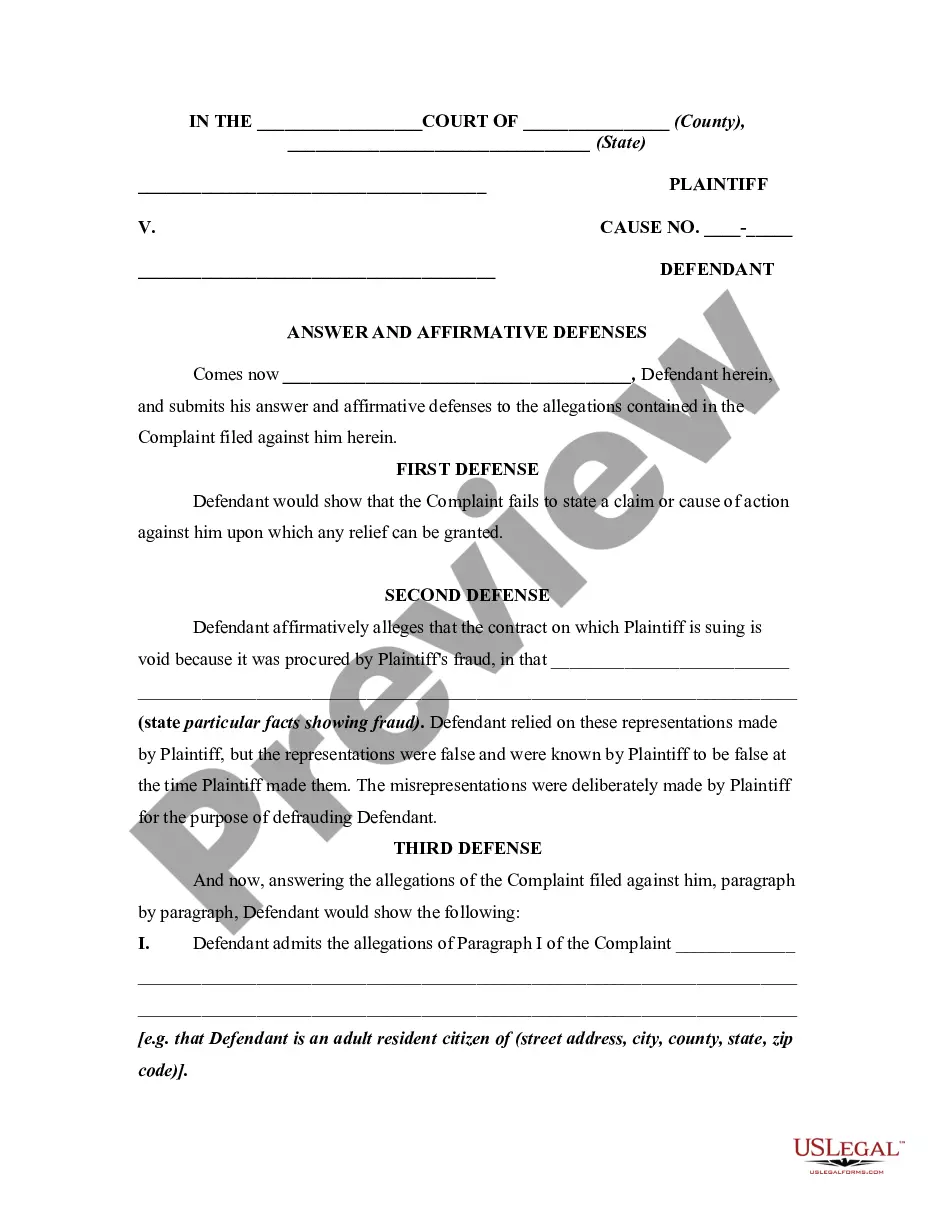
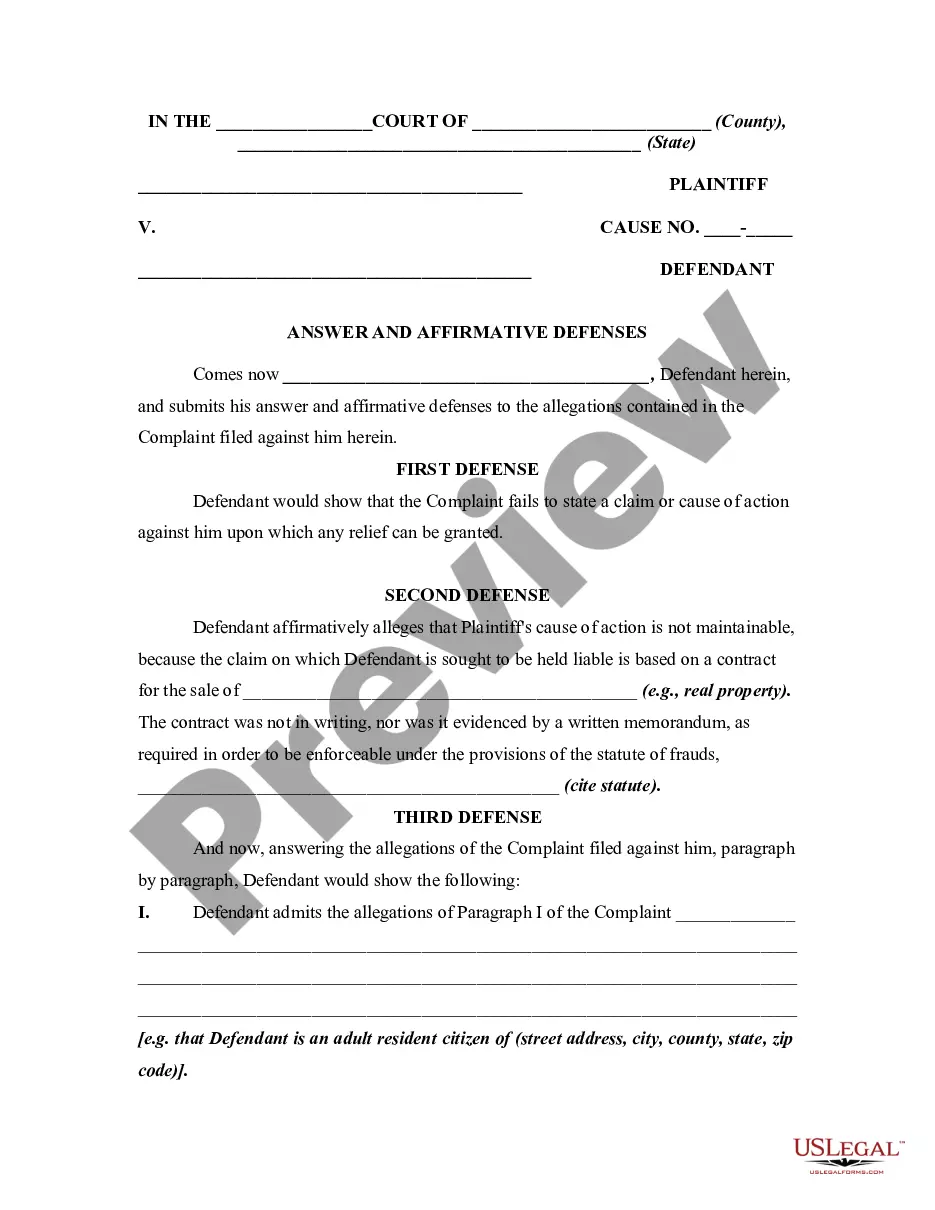
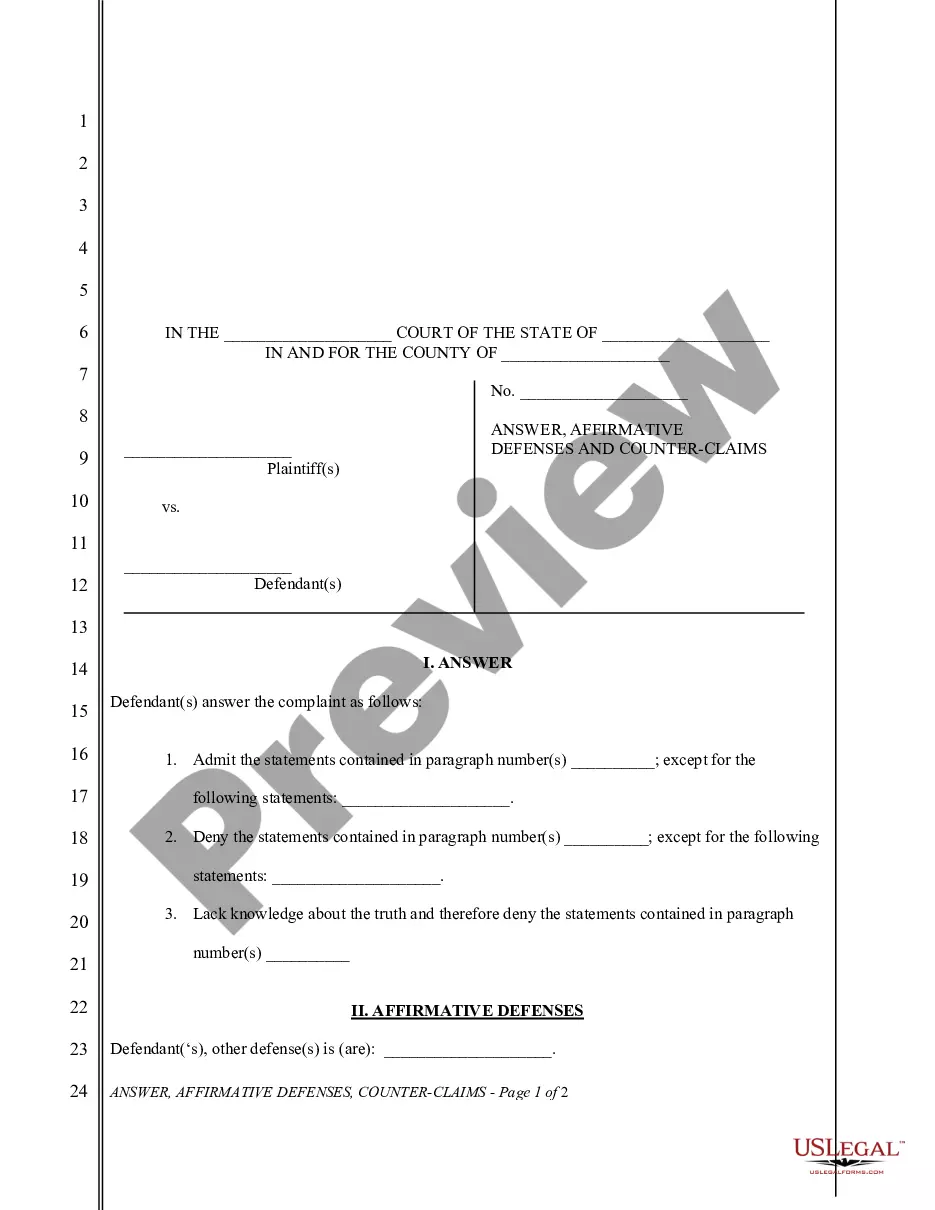
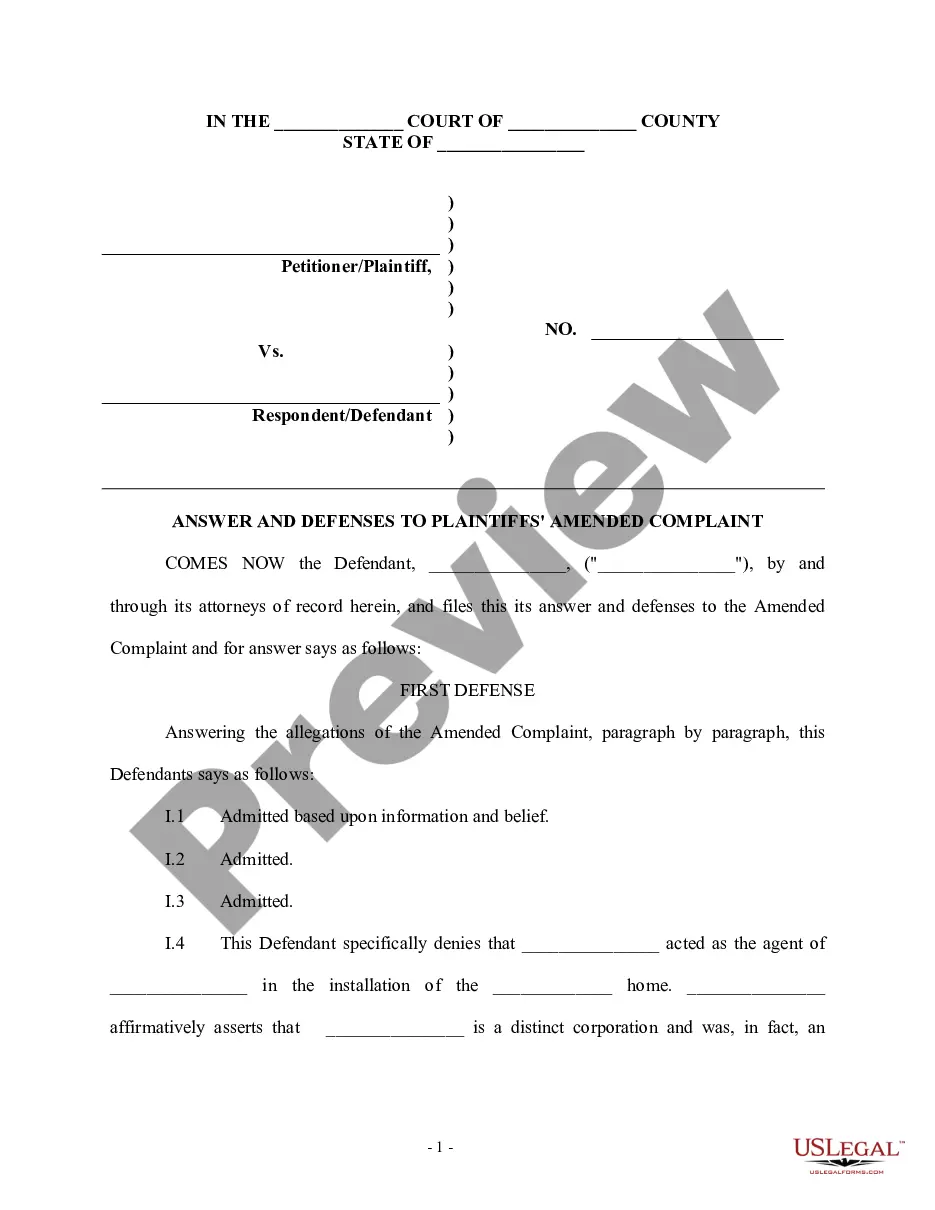
Get your form ready online
Our built-in tools help you complete, sign, share, and store your documents in one place.
Make edits, fill in missing information, and update formatting in US Legal Forms—just like you would in MS Word.
Download a copy, print it, send it by email, or mail it via USPS—whatever works best for your next step.
Sign and collect signatures with our SignNow integration. Send to multiple recipients, set reminders, and more. Go Premium to unlock E-Sign.
If this form requires notarization, complete it online through a secure video call—no need to meet a notary in person or wait for an appointment.
We protect your documents and personal data by following strict security and privacy standards.

Make edits, fill in missing information, and update formatting in US Legal Forms—just like you would in MS Word.

Download a copy, print it, send it by email, or mail it via USPS—whatever works best for your next step.

Sign and collect signatures with our SignNow integration. Send to multiple recipients, set reminders, and more. Go Premium to unlock E-Sign.

If this form requires notarization, complete it online through a secure video call—no need to meet a notary in person or wait for an appointment.

We protect your documents and personal data by following strict security and privacy standards.
Looking for another form?
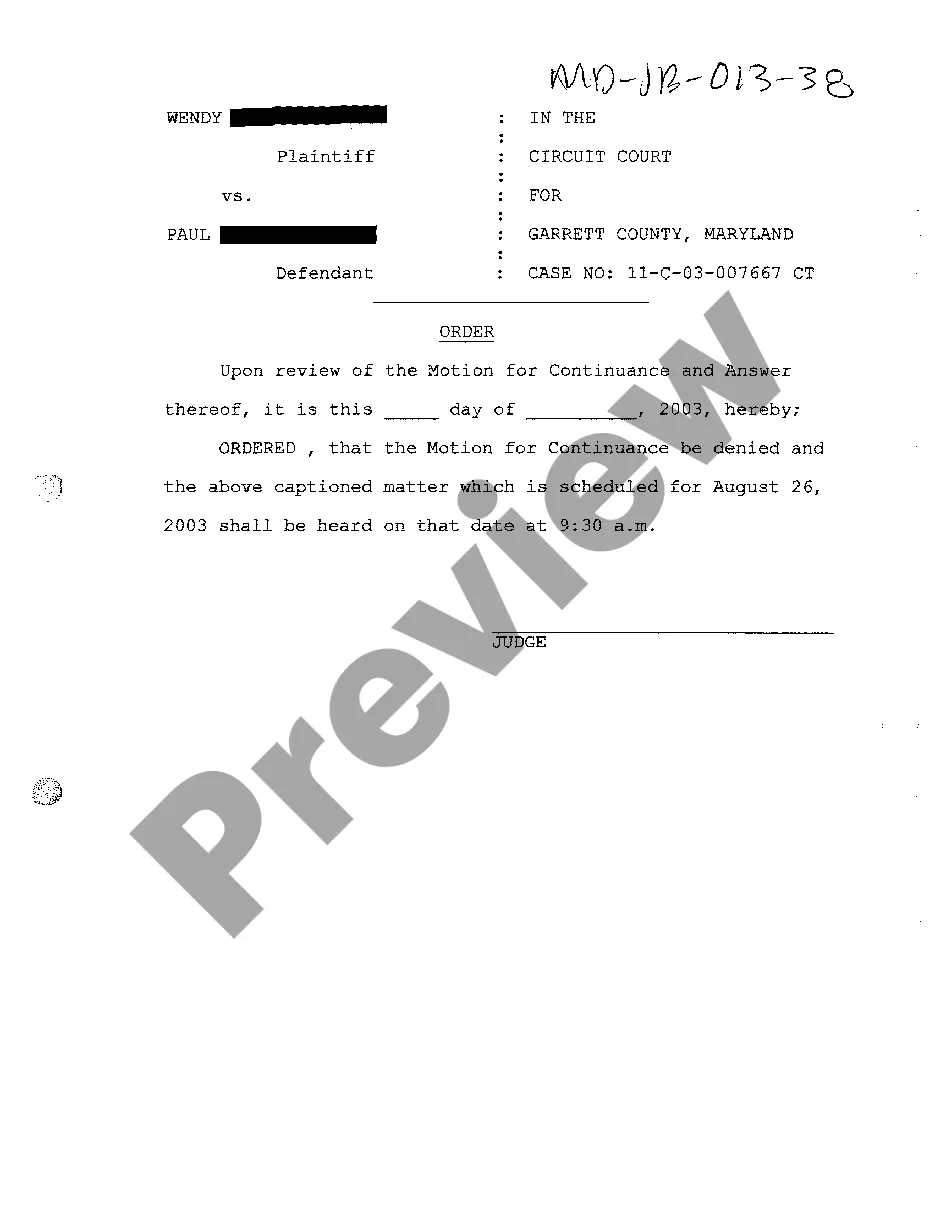

How to fill out General Form Of An Answer By Defendant In A Civil Lawsuit?
- Log into your account on the US Legal Forms website. If you haven’t registered yet, create an account to get started.
- Utilize the Preview mode to verify that your chosen form aligns with your needs and complies with your local laws.
- If the desired form is inconsistent or not fitting, use the Search tool to explore other templates.
- Once you find the correct template, click the Buy Now button and select your preferred subscription plan. Note that registration is necessary for access.
- Proceed to purchase by entering your payment details via credit card or PayPal.
- After completing your purchase, download the document and save it on your device. You can access it anytime in the My Forms section of your profile.
By following these straightforward steps, you can swiftly access the legal documents you need while ensuring they are credible and reliable.
Take control of your legal documentation today with US Legal Forms and experience the convenience of accessing expertly crafted legal templates!
Form popularity
FAQ
An example of an affirmative defense in law is self-defense, where a person asserts they acted to protect themselves from imminent harm. This defense can justify actions that would otherwise be unlawful. It highlights the balance of legal accountability and personal safety, effectively illustrating how affirmative defenses function in court.
An affirmative defense type of statute of limitations restricts the time period a person has to file a lawsuit. For example, if someone tries to sue for a contract breach after the designated three-year period, the defendant can claim this defense. Effectively, it bars the claim and emphasizes the importance of timeliness in legal matters.
Common affirmative defenses include consent, self-defense, assumption of risk, statute of limitations, and necessity. Each defense plays a significant role in legal proceedings. By understanding these concepts, individuals can better navigate their legal situations and explore options for their cases.
In the context of affirmative defense, the assumption of risk refers to the idea that a claimant cannot pursue legal action because they acknowledged the risks associated with their actions. This defense is crucial in personal injury cases. By proving that the claimant accepted the danger, defendants can avoid liability.
Assumption of risk occurs when a person voluntarily exposes themselves to a known danger. For instance, if someone chooses to participate in a contact sport, they understand the potential for injury. This concept serves as an affirmative defense in legal claims, where the defendant argues the plaintiff accepted the risk.
UsLegalForms offers resources and forms that can assist those facing affirmative defenses in court. The platform provides legal documents that outline various affirmative defenses, making it easier for you to navigate your case. By using UsLegalForms, you can ensure that you properly document and support your affirmative defense effectively.
For a claim to qualify as an affirmative defense, it must provide a valid legal reason that negates or reduces liability. Common examples include consent, justification, or an error in the law. Familiarizing yourself with what qualifies as an affirmative defense can help strengthen your position in litigation.
An affirmative defense is a legal reason that, if proven, can absolve a defendant from liability. This can include reasons such as self-defense, statute of limitations, or duress. Understanding what constitutes an affirmative defense is crucial, as these defenses can significantly alter the outcome of your case.
The standard of proof for an affirmative defense is generally 'preponderance of the evidence.' This means that you must show that your evidence is more convincing than the opposing evidence. If you succeed in meeting this standard, the court may rule in your favor based on your affirmative defense.
In a lawsuit, the party raising the affirmative defense typically bears the burden of proof. This means that if you assert an affirmative defense, it’s your responsibility to provide evidence supporting your claim. By doing this, you help establish the validity of your defense in court, potentially affecting the overall outcome of the case.