Remainder Living Trust Sample For Florida
Description
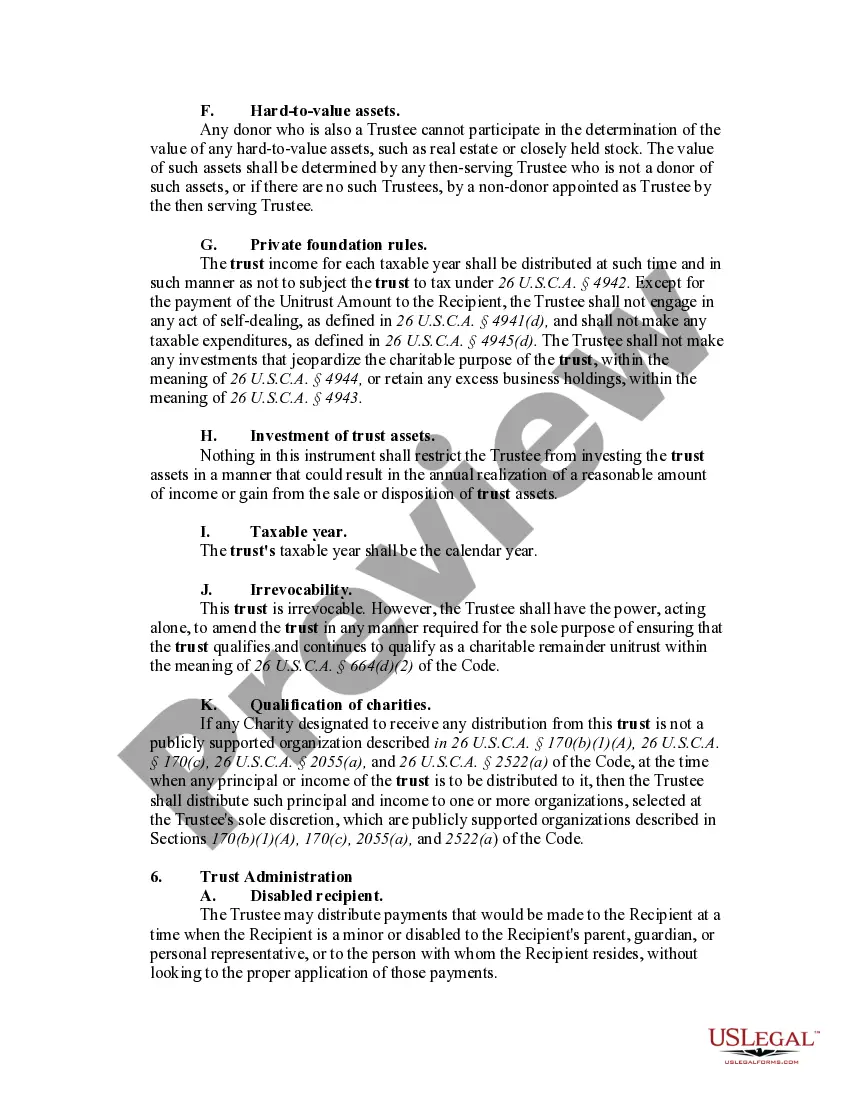
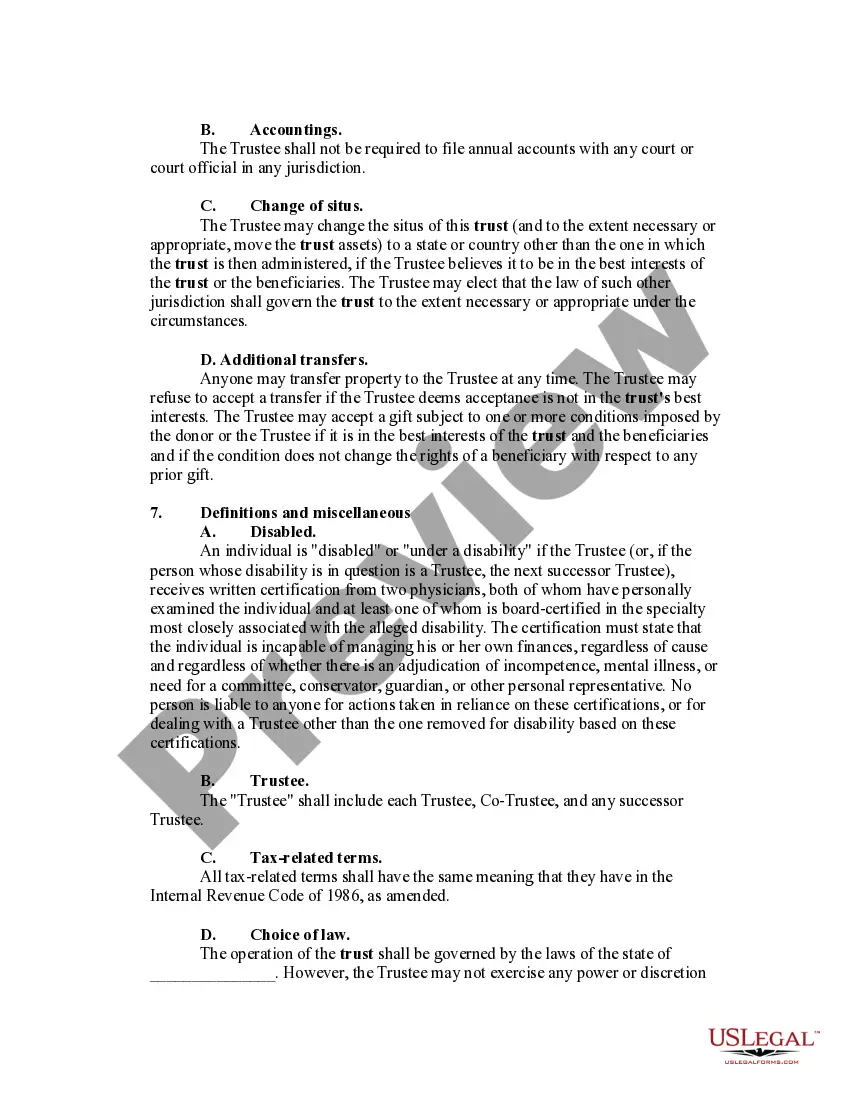
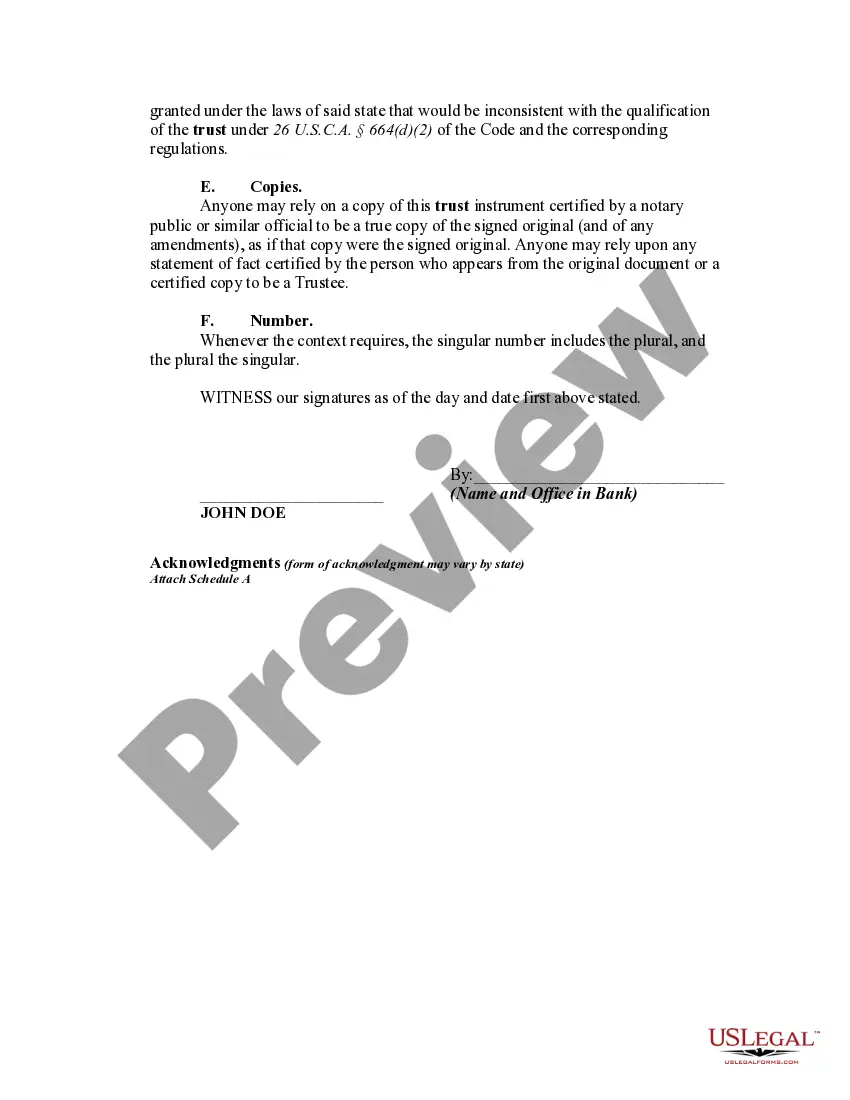
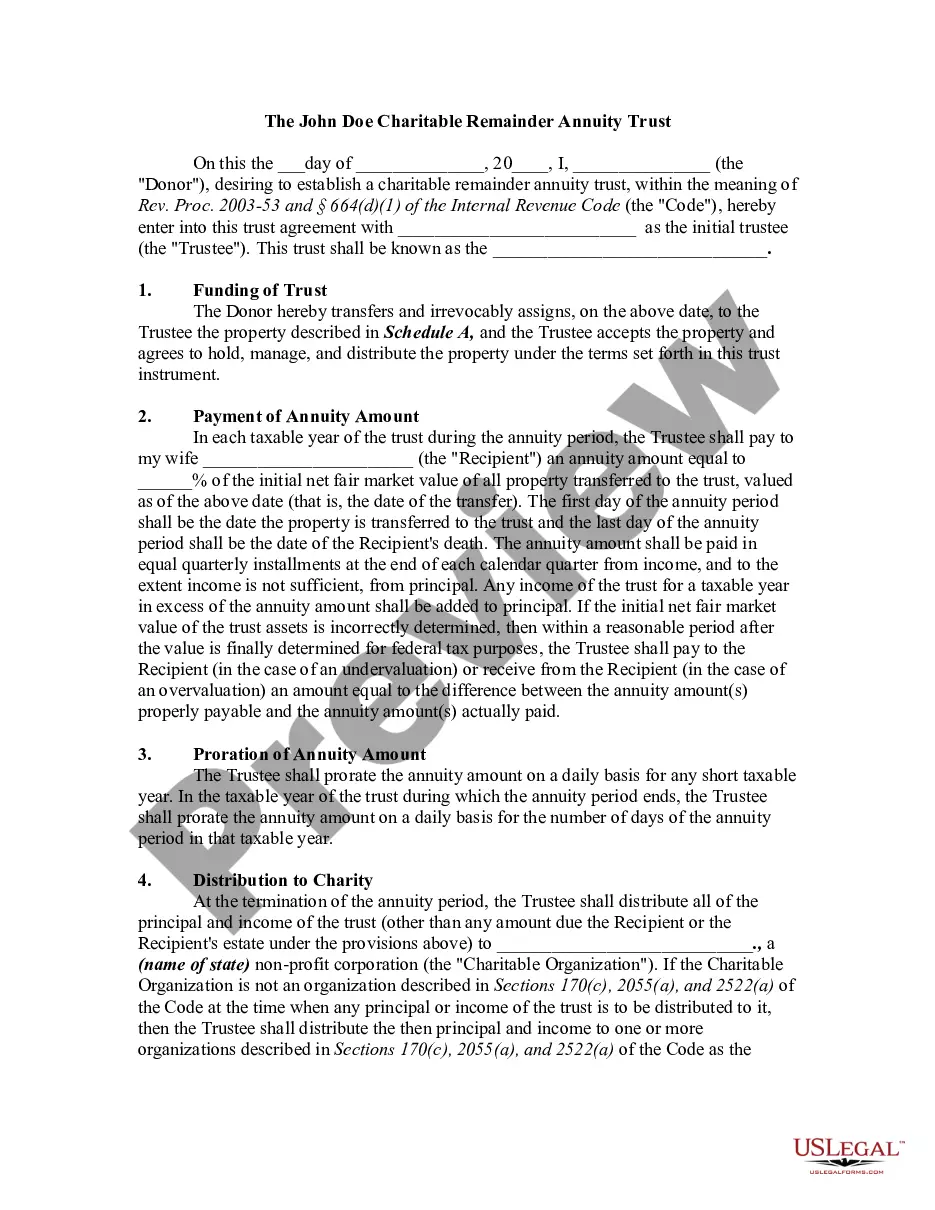
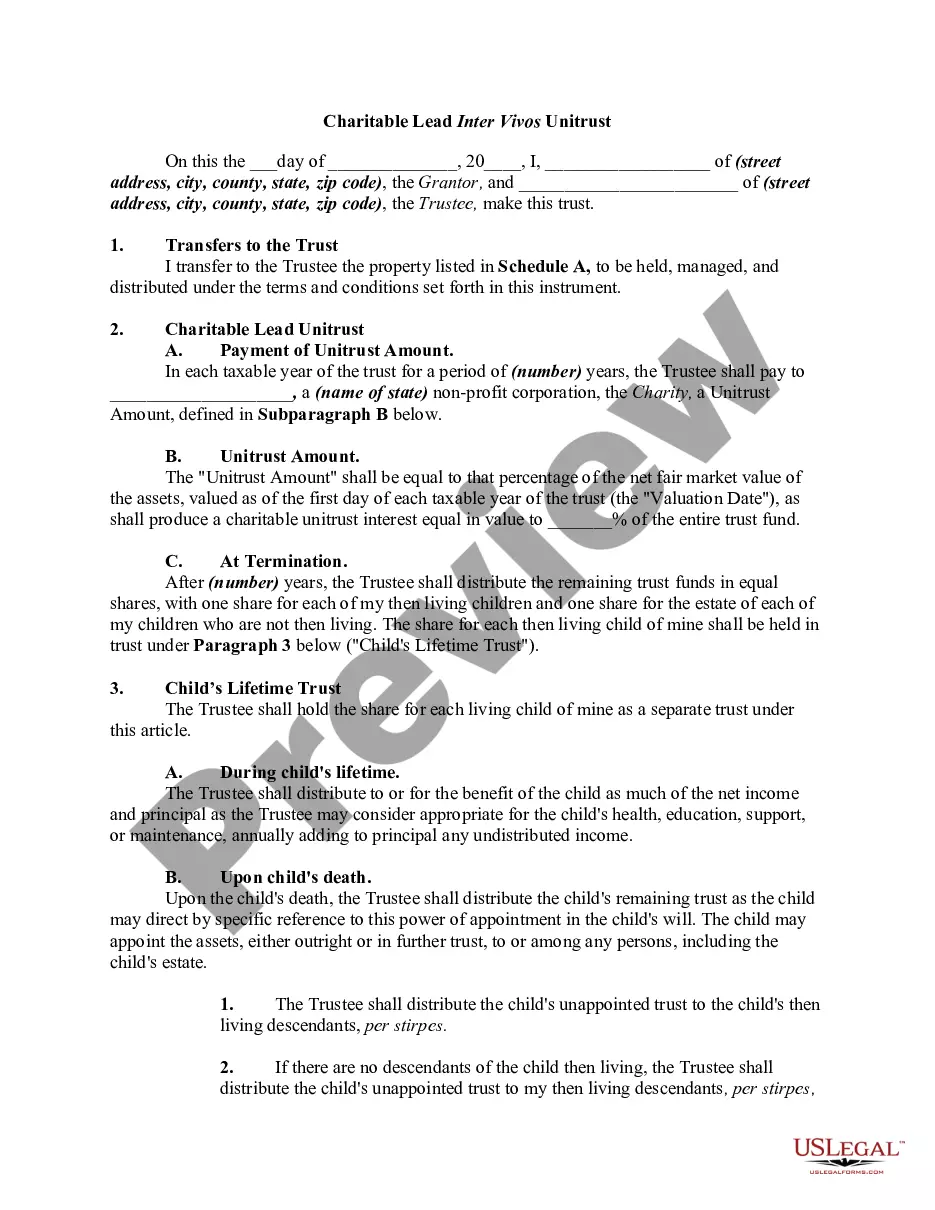
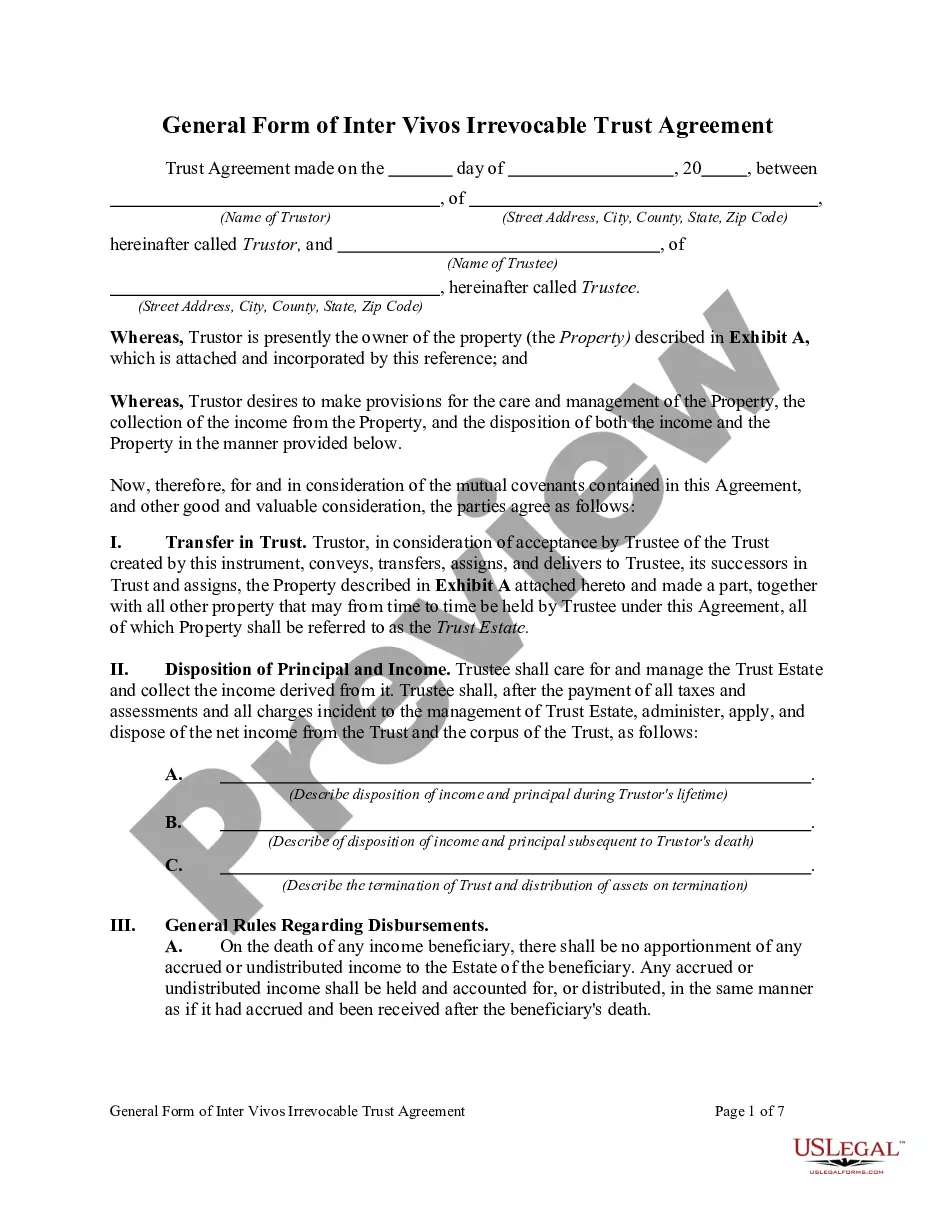
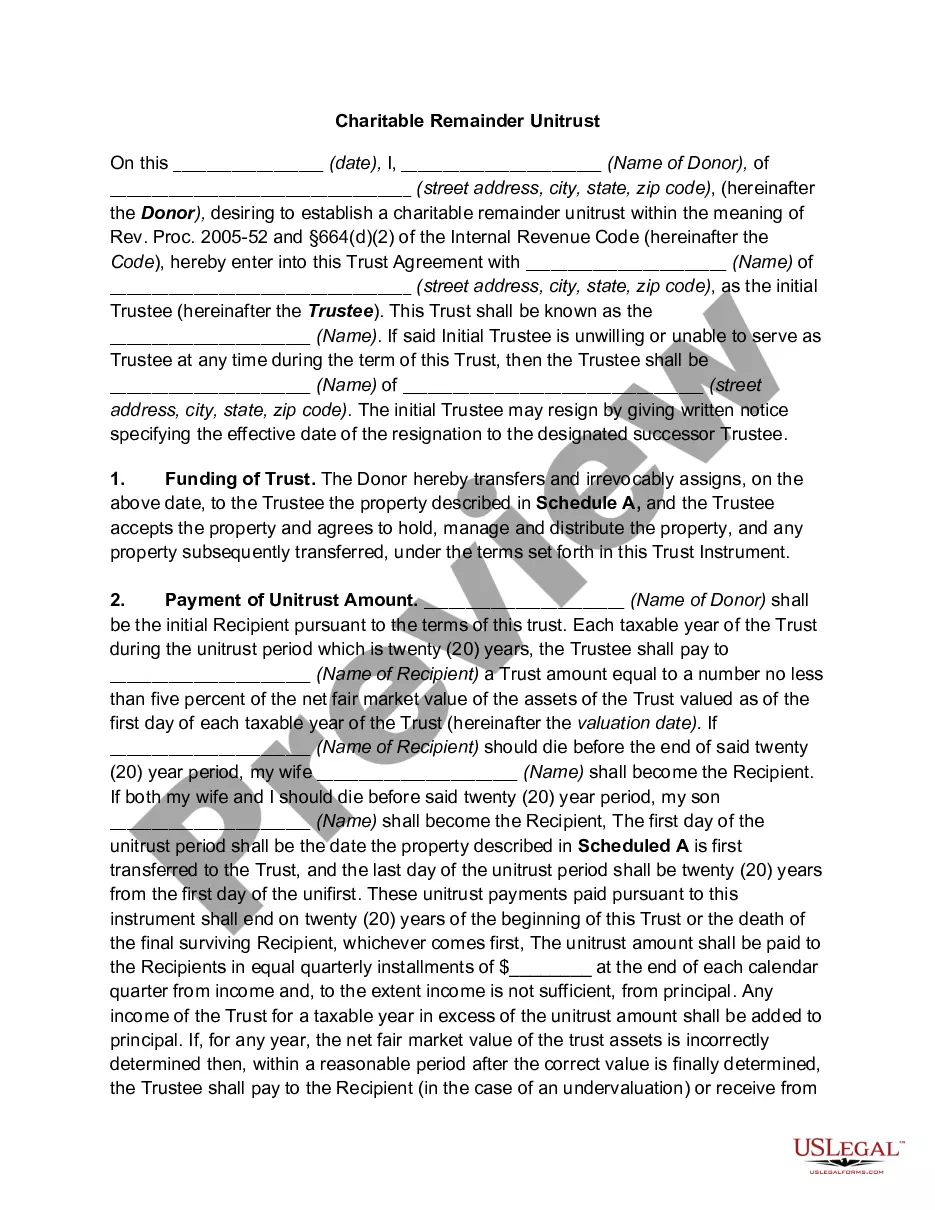
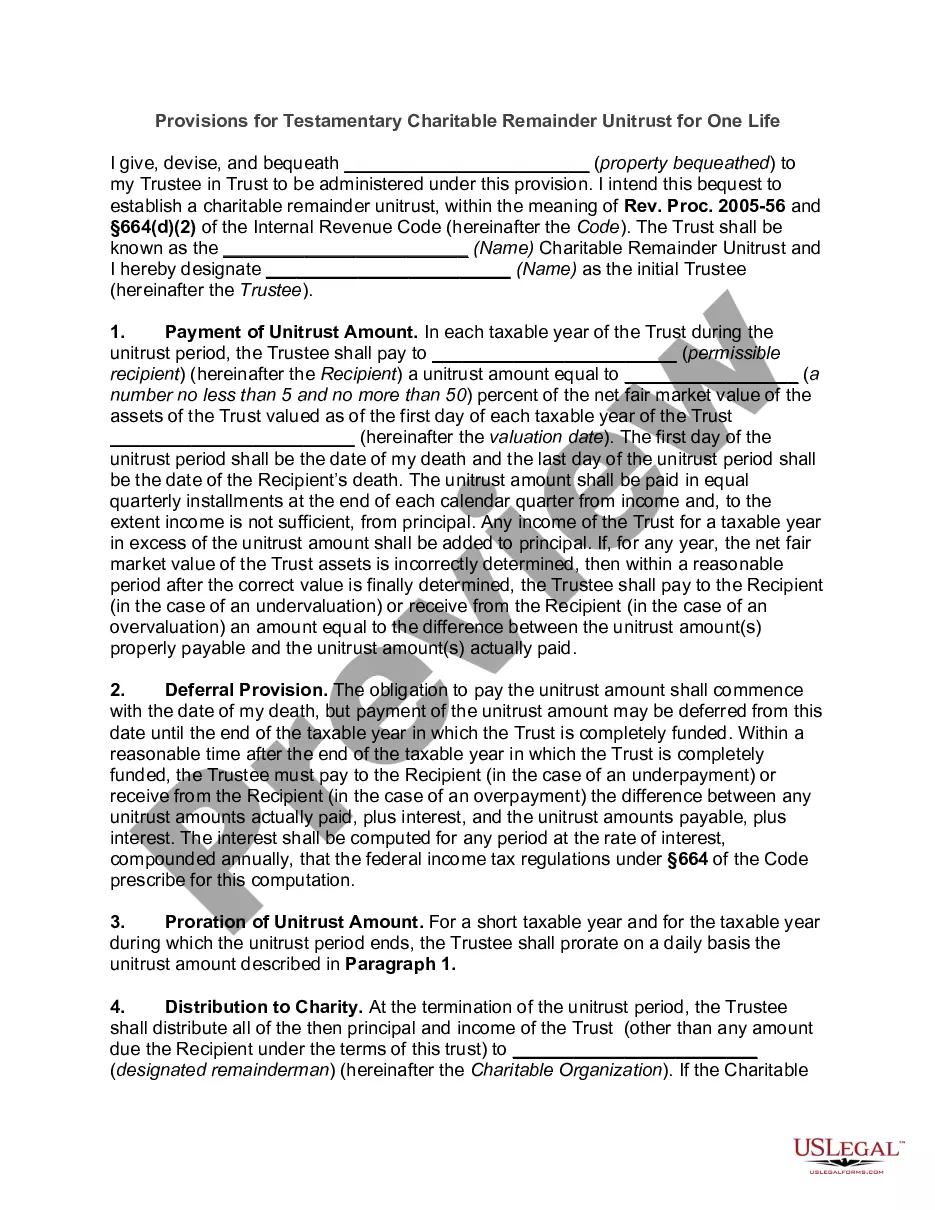
Get your form ready online
Our built-in tools help you complete, sign, share, and store your documents in one place.
Make edits, fill in missing information, and update formatting in US Legal Forms—just like you would in MS Word.
Download a copy, print it, send it by email, or mail it via USPS—whatever works best for your next step.
Sign and collect signatures with our SignNow integration. Send to multiple recipients, set reminders, and more. Go Premium to unlock E-Sign.
If this form requires notarization, complete it online through a secure video call—no need to meet a notary in person or wait for an appointment.
We protect your documents and personal data by following strict security and privacy standards.

Make edits, fill in missing information, and update formatting in US Legal Forms—just like you would in MS Word.

Download a copy, print it, send it by email, or mail it via USPS—whatever works best for your next step.

Sign and collect signatures with our SignNow integration. Send to multiple recipients, set reminders, and more. Go Premium to unlock E-Sign.

If this form requires notarization, complete it online through a secure video call—no need to meet a notary in person or wait for an appointment.

We protect your documents and personal data by following strict security and privacy standards.
Looking for another form?








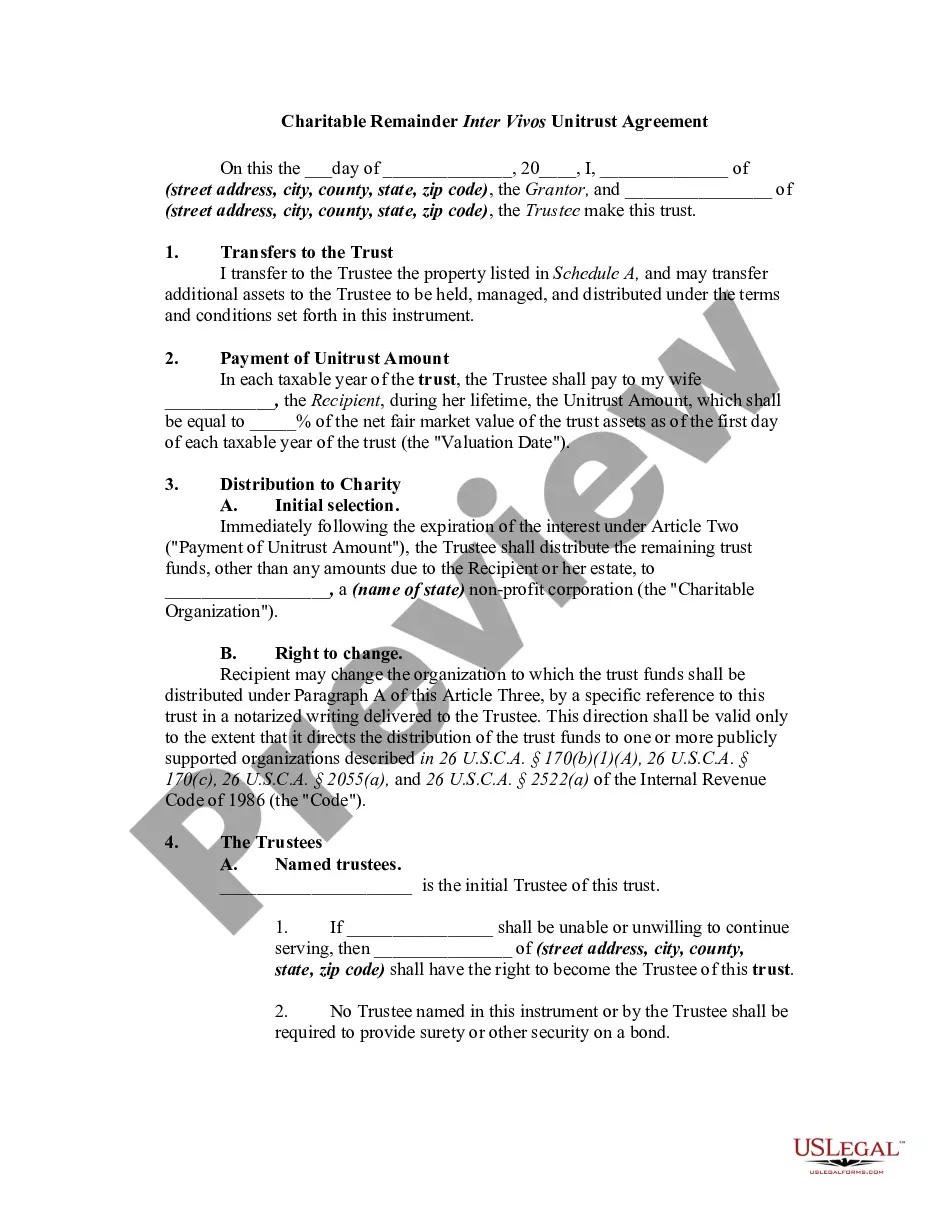
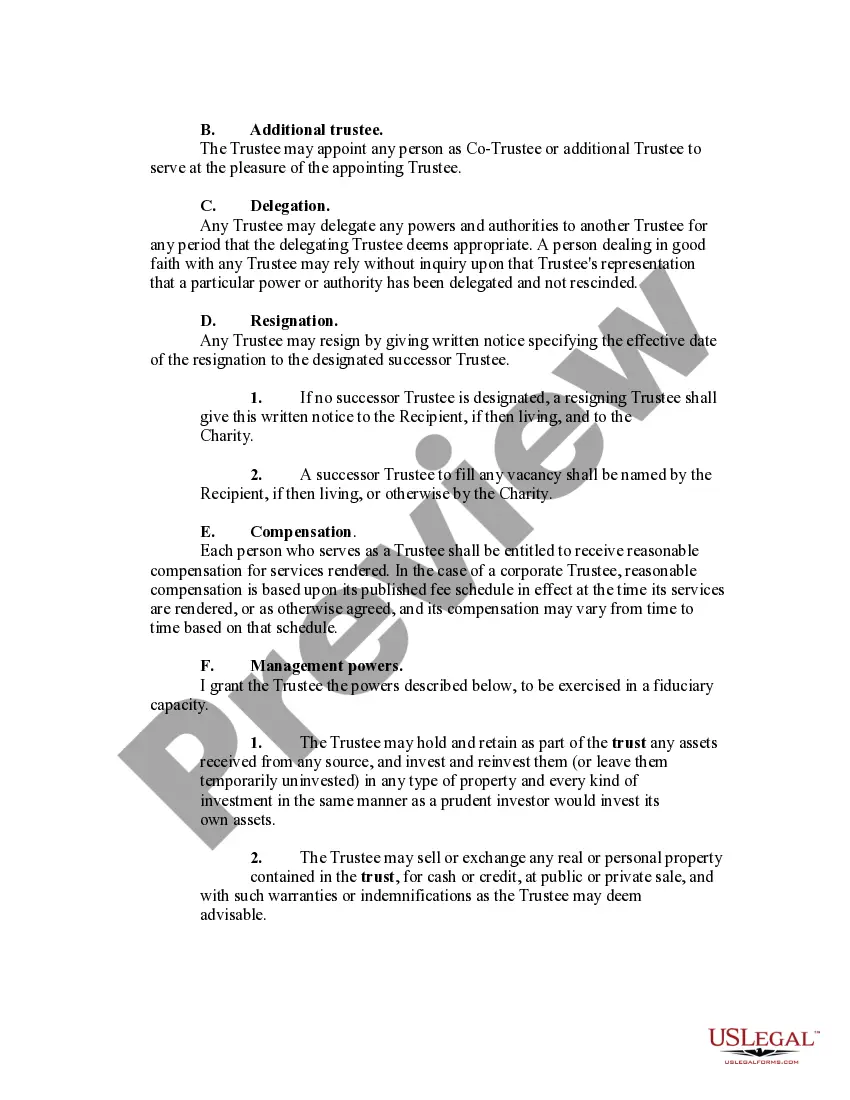
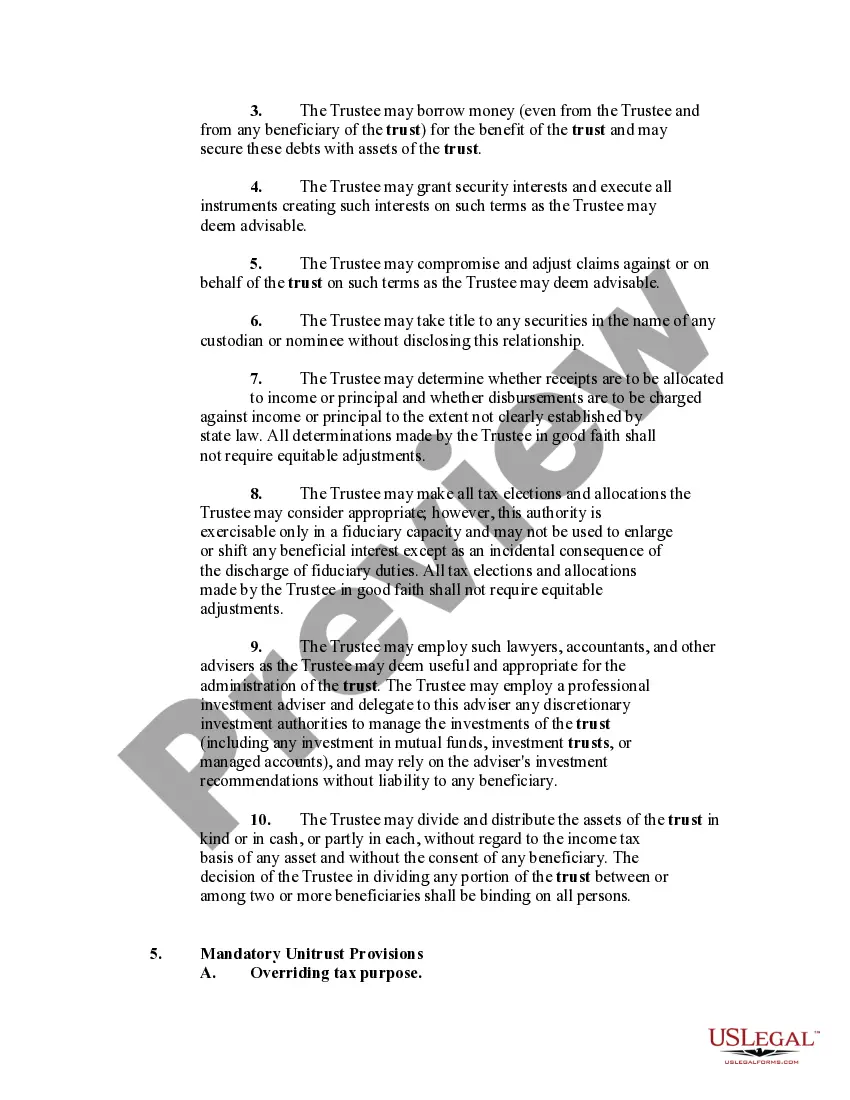
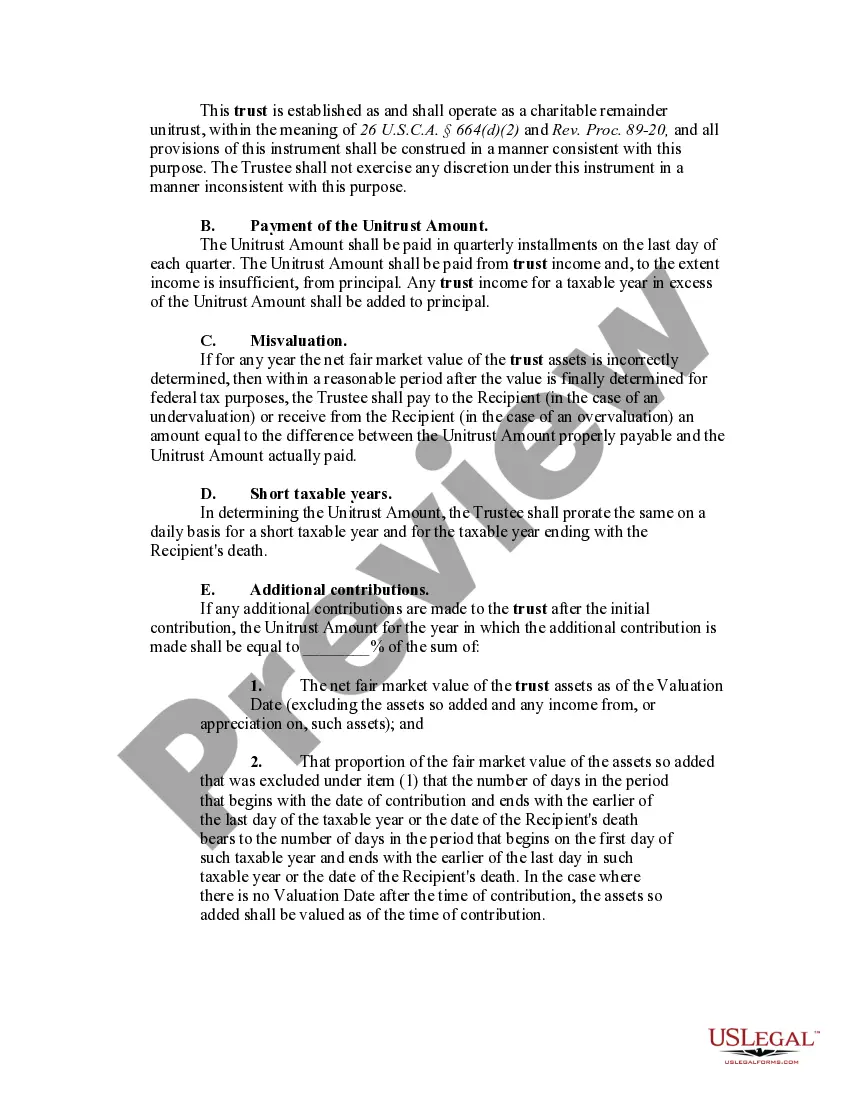
How to fill out Charitable Remainder Inter Vivos Unitrust Agreement?
Creating legal documents from the ground up can frequently be daunting.
Certain situations may require extensive research and significant financial investment.
If you’re looking for a simpler and cost-effective method of generating Remainder Living Trust Sample for Florida or any other forms without unnecessary complications, US Legal Forms is always available to assist you.
Our online repository of over 85,000 current legal forms encompasses nearly every aspect of your financial, legal, and personal matters.
Review the form preview and descriptions to ensure you’ve located the document you need. Verify that the template you select adheres to the laws and regulations of your state and county. Choose the appropriate subscription plan to acquire the Remainder Living Trust Sample for Florida. Download the form, then complete, validate, and print it out. US Legal Forms prides itself on a flawless reputation and over 25 years of experience. Join us today and transform document preparation into a simple and efficient process!
- With just a few clicks, you can swiftly obtain state- and county-compliant documents meticulously prepared by our legal experts.
- Utilize our platform whenever you require dependable services through which you can quickly find and download the Remainder Living Trust Sample for Florida.
- If you’re already familiar with our site and have set up an account with us, simply Log In, find the template, and download it or re-download it anytime in the My documents section.
- Don’t have an account? No problem. It takes minimal time to create one and browse the library.
- However, before directly downloading the Remainder Living Trust Sample for Florida, consider these suggestions.
Form popularity
FAQ
Generally speaking, most trusts cost between $1,000 and $3,000 to set up. A trust is a legal arrangement in which property (such as money or property) is held by one party for the benefit of another. A trustee holds legal title to the property for the benefit of the beneficiaries.
To set up a living trust, you'll choose the type of trust you'll need, take a thorough inventory of your property, and choose a trustee. Then you'll need to draw up the trust document and sign it in front of a notary public. After that, you'll fund the trust by transferring property into the trust.
Steps to Putting Your Home in a Trust in Florida Choose What Type of Trust You Want. ... Contact an Estate Planning Attorney. ... Decide Upon Beneficiaries and Trustees. ... Decide Upon The Terms of the Trust. ... Create the Trust Document. ... Prepare a New Property Deed. ... Get The New Property Deed Notarized. ... File The Deed.
A simple example would be the situation in which one member of a family advances money to another and asks the second member to hold the money or to invest it for him. A more complicated example of an implied trust would be the situation in which one party provides money to another for the purchase of property.
Yes. If you are competent to handle your financial affairs now, there's no legal reason why you can't be the trustee of your own Living Trust. In fact, this is what most people choose to do. And if you're married, you and your spouse can act as co-trustees.