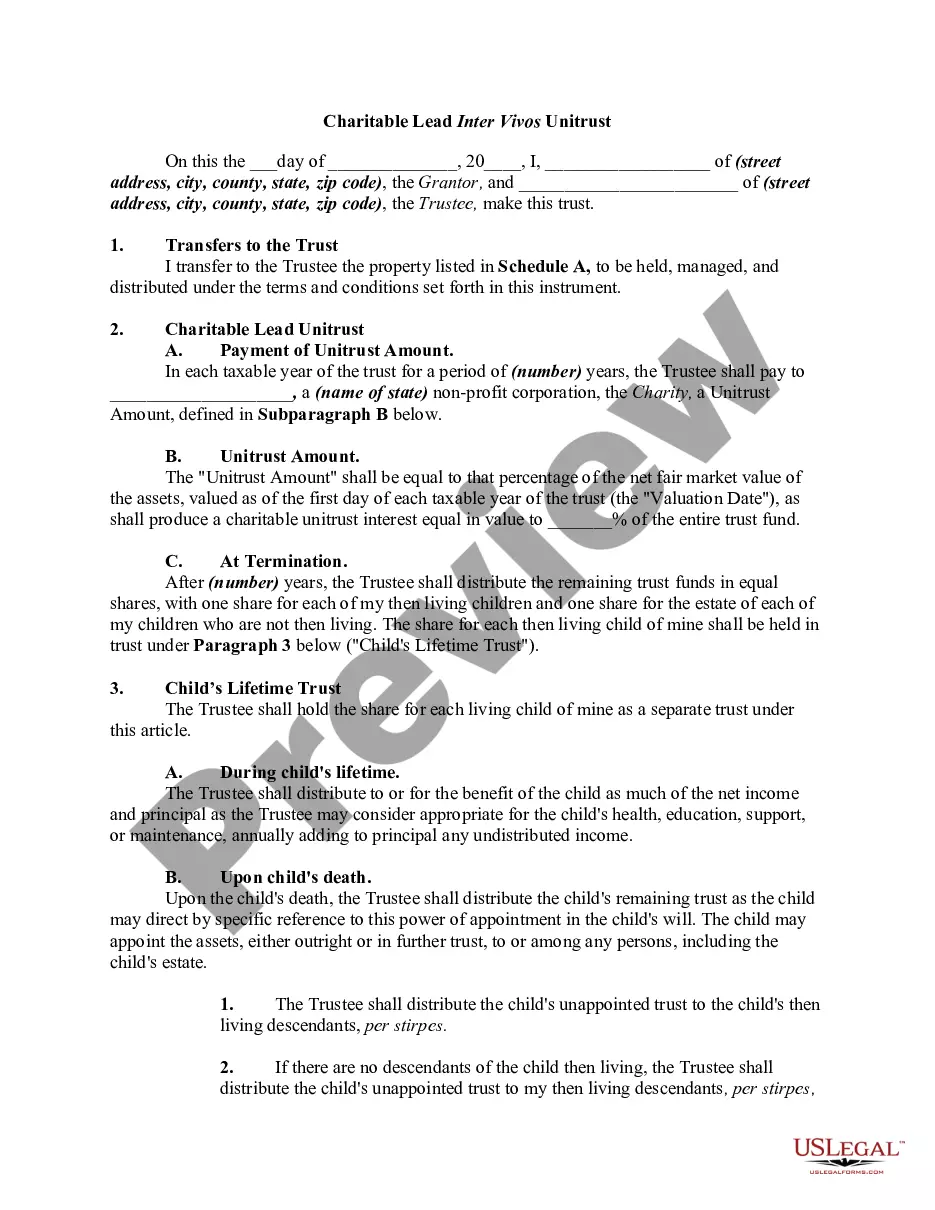
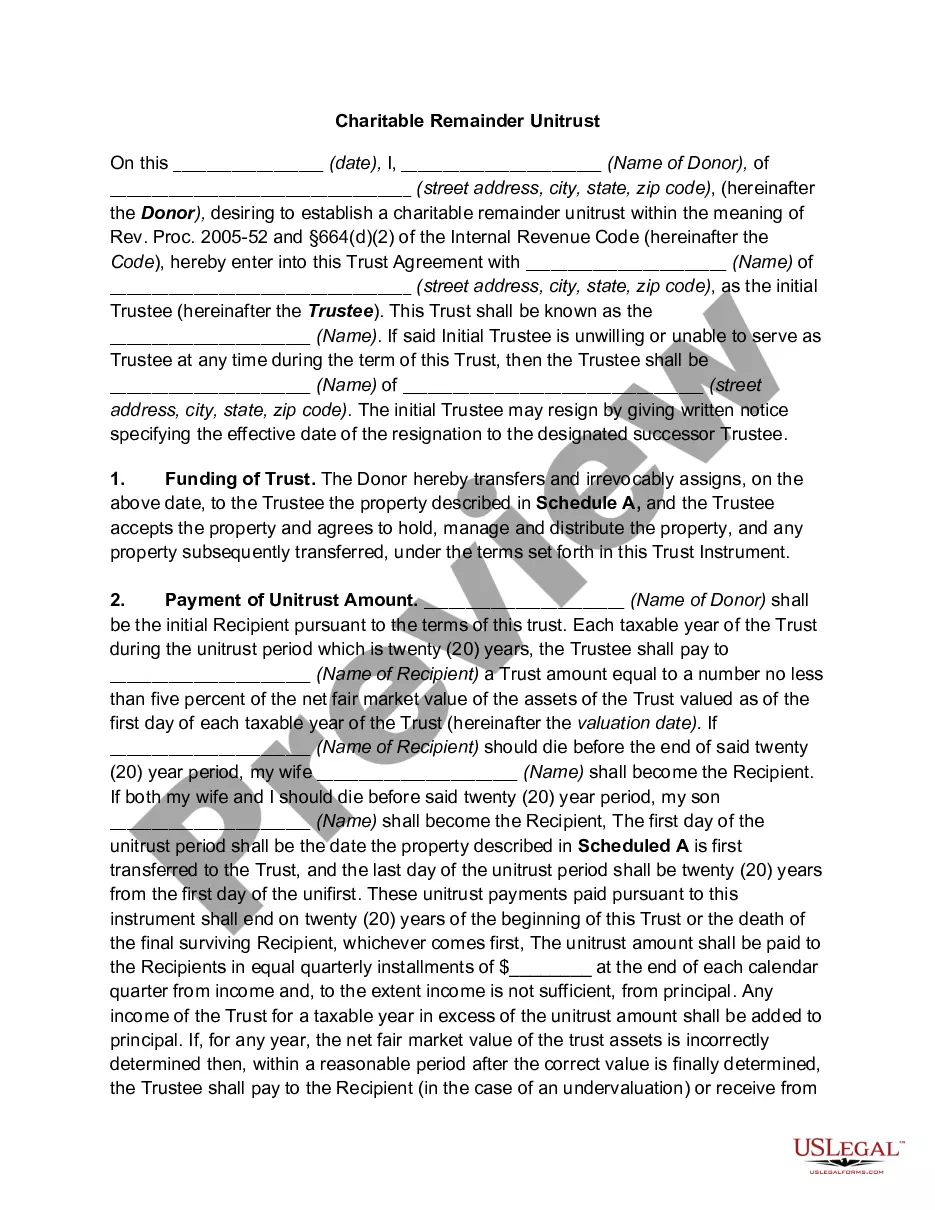
Form 8283 Charitable Remainder Trust With Trust
Description
Get your form ready online
Our built-in tools help you complete, sign, share, and store your documents in one place.
Make edits, fill in missing information, and update formatting in US Legal Forms—just like you would in MS Word.
Download a copy, print it, send it by email, or mail it via USPS—whatever works best for your next step.
Sign and collect signatures with our SignNow integration. Send to multiple recipients, set reminders, and more. Go Premium to unlock E-Sign.
If this form requires notarization, complete it online through a secure video call—no need to meet a notary in person or wait for an appointment.
We protect your documents and personal data by following strict security and privacy standards.

Make edits, fill in missing information, and update formatting in US Legal Forms—just like you would in MS Word.

Download a copy, print it, send it by email, or mail it via USPS—whatever works best for your next step.

Sign and collect signatures with our SignNow integration. Send to multiple recipients, set reminders, and more. Go Premium to unlock E-Sign.

If this form requires notarization, complete it online through a secure video call—no need to meet a notary in person or wait for an appointment.

We protect your documents and personal data by following strict security and privacy standards.
Looking for another form?
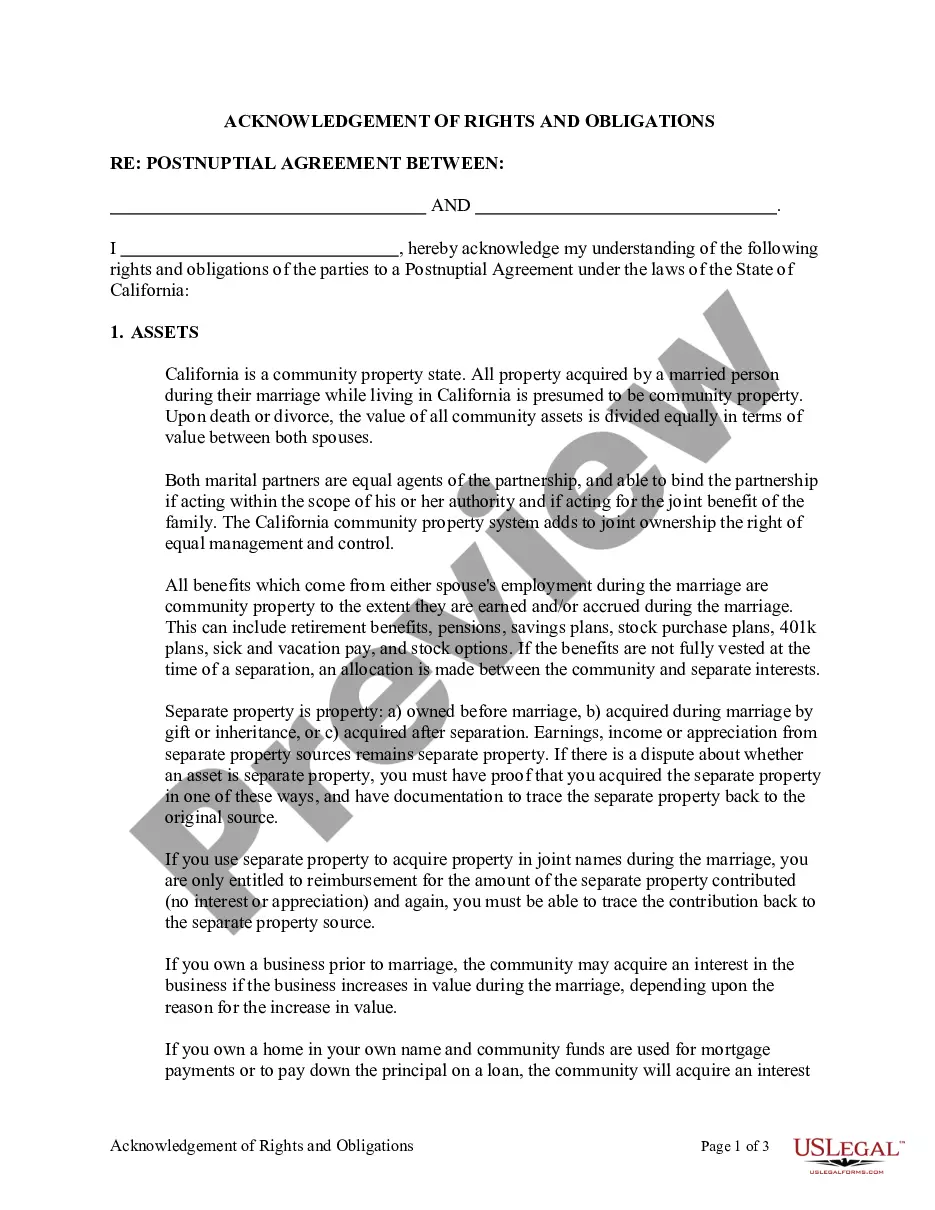

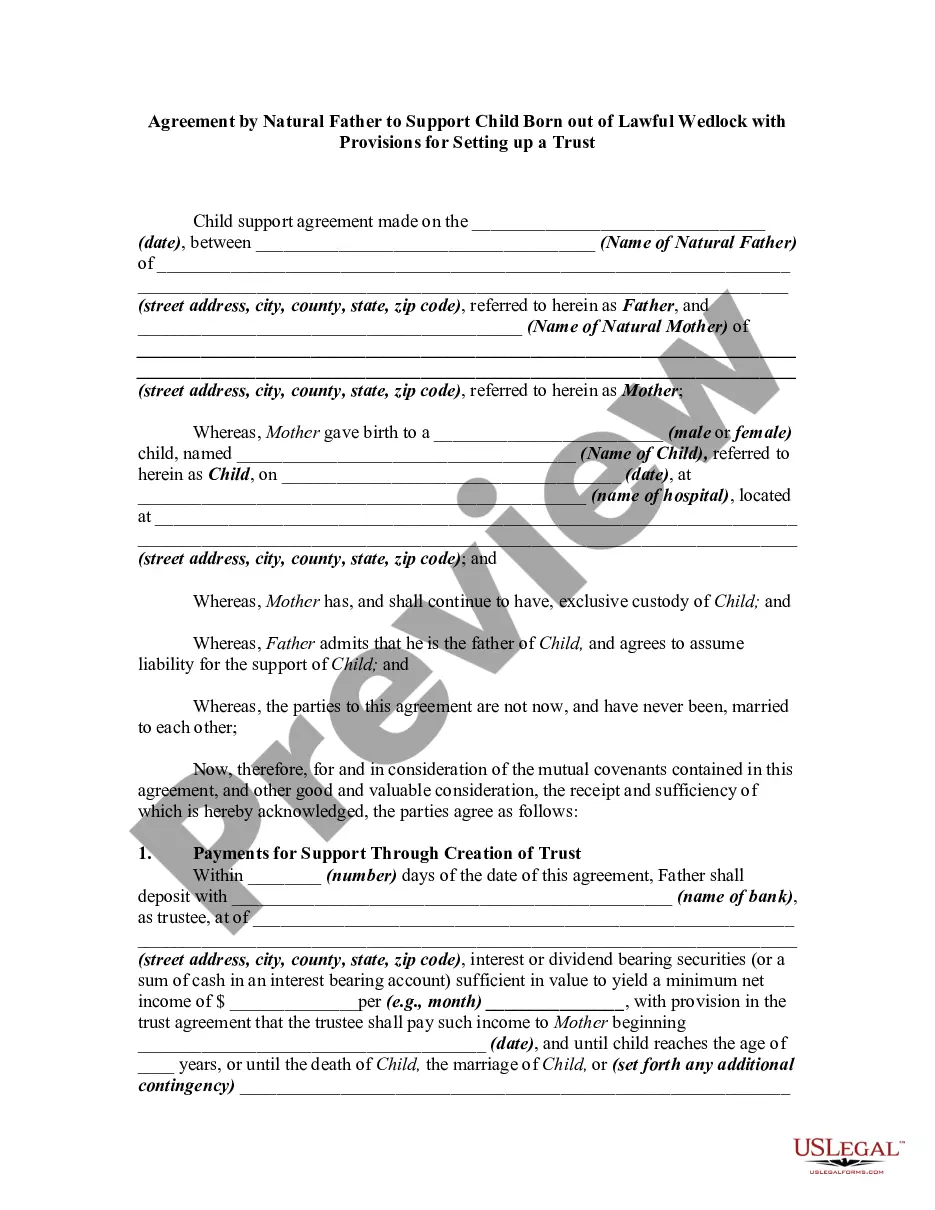
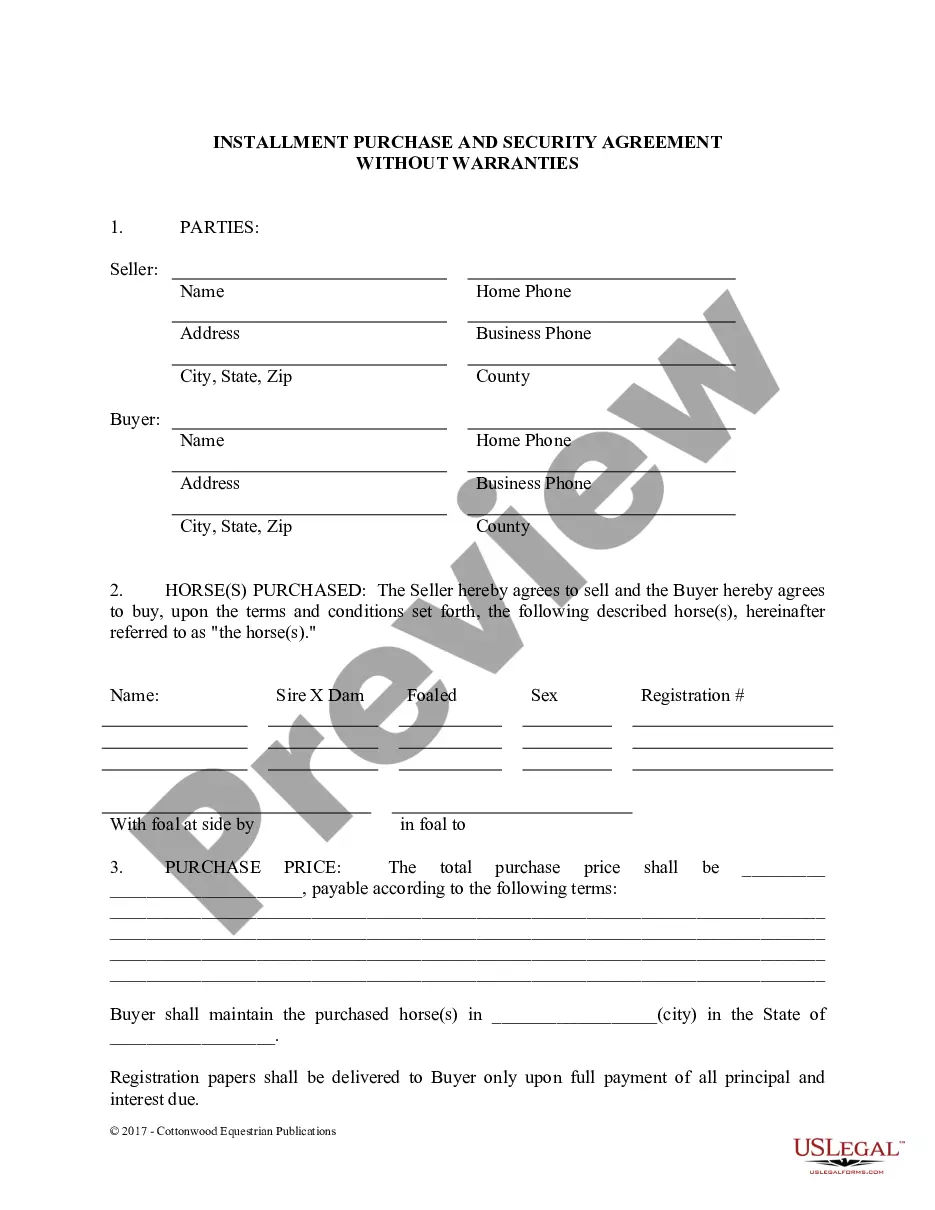


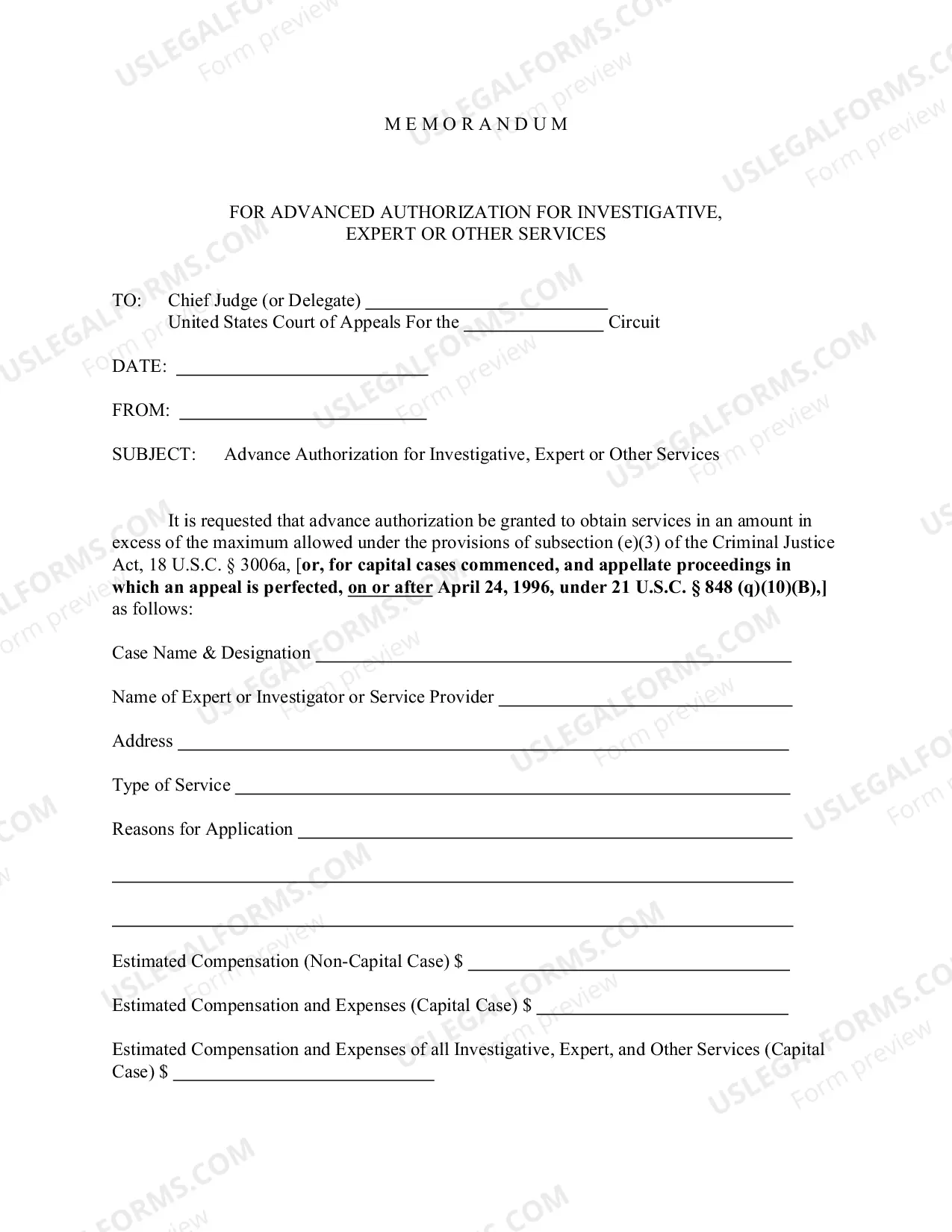
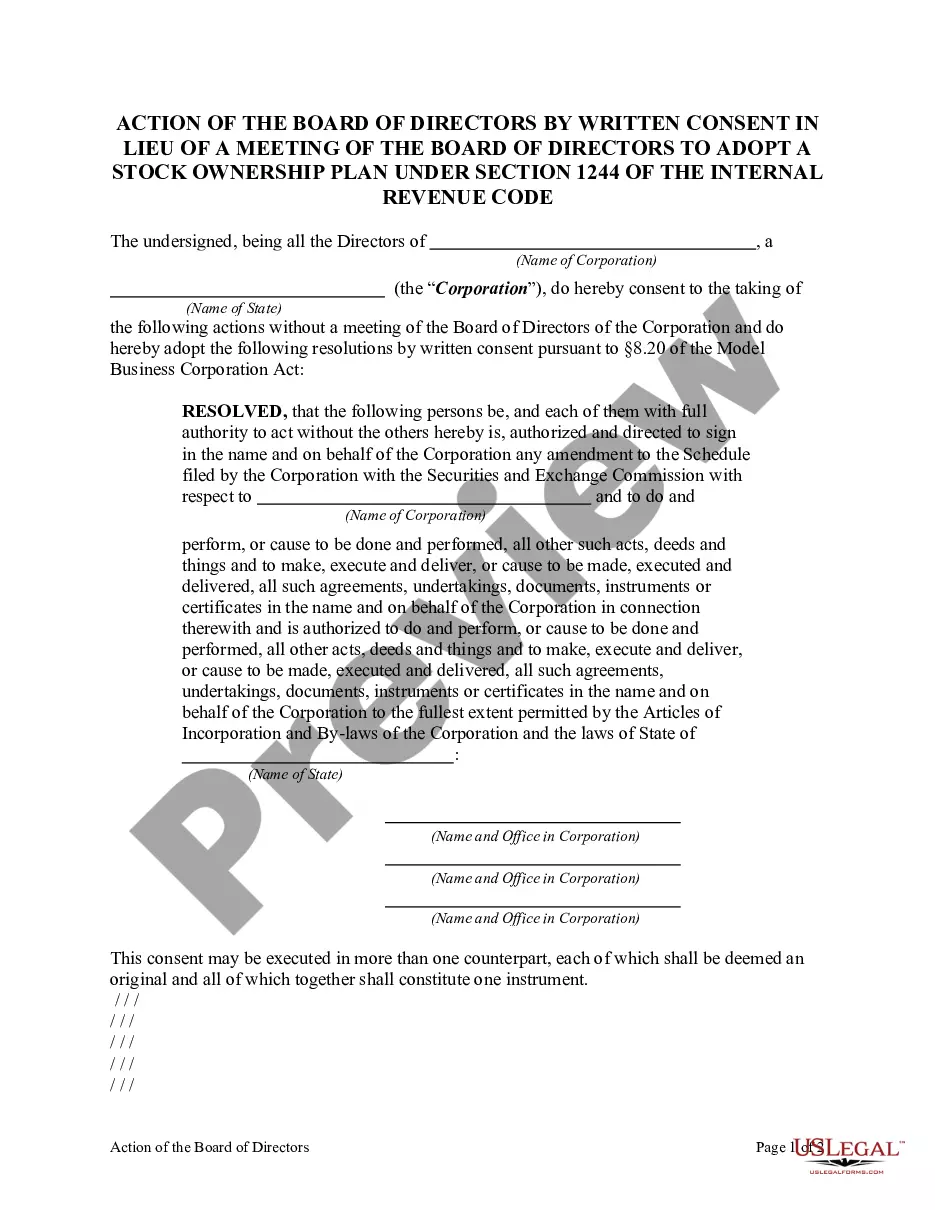

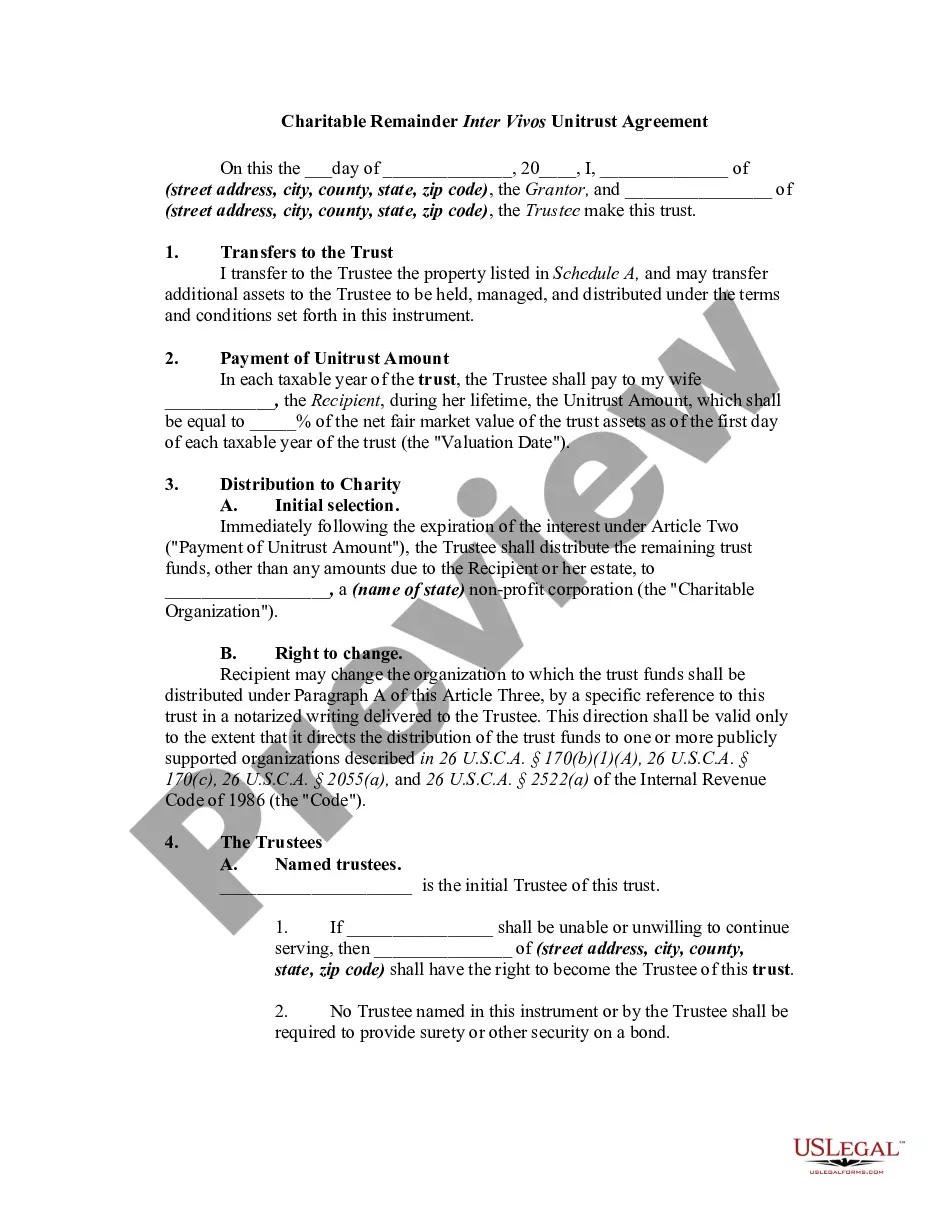
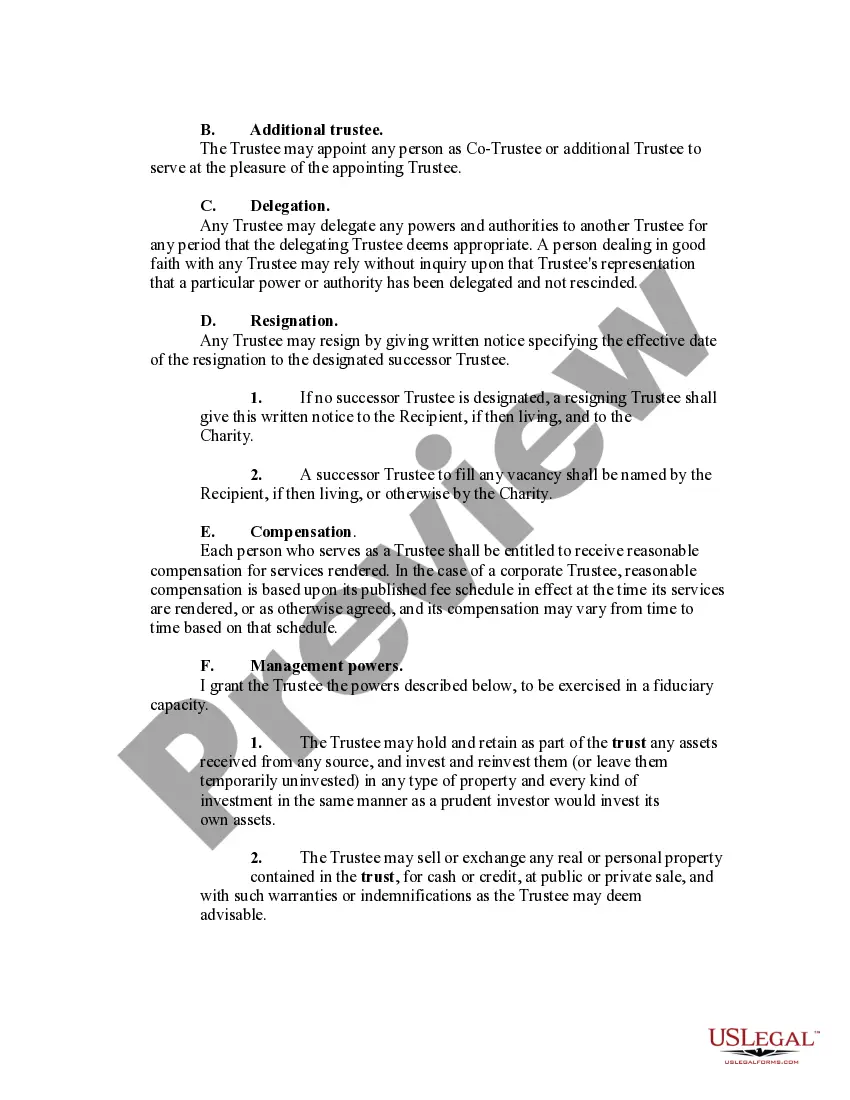
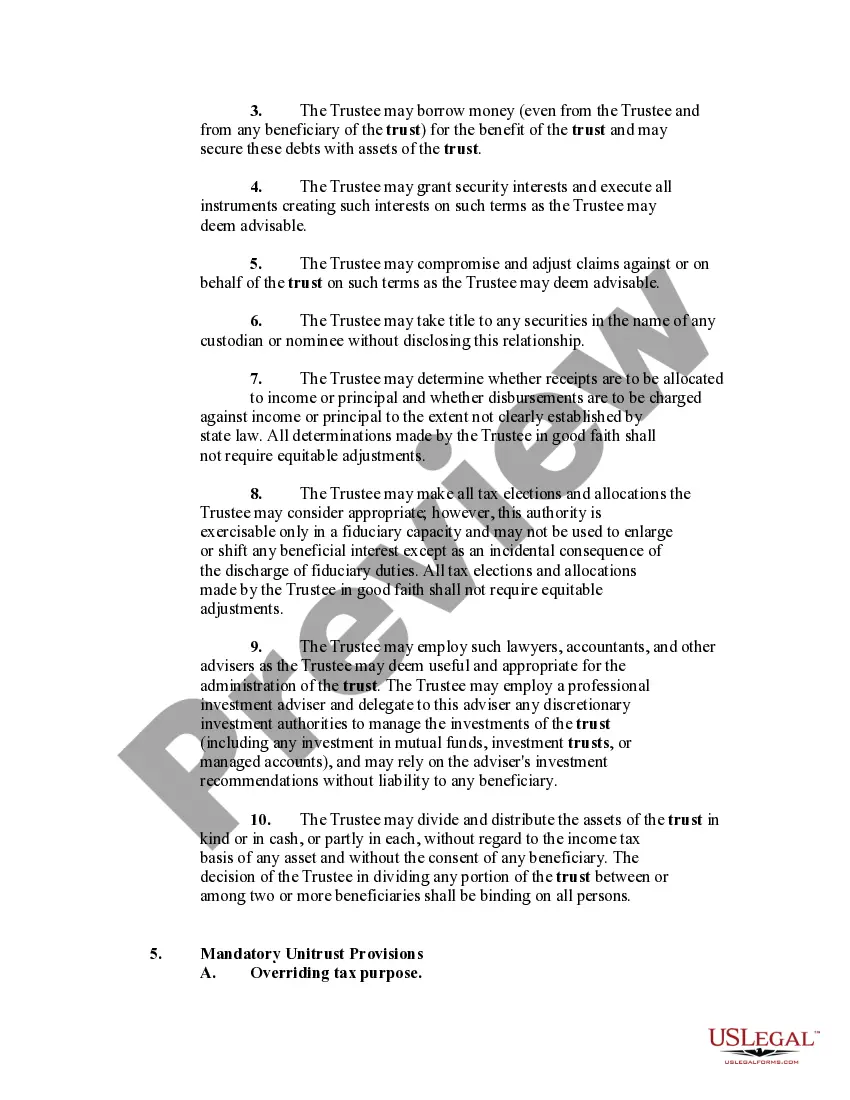
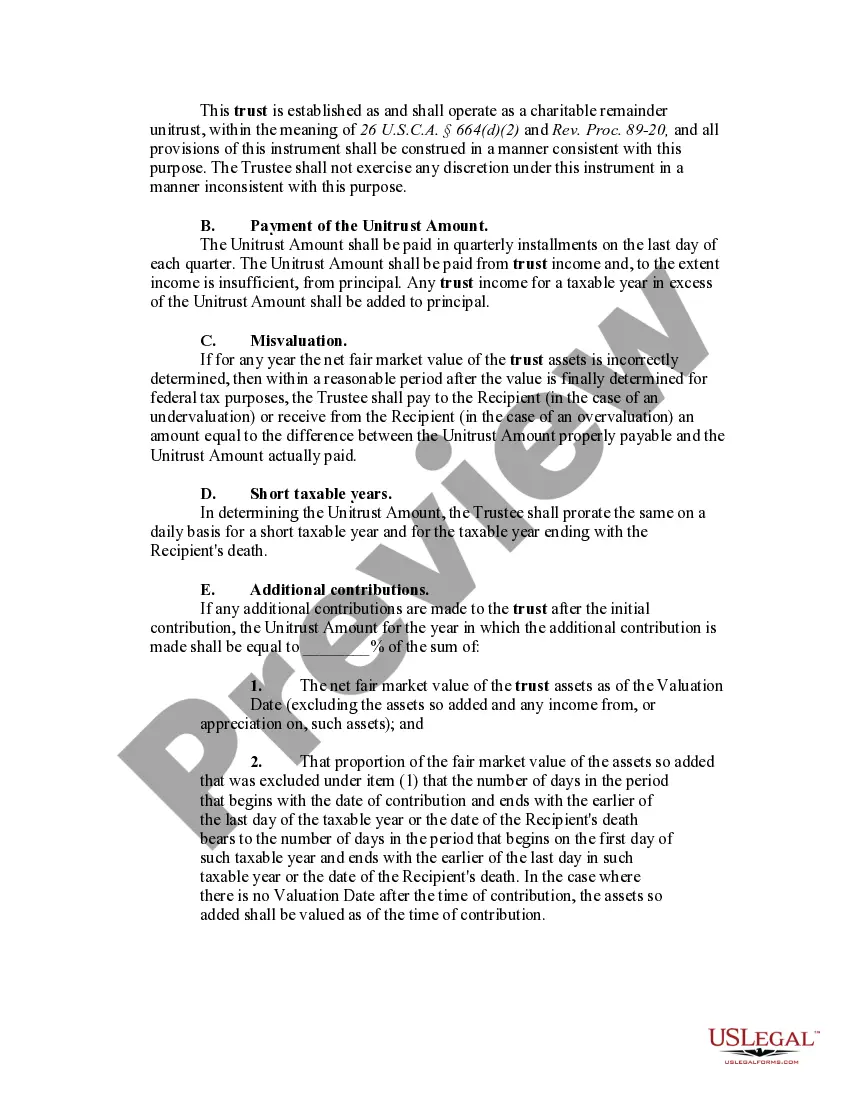
How to fill out Charitable Remainder Inter Vivos Unitrust Agreement?
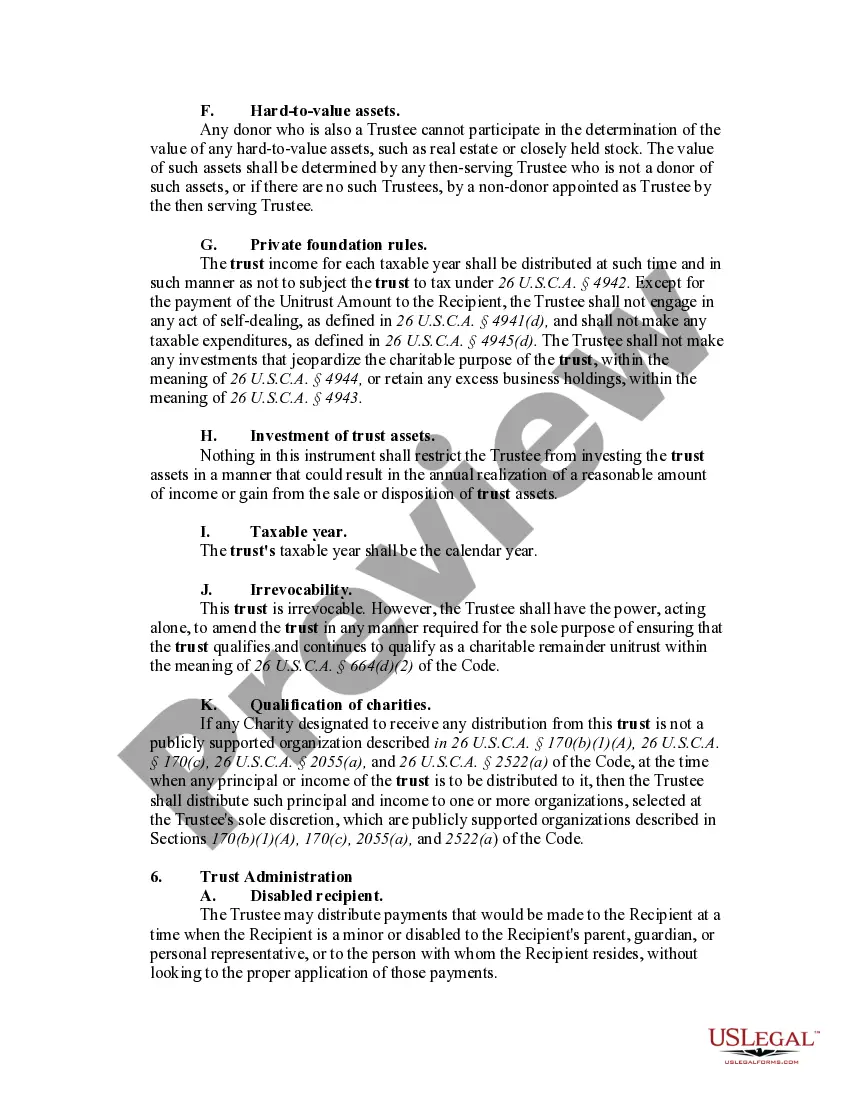
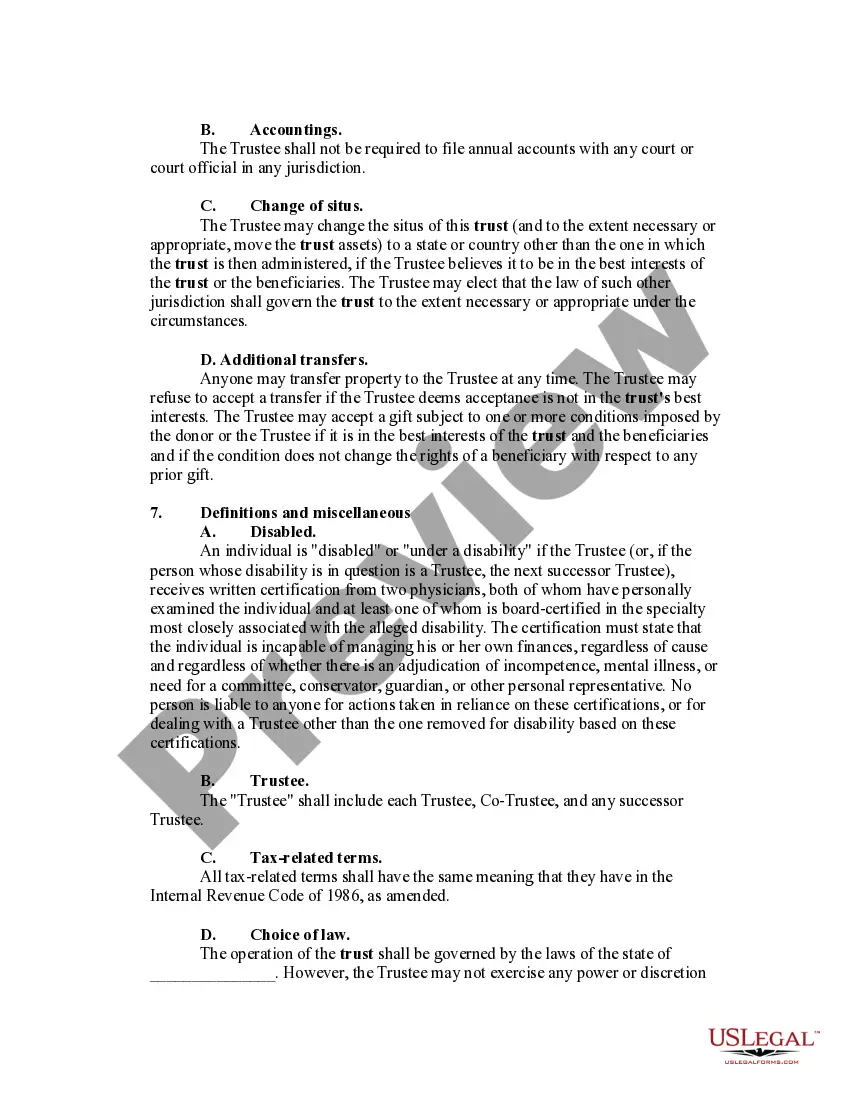
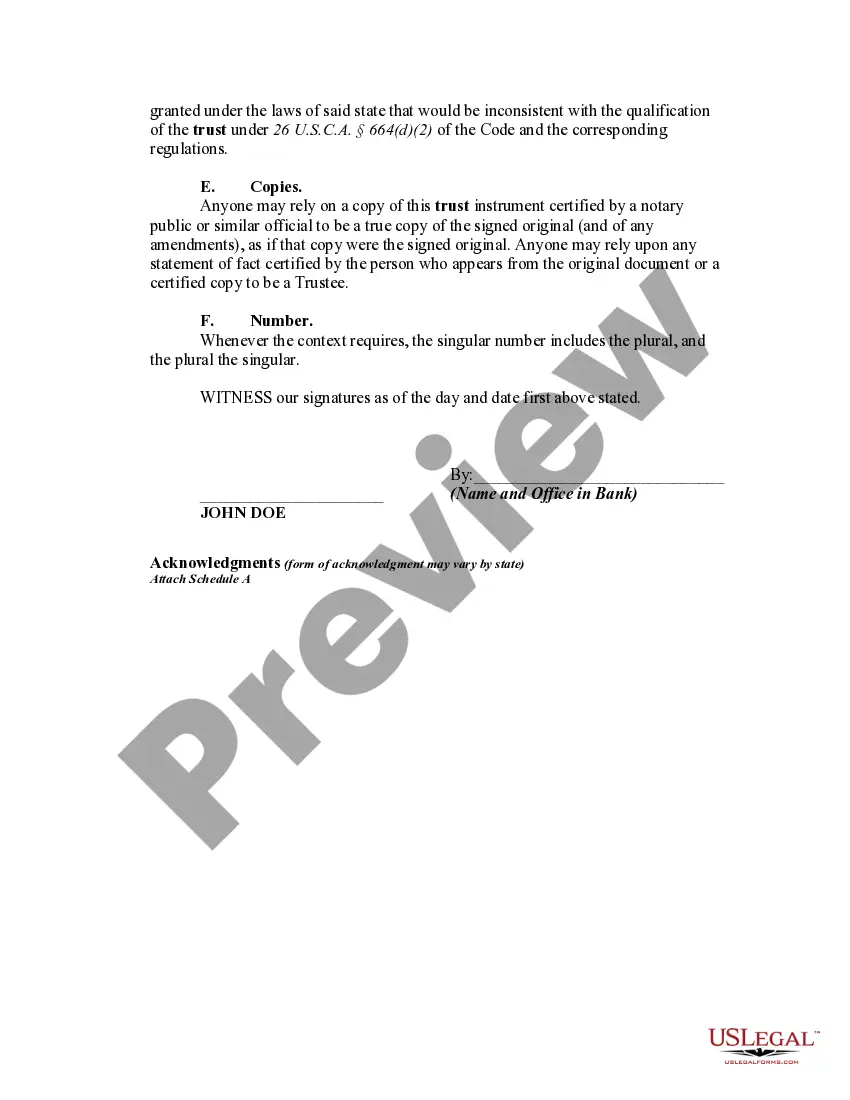
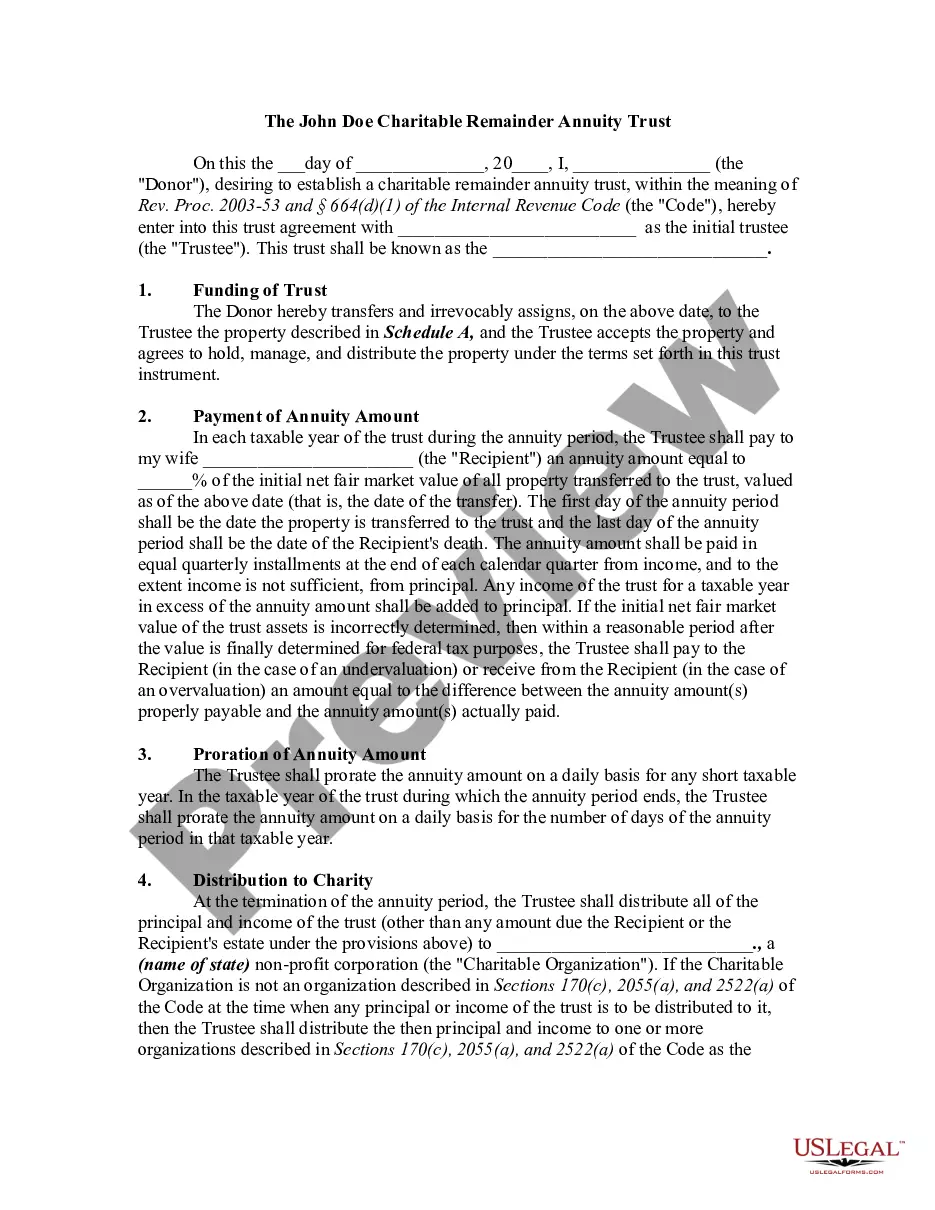
It’s well-known that becoming a legal expert cannot happen overnight, nor can you swiftly learn how to properly create Form 8283 Charitable Remainder Trust With Trust without a specific background.
Developing legal documents is a labor-intensive endeavor that necessitates specialized training and expertise.
So why not let the experts handle the creation of the Form 8283 Charitable Remainder Trust With Trust.
You can revisit your forms from the My documents tab at any moment. If you are an existing client, you can easily Log In and locate and download the template from the same tab.
Regardless of the aim of your documentation—whether it’s financial and legal, or personal—our website is designed to assist you. Experience US Legal Forms today!
- Locate the form you are searching for by utilizing the search bar at the top of the page.
- View it (if this option is available) and review the accompanying description to ascertain whether Form 8283 Charitable Remainder Trust With Trust meets your needs.
- Initiate your search once more if you require a different document.
- Sign up for a complimentary account and select a subscription plan to purchase the form.
- Click Buy now. Once the payment is completed, you can download the Form 8283 Charitable Remainder Trust With Trust, complete it, print it, and send or forward it by mail to the required recipients or organizations.
Form popularity
FAQ
If the agency can't provide proof, you owe the money, by law, they must stop collection efforts. If you don't owe the bill, don't pay anything ? ever. Even if you're willing to pay cash so the agency will go away, it's not a good idea. Payment is considered an acknowledgment that you are responsible.
Validation and Verification Letter Limitations and Benefits Validation and verification letters can be helpful but won't solve all debt collection problems. For example, a collector can continue trying to collect a debt that is past the statute of limitations. They just can't force you to pay it.
Debt collectors have a legal obligation to send a debt validation letter and it's important for consumers to be aware of that. If you receive information over the phone, ask for it to be sent in a letter. Do not give payment or personal financial information until you confirm that the collector is legitimate.
Once you receive the validation information or notice from the debt collector during or after your initial communication with them, you have 30 days to dispute all or part of the debt, if you don't believe that you owe it. If you receive a validation notice, the end date of the 30-day period will be specified.
The Fair Debt Collection Practices Act (FDCPA) prohibits debt collectors from using abusive, unfair, or deceptive practices to collect debts from you, including: Misrepresenting the nature of the debt, including the amount owed. Falsely claiming that the person contacting you is an attorney.
While debt validation requests can be a useful tool, they are not effective at resolving the issue. In most cases, creditors and collection agencies are able to provide the necessary documentation to prove the validity of the debt.
If you are struggling with debt and debt collectors, Farmer & Morris Law, PLLC can help. As soon as you use the 11-word phrase ?please cease and desist all calls and contact with me immediately? to stop the harassment, call us for a free consultation about what you can do to resolve your debt problems for good.
Effective January 1, the small loan act applies to loans under $10,000 and not just $5,000 and certain other restrictions on scope are loosened. The anti-evasion provisions are also expanded. § 58-15-3(D). As of January 1, 2023, a fee of 5% of the principal may be charged for a loan of $500 or less.