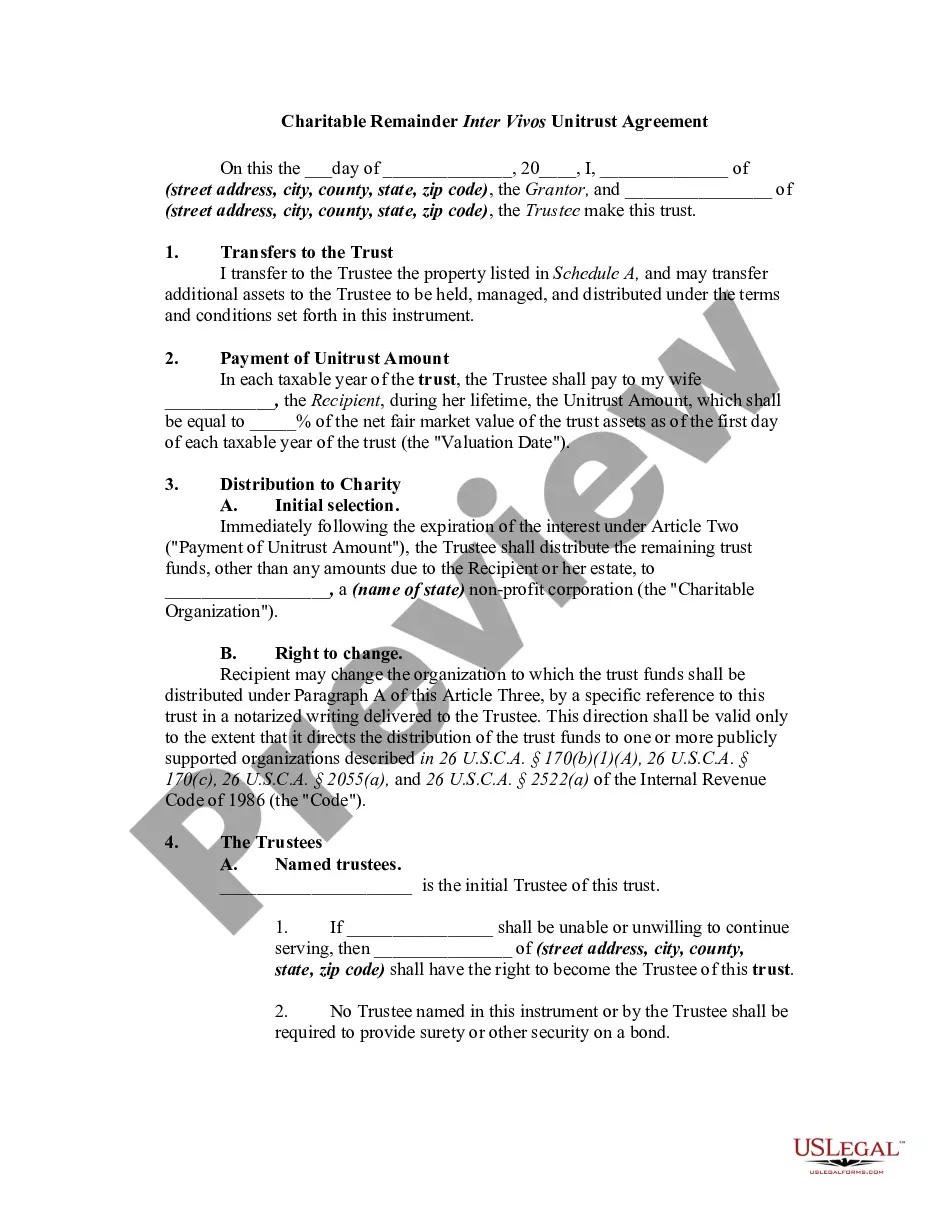
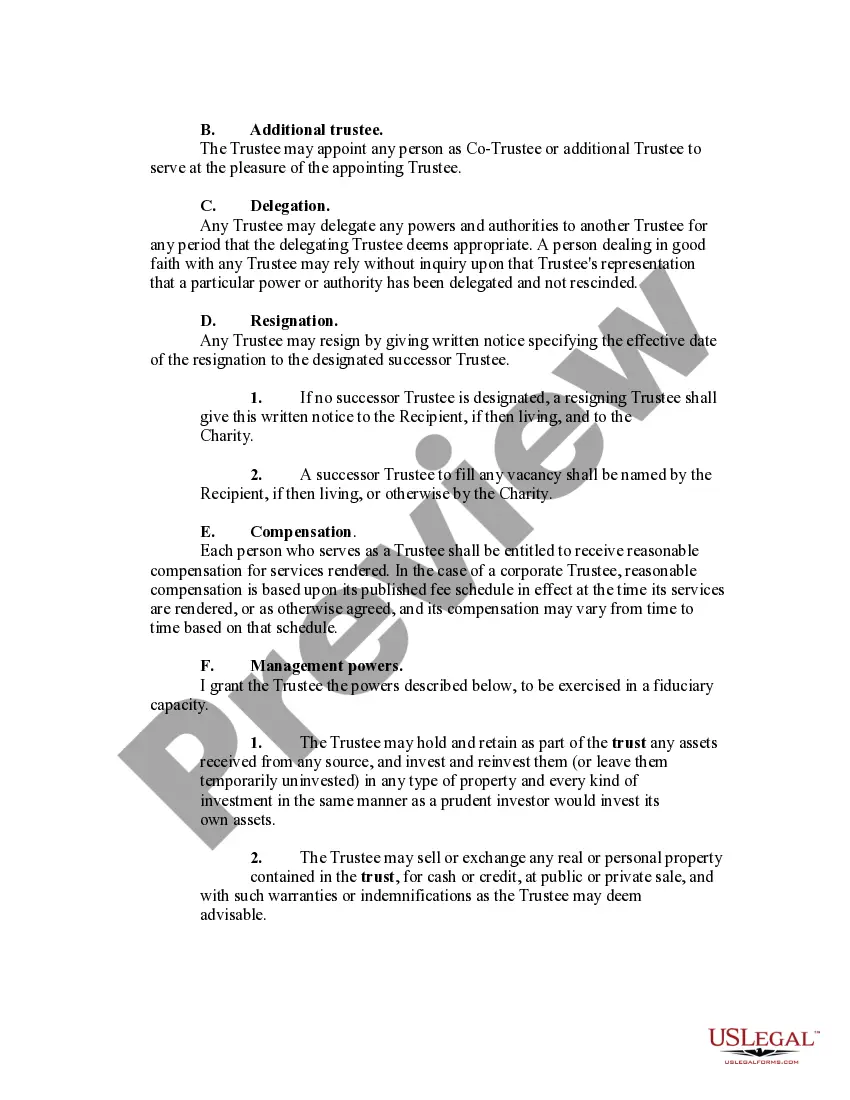
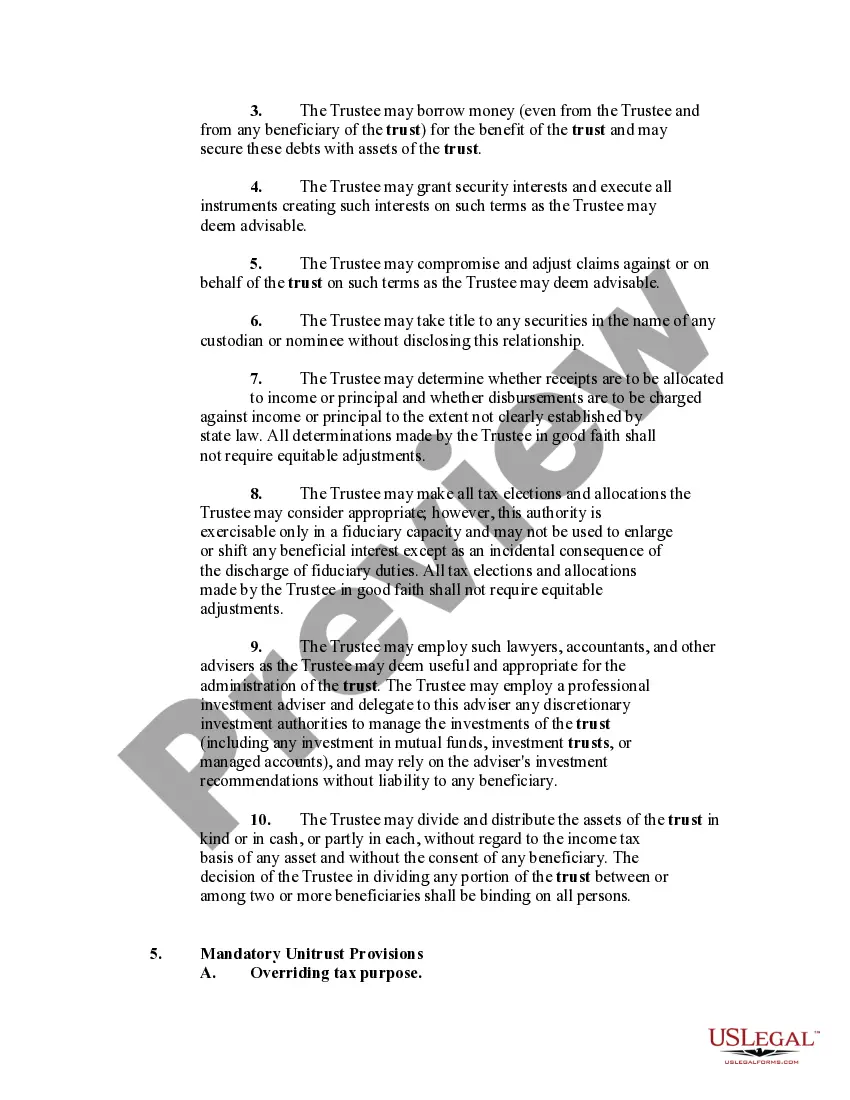
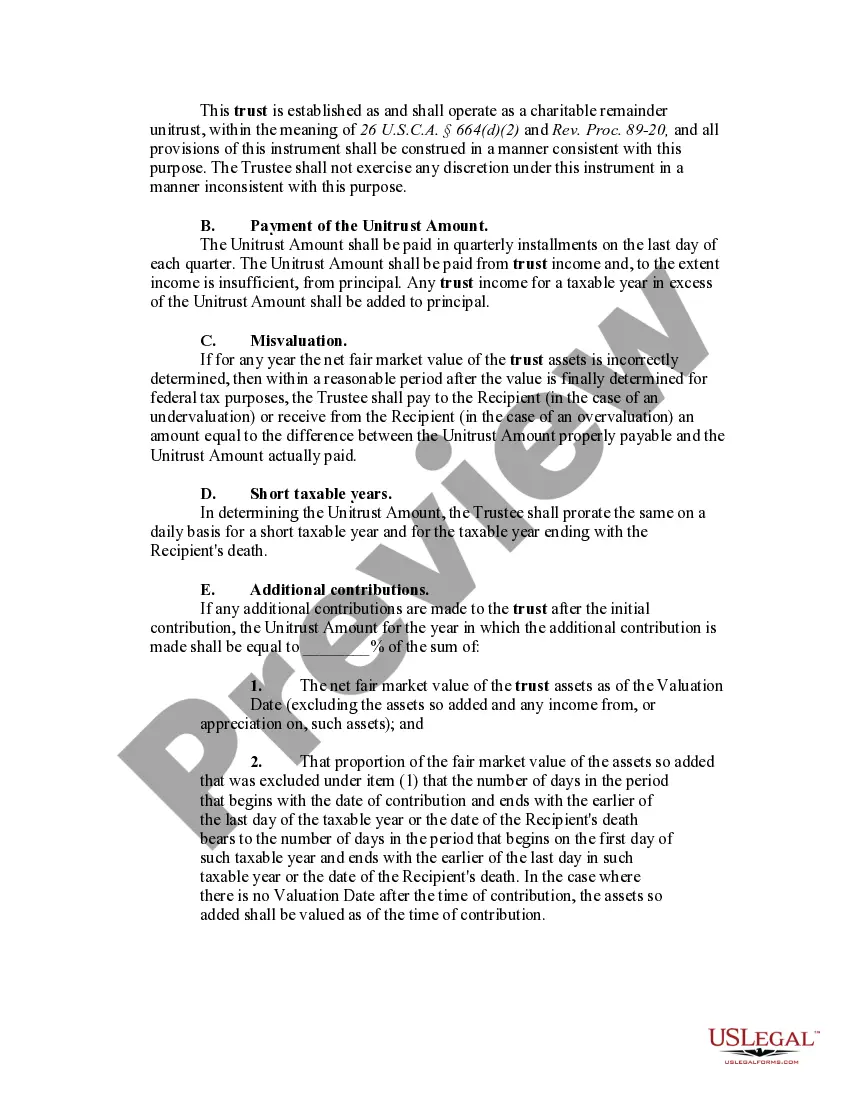
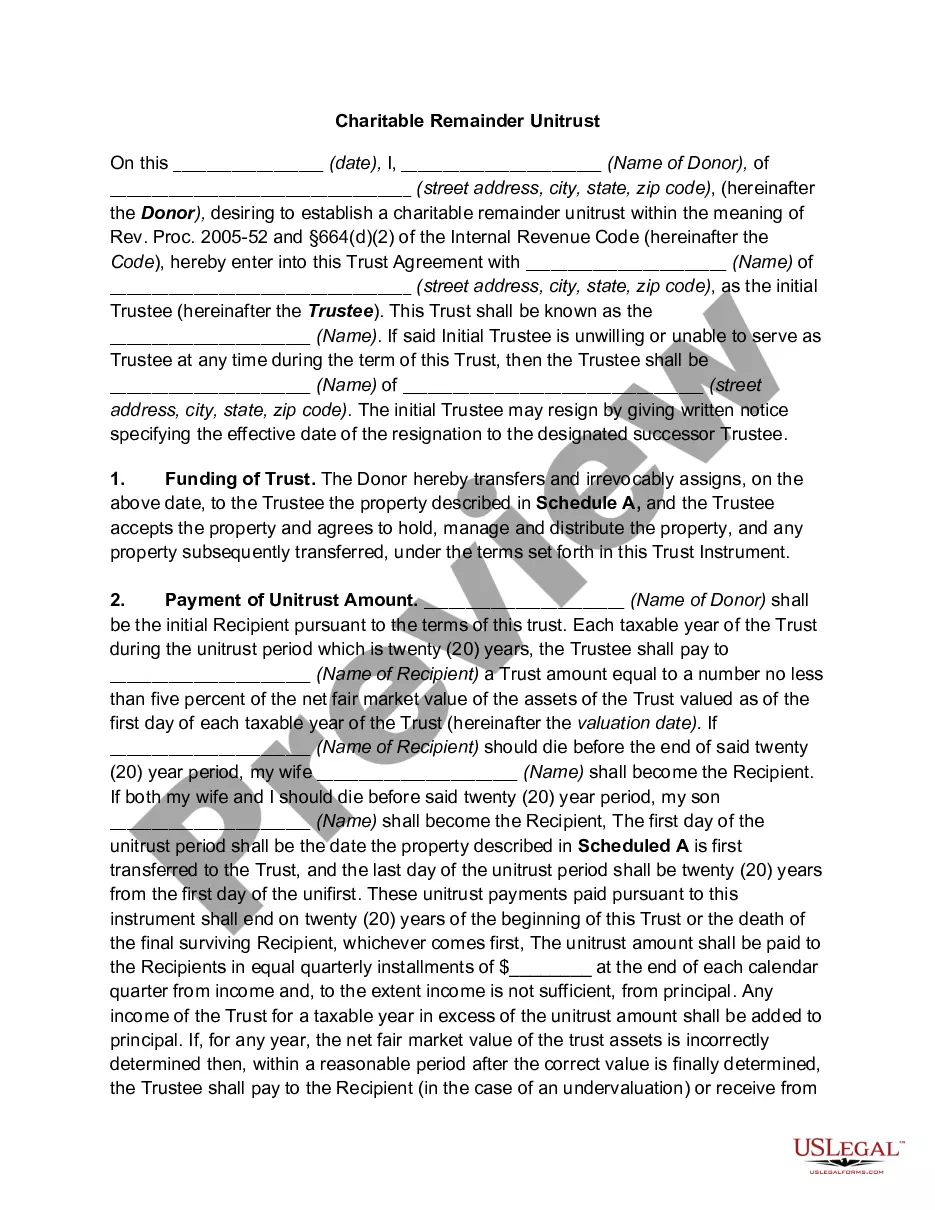
Charitable Remainder Unitrust Form For Taxes
Description
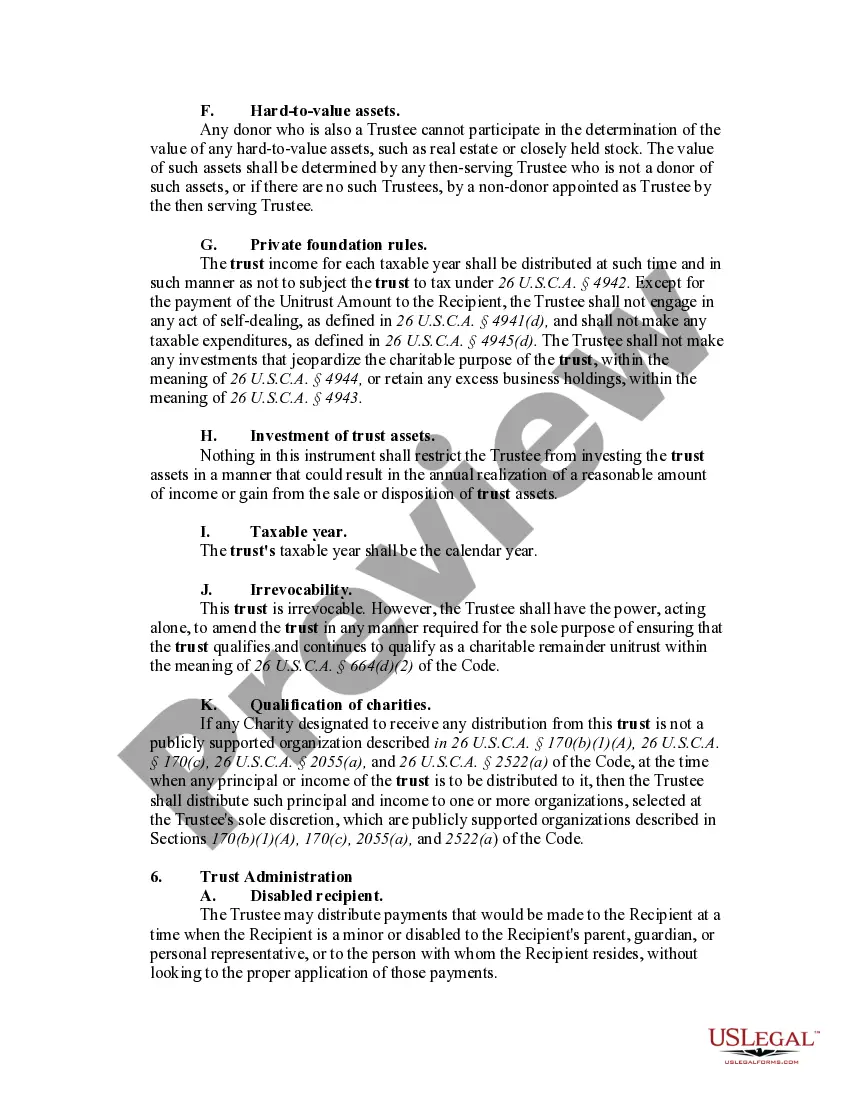
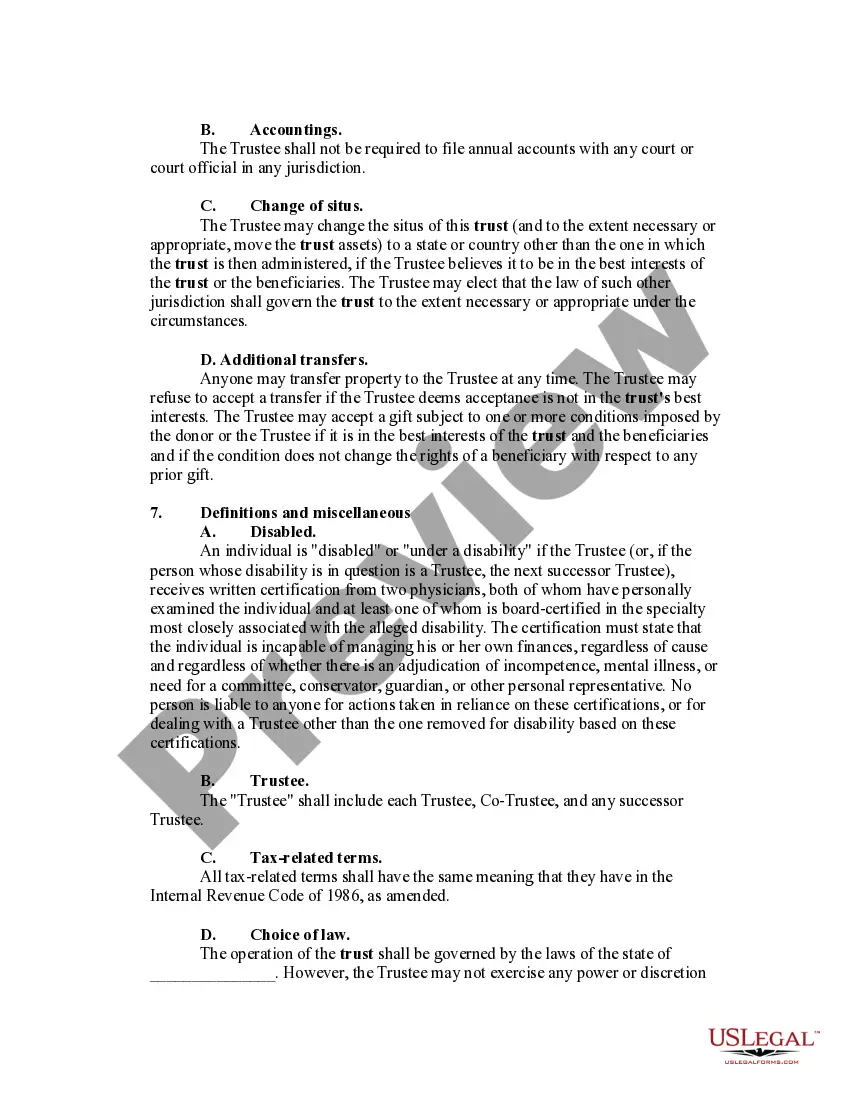
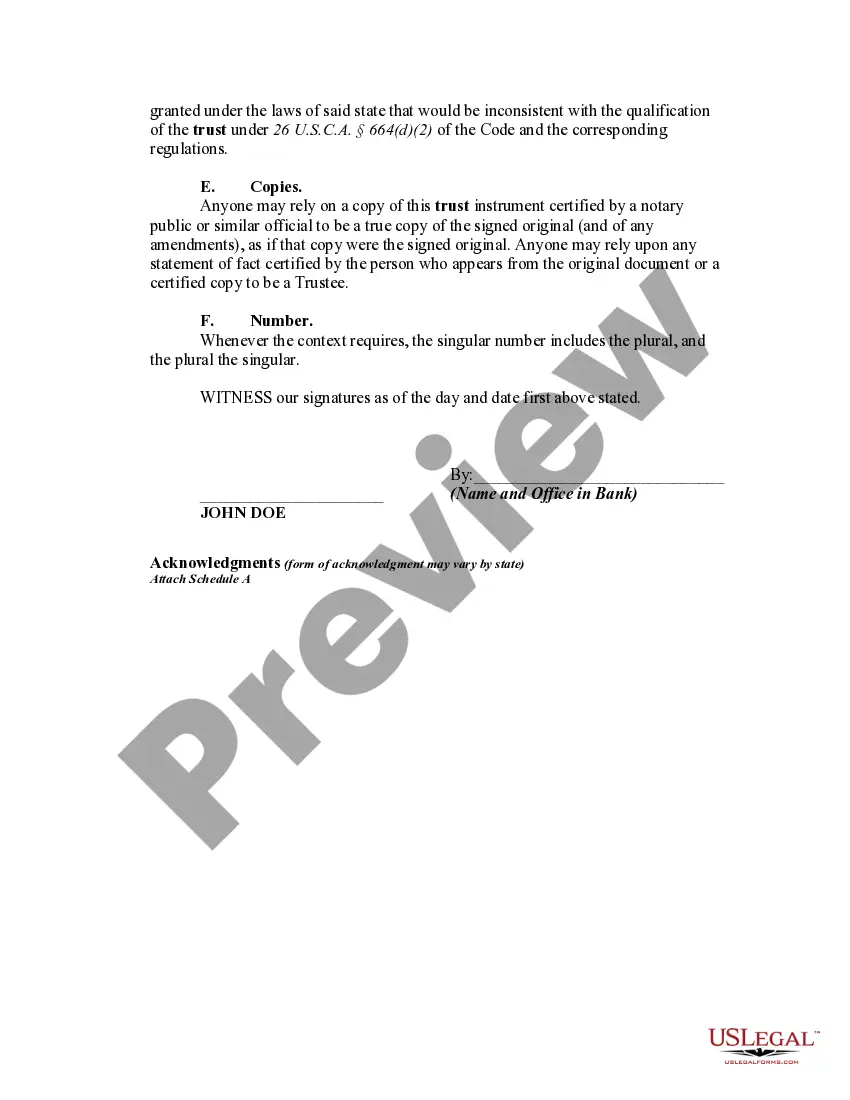
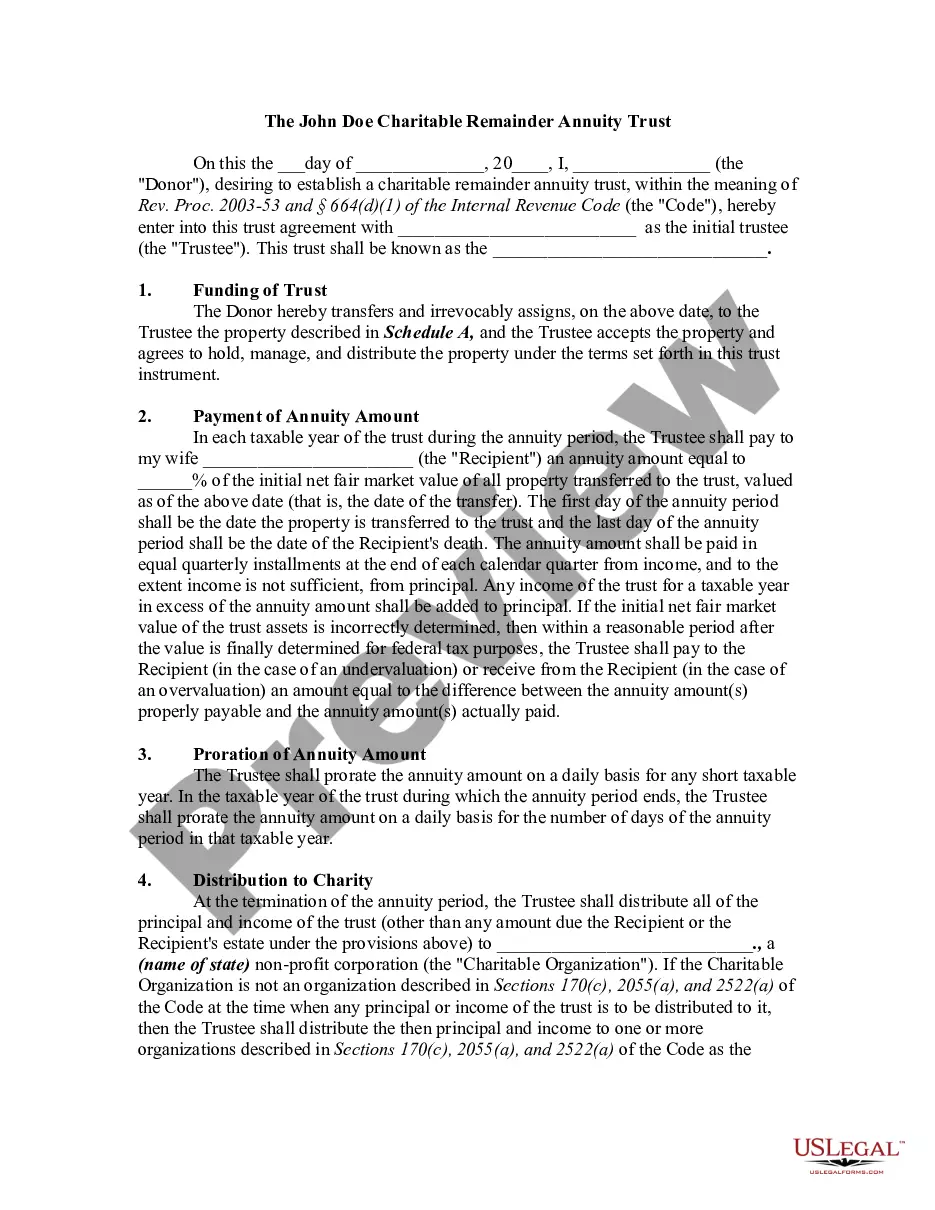
Get your form ready online
Our built-in tools help you complete, sign, share, and store your documents in one place.
Make edits, fill in missing information, and update formatting in US Legal Forms—just like you would in MS Word.
Download a copy, print it, send it by email, or mail it via USPS—whatever works best for your next step.
Sign and collect signatures with our SignNow integration. Send to multiple recipients, set reminders, and more. Go Premium to unlock E-Sign.
If this form requires notarization, complete it online through a secure video call—no need to meet a notary in person or wait for an appointment.
We protect your documents and personal data by following strict security and privacy standards.

Make edits, fill in missing information, and update formatting in US Legal Forms—just like you would in MS Word.

Download a copy, print it, send it by email, or mail it via USPS—whatever works best for your next step.

Sign and collect signatures with our SignNow integration. Send to multiple recipients, set reminders, and more. Go Premium to unlock E-Sign.

If this form requires notarization, complete it online through a secure video call—no need to meet a notary in person or wait for an appointment.

We protect your documents and personal data by following strict security and privacy standards.
Looking for another form?




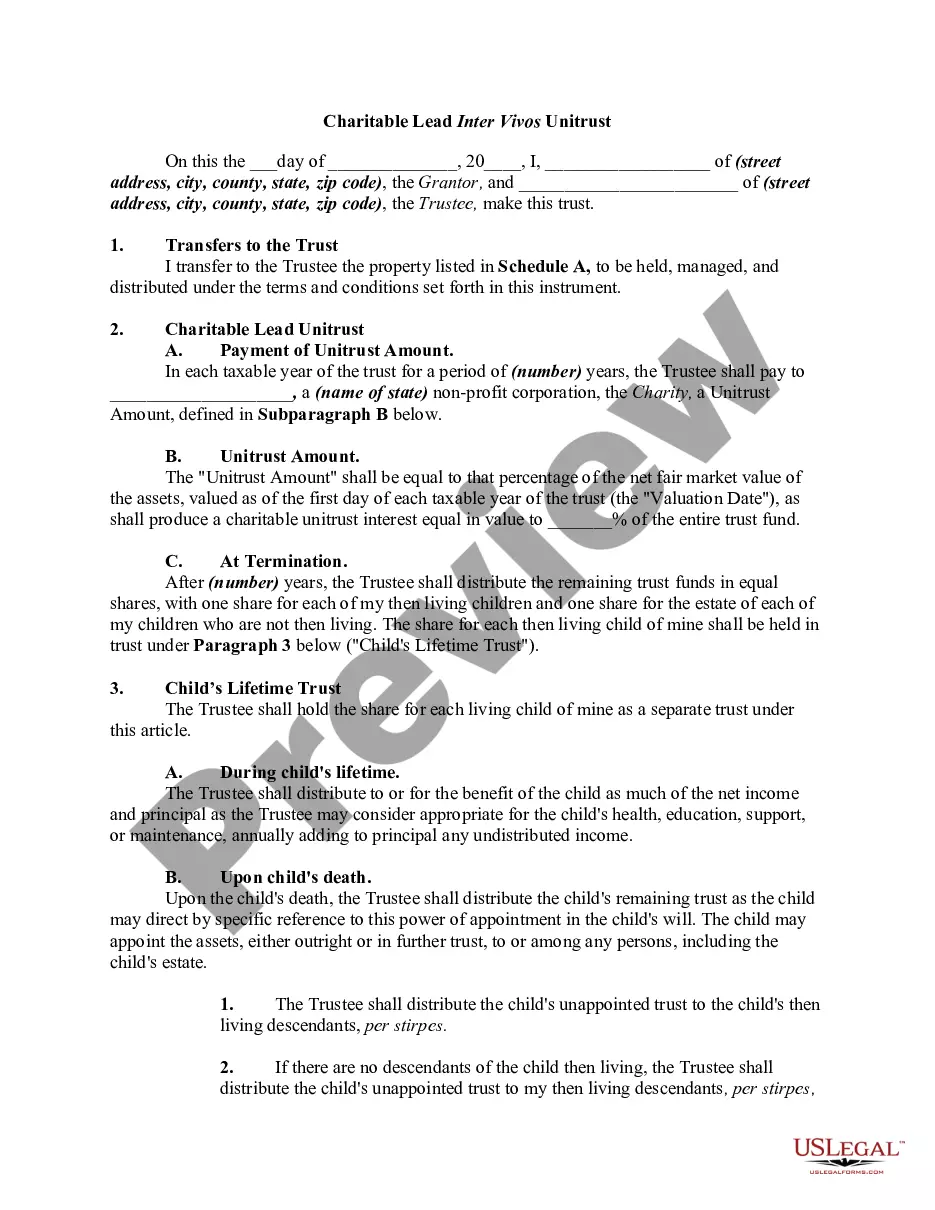
How to fill out Charitable Remainder Inter Vivos Unitrust Agreement?
Drafting legal documents from scratch can sometimes be intimidating. Some cases might involve hours of research and hundreds of dollars invested. If you’re searching for an easier and more affordable way of creating Charitable Remainder Unitrust Form For Taxes or any other documents without jumping through hoops, US Legal Forms is always at your disposal.
Our virtual catalog of over 85,000 up-to-date legal documents addresses almost every aspect of your financial, legal, and personal affairs. With just a few clicks, you can quickly get state- and county-compliant forms diligently prepared for you by our legal specialists.
Use our platform whenever you need a trustworthy and reliable services through which you can easily locate and download the Charitable Remainder Unitrust Form For Taxes. If you’re not new to our services and have previously set up an account with us, simply log in to your account, locate the form and download it away or re-download it anytime later in the My Forms tab.
Don’t have an account? No problem. It takes little to no time to register it and navigate the catalog. But before jumping directly to downloading Charitable Remainder Unitrust Form For Taxes, follow these tips:
- Check the document preview and descriptions to make sure you have found the form you are looking for.
- Check if form you select complies with the regulations and laws of your state and county.
- Pick the best-suited subscription option to buy the Charitable Remainder Unitrust Form For Taxes.
- Download the form. Then complete, certify, and print it out.
US Legal Forms boasts a spotless reputation and over 25 years of experience. Join us now and turn form completion into something easy and streamlined!
Form popularity
FAQ
A charitable remainder unitrust (CRUT) is an irrevocable, tax-exempt trust that generates income and provides a charitable donation to a chosen charity. It can be used to reduce taxable income, avoid capital gains taxes, and take an immediate partial income tax deduction.
Distributions from a charitable remainder unitrust are taxed to income recipients based on what is known as the ?four-tier system? of taxation. The system prioritizes the order in which income is distributed from the trust.
You need to file a Federal Form 5227, and if it's a non-grantor trust, a Form 1041. You also need to provide information to the grantor, if it's a grantor trust, and for all trusts, they often need to be registered with the state body that administers charitable bequests and charitable organizations.
The taxation of CRUTs is prescribed by the Internal Revenue Code and accompanying U.S. Treasury regulations. The trust itself is a tax-exempt entity, but the trust distributions to an income beneficiary will be taxable to that beneficiary ing to a four-tiered system.
A CRT trustee must file Form 5227 each year to report the financial activities of the trust. This form must be filed on or before April 15th following the close of the trust's tax year. CRTs have a calendar tax year which means December 31st is the end of the trust's tax year.