Charitable Remainder Unitrust Blank With A Letter
Description

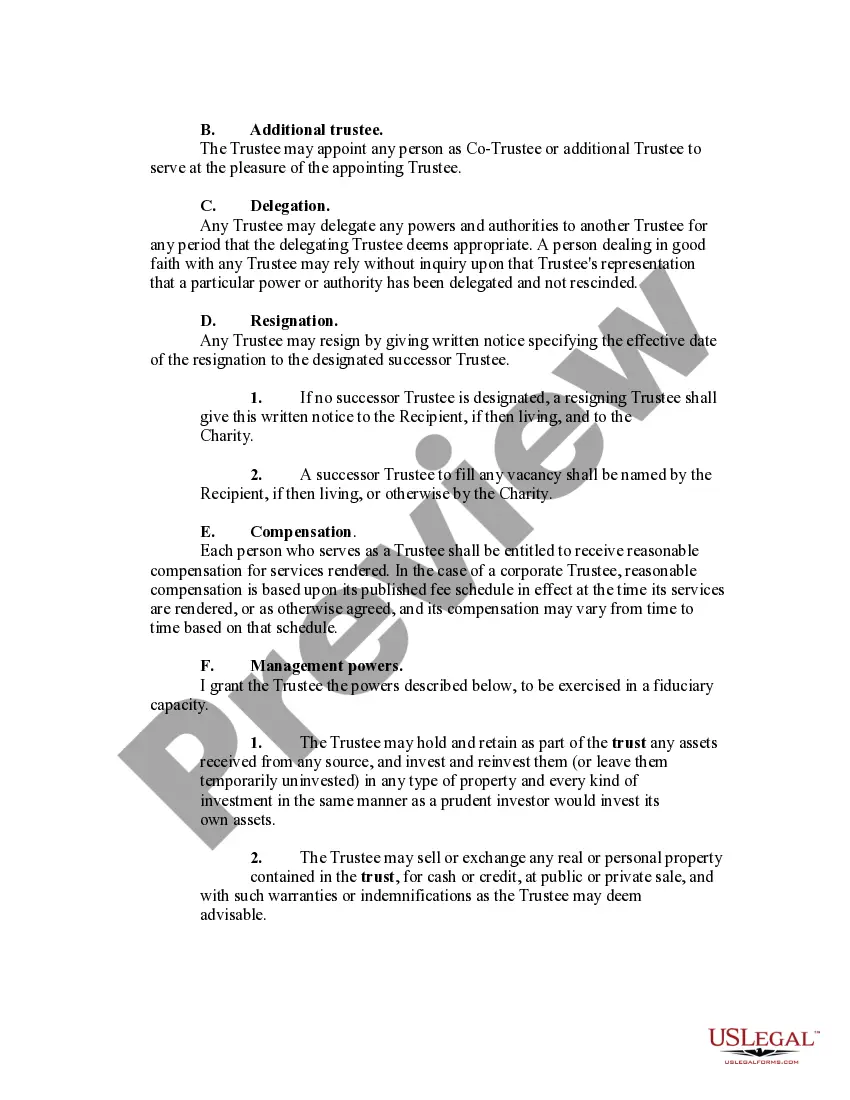
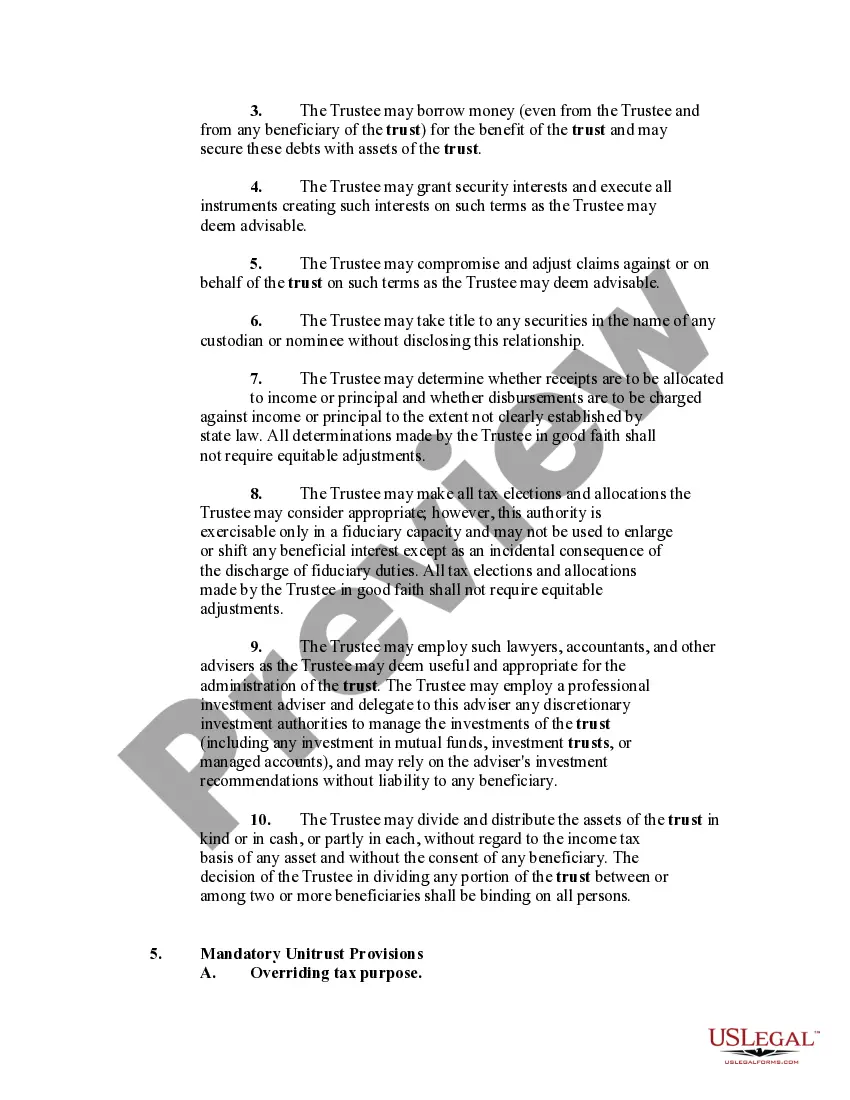
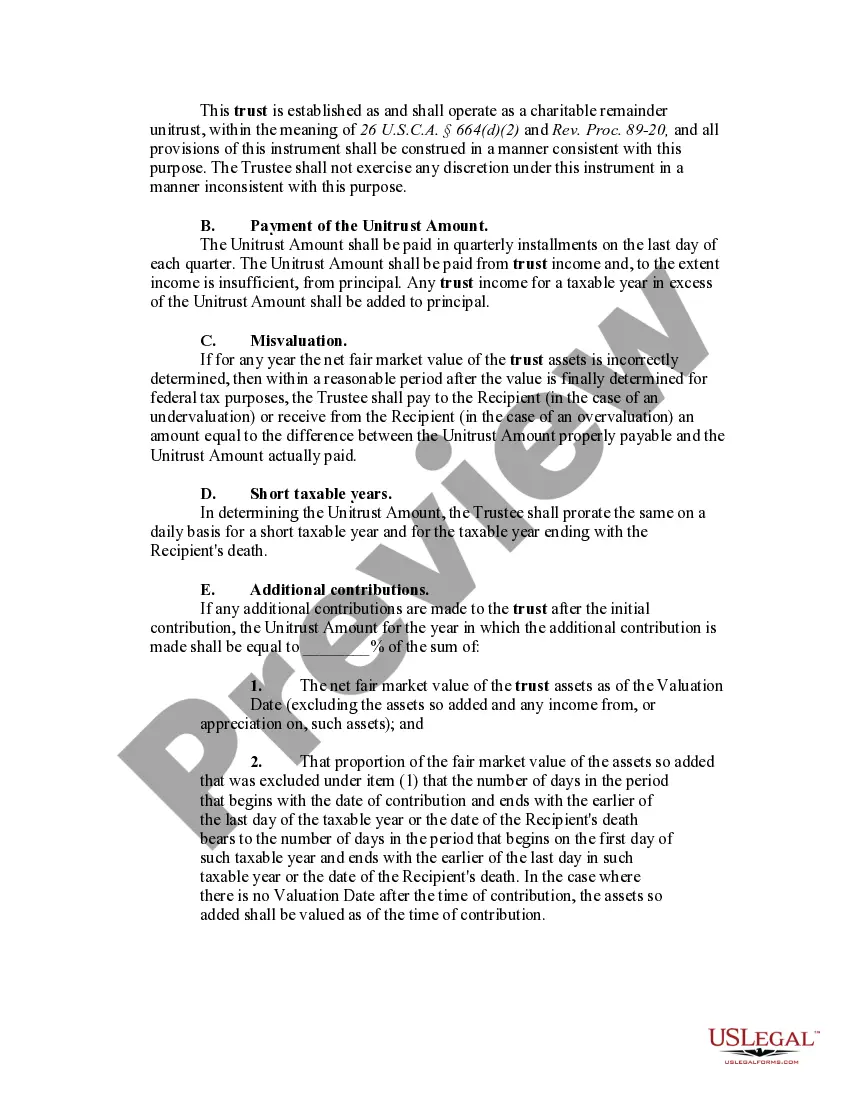
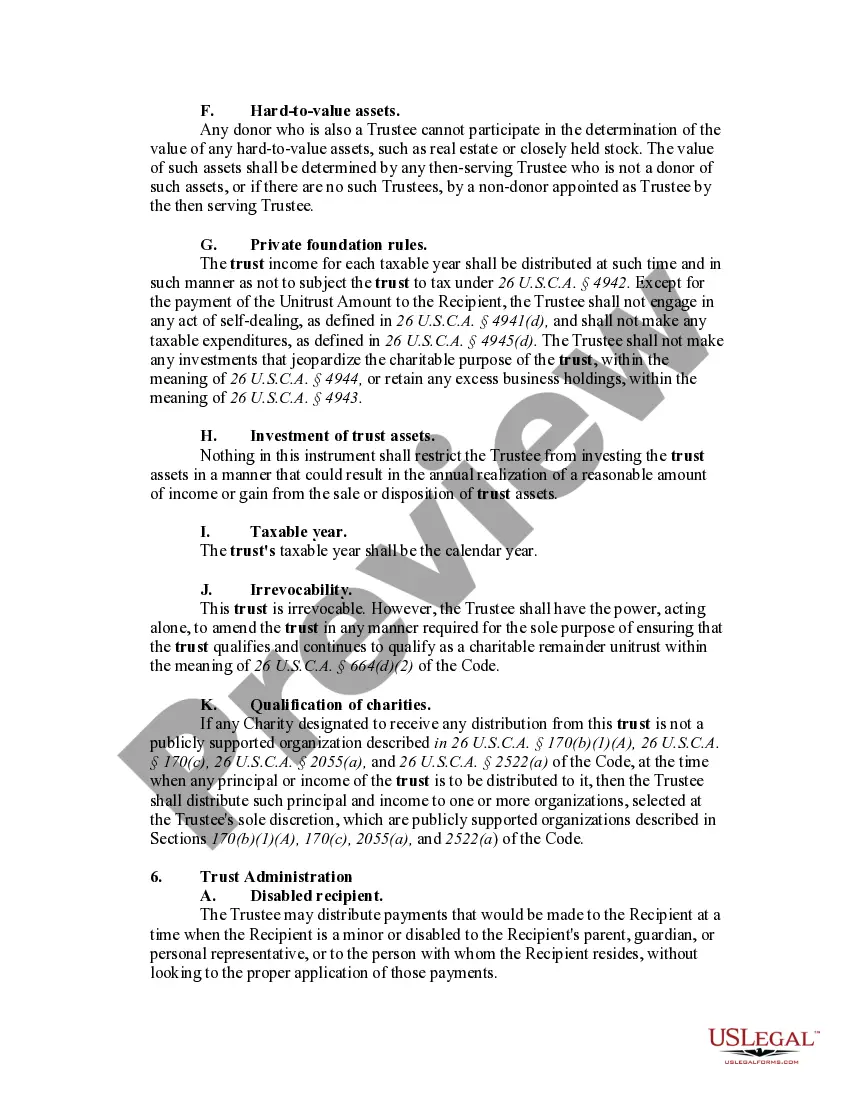
Get your form ready online
Our built-in tools help you complete, sign, share, and store your documents in one place.
Make edits, fill in missing information, and update formatting in US Legal Forms—just like you would in MS Word.
Download a copy, print it, send it by email, or mail it via USPS—whatever works best for your next step.
Sign and collect signatures with our SignNow integration. Send to multiple recipients, set reminders, and more. Go Premium to unlock E-Sign.
If this form requires notarization, complete it online through a secure video call—no need to meet a notary in person or wait for an appointment.
We protect your documents and personal data by following strict security and privacy standards.

Make edits, fill in missing information, and update formatting in US Legal Forms—just like you would in MS Word.

Download a copy, print it, send it by email, or mail it via USPS—whatever works best for your next step.

Sign and collect signatures with our SignNow integration. Send to multiple recipients, set reminders, and more. Go Premium to unlock E-Sign.

If this form requires notarization, complete it online through a secure video call—no need to meet a notary in person or wait for an appointment.

We protect your documents and personal data by following strict security and privacy standards.
Looking for another form?





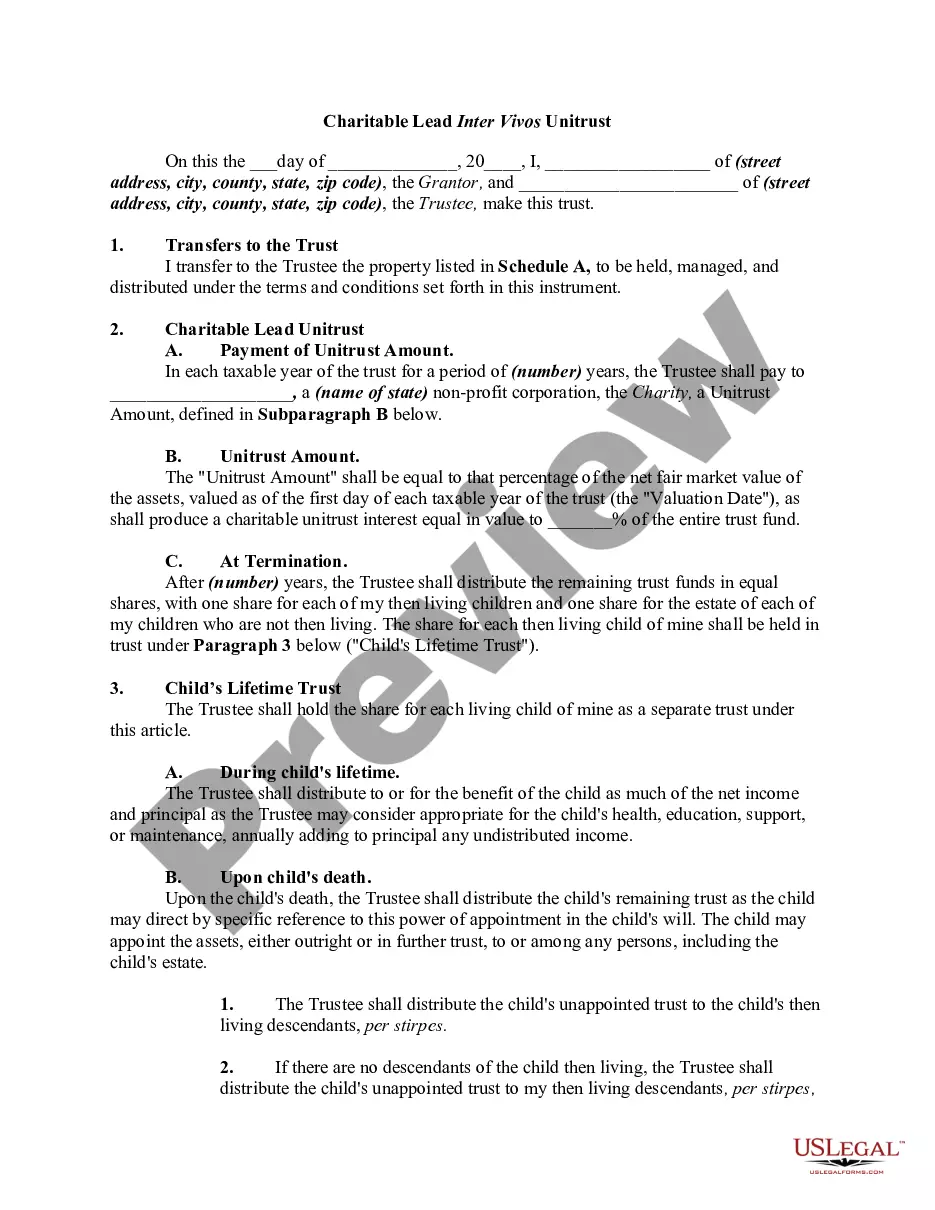
How to fill out Charitable Remainder Inter Vivos Unitrust Agreement?
- For returning users, start by logging into your US Legal Forms account. Verify that your subscription is active before proceeding to the library.
- If you are a new user, explore the form descriptions and preview modes to select the correct document that fits your jurisdiction.
- Use the search feature to find any other templates you might need; this ensures you have the most relevant forms.
- Select the 'Buy Now' option and choose a subscription plan that suits your needs. Create your account to access varied resources.
- Complete your purchase using a credit card or PayPal for a seamless transaction.
- Download the document onto your device and save it for completion. You can also find it in the 'My Forms' section of your profile at any time.
In conclusion, US Legal Forms empowers both individuals and attorneys alike to efficiently complete legal paperwork. With a vast collection of forms and expert assistance, you ensure your documents are both accurate and legally sound.
Don’t wait; start your journey towards easy legal document management today!
Form popularity
FAQ
Yes, federal gift tax returns can be filed electronically. This feature is particularly helpful for individuals managing multiple gifts or trusts and enjoying the benefits of a streamlined process. When you file, ensure that you complete all necessary forms, like the Charitable remainder unitrust blank with a letter, to avoid complications. Utilize software or online services that are IRS-approved for this electronic filing.
Unfortunately, charitable remainder trusts cannot be e-filed at this time. If you are managing such a trust, you will need to prepare and mail the relevant paperwork, including any Charitable remainder unitrust blank with a letter, to the IRS. Using a comprehensive service like USLegalForms can help in properly creating and organizing these documents. It’s always best to keep abreast of IRS updates regarding filing procedures.
Several IRS forms cannot be filed electronically, including forms related to certain trusts and estates. Specifically, forms like 5227 and some others tied to the Charitable remainder unitrust blank with a letter often require paper filing. For a full list, it’s wise to refer to the IRS website or consult with a tax professional. Knowing which forms are eligible for electronic filing helps streamline your tax preparation.
Currently, form 5227 cannot be filed electronically. However, you can easily fill it out and print it using services like USLegalForms. Remember, accurate completion of this form is essential when dealing with a Charitable remainder unitrust blank with a letter. Hence, consider reviewing the filled form with a tax professional if needed.
You should mail form 5227 to the address provided by the IRS based on your location and the type of trust. Typically, this includes the mailing addresses for submissions that require a Charitable remainder unitrust blank with a letter. Make sure to check the latest IRS guidelines for any updates to these mailing addresses. Always use a reliable mailing method to ensure your forms arrive safely.
Yes, trust tax returns can be filed electronically, making the process more efficient and convenient. By using platforms like USLegalForms, you can access necessary forms, including the Charitable remainder unitrust blank with a letter, and file them online. This method saves time and reduces the likelihood of errors. It's essential to ensure that you're using the correct software approved by the IRS.
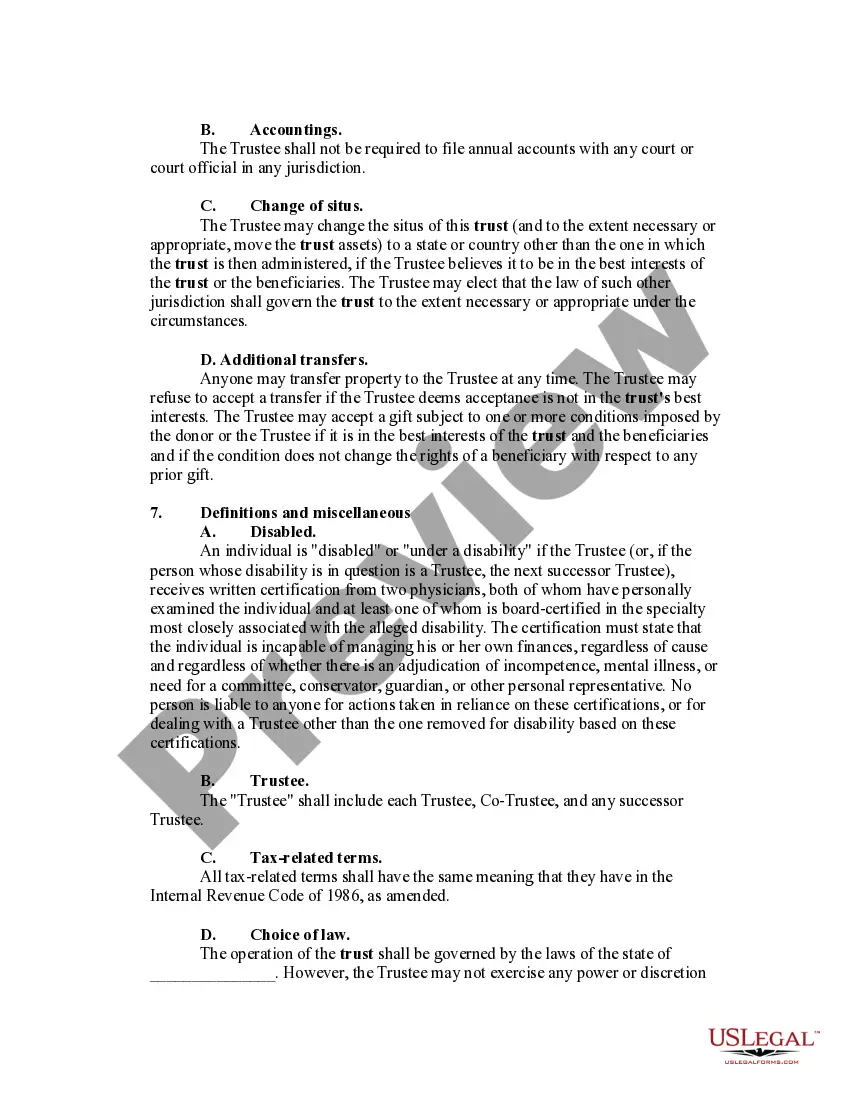
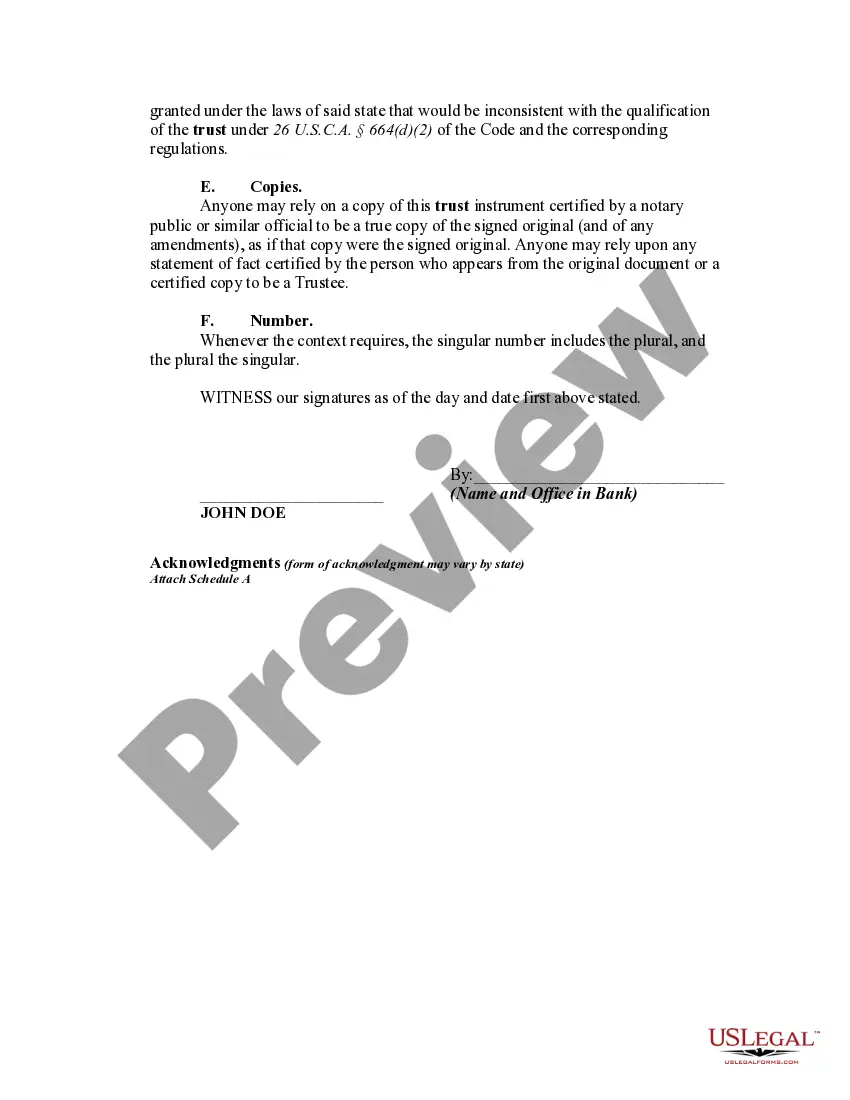
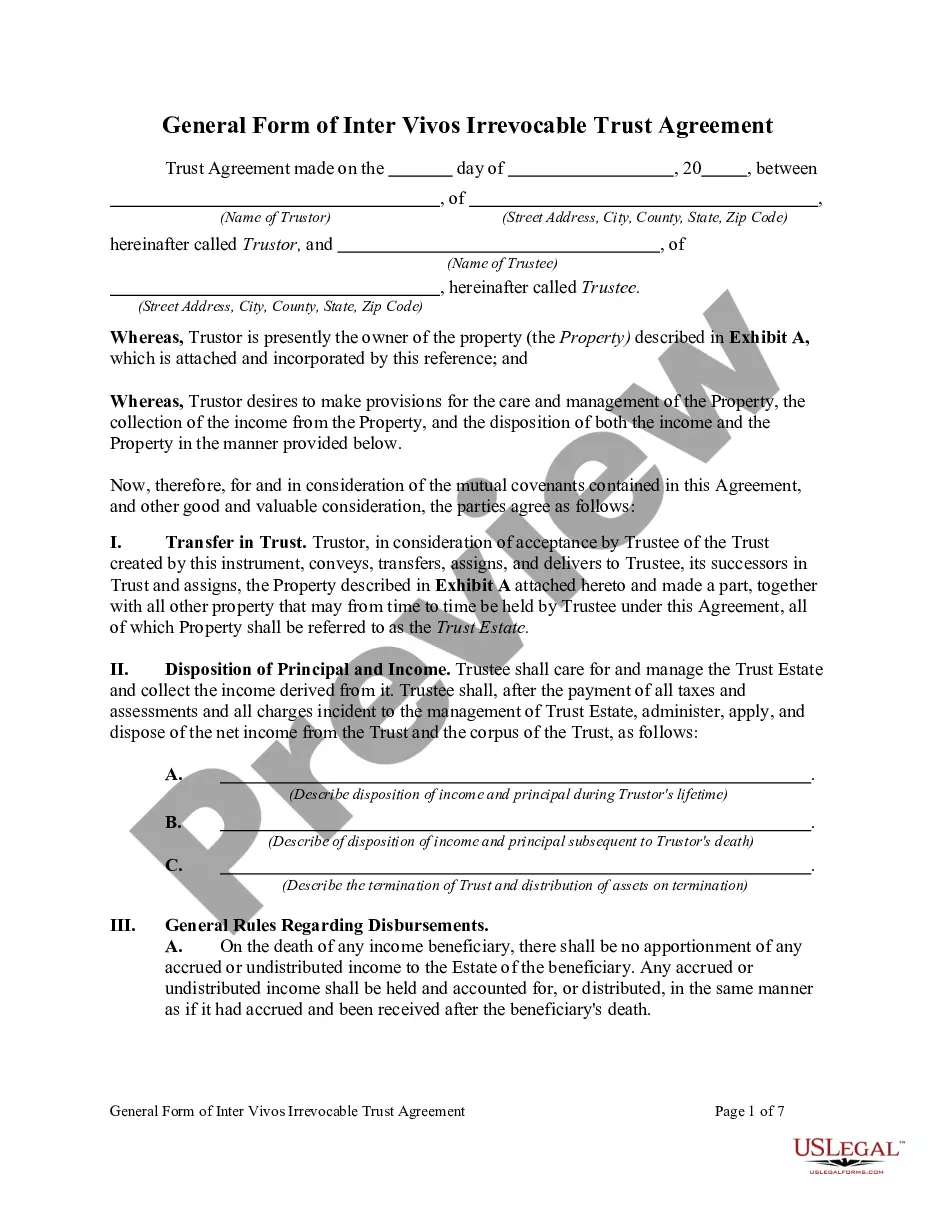
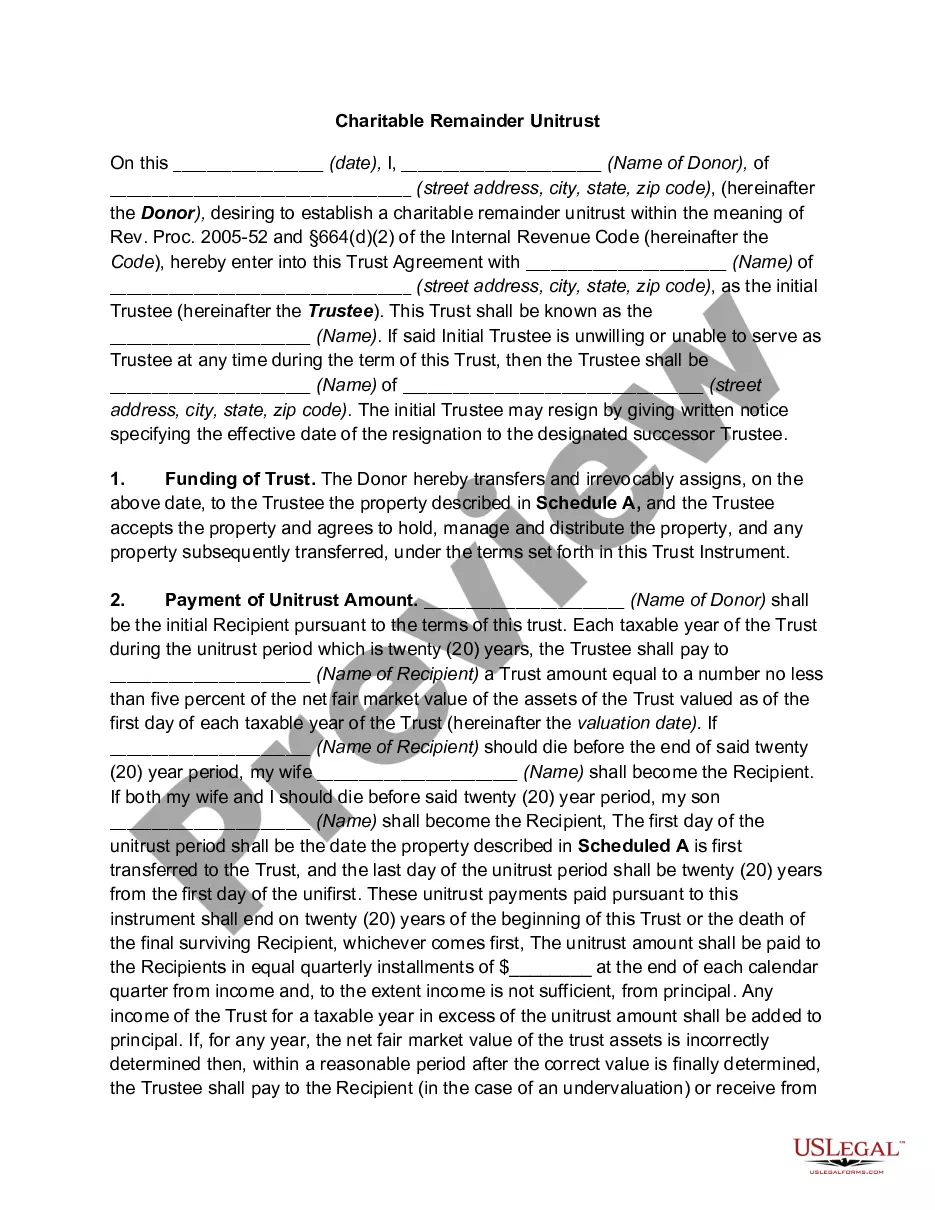
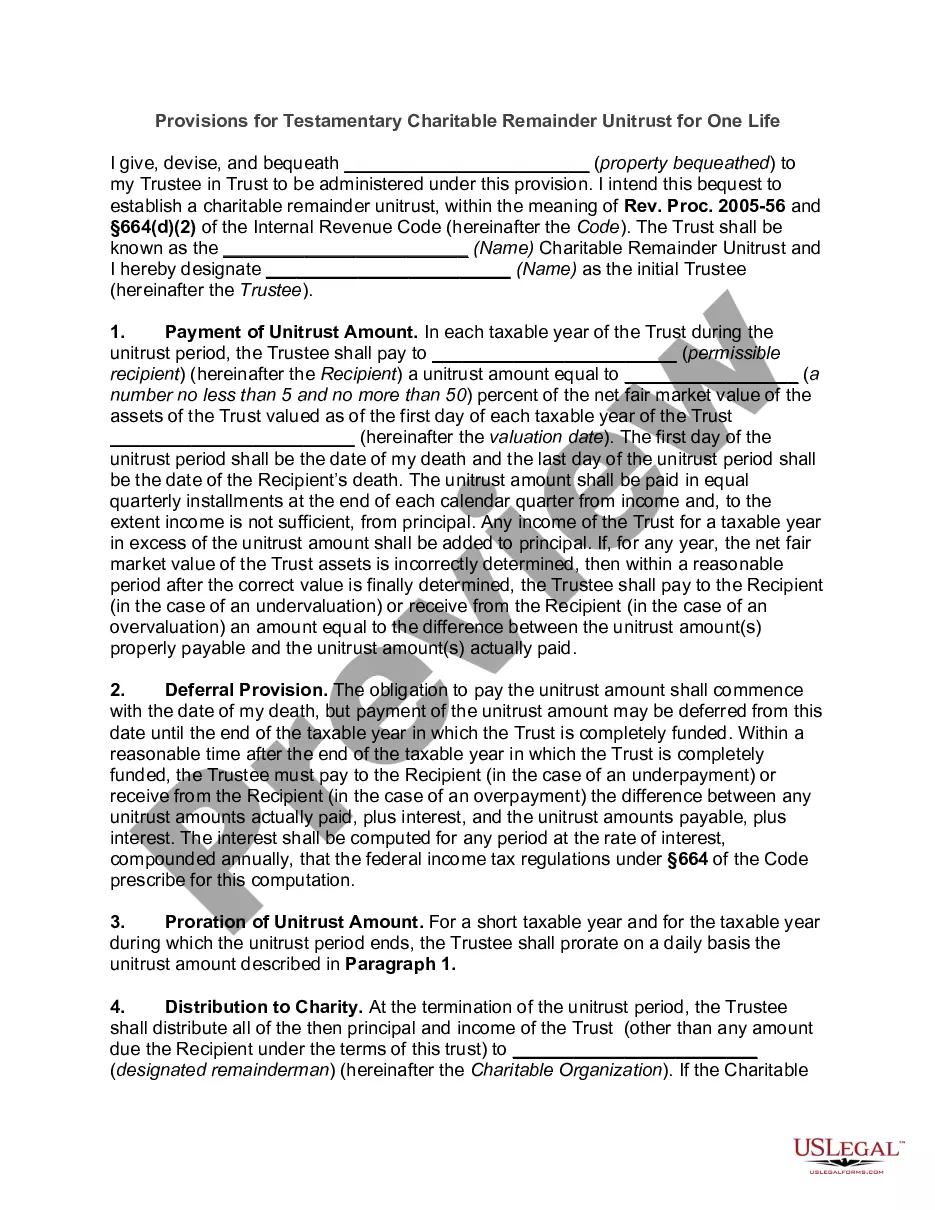
A Charitable Remainder Unitrust (CRUT) is a way to donate to charity while receiving income over time. You set up a trust that gives you or your beneficiaries a percentage of its value every year, and after a set period, the remaining assets go to a chosen charity. This arrangement provides tax benefits and allows for continued income during your lifetime.
Charitable Remainder Unitrusts must meet specific IRS guidelines to maintain their tax-exempt status. They need to distribute a minimum percentage of assets at least annually to the income beneficiaries and must designate a qualified charity to receive the remainder after the trust term ends. Familiarity with these rules can help you set up a compliant and effective trust.
The abbreviation for unitrust is UTM. This term is often used in discussions about various financial products, including Charitable Remainder Unitrusts. Understanding this abbreviation can enhance your financial literacy when discussing charitable or estate planning.
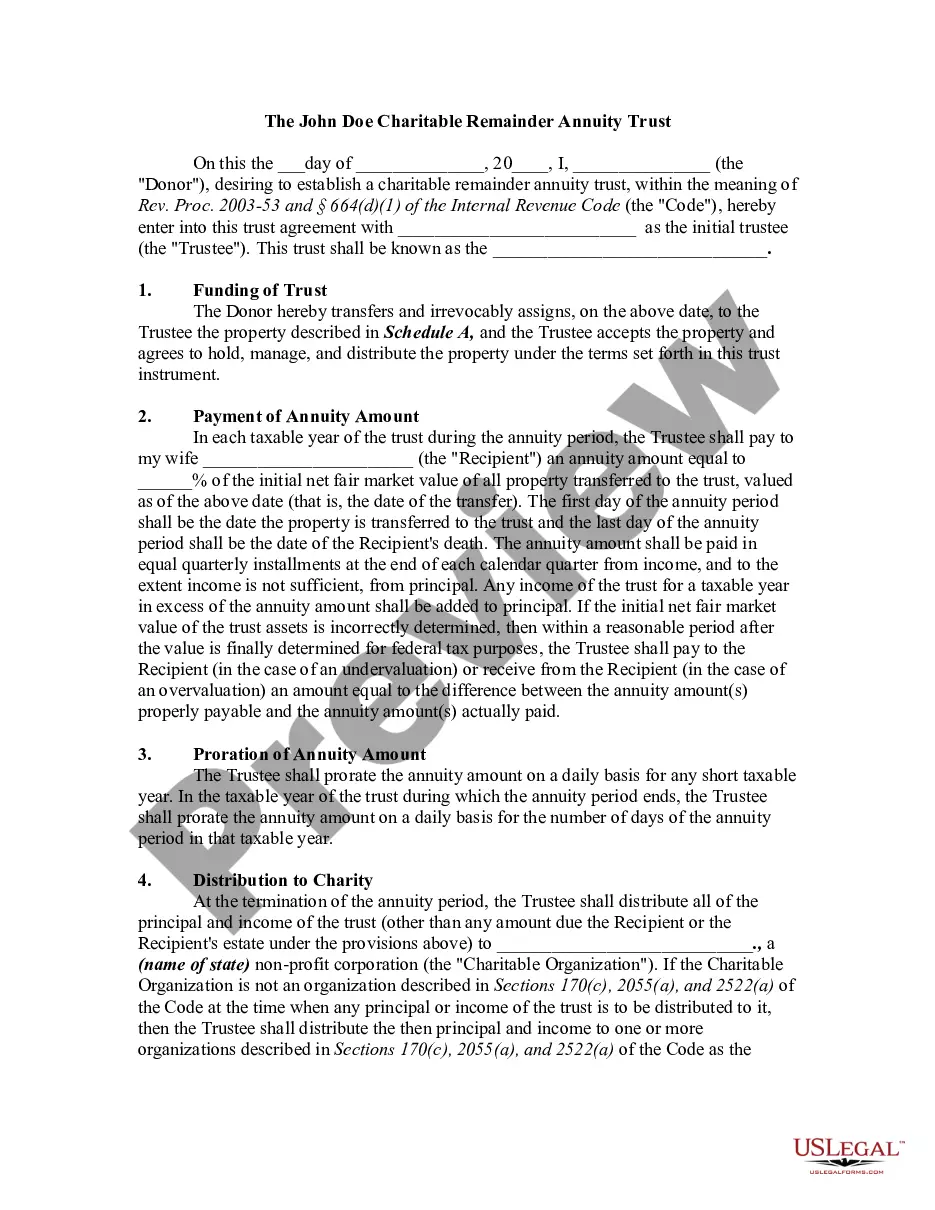
CRAT stands for Charitable Remainder Annuity Trust, while CRUT means Charitable Remainder Unitrust. Both are types of charitable remainder trusts but differ in how they distribute income. A CRAT pays a fixed amount annually, whereas a CRUT pays a percentage of the trust’s market value, offering potentially more variable income.