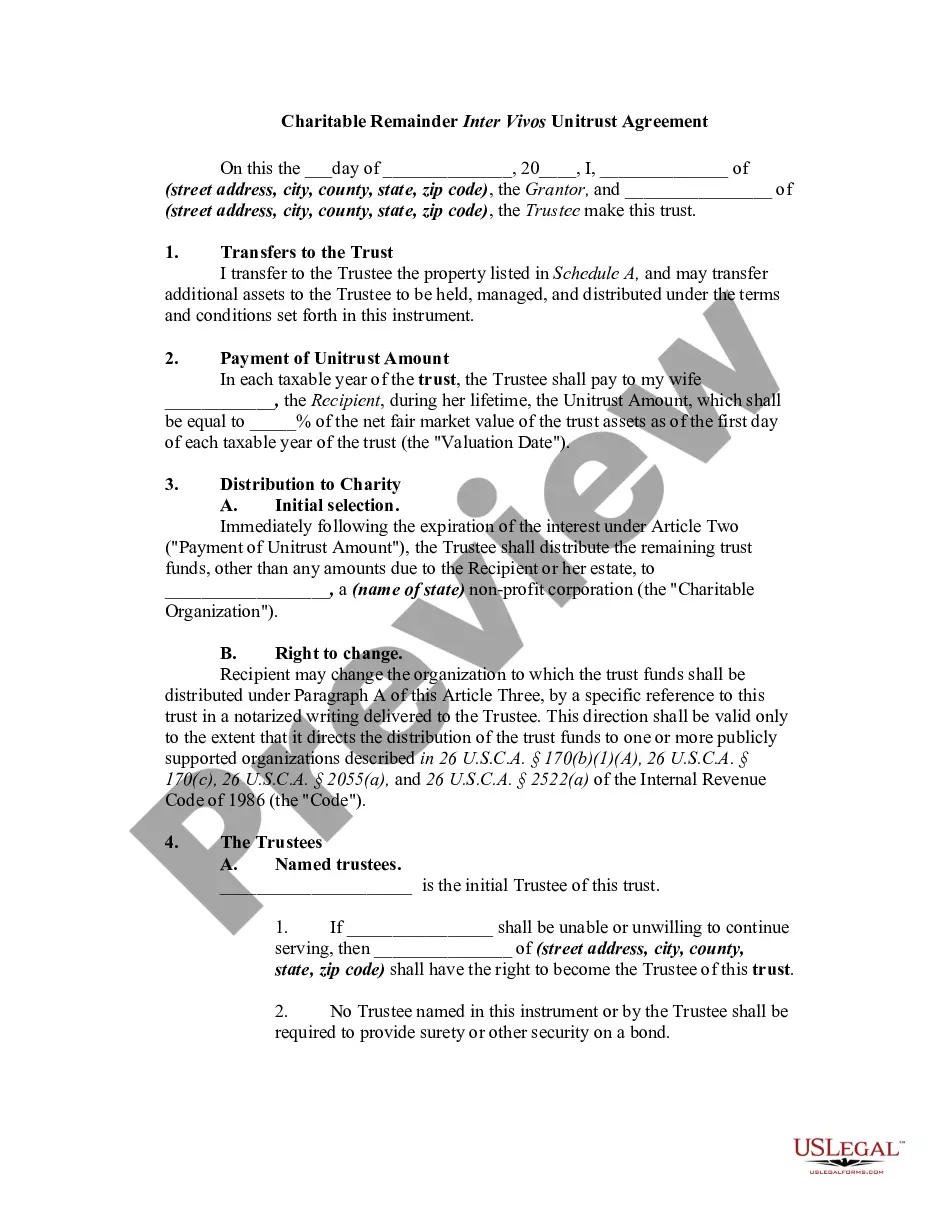
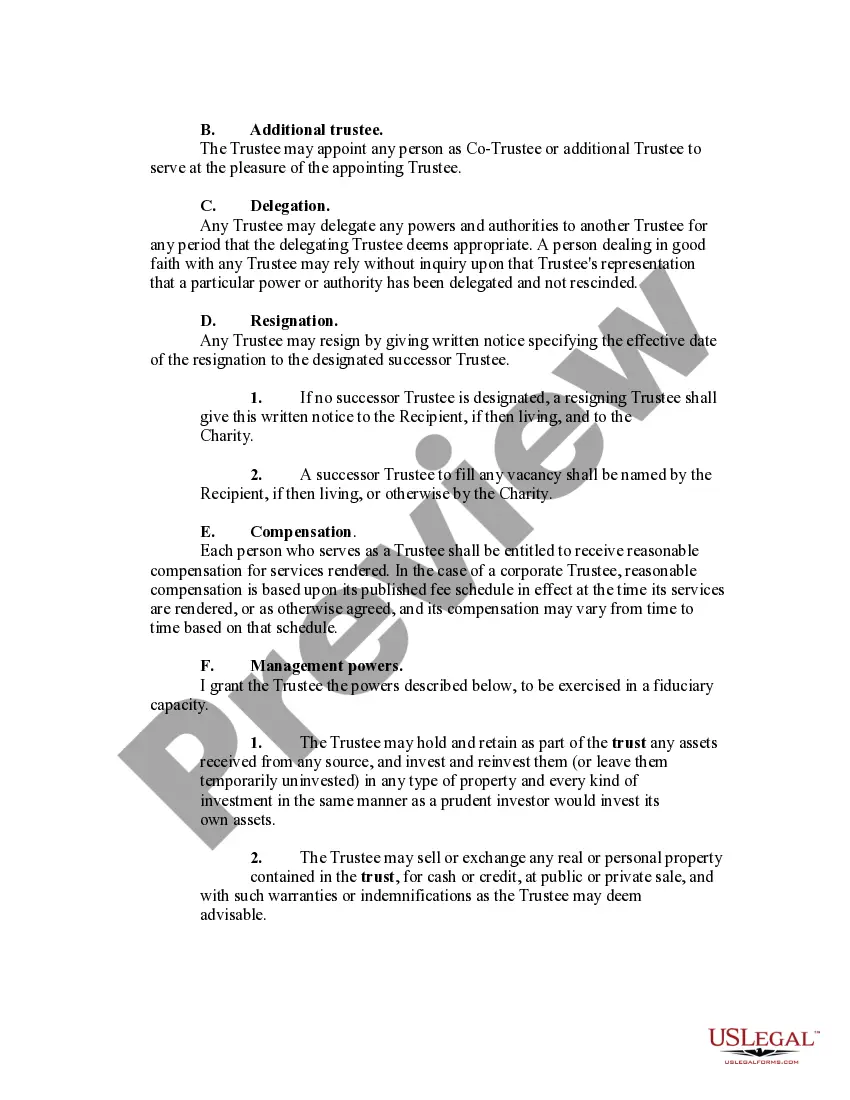
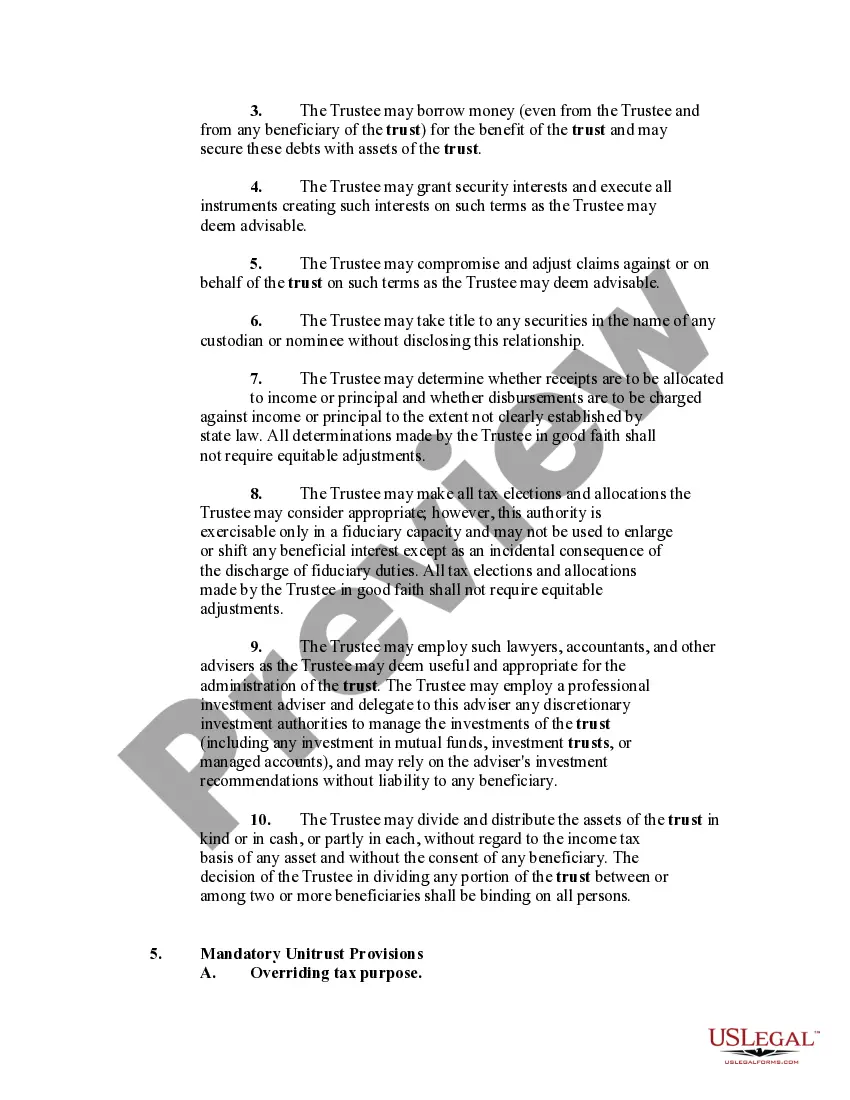
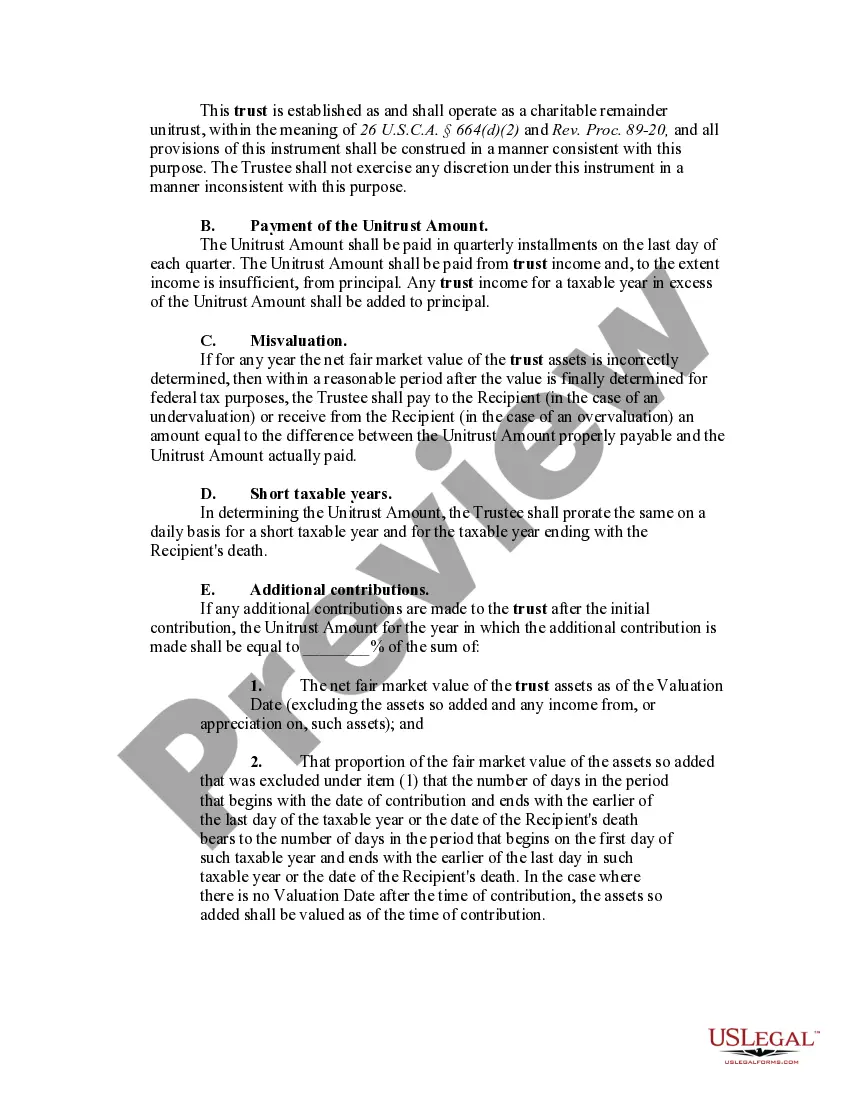
Charitable Remainder Unitrust Blank For A Trust
Description
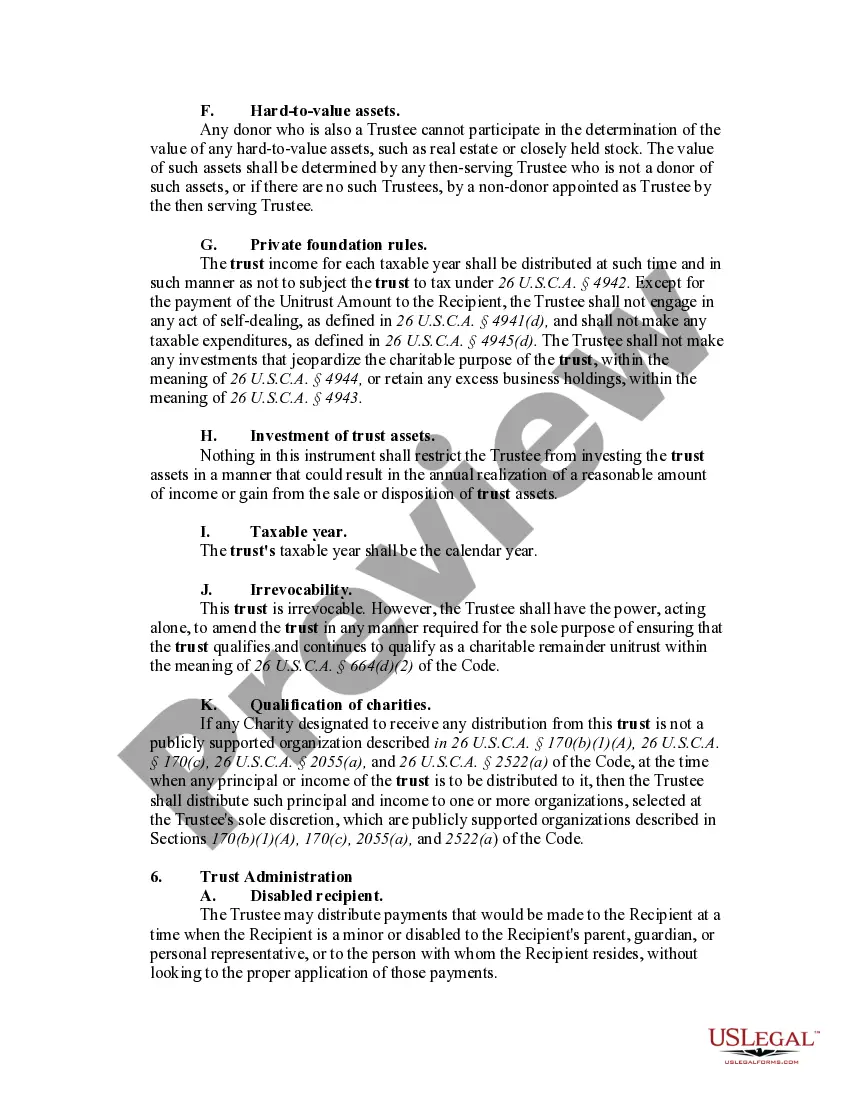
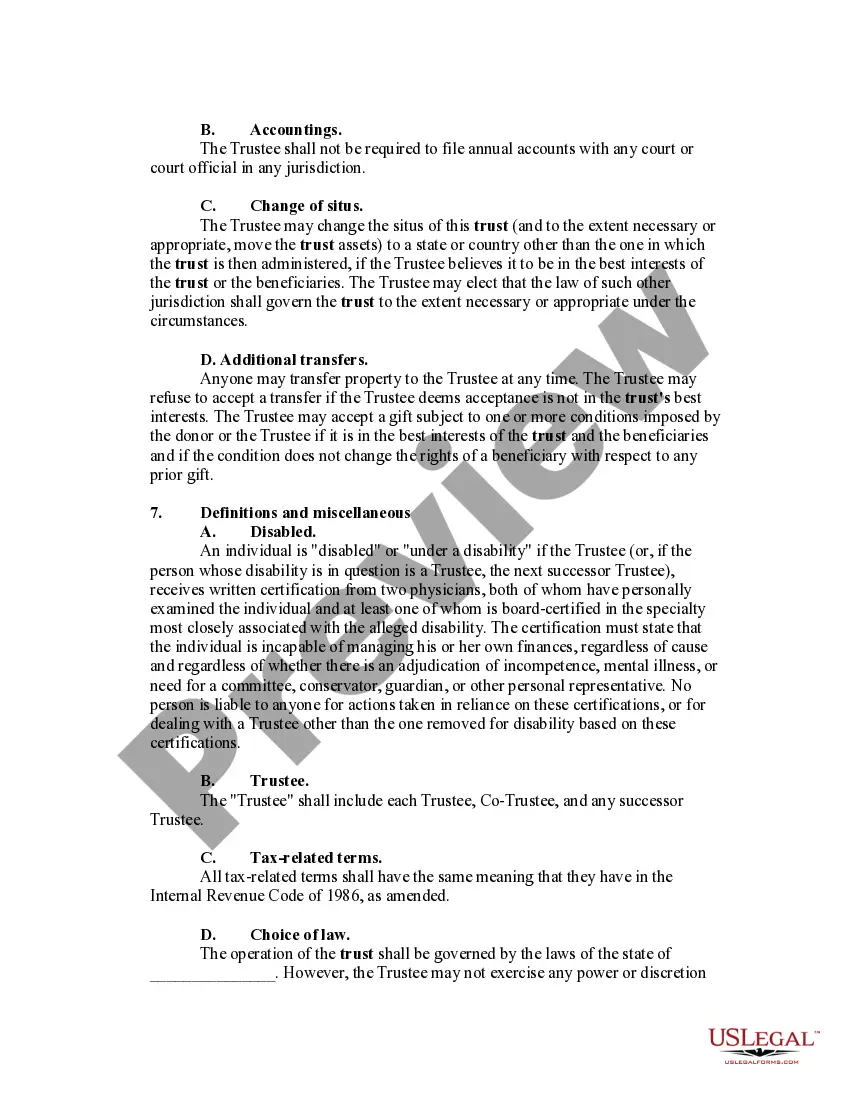
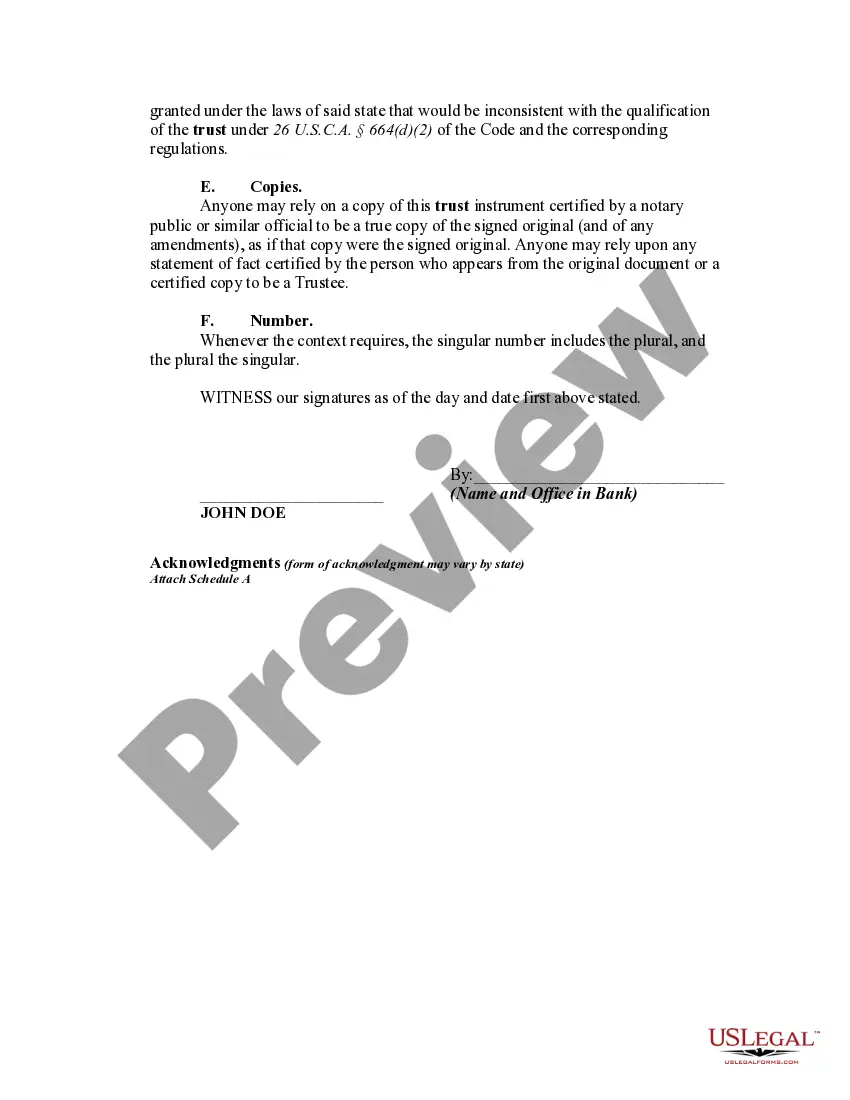
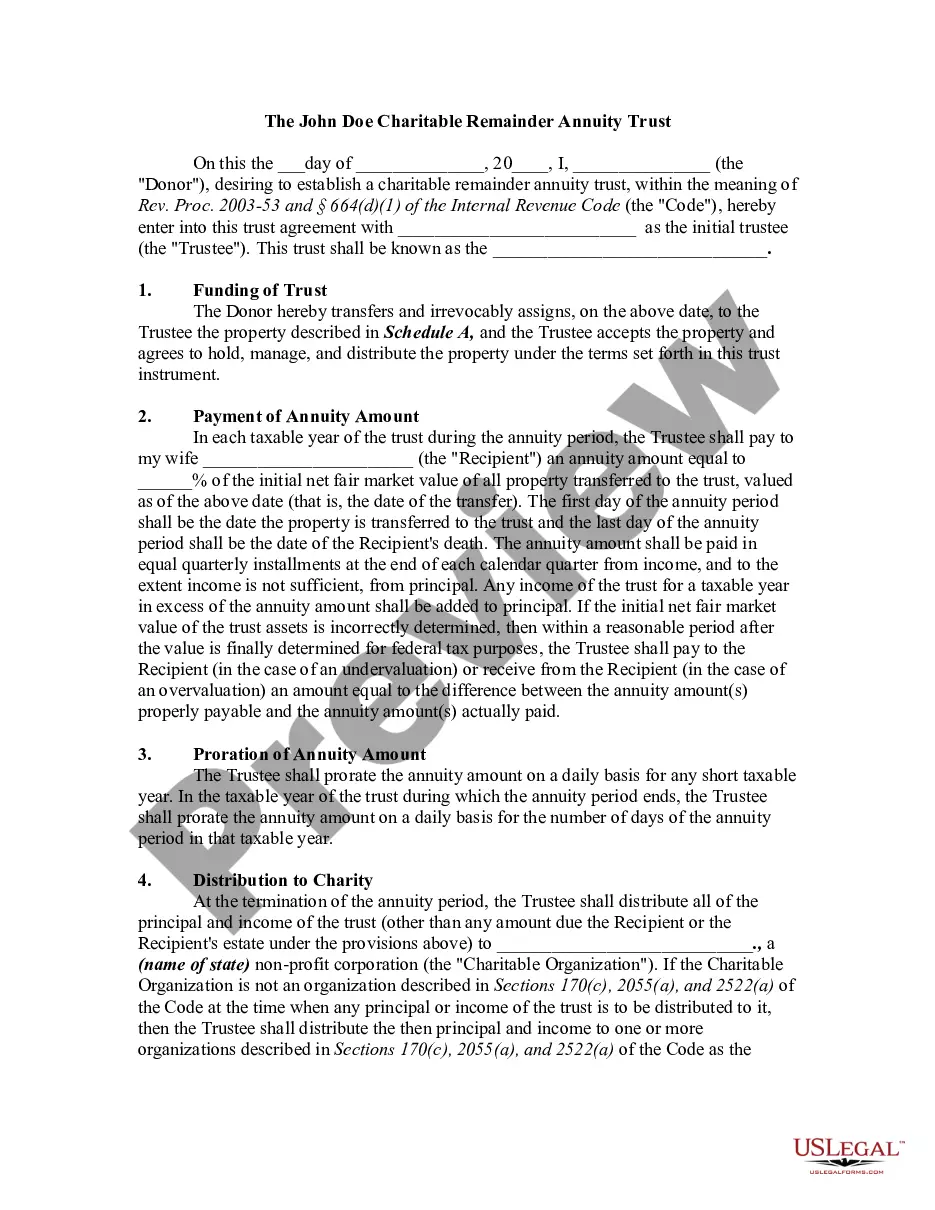
Get your form ready online
Our built-in tools help you complete, sign, share, and store your documents in one place.
Make edits, fill in missing information, and update formatting in US Legal Forms—just like you would in MS Word.
Download a copy, print it, send it by email, or mail it via USPS—whatever works best for your next step.
Sign and collect signatures with our SignNow integration. Send to multiple recipients, set reminders, and more. Go Premium to unlock E-Sign.
If this form requires notarization, complete it online through a secure video call—no need to meet a notary in person or wait for an appointment.
We protect your documents and personal data by following strict security and privacy standards.

Make edits, fill in missing information, and update formatting in US Legal Forms—just like you would in MS Word.

Download a copy, print it, send it by email, or mail it via USPS—whatever works best for your next step.

Sign and collect signatures with our SignNow integration. Send to multiple recipients, set reminders, and more. Go Premium to unlock E-Sign.

If this form requires notarization, complete it online through a secure video call—no need to meet a notary in person or wait for an appointment.

We protect your documents and personal data by following strict security and privacy standards.
Looking for another form?


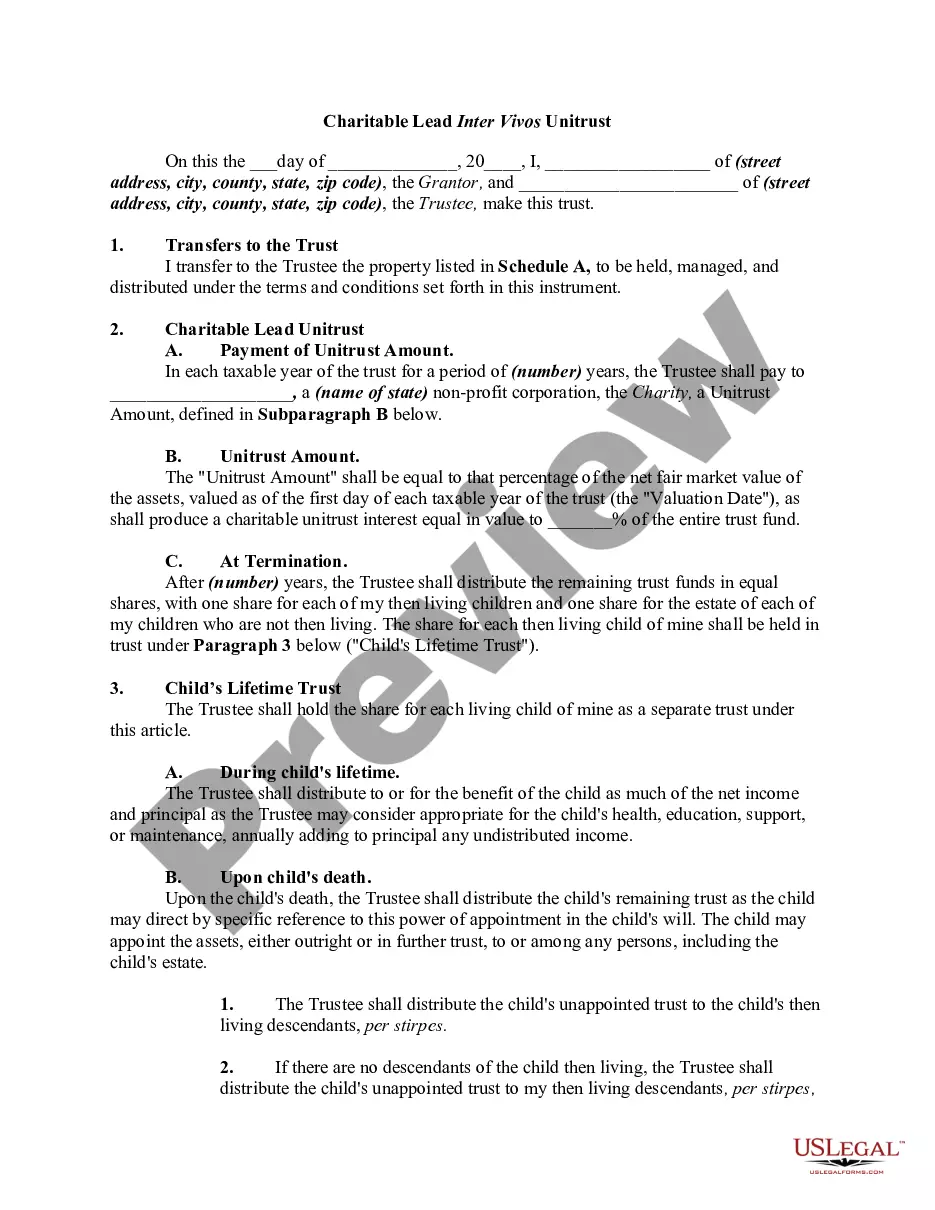
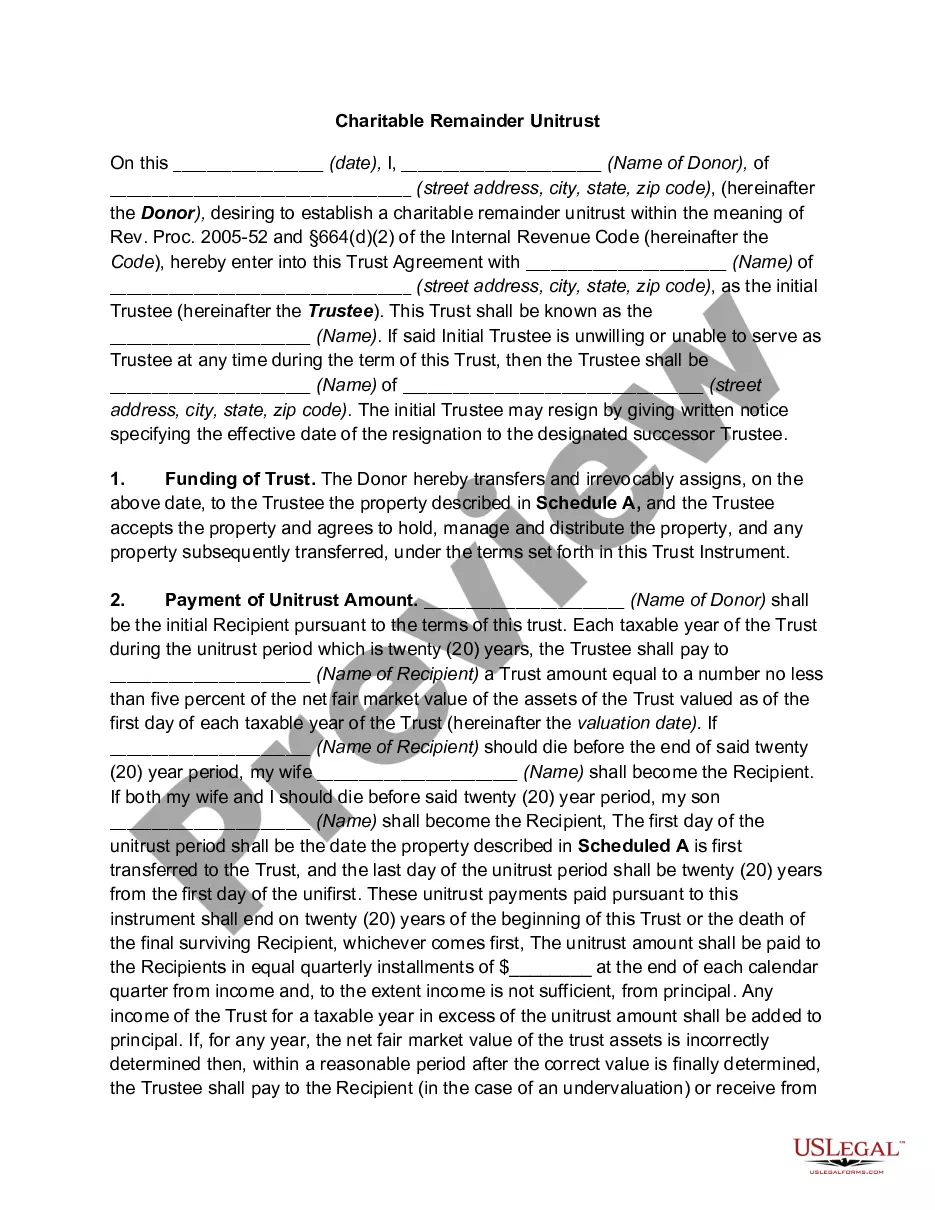
How to fill out Charitable Remainder Inter Vivos Unitrust Agreement?
- If you have an existing account with US Legal Forms, log in and navigate to your dashboard to download the Charitable Remainder Unitrust form. Ensure that your subscription is active to gain access to the document.
- If this is your first time using US Legal Forms, start by reviewing the form in Preview mode to ensure it fits your specific legal needs and complies with local jurisdiction requirements.
- If adjustments are needed or if you find inconsistencies, utilize the Search tab to find alternative legal templates that suit your needs accurately.
- Select and purchase your desired document by clicking the Buy Now button. Choose a subscription plan that works best for you, remembering that registration is required for access.
- Provide your payment details using either a credit card or your PayPal account to complete the payment process.
- After your purchase is confirmed, download your form directly to your device. You can always revisit it later through the My Forms section in your profile.
By following these straightforward steps with US Legal Forms, you can ensure that your Charitable Remainder Unitrust is set up effectively and legally sound.
Don't miss out on the opportunity to simplify your legal documentation needs. Explore US Legal Forms today for expert assistance and a robust collection of legal forms!
Form popularity
FAQ
One downside of charitable remainder trusts involves their complexity during setup and maintenance. They require ongoing administration and legal compliance, which can lead to added costs. Additionally, once you place your assets in the trust, you generally lose control over them. Understanding these downsides is crucial, and our US Legal Forms platform can guide you through the process of a charitable remainder unitrust blank for a trust to ensure clarity and compliance.
Charitable remainder trusts can be an excellent idea for individuals looking to balance philanthropy with financial planning. They offer the dual benefits of providing income during your lifetime while supporting a cause you care about after your passing. These trusts can also yield considerable tax advantages, enhancing your financial strategy. Explore our platform to discover how a charitable remainder unitrust blank for a trust might be the right fit for you.
While charitable trusts offer benefits, they also come with disadvantages. For instance, donors relinquish control of assets placed in the trust, which can be a significant consideration. Additionally, contributions may not provide as much immediate tax deduction compared to other strategies. It's essential to weigh these factors carefully, and using our resources can help clarify the aspects of a charitable remainder unitrust blank for a trust.
A charitable remainder trust allows you to donate assets to a trust, which then provides income to you or your beneficiaries for a specified period. After this period ends, the remaining assets go to a designated charity. For instance, a charitable remainder unitrust blank for a trust could involve you contributing stock to the trust, receiving annual payments based on the trust's value, and eventually benefiting a charity you care about. This setup not only supports your chosen cause but can also offer tax advantages, making it an appealing option.
As of now, IRS Form 5227 cannot be filed electronically; it must be submitted via mail. However, preparing the form digitally helps streamline the process, allowing for easy updates and record-keeping. By using platforms like US Legal Forms, you can access a Charitable Remainder Unitrust blank for a trust to assist in properly completing the form.
Yes, you can create your own charitable remainder trust. Start by drafting a trust document that details how the assets will be managed and distributed. While self-creation is possible, seeking legal advice helps avoid common pitfalls. To assist you, US Legal Forms offers a Charitable Remainder Unitrust blank for a trust, making the process smoother.
To set up a unitrust, start by writing a trust agreement that specifies how the unitrust will operate. Make sure to designate beneficiaries and choose a qualified charitable organization for the remainder interest. Consider reviewing templates or legal help from US Legal Forms, as they provide a Charitable Remainder Unitrust blank for a trust that can guide you through the setup.
Setting up a Charitable Remainder Unitrust (CRUT) involves drafting a trust document that clearly outlines the terms. You need to identify the trust beneficiaries and the charitable organization receiving the remainder. Consult with an estate planner or use online resources, such as US Legal Forms, to get a Charitable Remainder Unitrust blank for a trust that meets your needs.
To file a charitable remainder trust, you first need to complete necessary forms including IRS Form 5227. This form details the trust's income, expenses, and distributions. Additionally, ensure that all documentation, such as the trust agreement, is properly organized. Consider using a platform like US Legal Forms to simplify the filing process and ensure accuracy.
A Charitable Remainder Trust (CRT) provides income to beneficiaries and donates the remaining assets to a charity after a specified term. Conversely, a Charitable Lead Trust (CLT) pays income to a charity for a set period, with the remaining assets going to beneficiaries afterward. This distinction affects both income generation and charitable contributions, so consider your goals when selecting between a CRT and a CLT trust.