Charitable Remainder Trust With Ira
Description
Get your form ready online
Our built-in tools help you complete, sign, share, and store your documents in one place.
Make edits, fill in missing information, and update formatting in US Legal Forms—just like you would in MS Word.
Download a copy, print it, send it by email, or mail it via USPS—whatever works best for your next step.
Sign and collect signatures with our SignNow integration. Send to multiple recipients, set reminders, and more. Go Premium to unlock E-Sign.
If this form requires notarization, complete it online through a secure video call—no need to meet a notary in person or wait for an appointment.
We protect your documents and personal data by following strict security and privacy standards.

Make edits, fill in missing information, and update formatting in US Legal Forms—just like you would in MS Word.

Download a copy, print it, send it by email, or mail it via USPS—whatever works best for your next step.

Sign and collect signatures with our SignNow integration. Send to multiple recipients, set reminders, and more. Go Premium to unlock E-Sign.

If this form requires notarization, complete it online through a secure video call—no need to meet a notary in person or wait for an appointment.

We protect your documents and personal data by following strict security and privacy standards.
Looking for another form?








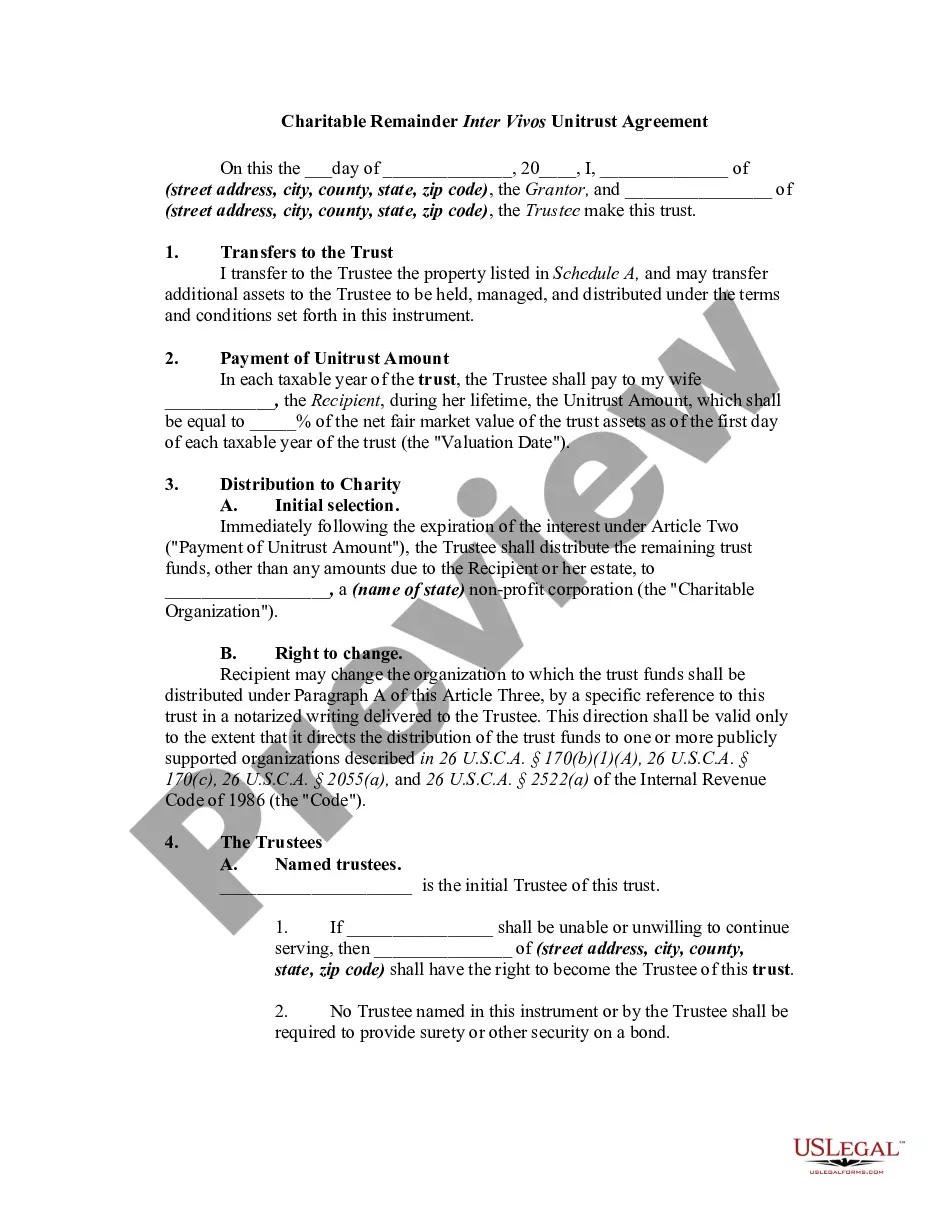
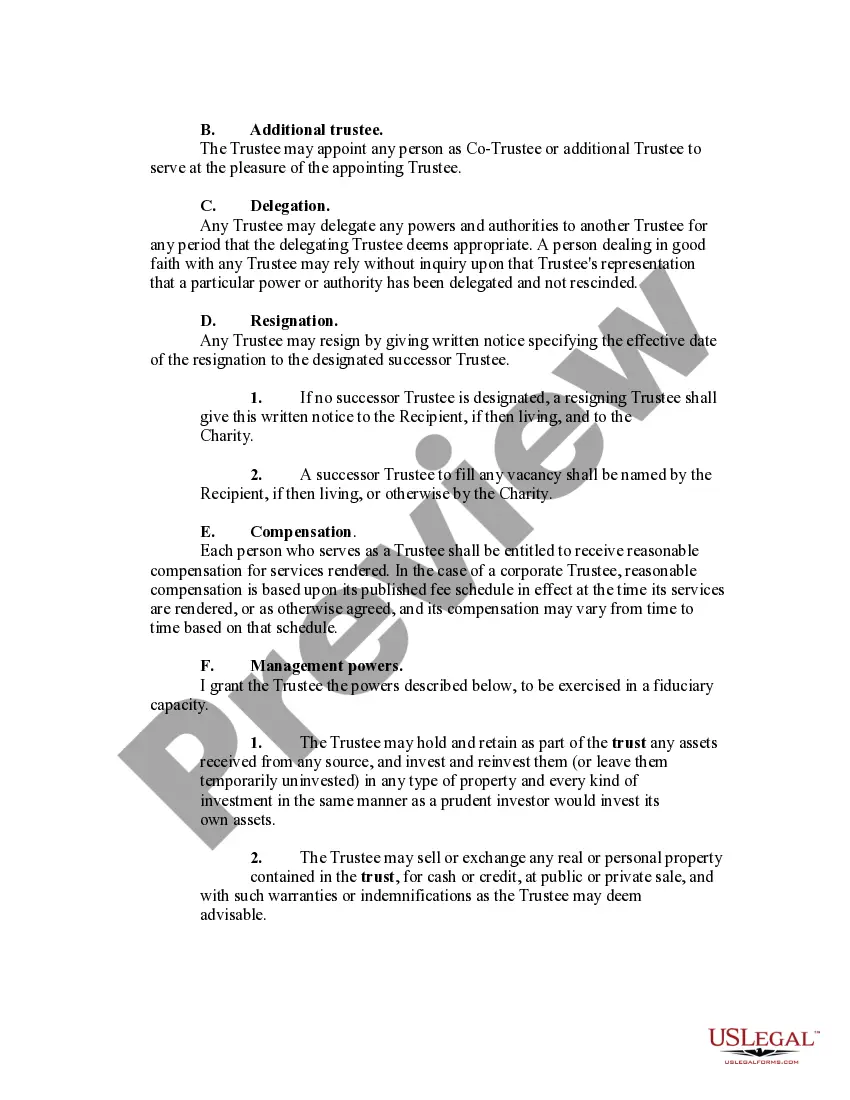
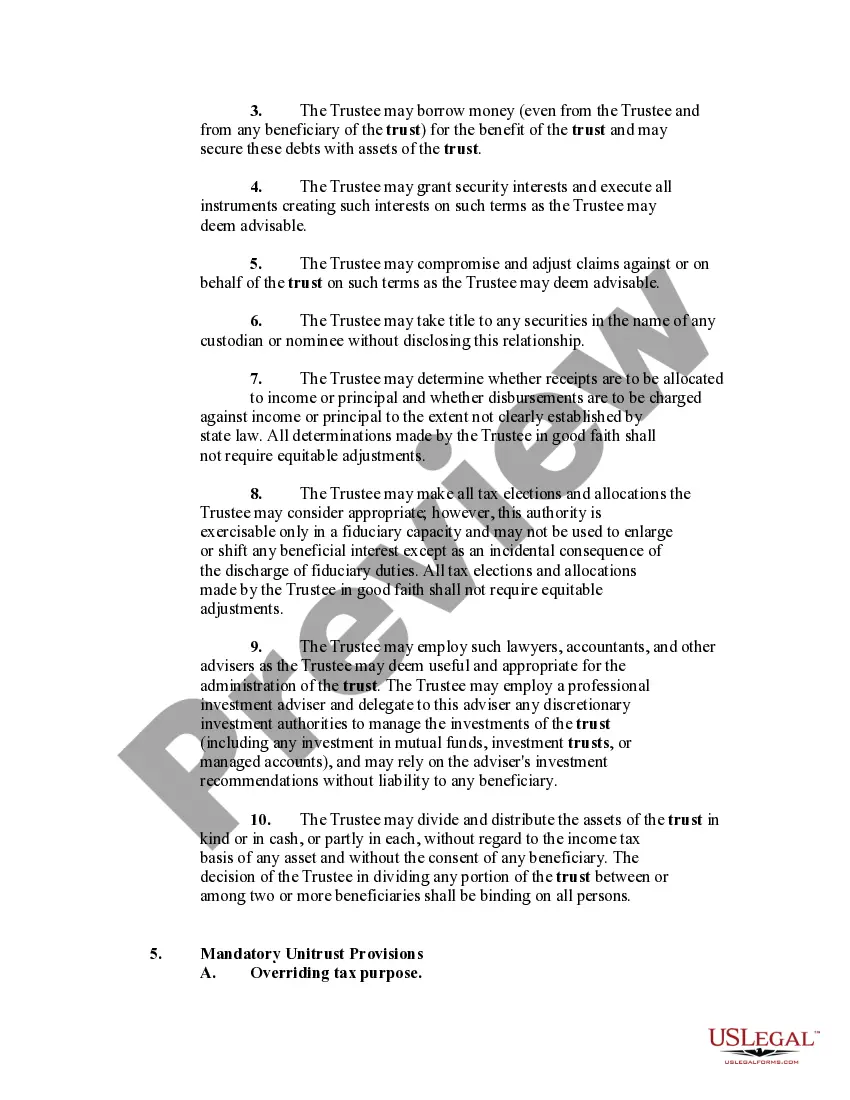
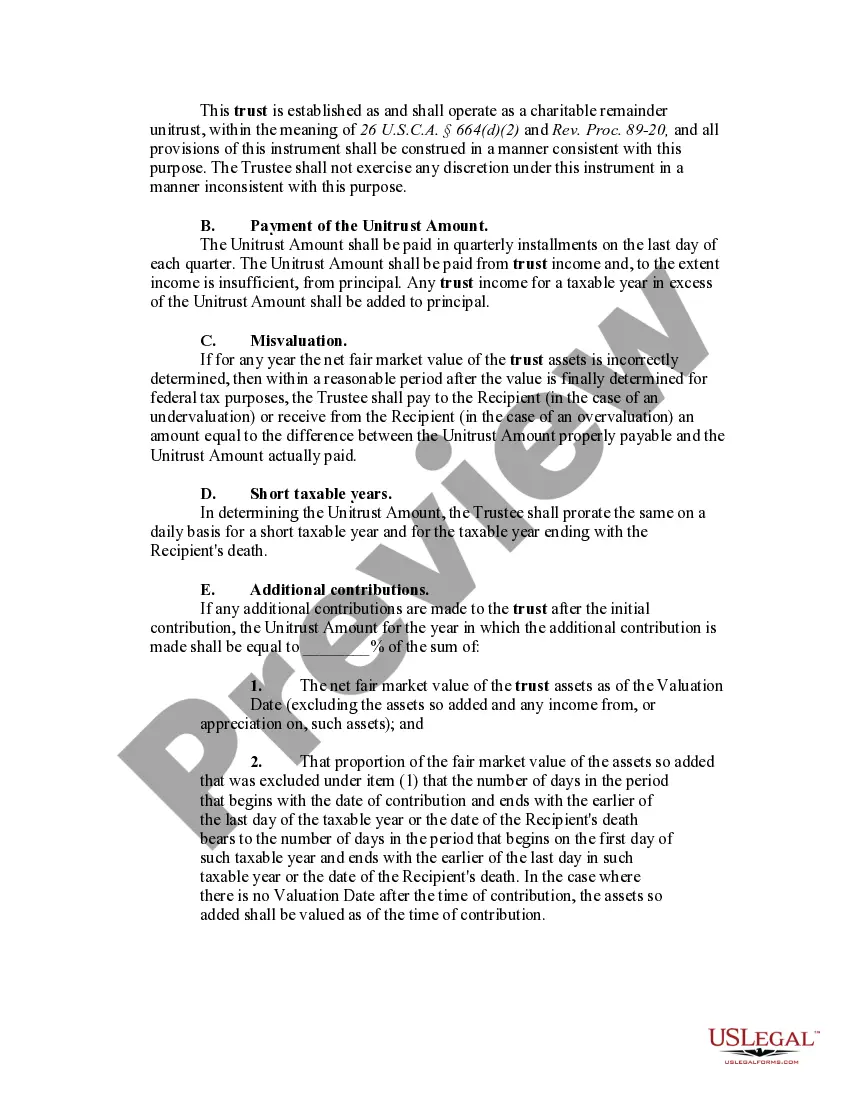
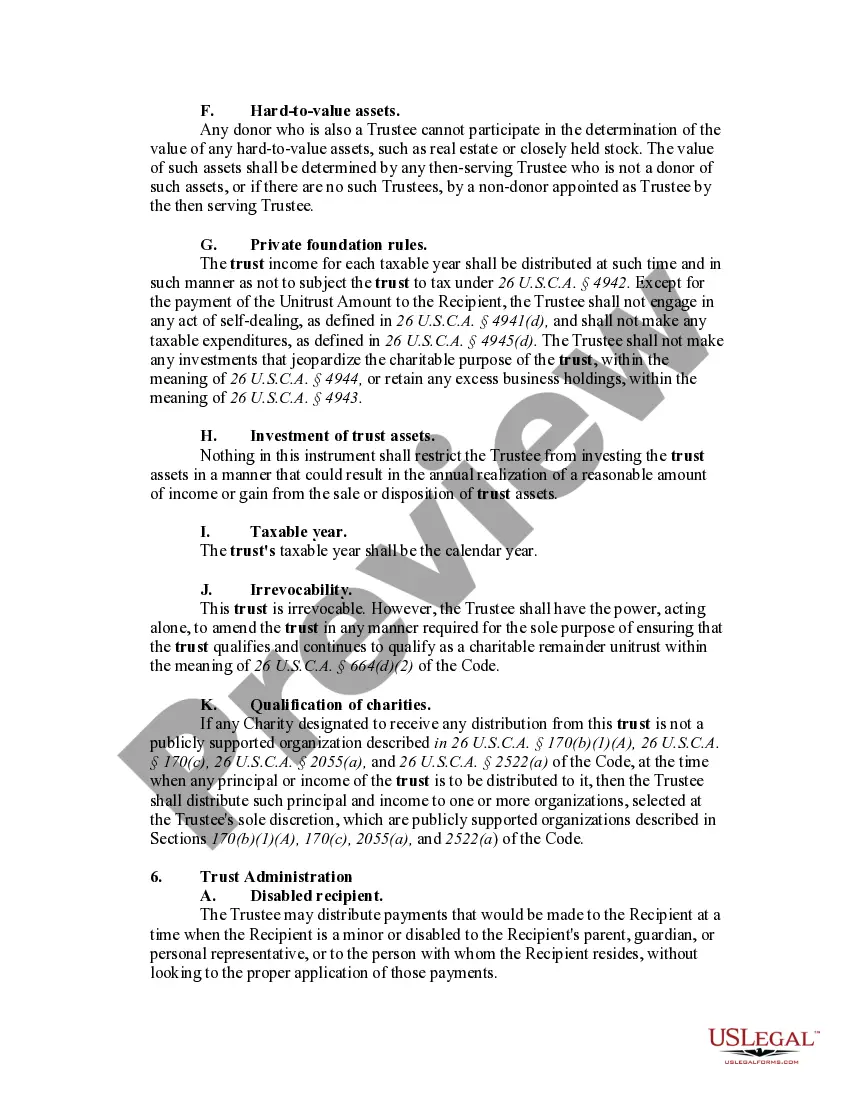
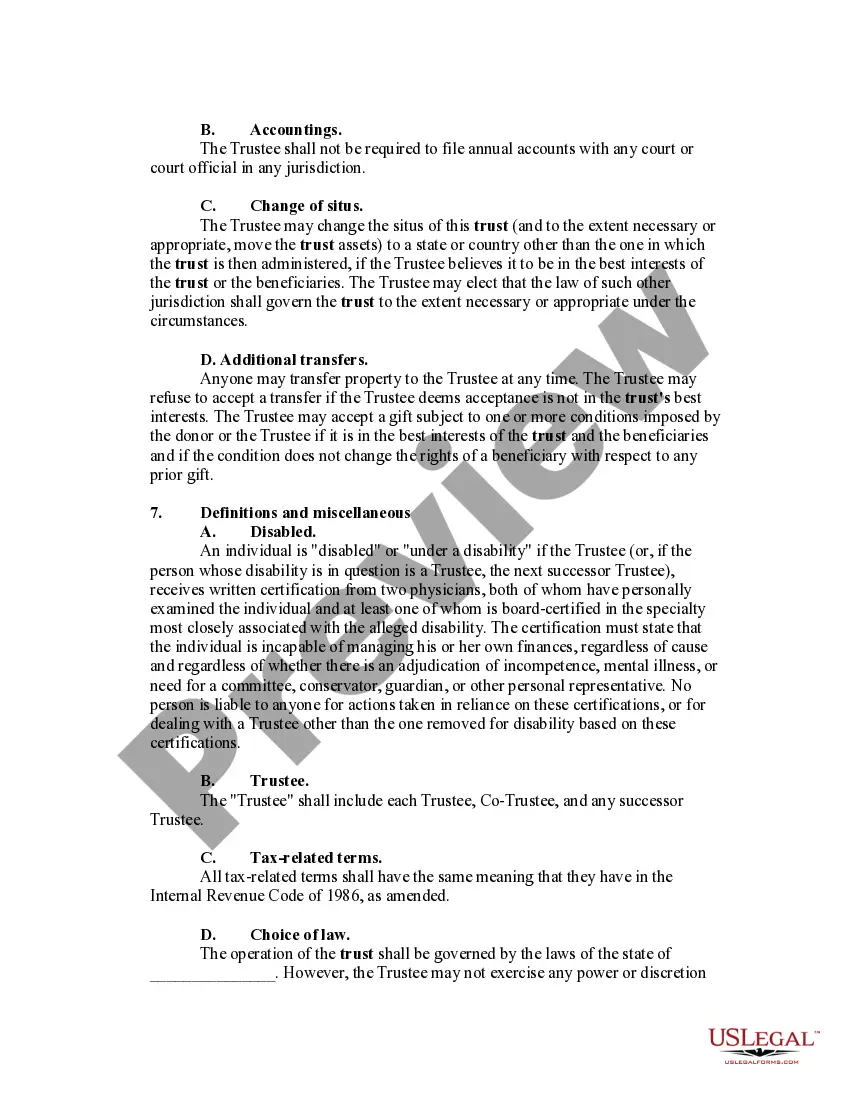
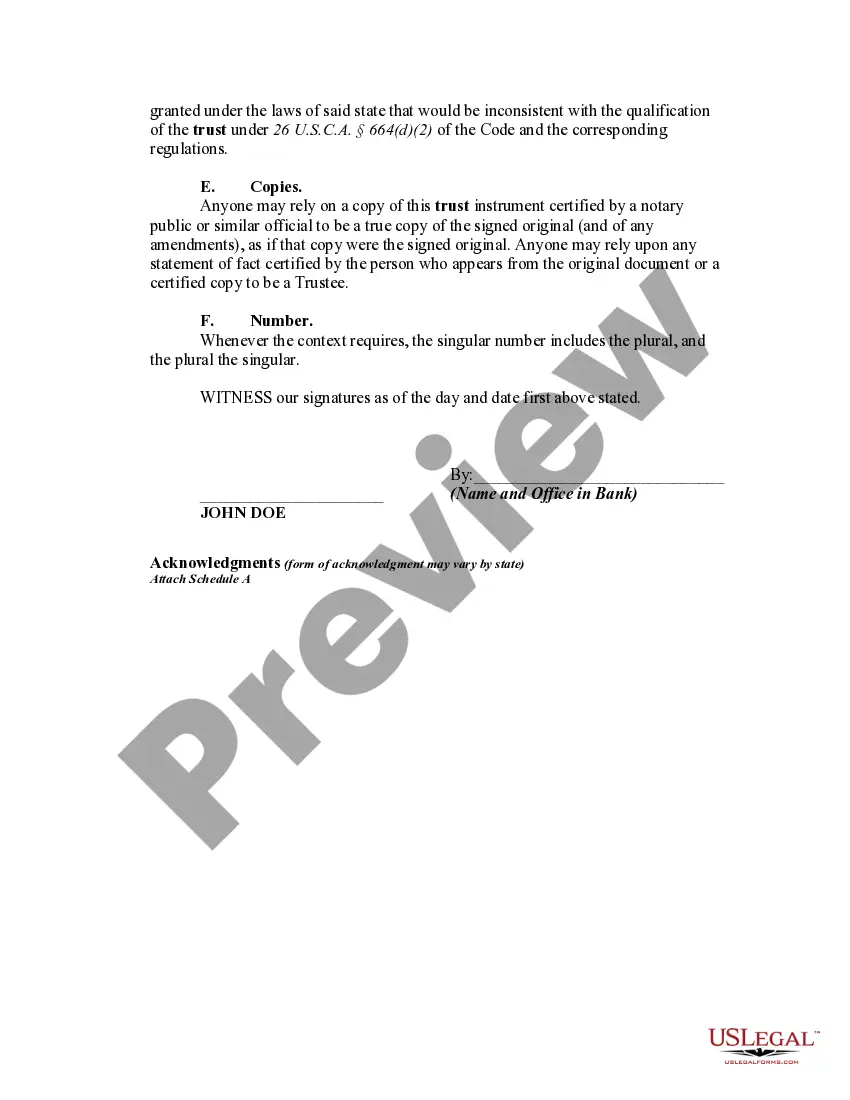
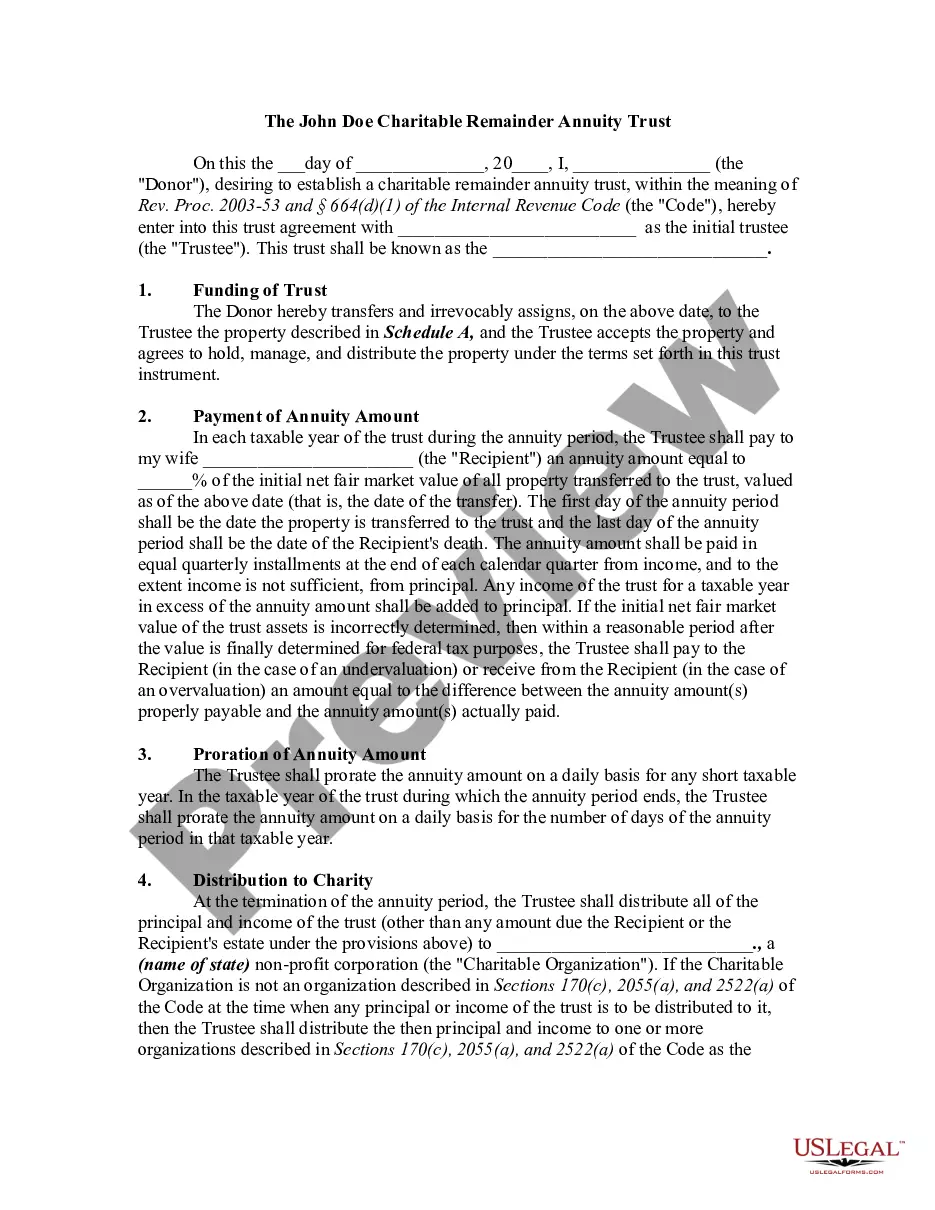
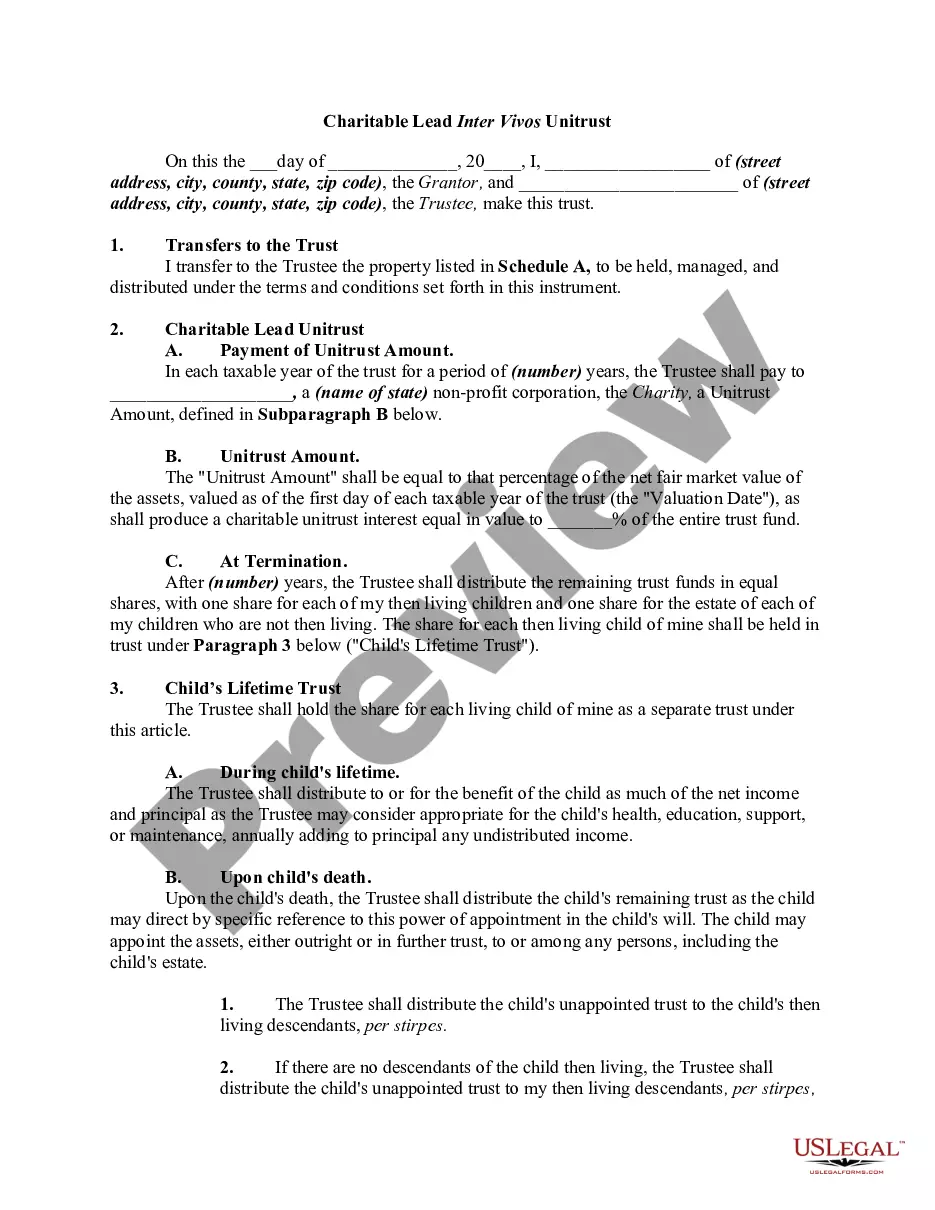
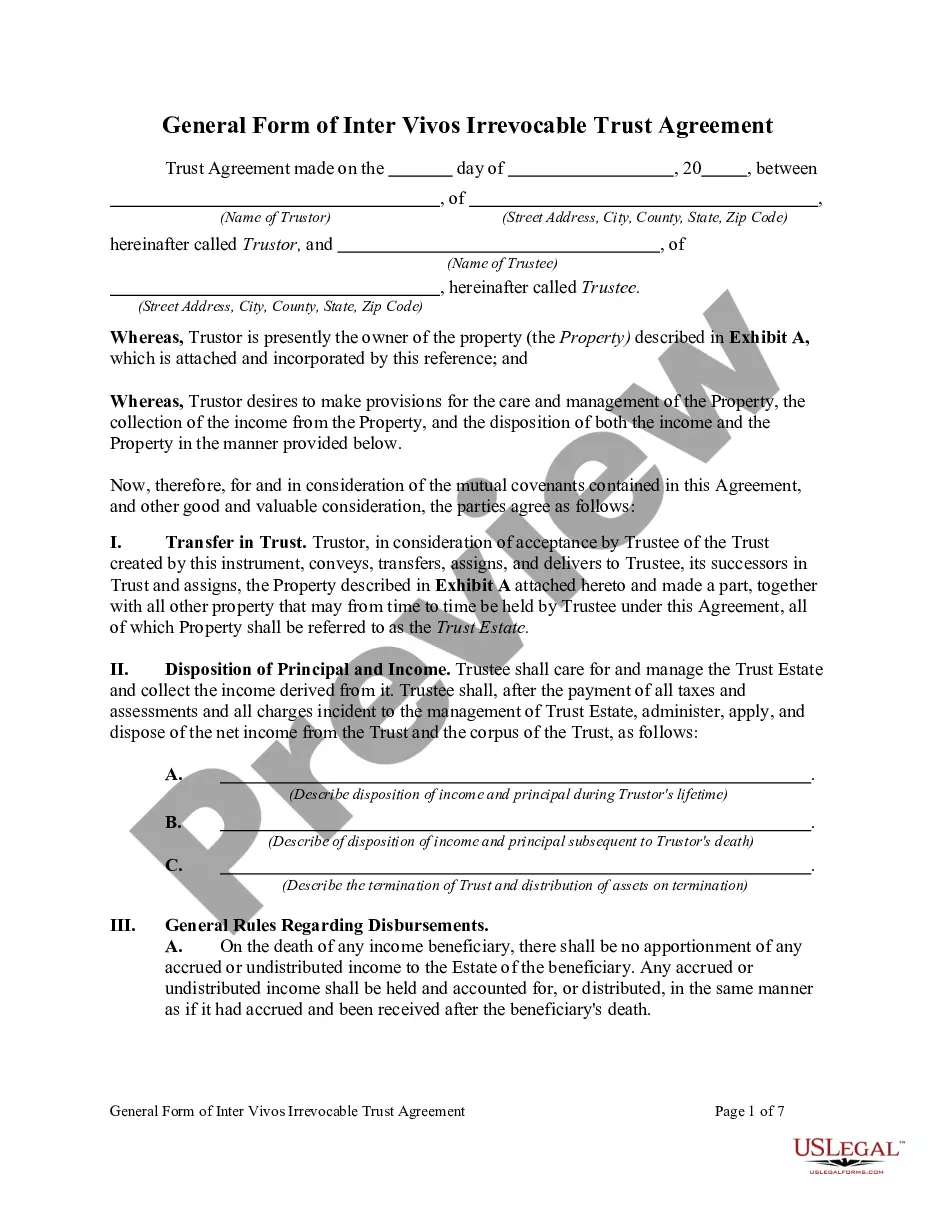
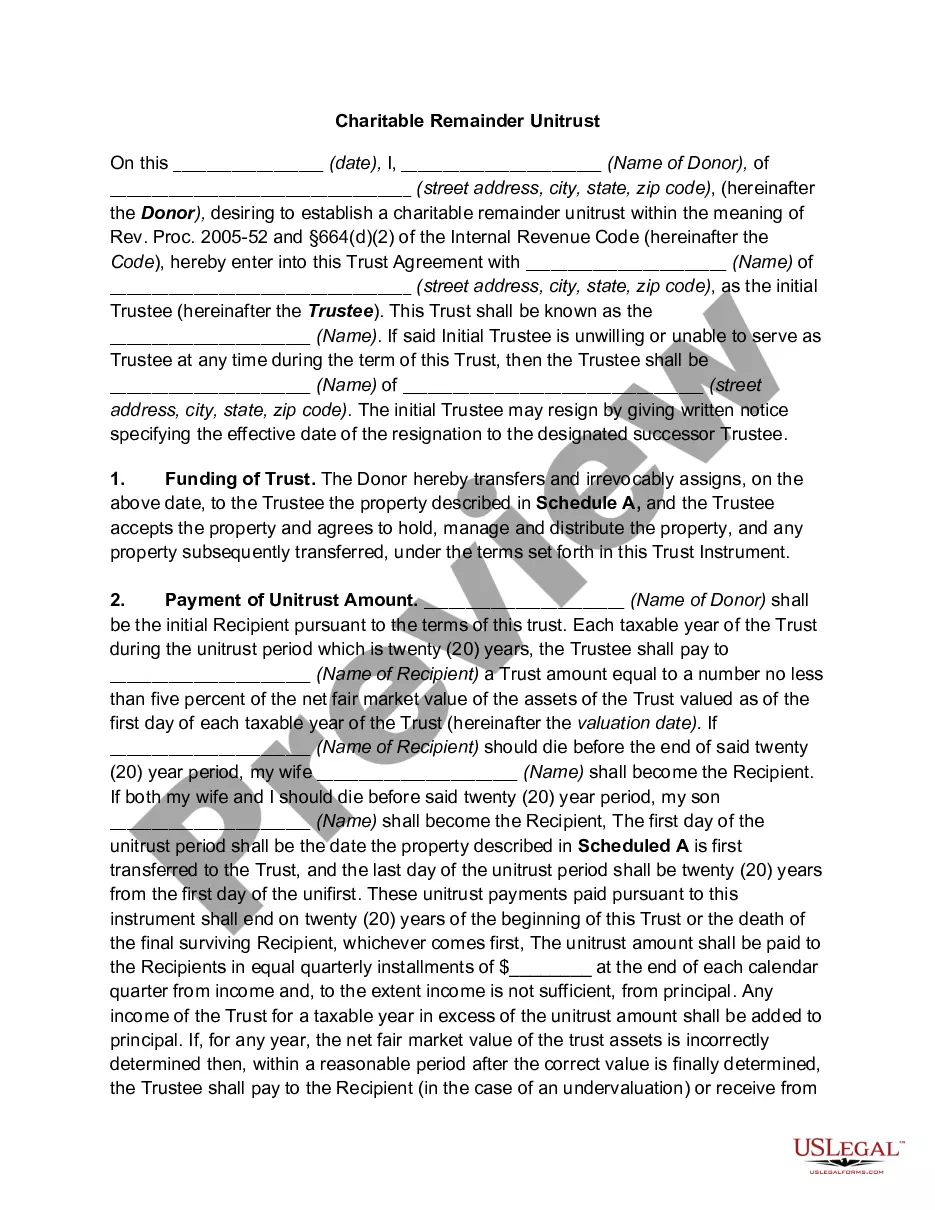
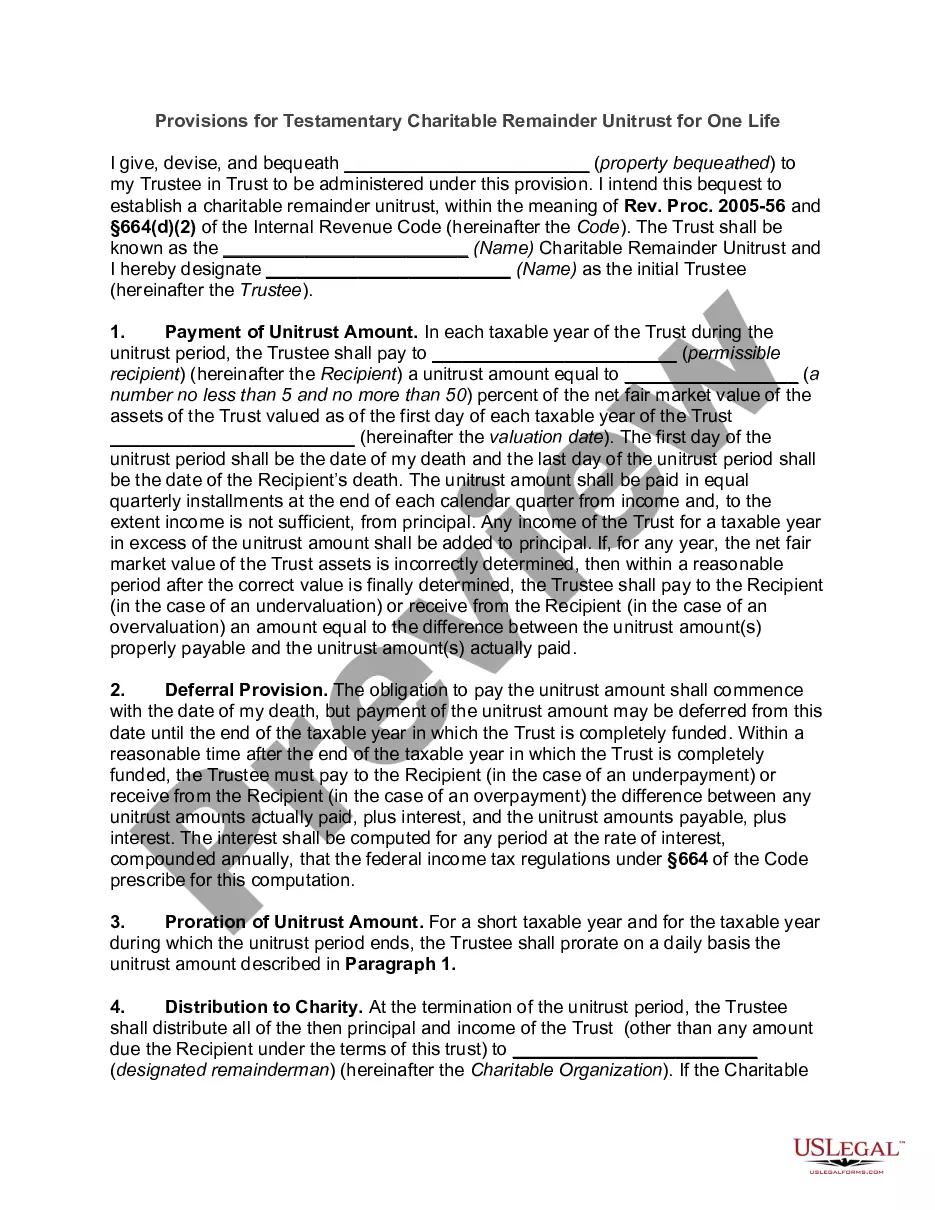
How to fill out Charitable Remainder Inter Vivos Unitrust Agreement?
- For previous users, log in to your account and locate the form template you need. Ensure your subscription is current; if not, renew it based on your payment plan.
- For new users, first, browse the preview mode and description of the required form. Confirm it aligns with your needs and adheres to your local jurisdiction.
- If you don't find what you need, use the Search tab to find alternative templates that may be more suitable.
- Once you've identified the correct document, click on the Buy Now button and select your preferred subscription plan. Registration is necessary for library access.
- After selecting your plan, submit your payment details via credit card or PayPal to complete the purchase.
- Finally, download your document and save it for completion. You can always retrieve it later from the My Forms section in your profile.
By utilizing US Legal Forms, you gain access to a vast library boasting over 85,000 legal forms. This ensures that you have everything needed to create legally sound documents efficiently.
Start your journey towards establishing a Charitable Remainder Trust today with US Legal Forms, and harness the benefits of legally secure document management.
Form popularity
FAQ
Yes, you can place your IRA in a charitable remainder trust. This can be a strategic move for both taxation and philanthropic purposes. When you design your charitable remainder trust with IRA in mind, you can create a sustainable income stream for yourself while ensuring that a portion of your assets supports a charitable cause after your passing. If you need assistance with this process, consider using the USLegalForms platform for reliable resources.
Naming a trust as an IRA beneficiary can complicate the distribution process. Trusts may not always allow for the same tax benefits that an individual beneficiary would receive. Additionally, required minimum distributions could be affected, and the IRS has specific rules regarding these distributions. Therefore, it is wise to seek advice on how best to structure a charitable remainder trust with IRA assets to minimize any drawbacks.
Yes, you can place IRA assets into a trust. This setup can help with estate planning and ensure your IRA assets are managed according to your wishes. However, it is essential to follow the rules governing IRAs and trusts to avoid any unintended tax implications. Utilizing platforms like USLegalForms can guide you in setting up your trust correctly, especially when incorporating a charitable remainder trust with IRA.
Yes, you can put an IRA into a charitable remainder trust. This strategy allows you to enjoy tax benefits while also supporting a charitable cause. By transferring your IRA assets to a charitable remainder trust, you can receive a potential income stream during your lifetime, and any remaining value will benefit your chosen charity. This approach effectively combines your retirement planning with philanthropic goals.
Yes, funding a charitable remainder trust with an IRA is feasible and can provide distinct tax benefits. With careful maneuvering of assets, you may allow the trust to grow without immediate tax implications. It’s essential to understand the regulations surrounding this option, and US Legal Forms can assist you in navigating the documentation and compliance.
Yes, it is indeed possible to fund a Donor-Advised Fund (DAF) from your IRA, just as you might fund a charitable remainder trust with IRA assets. This method allows you to make a charitable contribution while also receiving tax benefits. Be sure to consult with financial advisors to maximize the effectiveness of your contributions.
Yes, you can fund a charitable remainder trust with an IRA, which can provide significant tax advantages. By transferring IRA assets directly to the trust, you may avoid immediate income tax on the distribution. However, this process carries specific rules and requires careful planning to ensure compliance.
When you make a charitable distribution to fund a charitable remainder trust with IRA assets, you must report the transaction on your tax return. Typically, you would use IRS Form 1099-R to report distributions from your IRA. Ensure that you maintain detailed records of the transaction for your financial accounts.
You can certainly use IRA funds to fund a charitable remainder trust (CRT). This strategy allows you to receive an income stream from the trust while benefiting a charity you care about. Keep in mind that transferring an IRA to a CRT may have tax consequences, so seeking advice from a professional is important to maximize the benefits of your charitable remainder trust with IRA.
Yes, you can fund a charitable trust with an IRA, but it's essential to do so carefully. When you transfer an IRA to a charitable remainder trust with IRA assets, you can potentially reduce your taxable estate and benefit from the charitable deduction. However, you must consult with a tax advisor to understand the implications and the best way to structure the transfer.