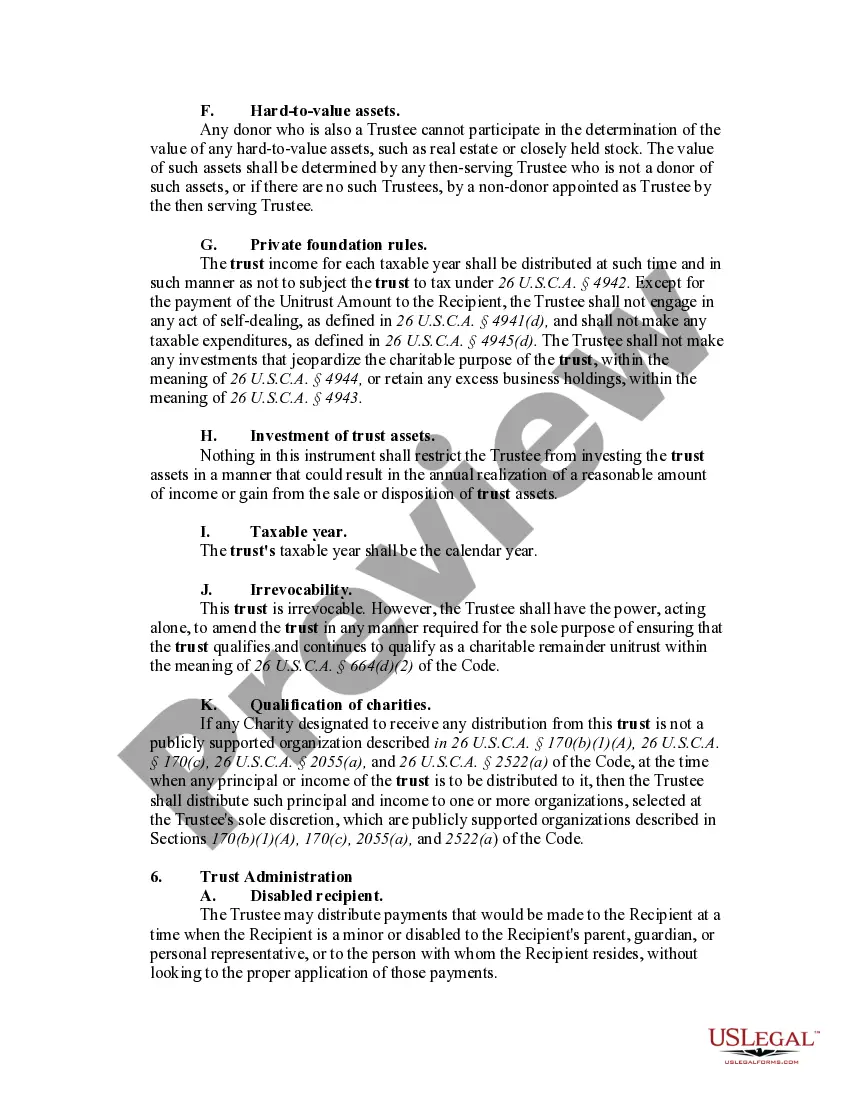
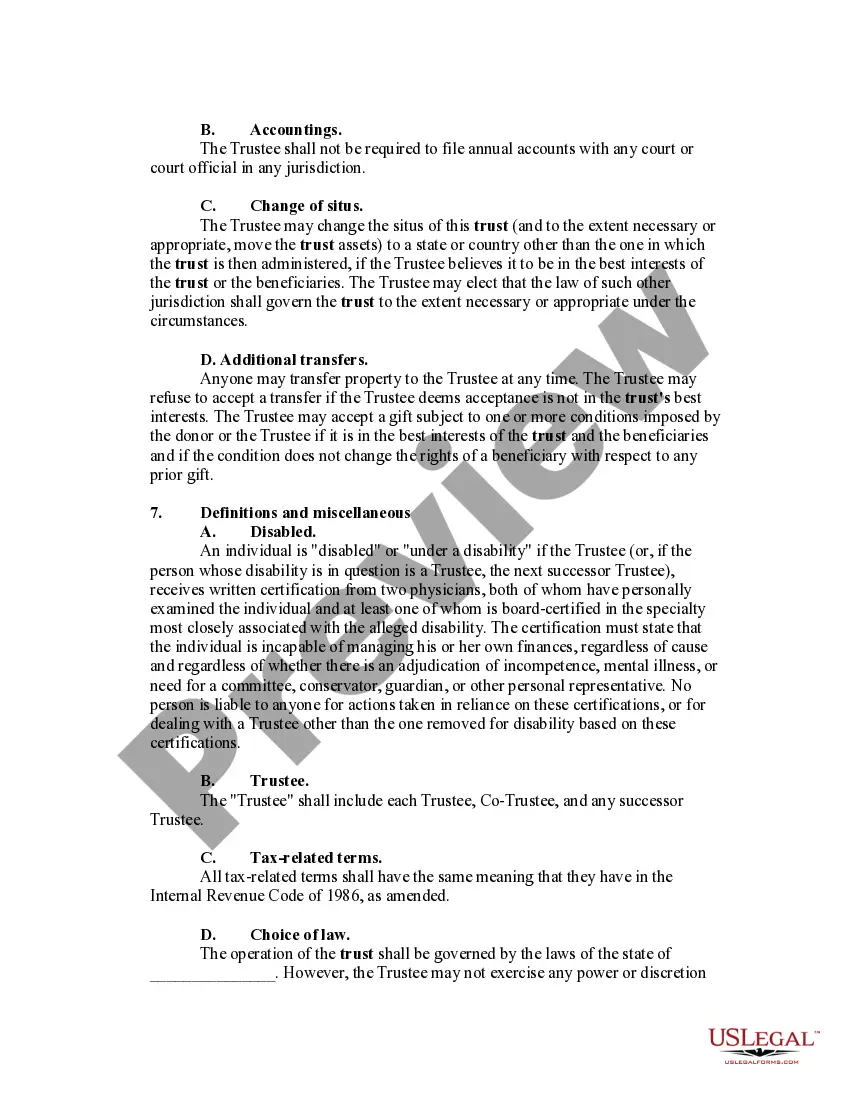
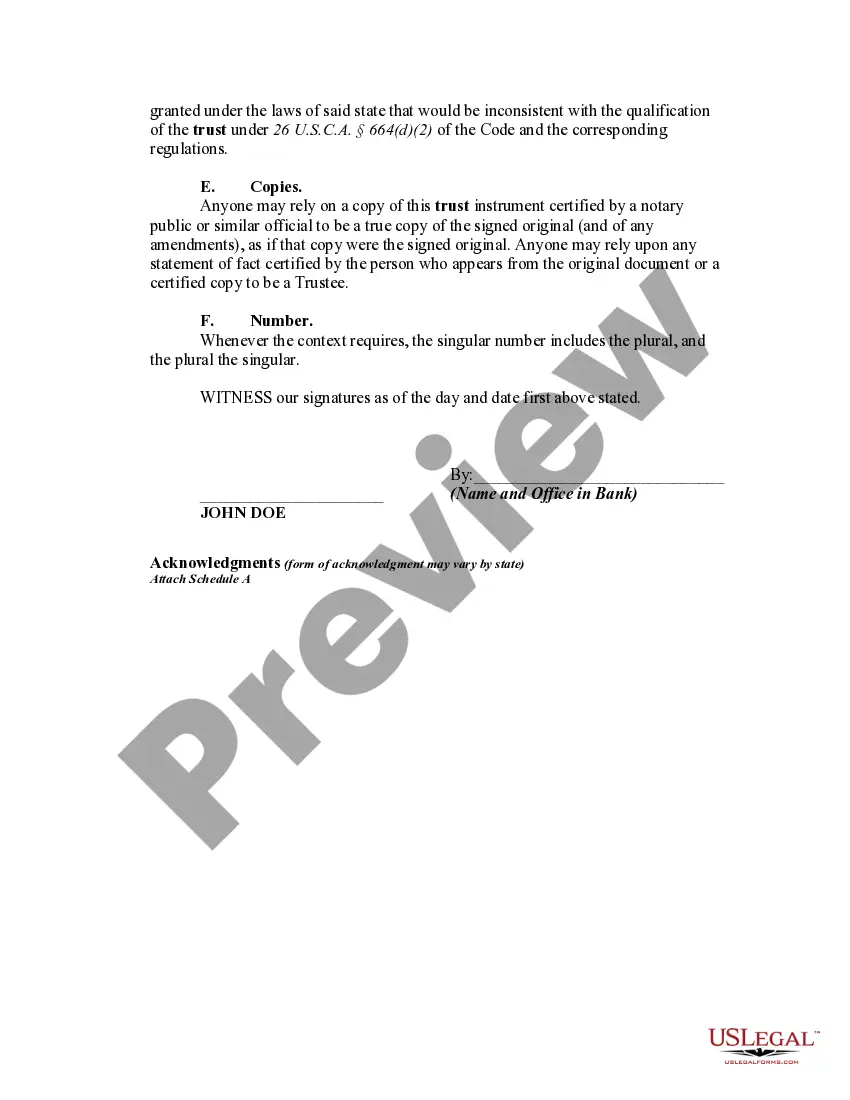
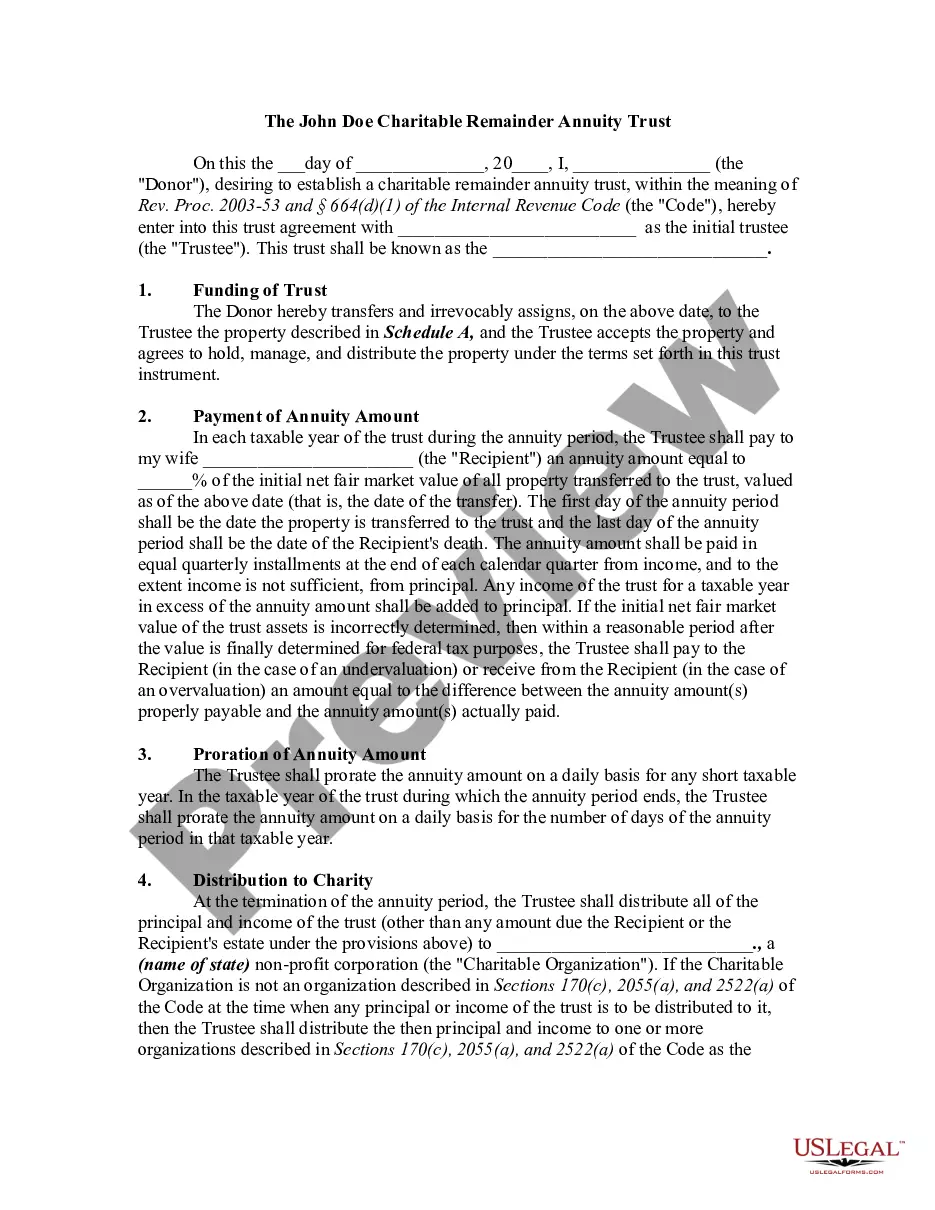
Charitable Remainder Trust Document Format
Description
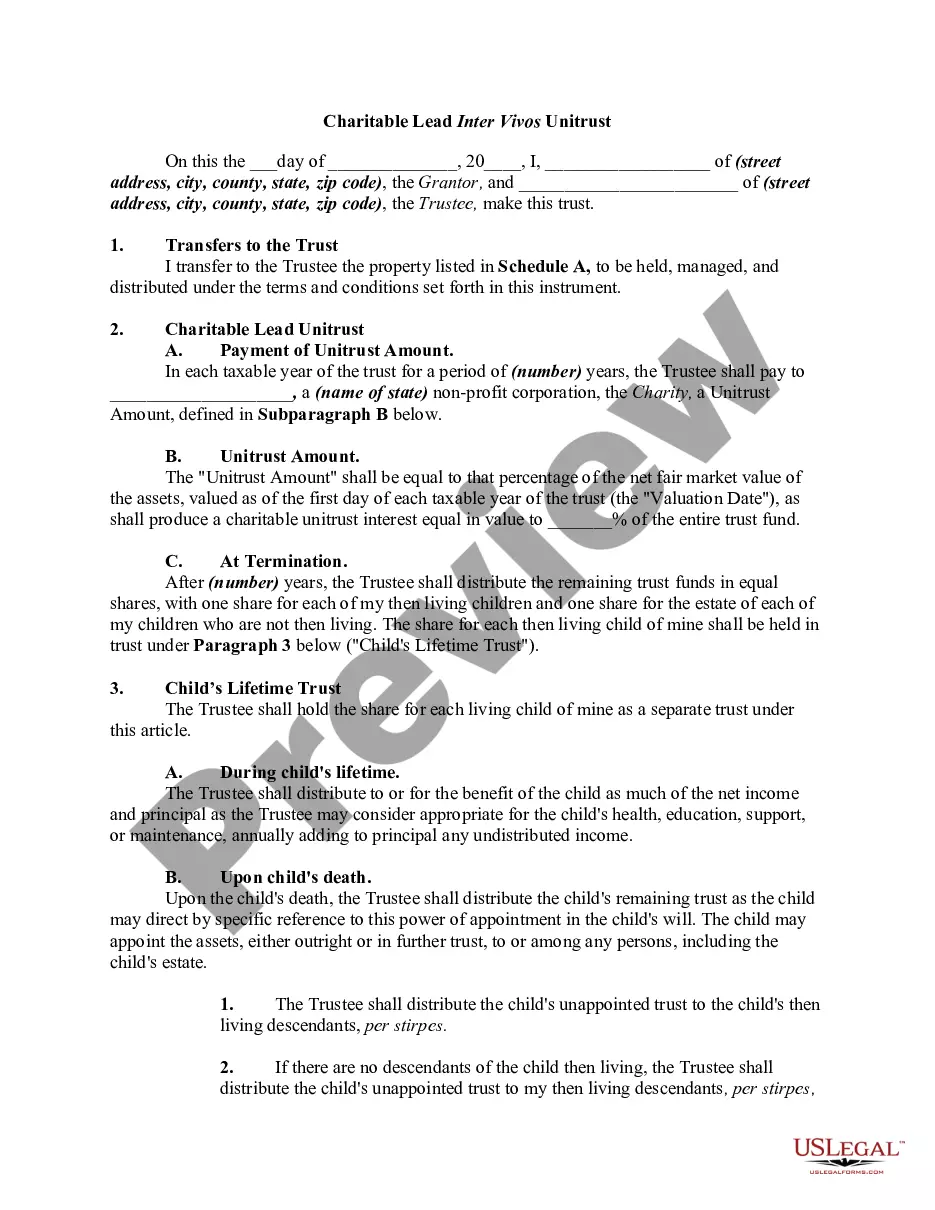
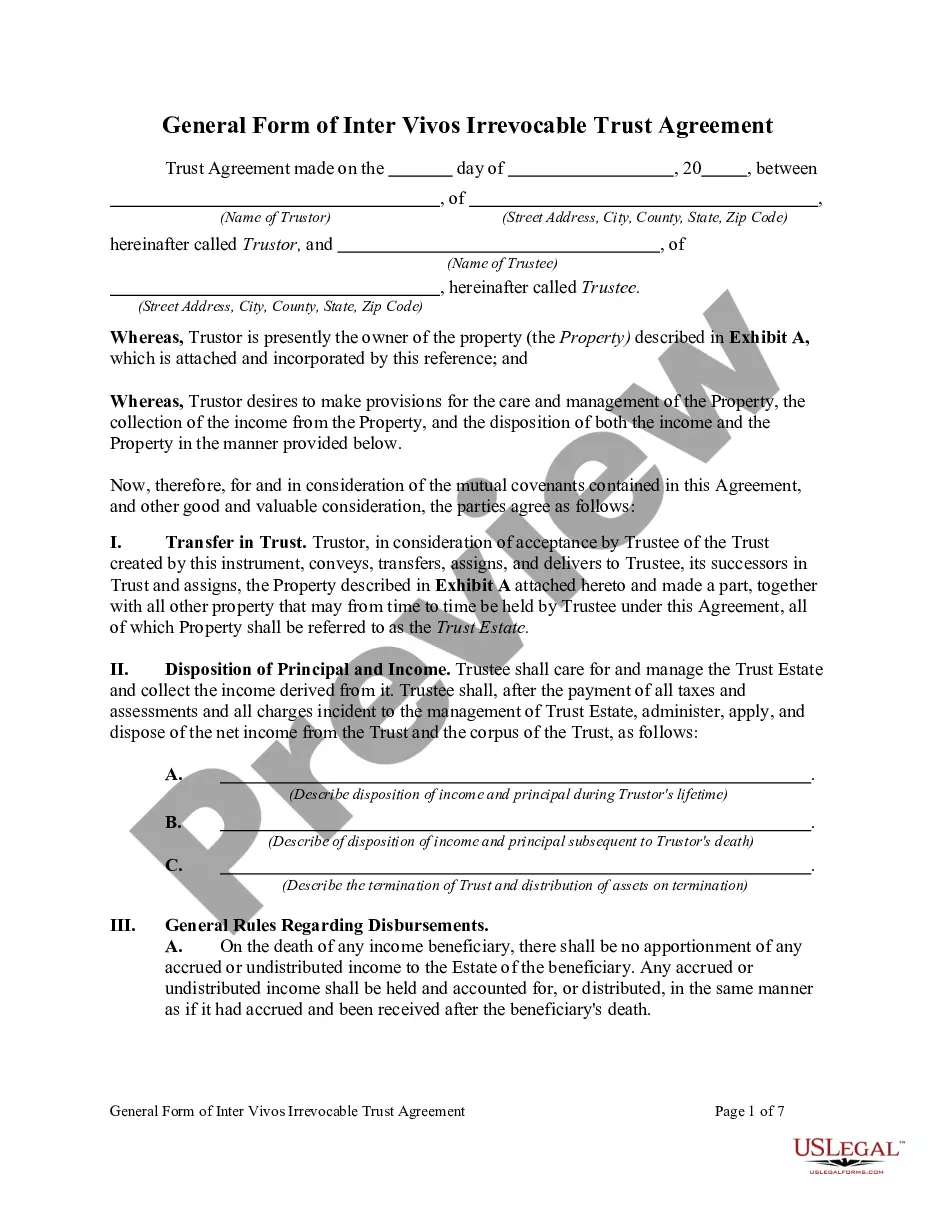
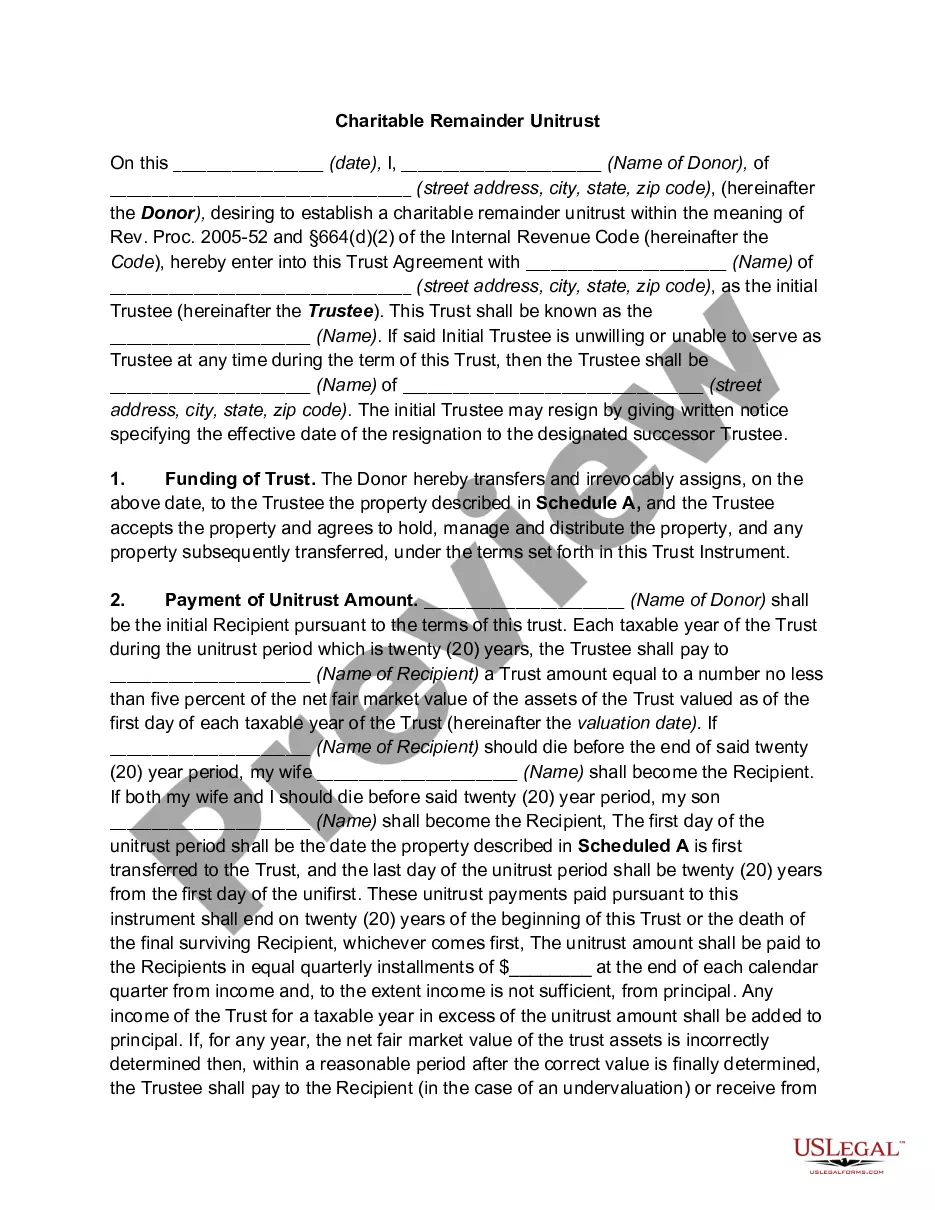
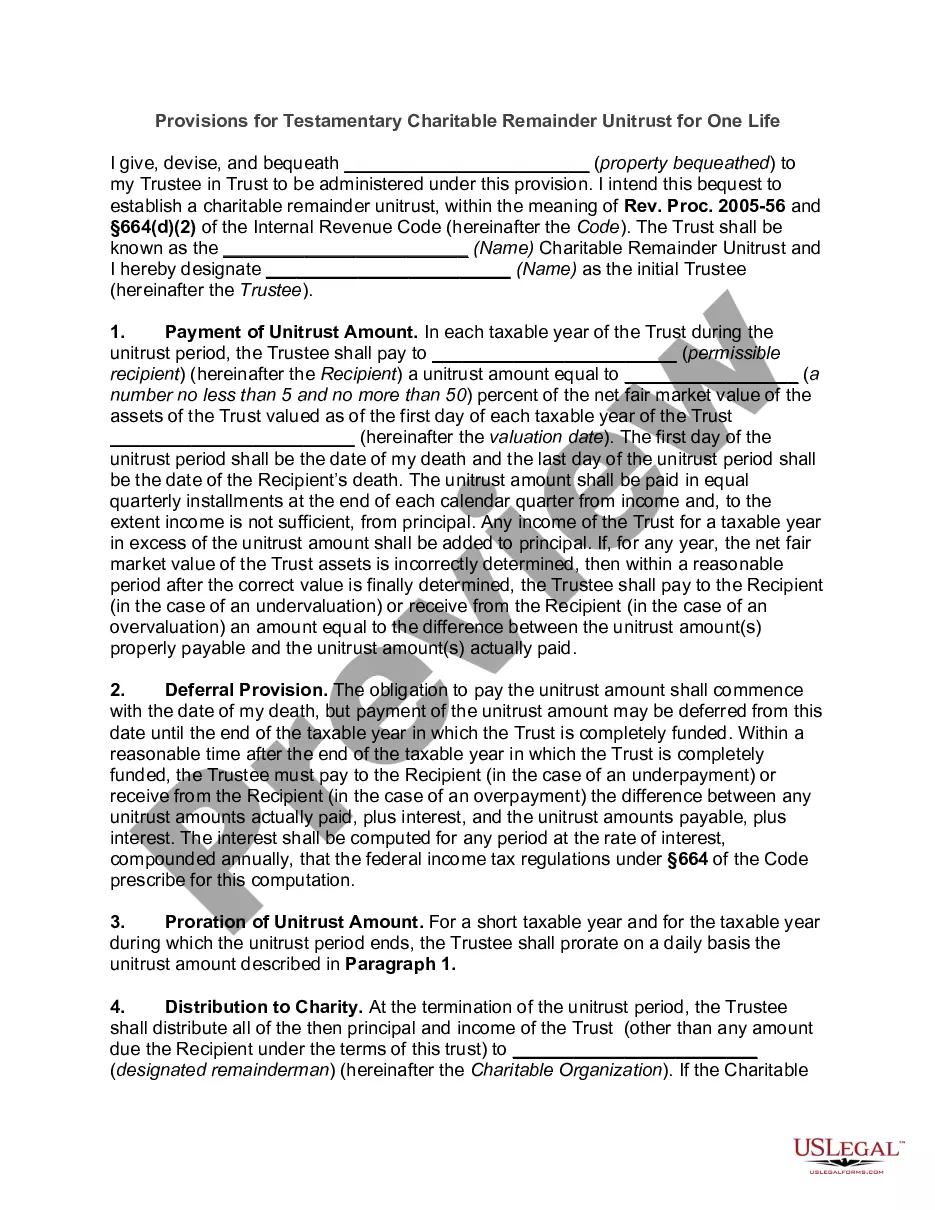
Get your form ready online
Our built-in tools help you complete, sign, share, and store your documents in one place.
Make edits, fill in missing information, and update formatting in US Legal Forms—just like you would in MS Word.
Download a copy, print it, send it by email, or mail it via USPS—whatever works best for your next step.
Sign and collect signatures with our SignNow integration. Send to multiple recipients, set reminders, and more. Go Premium to unlock E-Sign.
If this form requires notarization, complete it online through a secure video call—no need to meet a notary in person or wait for an appointment.
We protect your documents and personal data by following strict security and privacy standards.

Make edits, fill in missing information, and update formatting in US Legal Forms—just like you would in MS Word.

Download a copy, print it, send it by email, or mail it via USPS—whatever works best for your next step.

Sign and collect signatures with our SignNow integration. Send to multiple recipients, set reminders, and more. Go Premium to unlock E-Sign.

If this form requires notarization, complete it online through a secure video call—no need to meet a notary in person or wait for an appointment.

We protect your documents and personal data by following strict security and privacy standards.
Looking for another form?







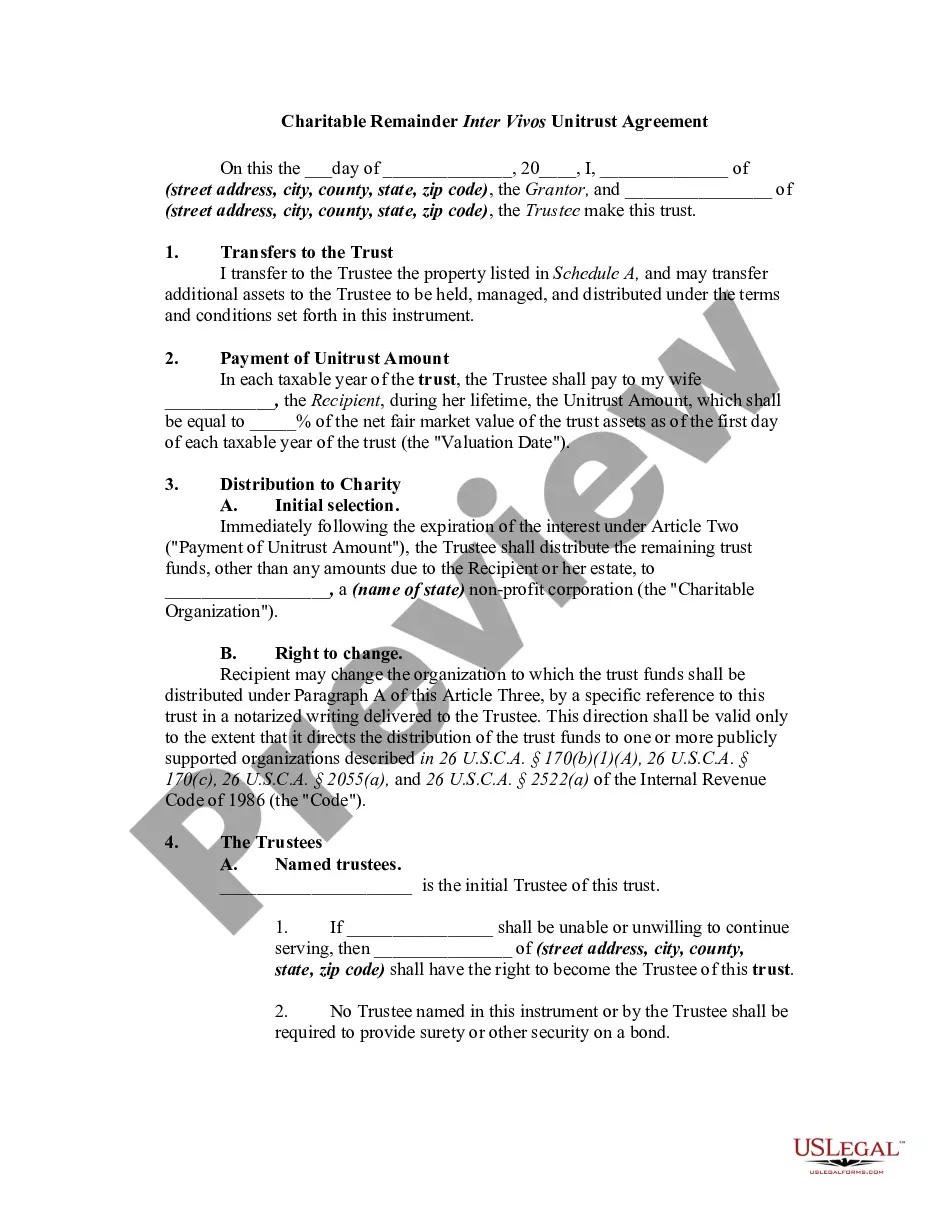
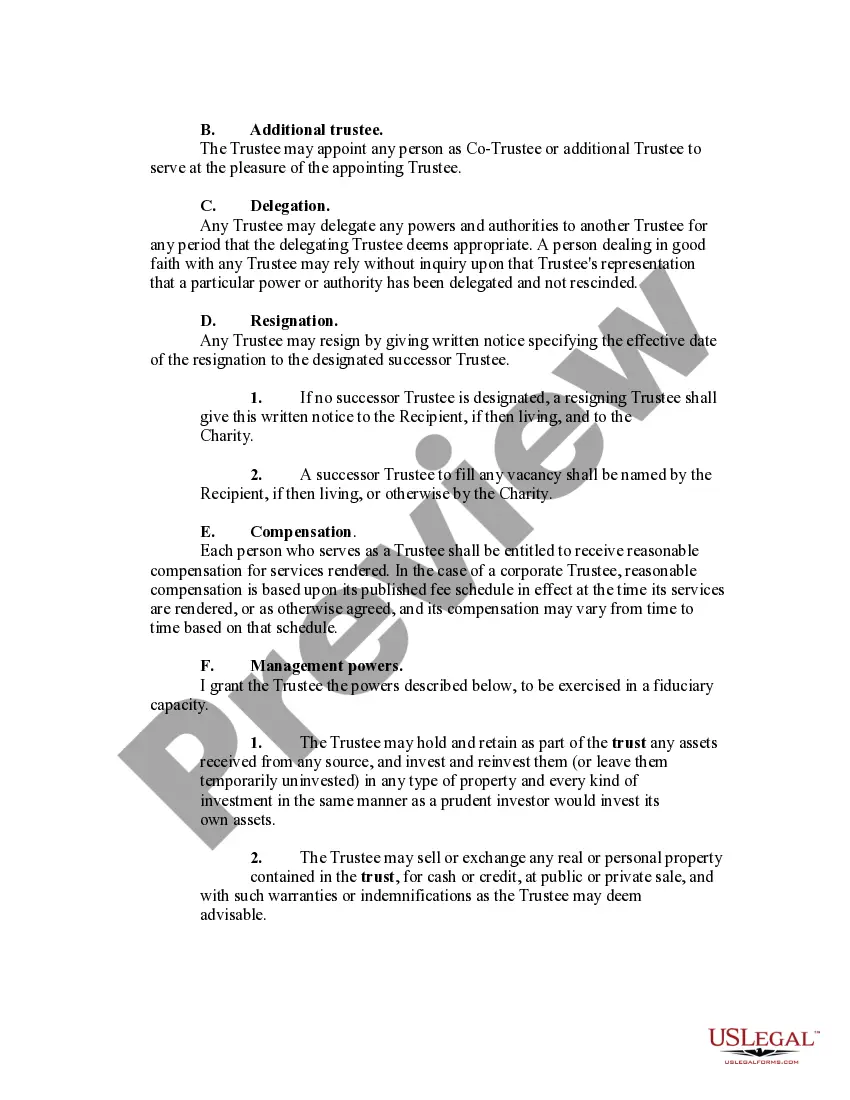
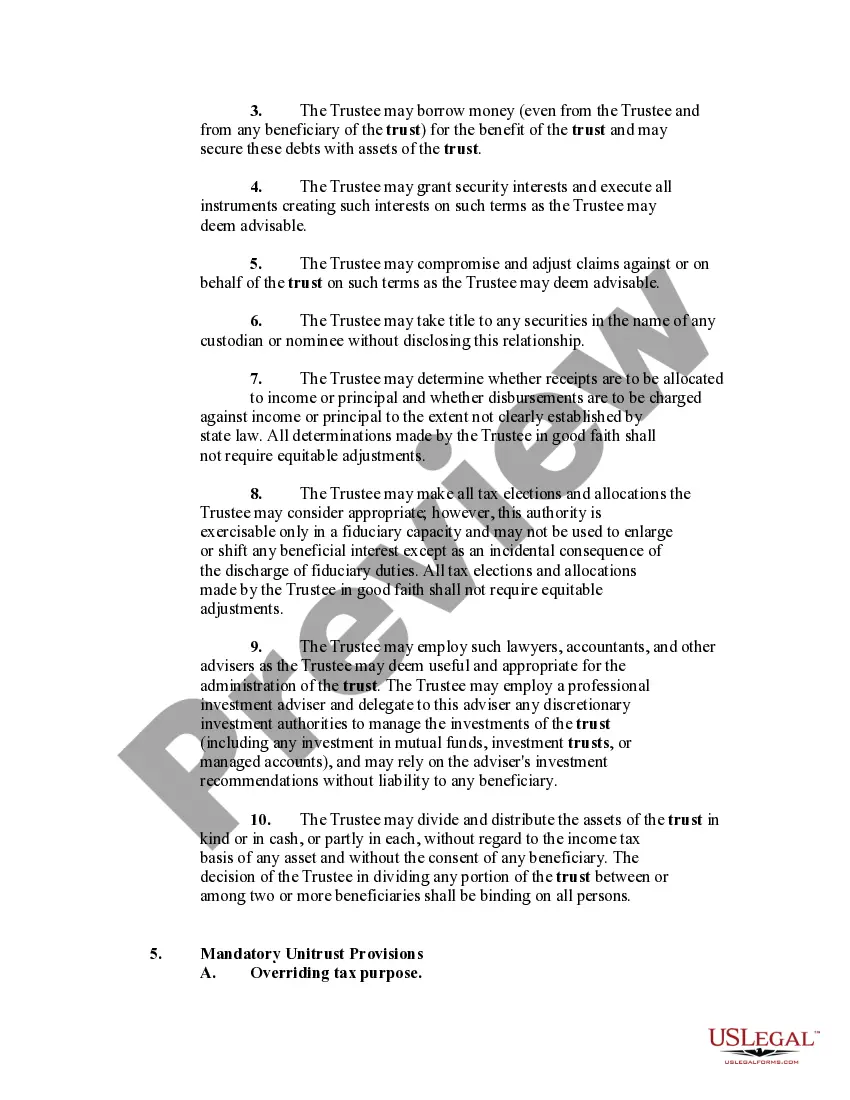
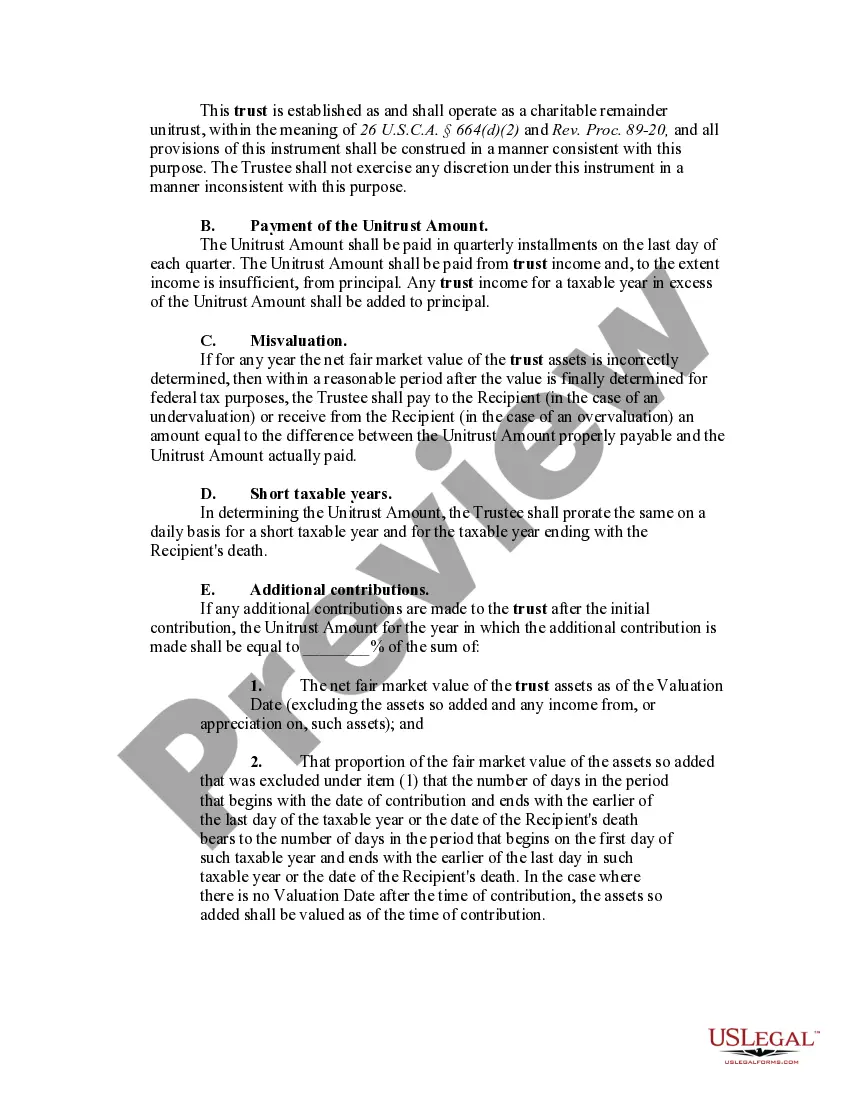
How to fill out Charitable Remainder Inter Vivos Unitrust Agreement?
Finding a go-to place to take the most current and relevant legal templates is half the struggle of handling bureaucracy. Finding the right legal documents requirements accuracy and attention to detail, which explains why it is vital to take samples of Charitable Remainder Trust Document Format only from trustworthy sources, like US Legal Forms. An improper template will waste your time and hold off the situation you are in. With US Legal Forms, you have very little to be concerned about. You can access and see all the details regarding the document’s use and relevance for your circumstances and in your state or county.
Consider the listed steps to complete your Charitable Remainder Trust Document Format:
- Use the catalog navigation or search field to find your template.
- View the form’s description to check if it suits the requirements of your state and county.
- View the form preview, if available, to ensure the template is definitely the one you are searching for.
- Go back to the search and look for the right document if the Charitable Remainder Trust Document Format does not suit your needs.
- When you are positive about the form’s relevance, download it.
- When you are an authorized user, click Log in to authenticate and access your picked forms in My Forms.
- If you do not have an account yet, click Buy now to get the template.
- Choose the pricing plan that fits your requirements.
- Go on to the registration to complete your purchase.
- Finalize your purchase by selecting a transaction method (bank card or PayPal).
- Choose the document format for downloading Charitable Remainder Trust Document Format.
- When you have the form on your device, you may modify it using the editor or print it and finish it manually.
Remove the hassle that comes with your legal documentation. Explore the comprehensive US Legal Forms catalog to find legal templates, check their relevance to your circumstances, and download them on the spot.
Form popularity
FAQ
For example, say that you wanted to leave your house to the local town to use as a community center. You might set up a charitable trust to hold the house and oversee its use and caretaking even after your death.
A charitable remainder unitrust (CRUT) pays a percentage of the value of the trust each year to noncharitable beneficiaries. The payments generally must equal at least 5% and no more than 50% of the fair market value of the assets, valued annually.
HOW DOES A CHARITABLE REMAINDER TRUST WORK? Donor establishes a trust, and CCF serves as trustee of transferred assets. Donor and/or beneficiaries receive long-term income from the trust. Upon the death of the beneficiaries, the remaining assets are donated to charities named in the trust.
At the end of the term, the trust terminates and the non-charitable beneficiaries receive whatever assets remain in the trust. A CLAT files both a Form 1041 and a Form 5227.
How to Set up a Charitable Remainder Trust Create a Charitable Remainder Trust. Check with the IRS that the charity you want to benefit is approved. Transfer assets into the Trust. Name the charity as Trustee. Create a provision that states who the lead beneficiary is - remember, this can be yourself or someone else.