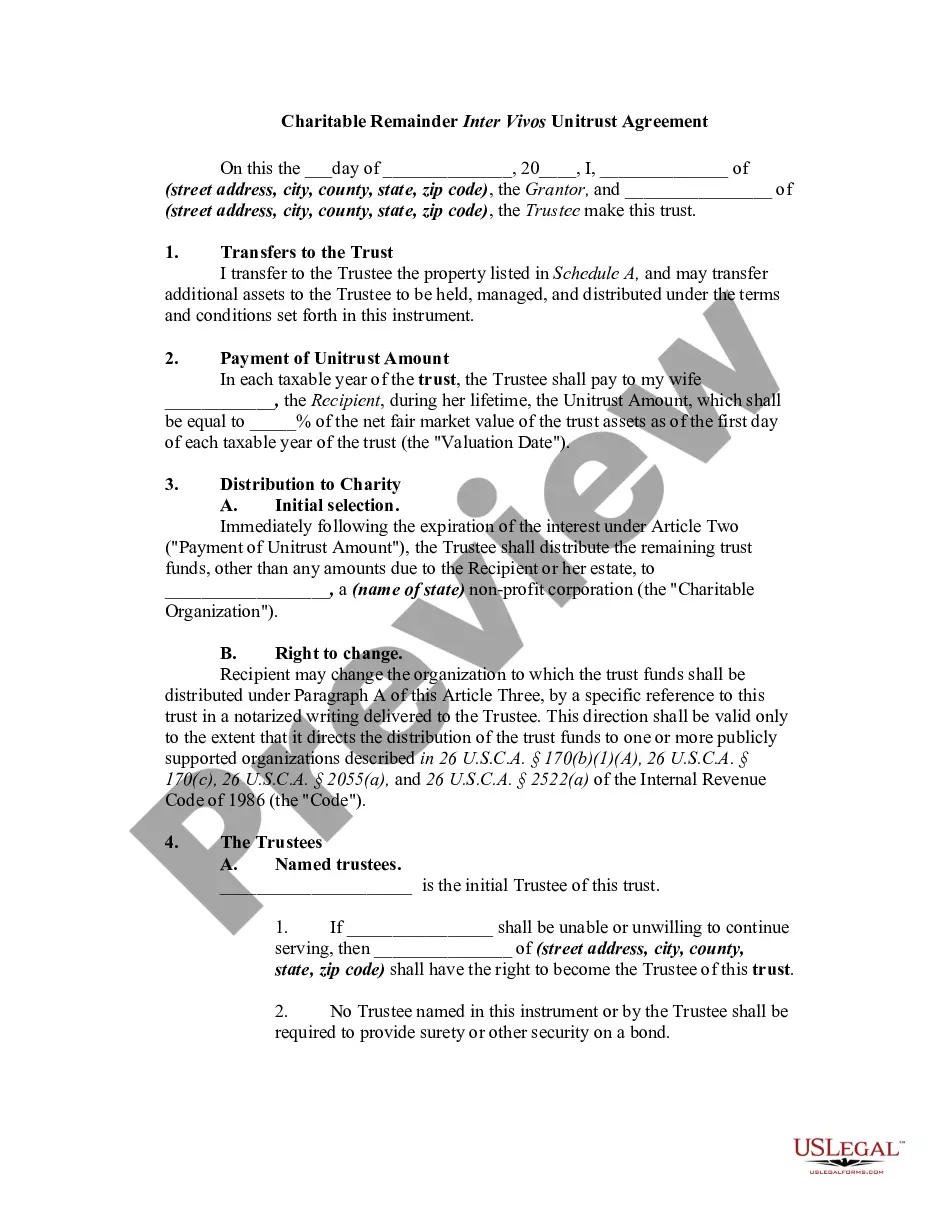
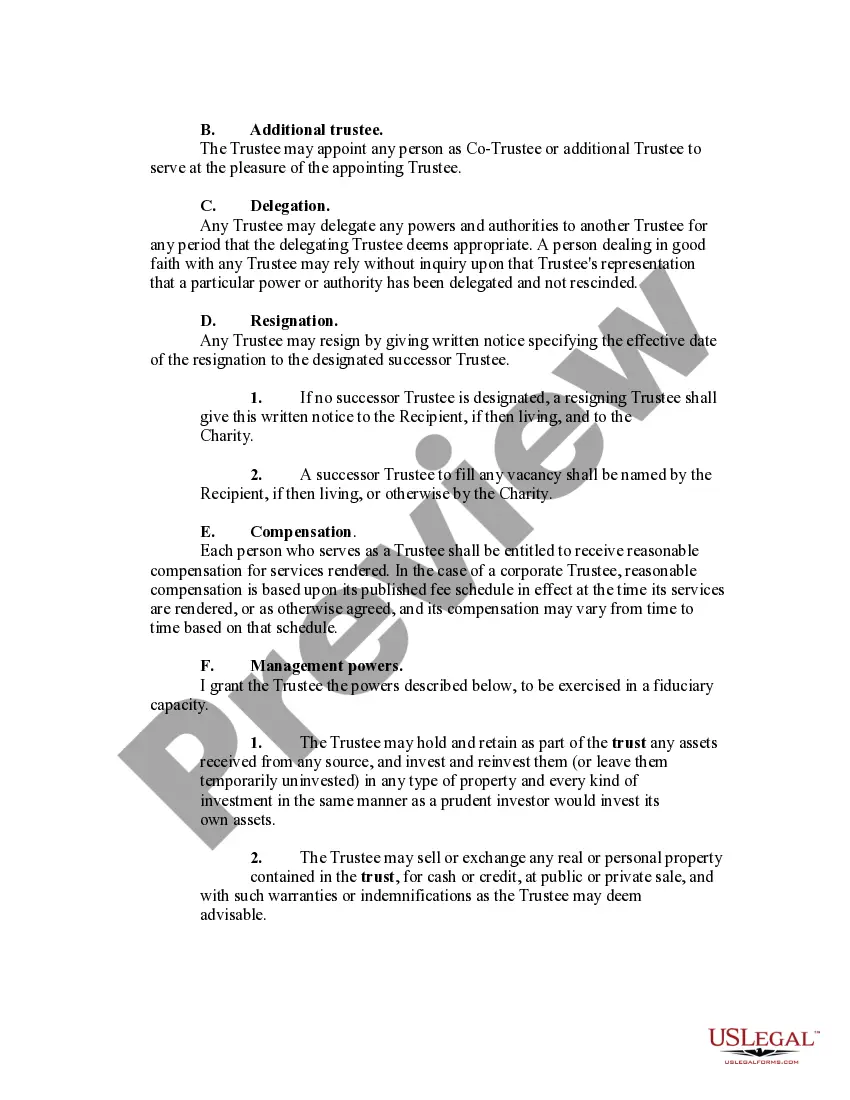
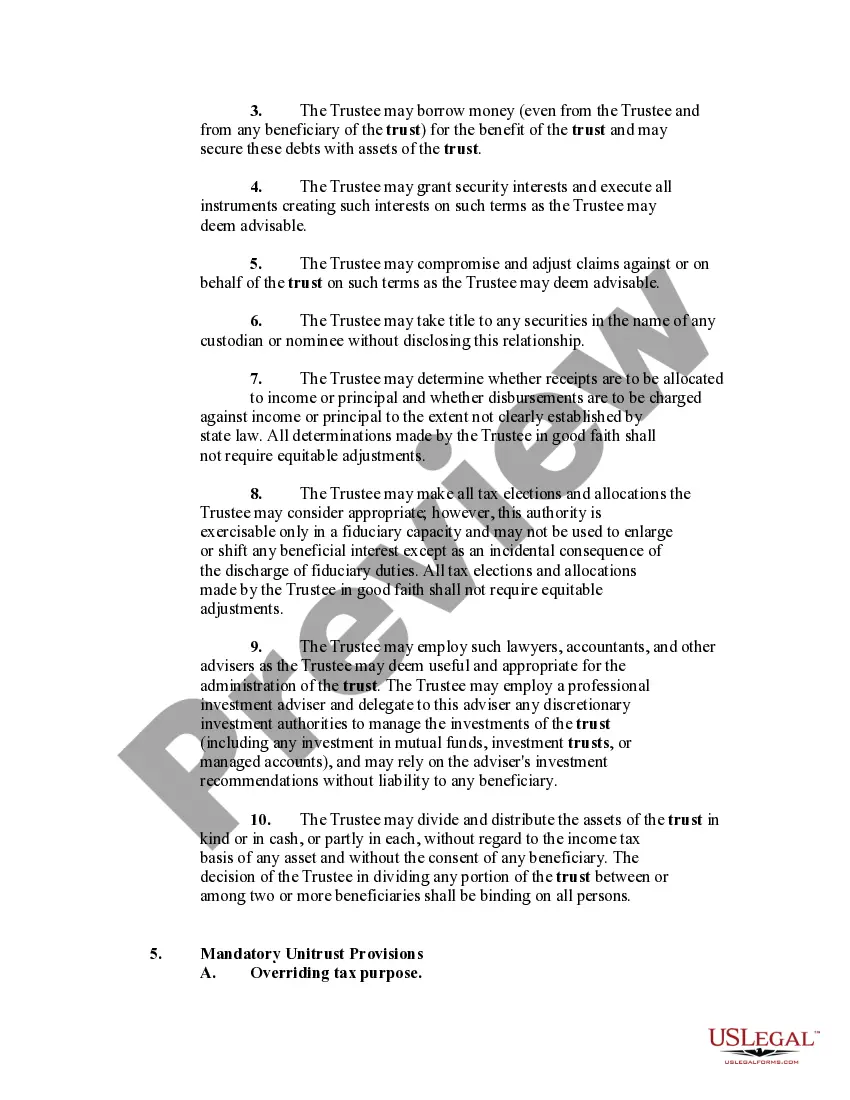
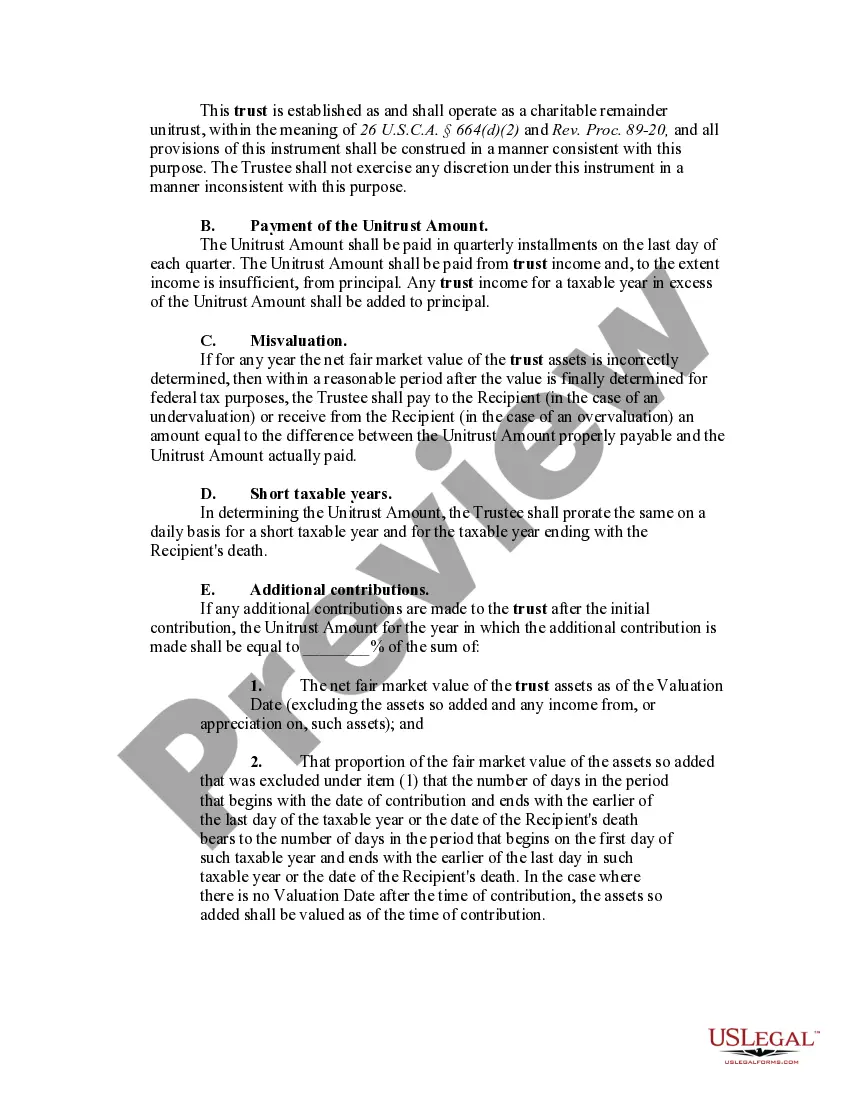
Charitable Remainder Trust Document For Tax Purposes
Description
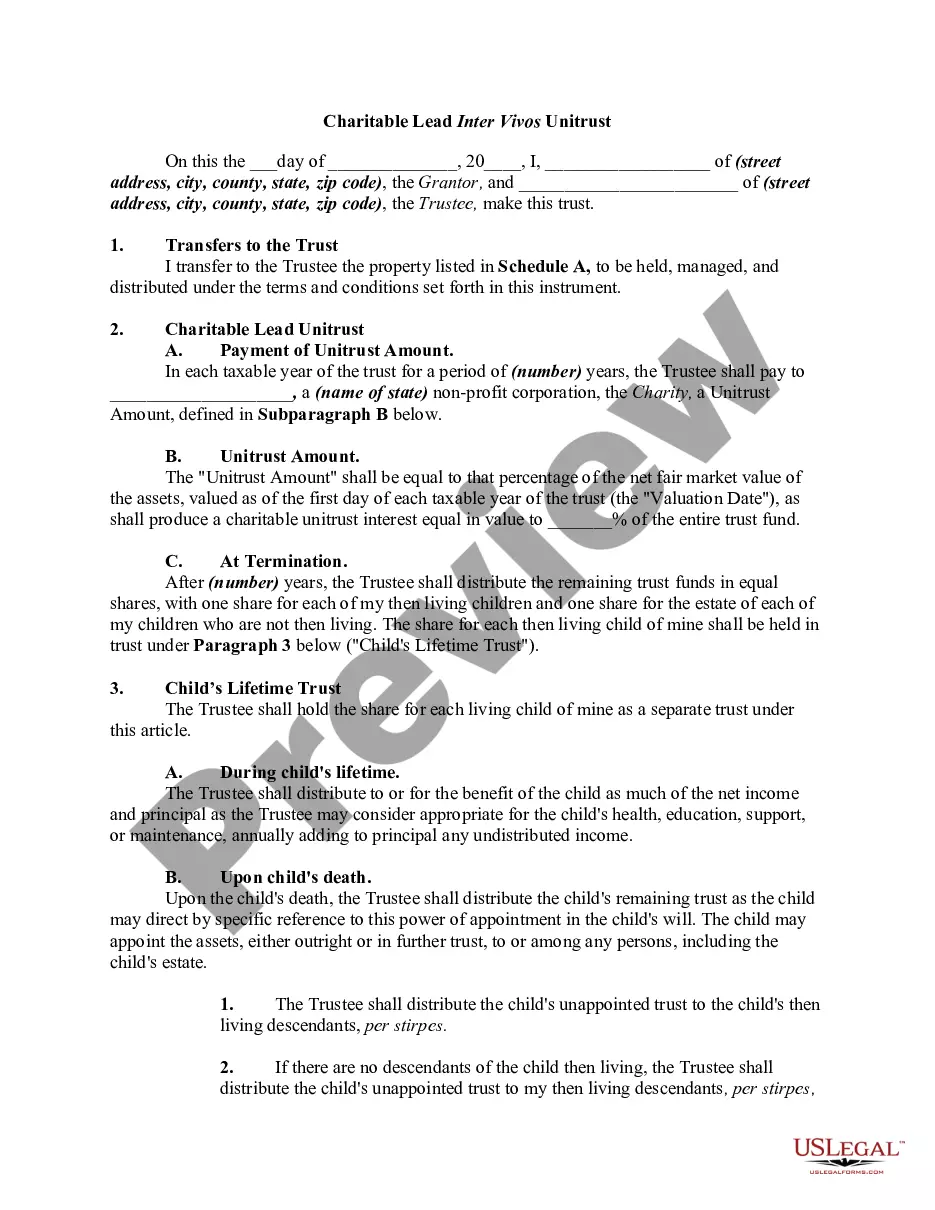
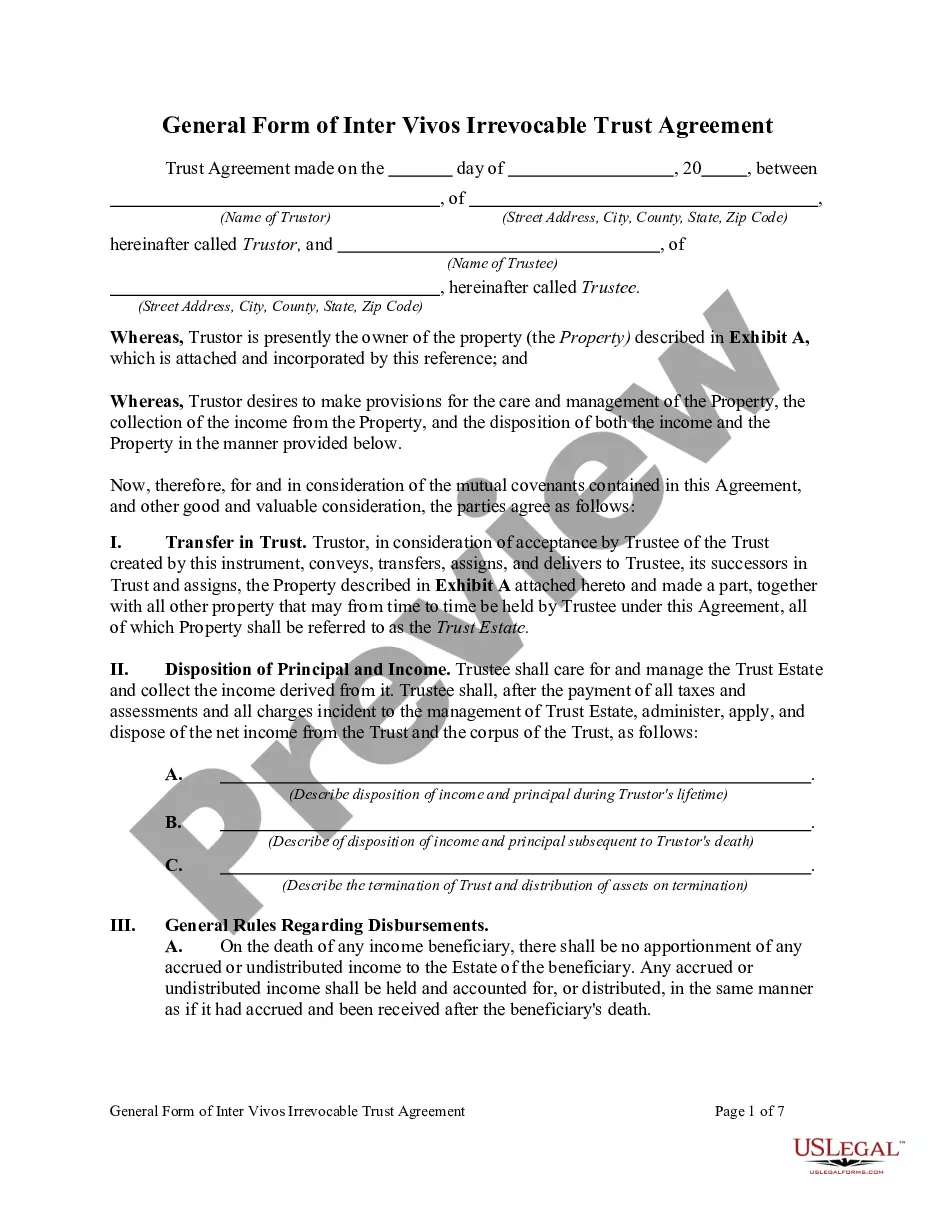
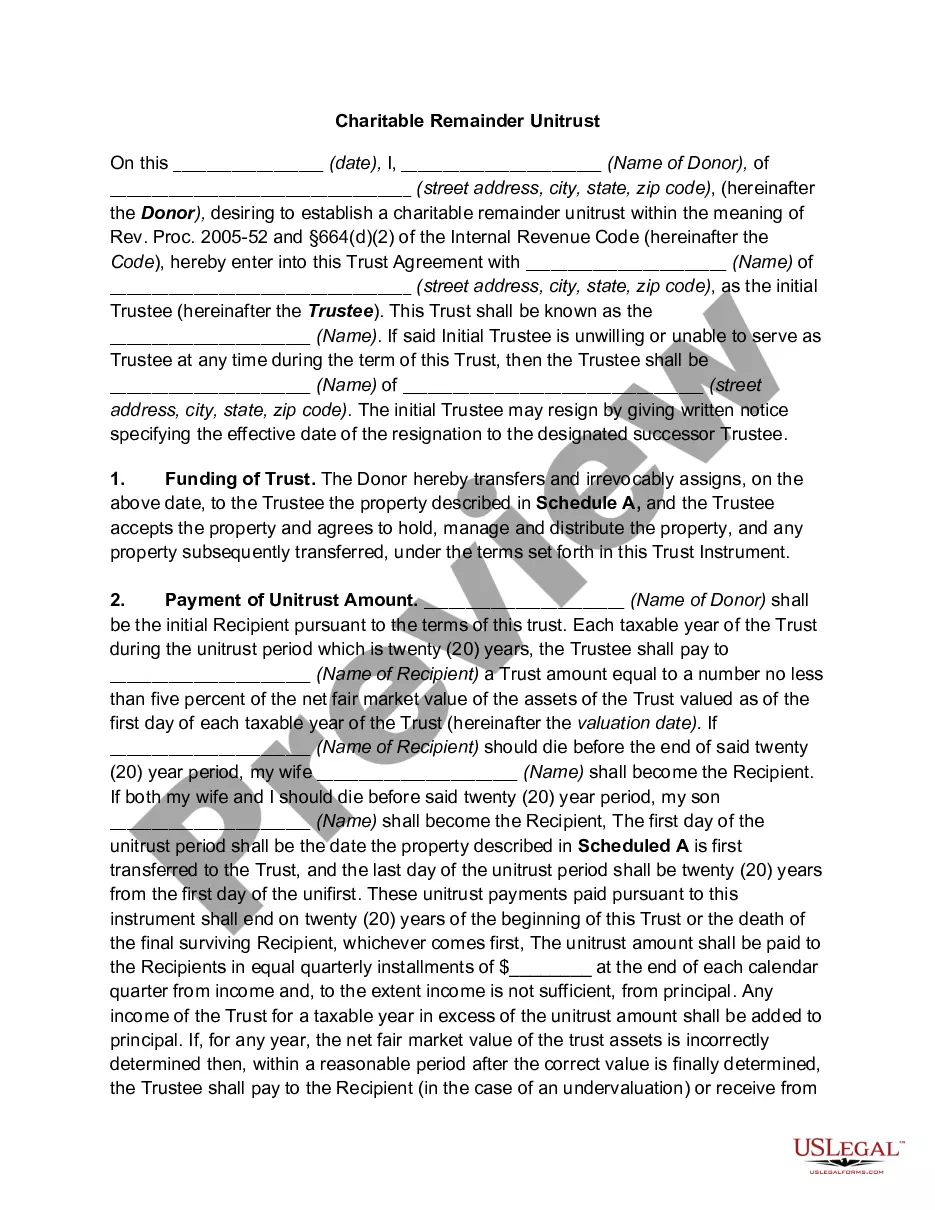
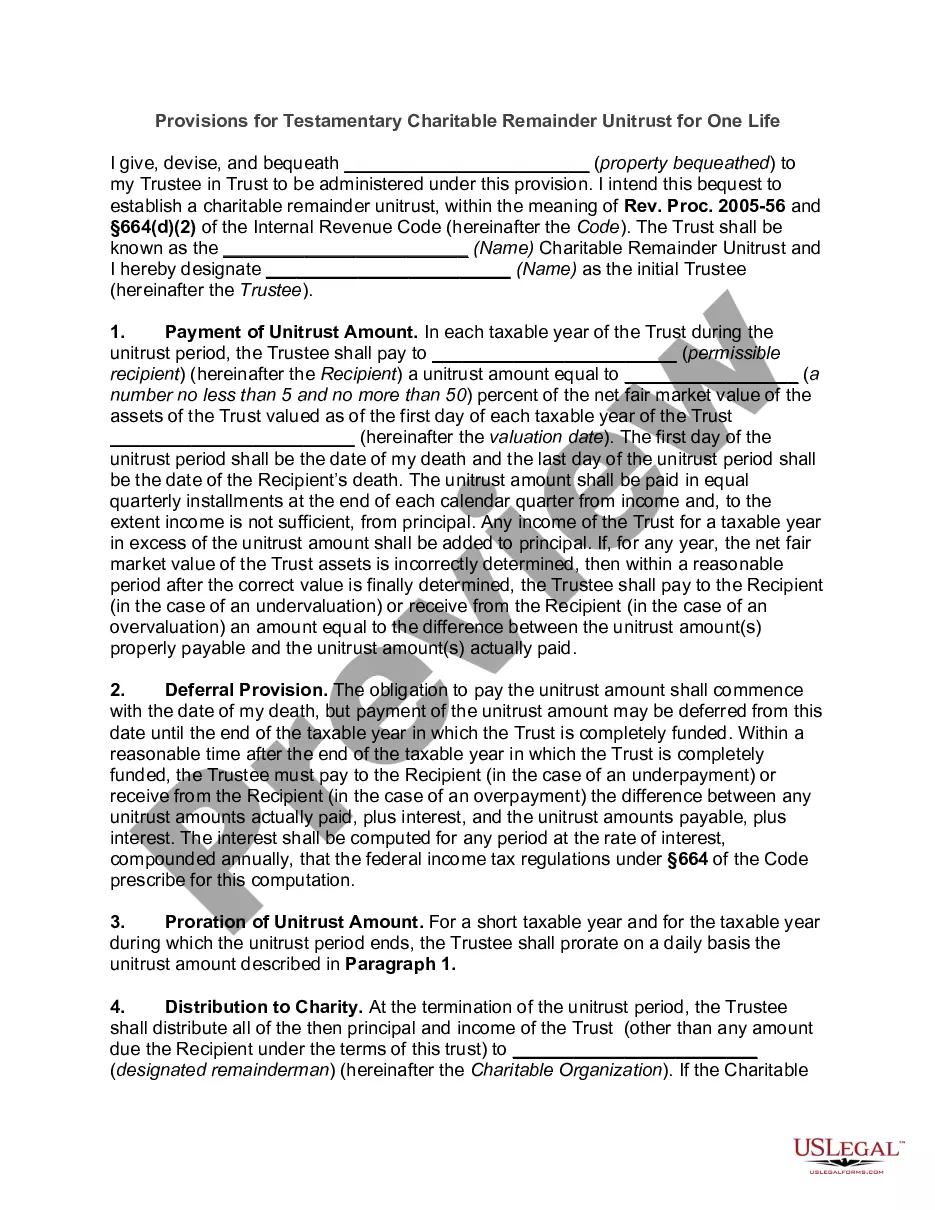
Get your form ready online
Our built-in tools help you complete, sign, share, and store your documents in one place.
Make edits, fill in missing information, and update formatting in US Legal Forms—just like you would in MS Word.
Download a copy, print it, send it by email, or mail it via USPS—whatever works best for your next step.
Sign and collect signatures with our SignNow integration. Send to multiple recipients, set reminders, and more. Go Premium to unlock E-Sign.
If this form requires notarization, complete it online through a secure video call—no need to meet a notary in person or wait for an appointment.
We protect your documents and personal data by following strict security and privacy standards.

Make edits, fill in missing information, and update formatting in US Legal Forms—just like you would in MS Word.

Download a copy, print it, send it by email, or mail it via USPS—whatever works best for your next step.

Sign and collect signatures with our SignNow integration. Send to multiple recipients, set reminders, and more. Go Premium to unlock E-Sign.

If this form requires notarization, complete it online through a secure video call—no need to meet a notary in person or wait for an appointment.

We protect your documents and personal data by following strict security and privacy standards.
Looking for another form?





How to fill out Charitable Remainder Inter Vivos Unitrust Agreement?
It’s obvious that you can’t become a law professional immediately, nor can you learn how to quickly draft Charitable Remainder Trust Document For Tax Purposes without having a specialized set of skills. Creating legal forms is a time-consuming venture requiring a particular training and skills. So why not leave the creation of the Charitable Remainder Trust Document For Tax Purposes to the specialists?
With US Legal Forms, one of the most comprehensive legal document libraries, you can find anything from court documents to templates for internal corporate communication. We understand how crucial compliance and adherence to federal and state laws are. That’s why, on our platform, all templates are location specific and up to date.
Here’s start off with our platform and get the document you need in mere minutes:
- Discover the document you need by using the search bar at the top of the page.
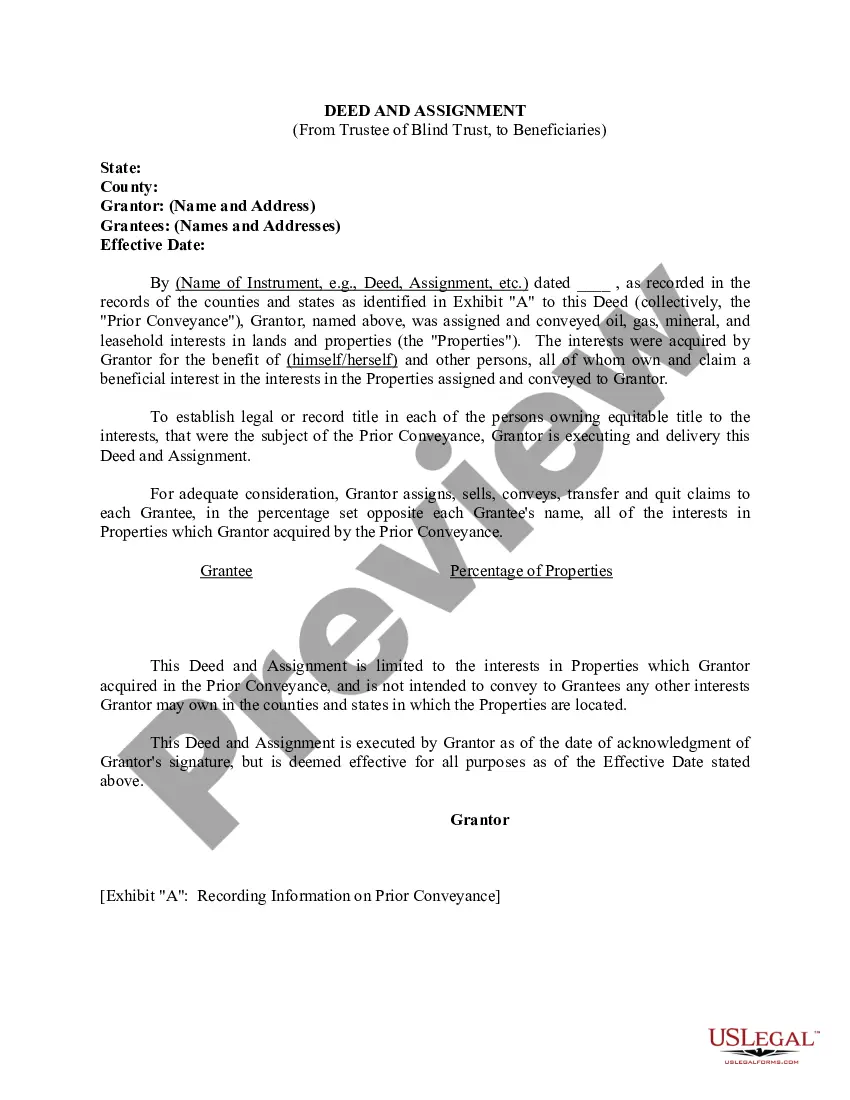
- Preview it (if this option provided) and read the supporting description to figure out whether Charitable Remainder Trust Document For Tax Purposes is what you’re looking for.
- Start your search again if you need any other template.
- Set up a free account and choose a subscription plan to buy the template.
- Pick Buy now. Once the payment is complete, you can get the Charitable Remainder Trust Document For Tax Purposes, complete it, print it, and send or send it by post to the designated individuals or entities.
You can re-access your forms from the My Forms tab at any time. If you’re an existing customer, you can simply log in, and locate and download the template from the same tab.
Regardless of the purpose of your paperwork-whether it’s financial and legal, or personal-our platform has you covered. Try US Legal Forms now!
Form popularity
FAQ
The income tax return of Charitable Trusts must be filed using ITR 5 return filing or ITR 7. In case the Trust is required to file an income tax return due to taxable income being in excess of the basic exemption limit, then ITR 5 can be filed.
An Example of How It Works Susan creates a charitable remainder unitrust with annual lifetime payments to her equal to 5% of the fair market value of the trust assets as revalued annually. She funds the trust with assets valued at $500,000. Susan receives $25,000 the first year from the trust.
CLTs distribute periodic payments to the charity during the trust term, after which the remainder interest is disbursed to your beneficiaries. CRTs are the opposite; CRTs provide you or your beneficiaries with cash distributions for a set time, after which the remainder interest is paid out to charity.
Jack and Joanna donate the cottage to a charitable remainder trust. The trustee sells the cottage free of any taxes since the trust is tax-exempt. The trustee reinvests the proceeds into a diversified portfolio. The Hilliers receive a current charitable income tax deduction of approximately $167,000.
The present value of the remainder interest is determined by multiplying the fair market value of the property on the valuation date by the appropriate remainder factor.