Charitable Remainder Trust At Death
Description
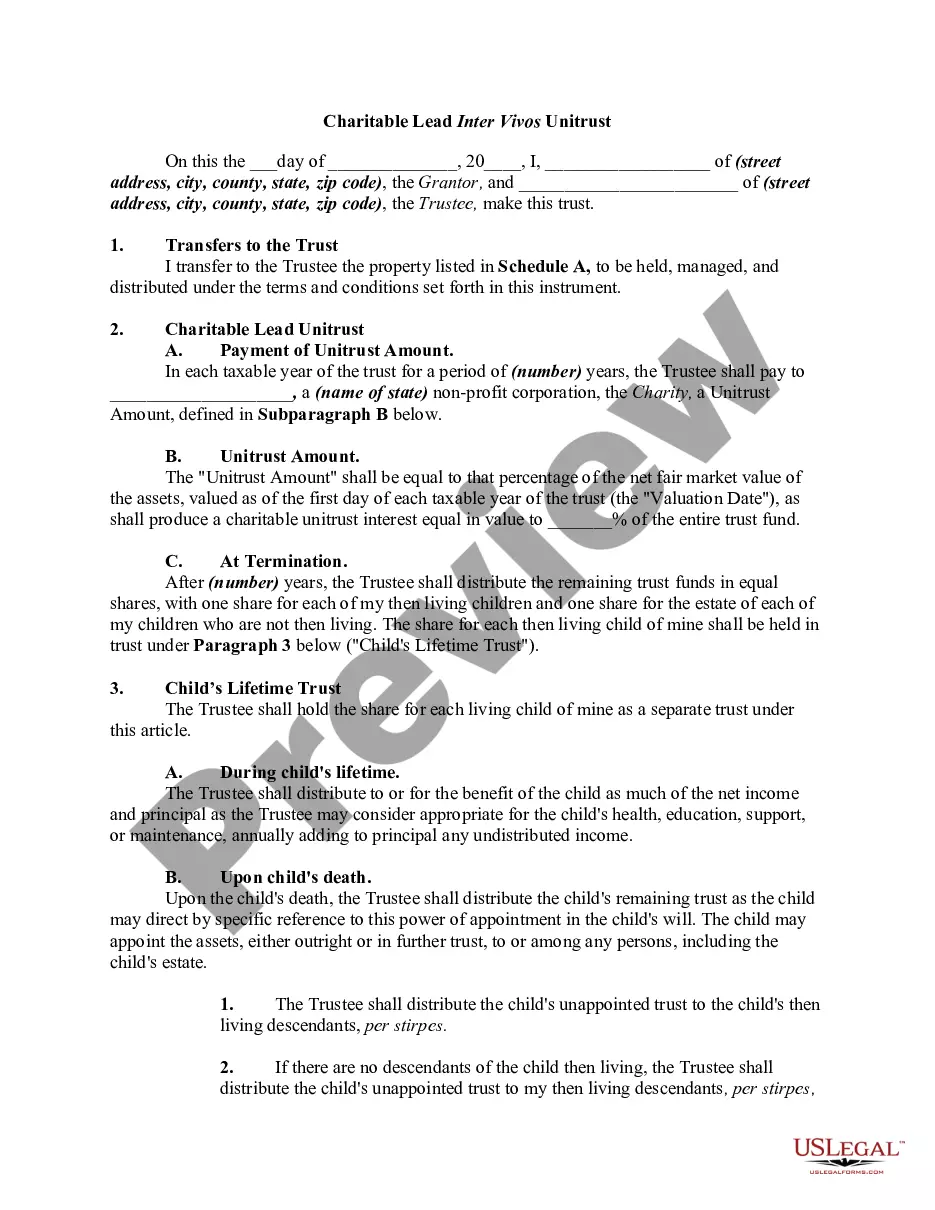
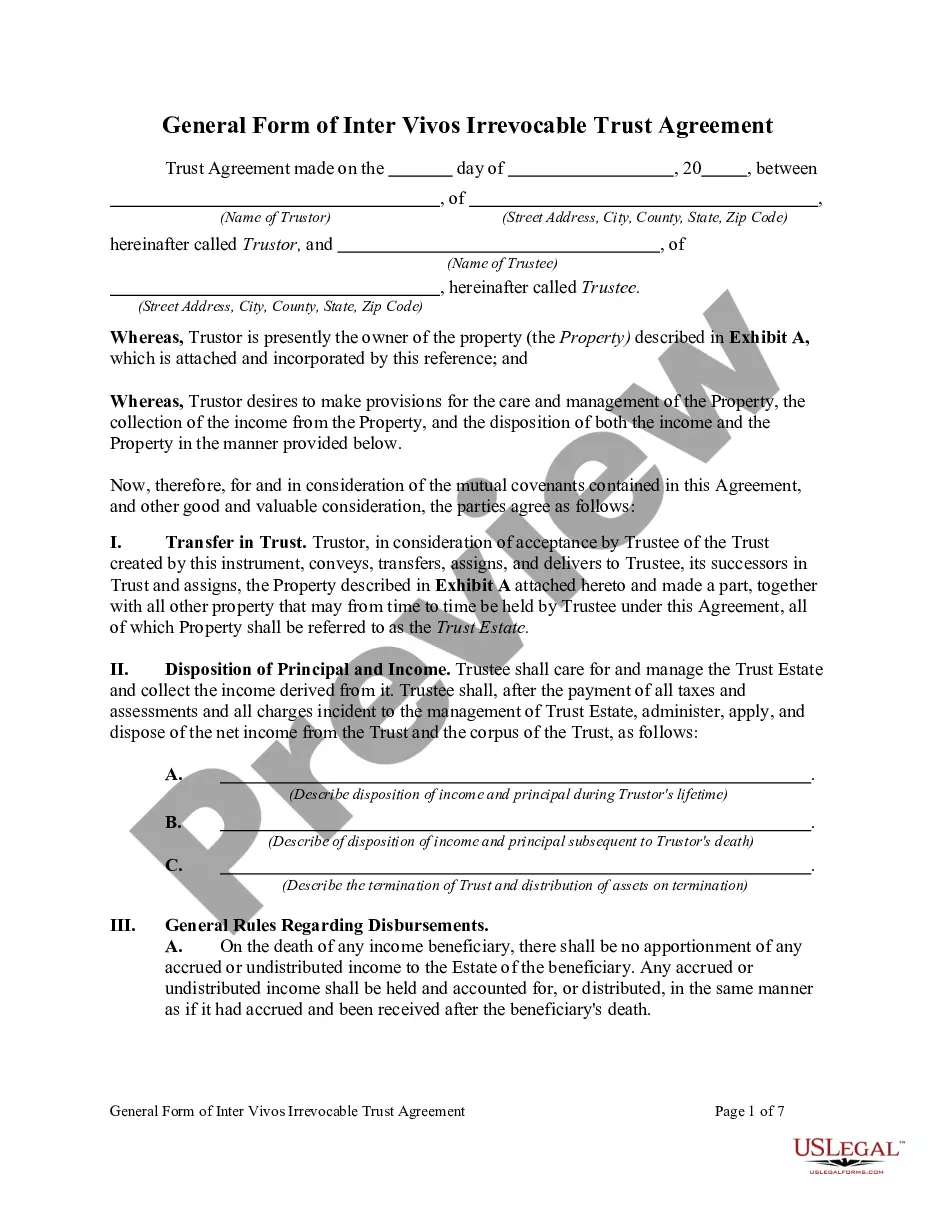
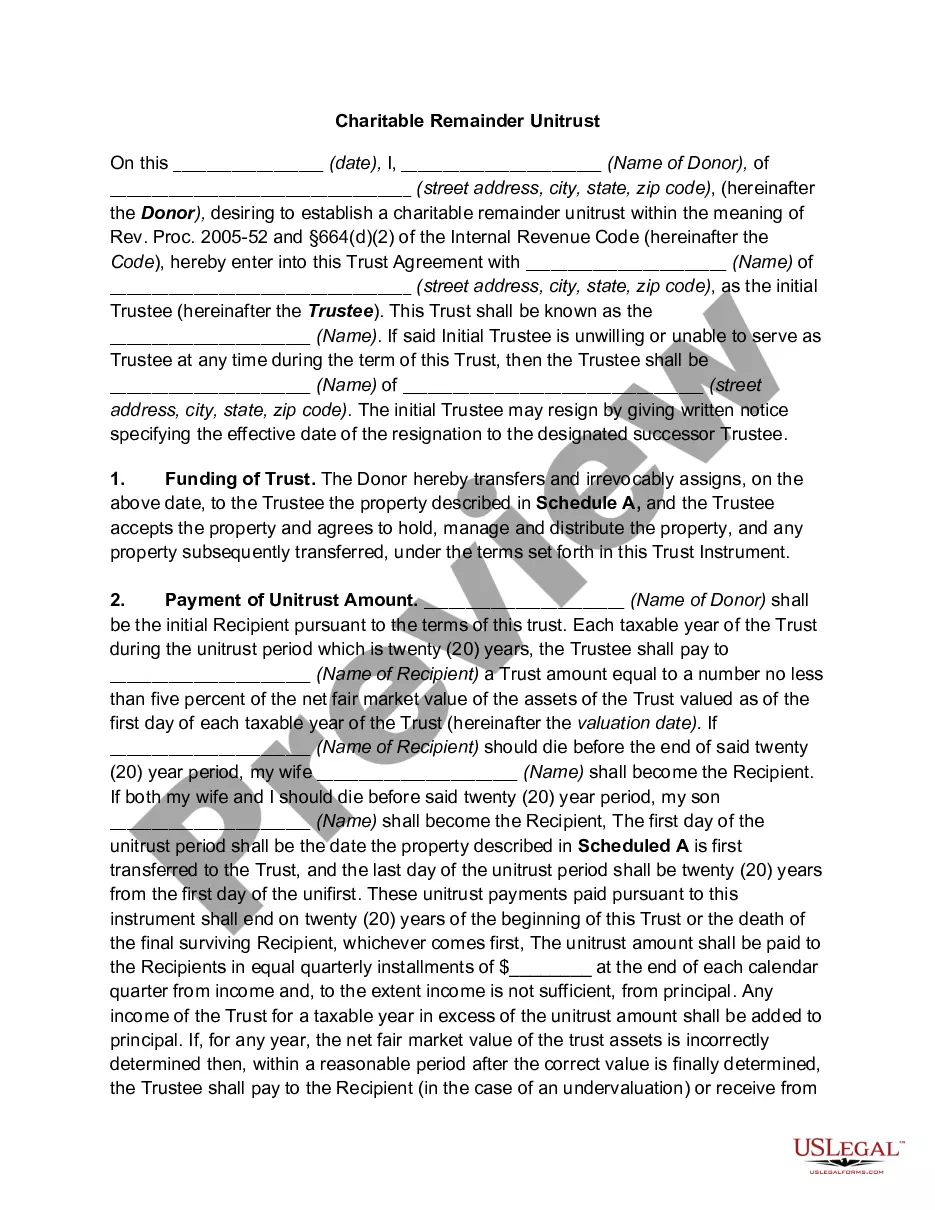
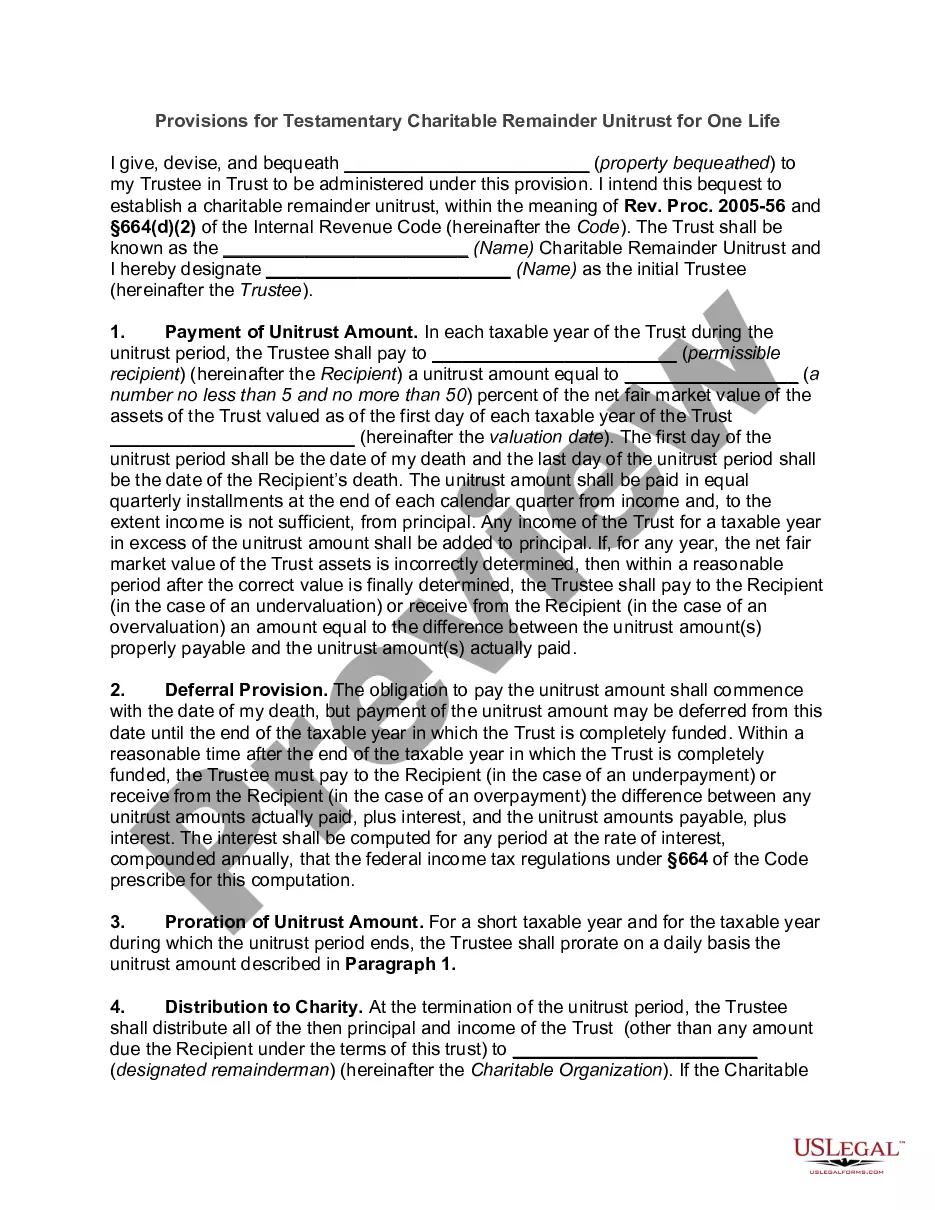
Get your form ready online
Our built-in tools help you complete, sign, share, and store your documents in one place.
Make edits, fill in missing information, and update formatting in US Legal Forms—just like you would in MS Word.
Download a copy, print it, send it by email, or mail it via USPS—whatever works best for your next step.
Sign and collect signatures with our SignNow integration. Send to multiple recipients, set reminders, and more. Go Premium to unlock E-Sign.
If this form requires notarization, complete it online through a secure video call—no need to meet a notary in person or wait for an appointment.
We protect your documents and personal data by following strict security and privacy standards.

Make edits, fill in missing information, and update formatting in US Legal Forms—just like you would in MS Word.

Download a copy, print it, send it by email, or mail it via USPS—whatever works best for your next step.

Sign and collect signatures with our SignNow integration. Send to multiple recipients, set reminders, and more. Go Premium to unlock E-Sign.

If this form requires notarization, complete it online through a secure video call—no need to meet a notary in person or wait for an appointment.

We protect your documents and personal data by following strict security and privacy standards.
Looking for another form?



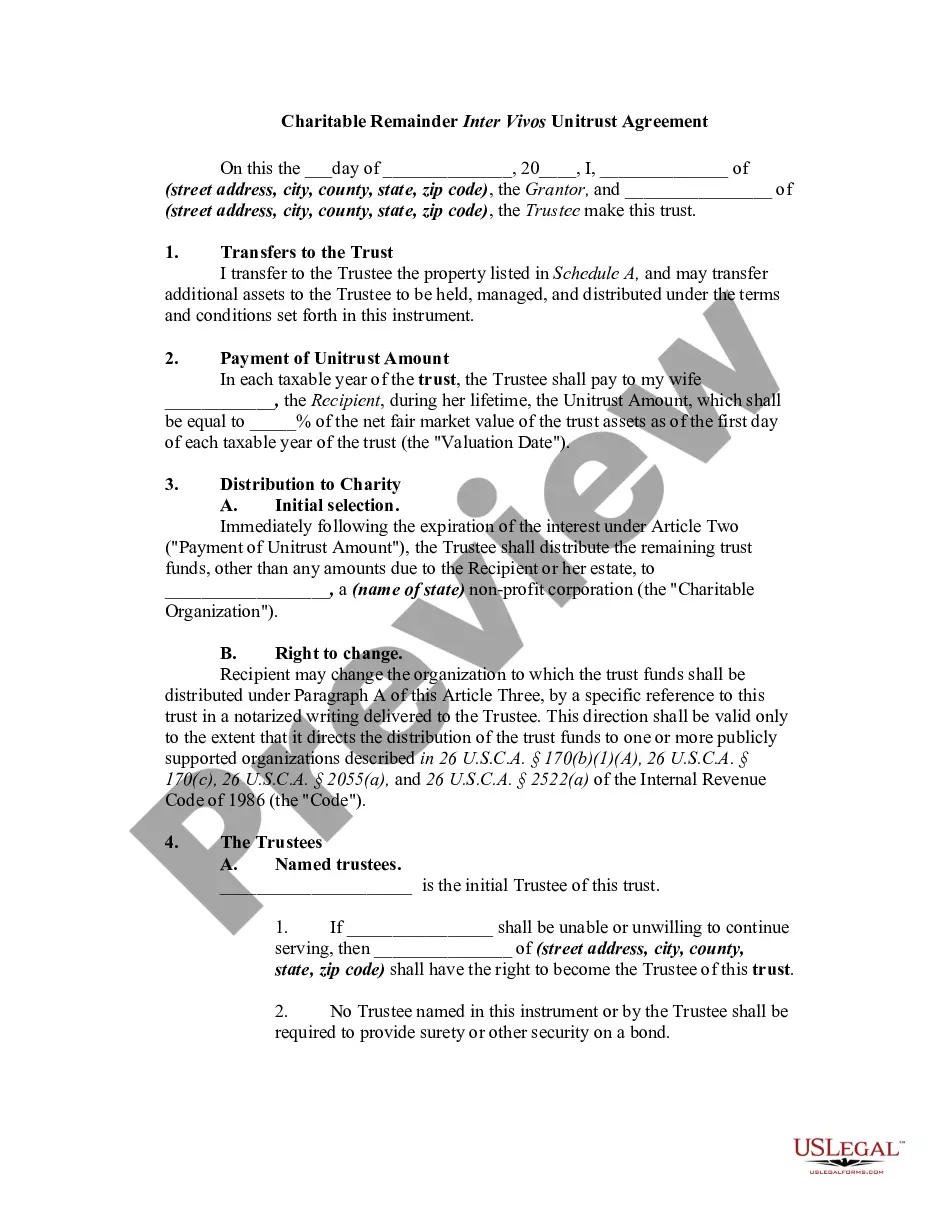
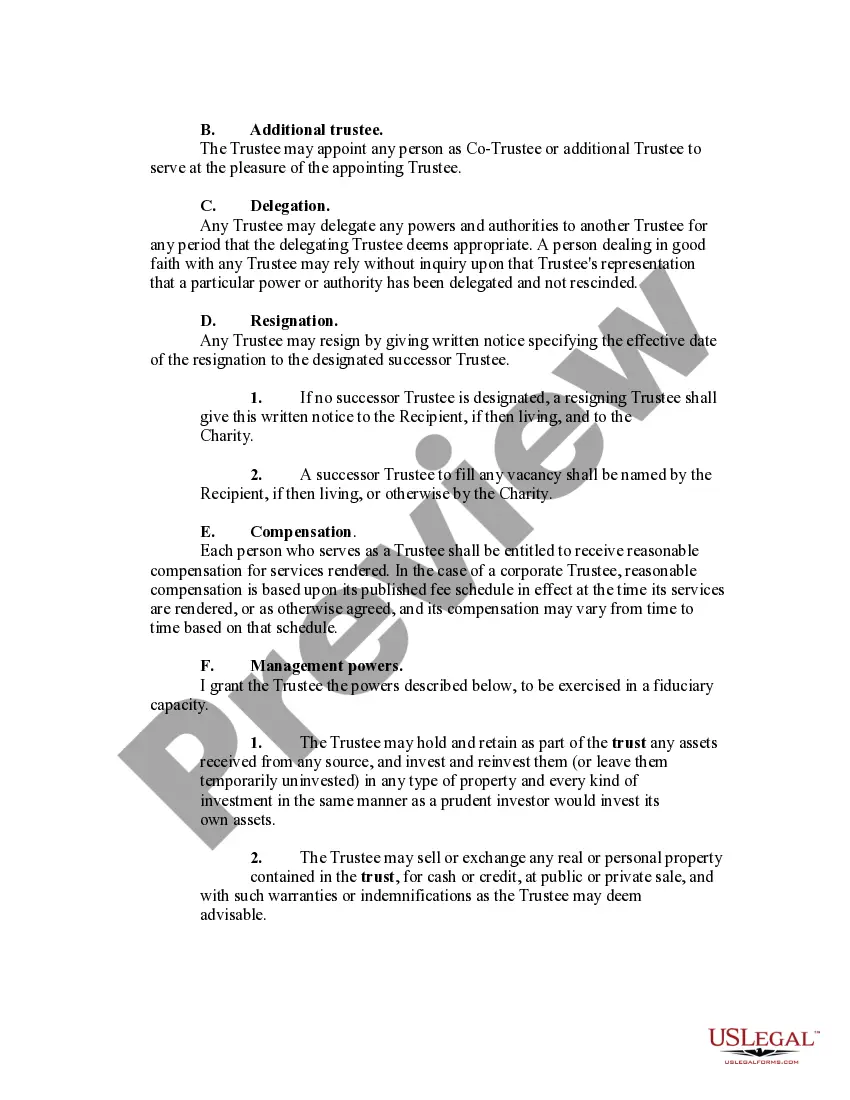
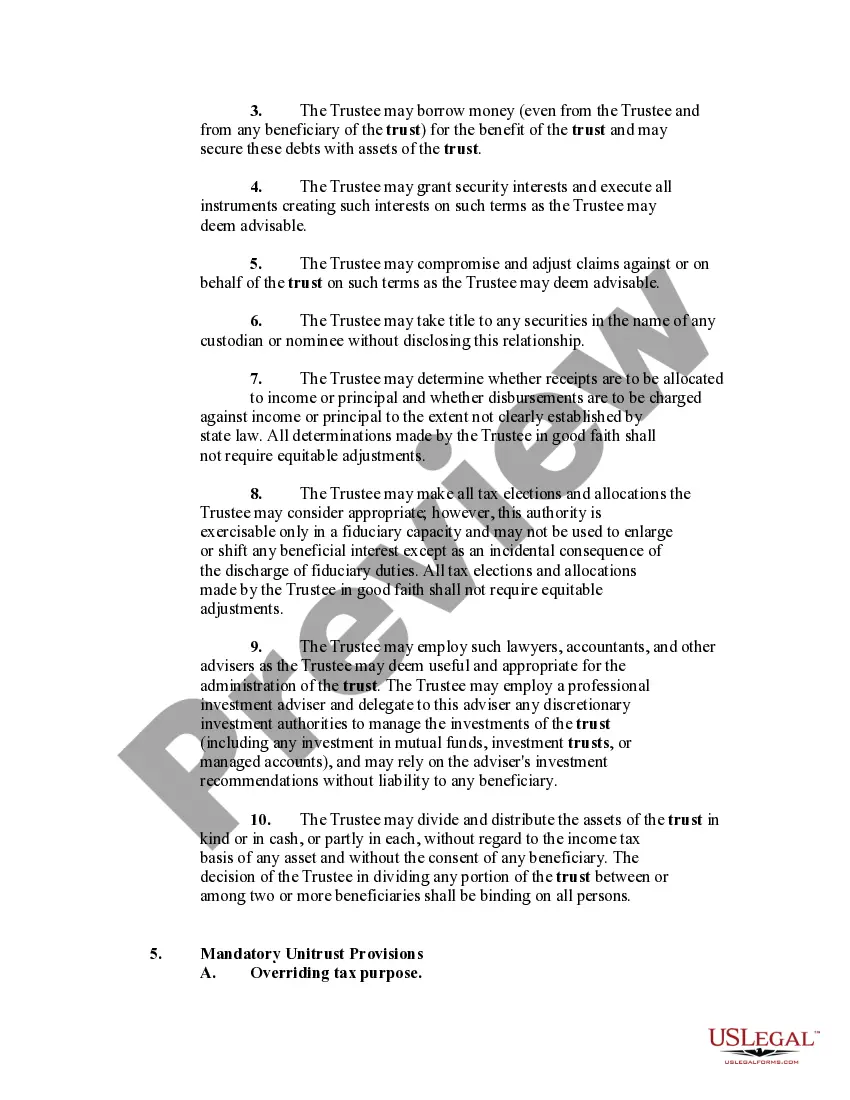
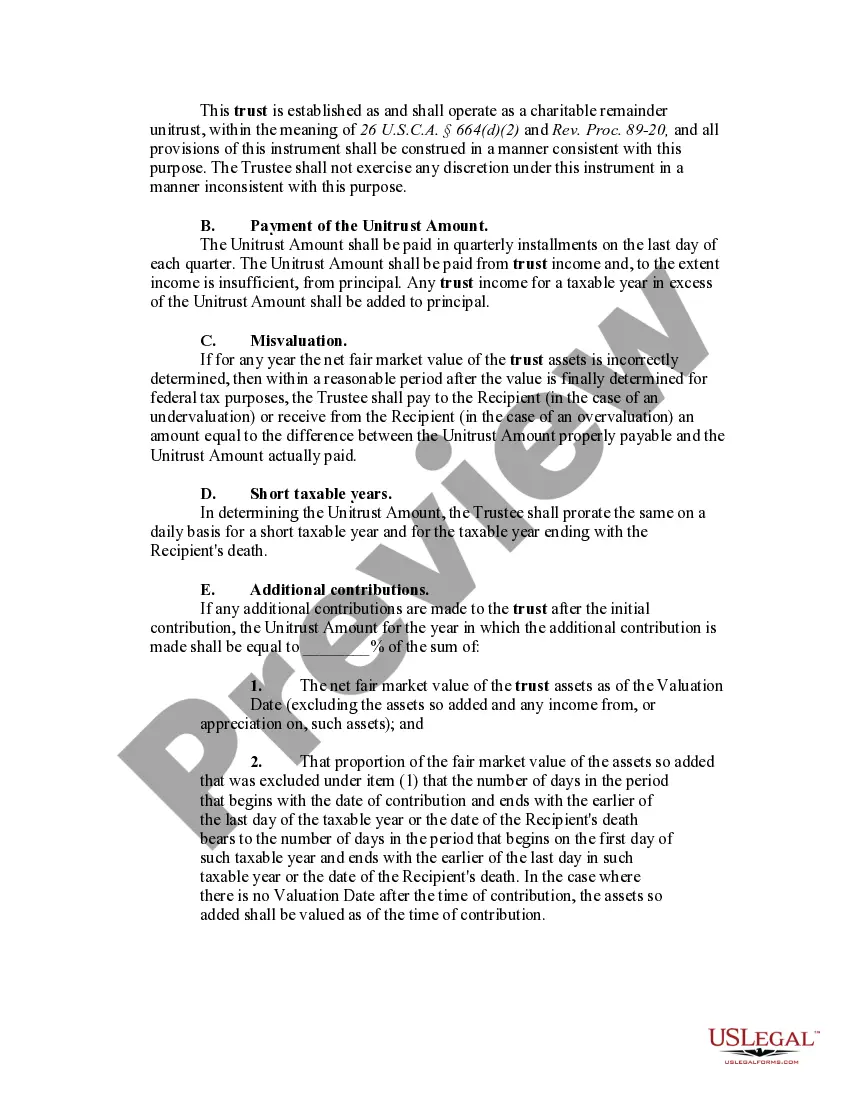
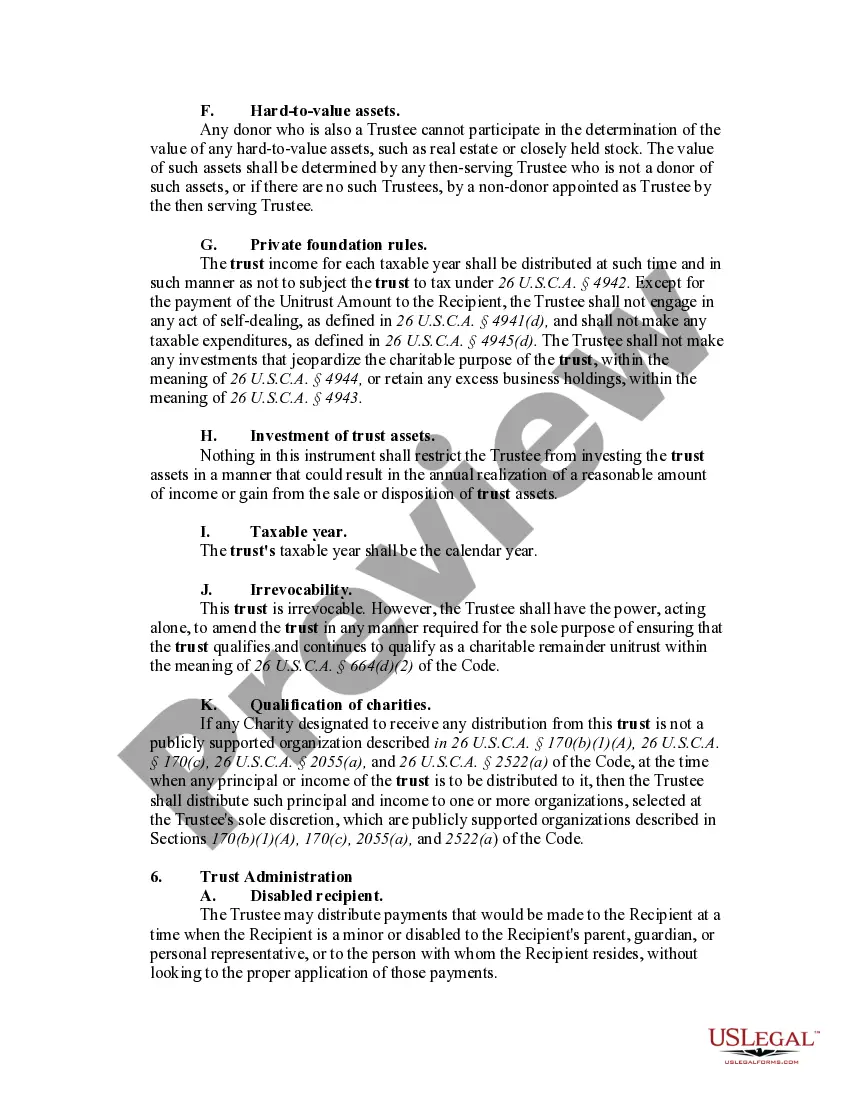
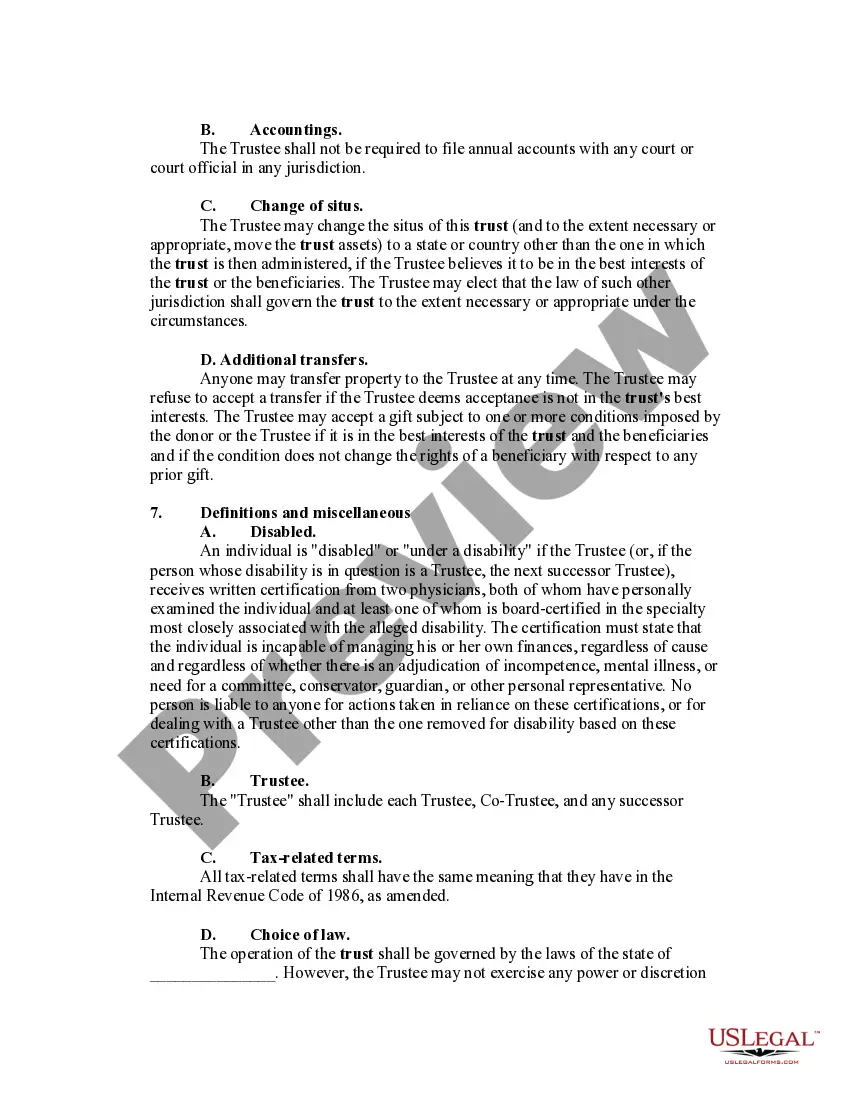
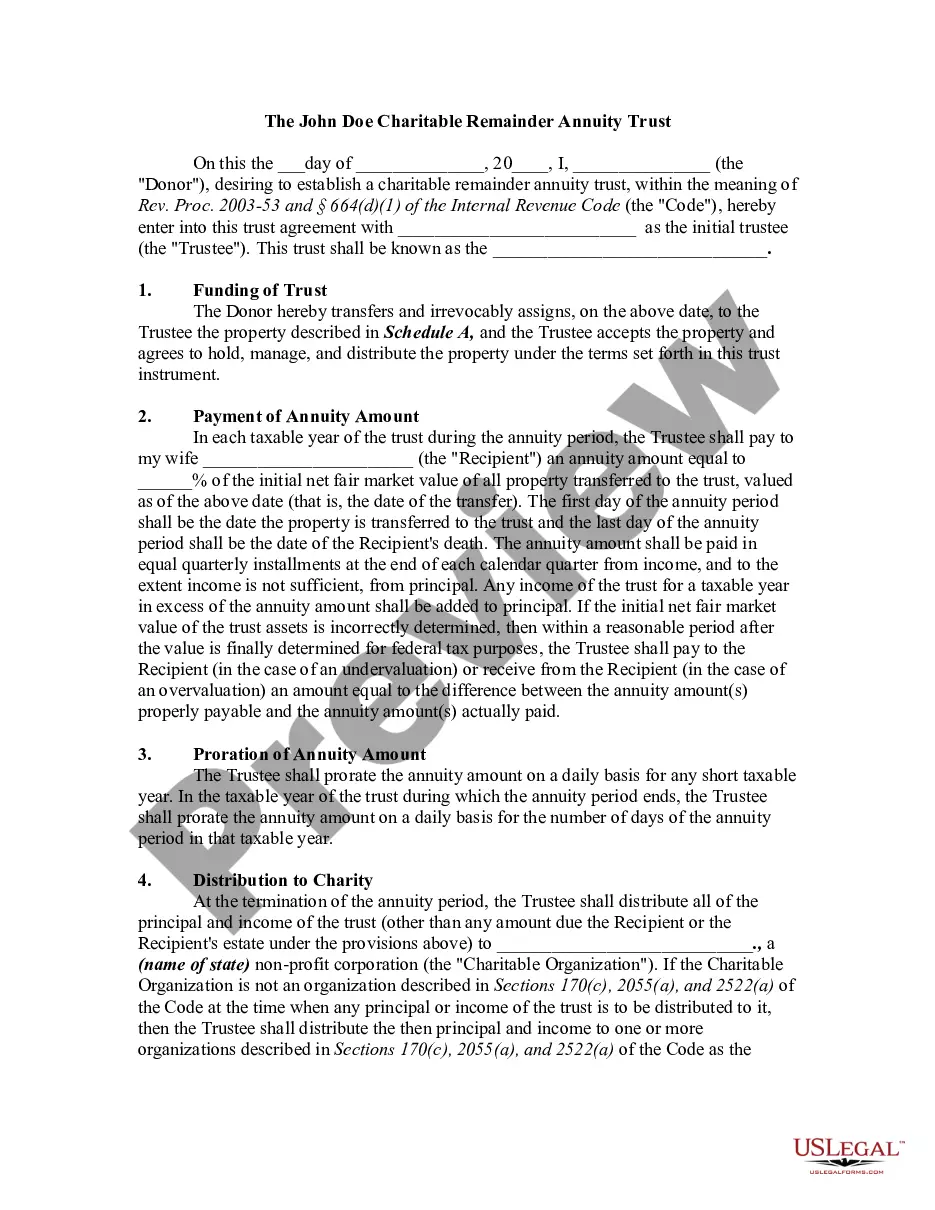
How to fill out Charitable Remainder Inter Vivos Unitrust Agreement?
Regardless of whether it's for professional objectives or personal matters, individuals must confront legal issues at some point in their lives.
Completing legal documents necessitates meticulous focus, starting with selecting the correct form template.
With an extensive US Legal Forms library available, you no longer have to waste time searching for the appropriate template online. Make use of the library’s user-friendly navigation to locate the correct template for any situation.
- Acquire the form you require by utilizing the search bar or browsing the catalog.
- Review the form’s details to ensure it corresponds with your situation, state, and locality.
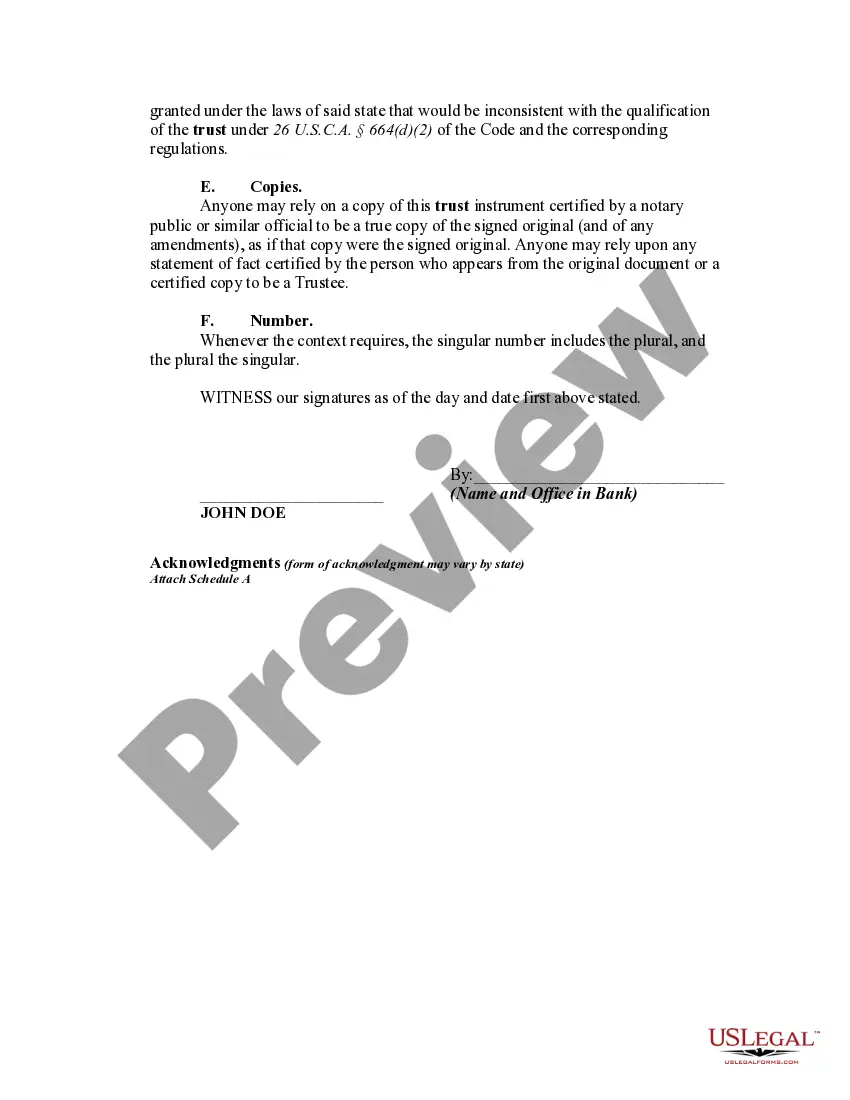
- Click on the form’s preview to inspect it.
- If it is the wrong document, return to the search feature to locate the Charitable Remainder Trust At Death template you need.
- Obtain the form once it aligns with your criteria.
- If you already possess a US Legal Forms account, simply click Log in to access previously stored documents in My documents.
- In case you do not have an account yet, you can download the form by clicking Buy now.
- Select the suitable pricing option.
- Fill out the account registration form.
- Choose your payment method: either a credit card or a PayPal account.
- Select the document format you desire and download the Charitable Remainder Trust At Death.
- After downloading, you can either fill in the form using editing software or print it and complete it by hand.
Form popularity
FAQ
While a charitable remainder trust at death offers several benefits, there are also noteworthy disadvantages to consider. One primary concern is the complexity associated with setting up and managing the trust, which may involve legal and administrative fees. Additionally, once you place your assets in the trust, you lose direct control over those assets, which can be a drawback for some individuals. It’s important to weigh these factors carefully, and resources like UsLegalForms can help you navigate the process effectively.
A charitable remainder trust at death can provide significant benefits, such as providing income to your beneficiaries while ultimately supporting a charitable organization. This can be a compelling option if you want to leave a lasting legacy while also receiving tax advantages. By utilizing a charitable remainder trust, you can effectively manage your estate and ensure your assets are used according to your wishes. Overall, many find that the financial and charitable implications make it a worthwhile endeavor.
The amount of income you can withdraw from a charitable remainder trust varies based on its terms, but it generally aligns with the trust's payout rate, which can be customized at setup. Commonly, the distributions range between 5% and 50% of the trust's assets. Planning wisely can enhance the benefits of your charitable remainder trust at death while satisfying your income needs.
The 5% rule refers to the minimum annual payout from a charitable remainder trust, which must be at least 5% of the initial fair market value of the assets transferred to the trust. This rule ensures that the trust generates income for you or your beneficiaries, while also fulfilling the charitable intent. Hence, understanding the 5% rule for CRT is essential for effective estate planning.
A charitable remainder trust allows you to donate assets to a trust while receiving income from it during your lifetime. At your death, the remaining assets in the trust go to a designated charity. This trust can provide financial benefits, such as income tax deductions and reduced estate taxes, especially when utilizing a charitable remainder trust at death.
While a charitable remainder trust offers many benefits, it also has some downsides to consider. The main drawback is that once assets are placed in the trust, you cannot access them during your lifetime, which may limit your liquidity. Additionally, creating a charitable remainder trust at death can involve setup costs and ongoing administrative fees, which could affect your overall financial strategy. It's essential to weigh these factors against your estate planning goals and explore all options.
To form a charitable remainder trust, you start by drafting a trust agreement that details the terms and conditions. You will typically work with an attorney experienced in estate planning to ensure compliance with legal standards. Once established, you can transfer assets into the trust, allowing you to receive income during your lifetime, followed by a charitable distribution after your death. Using a platform like US Legal Forms can simplify this process, guiding you in creating the right documents efficiently.
The 5% rule for a charitable remainder trust specifies that the annual payout to beneficiaries must be at least 5% of the trust's initial fair market value. This rule ensures that your trust provides a predictable income stream while also benefiting charity after your passing. With a charitable remainder trust at death, you can potentially reduce your taxable estate, making this a valuable option for estate planning. Understanding this rule is crucial to effectively manage your trust.
Upon your death, a charitable remainder trust typically terminates, and the remaining assets are distributed to the designated charitable organization. This process not only fulfills your philanthropic intent but may also provide significant tax benefits for your estate. Consulting with a platform like US Legal Forms can assist you in understanding how your charitable remainder trust works and how it can impact your overall estate plan.
A charitable trust is a broader category that can provide various benefits, while a charitable remainder trust specifically allows you to receive income during your lifetime and then donate the remainder to charity upon your death. The charitable remainder trust at death can be an effective estate planning tool, ensuring that your assets benefit both you and your chosen charitable organizations. Understanding these distinctions can guide your philanthropic decisions.