Charitable Remainder Form Trust Contract With A Trust
Description
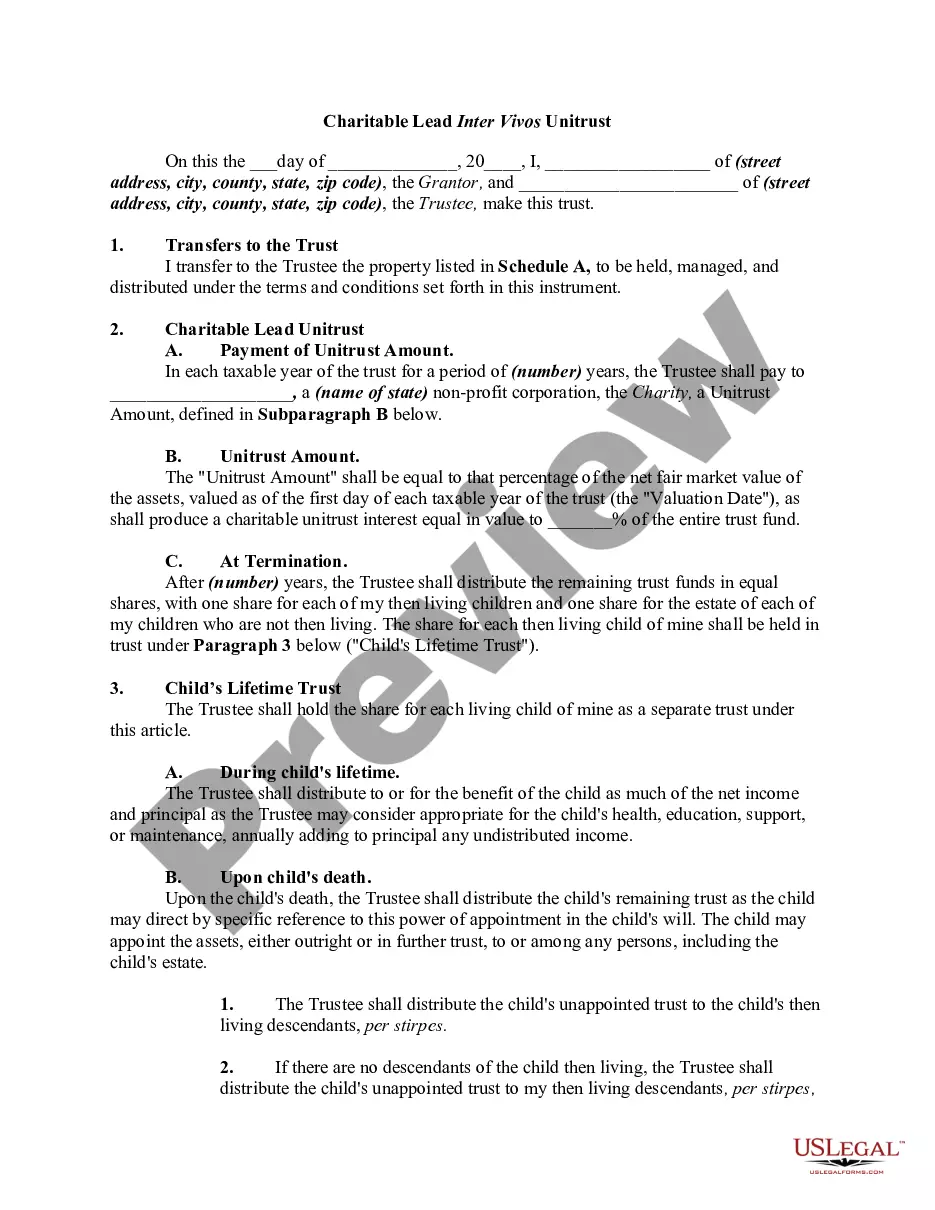
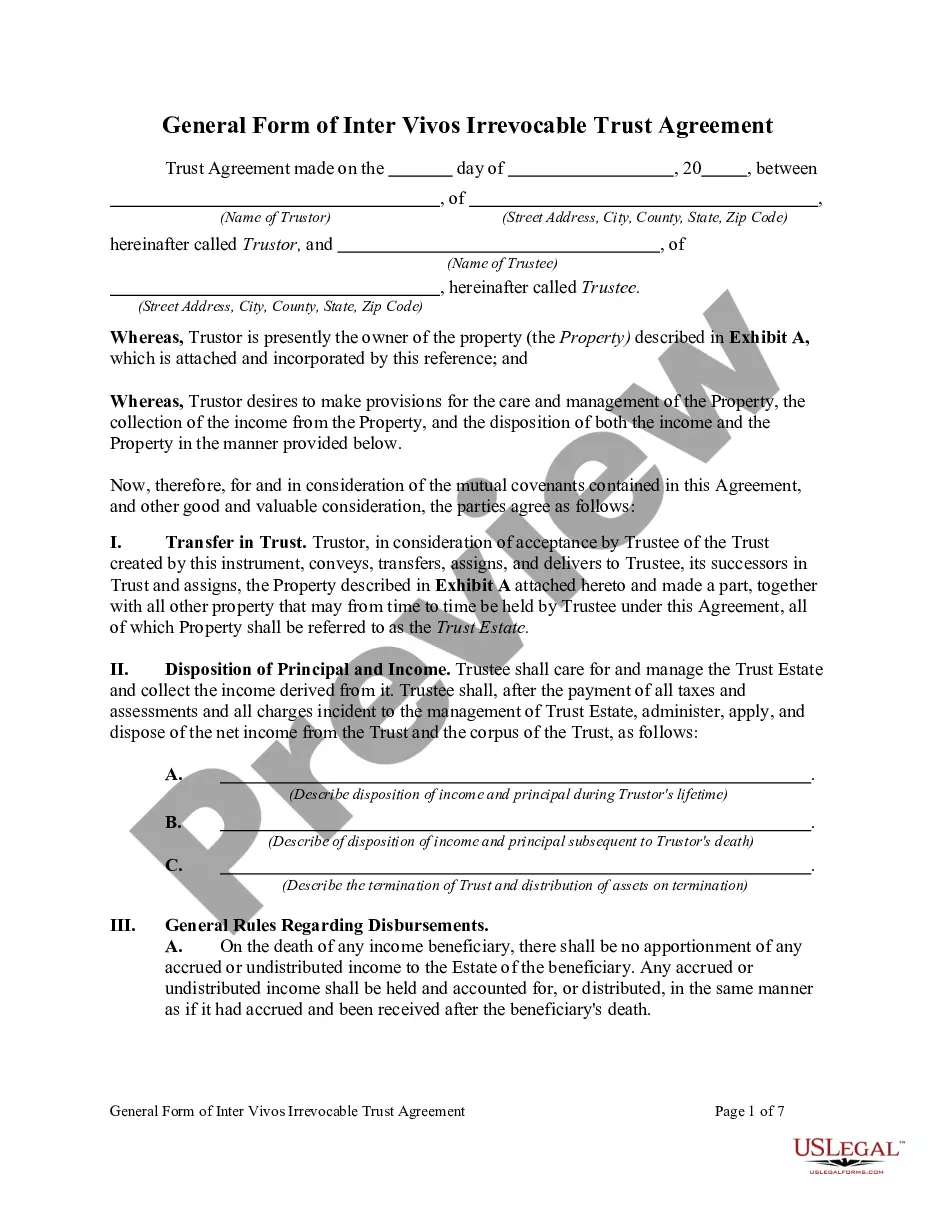
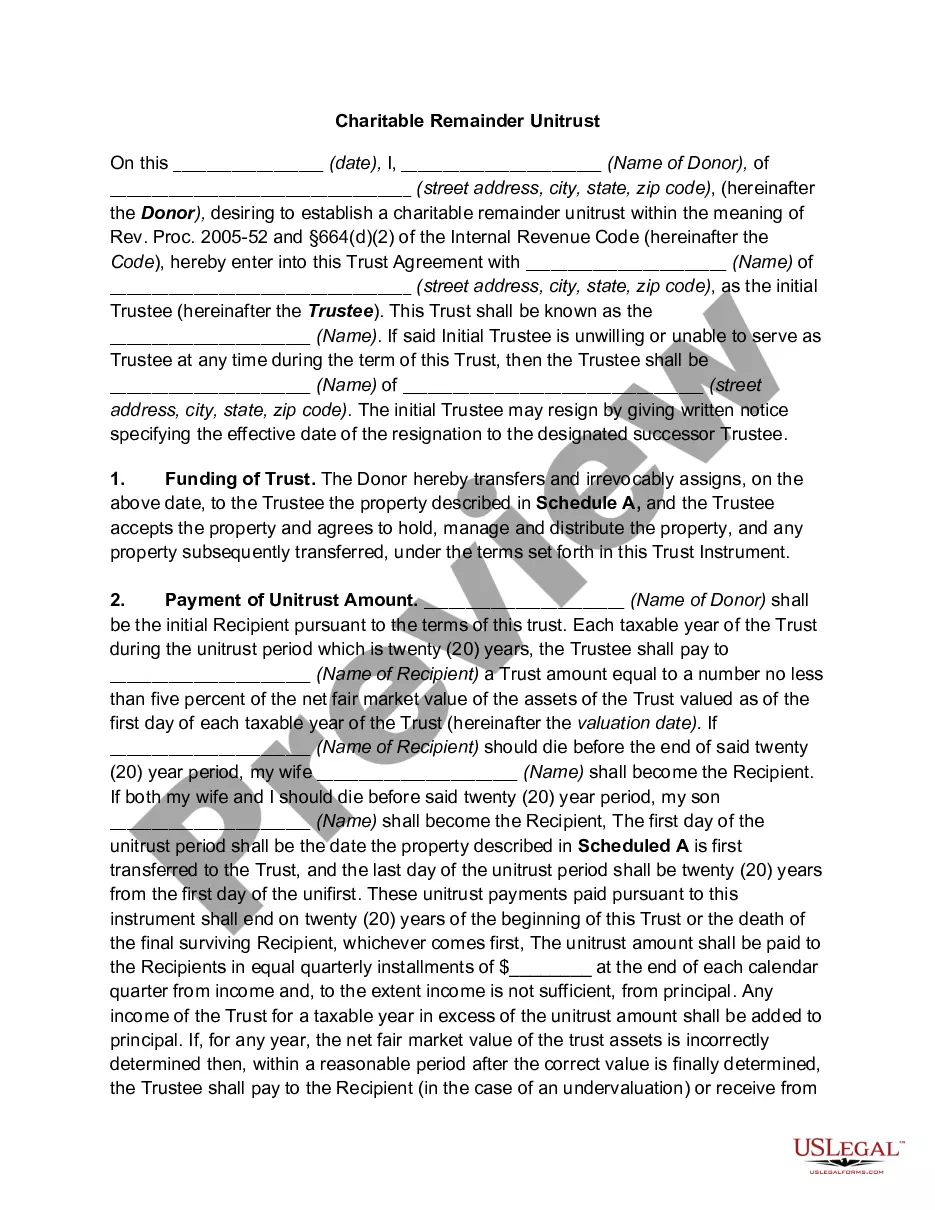
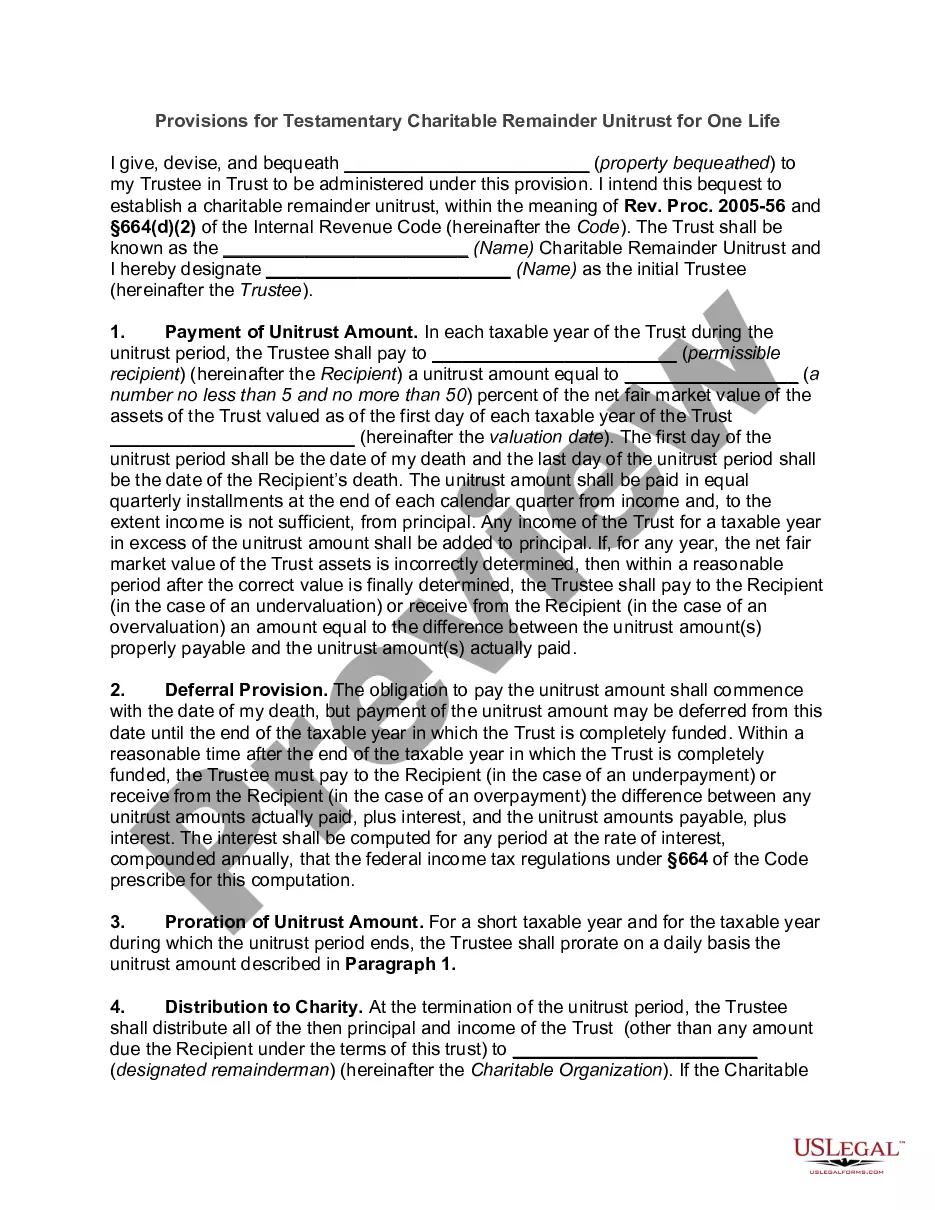
Get your form ready online
Our built-in tools help you complete, sign, share, and store your documents in one place.
Make edits, fill in missing information, and update formatting in US Legal Forms—just like you would in MS Word.
Download a copy, print it, send it by email, or mail it via USPS—whatever works best for your next step.
Sign and collect signatures with our SignNow integration. Send to multiple recipients, set reminders, and more. Go Premium to unlock E-Sign.
If this form requires notarization, complete it online through a secure video call—no need to meet a notary in person or wait for an appointment.
We protect your documents and personal data by following strict security and privacy standards.

Make edits, fill in missing information, and update formatting in US Legal Forms—just like you would in MS Word.

Download a copy, print it, send it by email, or mail it via USPS—whatever works best for your next step.

Sign and collect signatures with our SignNow integration. Send to multiple recipients, set reminders, and more. Go Premium to unlock E-Sign.

If this form requires notarization, complete it online through a secure video call—no need to meet a notary in person or wait for an appointment.

We protect your documents and personal data by following strict security and privacy standards.
Looking for another form?




How to fill out Charitable Remainder Inter Vivos Unitrust Agreement?
- If you're a returning user, log in to access your account. Verify your subscription status before downloading the required template by clicking the Download button.
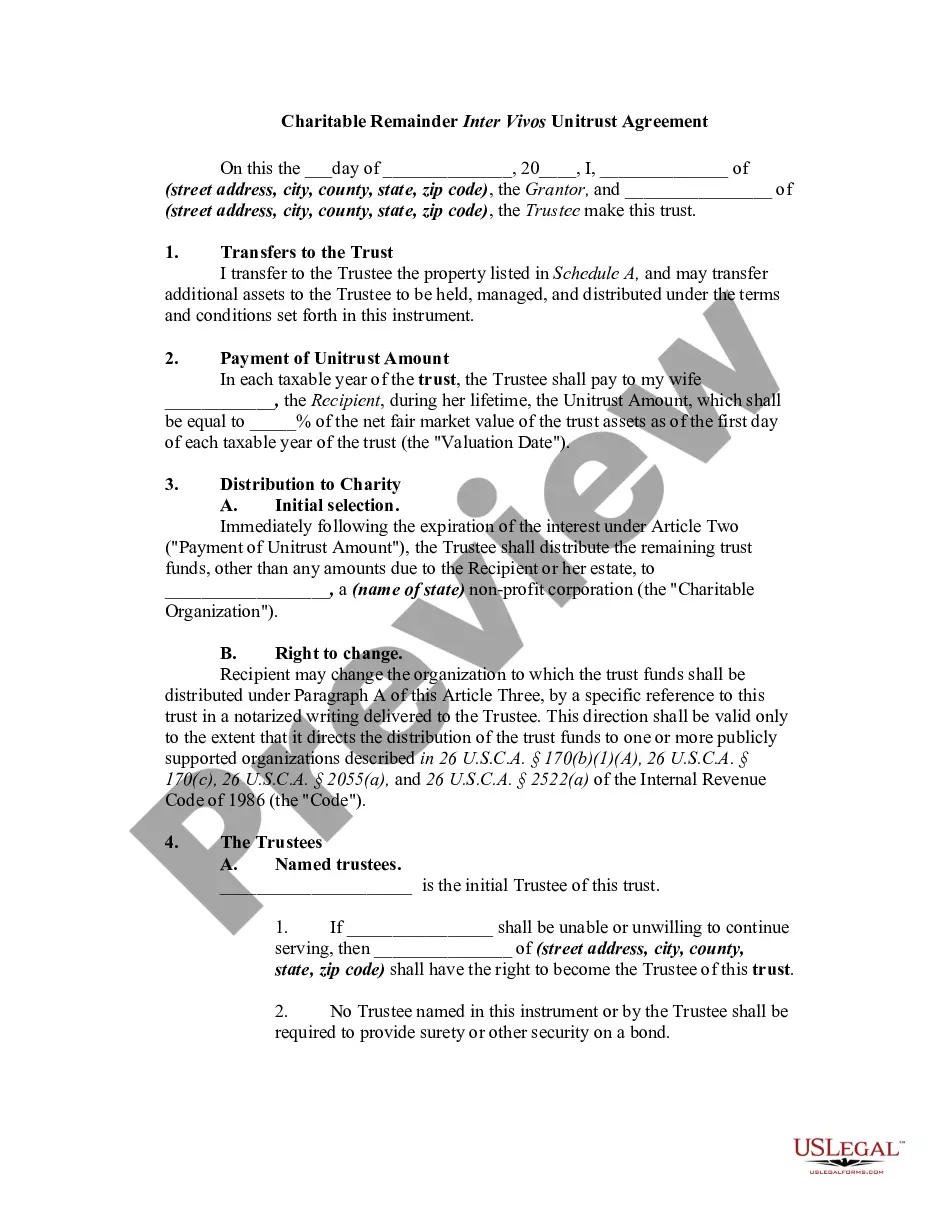
- For first-time users, start by reviewing the document preview and form description to ensure it aligns with your needs and local requirements.
- Should you need a different template, utilize the Search tab at the top to find a more suitable document that suits your requirements.
- After confirming your selection, click the Buy Now button to choose your desired subscription plan. Creating an account will provide access to the extensive library.
- Complete your purchase by entering your credit card information or by using your PayPal account for a seamless transaction.
- Finally, download the form to your device. You can access it anytime from the My Forms section of your profile.
US Legal Forms empowers both individuals and attorneys with a vast resource of more than 85,000 legal documents, ensuring you can find the right templates quickly and easily.
Don't wait to secure your charitable remainder trust contract. Start your journey with US Legal Forms today and experience the convenience of efficient legal documentation!
Form popularity
FAQ
Individuals who make noncash charitable contributions valued over $500 are required to file Form 8283. This form serves to report these contributions, providing the IRS with necessary details about your donations. If you have established a charitable remainder form trust contract with a trust and made significant noncash donations, filing this form is essential for compliance.
A Form 8283 is required for claiming a car donation deduction if the vehicle is valued at over $500. This requirement allows the IRS to monitor and validate the value of significant noncash donations. By completing the form accurately, you ensure that your charitable remainder form trust contract with a trust aligns with IRS guidelines for deductions.
Yes, a charitable remainder trust must file a tax return annually using Form 1041. This tax return ensures that all income generated by the trust is reported. It's important to keep in mind that the trust itself is responsible for tax reporting, even though you might receive income distributions. Consulting a tax professional can help guide you through this process effectively.
Form 8282 is used to report the sale of donated property, while Form 8283 is for reporting noncash charitable contributions. Both forms serve to provide the IRS with important information about charitable giving, yet they apply to different aspects of donations. Understanding these distinctions helps ensure that your charitable remainder form trust contract with a trust complies with federal requirements.
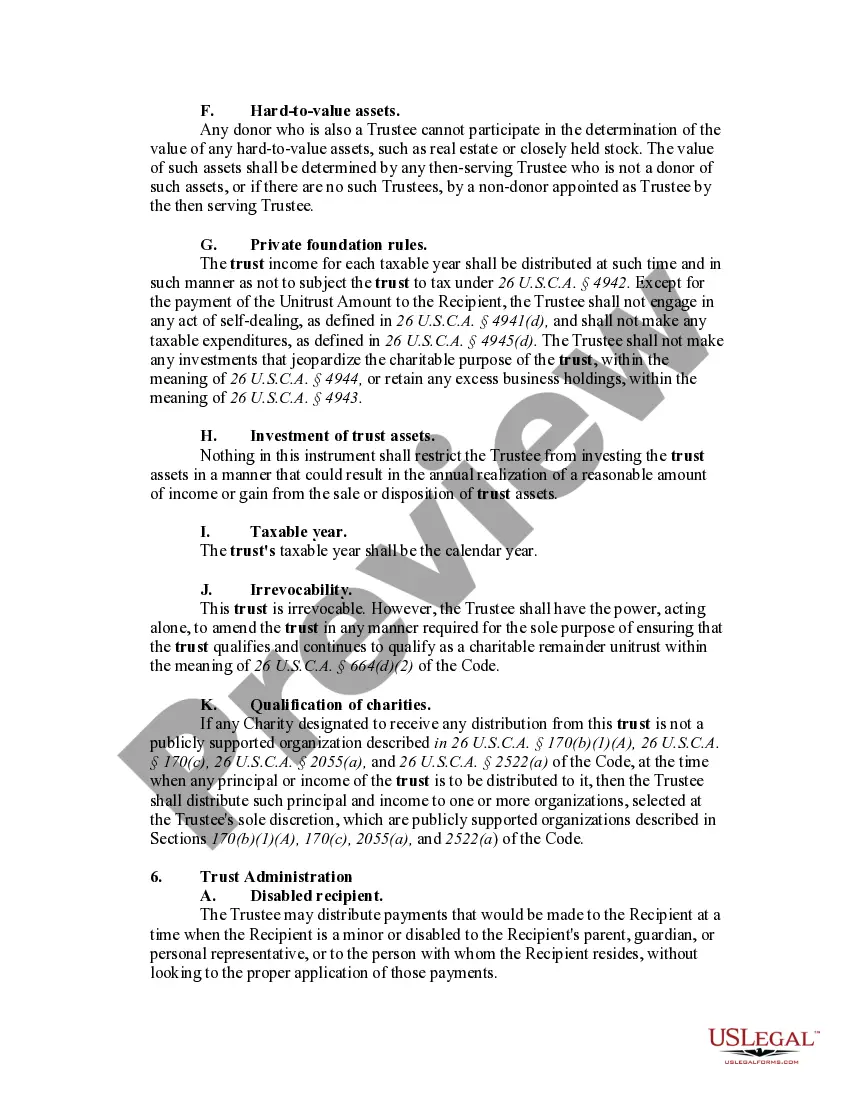
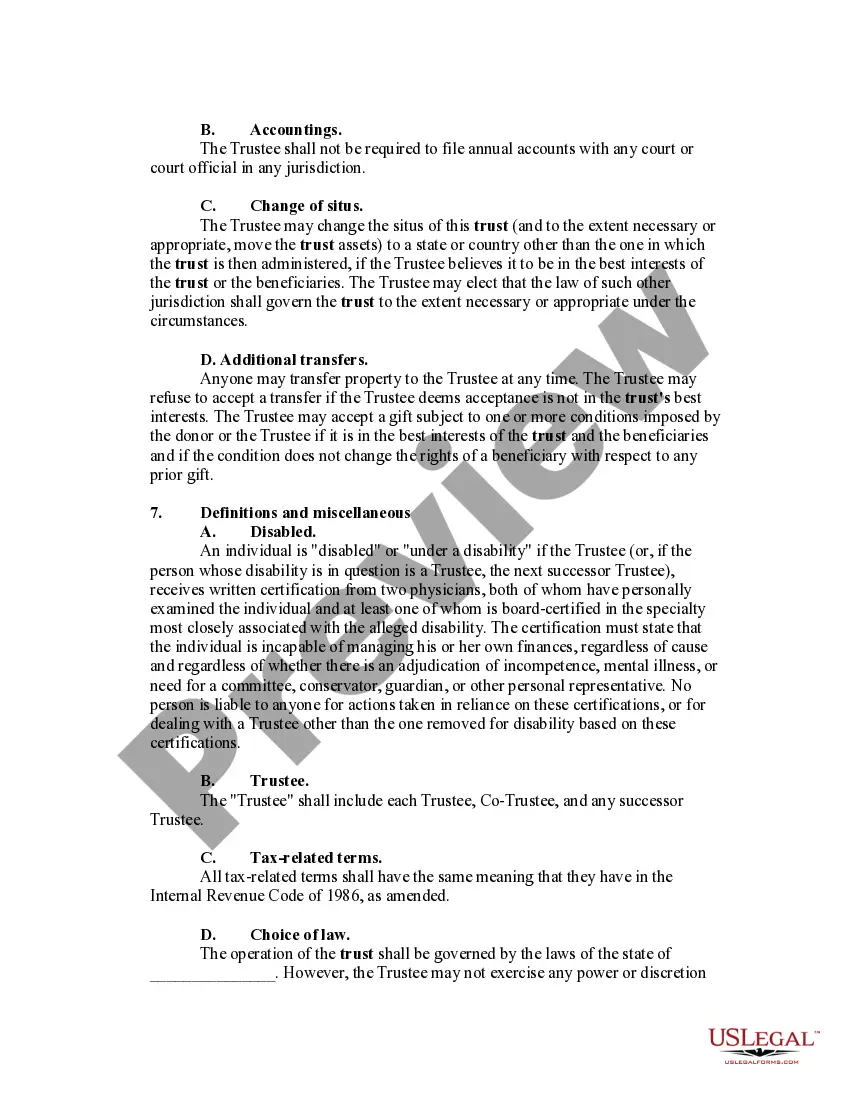
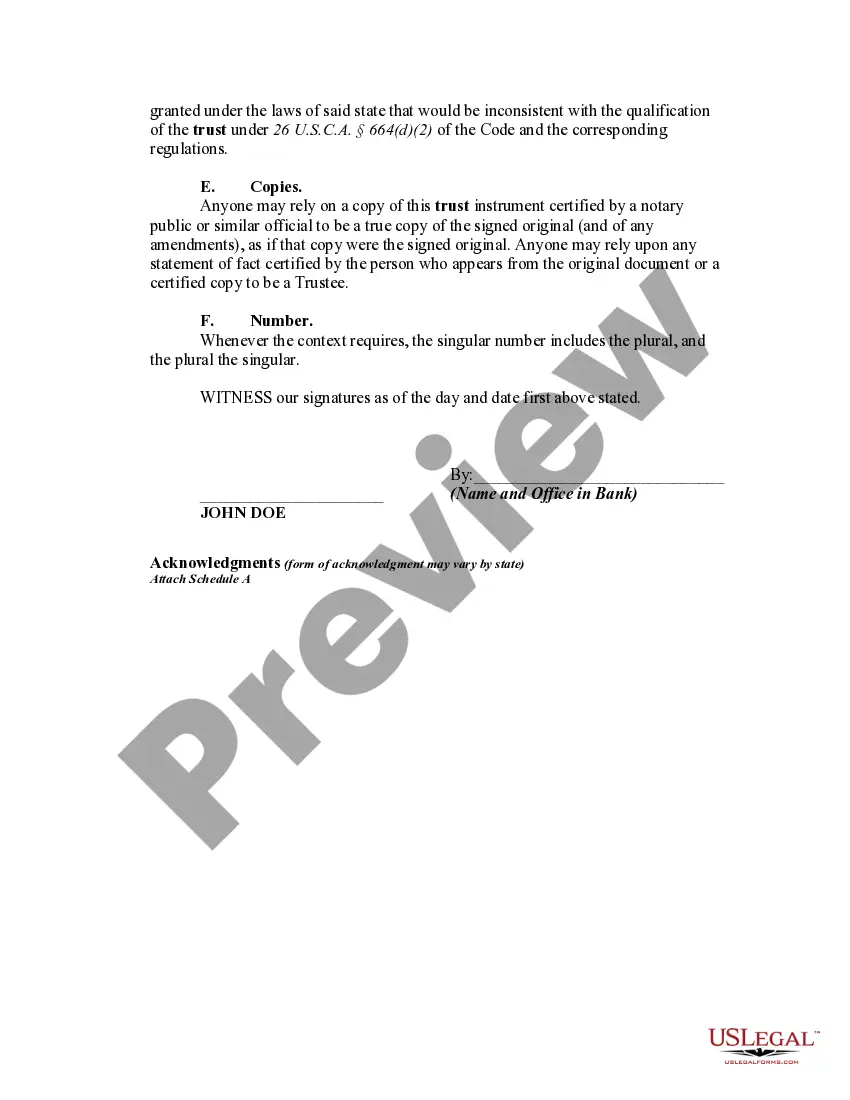
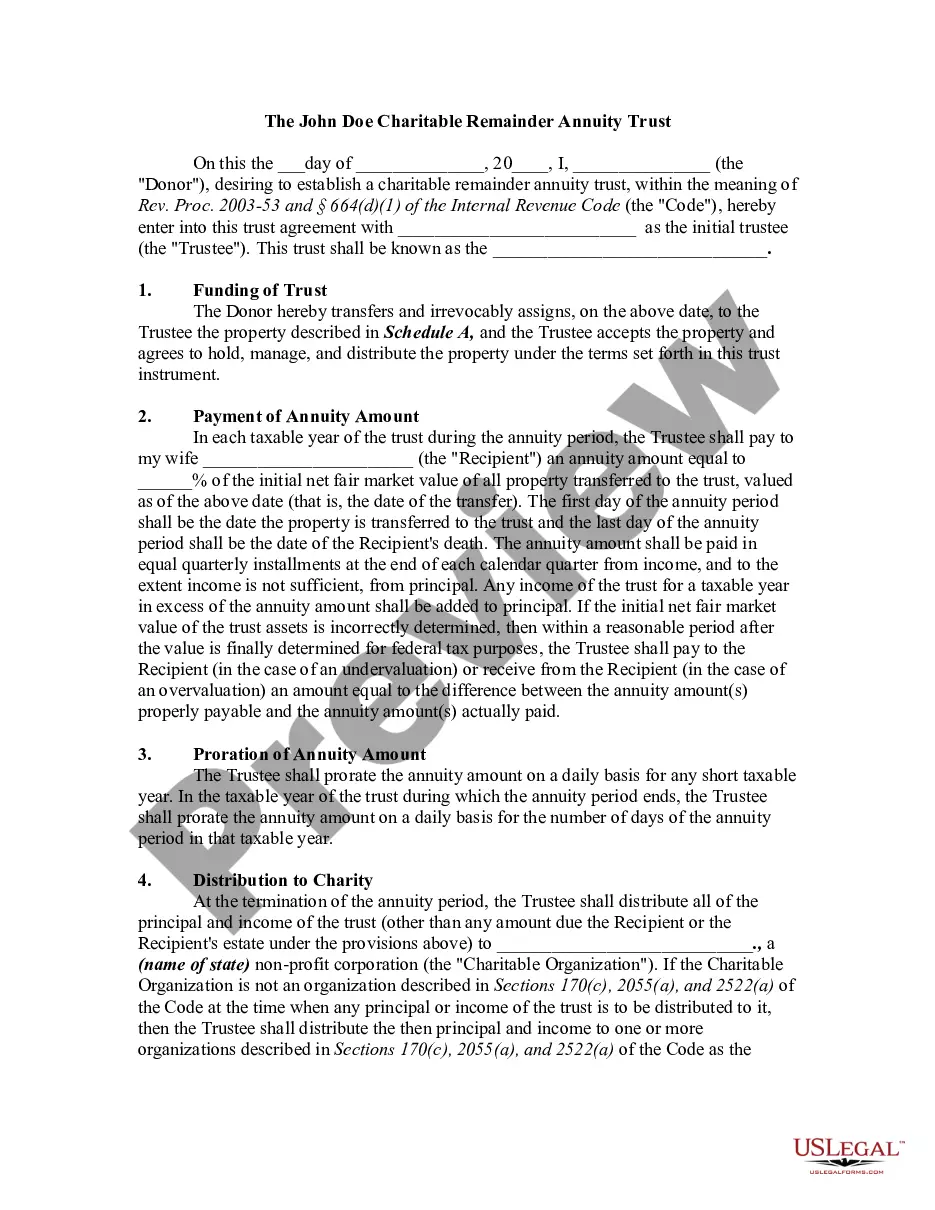
A declaration of trust, also known as a trust agreement, is a legal document that establishes a trust. It outlines the terms of the trust, specifies the roles of the grantor and trustee, and details how assets will be managed and distributed. In the case of a charitable remainder form trust contract with a trust, this document is crucial for ensuring that your charitable intentions are legally recognized and honored.
Form 8283 is a tax form used to report noncash charitable contributions, including contributions made through a charitable remainder trust. This form is particularly important for assets valued over $500. When you include your charitable remainder form trust contract with a trust on this form, it helps the IRS track charitable donations accurately.
Yes, a charitable remainder trust is indeed a type of split interest trust. This means that it divides the benefits between charitable organizations and non-charitable beneficiaries. Essentially, you receive income from the trust during your lifetime, and after your passing, the remaining assets are donated to a charity. This structure allows you to support a cause you care about while still enjoying income during your lifetime.
To file a charitable remainder trust, you must first gather all necessary financial documents and information related to the charitable remainder form trust contract with a trust. Next, complete Form 1041, ensuring you accurately report the income and expenses associated with the trust. You may also need to seek professional assistance to navigate any specific state requirements and ensure compliance with federal regulations. Platforms like USLegalForms can provide valuable resources and templates to facilitate this process, ensuring you file correctly and efficiently.
The amount of income you can take from a charitable remainder trust varies based on the trust's terms and the income payout percentage set in the charitable remainder form trust contract with a trust. Generally, this payout is typically around 5% to 7% of the trust's fair market value annually. It is important to review the trust agreement to understand your specific distribution rights. This income can provide financial support while also benefiting charitable causes in the long run.
Yes, a form 5227 can be filed electronically, which simplifies the process significantly. This convenience allows you to submit your charitable remainder form trust contract with a trust efficiently. Using an electronic filing method helps ensure that you meet deadlines and keep your records organized. Check with the IRS for specific guidelines regarding electronic submissions.