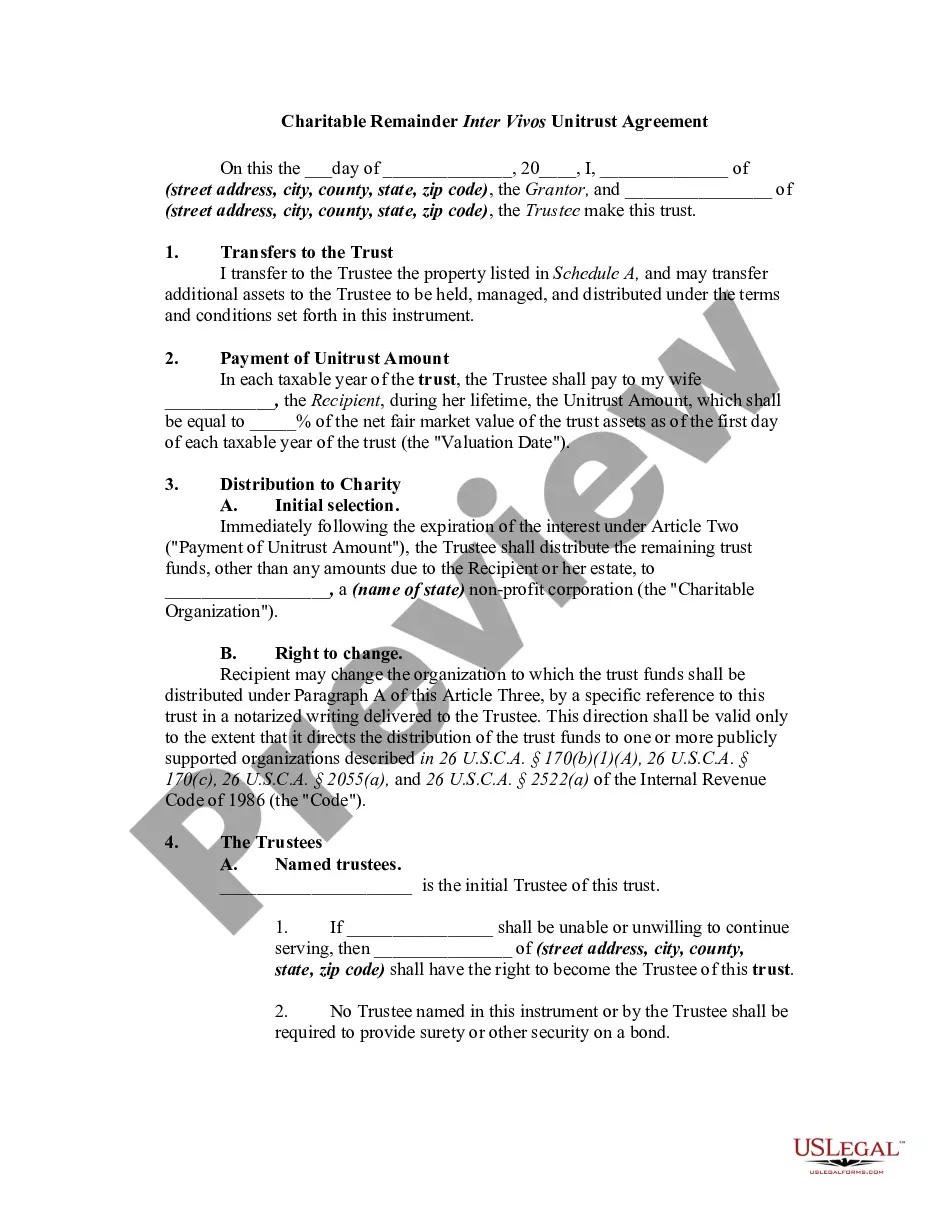
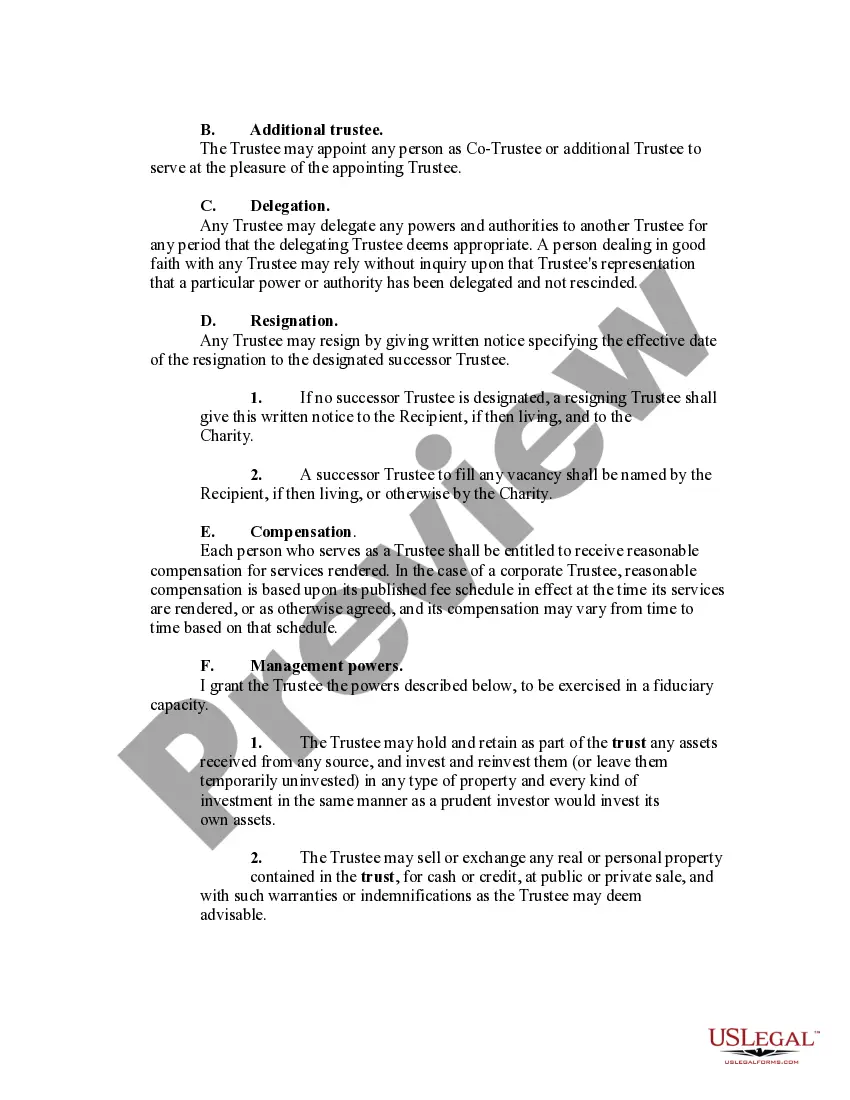
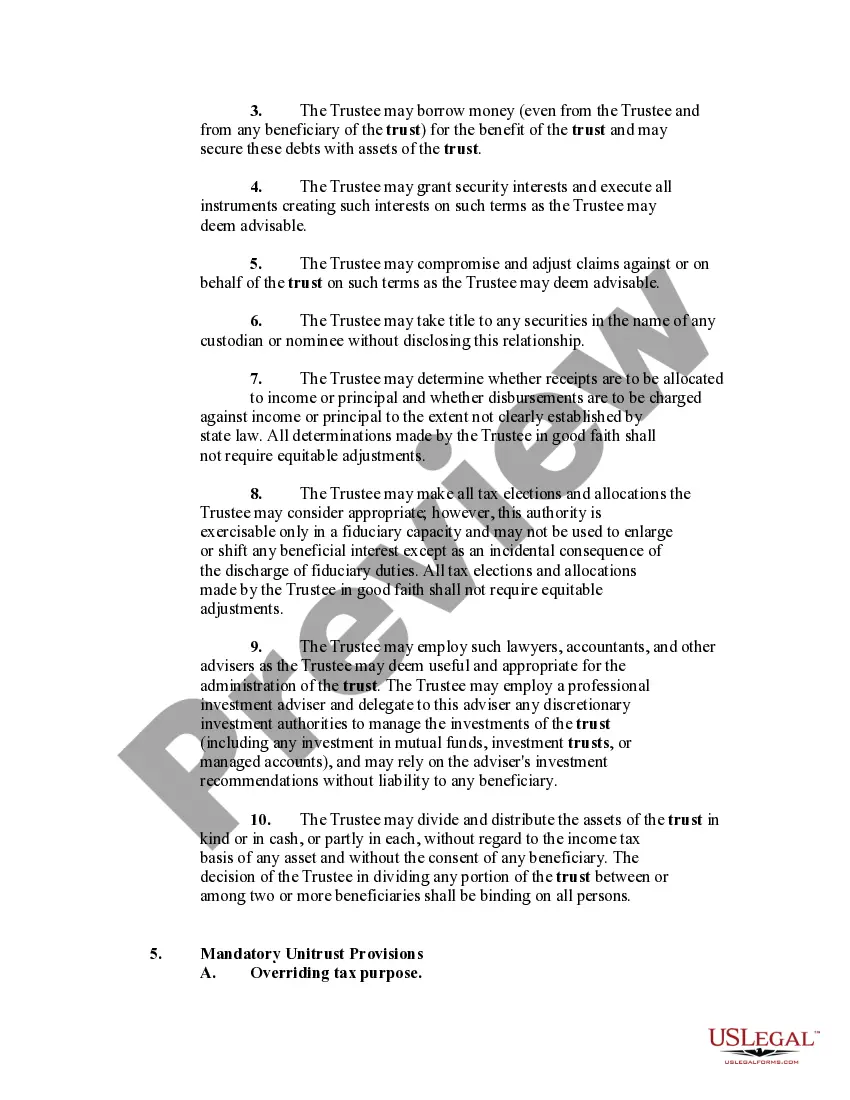
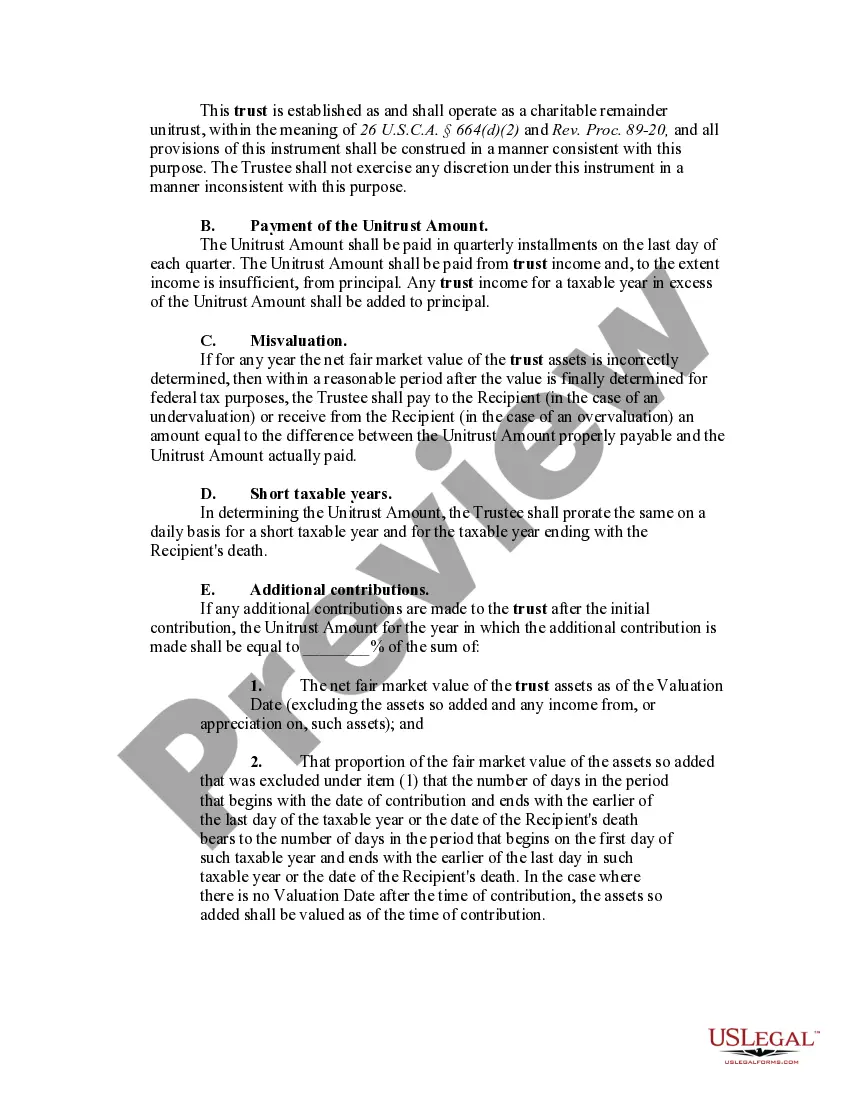
Charitable Remainder Form Trust Buy With 20
Description
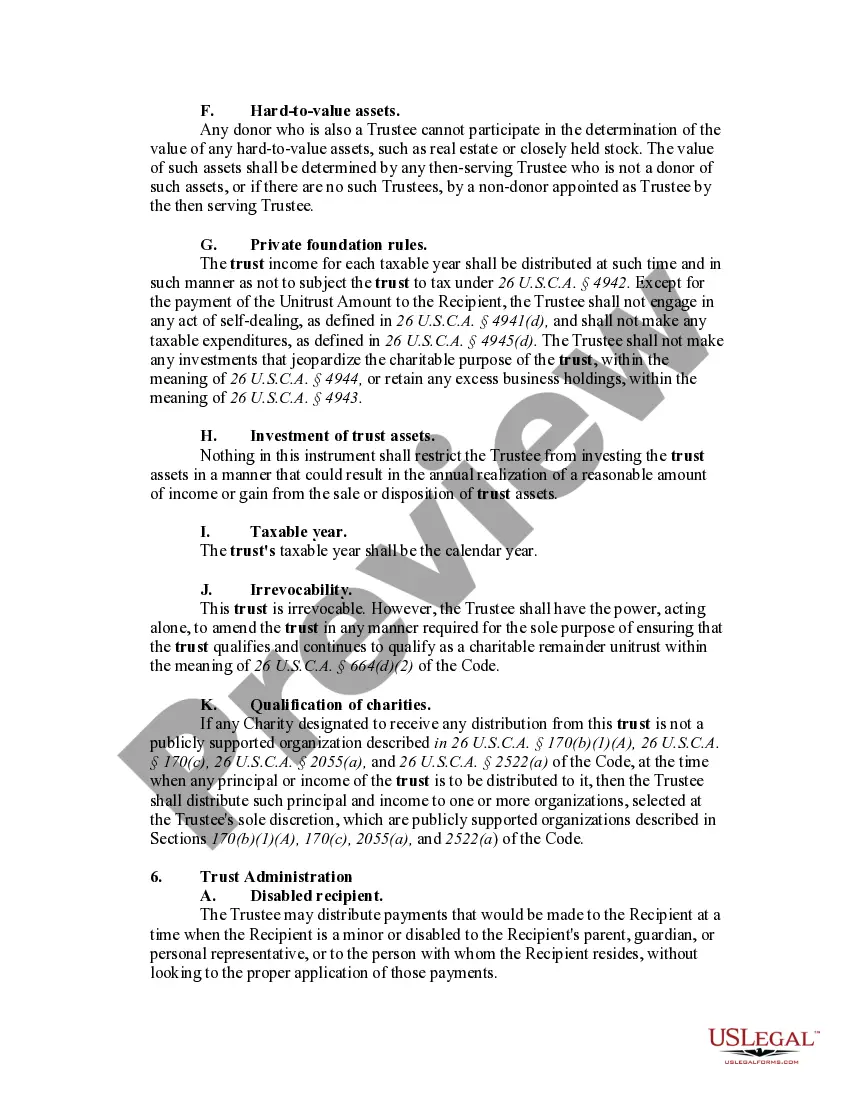
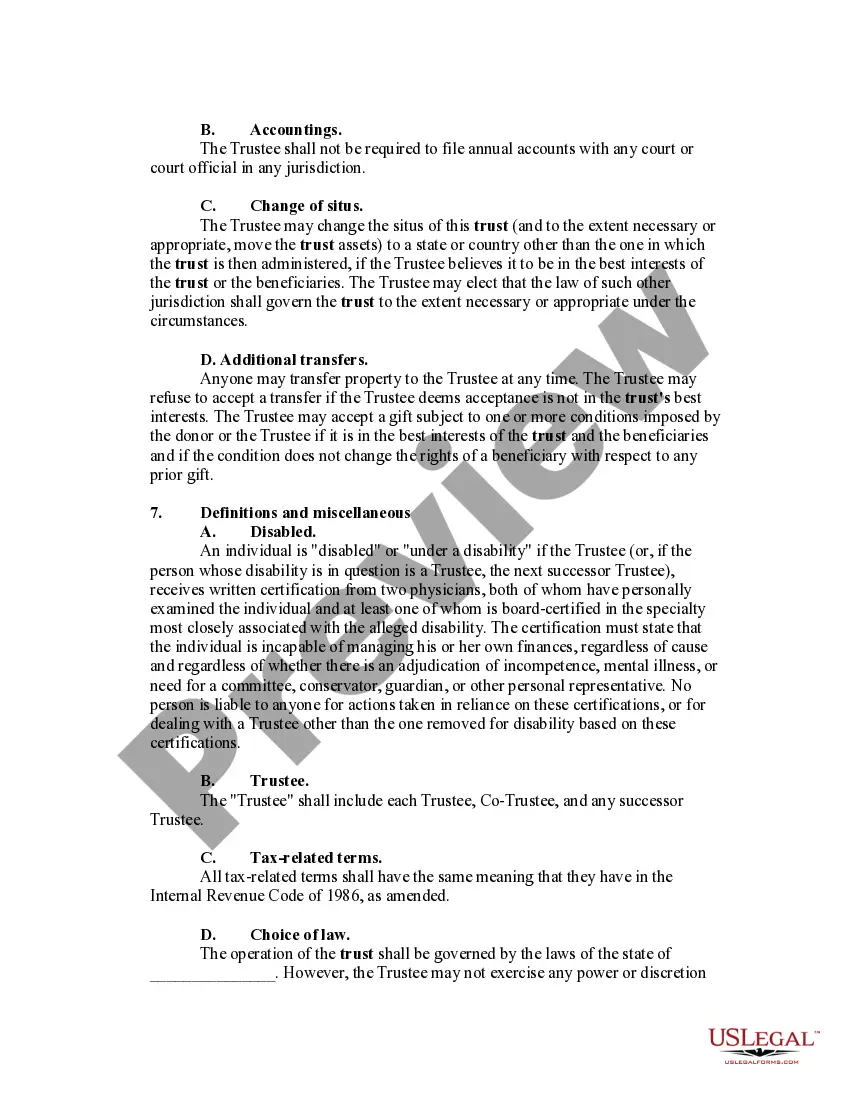
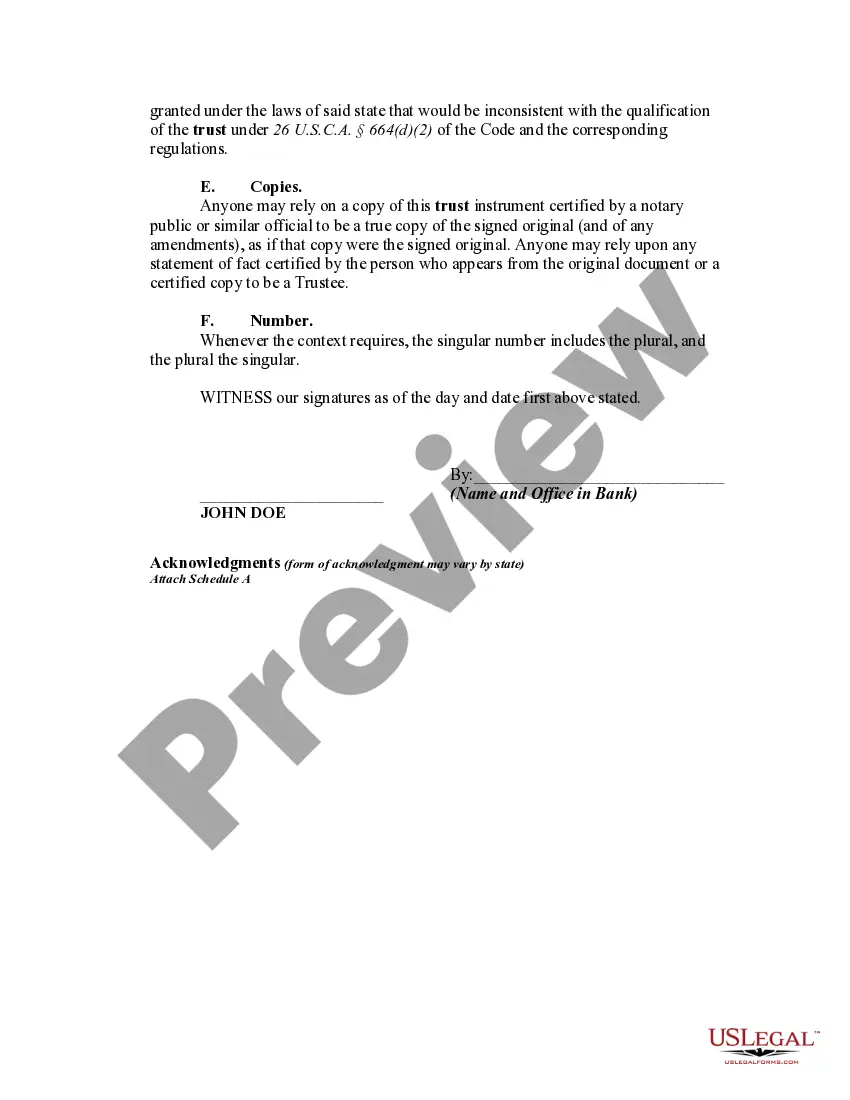
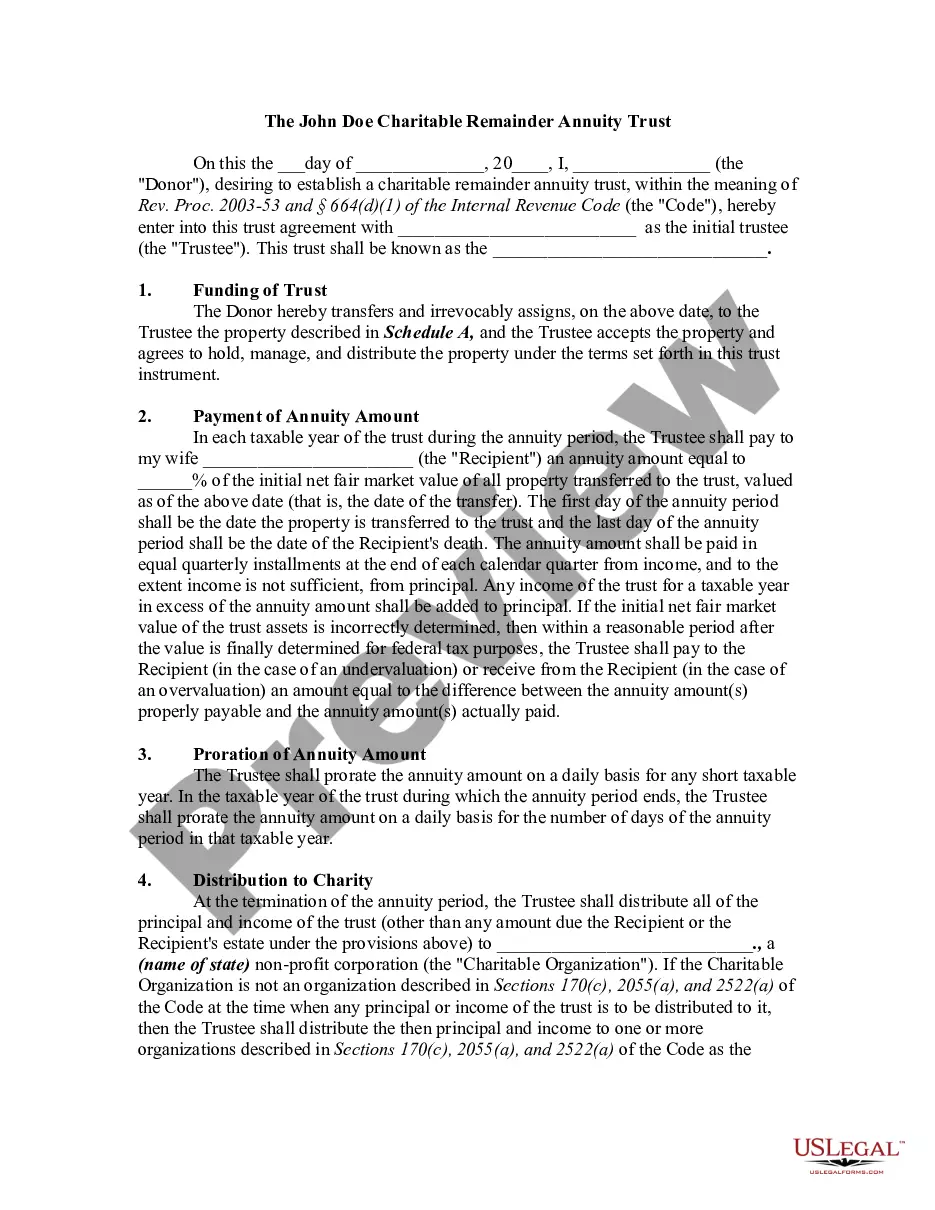
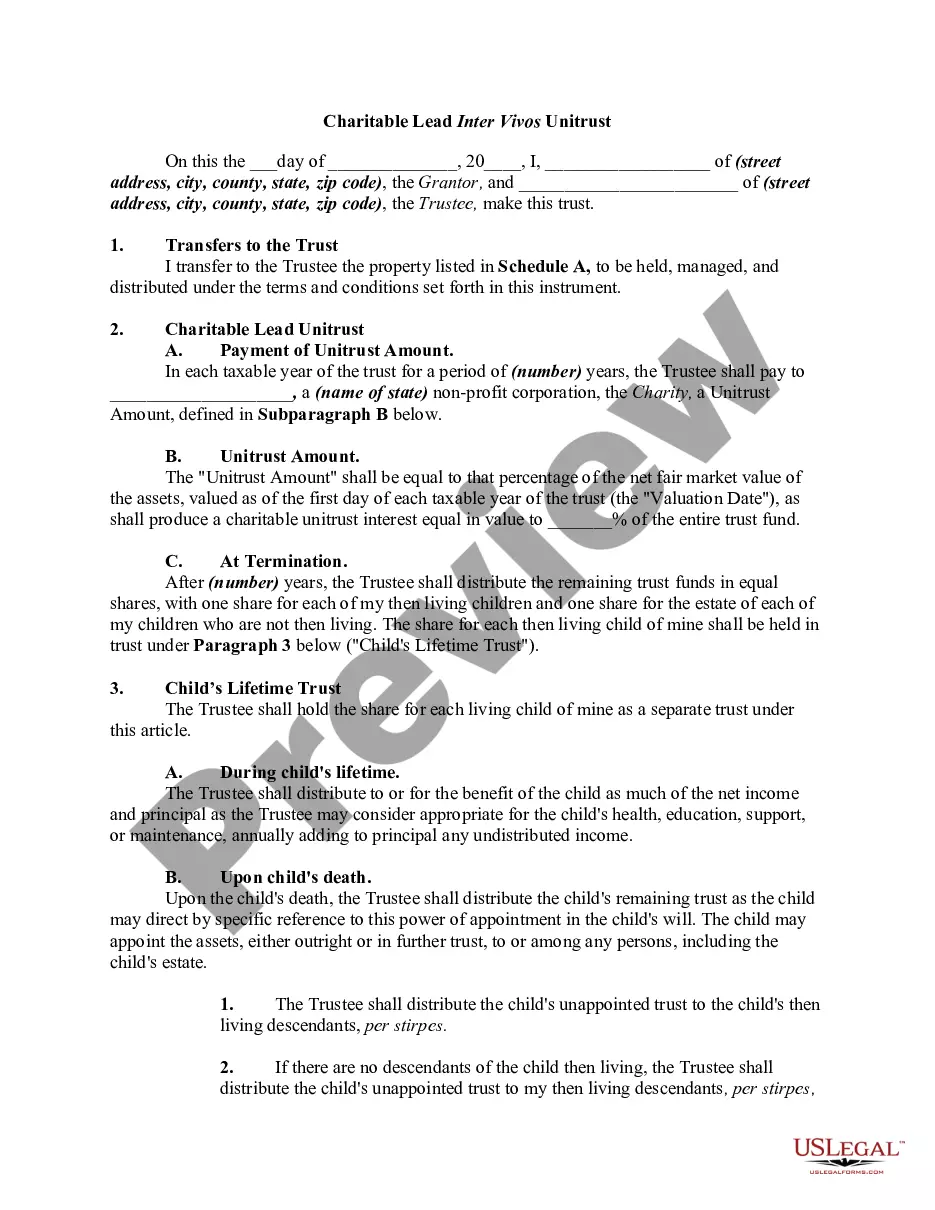
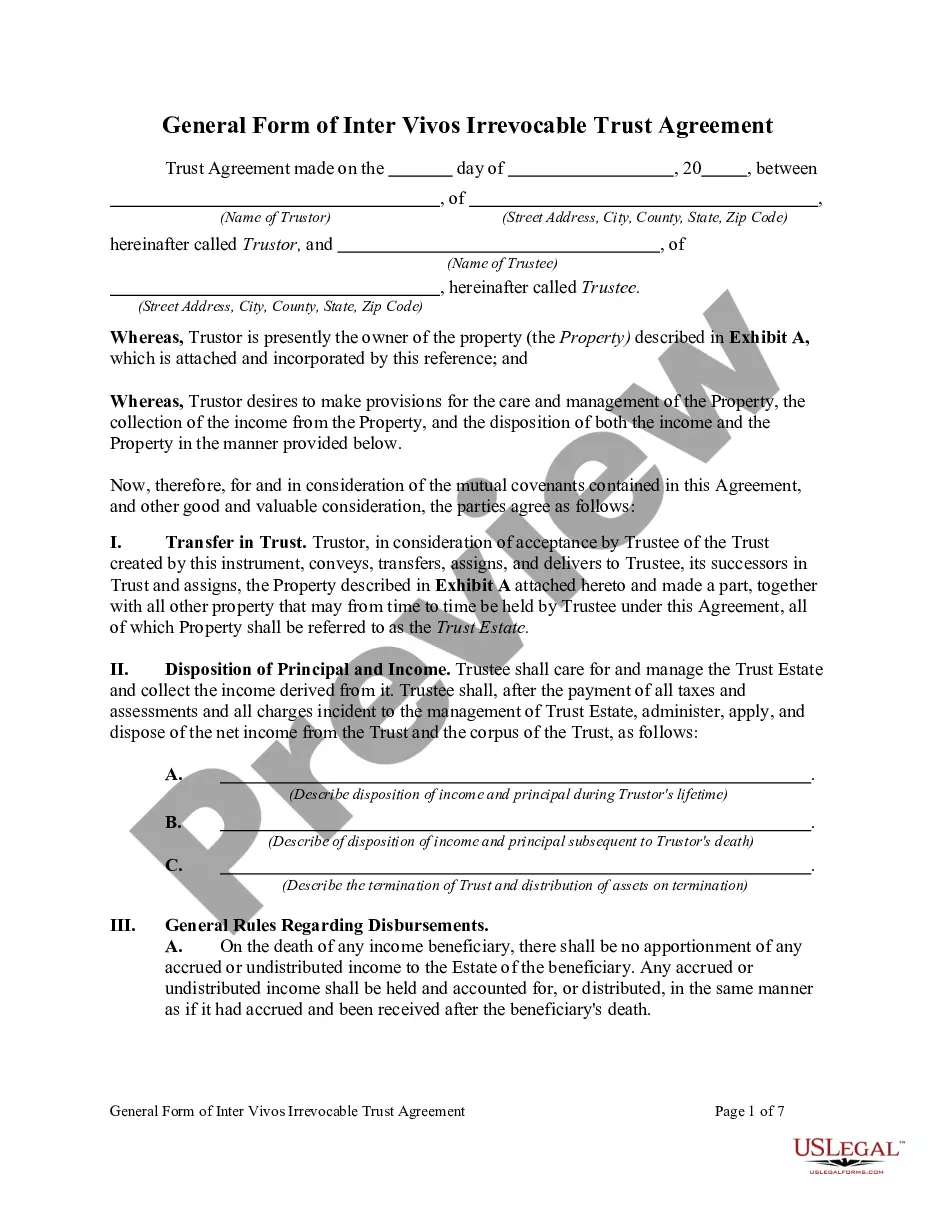
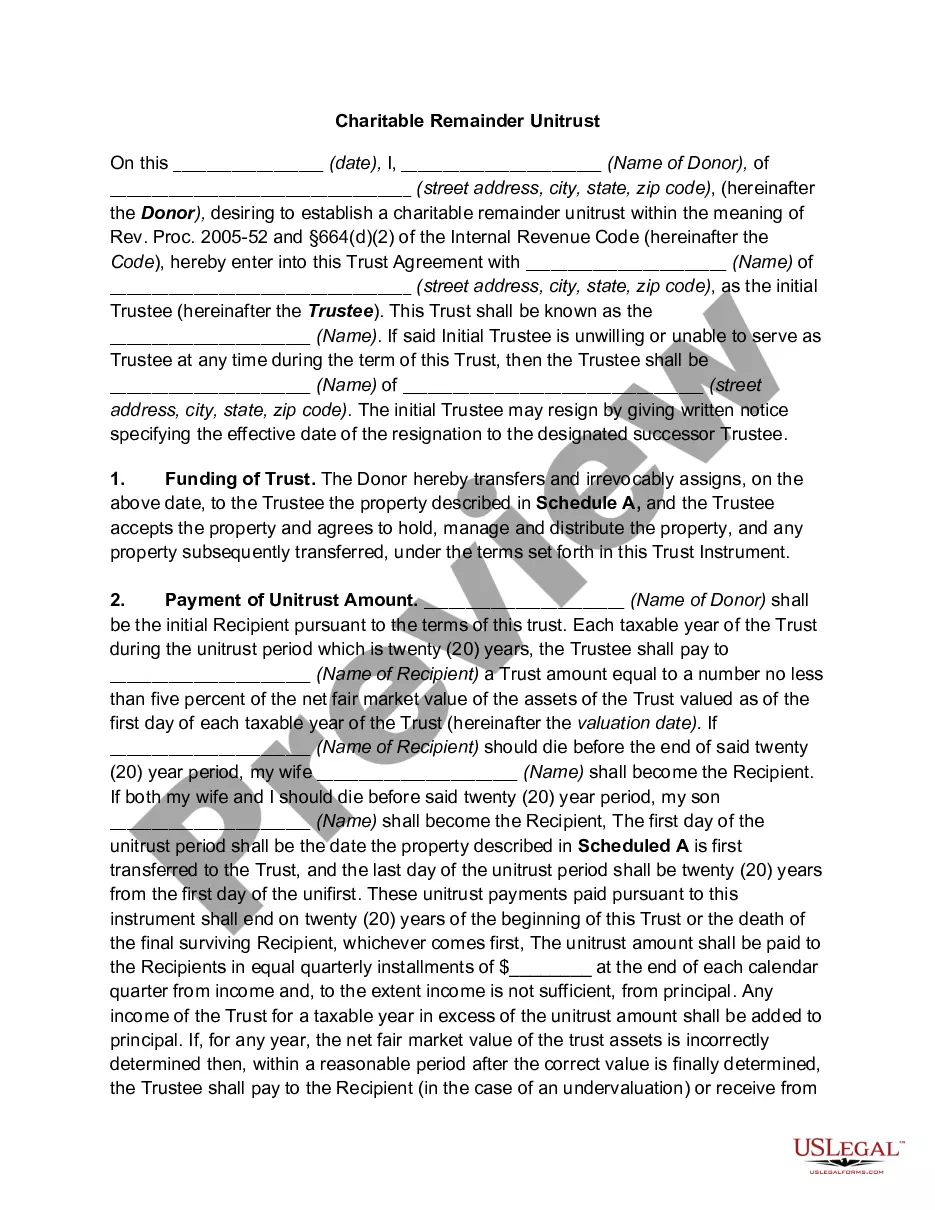
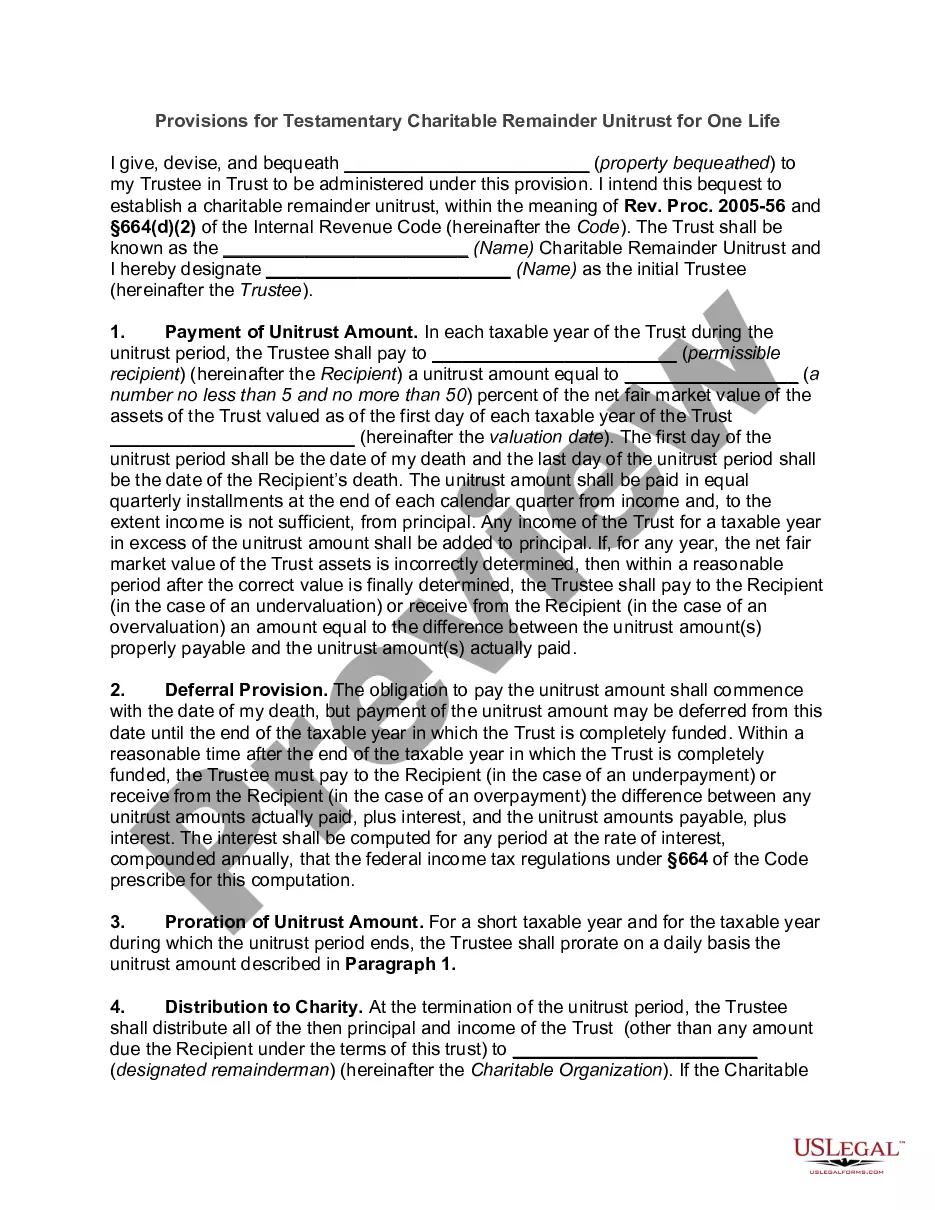
Get your form ready online
Our built-in tools help you complete, sign, share, and store your documents in one place.
Make edits, fill in missing information, and update formatting in US Legal Forms—just like you would in MS Word.
Download a copy, print it, send it by email, or mail it via USPS—whatever works best for your next step.
Sign and collect signatures with our SignNow integration. Send to multiple recipients, set reminders, and more. Go Premium to unlock E-Sign.
If this form requires notarization, complete it online through a secure video call—no need to meet a notary in person or wait for an appointment.
We protect your documents and personal data by following strict security and privacy standards.

Make edits, fill in missing information, and update formatting in US Legal Forms—just like you would in MS Word.

Download a copy, print it, send it by email, or mail it via USPS—whatever works best for your next step.

Sign and collect signatures with our SignNow integration. Send to multiple recipients, set reminders, and more. Go Premium to unlock E-Sign.

If this form requires notarization, complete it online through a secure video call—no need to meet a notary in person or wait for an appointment.

We protect your documents and personal data by following strict security and privacy standards.
Looking for another form?
How to fill out Charitable Remainder Inter Vivos Unitrust Agreement?
- Log in to your US Legal Forms account if you're a returning user. Ensure your subscription is active; renew if needed.
- Preview the form description. Verify that you've selected the correct Charitable Remainder Form Trust that meets your jurisdiction's requirements.
- If necessary, utilize the Search tab to explore further templates that align with your needs.
- Purchase the document by clicking the 'Buy Now' button, then select your preferred subscription plan.
- Complete your transaction by entering your payment details via credit card or PayPal.
- Download the form to your device and access it anytime through the 'My Forms' section in your account.
With US Legal Forms, users benefit from an extensive library of over 85,000 editable legal forms, ensuring they find the right documents tailored to their needs. The service also allows access to premium experts for assistance, guaranteeing that your forms are filled out correctly.
Securing your legal documents has never been easier. Get started now with US Legal Forms to make the process smooth and efficient!
Form popularity
FAQ
Yes, you can create your own charitable remainder trust, and tools are available to facilitate this process. Using a charitable remainder form trust buy with 20 simplifies the setup and management of your trust. It is advisable to consult with a legal professional or a financial advisor to ensure compliance with all legal requirements and maximize the trust's benefits.
The 5% distribution rule requires that a charitable remainder trust distribute at least 5% of its value each year to its income beneficiaries. This rule ensures that beneficiaries receive consistent income while the remaining assets support the charitable component of your trust. A charitable remainder form trust buy with 20 can help you find the right balance between income for you and support for your chosen charity.
The 5 by 5 rule allows beneficiaries to withdraw an amount equal to the greater of 5% of the trust value or $5,000 each year. This rule applies to Crummey trusts, which are often used in conjunction with a charitable remainder form trust buy with 20. By leveraging this rule, you can give beneficiaries more control over trust assets, enhancing their engagement and satisfaction.
The 5 and 5 rule allows beneficiaries to withdraw up to 5% of the trust's value each year or a total of $5,000, whichever is greater, without incurring gift tax. This rule applies to certain trusts, including charitable remainder form trust buy with 20. Understanding this rule can help you effectively manage withdrawals while minimizing tax implications.
When you use a charitable remainder form trust buy with 20, you can receive a tax deduction based on the present value of the charitable interest. This value is calculated at the time the trust is established. It is important to consult a tax professional to determine the precise deduction, as it can vary based on your unique financial situation and the trust's terms.
The income you can withdraw from a charitable remainder trust (CRT) depends on the specific terms outlined in the trust agreement. Generally, you can receive annual payments based on either a fixed percentage or annuity amount. The charitable remainder form trust buy with 20 allows you to set up a structure that maximizes your income while also benefiting your chosen charity, making it a win-win situation.
The CRT 10 rule pertains to the minimum and maximum payout rates of a charitable remainder trust. Specifically, this rule states that the income beneficiary must receive a payout between 5% and 50% of the trust's initial value. By adhering to the CRT 10 rule, you ensure that your charitable remainder form trust buy with 20 provides an excellent balance between benefits for yourself and contributions to charitable causes.
The 5% rule for CRTs is essential for maintaining compliance with IRS regulations. It specifies that the annual payout to the income beneficiary must be at least 5% of the initial fair market value of the trust assets. This guideline ensures that charitable remainder form trust buy with 20 is both beneficial for you and supportive of your chosen charity's mission.
The 5% rule for a charitable remainder trust (CRT) states that the charitable remainder must receive at least 5% of the trust's initial value. This requirement ensures that a significant portion of your contributions benefits the charity of your choice. When considering a charitable remainder form trust buy with 20, understanding this rule helps you make informed decisions about your contributions and the distribution of funds.
An example of a charitable remainder trust might involve an individual who donates stocks to a trust. The trust generates income from the stocks for a designated beneficiary, while the remaining balance eventually goes to a charity after the beneficiary's lifetime. This approach illustrates how charitable remainder trusts can provide both income and charitable benefits. Utilizing a charitable remainder form trust buy with 20 can support your philanthropic ambitions while securing your financial future.