Charitable Form Trust Order For Taxes
Description
Get your form ready online
Our built-in tools help you complete, sign, share, and store your documents in one place.
Make edits, fill in missing information, and update formatting in US Legal Forms—just like you would in MS Word.
Download a copy, print it, send it by email, or mail it via USPS—whatever works best for your next step.
Sign and collect signatures with our SignNow integration. Send to multiple recipients, set reminders, and more. Go Premium to unlock E-Sign.
If this form requires notarization, complete it online through a secure video call—no need to meet a notary in person or wait for an appointment.
We protect your documents and personal data by following strict security and privacy standards.

Make edits, fill in missing information, and update formatting in US Legal Forms—just like you would in MS Word.

Download a copy, print it, send it by email, or mail it via USPS—whatever works best for your next step.

Sign and collect signatures with our SignNow integration. Send to multiple recipients, set reminders, and more. Go Premium to unlock E-Sign.

If this form requires notarization, complete it online through a secure video call—no need to meet a notary in person or wait for an appointment.

We protect your documents and personal data by following strict security and privacy standards.
Looking for another form?





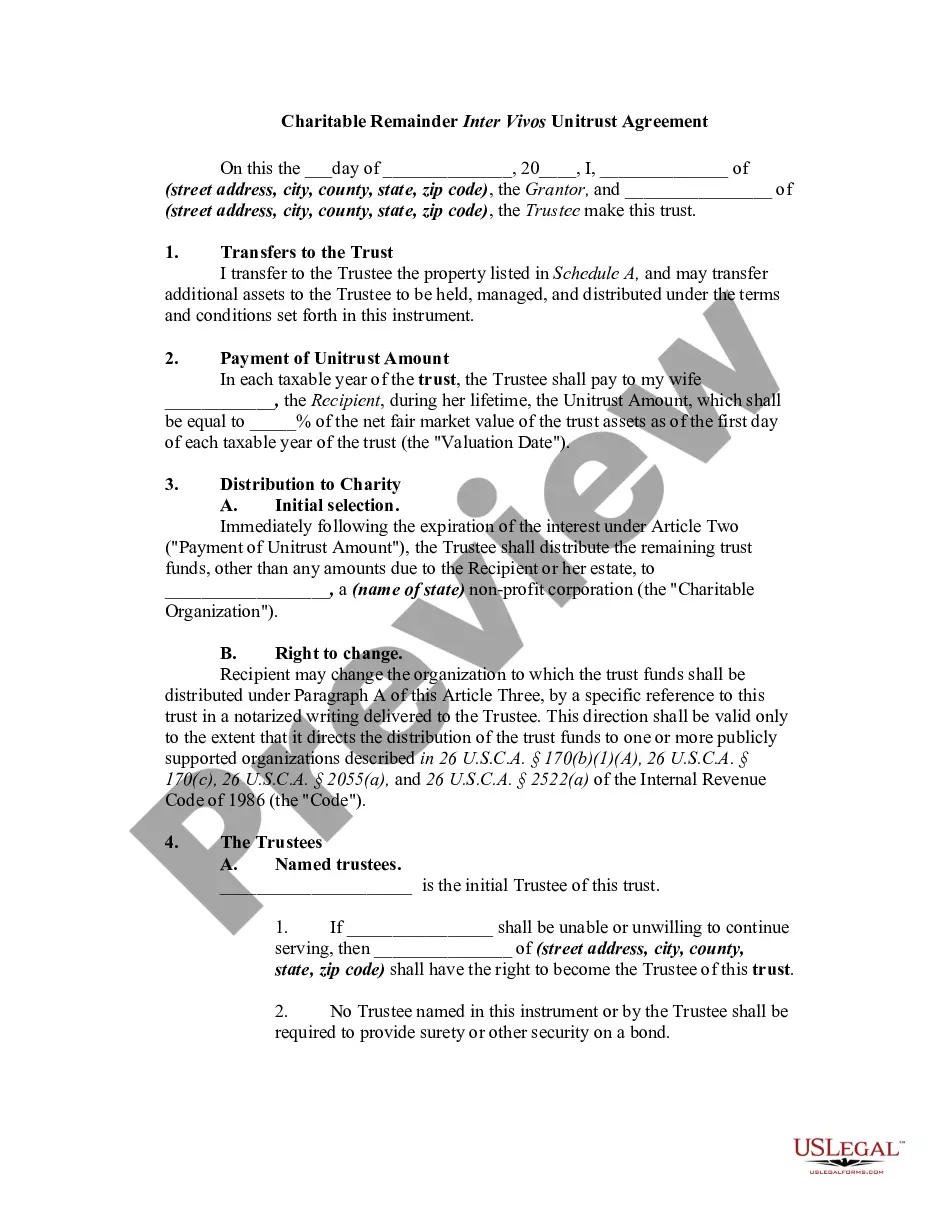
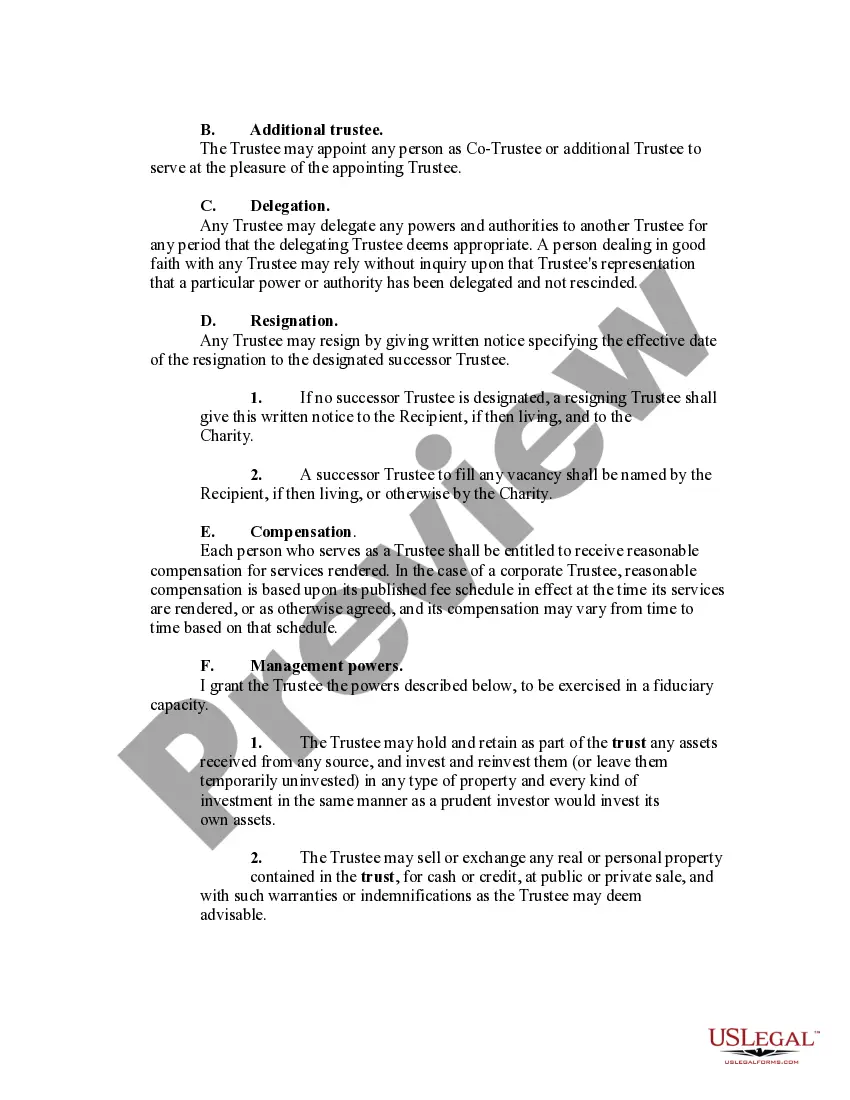
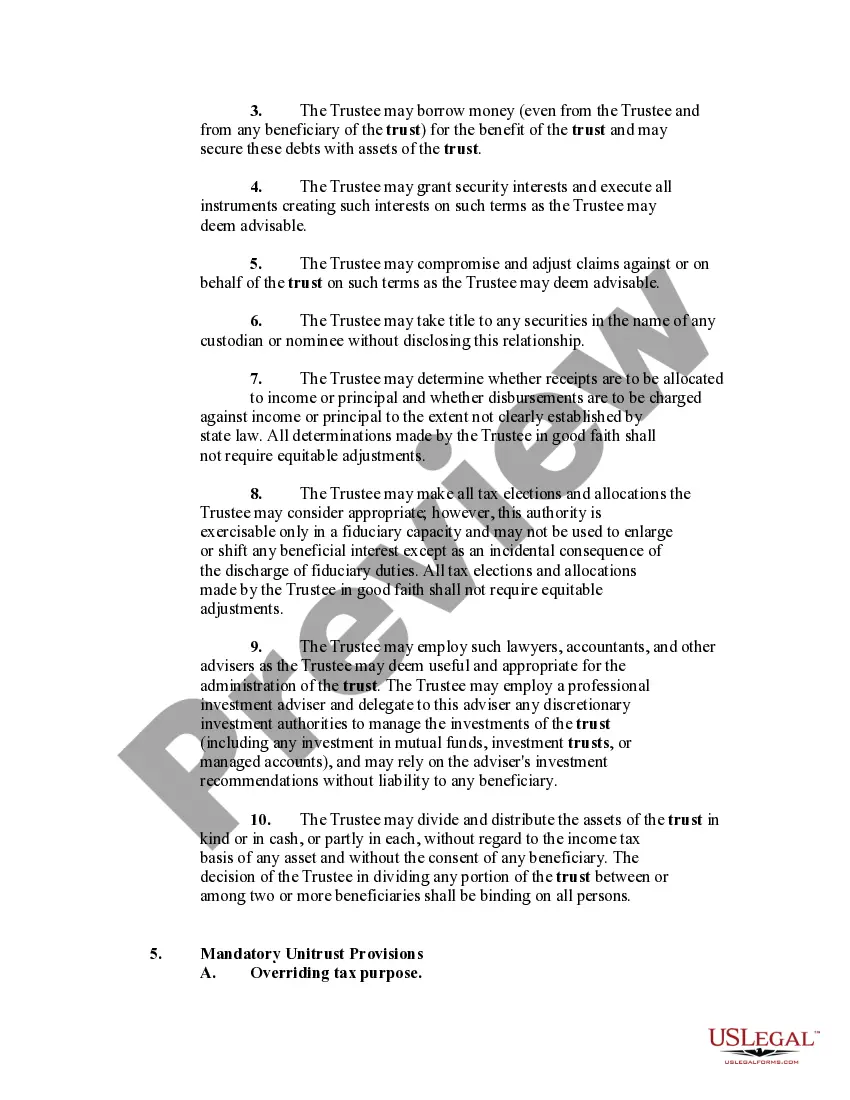
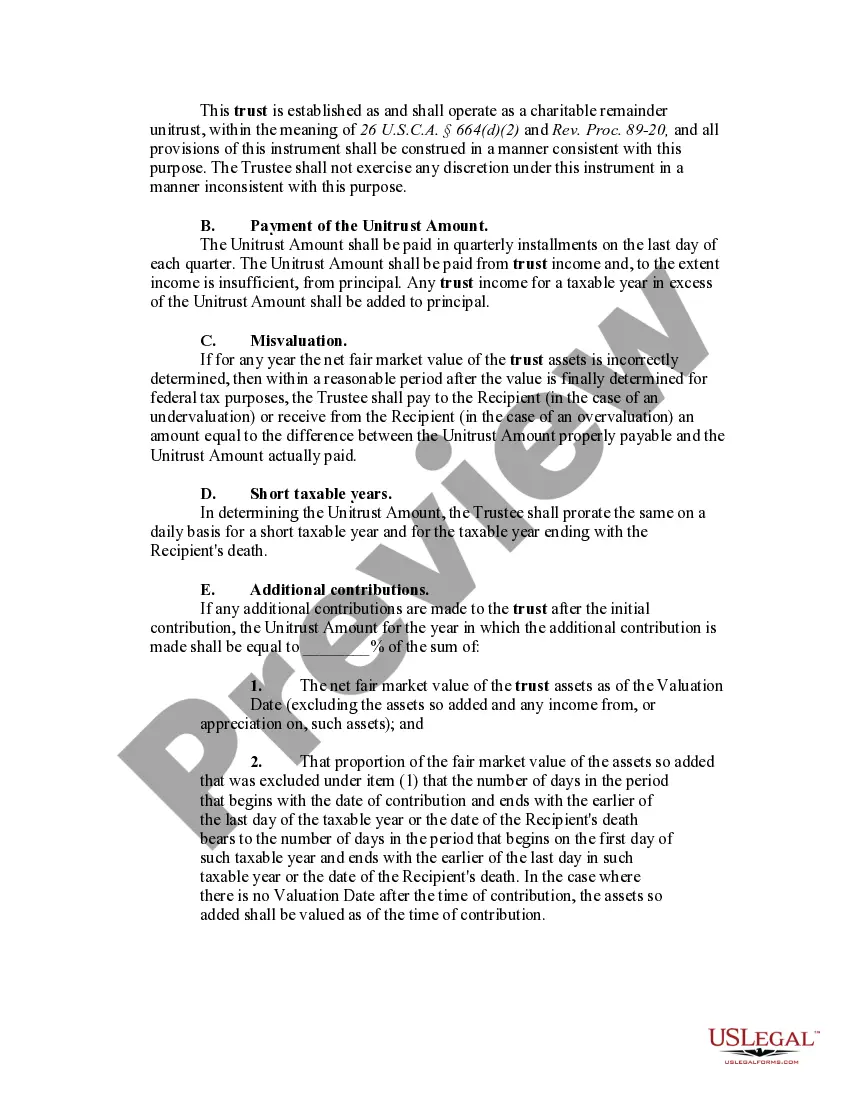
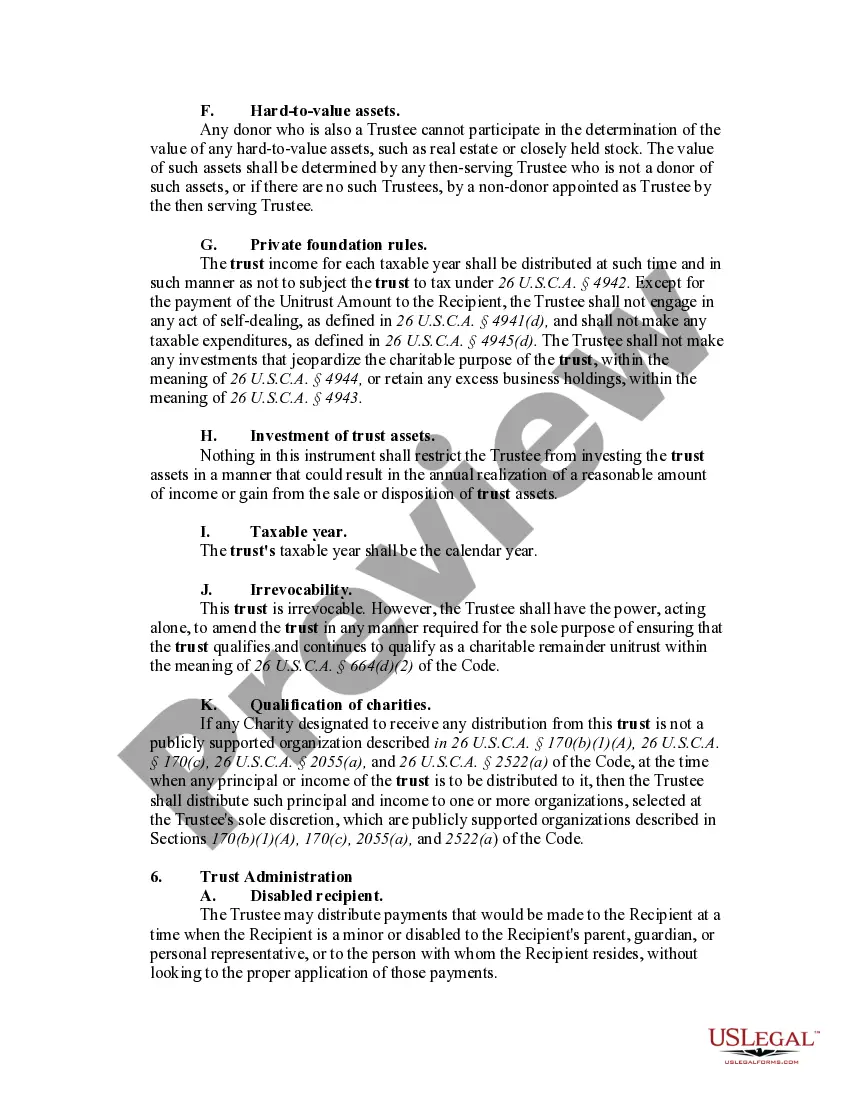
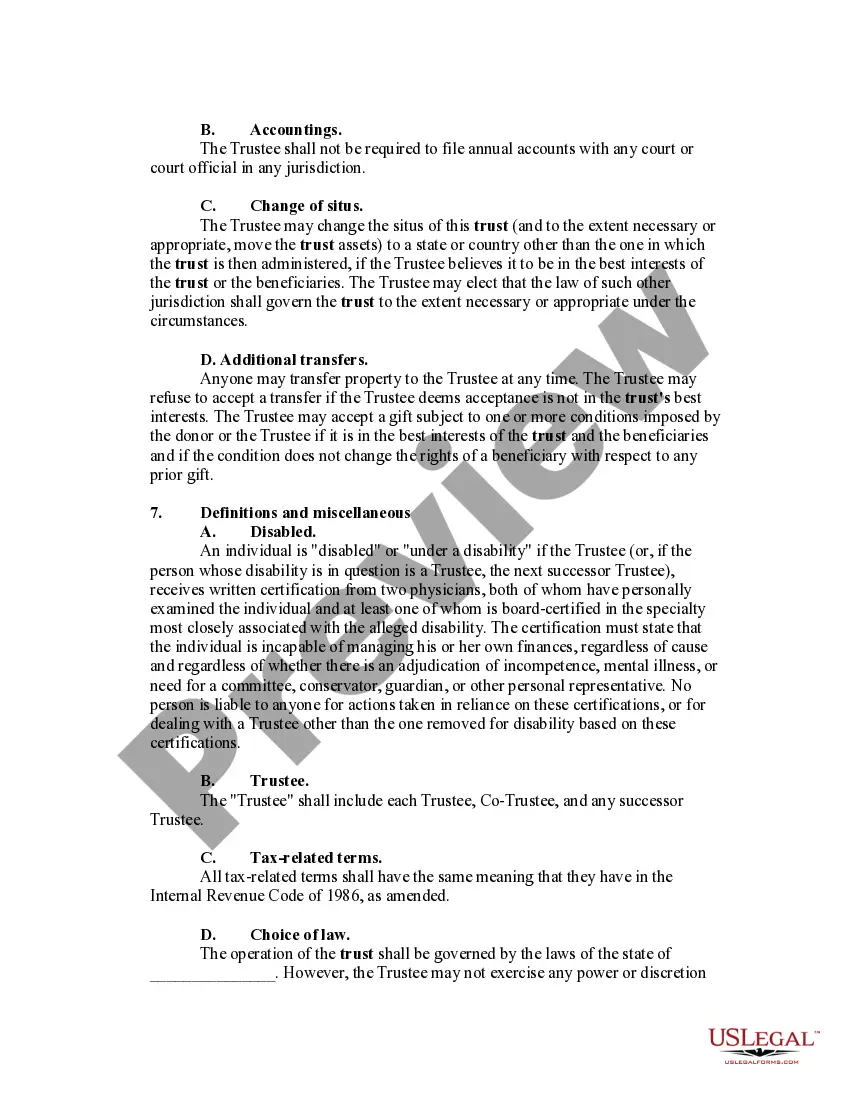
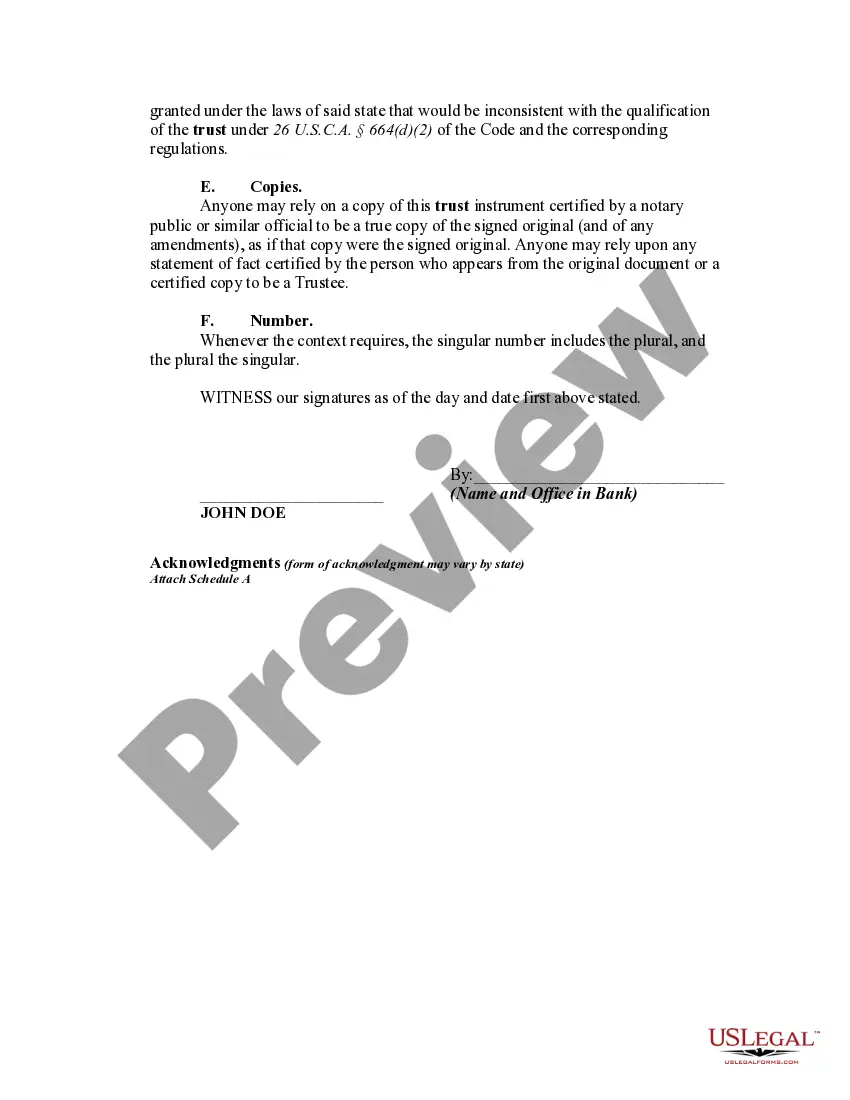
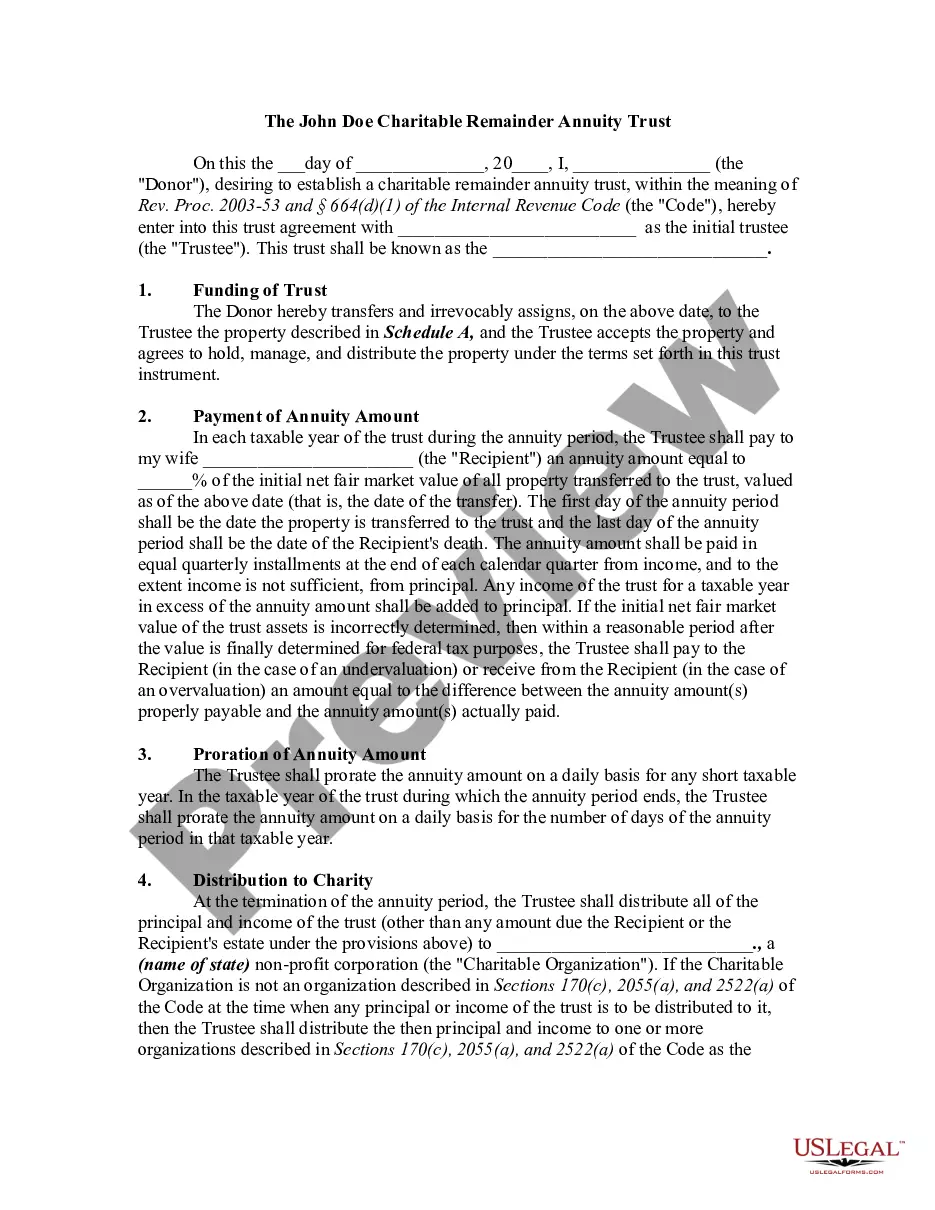
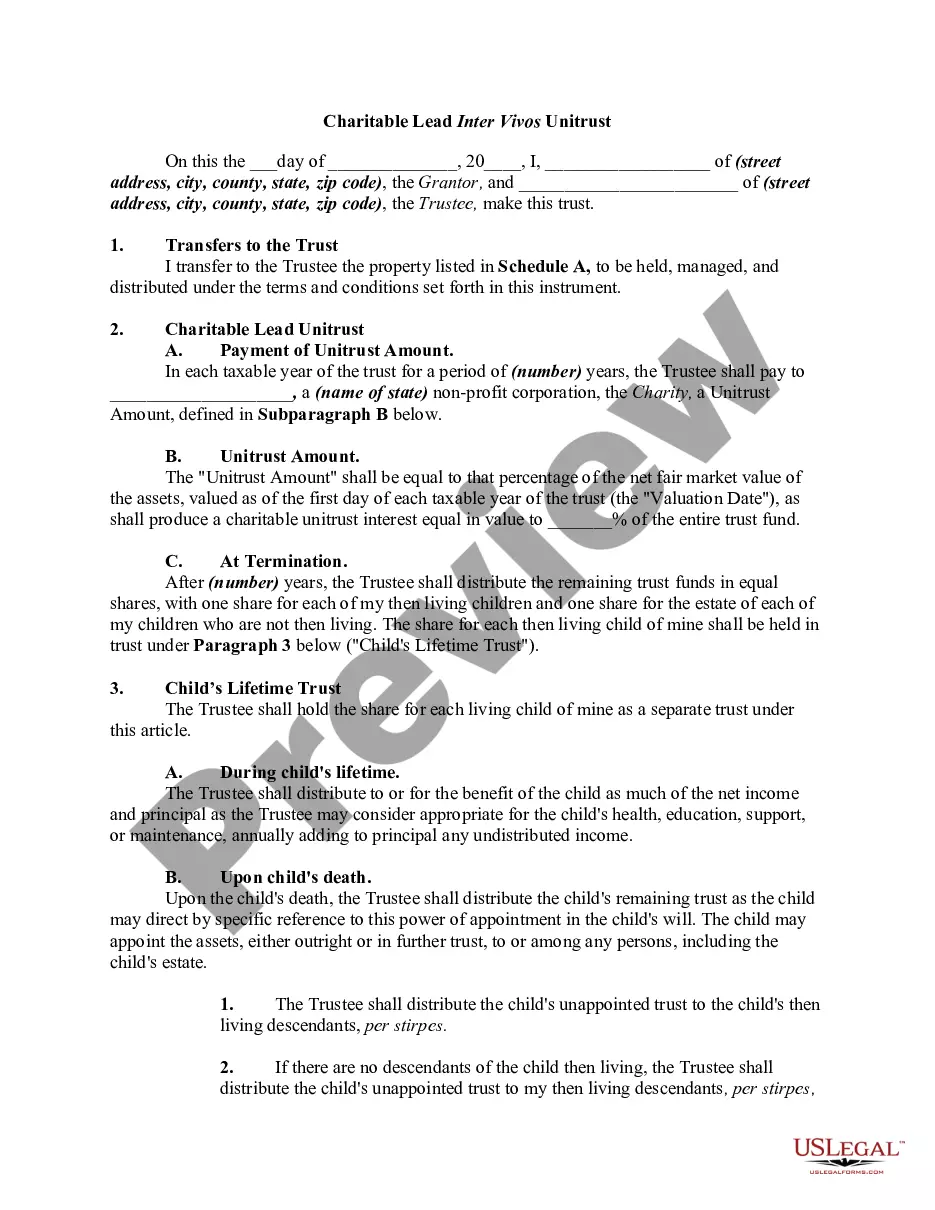
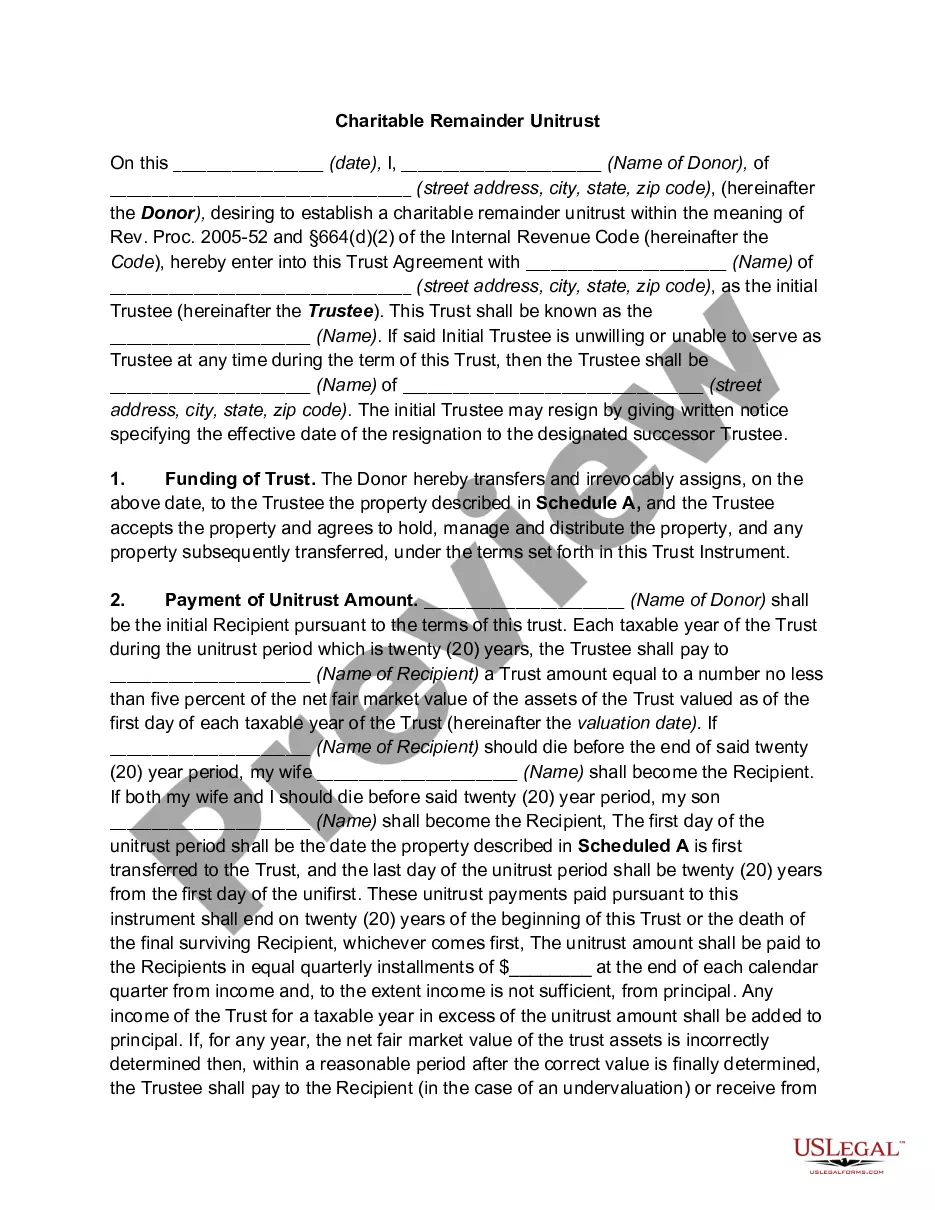
How to fill out Charitable Remainder Inter Vivos Unitrust Agreement?
- Begin by visiting the US Legal Forms website and logging into your existing account. If you're a new user, create an account to access the extensive library.
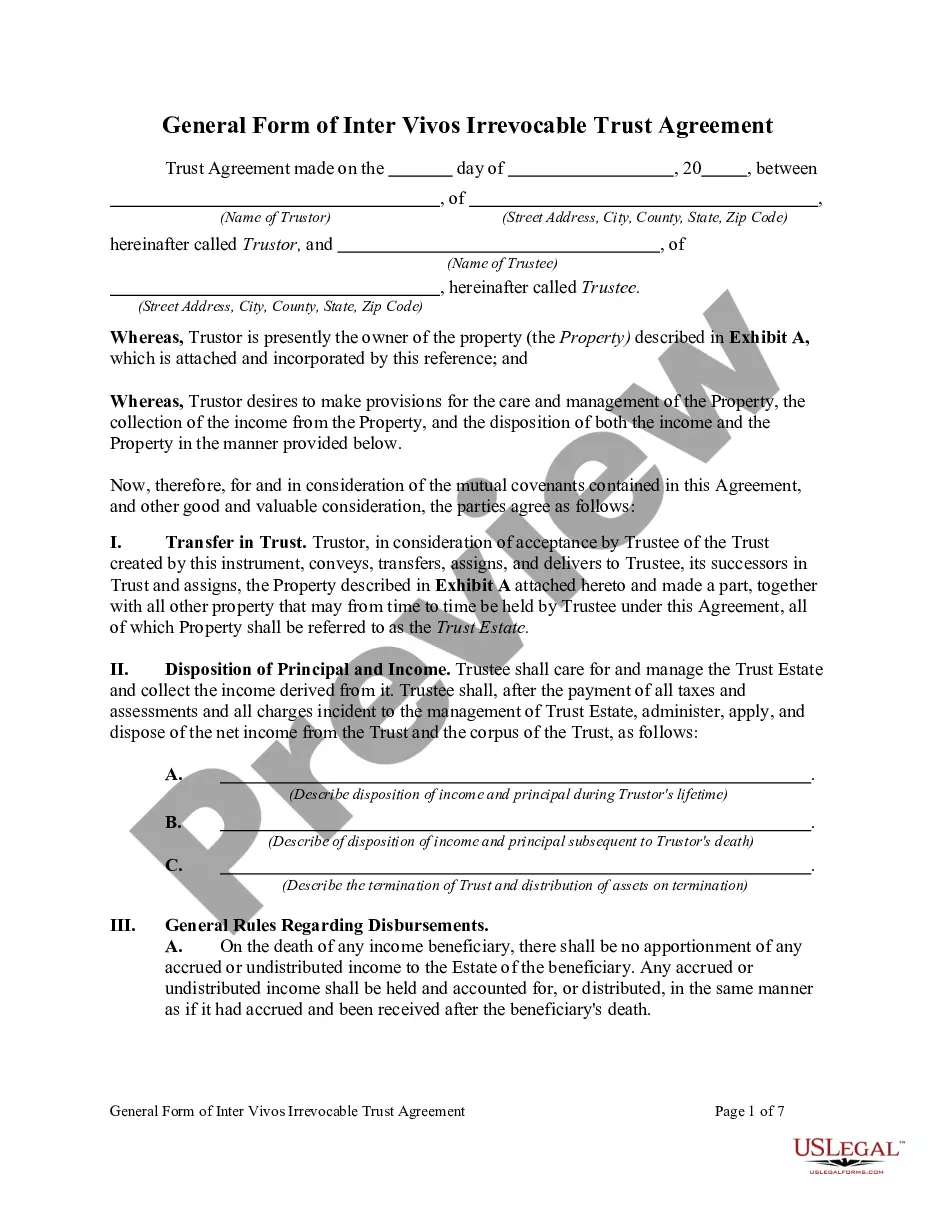
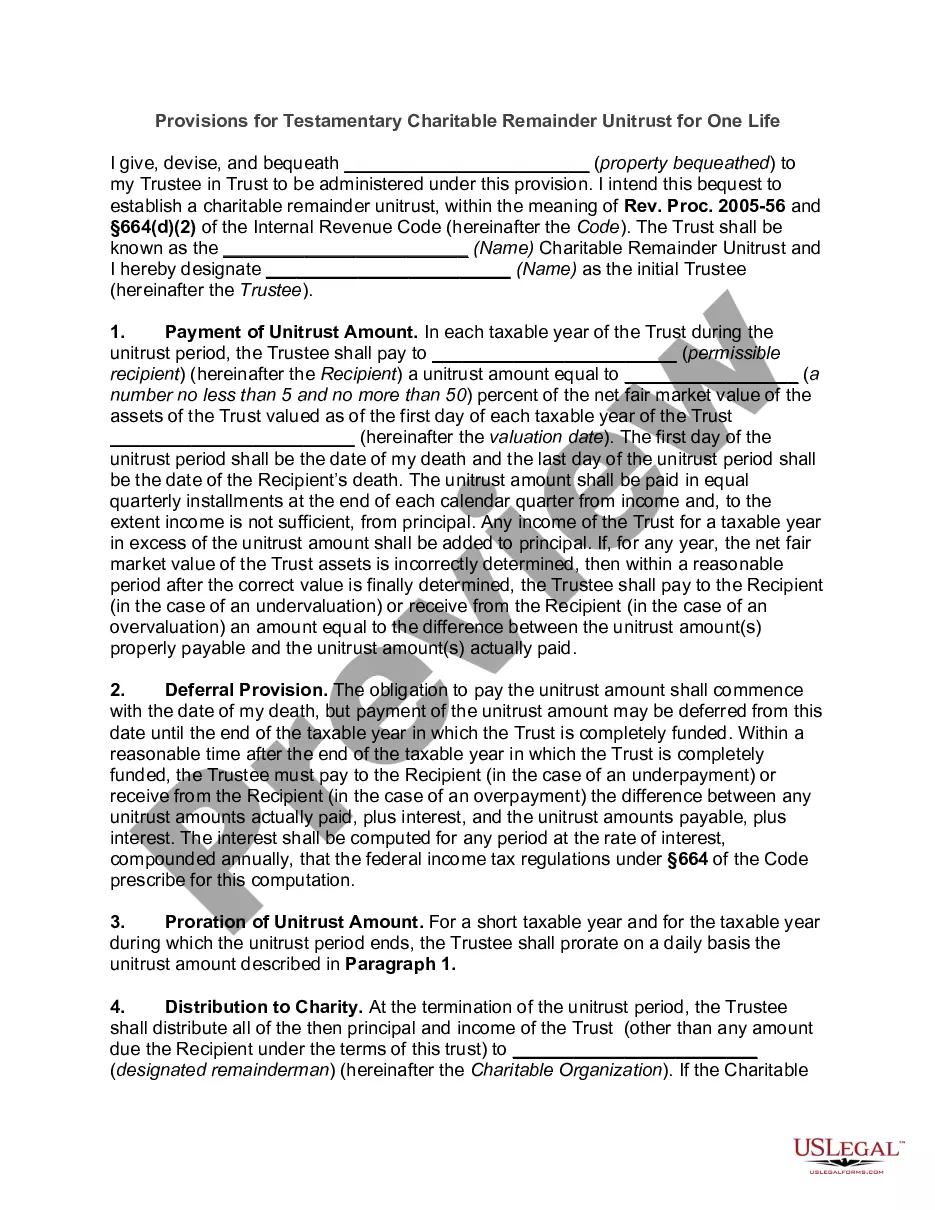
- Utilize the Preview mode to review the form descriptions. Confirm that the document meets your needs and complies with your local regulations.
- If the form is not suitable, use the Search function to explore other templates until you find the perfect match.
- Select the desired document by clicking the Buy Now button and pick a subscription plan that fits your requirements.
- Complete your purchase using credit card or PayPal to gain full access to the forms.
- Finally, download the template directly to your device, and you can manage it from your profile under the 'My Forms' section.
With over 85,000 legal documents available, US Legal Forms empowers users to create accurate and legally sound forms with ease. The service is designed with user-friendliness in mind, ensuring that even first-time users can navigate the process smoothly.
Don't let the complexities of charitable form trusts overwhelm you. Access the resources on US Legal Forms today and simplify your legal document needs!
Form popularity
FAQ
The IRS form used for a Charitable Remainder Trust is Form 1041. This form allows the trust to report its income and any distributions to beneficiaries. Filing Form 1041 is crucial for maintaining compliance and properly managing the charitable form trust order for taxes, ensuring you take full advantage of the tax benefits available.
To file taxes on behalf of a trust, you will need to complete Form 1041 and ensure all income is reported accurately. Start by gathering financial documentation related to the trust, including any income, deductions, and distributions made throughout the year. For assistance, you might consider using platforms like US Legal Forms, which provide comprehensive resources and templates to help with the charitable form trust order for taxes.
Generally, any trust that receives taxable income, such as a Charitable Remainder Trust, must file Form 1041. This includes all irrevocable trusts, regardless of their type or purpose. Therefore, understanding the requirements for filing this form is essential for managing your charitable form trust order for taxes effectively.
Indeed, a charitable remainder trust must file Form 1041 if it has gross income of at least $600 or has a non-resident alien as a beneficiary. The form allows the IRS to track income generated within the trust, ensuring that taxes are properly accounted for. Handling this correctly is crucial for maintaining the benefits associated with your charitable form trust order for taxes.
Yes, a Charitable Remainder Trust (CRT) typically files Form 1041, the U.S. Income Tax Return for Estates and Trusts. This form reports the income earned by the trust and ensures compliance with tax regulations. By filing Form 1041, you document how the charitable form trust order for taxes operates and how distributions are handled.
If a trust has no income, it generally does not need to file Form 1041. However, there are exceptions based on the structure and purpose of the trust. For a charitable form trust order for taxes, keeping accurate records and being aware of your obligations is key. Our platform can help ensure you meet all necessary requirements effortlessly.
Yes, a 501(c)(3) organization usually needs to file an annual return, such as Form 990. This helps maintain transparency and compliance with federal regulations. If you are navigating a charitable form trust order for taxes, it's important to understand the filing requirements for your organization to avoid penalties.
A 1041 form must be filed by estates and trusts that have any taxable income, or that meet certain other criteria, such as having a beneficiary who is a non-resident alien. If you manage a charitable form trust order for taxes, you may fall into this category depending on your trust's specific financial activities. Consult with our platform for in-depth guidance.
Not all trusts are required to file a tax return. Generally, if a trust has income over a specific threshold, it must file a return. For those dealing with a charitable form trust order for taxes, it's crucial to understand the specific conditions that may apply to your situation and consult with tax professionals if necessary.
Yes, a charitable trust typically files a tax return using Form 1041, which reports income earned by the trust. Filing this form is essential for compliance with tax laws. If you are managing a charitable form trust order for taxes, consider seeking professional advice to ensure all requirements are met properly.