Charitable Agreement Statement For Her Classroom
Description
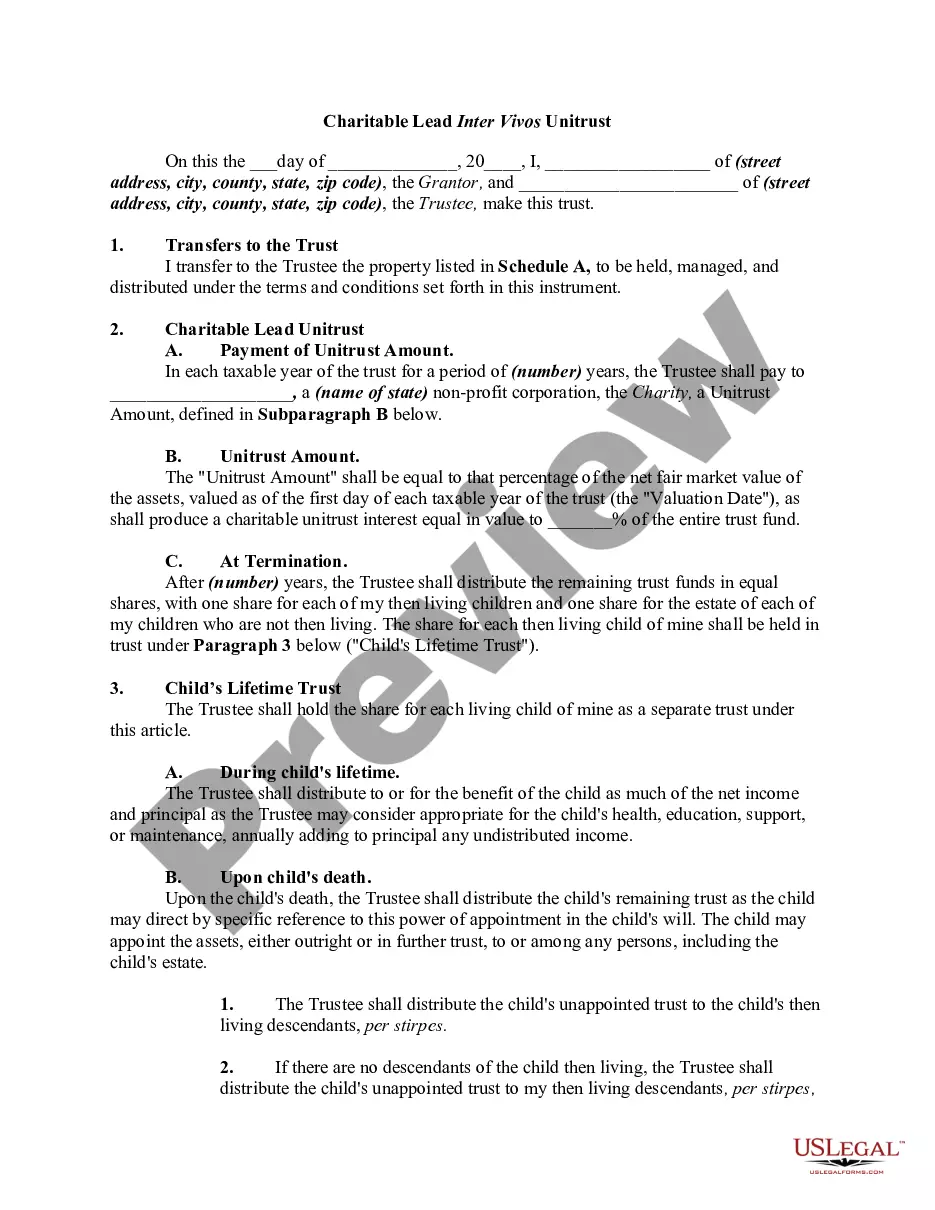
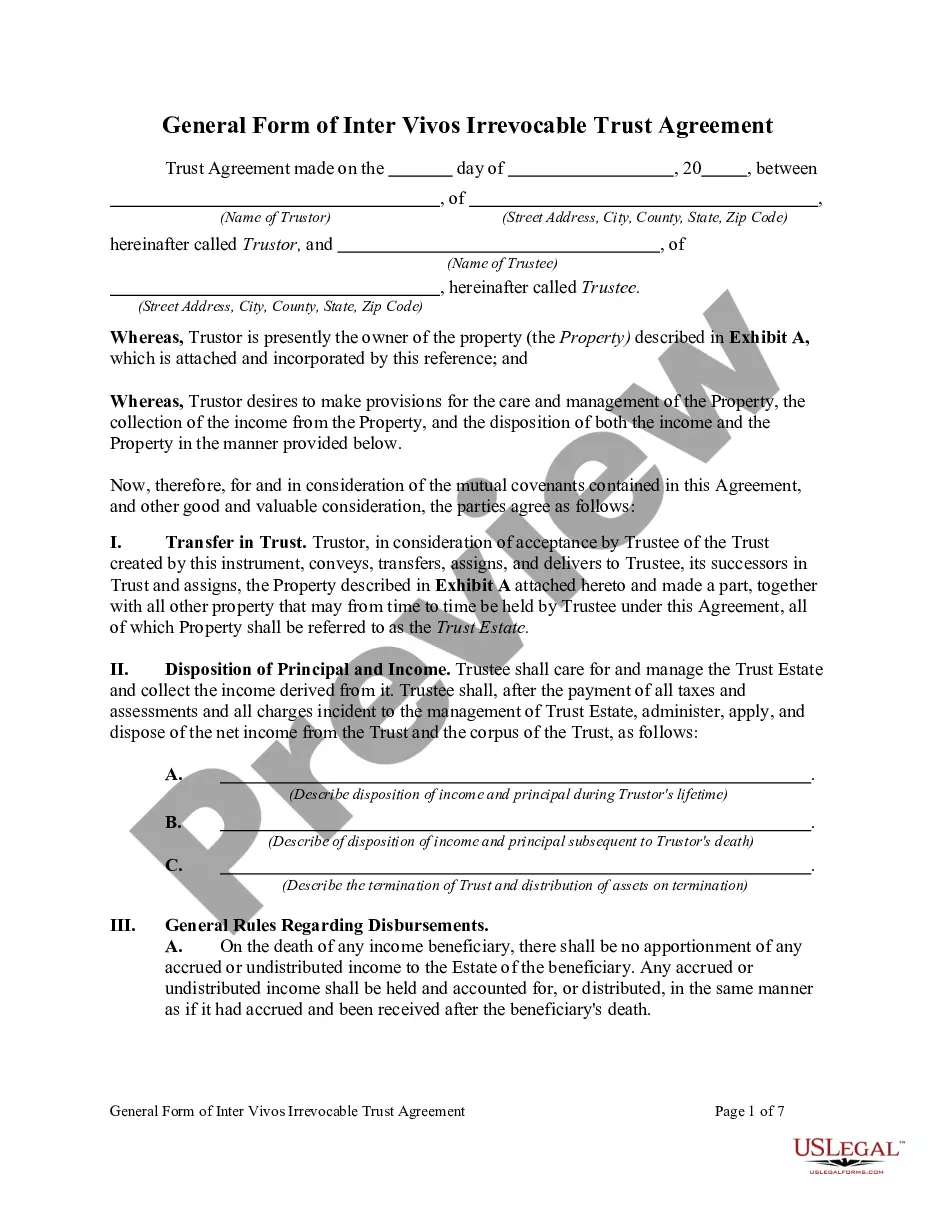
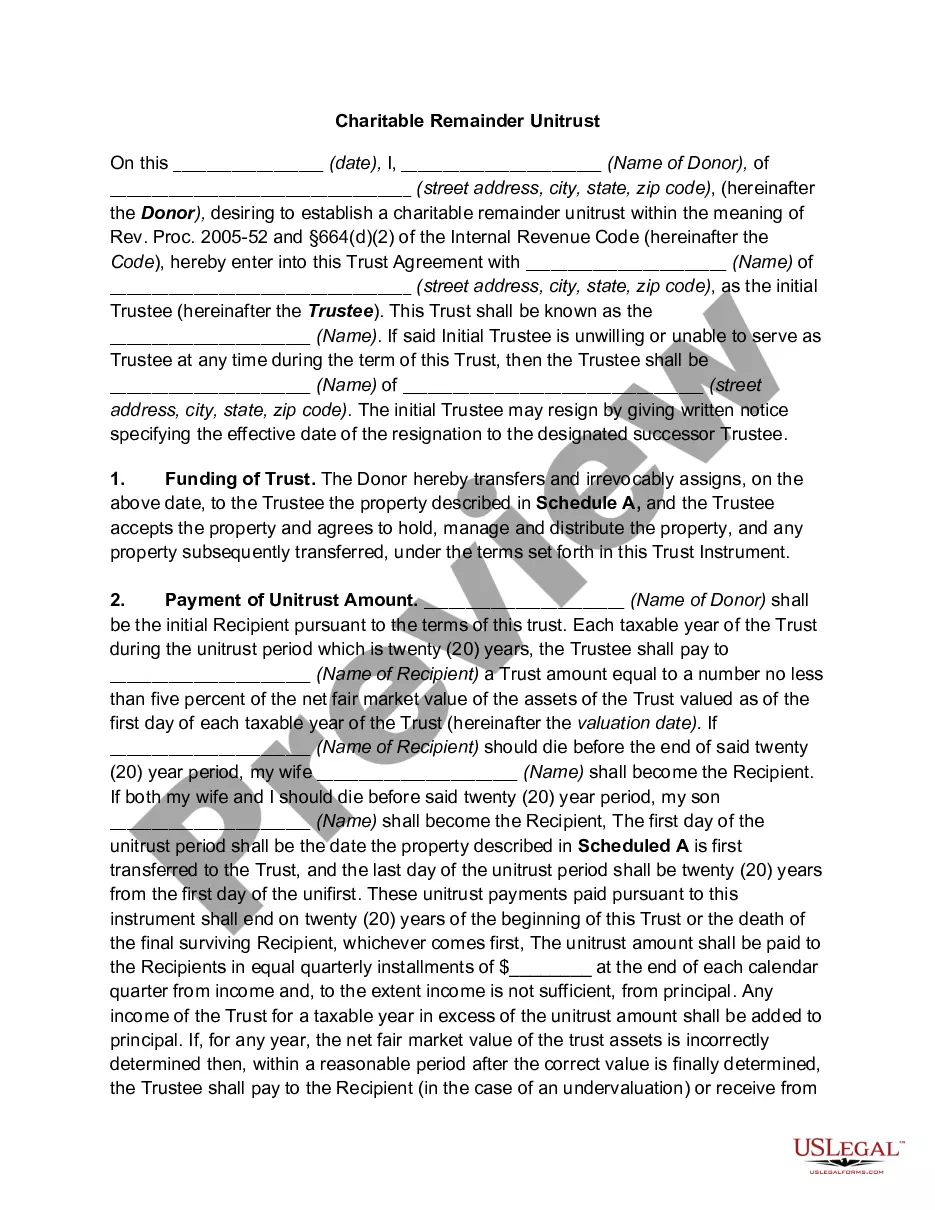
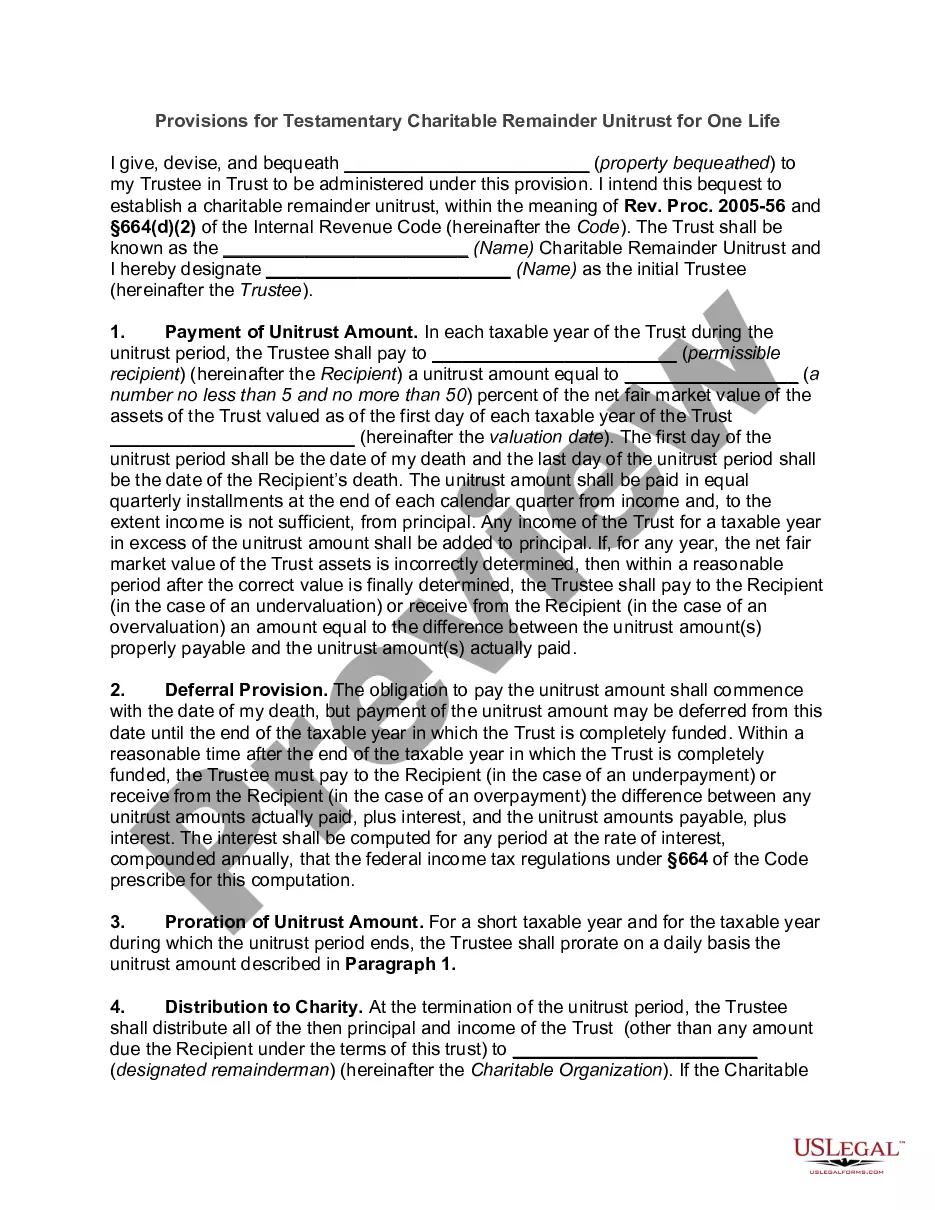
Get your form ready online
Our built-in tools help you complete, sign, share, and store your documents in one place.
Make edits, fill in missing information, and update formatting in US Legal Forms—just like you would in MS Word.
Download a copy, print it, send it by email, or mail it via USPS—whatever works best for your next step.
Sign and collect signatures with our SignNow integration. Send to multiple recipients, set reminders, and more. Go Premium to unlock E-Sign.
If this form requires notarization, complete it online through a secure video call—no need to meet a notary in person or wait for an appointment.
We protect your documents and personal data by following strict security and privacy standards.

Make edits, fill in missing information, and update formatting in US Legal Forms—just like you would in MS Word.

Download a copy, print it, send it by email, or mail it via USPS—whatever works best for your next step.

Sign and collect signatures with our SignNow integration. Send to multiple recipients, set reminders, and more. Go Premium to unlock E-Sign.

If this form requires notarization, complete it online through a secure video call—no need to meet a notary in person or wait for an appointment.

We protect your documents and personal data by following strict security and privacy standards.
Looking for another form?








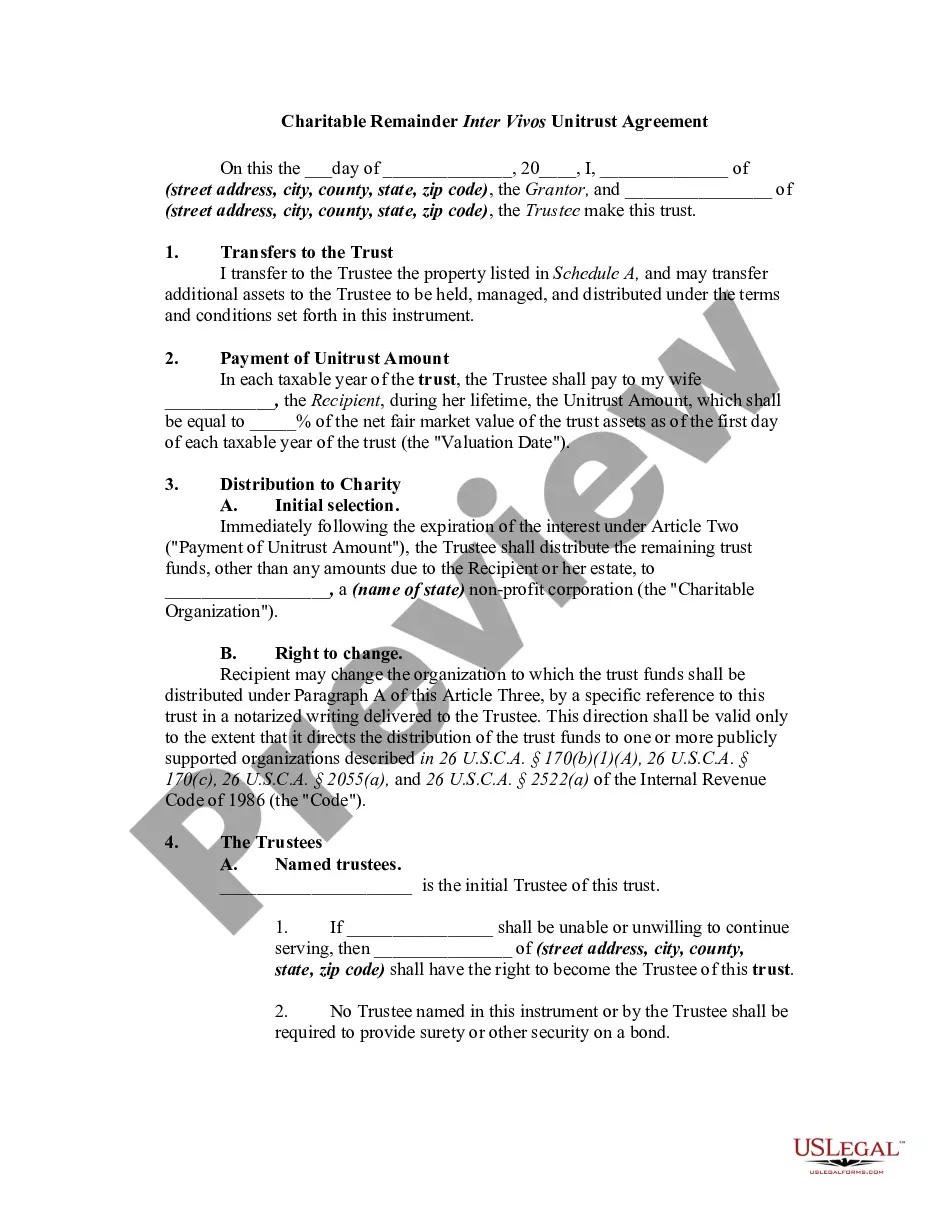
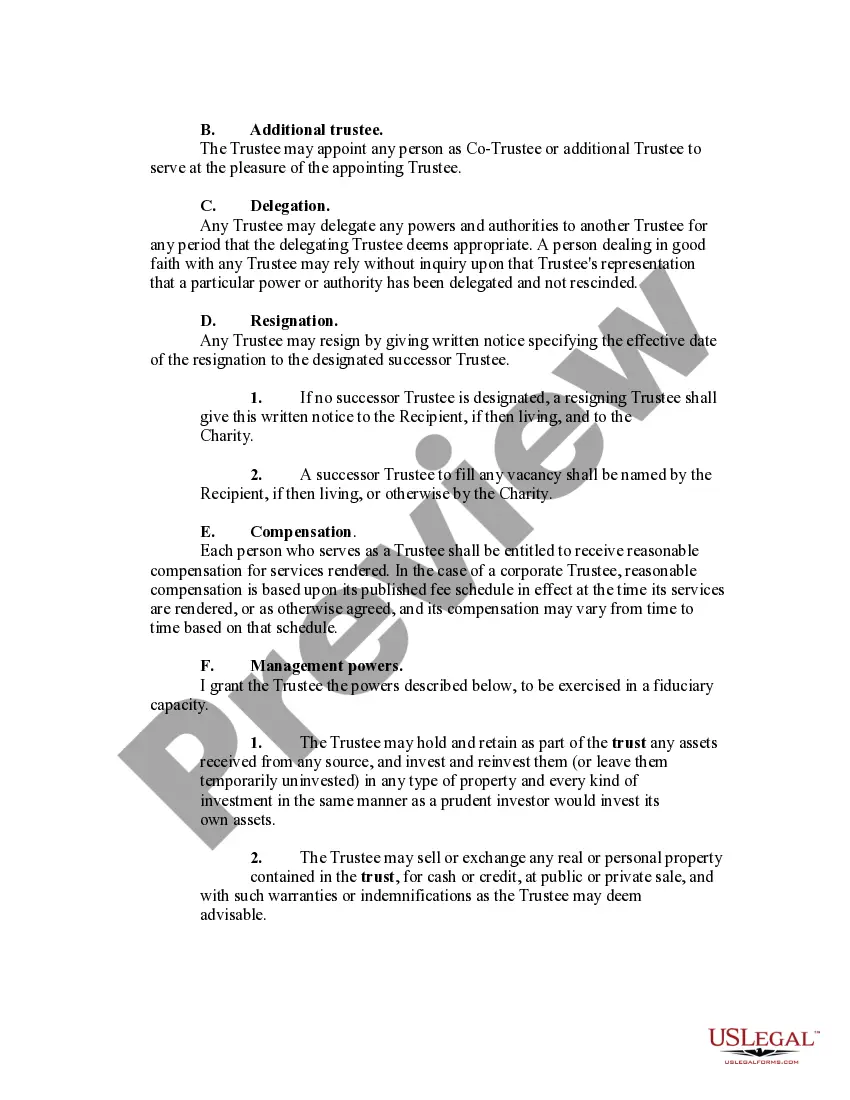
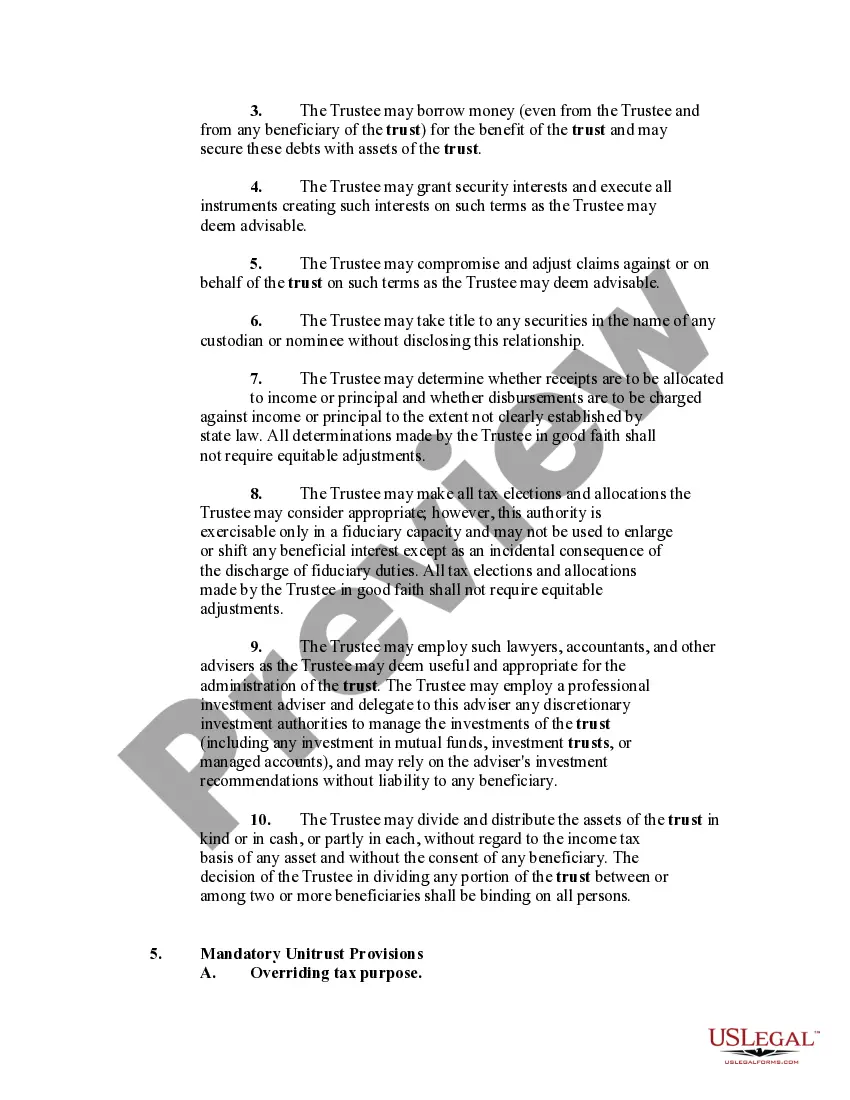
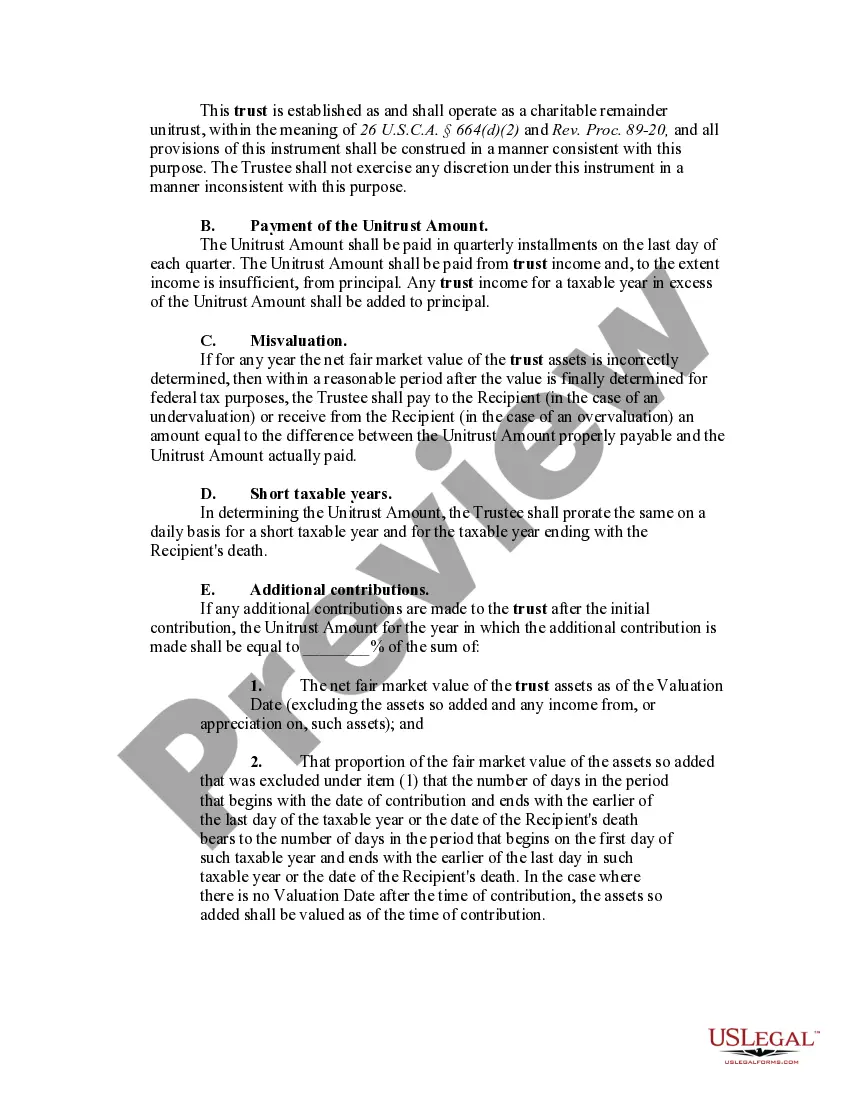
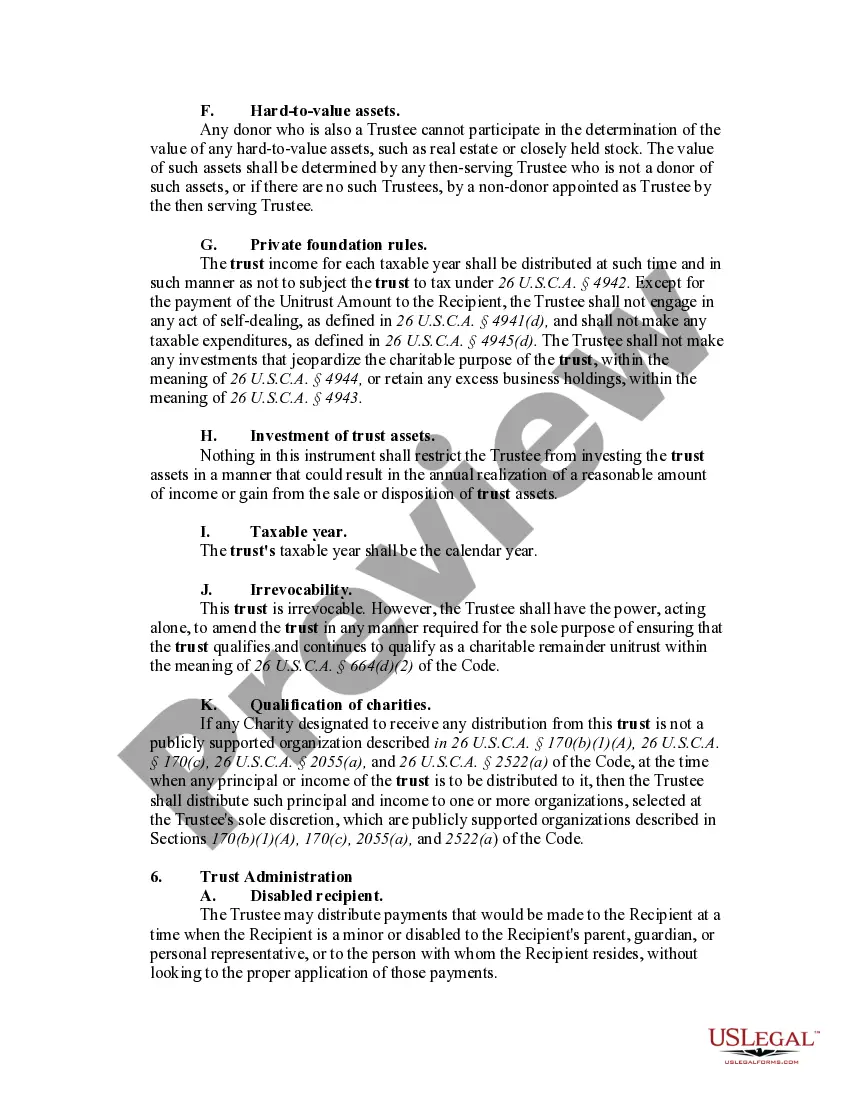
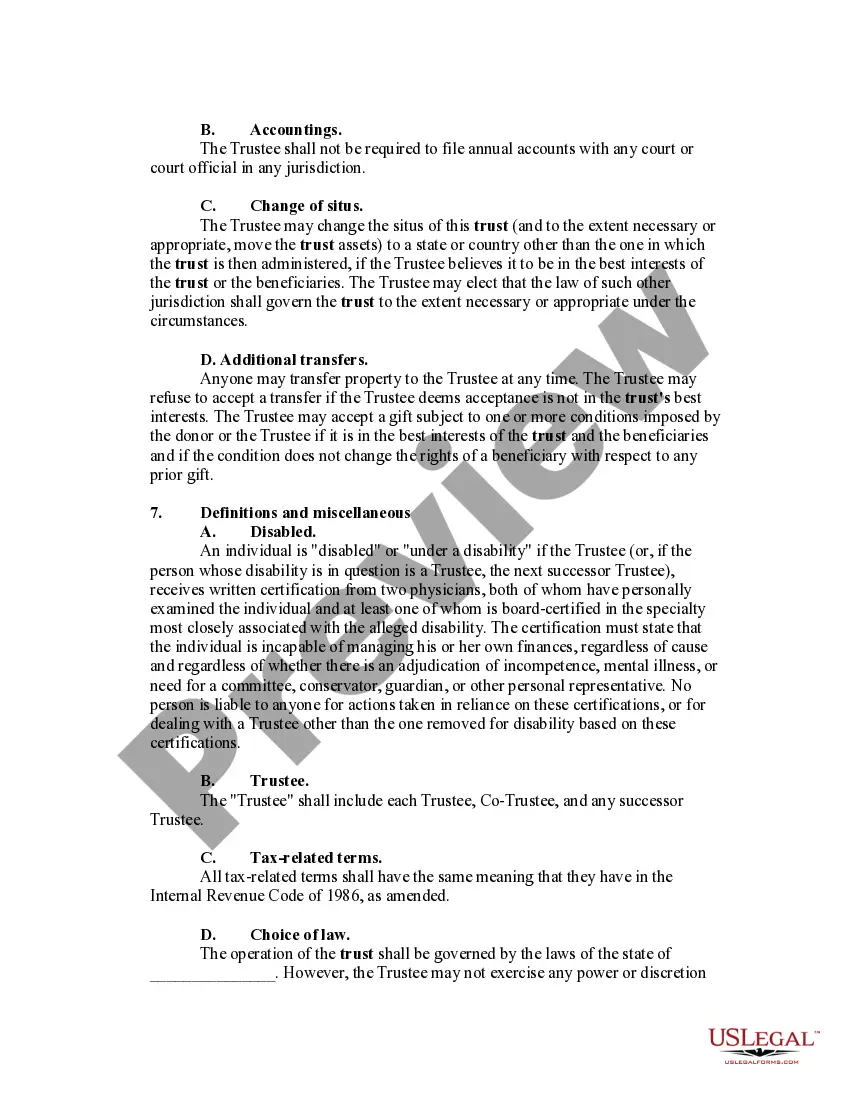
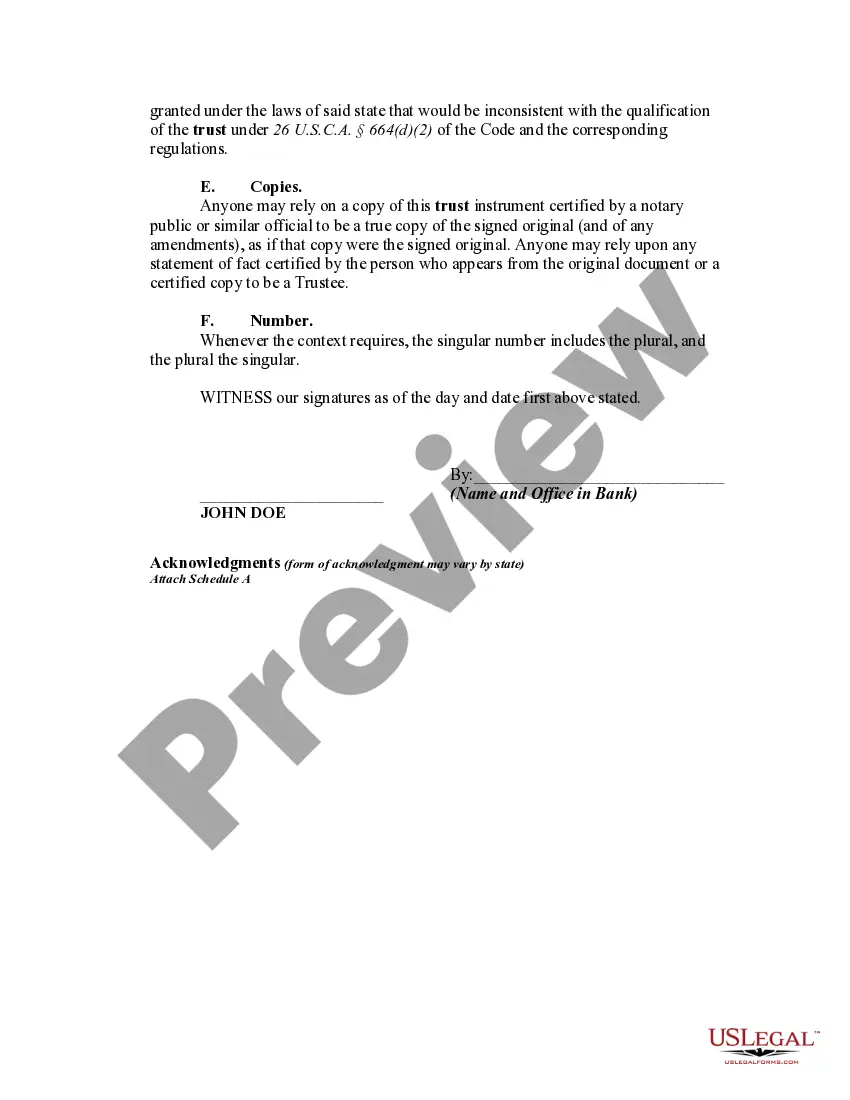
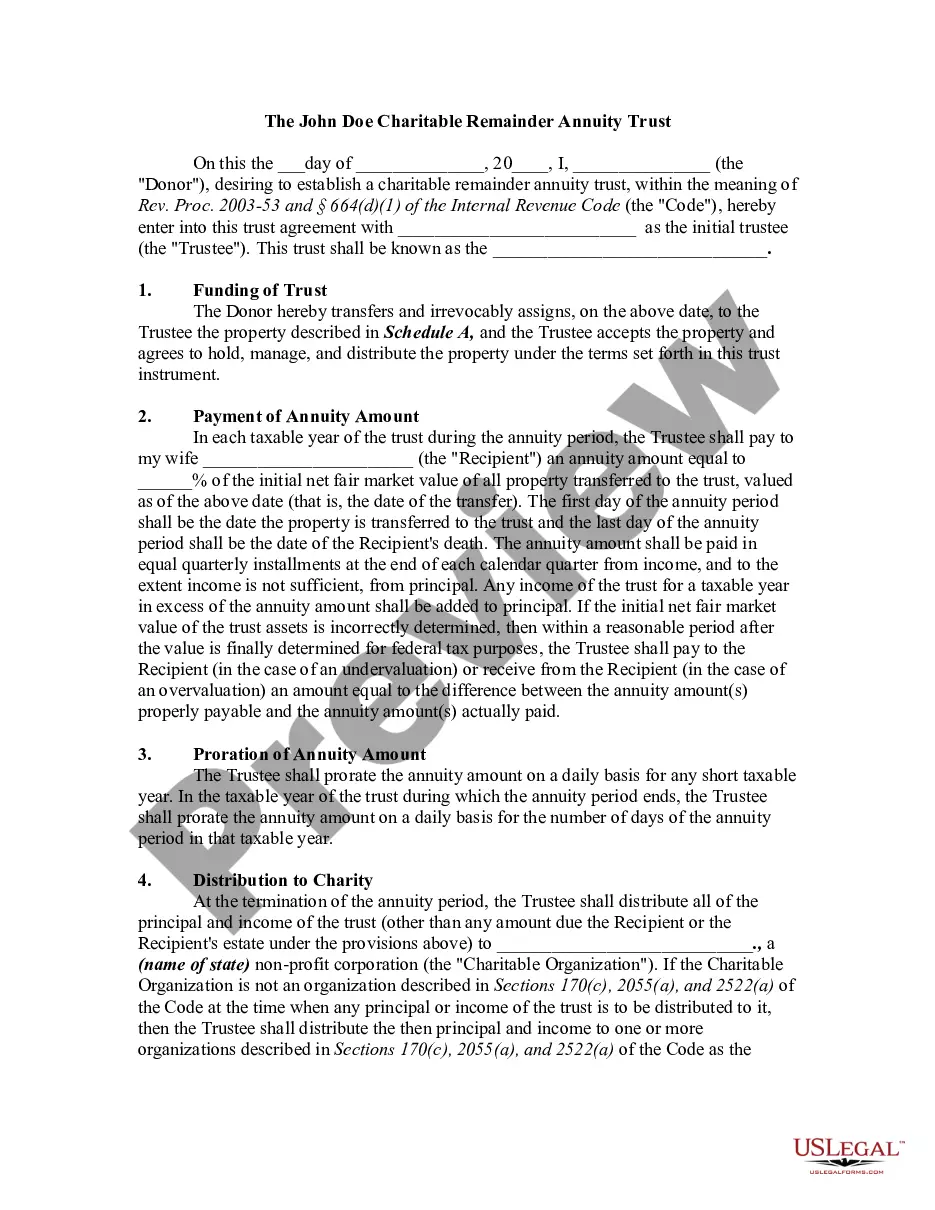
How to fill out Charitable Remainder Inter Vivos Unitrust Agreement?
Finding a go-to place to access the most recent and appropriate legal samples is half the struggle of working with bureaucracy. Choosing the right legal papers requirements accuracy and attention to detail, which is the reason it is important to take samples of Charitable Agreement Statement For Her Classroom only from trustworthy sources, like US Legal Forms. An improper template will waste your time and hold off the situation you are in. With US Legal Forms, you have little to worry about. You can access and check all the details concerning the document’s use and relevance for the situation and in your state or county.
Consider the listed steps to finish your Charitable Agreement Statement For Her Classroom:
- Use the catalog navigation or search field to find your template.
- Open the form’s description to check if it fits the requirements of your state and county.
- Open the form preview, if available, to make sure the form is the one you are interested in.
- Resume the search and look for the correct template if the Charitable Agreement Statement For Her Classroom does not suit your requirements.
- When you are positive regarding the form’s relevance, download it.
- If you are a registered user, click Log in to authenticate and access your selected templates in My Forms.
- If you do not have a profile yet, click Buy now to obtain the template.
- Pick the pricing plan that suits your needs.
- Go on to the registration to complete your purchase.
- Finalize your purchase by picking a payment method (credit card or PayPal).
- Pick the file format for downloading Charitable Agreement Statement For Her Classroom.
- When you have the form on your device, you can modify it using the editor or print it and finish it manually.
Get rid of the inconvenience that comes with your legal documentation. Explore the extensive US Legal Forms catalog to find legal samples, examine their relevance to your situation, and download them on the spot.
Form popularity
FAQ
The following is an example of a written acknowledgment where a charity accepts contributions in the name of one of its activities: "Thank you for your contribution of $250 to (Organization) made in the name of its Kids & Families program. No goods or services were provided in exchange for your donation."
What do you need to include in your donation acknowledgment letter? The donor's name. The full legal name of your organization. A declaration of your organization's tax-exempt status. Your organization's employer identification number. The date the gift was received. A description of the gift and the amount received.
By politely asking for donations with ?could you? and ?would you? questions and leaving the donation amount up to the individual to decide, your potential donors will understand that you need their help without expecting anyone to donate more than they can comfortably afford.
I'm writing to ask you to support me and my [cause/project/etc.]. Just a small donation of [amount] can help me [accomplish task/reach a goal/etc.]. Your donation will go toward [describe exactly what the contribution will be used for]. [When possible, add a personal connection to tie the donor to the cause.
The term charitable is used in its generally accepted legal sense and includes relief of the poor, the distressed, or the underprivileged; advancement of religion; advancement of education or science; or maintenance of public buildings, monuments, or works; lessening the burdens of government; lessening ...