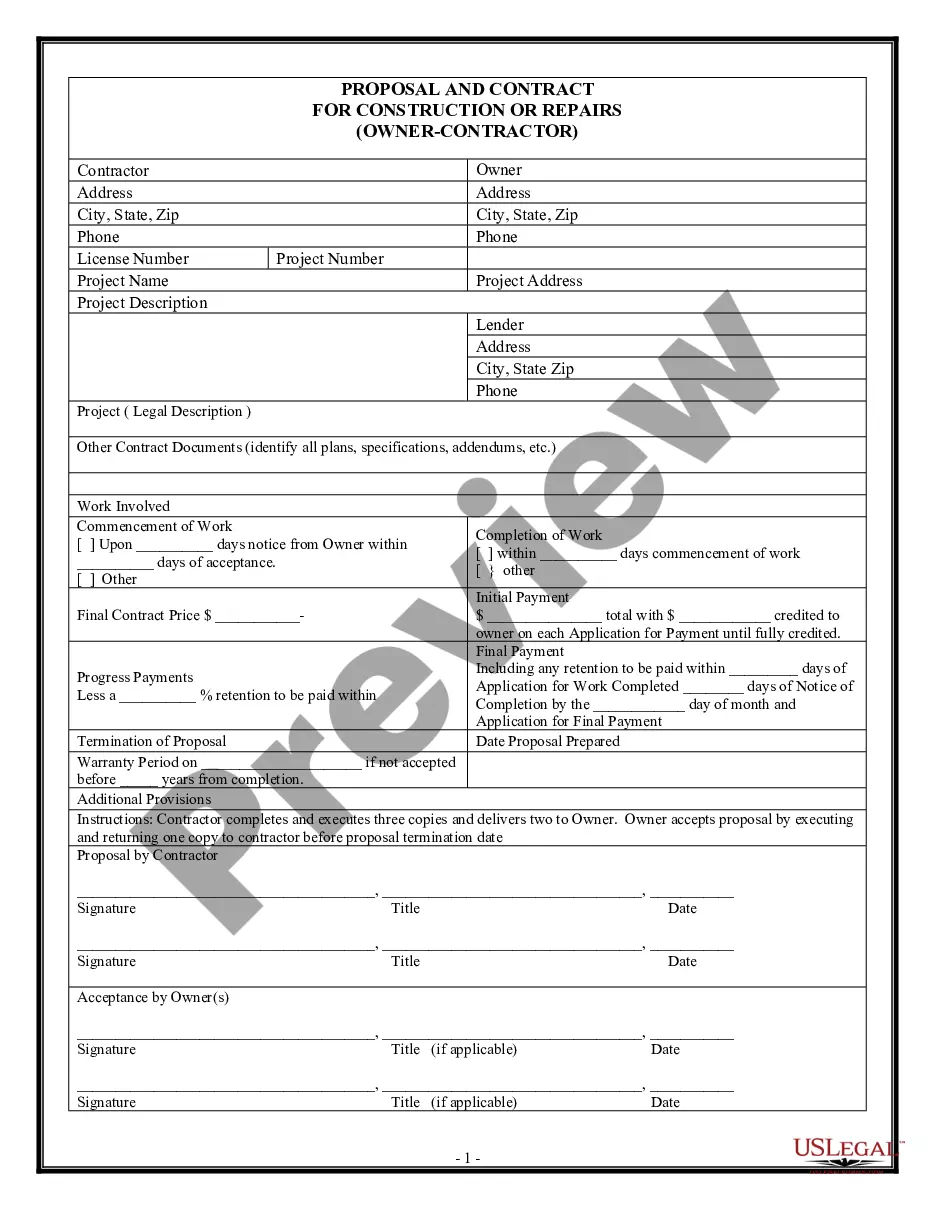
Contract Contractor Building Without Permit Consequences In Orange
Description





Form popularity
FAQ
Types of Projects That May Be Exempt From a Building Permit in California Painting. Floor upgrades. Kitchen remodels. Small drywall projects. Common electrical work. Small outbuildings. Bathroom fixes. Fences.
Yes, he can be fined and go to jail, but you can be fined for work done without a permit. If someone is injured by some dangerous condition of the property, you are also potentially liable as well. Work over a few hundred dollars requires a building permit.
In ance with the Current edition of The Florida Building Code, the following items are exempt from permitting: Floor coverings such as tile or carpet. Minor cabinetry which does not include any electrical or plumbing fixtures. Minor drywall repairs. Painting. Portable Heating or cooling appliances.
Florida sellers are required by law to disclose unpermitted work at the time of the sale of the home.
Contractors who violate the law are subject to disciplinary action by CSLB, including civil penalty assessments of up to $8,000 per violation, an order of correction that requires payment of permit fees and any assessed penalties imposed by the local building department, and suspension or revocation of the license.
Per the California Residential Code detached accessory structure not exceeding 120 square feet does not require a building permit if there is no plumbing, electrical, and or mechanical equipment. Please note, Sheds and/or Structures under 120 square feet do require a Planning Permit.
You're generally required to obtain a demolition permit from your local government before starting the demolition work. This ensures your project adheres to local regulations and safety standards. Check with your municipality for specific requirements, as they can vary widely by location.
Yes, additions and alterations require a building permit. Depending on the scope of work, additional building or sub permits may also be required such as electrical, roofing, mechanical, and possibly plumbing or gas sub-permits. Fence? Yes, Fence permits are issued by Zoning for all fences 6' in height or under.
Demolition permits are usually issued over-the- counter at the Building and Safety Division and the permit fees are minimal. California State Law also requires that all contaminants, such as asbestos, lead, and soil contaminants, be properly disposed of.
The floor area mustn't be more than 15m2 (although you might be able to get away with up to 30m2 if other conditions are also met). The eaves height must be below 2.5m for a flat roof, 4m for a pitched roof, or 3m for anything else.
