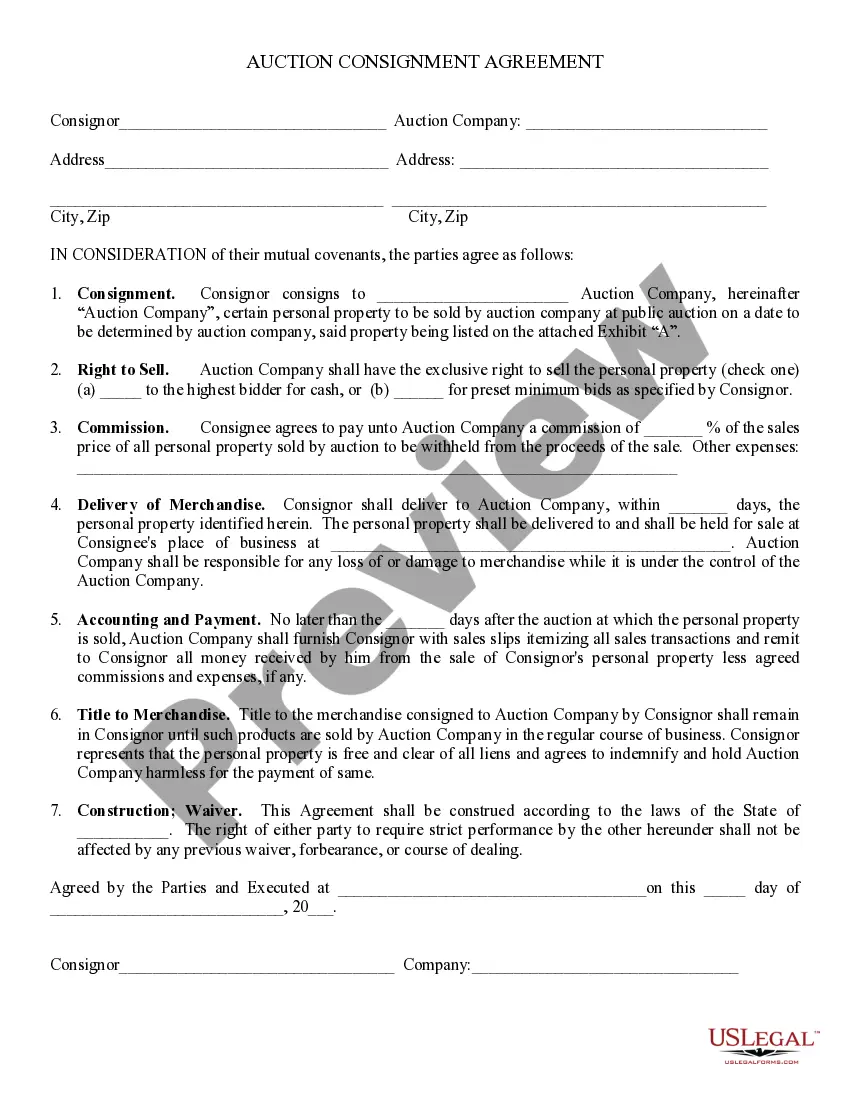
Consignment Form Template For Cars In Nassau
Description

Get your form ready online
Our built-in tools help you complete, sign, share, and store your documents in one place.
Make edits, fill in missing information, and update formatting in US Legal Forms—just like you would in MS Word.
Download a copy, print it, send it by email, or mail it via USPS—whatever works best for your next step.
Sign and collect signatures with our SignNow integration. Send to multiple recipients, set reminders, and more. Go Premium to unlock E-Sign.
If this form requires notarization, complete it online through a secure video call—no need to meet a notary in person or wait for an appointment.
We protect your documents and personal data by following strict security and privacy standards.

Make edits, fill in missing information, and update formatting in US Legal Forms—just like you would in MS Word.

Download a copy, print it, send it by email, or mail it via USPS—whatever works best for your next step.

Sign and collect signatures with our SignNow integration. Send to multiple recipients, set reminders, and more. Go Premium to unlock E-Sign.

If this form requires notarization, complete it online through a secure video call—no need to meet a notary in person or wait for an appointment.

We protect your documents and personal data by following strict security and privacy standards.
Looking for another form?








Form popularity
FAQ
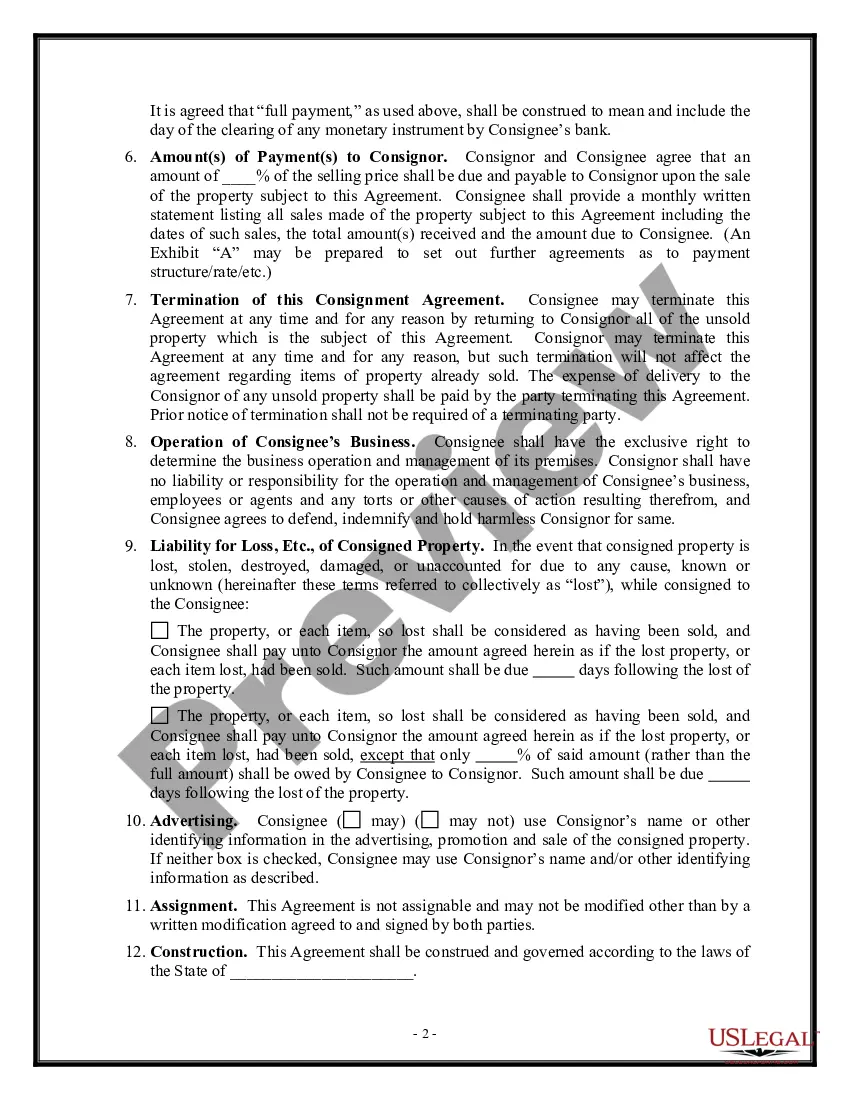
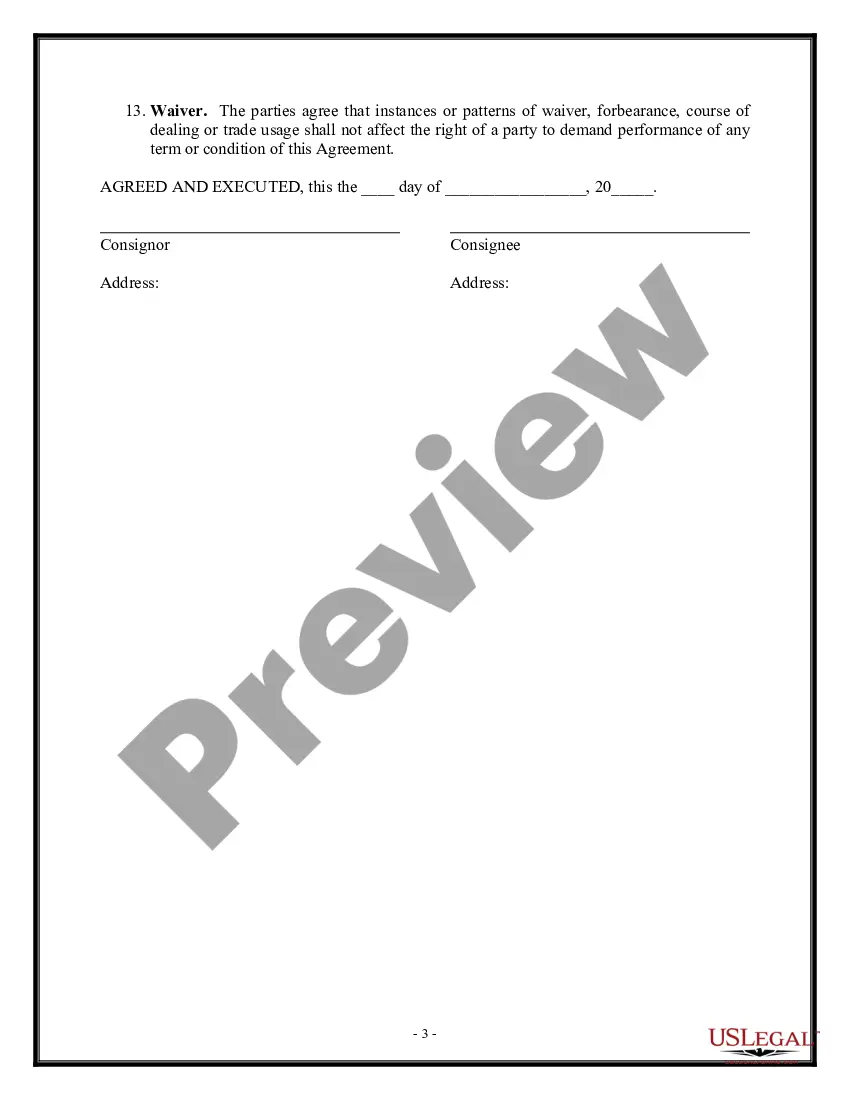
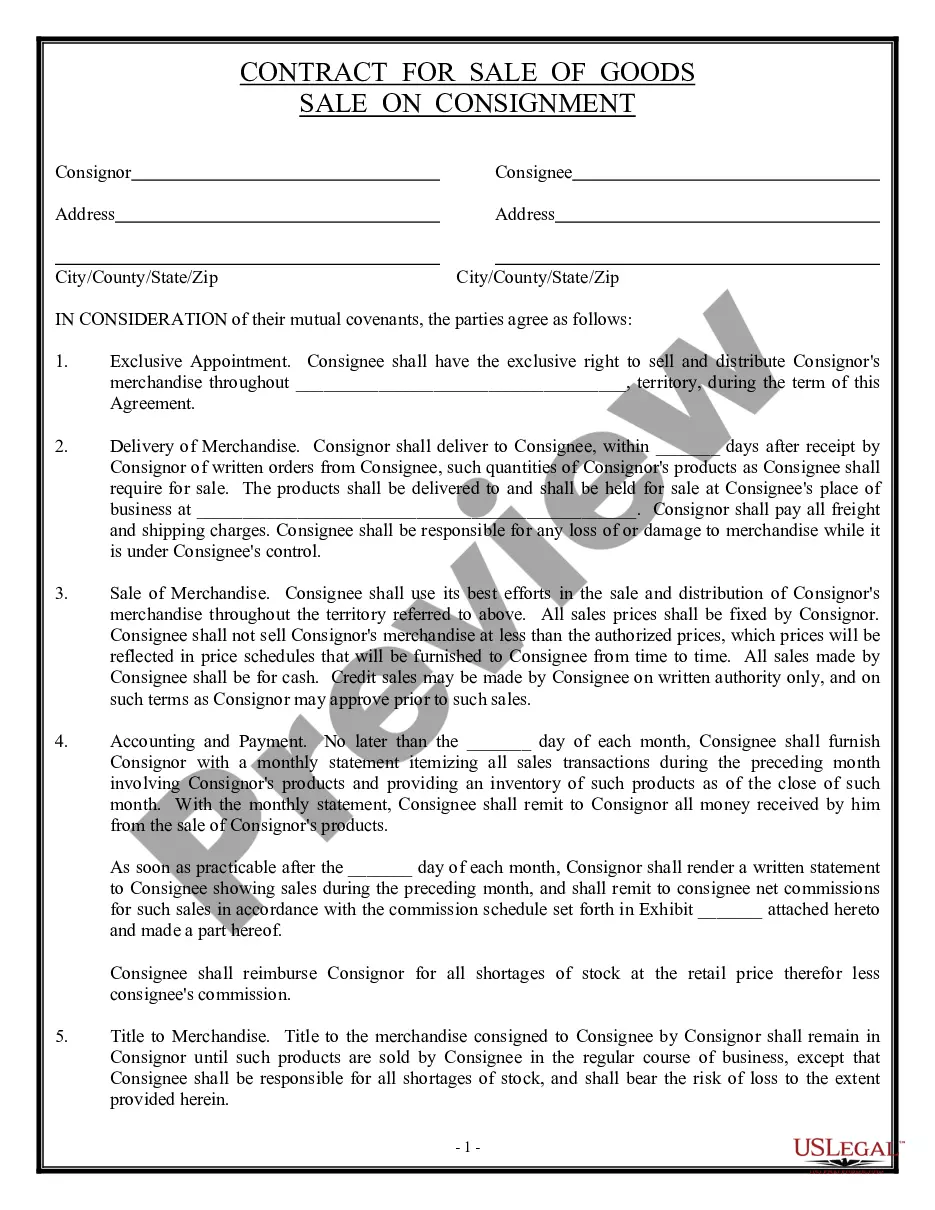
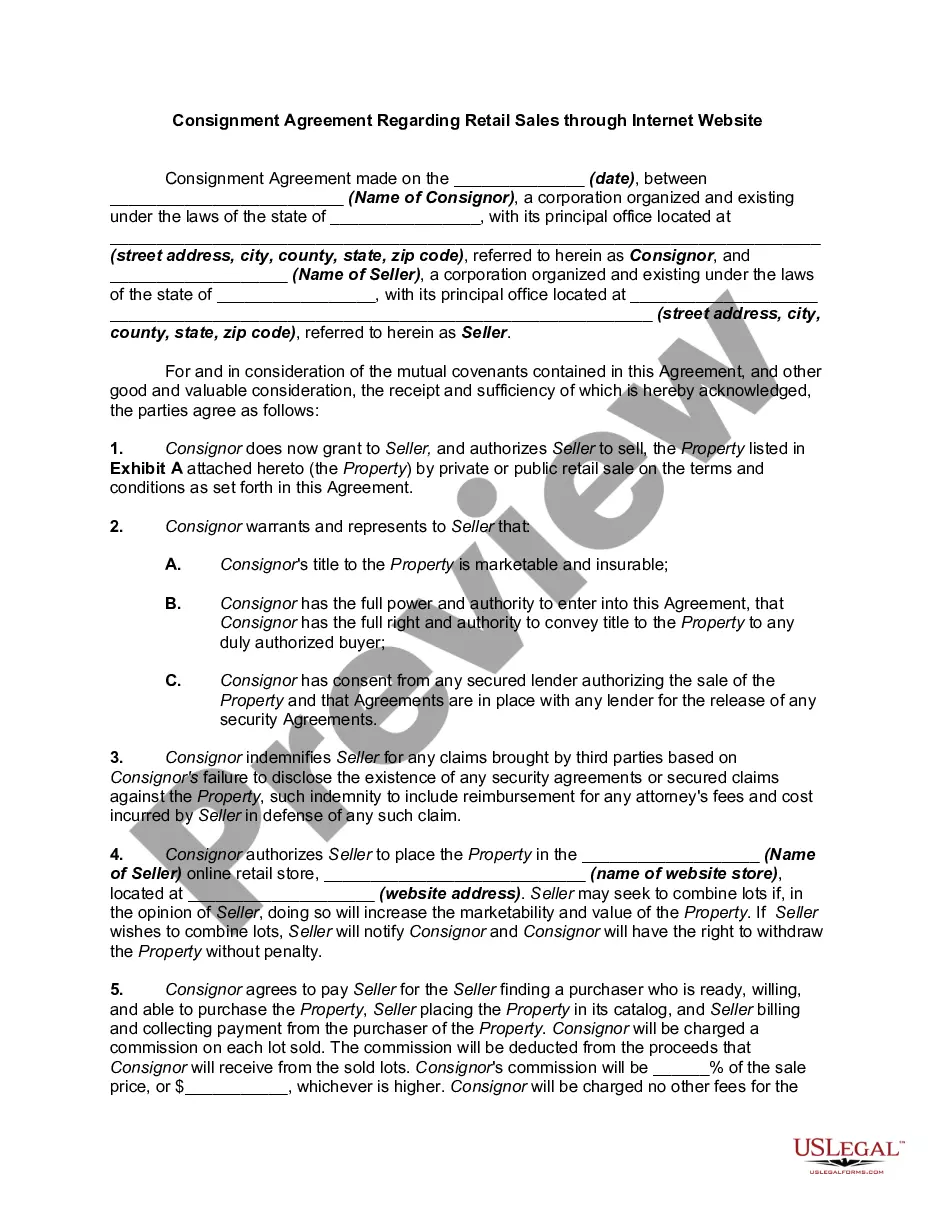
A consignment agreement, to be used where the seller (consignor) wishes to place goods on consignment before they are resold or used by the buyer (consignee). Goods will be stored at a facility or warehouse, under the control of the consignor, the consignee, or a third party.
What are Consignment Sales? Consignment sales are a trade agreement in which one party (the consignor) provides goods to another party (the consignee) to sell. However, the consignee has the right to return unsold goods back to the consigner.
A consignment agreement is an agreement between a consignee and consignor for the storage, transfer, sale or resale and use of the commodity. The consignee may take goods from the consignment stock for use or resale subject to payment to the consignor agreeably to the terms bargained in the consignment agreement.
For example, you may own a jewelry store where you sell jewelry on consignment. Typically, the owner of the jewelry will bring it to you and sign an agreement that authorizes you to sell the item and transfer ownership to the buyer.
A dealer plate may be used on a vehicle that is owned or controlled by the dealer. The plate must be displayed on the rear of the vehicle. When a dealer plate is used on a consignment vehicle, a copy of the consignment agreement must be in the vehicle.
Oregon does not have a Lemon Law that applies to used cars, however you may still qualify for protection under other laws such as the Federal Trade Commission's “Used Car Rule” and Oregon's Uniform Commercial Code through circumstances such as: The dealer did not indicate the sale of a vehicle was “as-is”
If the buyer does not sign the title and mail or give it to DVS, then the seller's name stays on the title of the car. If the buyer doesn't transfer the title within 10 days, the car's registration is suspended.
Consignment sales are a trade agreement in which one party (the consignor) provides goods to another party (the consignee) to sell. However, the consignee has the right to return unsold goods back to the consigner.
A consignment agreement is a contract between a consignor (owner or supplier of goods ) and a consignee (who sells the goods). Its purpose is to outline the terms and conditions for the sale of goods, including payment terms, agreement duration, rights and duties of both parties.
