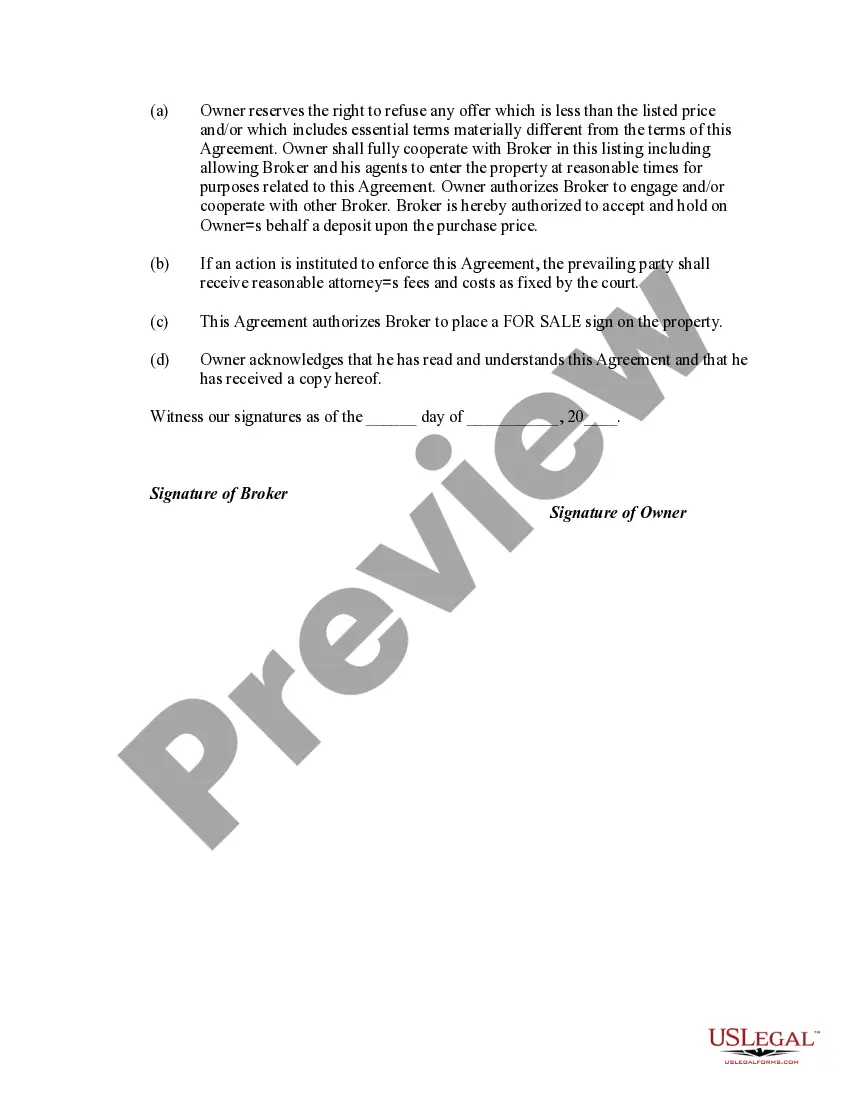
Listing Agreement For Lease In Wake
Description


Get your form ready online
Our built-in tools help you complete, sign, share, and store your documents in one place.
Make edits, fill in missing information, and update formatting in US Legal Forms—just like you would in MS Word.
Download a copy, print it, send it by email, or mail it via USPS—whatever works best for your next step.
Sign and collect signatures with our SignNow integration. Send to multiple recipients, set reminders, and more. Go Premium to unlock E-Sign.
If this form requires notarization, complete it online through a secure video call—no need to meet a notary in person or wait for an appointment.
We protect your documents and personal data by following strict security and privacy standards.

Make edits, fill in missing information, and update formatting in US Legal Forms—just like you would in MS Word.

Download a copy, print it, send it by email, or mail it via USPS—whatever works best for your next step.

Sign and collect signatures with our SignNow integration. Send to multiple recipients, set reminders, and more. Go Premium to unlock E-Sign.

If this form requires notarization, complete it online through a secure video call—no need to meet a notary in person or wait for an appointment.

We protect your documents and personal data by following strict security and privacy standards.
Looking for another form?





Form popularity
FAQ
Exclusive right to sell listing An exclusive right to sell grants a single real estate agency exclusive authority to market and sell a property, ensuring the listing agent earns a commission regardless of who finds the buyer.
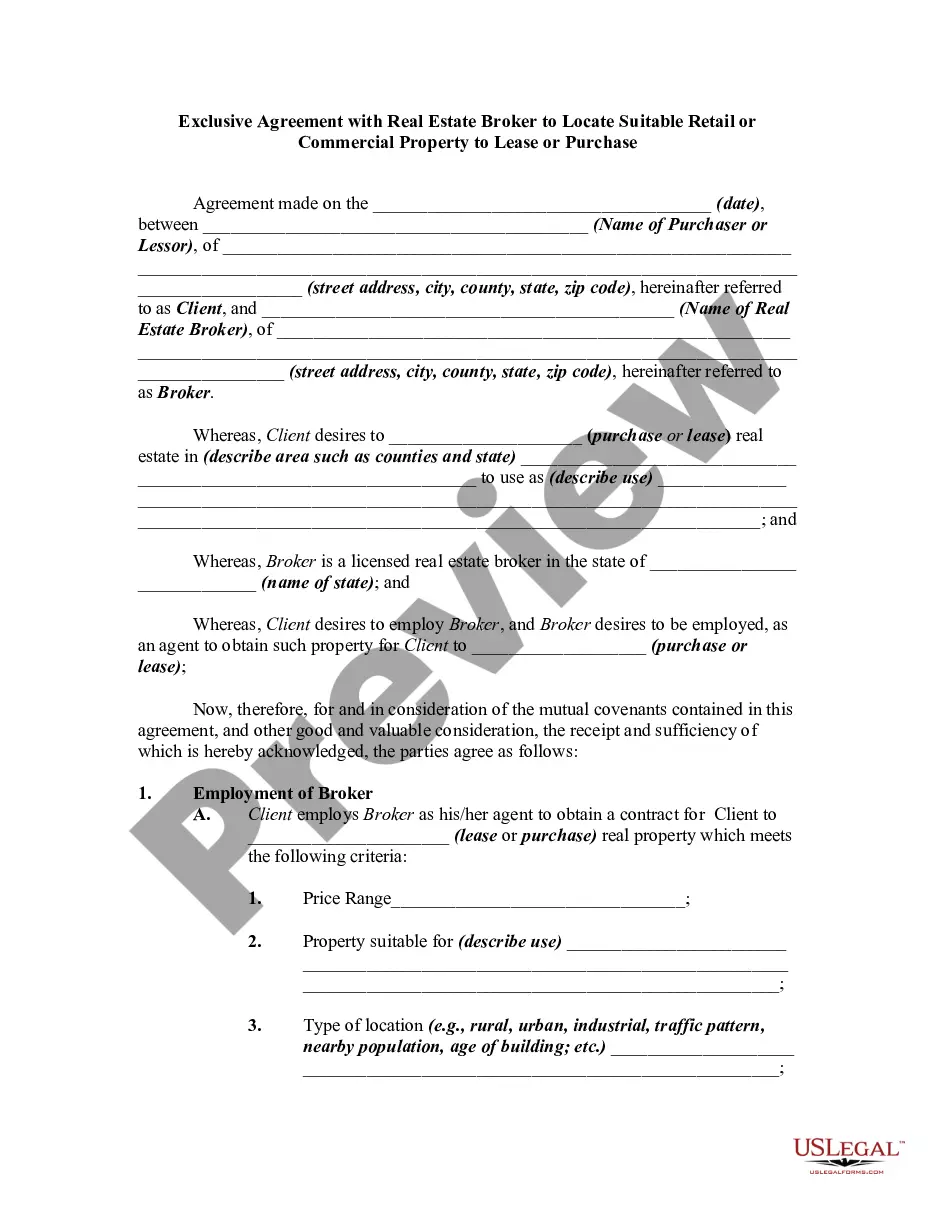
Types of Listing Agreements Exclusive Right-to-Sell Listing: The most common type. It grants the broker the exclusive right to sell your home, regardless of who finds the buyer.
A listing agreement is “a legally binding contract that creates an agency relationship authorizing a broker to serve as the agent for a principal in a real estate transaction.” In other words, a listing agreement is an employment contract between a client and a broker that spells out what the broker is responsible for ...
An exclusive right to sell listing is the most widely-used listing agreement. Under this agreement, the broker has the exclusive right to market the property for a specified period of time.
The most desirable form of listing agreement from an agent's viewpoint is the Exclusive right to sell because it guarantees a commission for the agent regardless of who sells the property during the listing period.
Ing to North Carolina G.S. § 47-18, a tenant who is leasing space for a term of more than three years should ensure that a memorandum of lease be executed and recorded in the office of the register of deeds in the county where the property is located.
No, leases don't have to be notarized to be legally binding in North Carolina. However, many prefer this.
Step 1: Draft the rental agreement and review of the agreement by both parties, i.e. owner and tenant. Step 2: Finalise the draft rental agreement and print it on stamp paper obtained from a Sub-Registrar's office. Step 3: Ensure the owner, tenant, and two witnesses sign the rental agreement.
The North Carolina Residential Rental Agreements Act was passed by the General Assembly in 1977 to define the duties of both the landlord and the tenant with respect to the maintenance and repair of the premises. It has been amended several times since then to address additional duties.
As a first concern, all leases should be in writing, even if the law does not require it. North Carolina's Statute of Frauds only requires that leases exceeding three years from the making need be in writing.
