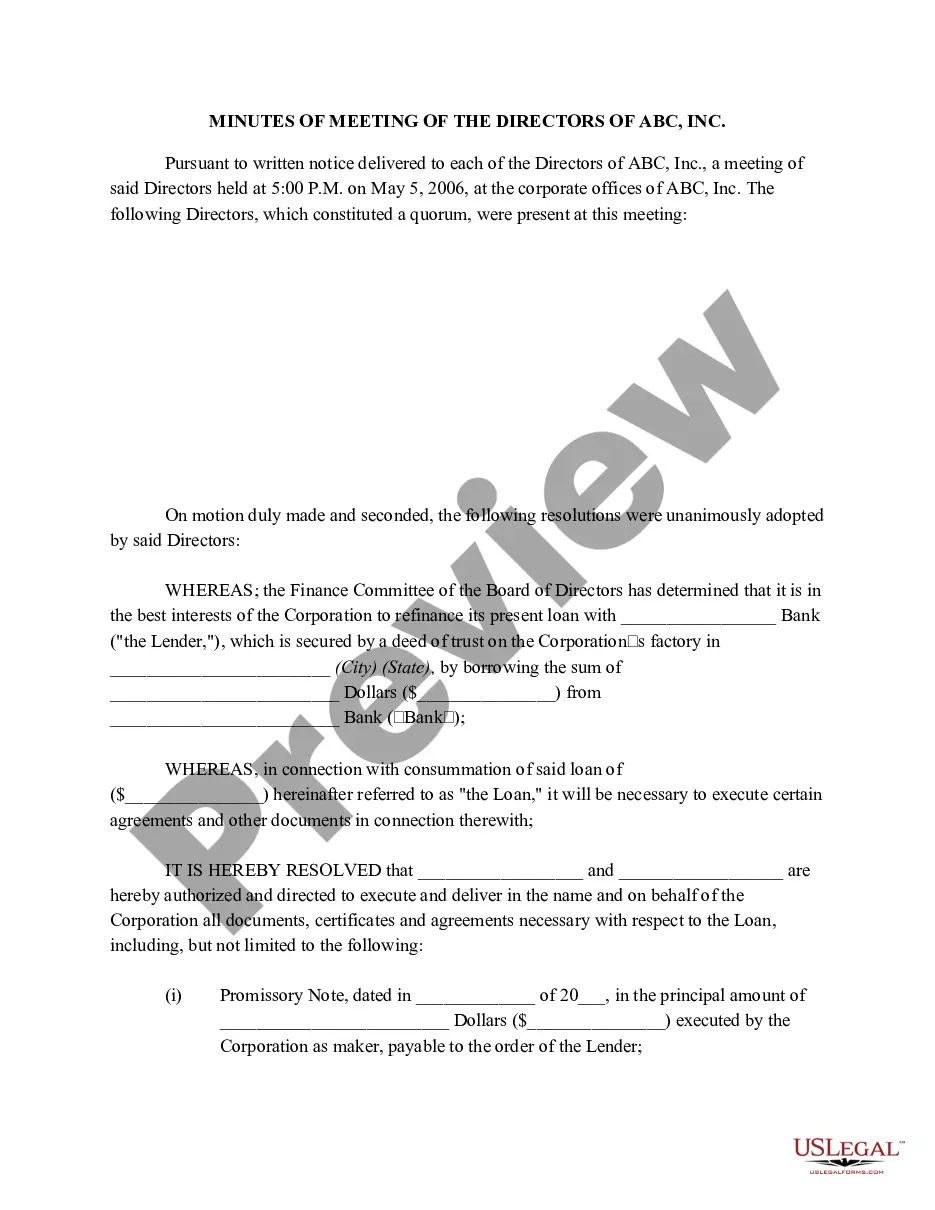
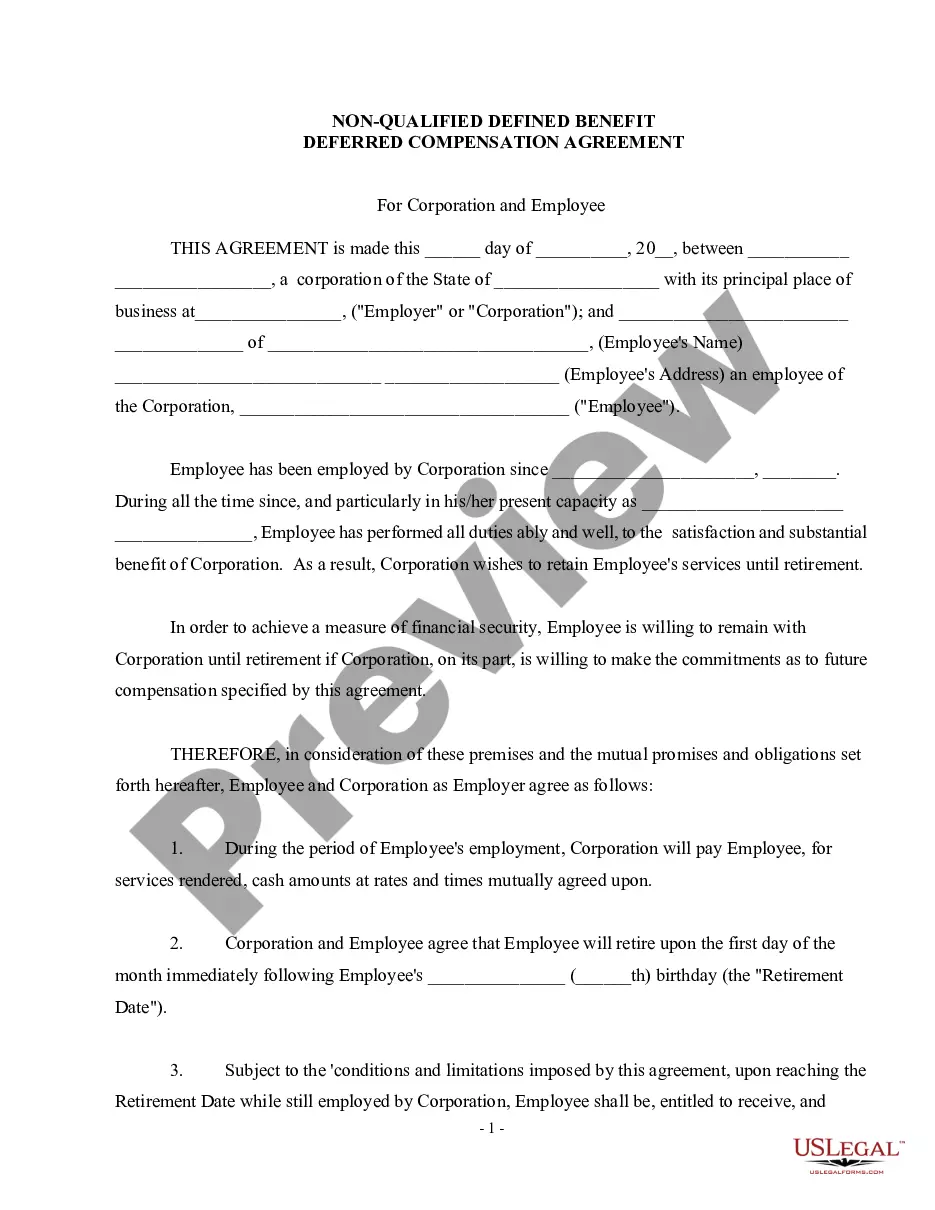
Deferred Compensation Plan For Executives In Pennsylvania
Description


Get your form ready online
Our built-in tools help you complete, sign, share, and store your documents in one place.
Make edits, fill in missing information, and update formatting in US Legal Forms—just like you would in MS Word.
Download a copy, print it, send it by email, or mail it via USPS—whatever works best for your next step.
Sign and collect signatures with our SignNow integration. Send to multiple recipients, set reminders, and more. Go Premium to unlock E-Sign.
If this form requires notarization, complete it online through a secure video call—no need to meet a notary in person or wait for an appointment.
We protect your documents and personal data by following strict security and privacy standards.

Make edits, fill in missing information, and update formatting in US Legal Forms—just like you would in MS Word.

Download a copy, print it, send it by email, or mail it via USPS—whatever works best for your next step.

Sign and collect signatures with our SignNow integration. Send to multiple recipients, set reminders, and more. Go Premium to unlock E-Sign.

If this form requires notarization, complete it online through a secure video call—no need to meet a notary in person or wait for an appointment.

We protect your documents and personal data by following strict security and privacy standards.
Looking for another form?









Form popularity
FAQ
About Your Deferred Compensation Plan. Your "deferred comp plan" offers a simple, flexible way for you to save for retirement. With its powerful pretax savings features, investment options and planning resources, you can work toward replacing your working income in retirement — for life.
The normal contribution limit for elective deferrals to a 457 deferred compensation plan is $23,500. The annual elective deferral limit for 401(k) plan employee contributions is $23,500. The annual elective deferral limit for 403(b) plan employee contributions is $23,500.
Deferred compensation is often considered better than a 401(k) for highly-compensated executives looking to reduce their tax burden. Contribution limits on deferred compensation plans can also be much higher than 401(k) limits.
The regular yearly contributions amount for Deferred Compensation will increase from $23,000 to $23,500. The catch-up contribution limit that generally applies for employees aged 50 and over remains at $7,500 for 2025 for a combined maximum contribution limit of $31,000 in 2025.
Elective deferral limit The amount you can defer (including pre-tax and Roth contributions) to all your plans (not including 457(b) plans) is $23,000 in 2024 ($22,500 in 2023; $20,500 in 2022; $19,500 in 2020 and 2021; $19,000 in 2021).
100% of the participant's includible compensation, or. the elective deferral limit ($23,000 in 2024; $22,500 in 2023; $20,500 in 2022; $19,500 in 2020 and in 2021).
From a high level, the sponsor of a 401(k) plan is the entity that establishes retirement plans for a company and its employees. Normally, the 401(k) plan sponsor is the employer itself, a union, or a selected employee of the firm.
Roth IRA is a great option because your contributions are accessable if you need to get to them unlike the 401k.
Deferred compensation is a written agreement between an employer and an employee where the employee voluntarily agrees to have part of their compensation withheld by the company, invested on their behalf, and given to them at some pre-specified point in the future.
401(k) plans and 403(b) plans offer very similar benefits. As such, one isn't really better than the other. The main difference is that each plan is offered to employees of different types of companies. Another key difference between the plans is that 403(b) plans also offer a $15,000 catch-up.