Employee Contract Rules In Arizona
Description


Get your form ready online
Our built-in tools help you complete, sign, share, and store your documents in one place.
Make edits, fill in missing information, and update formatting in US Legal Forms—just like you would in MS Word.
Download a copy, print it, send it by email, or mail it via USPS—whatever works best for your next step.
Sign and collect signatures with our SignNow integration. Send to multiple recipients, set reminders, and more. Go Premium to unlock E-Sign.
If this form requires notarization, complete it online through a secure video call—no need to meet a notary in person or wait for an appointment.
We protect your documents and personal data by following strict security and privacy standards.
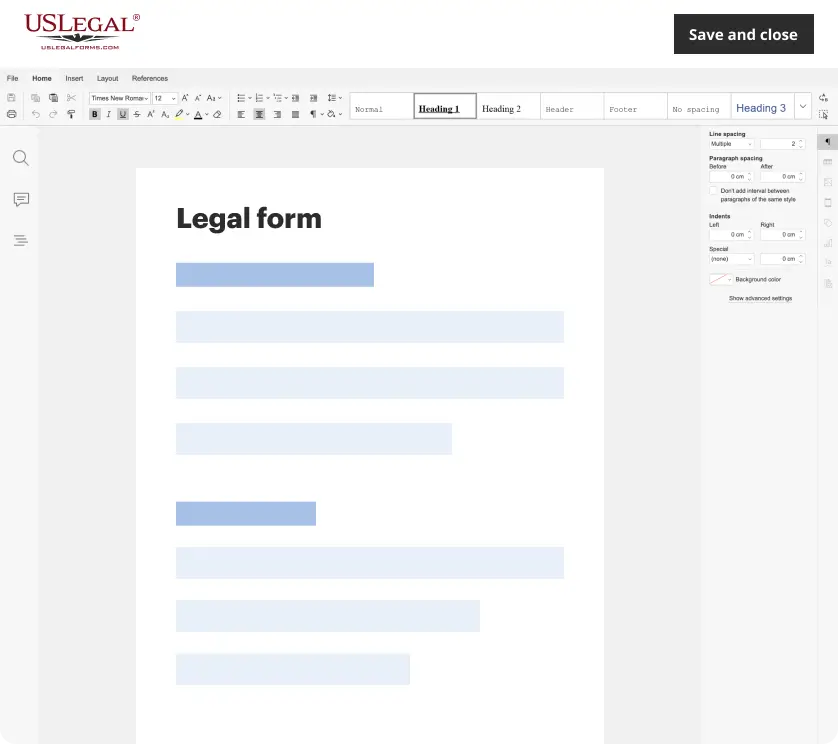
Make edits, fill in missing information, and update formatting in US Legal Forms—just like you would in MS Word.
Download a copy, print it, send it by email, or mail it via USPS—whatever works best for your next step.
Sign and collect signatures with our SignNow integration. Send to multiple recipients, set reminders, and more. Go Premium to unlock E-Sign.

If this form requires notarization, complete it online through a secure video call—no need to meet a notary in person or wait for an appointment.
We protect your documents and personal data by following strict security and privacy standards.
Looking for another form?
Form popularity
FAQ
Under Arizona Statutes governing labor, employment contracts are enforceable, but they must be written and signed by both the employer and the employee. Arizona employment contracts can include a variety of terms and conditions, but the terms of the agreement cannot violate state statutes or public policy.
23-1501 - Severability of employment relationships; protection from retaliatory discharges; exclusivity of statutory remedies in employment.
What are the features of a legally valid real estate contract in Arizona? Understanding the five essential features of a legally valid real estate contract in Arizona is fundamental. These features include mutual consent, capacity, consideration, a written format, and a proper description of the property.
The seven essential elements of a contract are: Offer. Acceptance. Consideration. Legally competent parties. Meeting of the minds. Terms of the contract. Legality of purpose.
A contract must contain a benefit or detriment to the offering party and a benefit or detriment to the accepting party that the parties otherwise would not be entitled to demand or expect. A unilateral promise to do or not do something will not be binding unless both parties get or give up something.
A contract will only be legally binding upon the contracting parties if the following requirements are complied with: consensus, contractual capacity, certainty, possibility, legality and formalities. 39 The above requirements will be discussed next. 39Para 1 1 above.
Contract Basics An offer - First, it must be shown that a specified offer was made by one or more parties. For example, when the seller of a vehicle says that he will sell his car to you for $10,000, an offer has been made. Acceptance - Next, to show an enforceable contract, acceptance must be demonstrated.
For a contract to be legally binding, it must have 4 essential elements: An offer. Acceptance of material terms of the offer. Consideration by both parties. Mutual assent (called a “meeting of the minds”)
When is a contract legally binding? Typically, a document that includes an offer, acceptance, and appropriate consideration will be considered legally binding. In most cases, a contract is binding in Arizona even if the parties signed it in another state.
Texas permits Use-It-or-Lose-It policy. Therefore, employers can deny rollover (carry-over or brought forward) vacation leaves. Still, most employers allow employees to carry forward unused vacation days from one year to the next. Employers can determine under what conditions the rollover of leave is possible.
