Talent Management Contract Forbes In Texas
Description









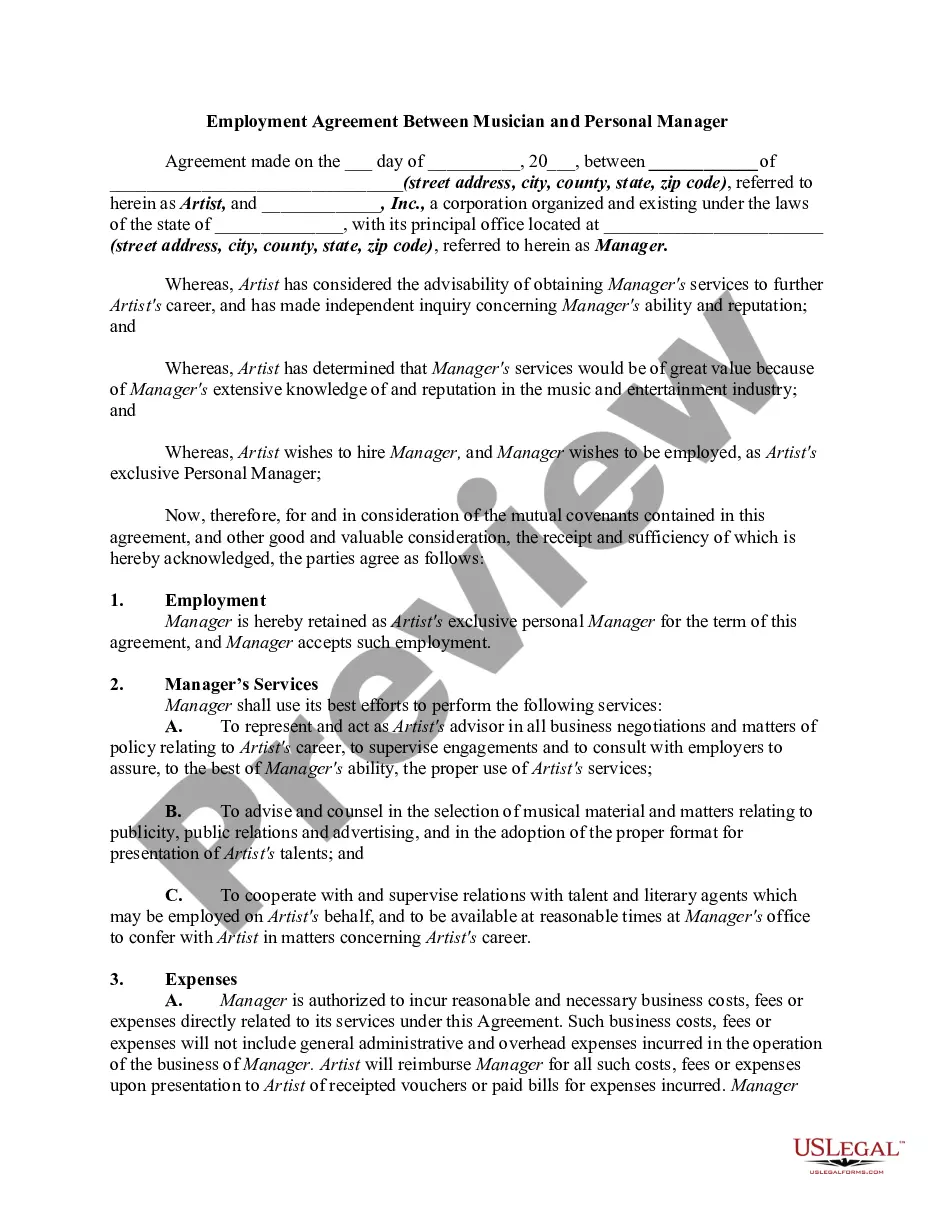
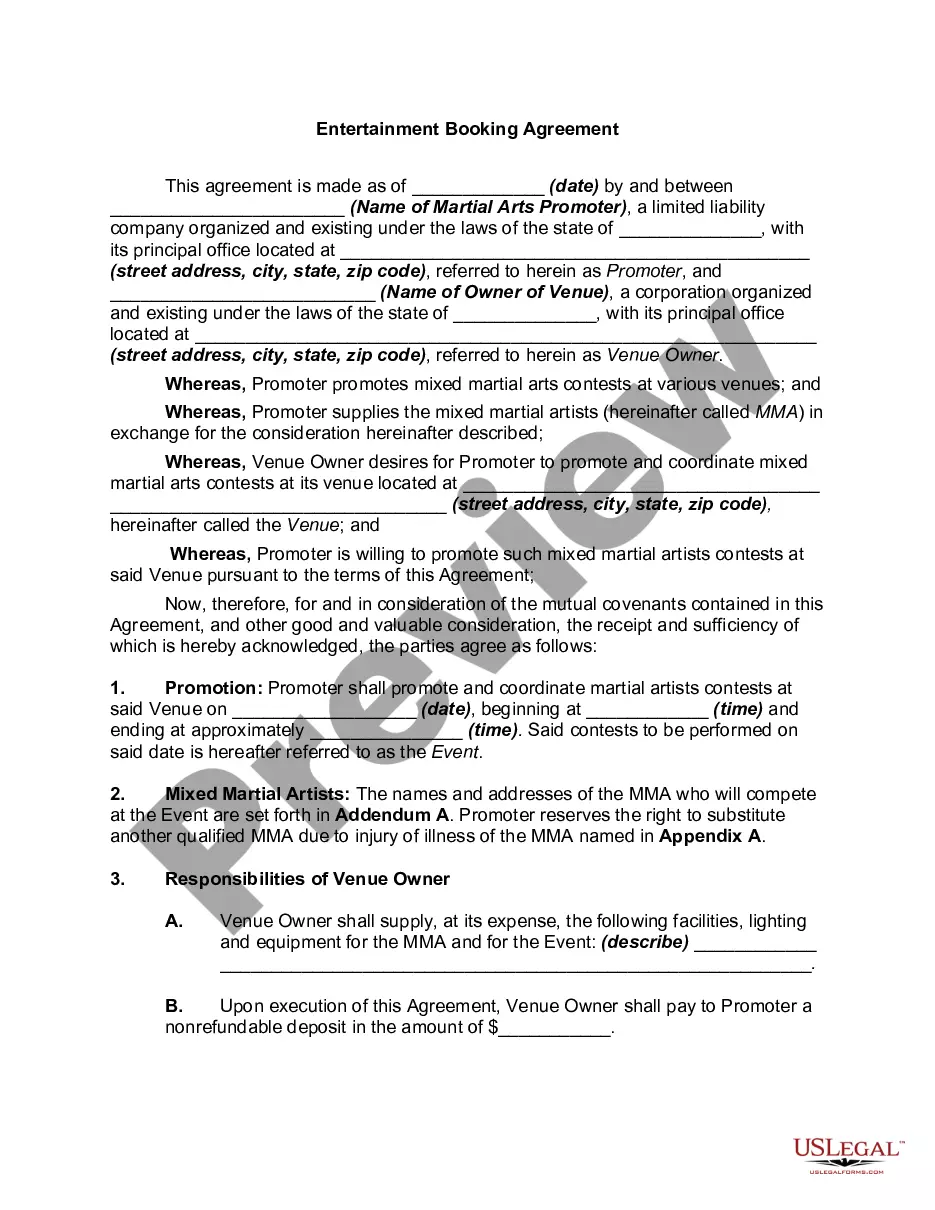
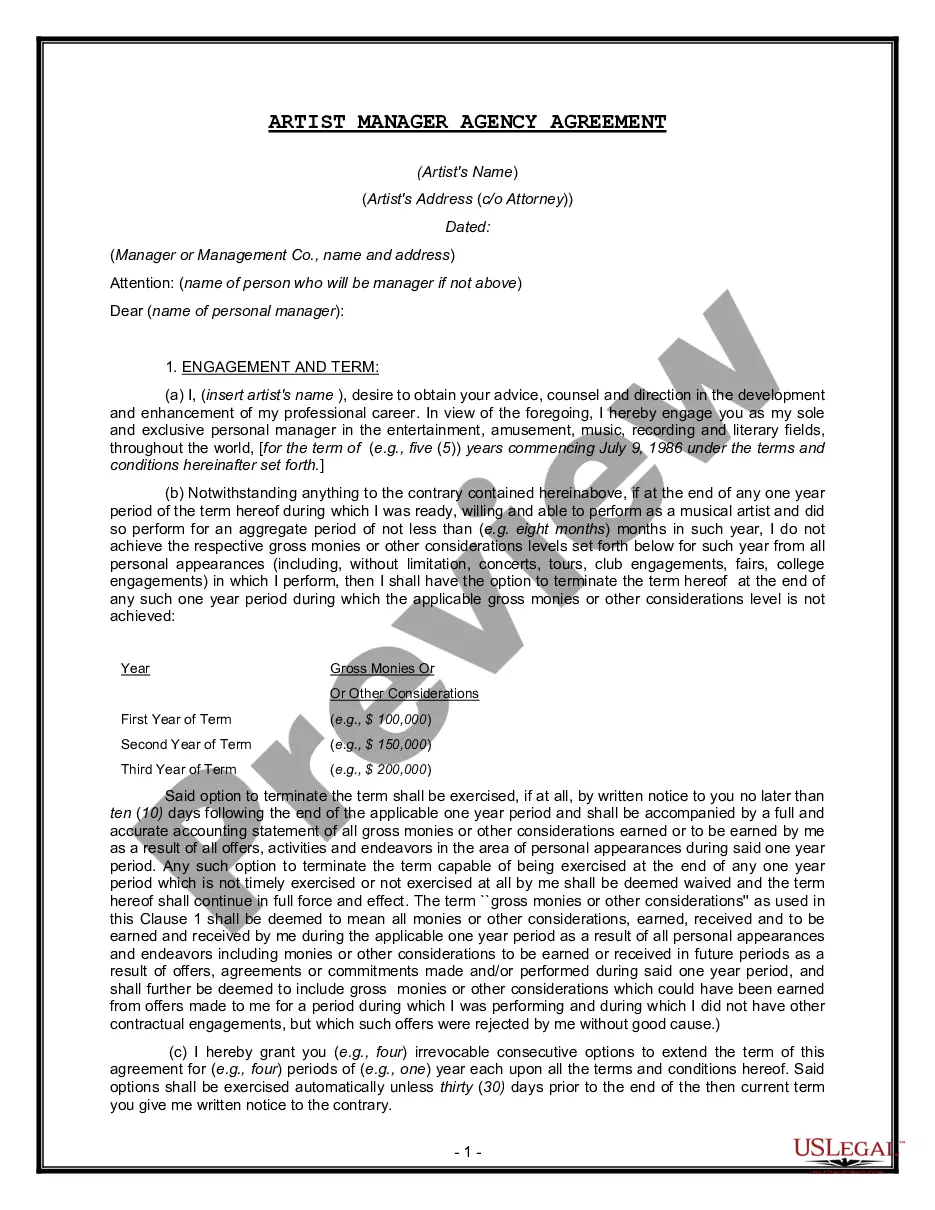
Get your form ready online
Our built-in tools help you complete, sign, share, and store your documents in one place.
Make edits, fill in missing information, and update formatting in US Legal Forms—just like you would in MS Word.
Download a copy, print it, send it by email, or mail it via USPS—whatever works best for your next step.
Sign and collect signatures with our SignNow integration. Send to multiple recipients, set reminders, and more. Go Premium to unlock E-Sign.
If this form requires notarization, complete it online through a secure video call—no need to meet a notary in person or wait for an appointment.
We protect your documents and personal data by following strict security and privacy standards.

Make edits, fill in missing information, and update formatting in US Legal Forms—just like you would in MS Word.

Download a copy, print it, send it by email, or mail it via USPS—whatever works best for your next step.

Sign and collect signatures with our SignNow integration. Send to multiple recipients, set reminders, and more. Go Premium to unlock E-Sign.

If this form requires notarization, complete it online through a secure video call—no need to meet a notary in person or wait for an appointment.

We protect your documents and personal data by following strict security and privacy standards.
Looking for another form?





Form popularity
FAQ
How to create an LLC operating agreement in 9 steps Decide between a template or an attorney. Include your business information. List your LLC's members. Choose a management structure. Outline ownership transfers and dissolution. Determine tax structure. Gather LLC members to sign the agreement. Distribute copies.
If you're forming—or have formed—an LLC in California, New York, Missouri, Maine, or Delaware, state laws require you to create an LLC Operating Agreement. But no matter what state you're in, it's always a good idea to create a formal agreement between LLC members.
Common Mistakes to Avoid in Your LLC Operating Agreement Overlooking the Need for an Operating Agreement. Vague or Incomplete Agreements. Failing to Plan for Disputes and Dissolution. Ignoring State-Specific Requirements. Inconsistency with Other Business Documents. Not Updating the Agreement. DIY without Professional Advice.
Increased Legal Vulnerability: An operating agreement strengthens the LLC's limited liability status, protecting your personal assets from business debts. Without it, there's a higher risk of personal liability for business obligations if the LLC is sued.
Once you (and the other LLC Members, if applicable) sign the Operating Agreement, then it becomes a legal document. Can I write my own Operating Agreement? Yes, but we recommend using an Operating Agreement template. An Operating Agreement is a legal document.
No requirement exists under Texas law for a Texas LLC to create an operating agreement. However, it is recommended. Both sole owners and multi-members benefit from a Texas LLC operating agreement.
How to create an LLC operating agreement in 9 steps Decide between a template or an attorney. Include your business information. List your LLC's members. Choose a management structure. Outline ownership transfers and dissolution. Determine tax structure. Gather LLC members to sign the agreement. Distribute copies.
Talent management agencies work behind the scenes to secure jobs and performances for the artist. They leverage their connections with producers, directors, and media companies to book various performance slots for their clients.
Talent management, sometimes referred to as human capital management, is the strategic practice of acquiring, onboarding, developing, retaining, and transitioning employees to help build an organization's culture, engagement, capability, and capacity.
Talent management agencies Actors may be interested in working theatrically (stage, film or television) as well as in commercials. Some agents will handle all types of acting work, while others may specialize in a particular area. Some agents work only in the field of television, or only in film and television.
