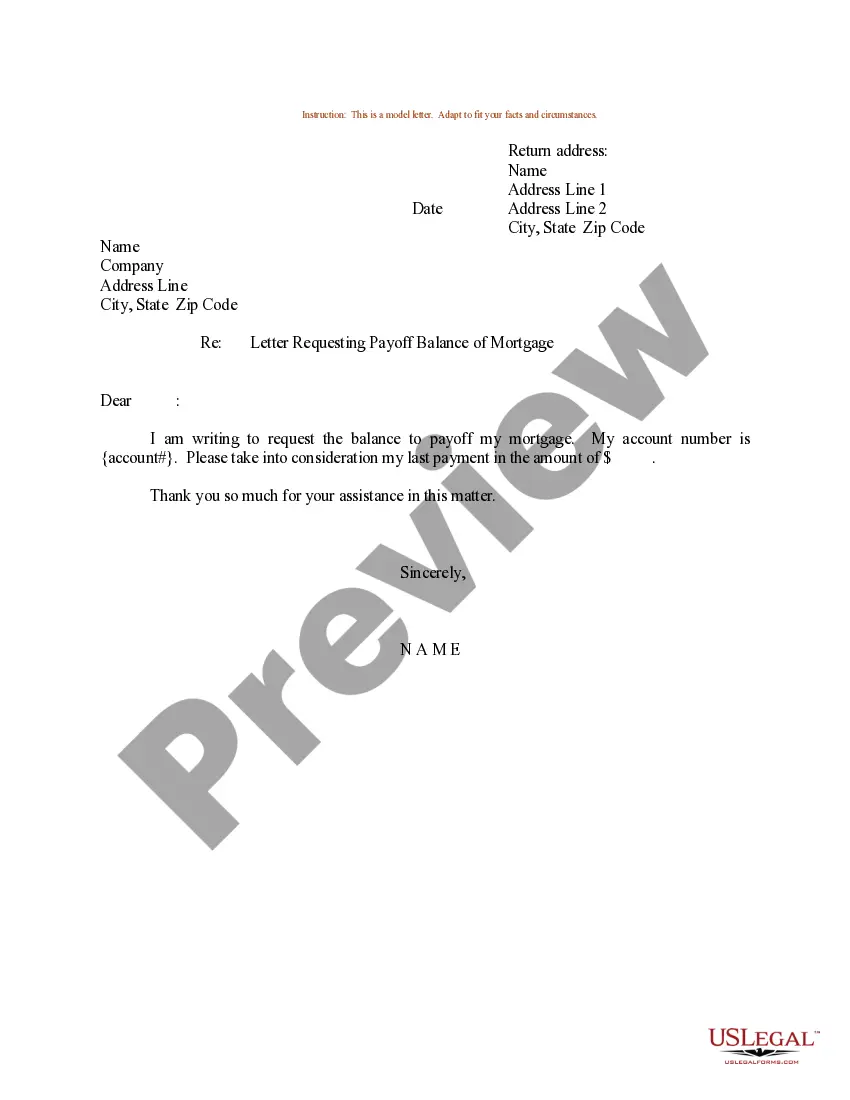
Loan Payoff Letter Example Without Notice Period In San Bernardino
Description
Get your form ready online
Our built-in tools help you complete, sign, share, and store your documents in one place.
Make edits, fill in missing information, and update formatting in US Legal Forms—just like you would in MS Word.
Download a copy, print it, send it by email, or mail it via USPS—whatever works best for your next step.
Sign and collect signatures with our SignNow integration. Send to multiple recipients, set reminders, and more. Go Premium to unlock E-Sign.
If this form requires notarization, complete it online through a secure video call—no need to meet a notary in person or wait for an appointment.
We protect your documents and personal data by following strict security and privacy standards.

Make edits, fill in missing information, and update formatting in US Legal Forms—just like you would in MS Word.

Download a copy, print it, send it by email, or mail it via USPS—whatever works best for your next step.

Sign and collect signatures with our SignNow integration. Send to multiple recipients, set reminders, and more. Go Premium to unlock E-Sign.

If this form requires notarization, complete it online through a secure video call—no need to meet a notary in person or wait for an appointment.

We protect your documents and personal data by following strict security and privacy standards.
Looking for another form?






Form popularity
FAQ
First, you'll need to contact your lender and let them know you want the information. Depending on your lender, you may have to sign in to an online account, call a helpline, or send a formal letter to start the request process.
Provide Detailed Information: Include relevant details such as dates, amounts owed, and any contractual agreements or promises made. Provide supporting documentation, such as invoices, contracts, or correspondence, to substantiate your claim. 3. Be Concise and Professional: Keep your letter concise and professional.
If the letter is unclear, poorly written, or misses critical legal nuances, it could reduce the likelihood of resolving the dispute amicably. Notarization is optional but might add credibility. Delivery method and proof of receipt are more crucial.
Frequently Asked Questions (FAQ) Type your letter. Concisely review the main facts. Be polite. Write with your goal in mind. Ask for exactly what you want. Set a deadline. End the letter by stating you will promptly pursue legal remedies if the other party does not meet your demand. Make and keep copies.
Don't forget legal requirements. Maintain a polite, neutral tone. Outline the facts clearly. Explain the costs or "damages" you've incurred. Make your total demand explicit. Ask for more than you want to allow for negotiation. Specify a response deadline. Explain what you will do if the demand isn't met.
Frequently Asked Questions (FAQ) Type your letter. Concisely review the main facts. Be polite. Write with your goal in mind. Ask for exactly what you want. Set a deadline. End the letter by stating you will promptly pursue legal remedies if the other party does not meet your demand. Make and keep copies.
In California, you're typically required to send a small claims demand letter to the defendant before filing a small claims case.
A demand letter is also sometimes called a “lawyer's letter” or “formal notice” or, in French, a “mise en demeure.” It means you're making a formal demand for something.
No Strict Legal Requirement on the Number of Demand Letters: Many attorneys will recommend sending at least one formal demand letter. Often, a single well-crafted demand suffices to either prompt a settlement discussion or clarify that litigation may ensue should the other party fail to comply.
However, sending a letter of demand can have its disadvantages. Depending on the situation, the other party may feel threatened and respond negatively, or they may not respond at all. They might engage a lawyer, or they might even start legal action against you.

