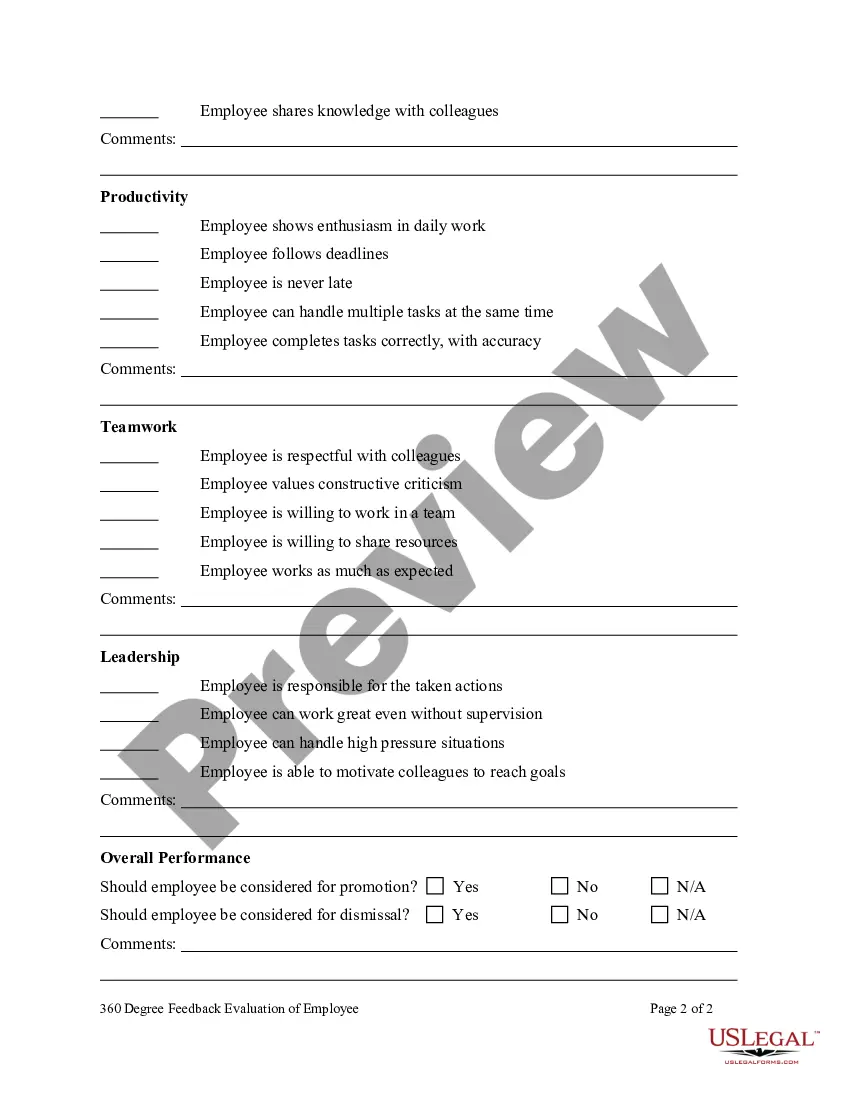
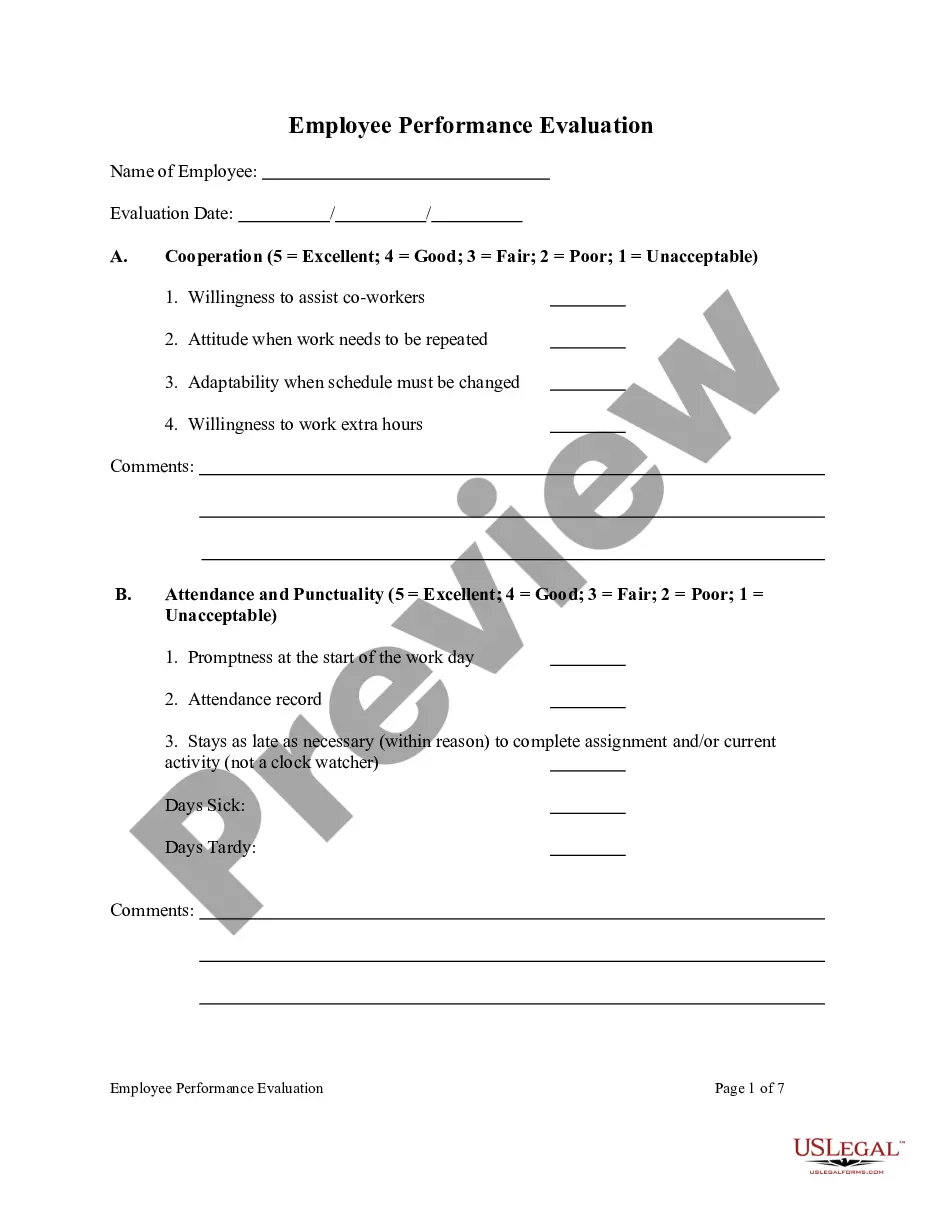
360 Degree Feedback Form For Nurses In Ohio
Description

Get your form ready online
Our built-in tools help you complete, sign, share, and store your documents in one place.
Make edits, fill in missing information, and update formatting in US Legal Forms—just like you would in MS Word.
Download a copy, print it, send it by email, or mail it via USPS—whatever works best for your next step.
Sign and collect signatures with our SignNow integration. Send to multiple recipients, set reminders, and more. Go Premium to unlock E-Sign.
If this form requires notarization, complete it online through a secure video call—no need to meet a notary in person or wait for an appointment.
We protect your documents and personal data by following strict security and privacy standards.
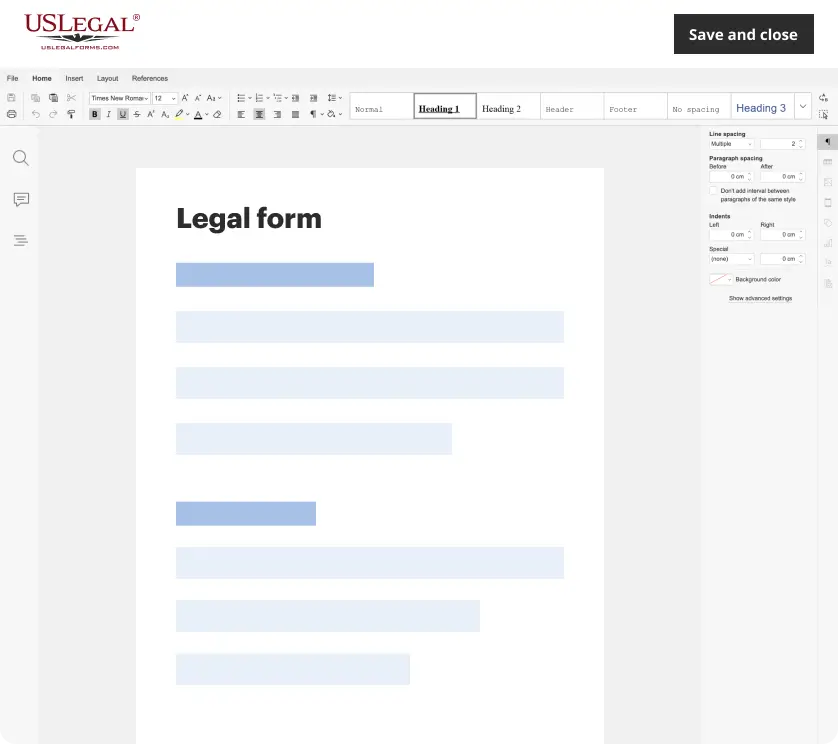
Make edits, fill in missing information, and update formatting in US Legal Forms—just like you would in MS Word.
Download a copy, print it, send it by email, or mail it via USPS—whatever works best for your next step.
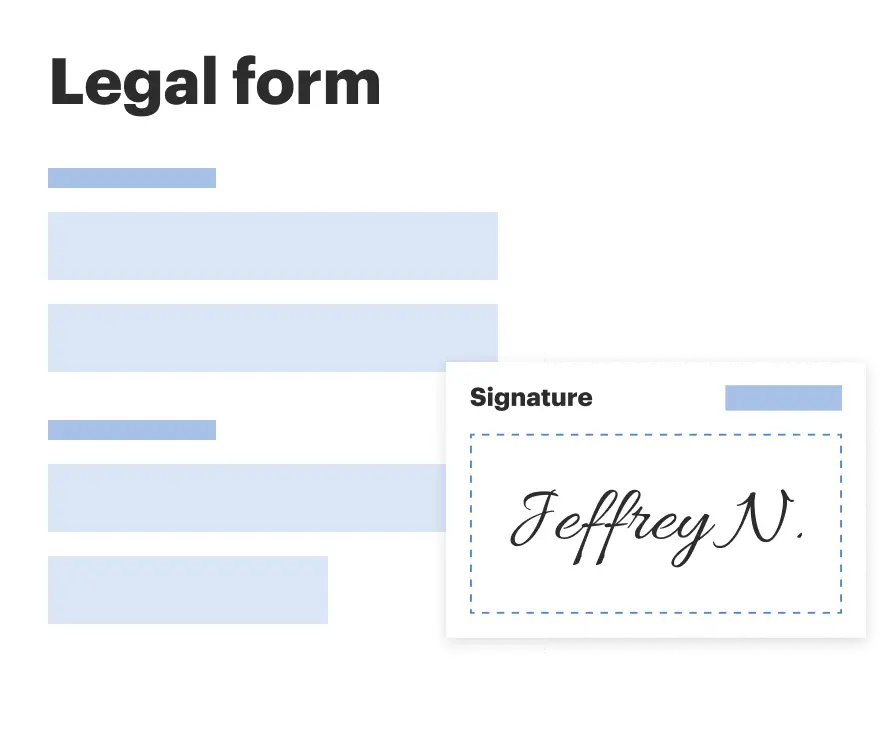
Sign and collect signatures with our SignNow integration. Send to multiple recipients, set reminders, and more. Go Premium to unlock E-Sign.
If this form requires notarization, complete it online through a secure video call—no need to meet a notary in person or wait for an appointment.
We protect your documents and personal data by following strict security and privacy standards.
Looking for another form?





Form popularity
FAQ
How to design an effective 360 degree feedback questionnaire Identify the themes you want to measure. Create specific 360 questions based on your themes. Example 360 degree feedback questionnaire questions. Define your 360 degree feedback questionnaire rating scale. In conclusion.
Tips for Successfully Implementing a 360 Feedback Initiative at Your Organization Clarify the goals for the 360 feedback initiative. Address individual and organization readiness. Design the process. Select or design the tool. Identify and prepare participants. Prepare the organization. Administer the assessment.
The 360-degree angle is a full angle or a complete angle as it forms a circle around a point. It is exactly double the straight angle (180-degree angle). If we talk about a real-life example of a 360-degree angle, then a perfect example is the angle between the two hands of a clock at 12 o'clock.
360 feedback is multi rater feedback. This means it should be given by those colleagues who work directly with the person who's receiving the feedback. This can include supervisors, colleagues, direct reports, customers, and vendors.
360-Degree Feedback is a multi-source feedback system where employees receive anonymous feedback from the people they work with. This includes peers, subordinates, superiors, and sometimes even customers, offering a well-rounded view of their performance.
These close-ended questions are useful for adding to management 360 feedback reviews, to ask relevant questions for this particular role. Does the manager work in a respectful manner to others? Does the manager consider other team members' opinions before making a decision? Does the manager effectively solve problems?
These steps can help you establish a 360 evaluation system. Establish criteria for rating each employee. Choose who will assess each employee. Send surveys. Send the survey to the employee. Schedule the 360 evaluation. Review ratings with employee. Follow up on progress.
360-degree feedback acts as a catalyst for change my prompting individuals to evaluate their current behaviors and make plans for improvement. The survey results provide detailed feedback from supervisors, peers, direct reports, and others who are in a position to evaluate the participant's behavior or performance.
A New York Times article highlighted how 360-degree feedback can sometimes lead to hurtful and unproductive personal comments, such as “stop using your looks and personality to get things done” and “I never really liked you.” The article also notes that employees being considered for promotion might receive biased and ...
7 steps for designing an effective 360 degree feedback review program Set clear goals. Train raters. Focus on natural strengths. Involve managers and leaders. Create buy-in and trust in the 360 development program. Know what to ask and how to ask it. Personalise the 360 degree feedback program to your organisation.
