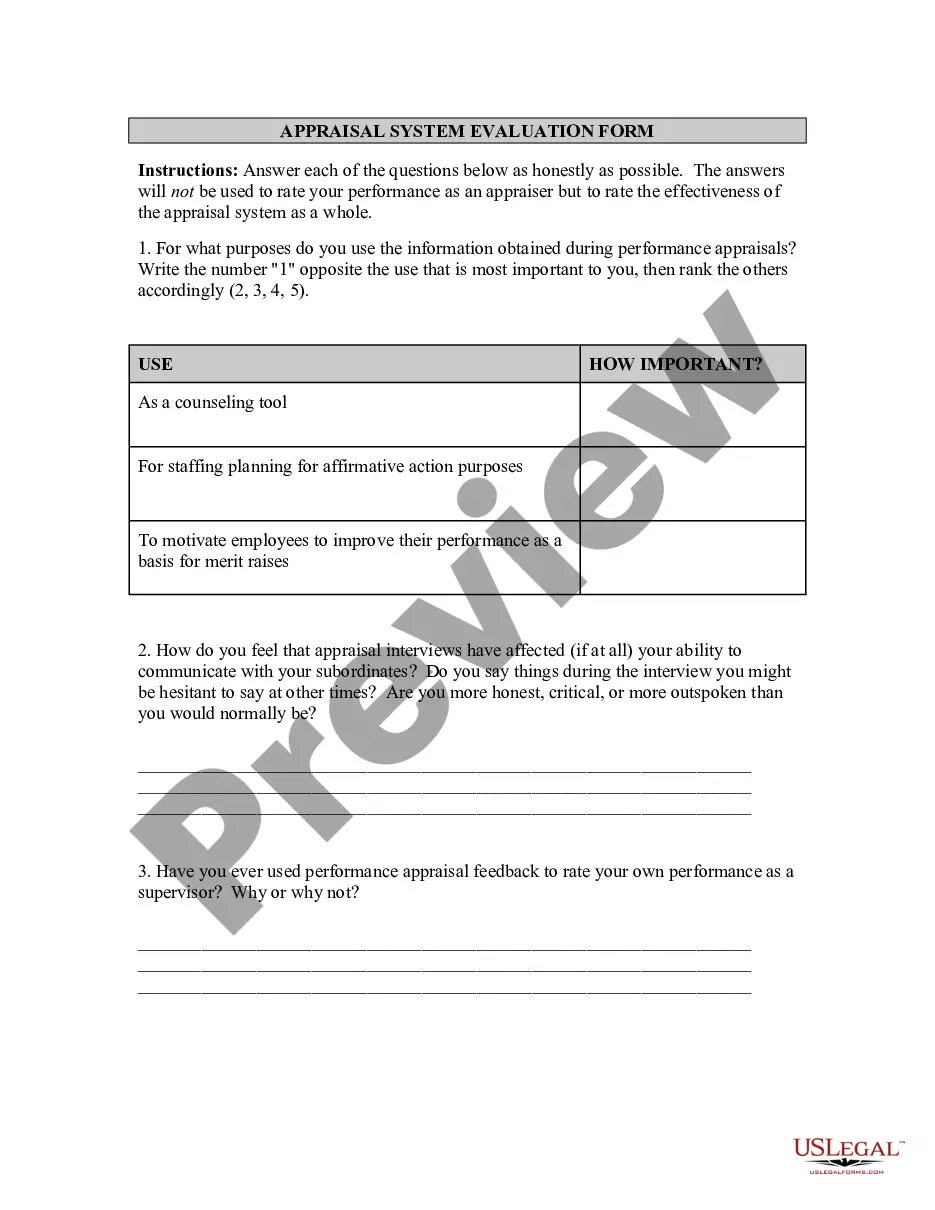
System Evaluation Form For .net 6
Description


Get your form ready online
Our built-in tools help you complete, sign, share, and store your documents in one place.
Make edits, fill in missing information, and update formatting in US Legal Forms—just like you would in MS Word.
Download a copy, print it, send it by email, or mail it via USPS—whatever works best for your next step.
Sign and collect signatures with our SignNow integration. Send to multiple recipients, set reminders, and more. Go Premium to unlock E-Sign.
If this form requires notarization, complete it online through a secure video call—no need to meet a notary in person or wait for an appointment.
We protect your documents and personal data by following strict security and privacy standards.

Make edits, fill in missing information, and update formatting in US Legal Forms—just like you would in MS Word.

Download a copy, print it, send it by email, or mail it via USPS—whatever works best for your next step.

Sign and collect signatures with our SignNow integration. Send to multiple recipients, set reminders, and more. Go Premium to unlock E-Sign.

If this form requires notarization, complete it online through a secure video call—no need to meet a notary in person or wait for an appointment.

We protect your documents and personal data by following strict security and privacy standards.
Looking for another form?








How to fill out Appraisal System Evaluation Form?
Legal management can be exasperating, even for the most seasoned experts.
When you are looking for a System Evaluation Form For .net 6 and lack the time to dedicate to finding the correct and updated version, the tasks can be challenging.
Utilize advanced tools to fill out and manage your System Evaluation Form For .net 6.
Access a valuable resource library of articles, guides, handbooks, and materials pertinent to your situation and requirements.
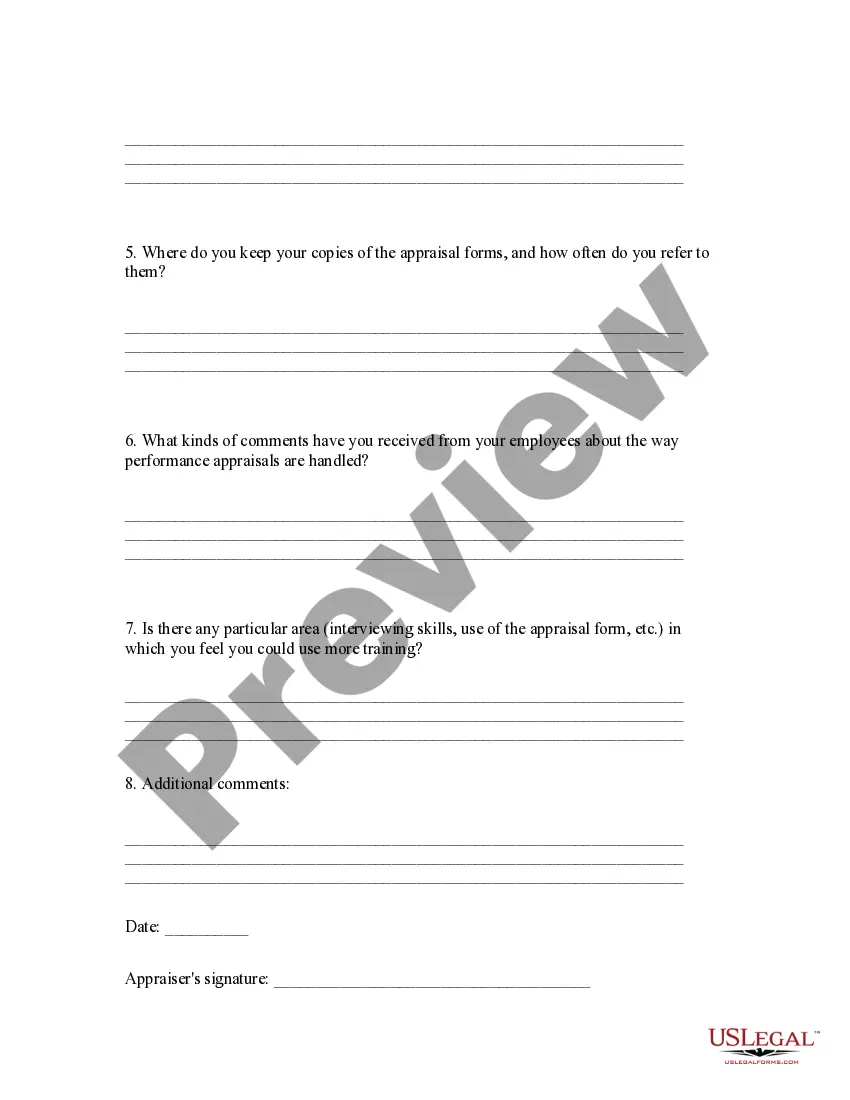
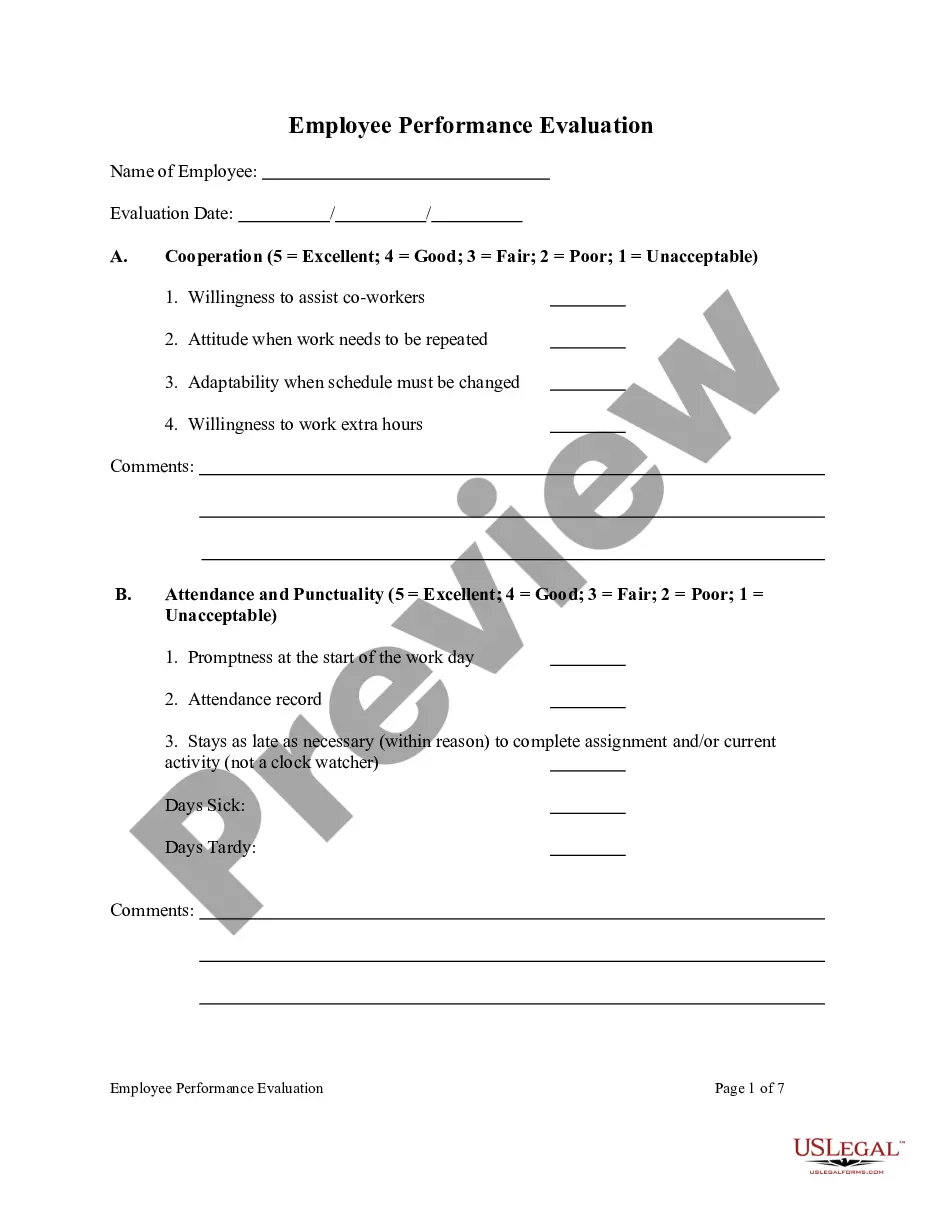
Confirm this is the correct document by previewing it and reviewing its details.
- Save time and effort finding the documents you need, and take advantage of US Legal Forms’ advanced search and Preview feature to discover System Evaluation Form For .net 6 and download it.
- If you have a monthly subscription, Log In to your US Legal Forms account, search for the form, and download it.
- Check your My documents tab to see the documents you previously saved and manage your folders as you wish.
- If this is your first experience with US Legal Forms, create an account and gain unlimited access to all the platform's benefits.
- Here are the steps to follow after obtaining the form you need.
- A strong web form library can be transformative for anyone looking to navigate these scenarios efficiently.
- US Legal Forms is a leading provider in online legal forms, with over 85,000 state-specific legal templates available to you at any time.
- With US Legal Forms, you gain access to state- or county-specific legal and business documents. US Legal Forms fulfills any demands you might have, from personal to business paperwork, all in one spot.
Form popularity
FAQ
The performance differences between 6 and 8 are significant, with 8 expected to introduce further optimizations and advanced features. While 6 provides a solid performance baseline, 8 aims to enhance speed, efficiency, and overall user experience. To evaluate how these changes might affect your applications, using the System evaluation form for 6 can offer valuable insights.
While both 6 and 7 offer robust features, 7 focuses on even more performance improvements and additional functionalities. Developers will find that 7 builds on the solid foundation of 6, providing even better tools for modern application development. To understand how your projects can benefit from this transition, refer to the System evaluation form for 6.
Creating a project is straightforward. First, you need to install the SDK and choose your preferred development environment, such as Visual Studio or Visual Studio Code. After that, you can create a new project using the command line or GUI tools, and the System evaluation form for 6 can guide you through best practices and initial setups.
The transition from 5 to 6 brings a host of new features and updates, including long-term support and better cloud integration. Additionally, 6 introduces new APIs and enhanced capabilities for developers. To explore how these differences impact your development projects, the System evaluation form for 6 can be a valuable resource.
With 6, you can expect significant performance enhancements, such as faster startup times and more efficient memory usage. These optimizations allow applications to run smoother and provide a better user experience. To assess how these improvements can benefit you, consider utilizing the System evaluation form for 6.
6 offers multiple advantages, including improved performance and enhanced productivity features. Developers enjoy a unified platform that supports various application types, making it easier to create and manage projects. The System evaluation form for 6 helps streamline this process, ensuring you leverage its full potential effectively.
Here is a step-by-step process on how to migrate from .NET Framework to .NET Core manually: Analyze Project Dependencies. ... Migrate from ASP.NET MVC. ... Migrate from WebForms. ... Move Your Project File. ... Test Run your Application on .
How to upgrade your ASP.NET Core web project to . NET6 the new .NET SDK to your development computer. . the new . NET Runtime to your production server. . ... Update the Dockerfile in each website.
Create Console App in . NET 6 Select Console App and click Next. Give the project name and location of the project. Select framework: . NET 6.0 (Long-term support). This creates the console app which looks like below. Default Program. cs file is listed below.
IOptions is singleton and hence can be used to read configuration data within any service lifetime. Being singleton, it cannot read changes to the configuration data after the app has started. Run the app and hit the controller action. You should be able to see the values being fetched from the configuration file.