Special Meeting Sample For Nonprofit In Bexar
Description



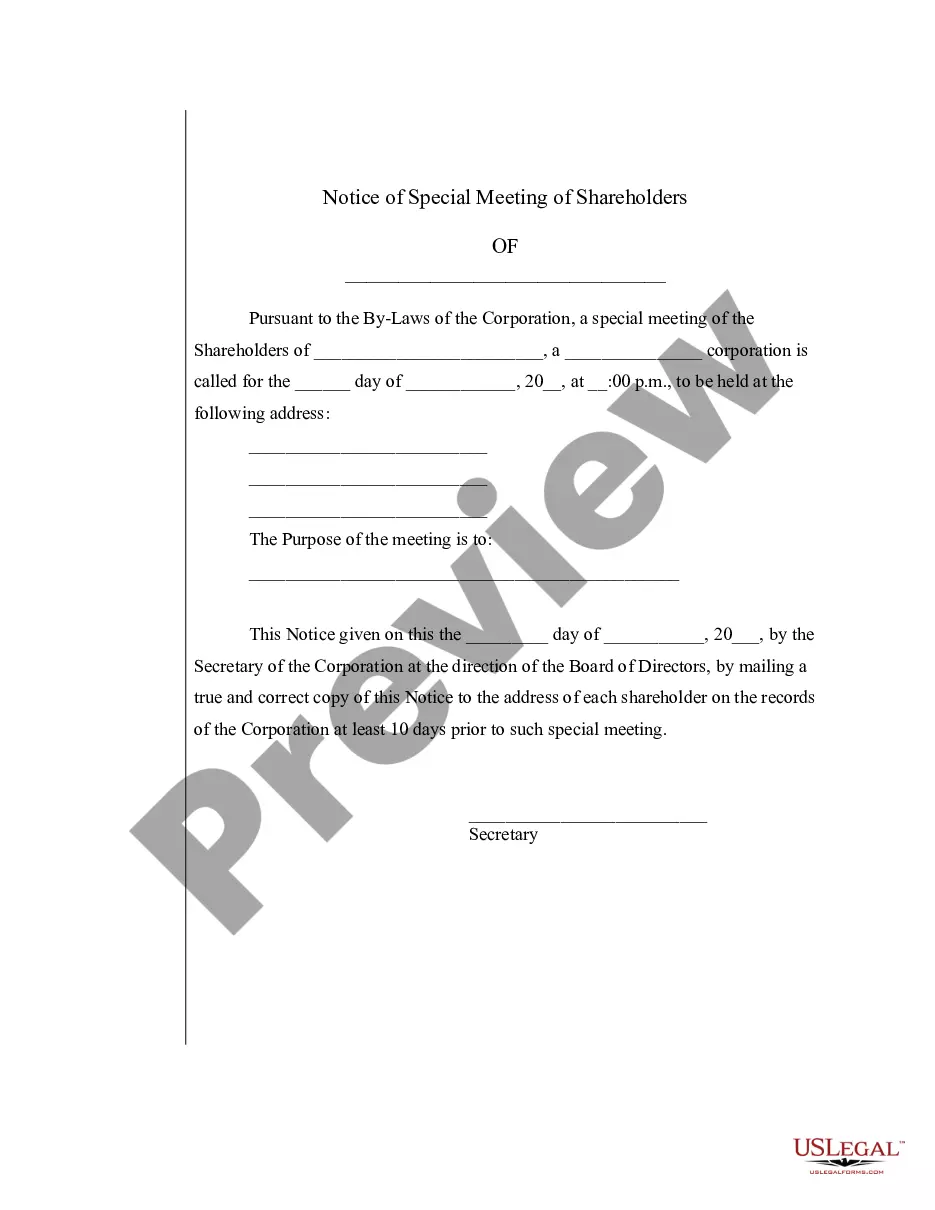
Get your form ready online
Our built-in tools help you complete, sign, share, and store your documents in one place.
Make edits, fill in missing information, and update formatting in US Legal Forms—just like you would in MS Word.
Download a copy, print it, send it by email, or mail it via USPS—whatever works best for your next step.
Sign and collect signatures with our SignNow integration. Send to multiple recipients, set reminders, and more. Go Premium to unlock E-Sign.
If this form requires notarization, complete it online through a secure video call—no need to meet a notary in person or wait for an appointment.
We protect your documents and personal data by following strict security and privacy standards.

Make edits, fill in missing information, and update formatting in US Legal Forms—just like you would in MS Word.

Download a copy, print it, send it by email, or mail it via USPS—whatever works best for your next step.

Sign and collect signatures with our SignNow integration. Send to multiple recipients, set reminders, and more. Go Premium to unlock E-Sign.

If this form requires notarization, complete it online through a secure video call—no need to meet a notary in person or wait for an appointment.

We protect your documents and personal data by following strict security and privacy standards.
Looking for another form?


Form popularity
FAQ
How to Run a Successful Nonprofit Board Meeting in 8 Steps Send Out the Agenda Early. Start and End on Time. Implement Robert's Rules of Order. Ensure You Have Someone Responsible for Detailed Meeting Minutes. Focus on Strategy. Give Everyone a Chance to Speak. Ensure Everyone Knows What They're Responsible For.
President: The president of your board of directors is the head of your nonprofit board. They preside at board meetings and create meeting agendas. This individual also supervises all of the business affairs of the board and acts as the primary contact for the group.
The chair calls the meeting to order with a simple statement. They should say something along the lines of: “Good morning/evening, everyone! It's state the date and time, and I'd like to call the meeting of organization name to order.”
Tips on How to Run a Nonprofit Board Meeting Set clear objectives. Create a focused meeting agenda. Prepare meeting packets. Start and end on time. Set out guidelines or procedures. Encourage input from everyone. Take detailed meeting minutes. Conduct regular post-meeting surveys.
In California, for instance, the Corporations Code includes certain mandatory rules for how nonprofit corporations conduct meetings, but there is nothing at all about using or adopting Robert's Rules of Order or any other specific manual.
Commissioners Court is responsible for budgetary decisions, tax and revenue decisions, and all personnel decisions except for certain positions which are either elected or appointed by the judiciary or other committees.
The major duties of the commissioner's court involve overseeing the budgetary and policy making functions of county government. In addition, in many counties, commissioners have extensive responsibilities related to the building and maintenance of county roads.
Founded over 300 years ago, Bexar County is steeped in rich history and tradition with historical locations such as the Bexar County Courthouse; the Alamo and the other four Missions of San Antonio, a UNESCO-designated World Heritage Site; Casa Navarro; and San Pedro Creek Cultural Park, among others.
Notices must be posted and accessible to the public for at least 72 hours prior to the meeting. The Act also requires a city, county, school district, or sales tax economic development corporations publish a notice of its meetings on its Internet website.

