Sample Letter for Update to Estate Closure
Understanding this form
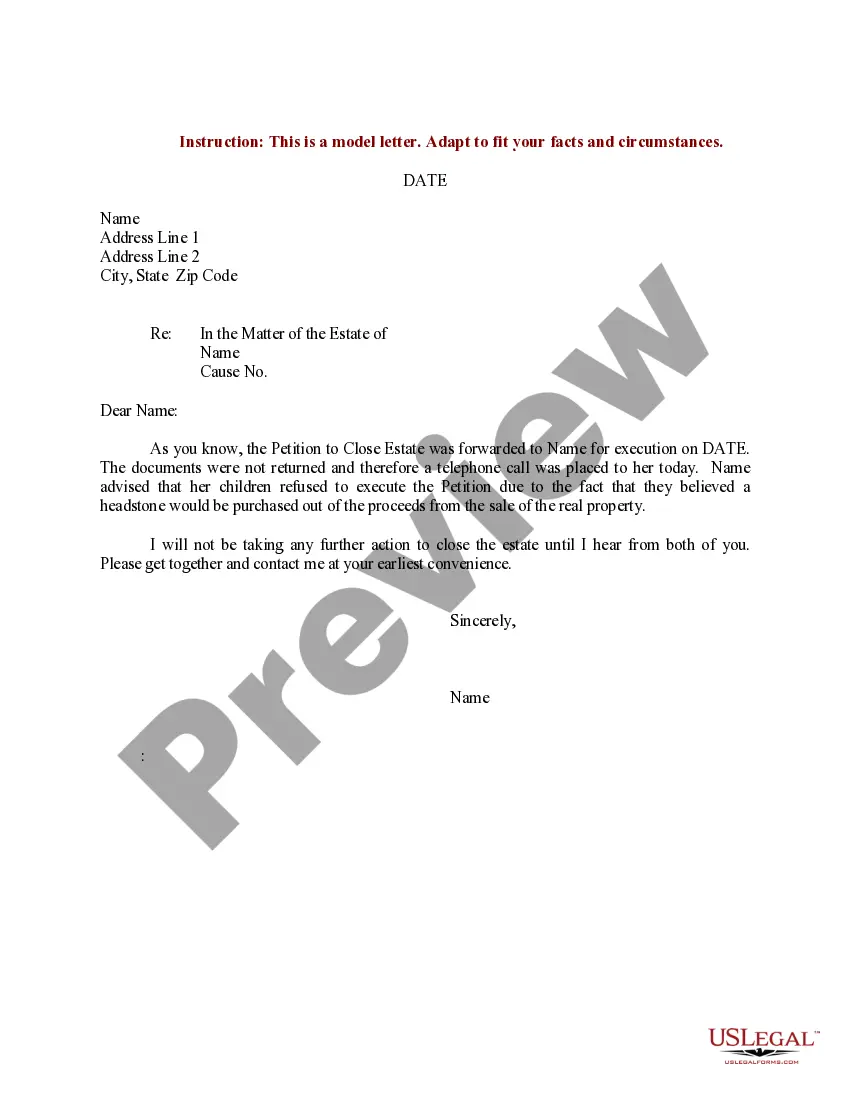
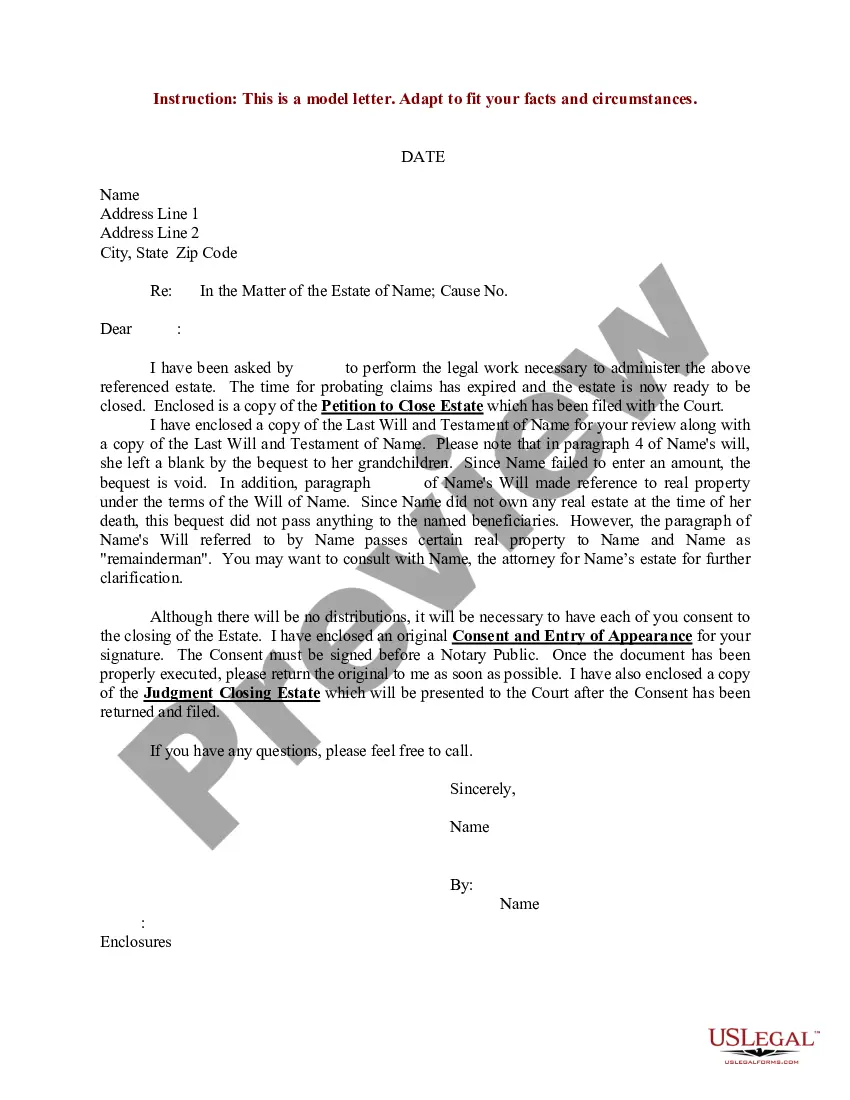
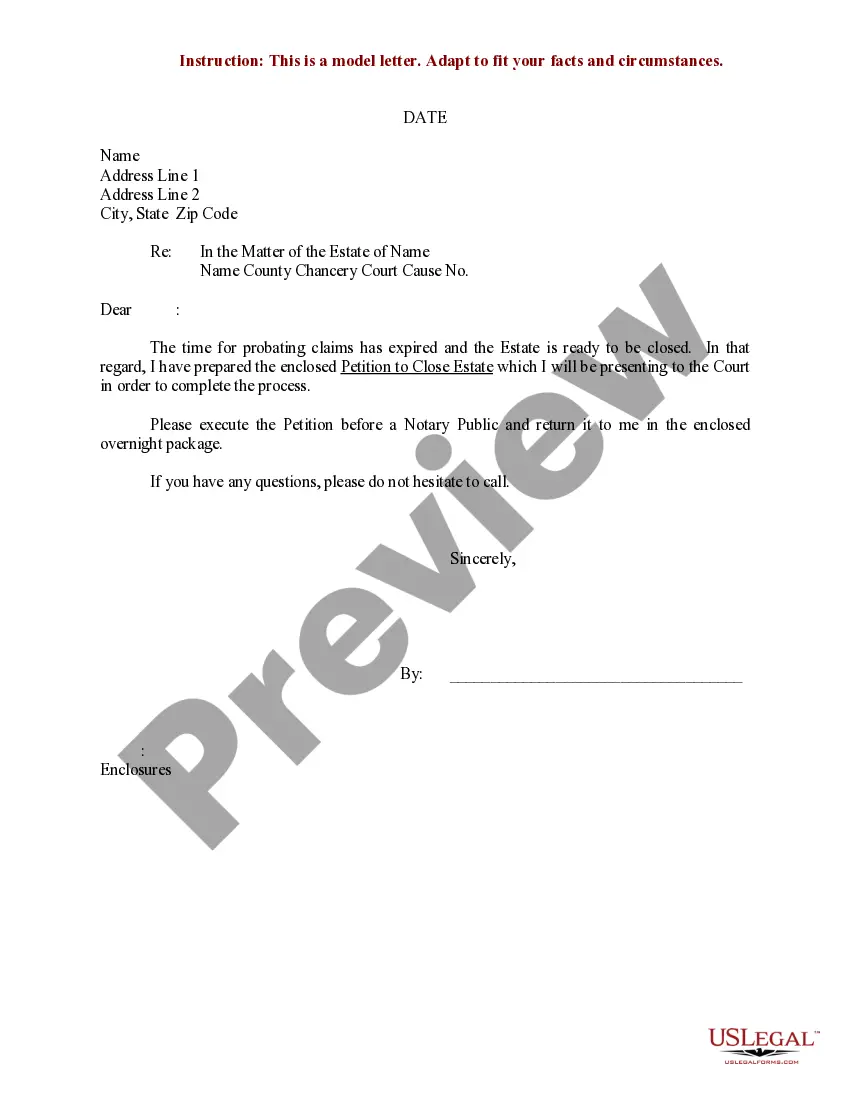
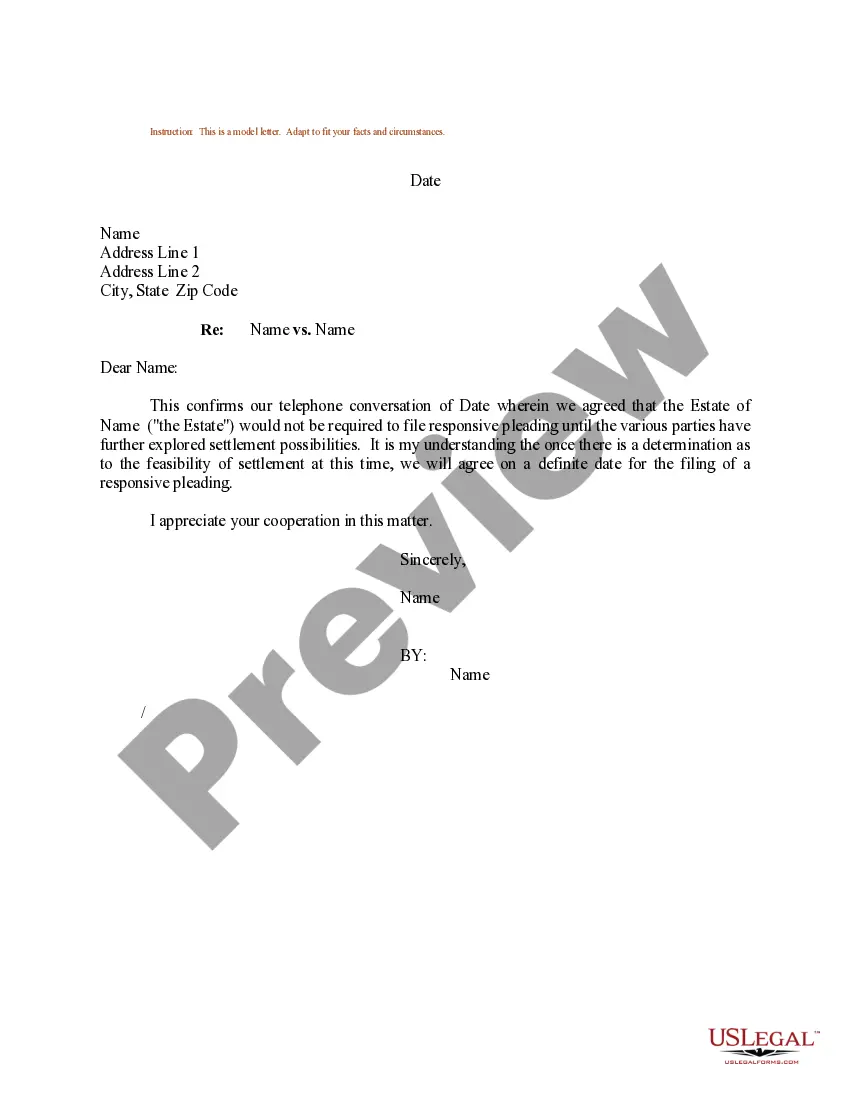
This Sample Letter for Update to Estate Closure is a template designed to communicate updates regarding the closure of an estate. It serves the purpose of informing interested parties that no further actions will be taken until responses are received from them. This form provides a clear and professional way to manage communications during the estate closure process, distinguishing itself from other forms that may deal with different aspects of estate management, such as wills or trusts.
Key parts of this document
- Date of the letter
- Names and addresses of the recipients
- Subject line regarding the estate closure
- Statement indicating that no further action will be taken until contact is made
- Space for the sender's signature
Common use cases
This form should be used when the executor or administrator of an estate needs to notify beneficiaries or other appointed individuals that the estate closure process is on hold until further communication occurs. It is useful in situations where parties have yet to reach an agreement, require clarification, or need additional time to finalize their decisions regarding the estate.
Intended users of this form
- Executors or administrators managing the estate
- Beneficiaries awaiting updates on estate closure
- Attorneys representing parties involved in the estate
How to complete this form
- Enter the date at the top of the letter.
- Fill in the names and addresses of the recipients.
- Include the subject line that specifies the estate's name.
- Clearly state the message about pausing the estate closure until further notice.
- Sign the letter with your name to validate the communication.
Is notarization required?
In most cases, this form does not require notarization. However, some jurisdictions or signing circumstances might. US Legal Forms offers online notarization powered by Notarize, accessible 24/7 for a quick, remote process.
Get your form ready online
Our built-in tools help you complete, sign, share, and store your documents in one place.
Make edits, fill in missing information, and update formatting in US Legal Forms—just like you would in MS Word.
Download a copy, print it, send it by email, or mail it via USPS—whatever works best for your next step.
Sign and collect signatures with our SignNow integration. Send to multiple recipients, set reminders, and more. Go Premium to unlock E-Sign.
If this form requires notarization, complete it online through a secure video call—no need to meet a notary in person or wait for an appointment.
We protect your documents and personal data by following strict security and privacy standards.

Make edits, fill in missing information, and update formatting in US Legal Forms—just like you would in MS Word.

Download a copy, print it, send it by email, or mail it via USPS—whatever works best for your next step.

Sign and collect signatures with our SignNow integration. Send to multiple recipients, set reminders, and more. Go Premium to unlock E-Sign.

If this form requires notarization, complete it online through a secure video call—no need to meet a notary in person or wait for an appointment.

We protect your documents and personal data by following strict security and privacy standards.
Avoid these common issues
- Failing to provide clear contact information for follow-up.
- Neglecting to include the estate's name in the subject line.
- Not updating the letter with the current date.
Why complete this form online
- Convenient access to a professionally drafted template.
- Editable format allows for easy customization to fit specific needs.
- Reliable way to ensure legal accuracy and completeness.
What to keep in mind
- This Sample Letter for Update to Estate Closure is tailored for estate administrators and beneficiaries.
- Clear communication is essential for effective estate management.
- Adapting the form to fit individual circumstances is crucial for legal adequacy.
- No notarization is generally required for this form.
Looking for another form?
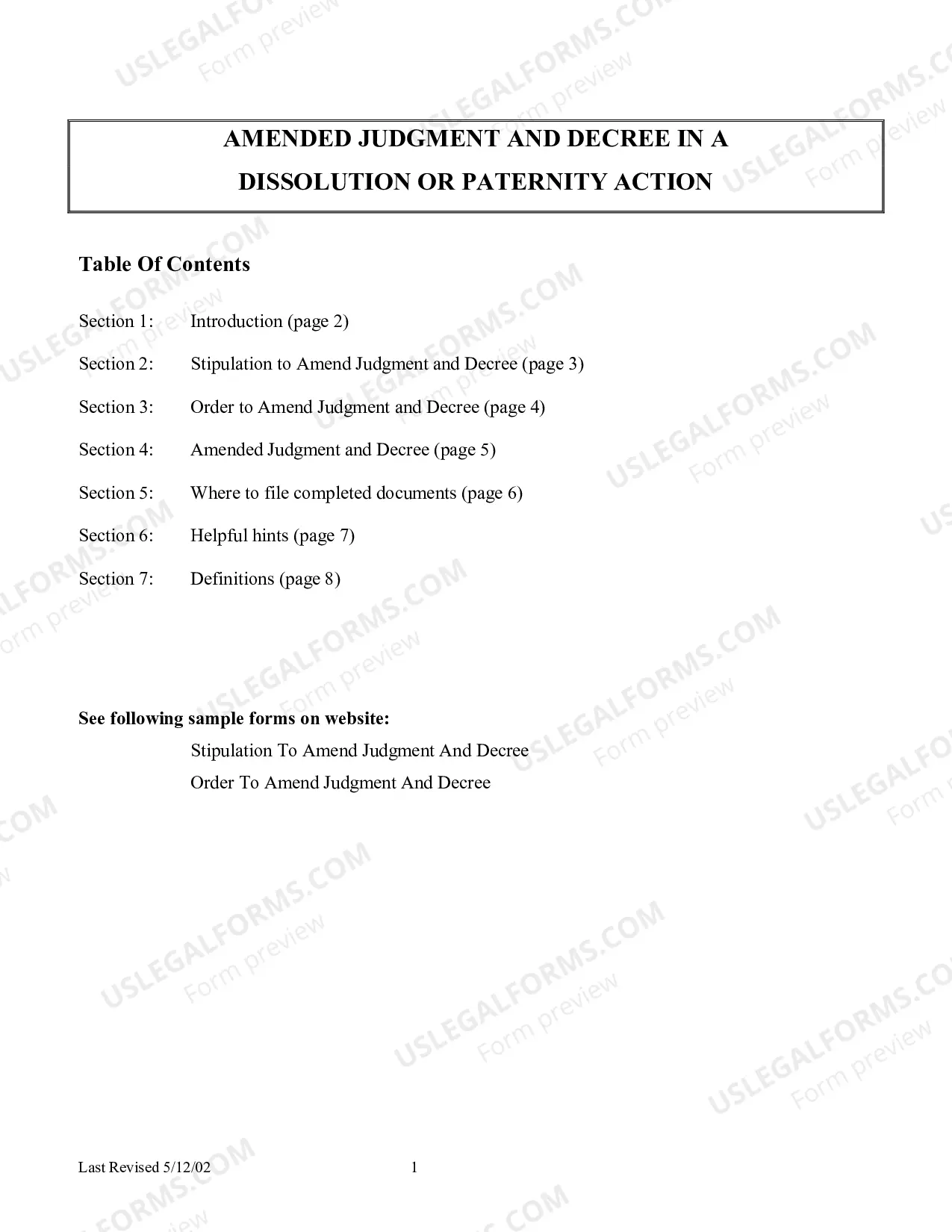
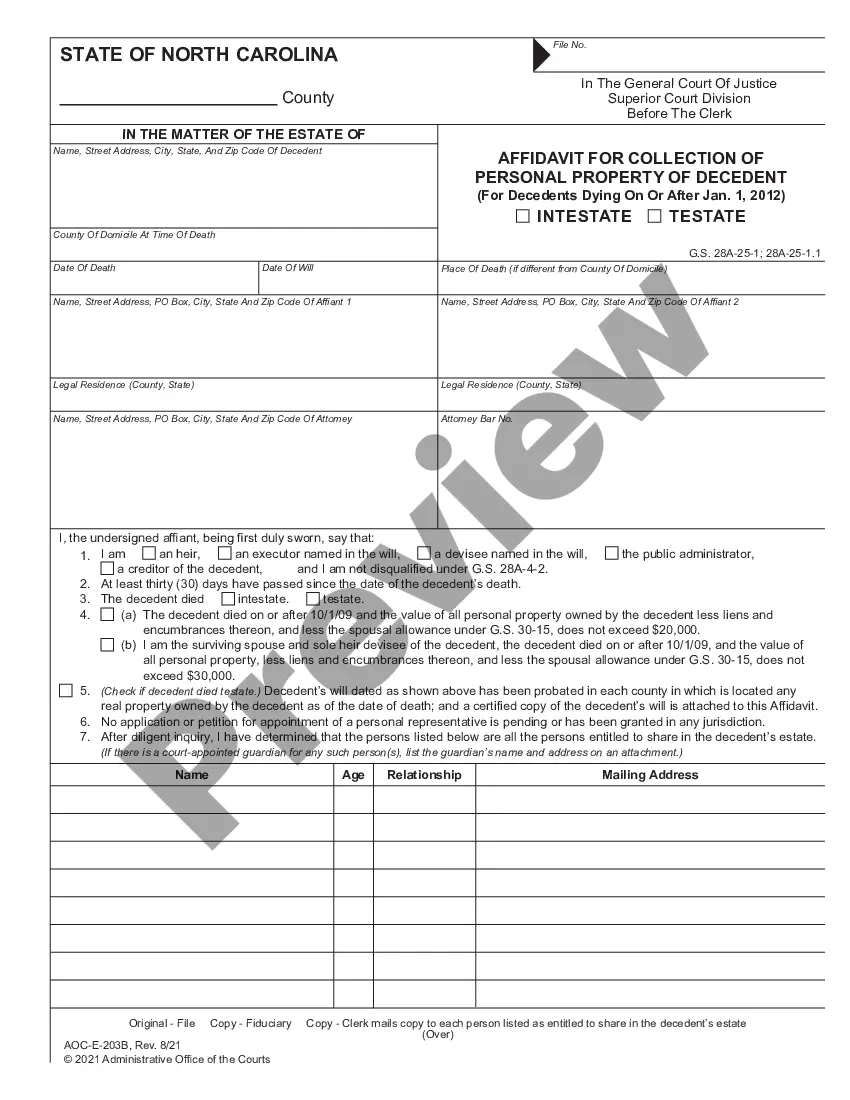
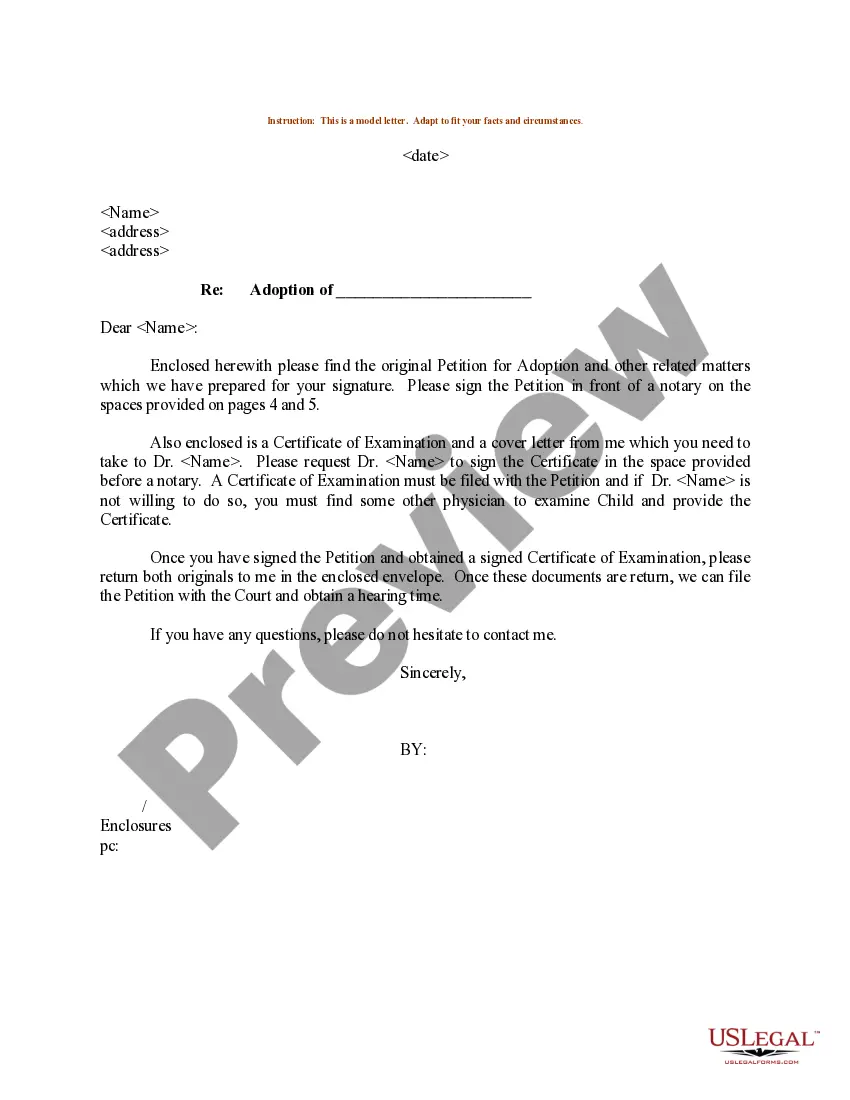
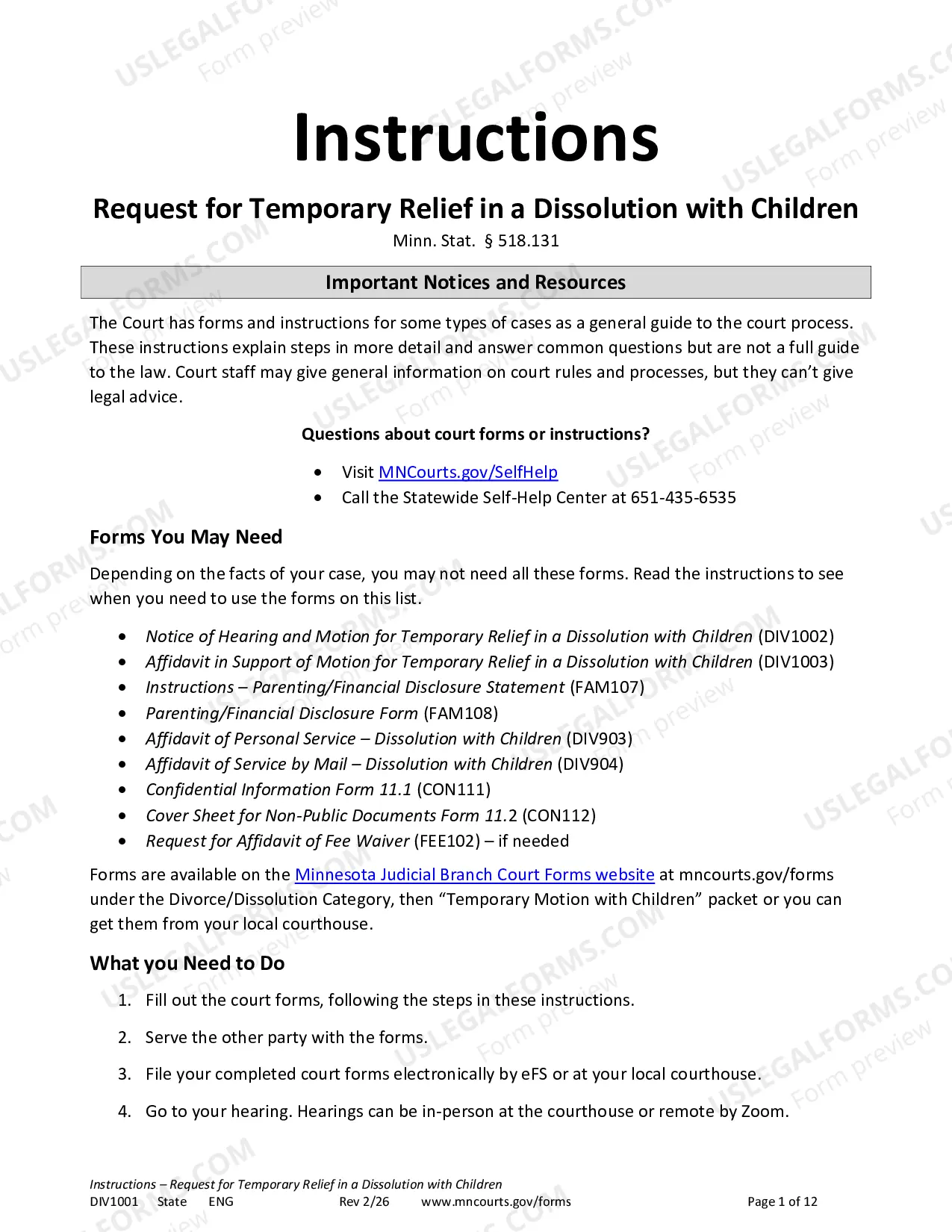
Form popularity
FAQ
Letters of Administration are granted by a Surrogate Court or probate registry to appoint appropriate people to deal with a deceased person's estate where property will pass under Intestacy Rules or where there are no executors living (and willing and able to act) having been validly appointed under the deceased's will
If there is no will, then a relative or legal representative must ask the court for permission to close the deceased's bank accounts. The court will issue a document called "Letters of Administration." Take this to the bank, along with some photo identification to prove who you are, and ask to close the account.
The Executor's Final Act, Closing an Estate The personal representative, now without any estate funds to pay his lawyer, must respond. Even if the charges are baseless, the executor is stuck paying the legal bill. Instead, before making any distribution, the administrator should insist on receiving a release.
Find the will, if any. File the will with the local probate court. Notify agencies and business of the death. Inventory assets and get appraisals. Decide whether probate is necessary. Coordinate with the successor trustee. Communicate with beneficiaries. Take good care of estate assets.
Generally, an executor has 12 months from the date of death to distribute the estate. This is known as 'the executor's year'. However, for various reasons the executor may have been delayed and has not distributed the estate within this time frame.
A grant of probate is issued to the executor/s named in the will, whereas a grant of letters of administration is issued to the next of kin of someone who died without a will.This document will allow whoever is dealing with the estate to close bank accounts, cash in investments and sell or transfer property.
The simple answer is that once you have a grant of probate or letter of administration in hand, it usually takes between six and twelve months to transfer all the funds, assets and property in an estate.The Department for Work and Pensions needs to investigate the estate. The estate is bankrupt.
Notify all creditors. File tax returns and pay final taxes. File the final accounting with the probate court. Distribute remaining assets to beneficiaries. File a closing statement with the court.
A simple estate with just a few, easy-to-find assets may be all wrapped up in six to eight months. A more complicated affair may take three years or more to fully settle.