Letter With Cash In Texas
Description
Get your form ready online
Our built-in tools help you complete, sign, share, and store your documents in one place.
Make edits, fill in missing information, and update formatting in US Legal Forms—just like you would in MS Word.
Download a copy, print it, send it by email, or mail it via USPS—whatever works best for your next step.
Sign and collect signatures with our SignNow integration. Send to multiple recipients, set reminders, and more. Go Premium to unlock E-Sign.
If this form requires notarization, complete it online through a secure video call—no need to meet a notary in person or wait for an appointment.
We protect your documents and personal data by following strict security and privacy standards.

Make edits, fill in missing information, and update formatting in US Legal Forms—just like you would in MS Word.

Download a copy, print it, send it by email, or mail it via USPS—whatever works best for your next step.

Sign and collect signatures with our SignNow integration. Send to multiple recipients, set reminders, and more. Go Premium to unlock E-Sign.

If this form requires notarization, complete it online through a secure video call—no need to meet a notary in person or wait for an appointment.

We protect your documents and personal data by following strict security and privacy standards.
Looking for another form?







Form popularity
FAQ
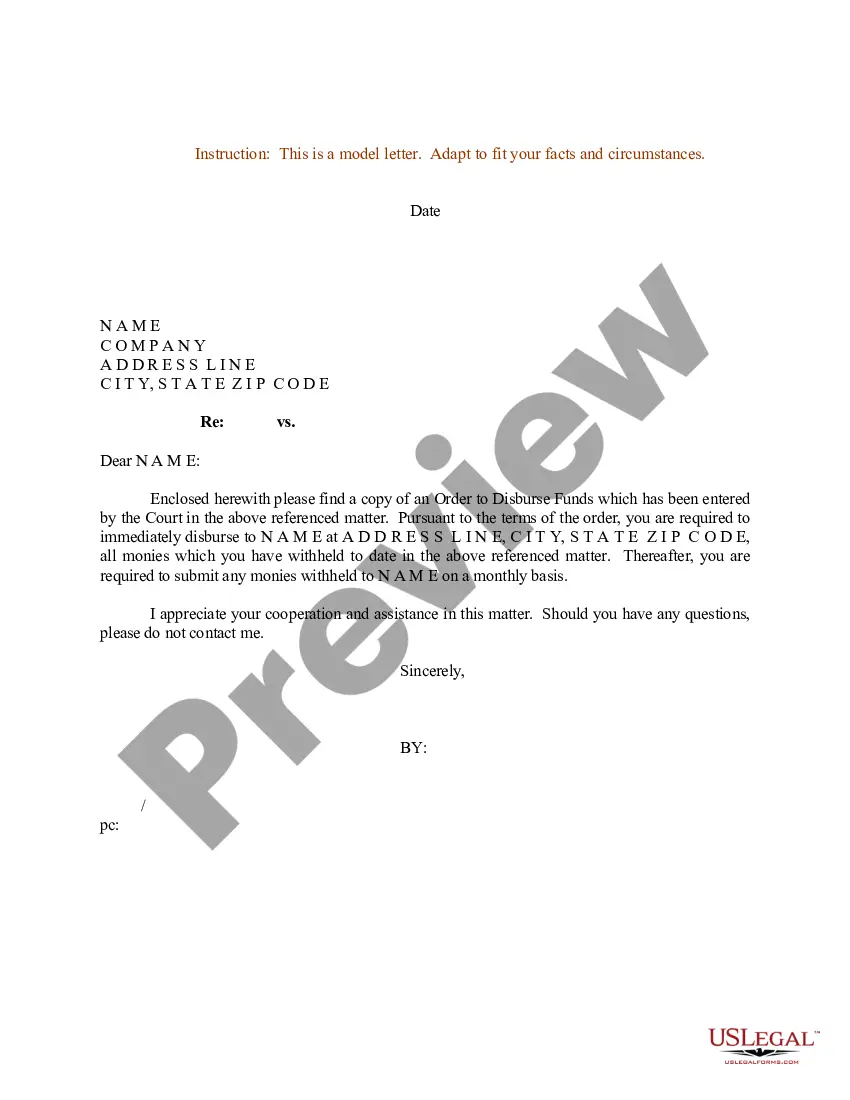
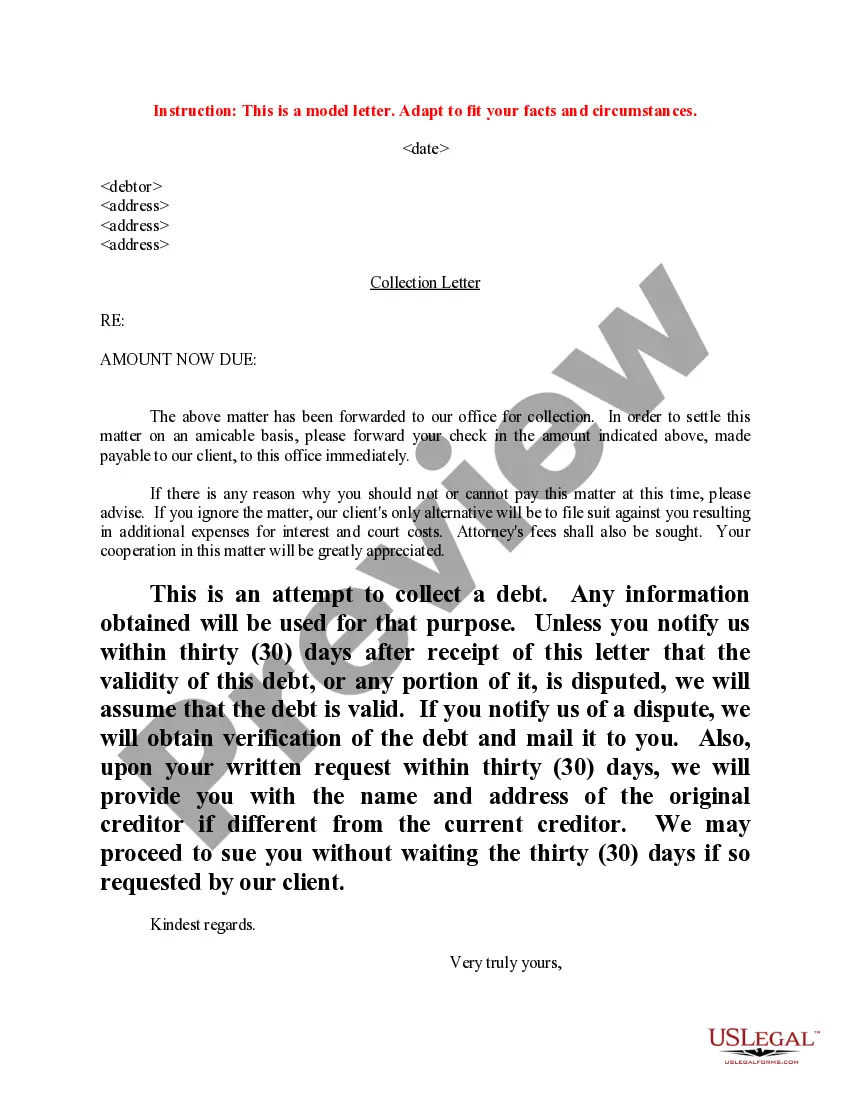
Dear Name, Further to my previous correspondence, I am contacting you regarding late payment for invoice invoice number. The invoice was due on due date, and payment is now overdue by number of days overdue. Be advised that late payment interest may be applied if we do not receive payment within 30 days.
Don't forget legal requirements. Maintain a polite, neutral tone. Outline the facts clearly. Explain the costs or "damages" you've incurred. Make your total demand explicit. Ask for more than you want to allow for negotiation. Specify a response deadline. Explain what you will do if the demand isn't met.
In short, you may have received a letter from the Texas Department of Public Safety for a variety of reasons, such as an issue with your driver's license or vehicle registration, a traffic violation, or the need for additional information or documentation.
The correct statement regarding private letter rulings is they cover facts applicable to a particular taxpayer. Option A is correct. This means that the ruling is based on the specific facts and circumstances presented by the taxpayer and cannot be relied upon by other taxpayers as precedent.
A private letter ruling is the Comptroller's written determination of how relevant tax laws, rules and policies apply to a specific set of facts.
The Comptroller will consider issuing a private letter ruling when taxability guidance in statutes, rules or other controlling authorities does not exist or is not clear.
The taxpayers have 15 days after delinquency before a levy is enforced and 20 days to resolve the delinquency before seized assets are liquidated. Taxpayer assets, including bank accounts, can be frozen without notifying the taxpayer.
Abandoned property belongs to whomever finds it. Lost property belongs to whomever finds it, subject only to a claim by the true owner. Mislaid property belongs to the owner of the property on which it is found, subject only to a claim by the true owner.
(b)(1) The three-year period leading to a presumption of abandonment of stock or another intangible ownership interest in a business association, the existence of which is evidenced by records available to the association, commences on the first date that either a sum payable as a result of the ownership interest is ...
Unclaimed Personal Property Once the personal property is considered abandoned under the law, it must be reported to the Texas Comptroller. Texans can search for unclaimed property in their name through the Texas Comptroller's website and submit a claim.

