Clauses resulting in Additional Space Leased
What is this form?
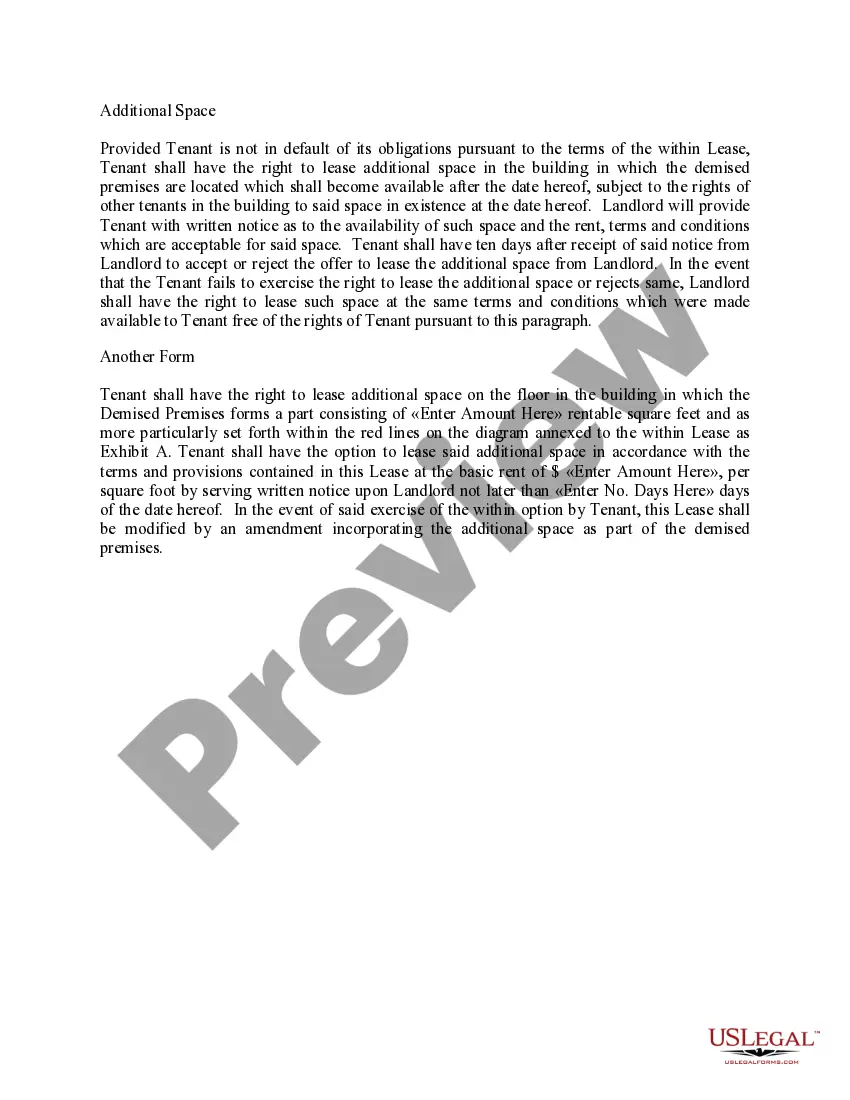
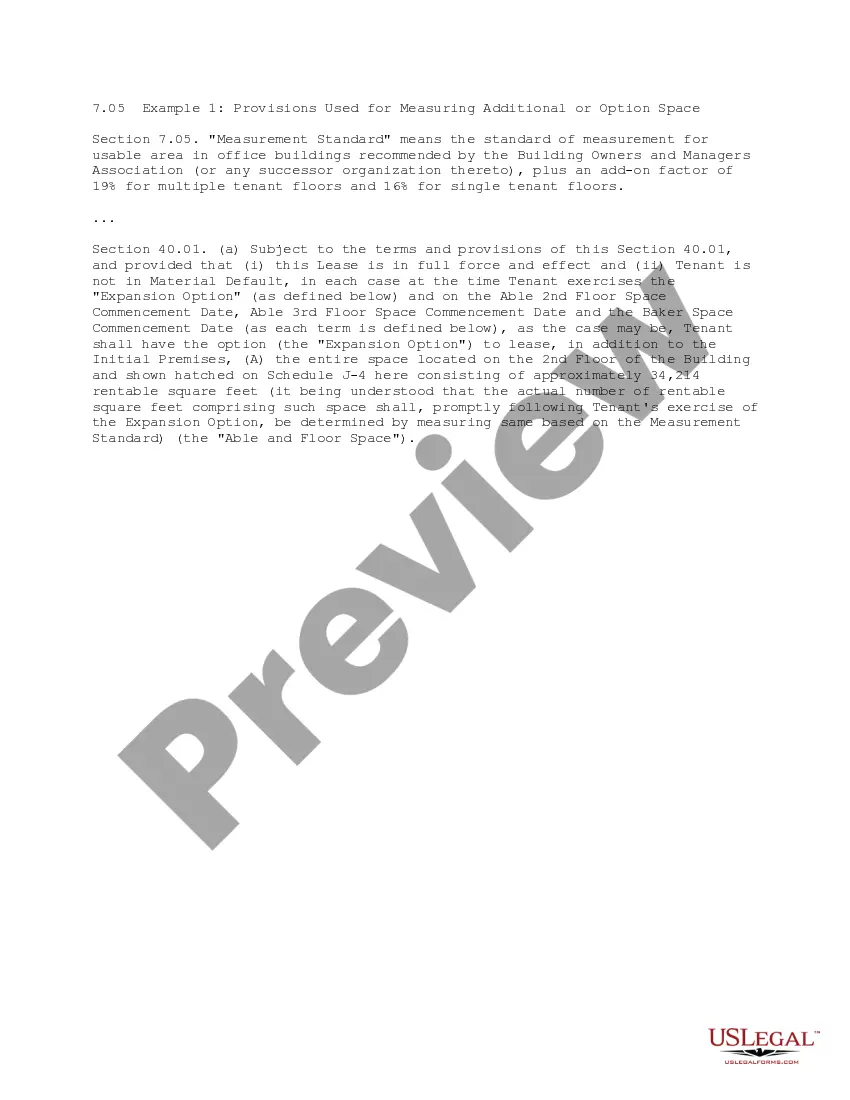
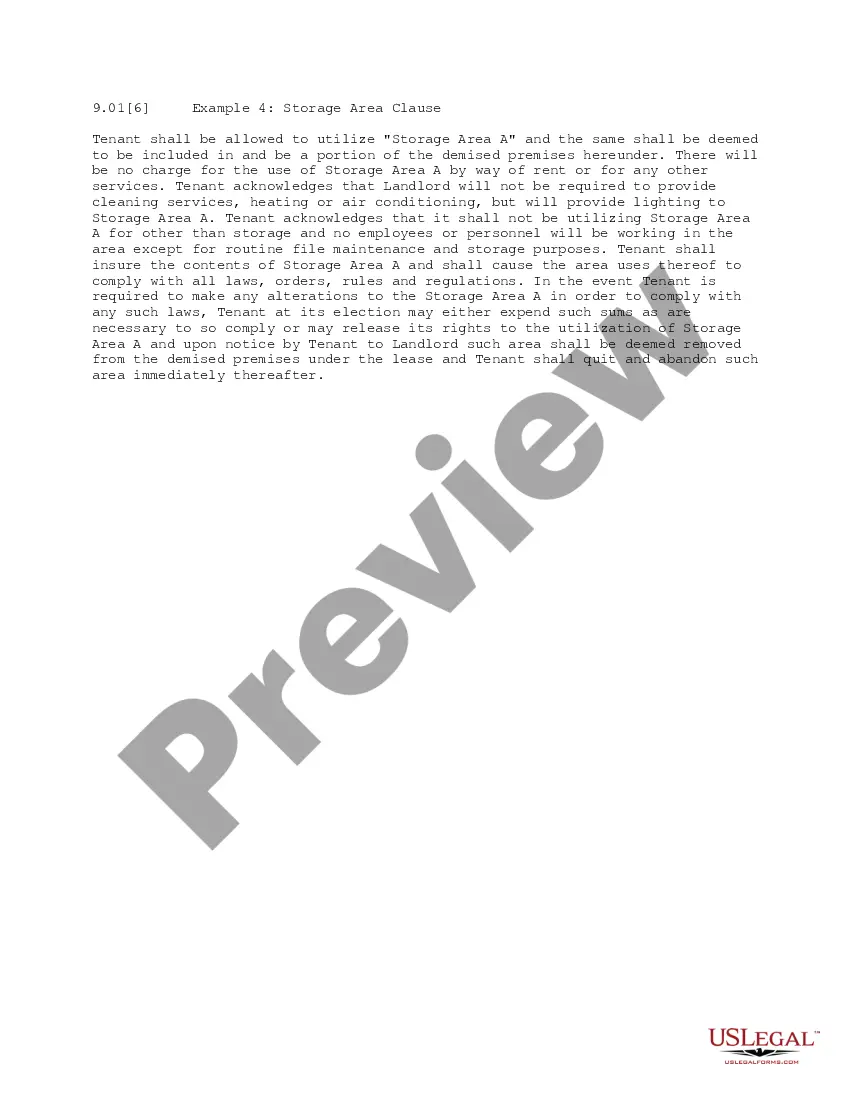
The Clauses Resulting in Additional Space Leased form is a legal document that outlines the conditions under which a tenant may lease additional space within a building. This form provides specific clauses designed to grant tenants the right to expand their leased premises, distinguishing it from standard lease agreements by focusing on the tenant's additional space leasing options.
Key components of this form
- Tenant's right to lease additional space if not in default.
- Notification process from the landlord regarding availability of space.
- Timeframe for the tenant to accept or reject the offer for additional space.
- Details on the rent and terms for the additional space.
- Provision for modifying the lease to include the additional space.
When to use this document
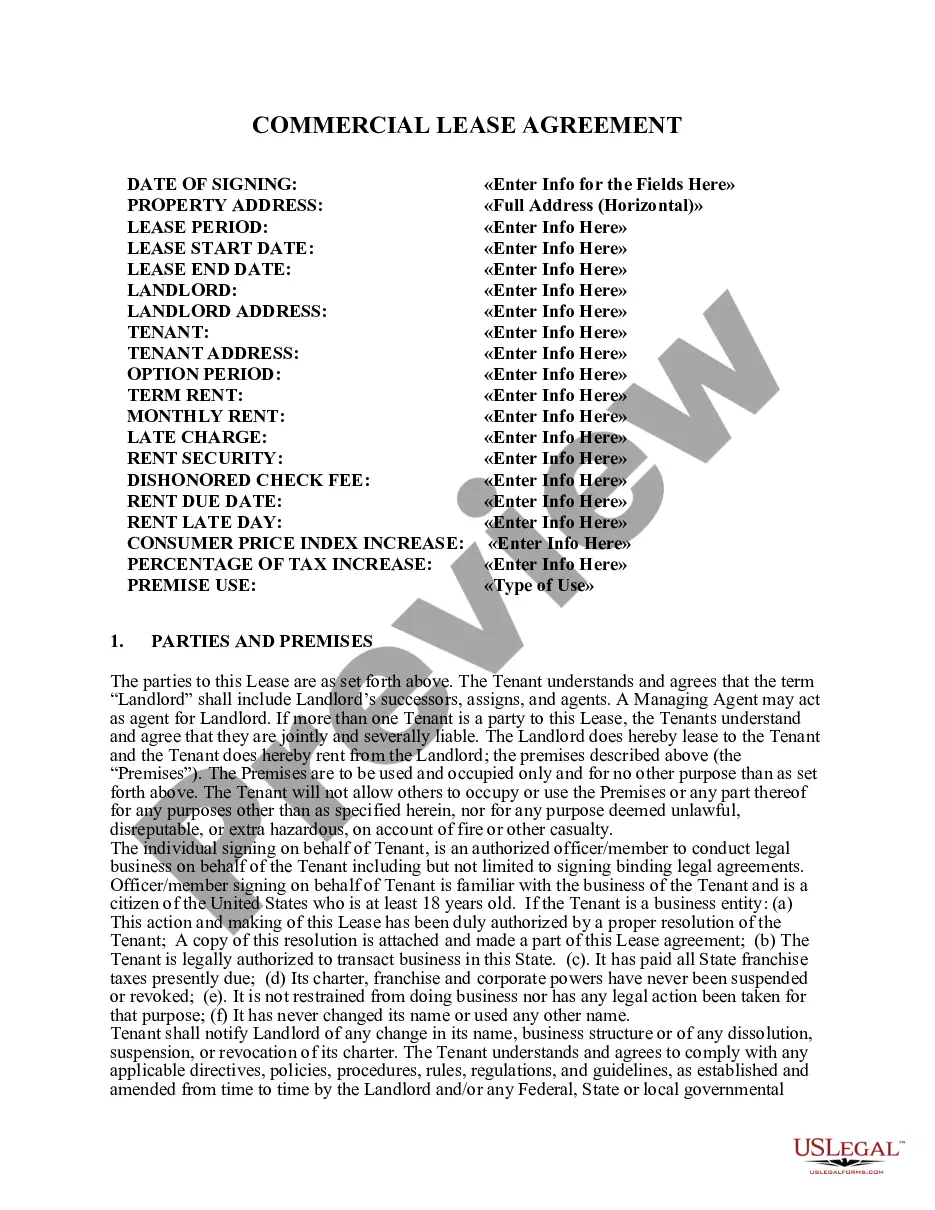
This form is useful when a tenant in a leased property wishes to expand their space. It is typically used in situations where tenants anticipate needing more room due to business growth, increased inventory, or changes in operational needs. By clearly outlining the process for leasing additional space, the form helps prevent misunderstandings between tenants and landlords.
Who needs this form
- Tenants looking to expand their current leased premises.
- Landlords managing commercial or residential buildings.
- Property managers assisting tenants with lease modifications.
- Businesses planning for future space needs in a leased environment.
How to prepare this document
- Identify the parties involved, including landlord and tenant details.
- Specify the additional space requested, including square footage and location.
- Enter the proposed basic rent per square foot for the additional space.
- Detail the timeframe for accepting or rejecting the offer from the landlord.
- Include any necessary modifications to the original lease agreement to reflect the added space.
Notarization guidance
This form does not typically require notarization unless specified by local law. However, it is advisable to check with a legal professional to understand any jurisdiction-specific requirements.
Get your form ready online
Our built-in tools help you complete, sign, share, and store your documents in one place.
Make edits, fill in missing information, and update formatting in US Legal Forms—just like you would in MS Word.
Download a copy, print it, send it by email, or mail it via USPS—whatever works best for your next step.
Sign and collect signatures with our SignNow integration. Send to multiple recipients, set reminders, and more. Go Premium to unlock E-Sign.
If this form requires notarization, complete it online through a secure video call—no need to meet a notary in person or wait for an appointment.
We protect your documents and personal data by following strict security and privacy standards.

Make edits, fill in missing information, and update formatting in US Legal Forms—just like you would in MS Word.

Download a copy, print it, send it by email, or mail it via USPS—whatever works best for your next step.

Sign and collect signatures with our SignNow integration. Send to multiple recipients, set reminders, and more. Go Premium to unlock E-Sign.

If this form requires notarization, complete it online through a secure video call—no need to meet a notary in person or wait for an appointment.

We protect your documents and personal data by following strict security and privacy standards.
Typical mistakes to avoid
- Failing to notify the landlord within the specified timeframe.
- Not including critical details about the additional space in the form.
- Overlooking existing lease obligations that may affect the right to lease additional space.
- Assuming the form does not require amendments to the original lease.
Benefits of using this form online
- Convenient access to legal document templates at any time.
- Editability allows customization to meet specific lease agreements.
- Assured reliability of attorney-drafted documents to ensure legal compliance.
Legal use & context
- Ensures tenants have a documented right to expand their leased space.
- Helps maintain clarity on terms and conditions associated with additional leasing.
- Minimizes disputes between tenants and landlords regarding space leasing rights.
Quick recap
- The form provides tenants with specific rights to lease additional space.
- Clear communication between tenants and landlords is essential for successful use of this form.
- Familiarity with state-specific requirements is important for proper completion.
Looking for another form?

Form popularity
FAQ
Escalation clauses can be beneficial, especially in a seller's market. If homes are selling fast, you'll want something that can help your offer stand out in a competitive market and let sellers know you mean business. Therefore, the best time to use an escalation clause would be during a bidding war scenario.
An escalator clause (also known as an escalation clause or a laddering clause) is a clause or provision in a lease or contract that allows pricing or wages to be adjusted to account for changing market conditions, such as inflation or tax fluctuations.
Lease rate escalations are common clauses built into commercial leases allowing for automatic periodic increases on a tenant's rent. This clause has been known by many names: an escalation clause, an annual increase clause, an annual rent increase, or an annual rent bump.
In terms of commercial real estate, expansion options provide tenants with the choice to add more space to their rented premises. Typically, this would apply to an office space or retail location where the tenants seek to expand into an adjoining space.
For example, if a lease agreement has an escalation clause based on the CPI, the rent for the property will be adjusted annually based on the change in the CPI. For example, if the CPI increases by 3% over a year, the rent will also increase by 3%.
Expansion rights allow a tenant to elect to expand beyond the fixed area of the leased premises to other specified areas under the landlord's control. The provision usually specifies: The description and location of the expansion space.
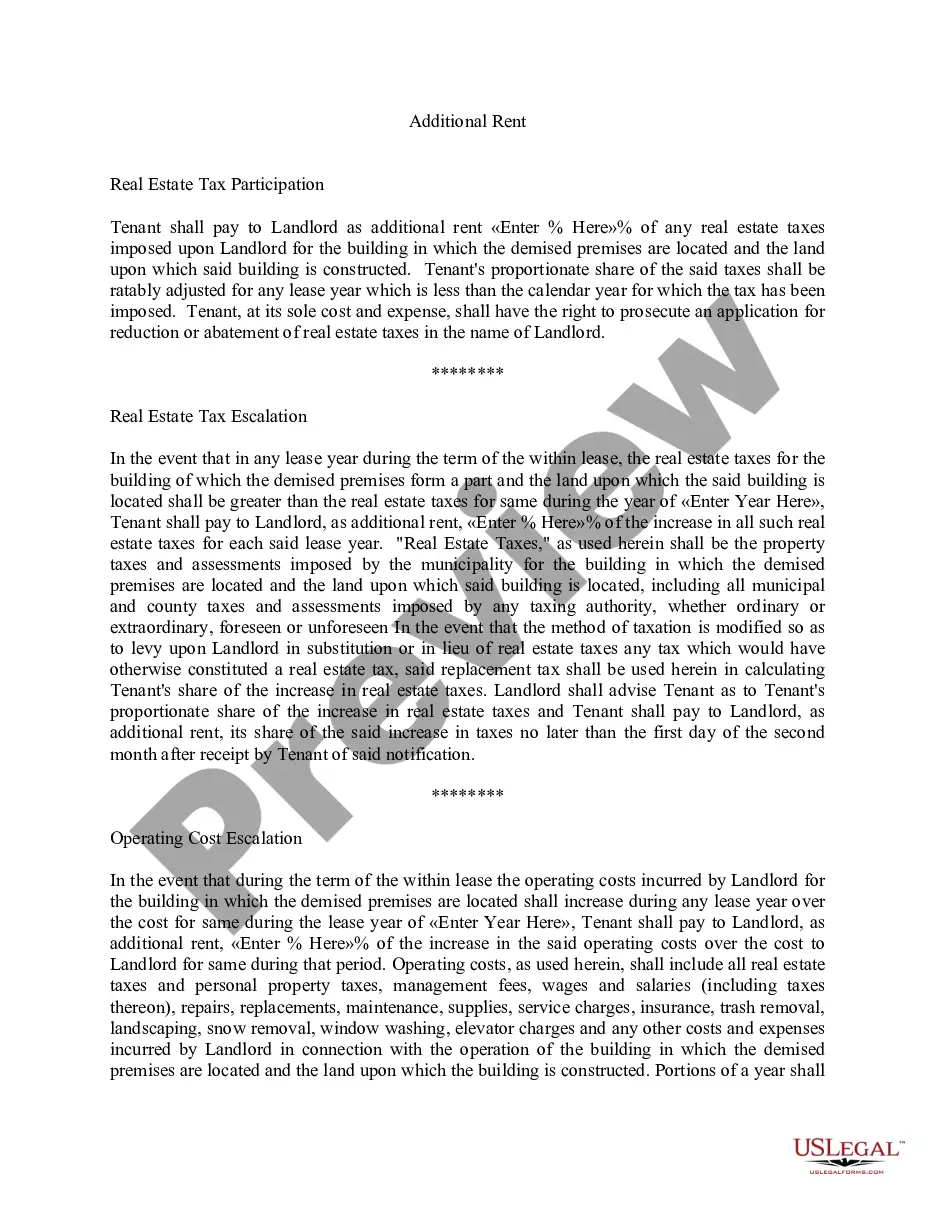
Tenant shall pay to Landlord, as Additional Rent, an amount equal to Tenant's Proportionate Share of (i)Taxes (as such term is hereinafter defined) payable by Landlord during the Term, plus (it) Operating Expenses (as such term is hereinafter defined) payable by Landlord during the Term.
For instance, if a buyer makes an offer of $400,000, an escalator clause could specify that if a higher offer comes in, the buyer will beat it by $3,000, but only up to $430,000. This would mean that if an offer of $405,000 is tabled, the escalator clause would trigger a new offer of $408,000.