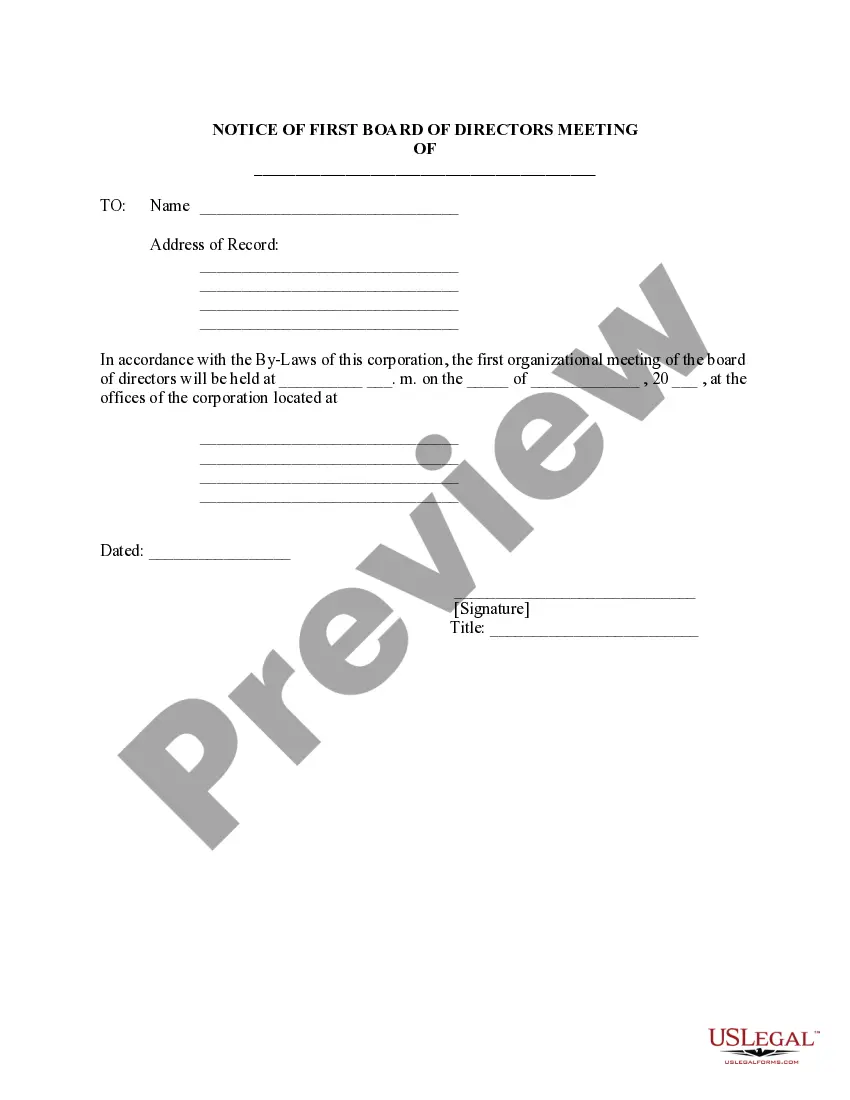
Corporation First Meeting For Project In Utah
Description


Get your form ready online
Our built-in tools help you complete, sign, share, and store your documents in one place.
Make edits, fill in missing information, and update formatting in US Legal Forms—just like you would in MS Word.
Download a copy, print it, send it by email, or mail it via USPS—whatever works best for your next step.
Sign and collect signatures with our SignNow integration. Send to multiple recipients, set reminders, and more. Go Premium to unlock E-Sign.
If this form requires notarization, complete it online through a secure video call—no need to meet a notary in person or wait for an appointment.
We protect your documents and personal data by following strict security and privacy standards.

Make edits, fill in missing information, and update formatting in US Legal Forms—just like you would in MS Word.

Download a copy, print it, send it by email, or mail it via USPS—whatever works best for your next step.

Sign and collect signatures with our SignNow integration. Send to multiple recipients, set reminders, and more. Go Premium to unlock E-Sign.

If this form requires notarization, complete it online through a secure video call—no need to meet a notary in person or wait for an appointment.

We protect your documents and personal data by following strict security and privacy standards.
Looking for another form?








Form popularity
FAQ
Although actual requirements can vary depending on the state, they typically involve the following: Select a state of incorporation. Choose a business name. File incorporation paperwork. Appoint a registered agent. Prepare corporate bylaws. Draft a shareholders' agreement. Hold the first board meeting. Get an EIN.
To start your own corporation, you must take these essential steps, including registering your business, appointing a board, creating bylaws, and issuing shares. Step 1: Choose a Name for Your Corporation. Step 2: File Articles of Incorporation. Step 3: Appoint Corporate Directors. Step 4: Draft the Bylaws.
An important first step when starting a corporation is selecting a business name. In most states, you'll need to include a corporate designation or a word that identifies your business as a corporation.
Steps to forming a corporation Select a state of incorporation. Choose a business name. File incorporation paperwork. Appoint a registered agent. Prepare corporate bylaws. Draft a shareholders' agreement. Hold the first board meeting. Get an EIN.
Here are eight key things to include when writing bylaws. Basic corporate information. The bylaws should include your corporation's formal name and the address of its main place of business. Board of directors. Officers. Shareholders. Committees. Meetings. Conflicts of interest. Amendment.
A corporation is owned by shareholders. If you are the sole owner of the company, then you own 100 percent of the shares. If there are other owners besides yourself, the ownership position of each is based on the percentage of the total shares owned.
How to Start A Corporation In Utah Name Your Corporation. Designate a Registered Agent. Submit Articles of Incorporation. Get an EIN. File the Beneficial Ownership Information Report. Write Corporate Bylaws. Hold an Organizational Meeting. Open a Corporate Bank Account.
How to Start a corporation in California Choose a name for your business. Designate a Registered Agent in California. File Your Articles of Incorporation in California. Create your Corporate Bylaws. Appoint your Corporate Directors. Hold the First Meeting of the Board of Directors. Authorize the issuance of shares of stock.
Yes, a single member LLC can form an S Corp. This structure is popular among solo entrepreneurs who want to benefit from the tax advantages of an S Corporation and the liability protection of an LLC.
Start a corporation with one person Incorporating with one person is called a single-member or one-person corporation. You will be the sole shareholder, the director, and the officer.

