Court Letter Sample For Student In Allegheny
Description



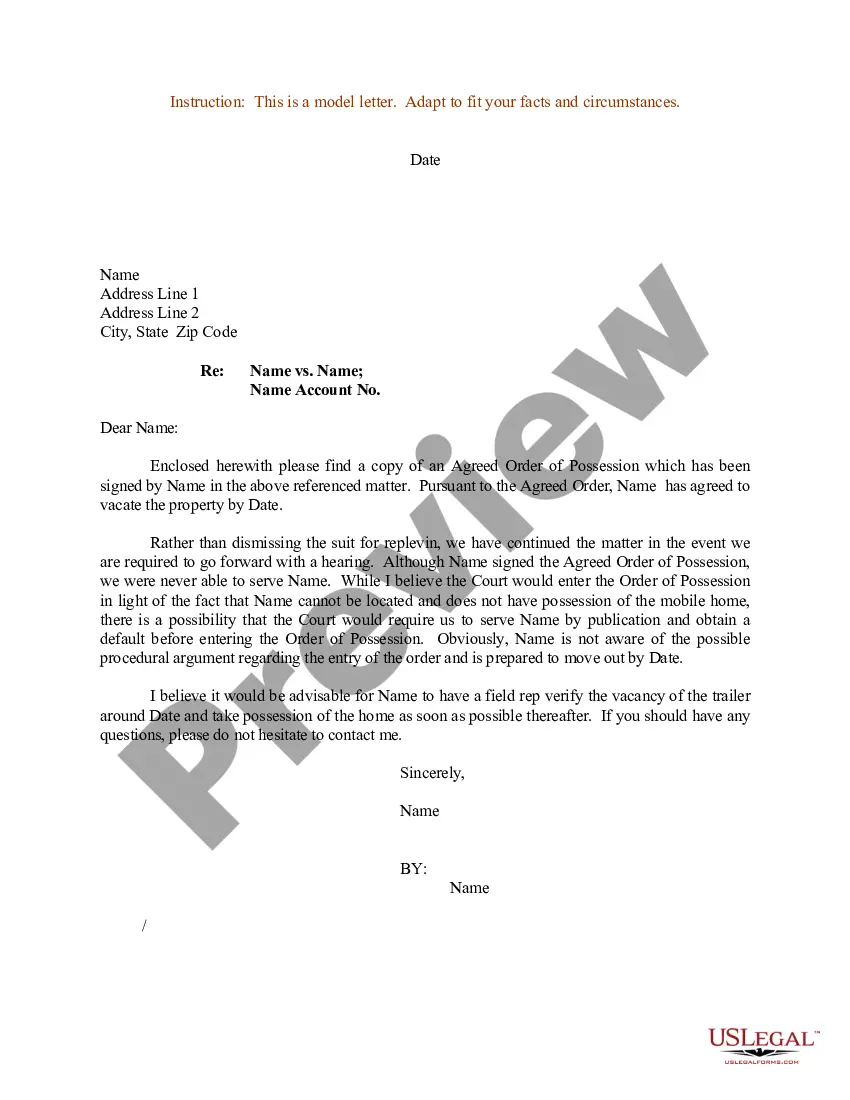
Get your form ready online
Our built-in tools help you complete, sign, share, and store your documents in one place.
Make edits, fill in missing information, and update formatting in US Legal Forms—just like you would in MS Word.
Download a copy, print it, send it by email, or mail it via USPS—whatever works best for your next step.
Sign and collect signatures with our SignNow integration. Send to multiple recipients, set reminders, and more. Go Premium to unlock E-Sign.
If this form requires notarization, complete it online through a secure video call—no need to meet a notary in person or wait for an appointment.
We protect your documents and personal data by following strict security and privacy standards.

Make edits, fill in missing information, and update formatting in US Legal Forms—just like you would in MS Word.

Download a copy, print it, send it by email, or mail it via USPS—whatever works best for your next step.

Sign and collect signatures with our SignNow integration. Send to multiple recipients, set reminders, and more. Go Premium to unlock E-Sign.

If this form requires notarization, complete it online through a secure video call—no need to meet a notary in person or wait for an appointment.

We protect your documents and personal data by following strict security and privacy standards.
Looking for another form?


Form popularity
FAQ
You can get the form from the Prothonotary (the clerk of the civil part of the Common Pleas Court). Appendix A shows a Notice of Appeal. Once you have filled out the Notice of Appeal, you must file it with the Prothonotary in the Common Pleas Court where the office of the District Justice is located.
Call the Allegheny County Department of Court Records at (412) 350-4201 and tell them you're looking for information on a legal name change. They will describe the entire process to you, including estimated costs, and mail you the necessary forms. As of September 2017, these are the name change petition forms.
Certified copies of a divorce decree can be obtained at the Allegheny County Department of Court records. Consult instructions, fees, and hours. Divorce pleadings are filed at Allegheny County Department of Court Records, (not the Allegheny County Family Division).
Couples in Pennsylvania cannot be “legally separated” because there is no legal status for separated but still married couples. If a couple wants to separate and have it enforced by the law, they must be eligible for and obtain a divorce.
Rule 1301.1 - Discovery in Compulsory Arbitration Proceedings (Except Small Claims) (1) For any personal injury claim filed in Compulsory Arbitration, the plaintiff may serve arbitration discovery requests (see FORM 1301.1A) (see subsection (8)(a) below) either together with the copy of the Complaint served on the ...
In the state of Pennsylvania, divorce records are managed and disseminated by the courthouse in the county where the divorce was granted. By law, these divorces decrees are public record and can be made available to interested members of the public upon request.
Certified copies of a divorce decree can be obtained at the Allegheny County Department of Court records. Consult instructions, fees, and hours. Divorce pleadings are filed at Allegheny County Department of Court Records, (not the Allegheny County Family Division).
If a member of the public desires to inspect or copy records, he or she must submit a written request to the office of the prothonotary. A written request must contain a clear description of the requested record, such as case number, the full names of the involved parties, and the date of the divorce.
These documents, called either LETTERS TESTAMENTARY (for an executor) or LETTERS OF ADMINISTRATION (for an administrator), are obtained through the Register of Wills in the county in which the DECEDENT (the deceased person) lived at the time of death.

