Consumer Investigative Release Form California In Arizona
Description
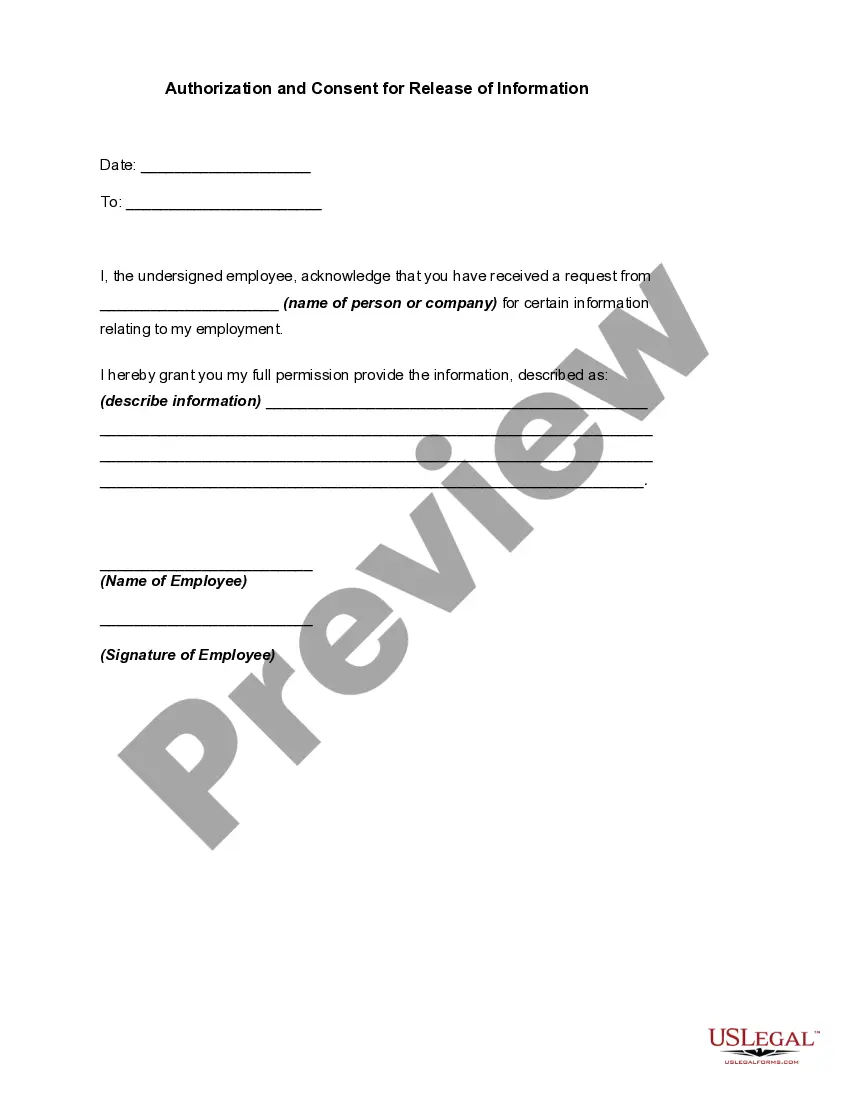
Get your form ready online
Our built-in tools help you complete, sign, share, and store your documents in one place.
Make edits, fill in missing information, and update formatting in US Legal Forms—just like you would in MS Word.
Download a copy, print it, send it by email, or mail it via USPS—whatever works best for your next step.
Sign and collect signatures with our SignNow integration. Send to multiple recipients, set reminders, and more. Go Premium to unlock E-Sign.
If this form requires notarization, complete it online through a secure video call—no need to meet a notary in person or wait for an appointment.
We protect your documents and personal data by following strict security and privacy standards.

Make edits, fill in missing information, and update formatting in US Legal Forms—just like you would in MS Word.

Download a copy, print it, send it by email, or mail it via USPS—whatever works best for your next step.

Sign and collect signatures with our SignNow integration. Send to multiple recipients, set reminders, and more. Go Premium to unlock E-Sign.

If this form requires notarization, complete it online through a secure video call—no need to meet a notary in person or wait for an appointment.

We protect your documents and personal data by following strict security and privacy standards.
Looking for another form?




Form popularity
FAQ
Unfair Business Practices This includes practices like overcharging for goods or services, using bait-and-switch tactics, or failing to deliver services as promised. These practices not only deceive consumers but also disrupt the integrity of the marketplace by giving dishonest businesses an unfair advantage.
File a Complaint Internal Affairs Unit. Arizona Department of Public Safety. P.O. Box 6638. Duty Office. 602-223-2212. Available 24 hours a day, year round. Area Supervisor. Call 602-223-2000 and request to speak to a supervisor in the area of the incident. This service is also available 24 hours a day, year round.
The Arizona Consumer Fraud Act (ACFA) is a package of Arizona state laws that give protections to consumers in almost any kind of transaction related to the sale or advertisement of merchandise.
File a complaint with your local consumer protection office. Notify the Better Business Bureau (BBB) in your area about your problem. The BBB tries to resolve complaints against companies. Report scams and suspicious communications to the Federal Trade Commission.
Additional Protection The Arizona Attorney General has the authority investigate and prosecute violations of the Consumer Fraud Act and other state and federal consumer protection laws. A private citizen can also bring an action for a violation of the Consumer Fraud Act within one year from the date the claim arises.
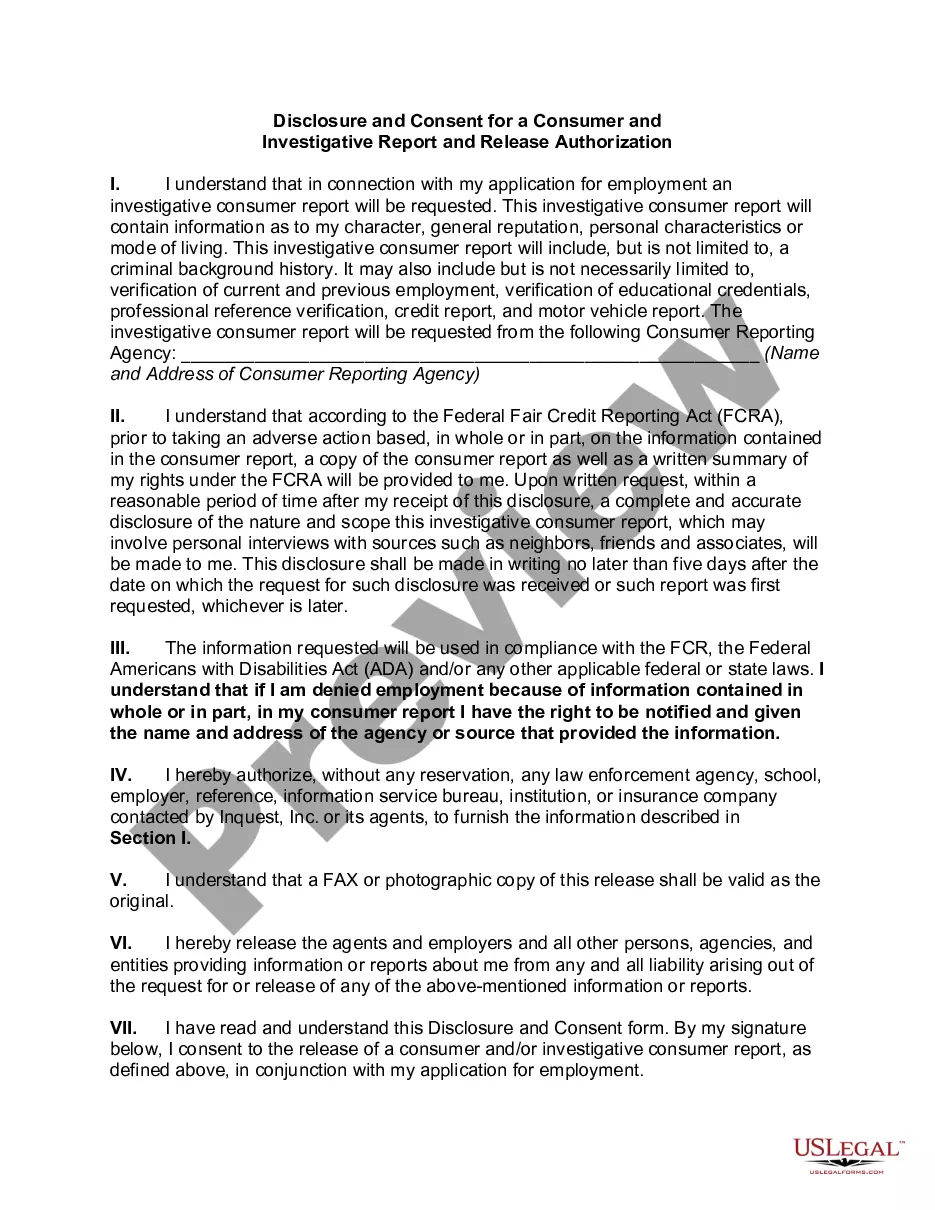
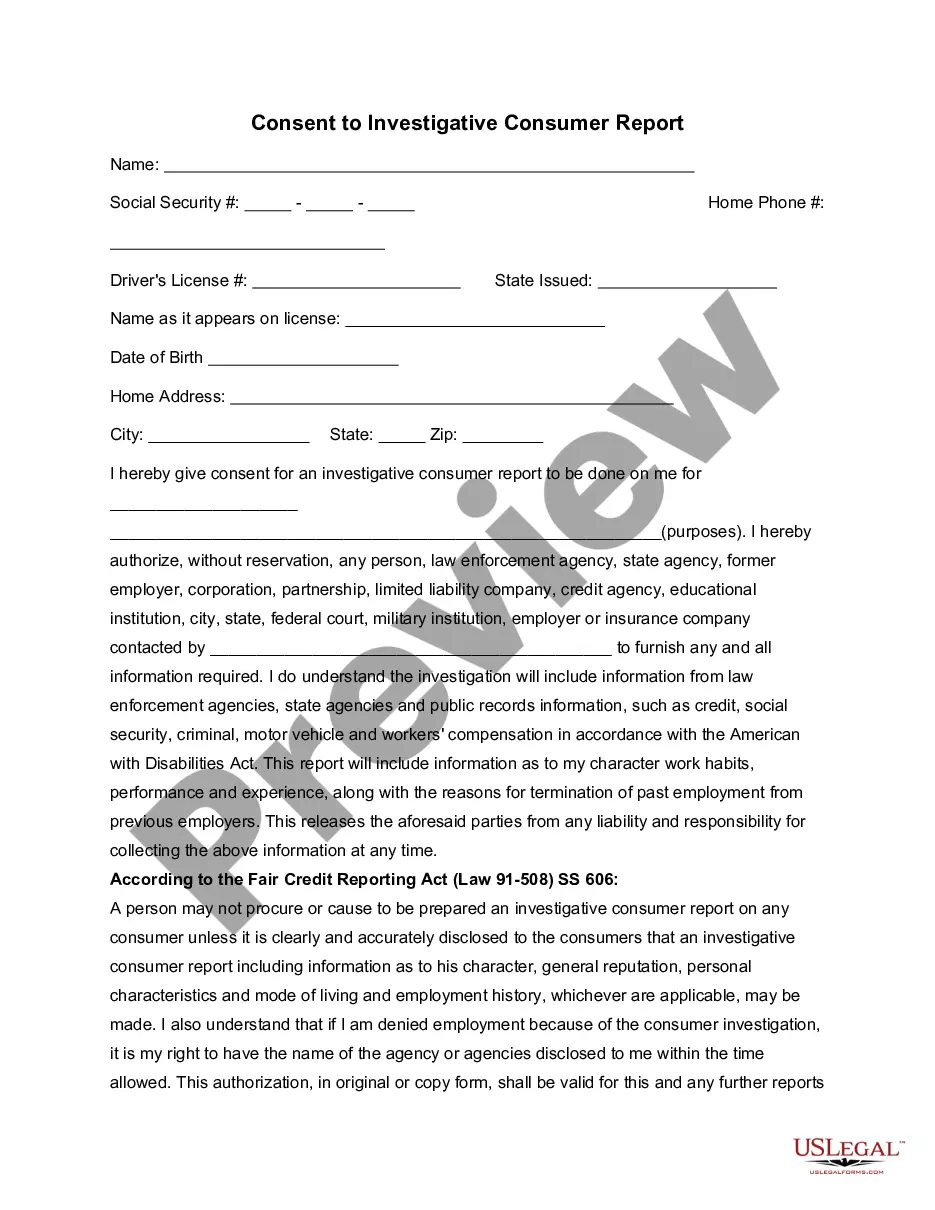
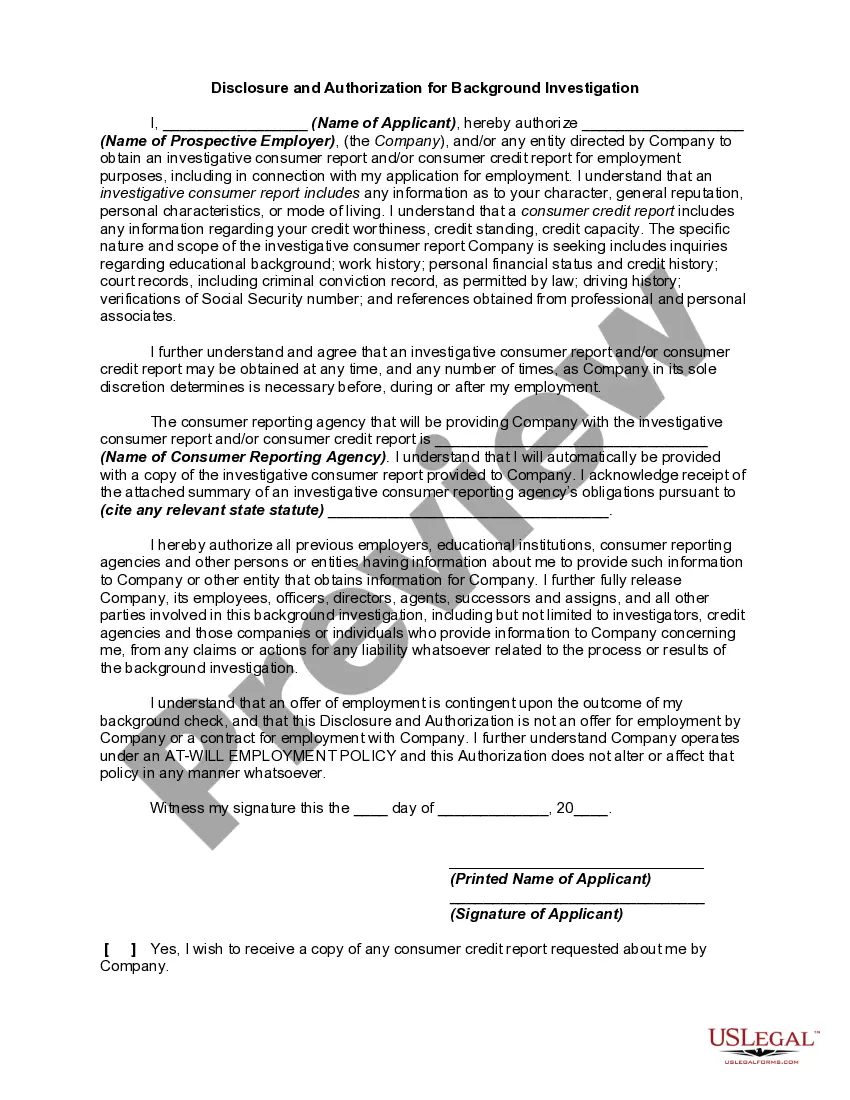
(c) The term “investigative consumer report” means a consumer report in which information on a consumer's character, general reputation, personal characteristics, or mode of living is obtained through any means.
Consumer protection laws are made to protect consumers from fraudulent business practices, defective products, and dangerous goods and services. They play an important role in a reliable market economy, helping to keep sellers honest with no threat of unpleasant surprises.
Consumer reports may include information about a person's credit history, medical conditions, driving record, criminal activity, and even their participation in dangerous sports.
The FTC does clarify that obtaining information from a former employer beyond “fact-checking” could constitute an interview and be considered an Investigative Consumer Report. This could include, but is not limited to, asking a candidate's former employer about: Discipline actions against the candidate.
