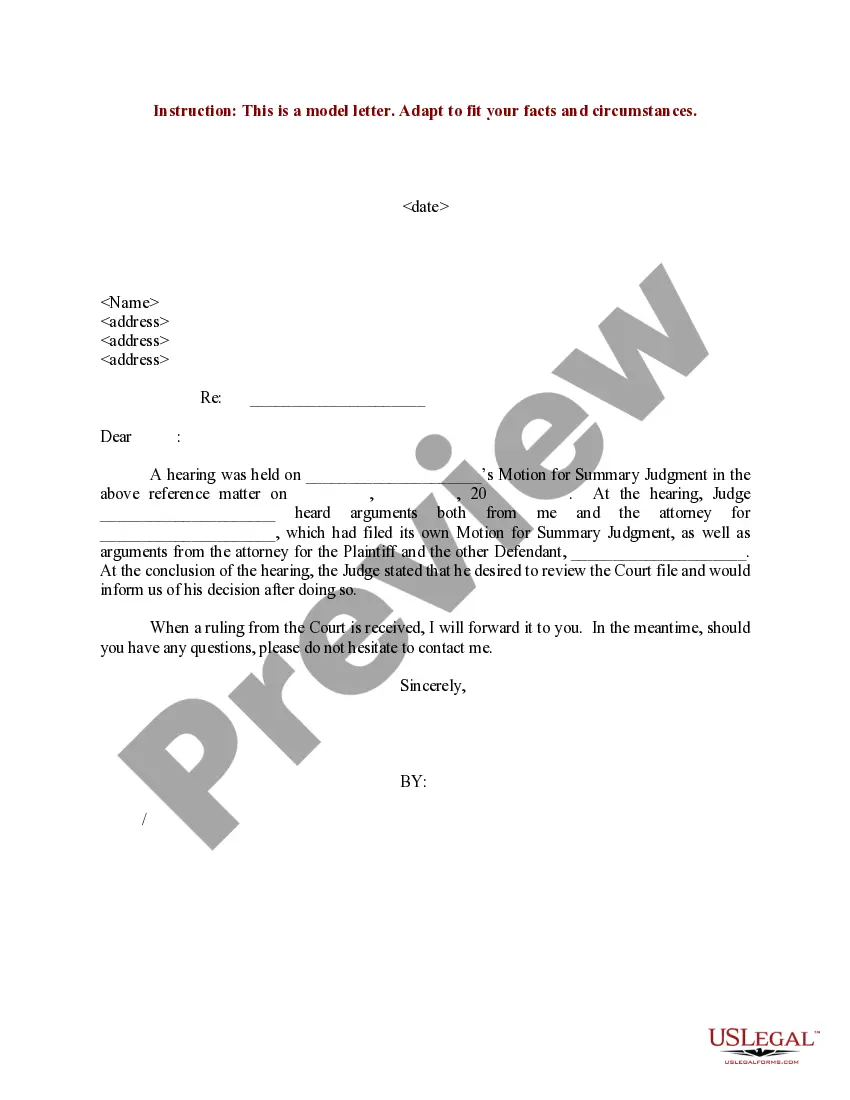
Motion Hearing In Court In Utah
Description
Get your form ready online
Our built-in tools help you complete, sign, share, and store your documents in one place.
Make edits, fill in missing information, and update formatting in US Legal Forms—just like you would in MS Word.
Download a copy, print it, send it by email, or mail it via USPS—whatever works best for your next step.
Sign and collect signatures with our SignNow integration. Send to multiple recipients, set reminders, and more. Go Premium to unlock E-Sign.
If this form requires notarization, complete it online through a secure video call—no need to meet a notary in person or wait for an appointment.
We protect your documents and personal data by following strict security and privacy standards.

Make edits, fill in missing information, and update formatting in US Legal Forms—just like you would in MS Word.

Download a copy, print it, send it by email, or mail it via USPS—whatever works best for your next step.

Sign and collect signatures with our SignNow integration. Send to multiple recipients, set reminders, and more. Go Premium to unlock E-Sign.

If this form requires notarization, complete it online through a secure video call—no need to meet a notary in person or wait for an appointment.

We protect your documents and personal data by following strict security and privacy standards.
Looking for another form?








Form popularity
FAQ
During this hearing, the judge makes sure both your Los Angeles criminal defense lawyer and the prosecution are ready to proceed. The judge also hears any legal arguments related to the motion your lawyer has to make.
A party can ask to reschedule ("continue") an upcoming hearing or trial by filing a Motion to Continue Hearing or Trial. It is up to the commissioner or judge to decide if the hearing or trial will be rescheduled. If it is not rescheduled the parties should plan to attend the hearing or trial.
After a motion hearing, the next steps depend on the judge's rulings and the issues addressed during the proceeding. If the judge grants a motion, such as dismissing certain charges or excluding key evidence, it can significantly alter the course of the case.
A motion is an application to the court made by the prosecutor or defense attorney, requesting that the court make a decision on a certain issue before the trial begins. The motion can affect the trial, courtroom, defendants, evidence, or testimony.
A motion hearing is a special meeting that occurs before your criminal trial in California.
In addition to influencing the immediate progress of a case, motion hearings help ensure fairness and efficiency in the legal process. They resolve disputes early, prevent unnecessary delays, and create a clearer path toward resolution.
Bring your paperwork. Whether you filed the motion or case or you are responding to a motion or case, there is paperwork you created or received about this hearing. Bring it with you. Bring any other paperwork you may need or want.
Write your legal argument by stating the rule and explaining how your facts apply to it. Then, add your signature, a Certificate of Service, and a Notice of Hearing. File your motion with the clerk of court overseeing your case. Then, give copies to each defendant.
If you want to file a motion, the process is generally something like this: You write your motion. You file your motion with the court clerk. The court clerk inserts the date and time your motion will be heard by the judge. You “serve” (mail) your motion to the other side.
You can also use an affidavit or several affidavits in support of your motion to show the judge the seriousness of the matter and to support your request for the relief.