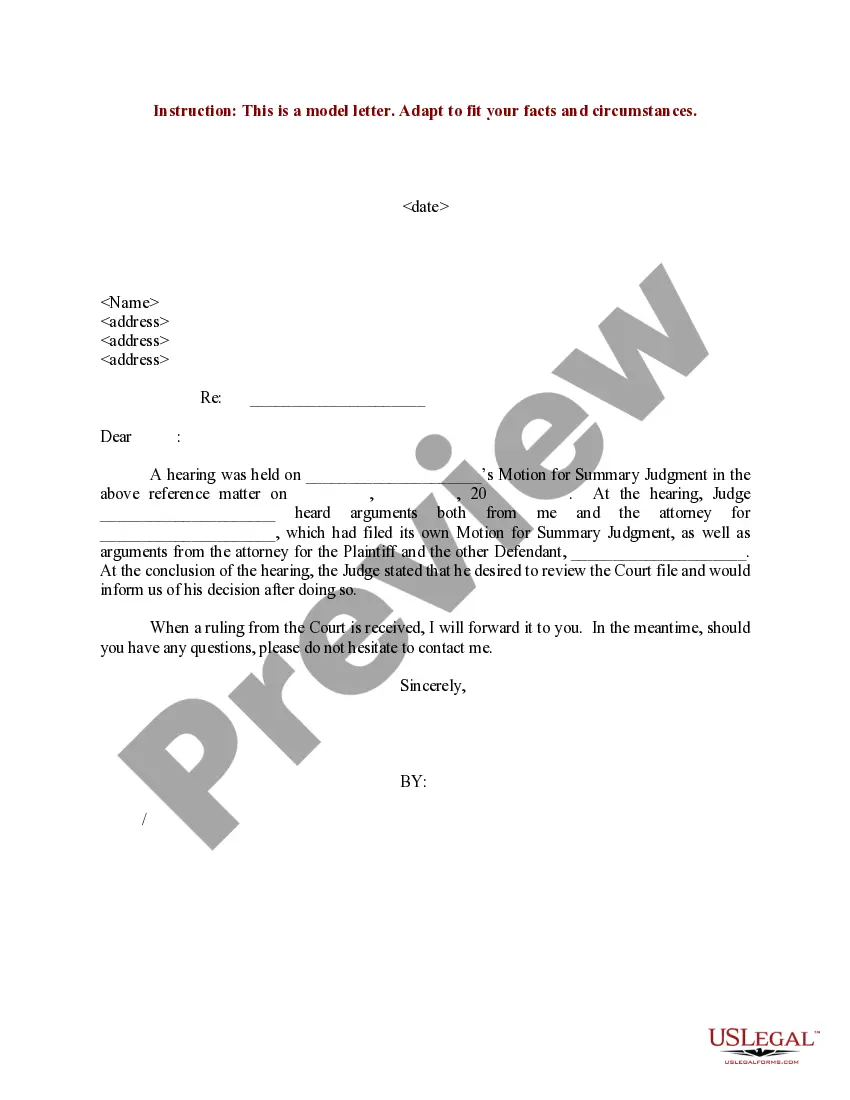
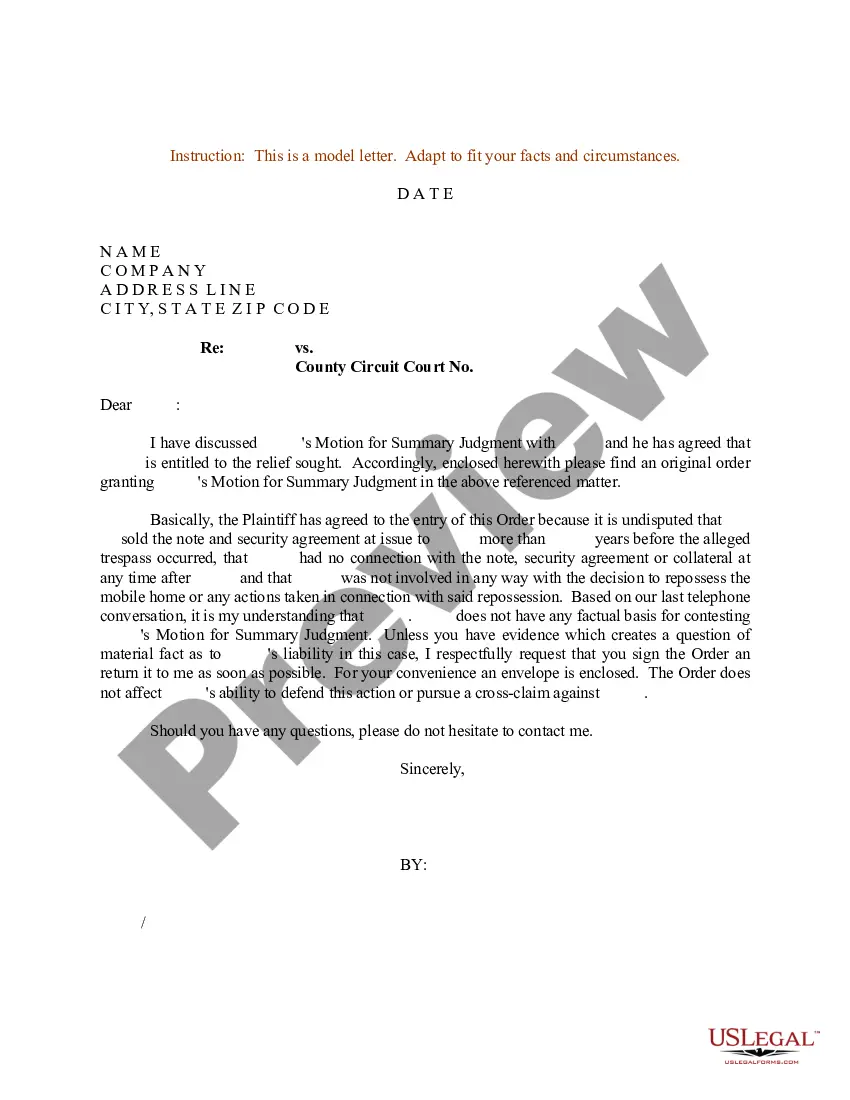
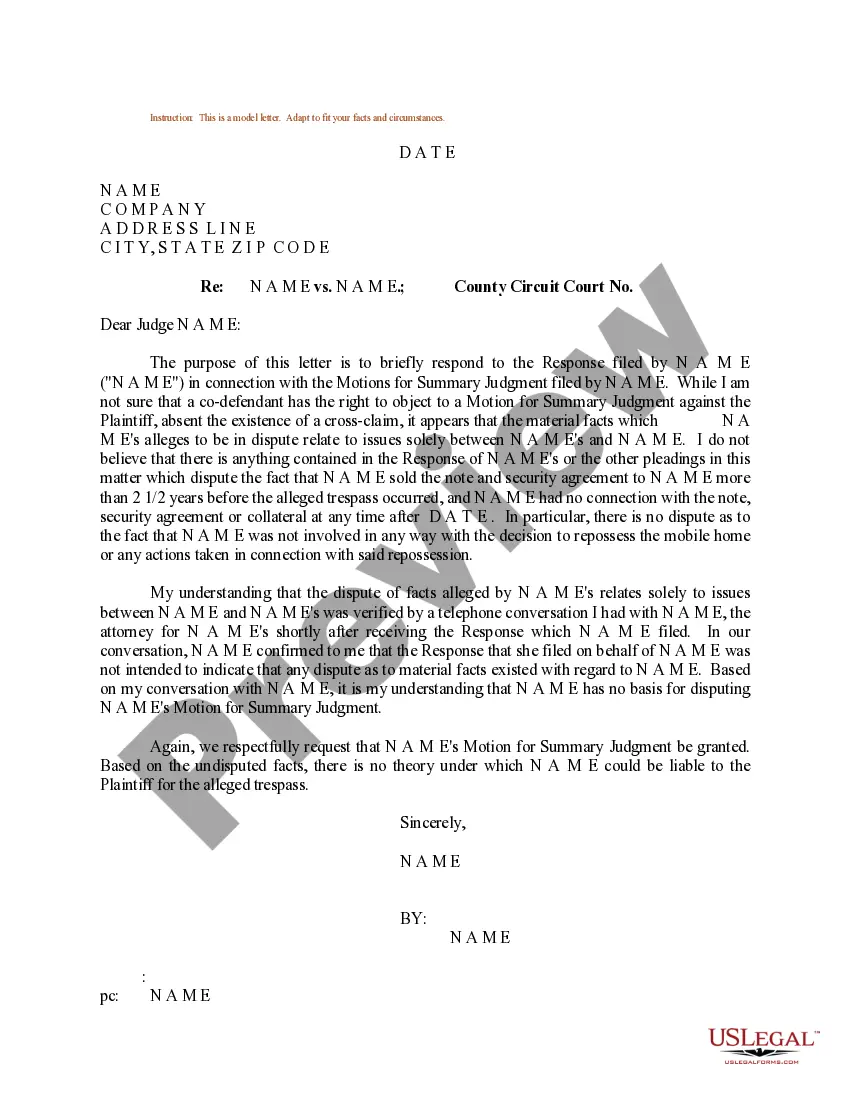
Letter Concerning Hearing Without Consent In Michigan
Description
Get your form ready online
Our built-in tools help you complete, sign, share, and store your documents in one place.
Make edits, fill in missing information, and update formatting in US Legal Forms—just like you would in MS Word.
Download a copy, print it, send it by email, or mail it via USPS—whatever works best for your next step.
Sign and collect signatures with our SignNow integration. Send to multiple recipients, set reminders, and more. Go Premium to unlock E-Sign.
If this form requires notarization, complete it online through a secure video call—no need to meet a notary in person or wait for an appointment.
We protect your documents and personal data by following strict security and privacy standards.

Make edits, fill in missing information, and update formatting in US Legal Forms—just like you would in MS Word.

Download a copy, print it, send it by email, or mail it via USPS—whatever works best for your next step.

Sign and collect signatures with our SignNow integration. Send to multiple recipients, set reminders, and more. Go Premium to unlock E-Sign.

If this form requires notarization, complete it online through a secure video call—no need to meet a notary in person or wait for an appointment.

We protect your documents and personal data by following strict security and privacy standards.
Looking for another form?







Form popularity
FAQ
The court must sign a properly submitted proposed judgment or order if no written objections have been filed within 7 days after service of notice, as long as the judgment or order is consistent with the court's decision. MCR 2.602(B)(3). (This is commonly referred to as the “Seven-Day Rule.”)
Rule 2.313 - Failure to Serve Disclosure or to Provide or to Permit Discovery; Sanctions (A) Motion for Order Compelling Disclosure or Discovery. A party, on reasonable notice to other parties and all persons affected, may apply for an order compelling disclosure or discovery as follows: (1) Appropriate Court.
Some court forms include a “Notice of Hearing” section. This tells the other party that a hearing has been scheduled.
The Home Rule City Act resulted from the provisions of the 1908 state constitution, which called for home rule authority to be conferred upon the various local governments in the state. The 1963 state constitution retained these same home rule provisions.
Michigan's new scope allows discovery into any “matters that are relevant to any party's claims or defenses.” This is slightly narrower than its previous scope that allowed discovery of matters “relevant to the subject matter involved in the pending actions.”
A subpoena must: (1) be entitled in the name of the People of the State of Michigan; (2) be imprinted with the seal of the Supreme Court of Michigan; (3) have typed or printed on it the name of the court in which the matter is pending; (4) state the place where the trial or hearing is scheduled; (5) state the title of ...
The person who gives consent can withdraw the consent anytime and should have the capacity to make valid consent.
Under implied consent laws, someone who drives in the state automatically consents to chemical tests upon being arrested for drunk driving or in certain other situations specified by state law.
Final answer: Under the implied consent law, willful refusal to submit to a breath or blood test can result in penalties such as driver's license suspension, fines, and possible jail time.