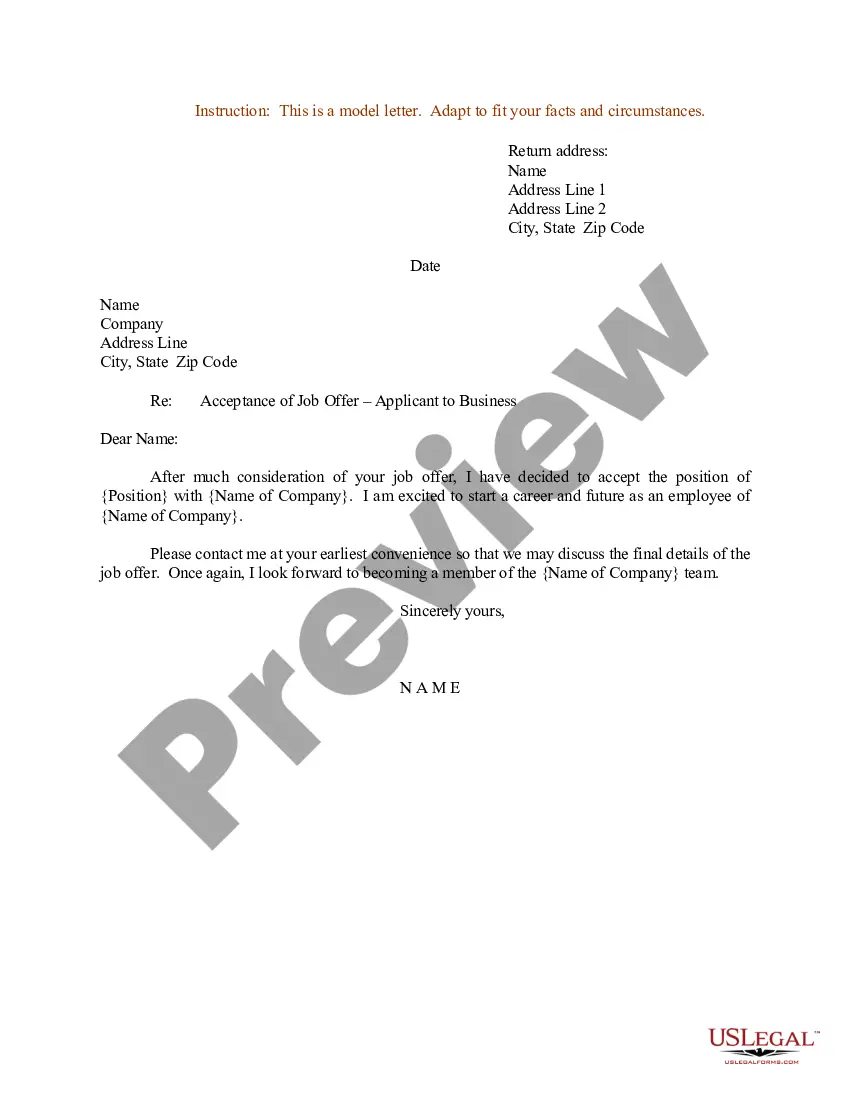
Daycare Acceptance Letter With Conditions In California
Description
Get your form ready online
Our built-in tools help you complete, sign, share, and store your documents in one place.
Make edits, fill in missing information, and update formatting in US Legal Forms—just like you would in MS Word.
Download a copy, print it, send it by email, or mail it via USPS—whatever works best for your next step.
Sign and collect signatures with our SignNow integration. Send to multiple recipients, set reminders, and more. Go Premium to unlock E-Sign.
If this form requires notarization, complete it online through a secure video call—no need to meet a notary in person or wait for an appointment.
We protect your documents and personal data by following strict security and privacy standards.

Make edits, fill in missing information, and update formatting in US Legal Forms—just like you would in MS Word.

Download a copy, print it, send it by email, or mail it via USPS—whatever works best for your next step.

Sign and collect signatures with our SignNow integration. Send to multiple recipients, set reminders, and more. Go Premium to unlock E-Sign.

If this form requires notarization, complete it online through a secure video call—no need to meet a notary in person or wait for an appointment.

We protect your documents and personal data by following strict security and privacy standards.
Looking for another form?




Form popularity
FAQ
Childcare licensing requirements in California Must be at least 18 years old. Must live in the home. Must have a clear criminal record. Must have a TB test. Must complete 16 Pediatric Health and Safety training hours from an Emergency Medical Services Authority (EMSA) approved vendor or accredited college/university.
Title 22 encompasses a wide range of regulations, from licensing requirements and staffing ratios to safety standards and resident rights. Its primary objective is to protect the health, safety, and well-being of residents in care facilities.
The caregiver/teacher should determine if the illness: Prevents the child from participating comfortably in activities. Results in a need for care that is greater than the staff can provide without compromising the health and safety of other children. Poses a risk of spread of harmful diseases to others.
(a) Cots used for napping shall be maintained in a safe condition. (b) Floor mats used for napping shall be: (1) Constructed of foam at least 3/4 inch thick. (2) Covered with vinyl or similar material that can be wiped. (3) Marked or colored so that the sleeping side can be distinguished from the floor side.
Tit. 22, § 101216 - Personnel Requirements. (a) Child care center personnel shall be competent to provide the services necessary to meet the individual needs of children in care and shall at all times be employed in numbers sufficient to meet those needs.
(a) The licensee shall immediately notify the child's authorized representative if the child becomes ill or sustains an injury more serious than a minor cut or scratch. The licensee shall obtain specific instructions from the authorized representative regarding action to be taken.
(u) For the purposes of Section 140.5 of the code no individual shall be deemed eligible for disability benefits for any week of unemployment unless such unemployment is due to a disability.
Type B: violations of the regulations and the Health and Safety Code that, without correction, could become a risk to the health, safety or personal rights of clients, or a recordkeeping violation that would impact the care of clients and/or protection of their resources, or a violation that would impact those services ...
Title 22, Division 12, dictates all of the general licensing requirements for Child Care Centers and Family Day Care Homes. If you're curious about the intricate safety standards in place by a licensed childcare setting in California, this is where to start.