Confidentiality Agreement between Researcher and Research Company 's Internation Review Board
What is this form?
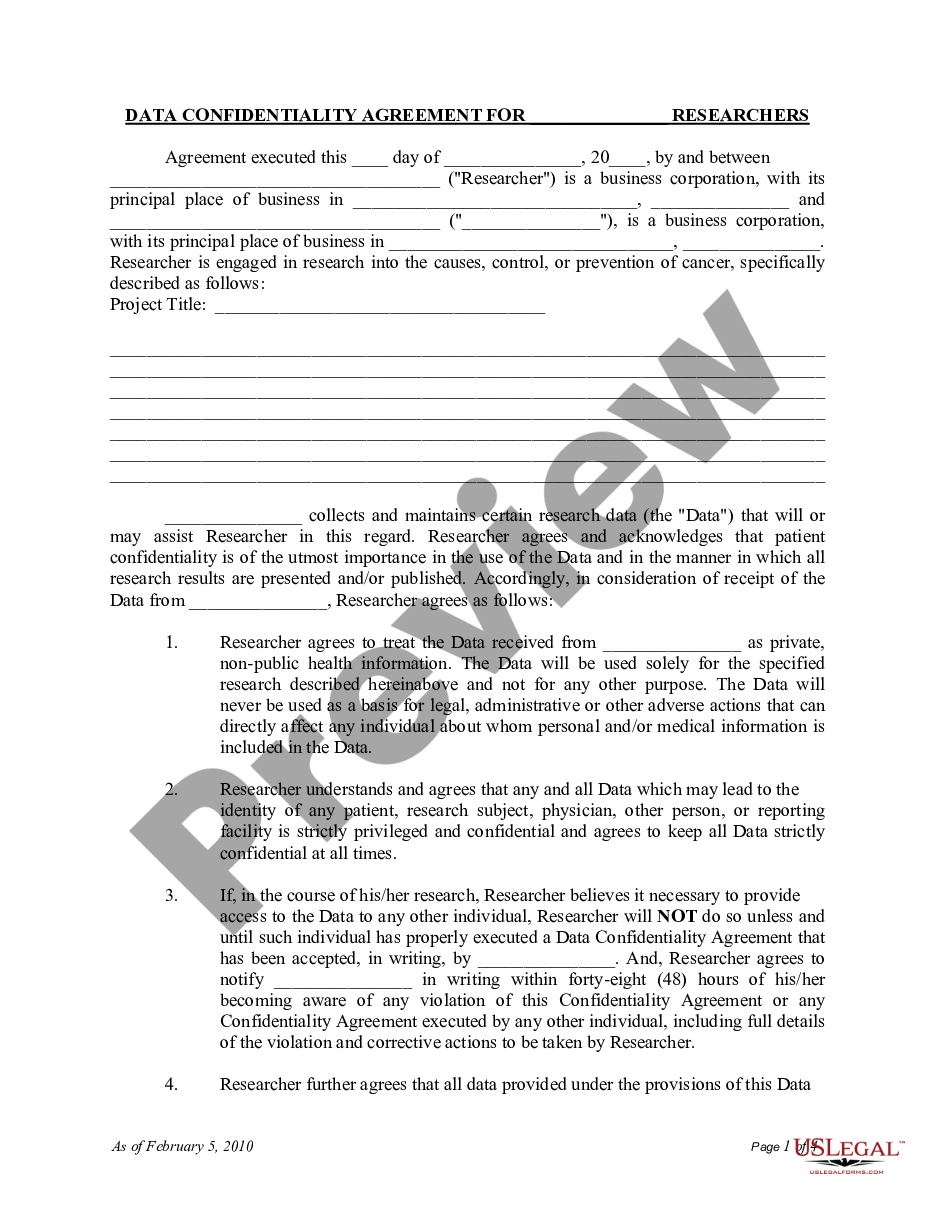
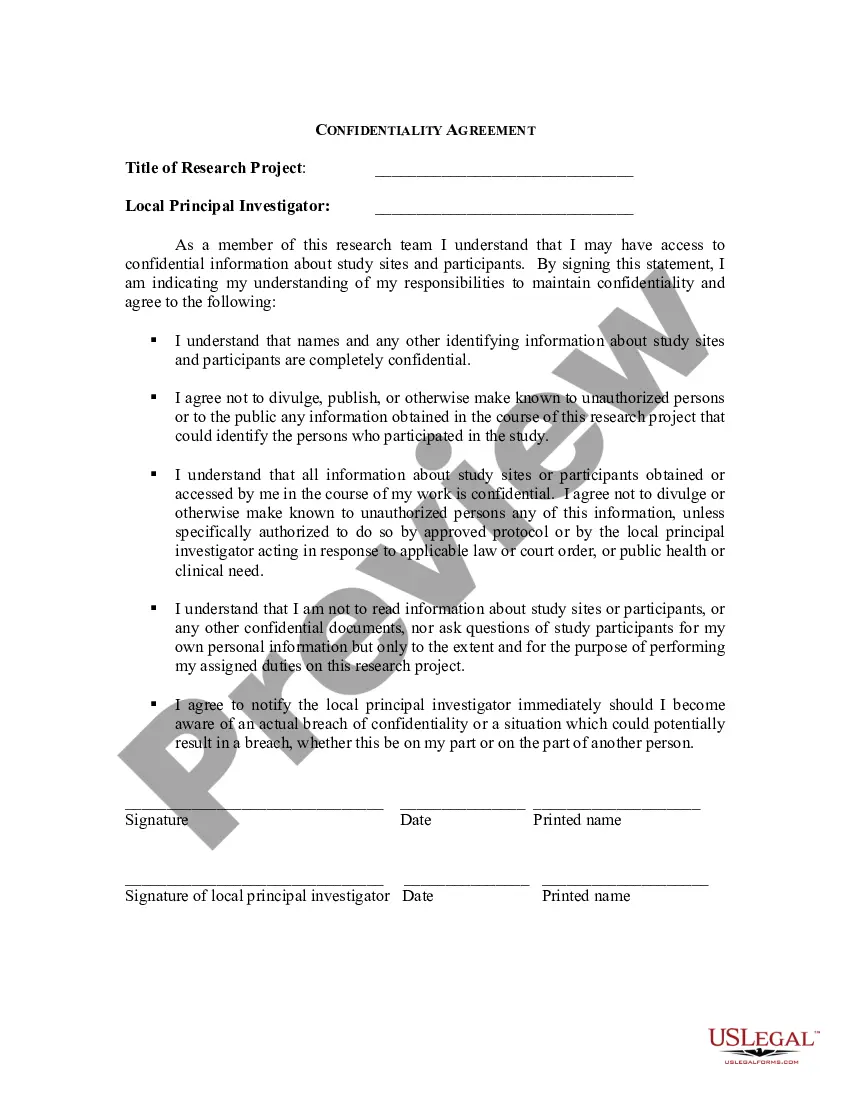
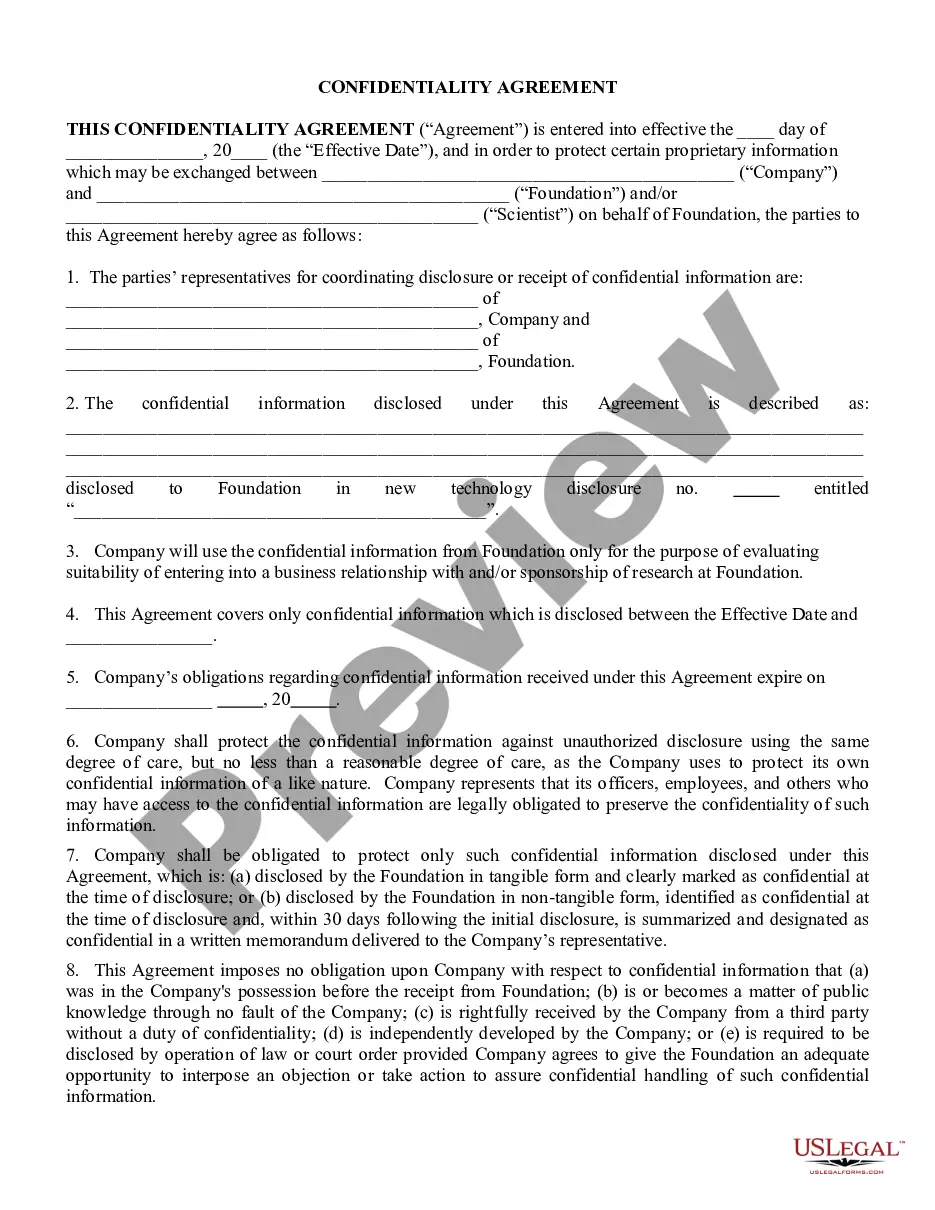
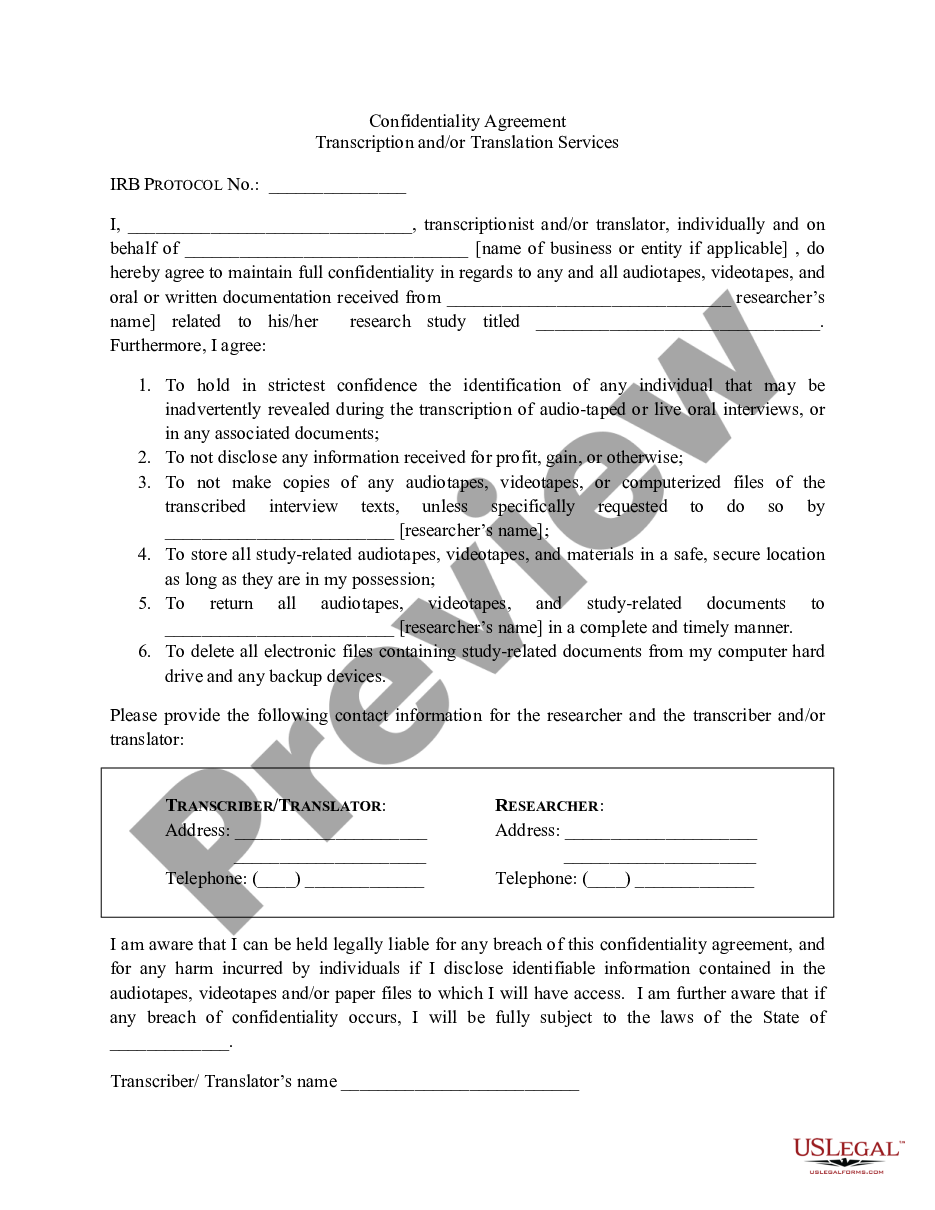
The Confidentiality Agreement between Researcher and Research Companyâs International Review Board is a legal document designed to protect participant data in research projects. This form ensures that independent researchers maintain the confidentiality of sensitive health information, preventing unauthorized access or disclosure by third parties. It is distinct from general confidentiality agreements as it specifically addresses the use of health data in research settings, emphasizing the significance of patient privacy in the research process.
What’s included in this form
- Identification of the Researcher and Research Company.
- Definition of the data being protected and its purpose.
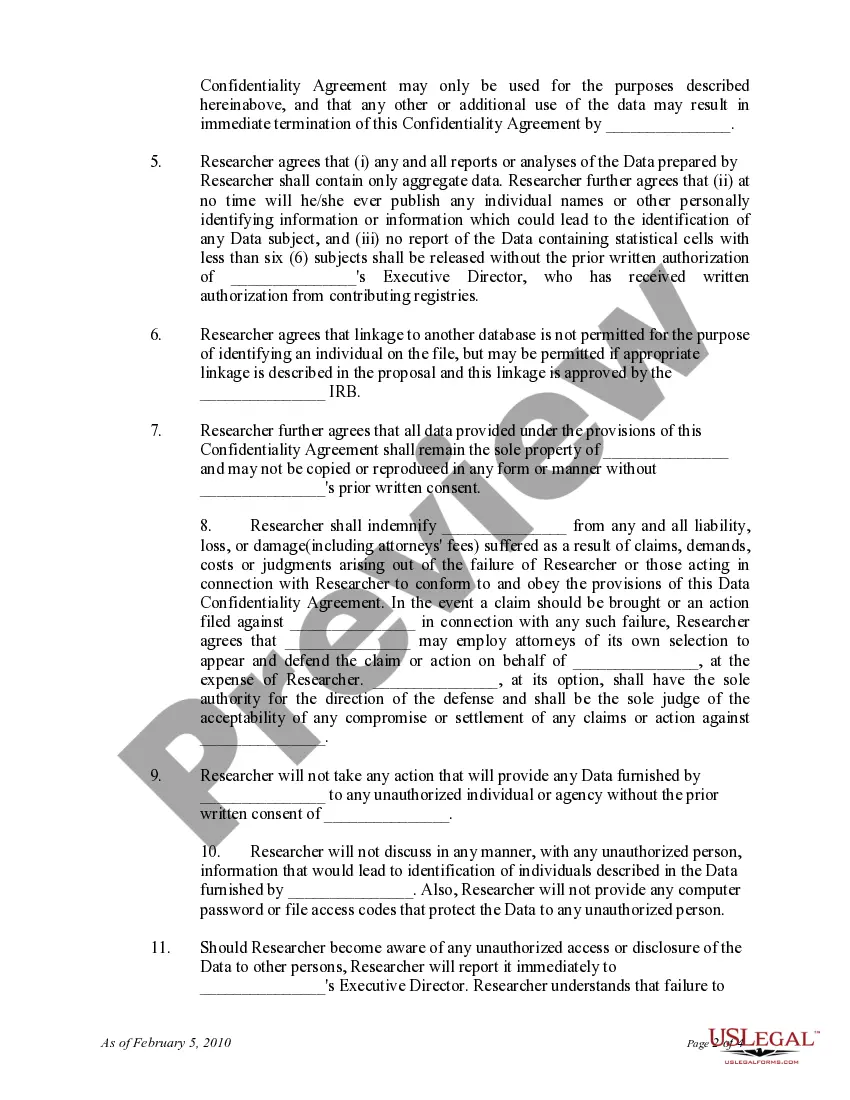
- Obligations regarding the confidentiality and use of data.
- Conditions under which data may be shared with third parties.
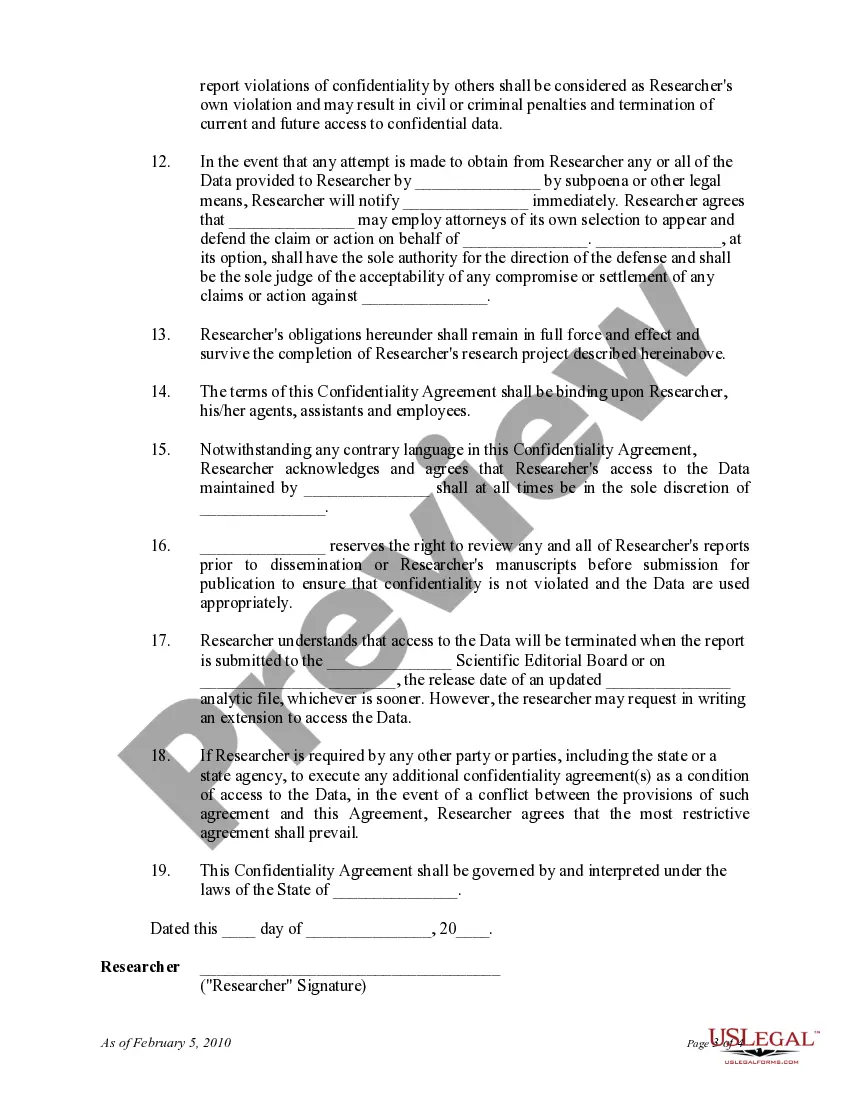
- Indemnification clauses concerning breaches of confidentiality.
- Termination conditions and the continued obligation of confidentiality.
When to use this document
This Confidentiality Agreement should be used whenever an independent researcher is granted access to sensitive health data held by a research company. Situations include academic research projects, clinical trials, and any study requiring the collection and analysis of private participant information. It is essential whenever the potential for unauthorized disclosure of health data exists.
Who should use this form
This form is intended for:
- Independent researchers seeking access to health data for their studies.
- Research companies that collect and maintain participant data.
- Members of Institutional Review Boards overseeing research projects.
Completing this form step by step
- Identify and enter the names of the Researcher and Research Company.
- Clearly describe the research project title and objectives.
- Specify the types of data that will be collected and the conditions for its use.
- Ensure the agreement includes relevant confidentiality obligations and conditions for data access.
- Both parties should sign and date the agreement to make it effective.
Notarization guidance
This form does not typically require notarization unless specified by local law. By using US Legal Forms, you can fill out and sign your agreements securely and efficiently without needing to arrange a meeting with a notary, unless your jurisdiction has specific requirements.
Get your form ready online
Our built-in tools help you complete, sign, share, and store your documents in one place.
Make edits, fill in missing information, and update formatting in US Legal Forms—just like you would in MS Word.
Download a copy, print it, send it by email, or mail it via USPS—whatever works best for your next step.
Sign and collect signatures with our SignNow integration. Send to multiple recipients, set reminders, and more. Go Premium to unlock E-Sign.
If this form requires notarization, complete it online through a secure video call—no need to meet a notary in person or wait for an appointment.
We protect your documents and personal data by following strict security and privacy standards.

Make edits, fill in missing information, and update formatting in US Legal Forms—just like you would in MS Word.

Download a copy, print it, send it by email, or mail it via USPS—whatever works best for your next step.

Sign and collect signatures with our SignNow integration. Send to multiple recipients, set reminders, and more. Go Premium to unlock E-Sign.

If this form requires notarization, complete it online through a secure video call—no need to meet a notary in person or wait for an appointment.

We protect your documents and personal data by following strict security and privacy standards.
Common mistakes
- Failing to clearly define the data being protected.
- Not including all necessary parties in the agreement.
- Overlooking the need for written notification in case of a confidentiality breach.
- Neglecting to specify conditions for the termination of access to data.
Why use this form online
- Convenient access to the form allows for quicker preparation.
- Editable templates enable users to customize details of the agreement easily.
- Reliable formatting ensures compliance with legal standards.
Looking for another form?
Form popularity
FAQ
When reviewing research IRBs are guided by three ethical principles that are fundamental to human subject protection - respect for persons, beneficence, and justice.
Keep all the research information shared with me confidential. I will not discuss or share any of the research information with anyone other than with the Researcher(s) or others identified by the Researcher(s). 2. Keep all research information secure while it is in my possession.
Individuals should be treated with respect from the time they are approached for possible participation ? even if they refuse enrollment in a study ? throughout their participation and after their participation ends. This includes: respecting their privacy and keeping their private information confidential.
Confidentiality refers to the agreements you make with subjects about how you will collect, store, analyze, use, and report on information about themselves that they agree to share with you. By contrast, privacy refers to the control over what information someone shares with others.
The IRB is responsible for evaluating proposed research to ensure adequate provisions to protect the privacy of participants and to maintain the confidentiality of data.
An essential concern of the IRB is how any proposed invasion of privacy could harm an individual. IRBs must assess the potential repercussion to an individual that results from private information becoming known to others, such as past criminal activity becoming known to an employer.
Examples of Confidentiality Protections: Storing research data on password protected computers or in locked cabinets or offices. Limiting access to study data to only a few members of the study team. Using only encrypted systems for storing research data on laptops. De-identifying study data.
How to say it: Although collected data may be made public or used for future research purposes, your identity will always remain confidential. At the conclusion of this study, identifiable information may be made public or used for future research purposes without additional consent.