Confidentiality Agreement for School District's Special Education Dept.
Overview of this form
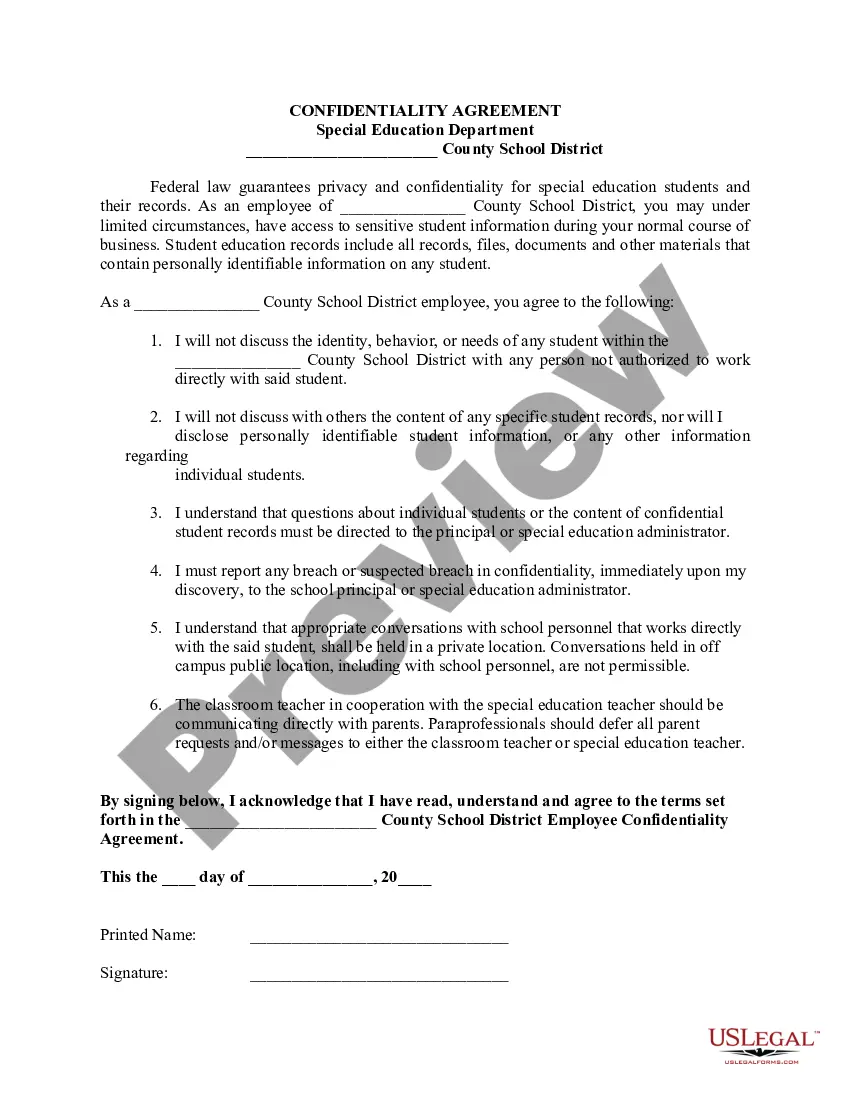
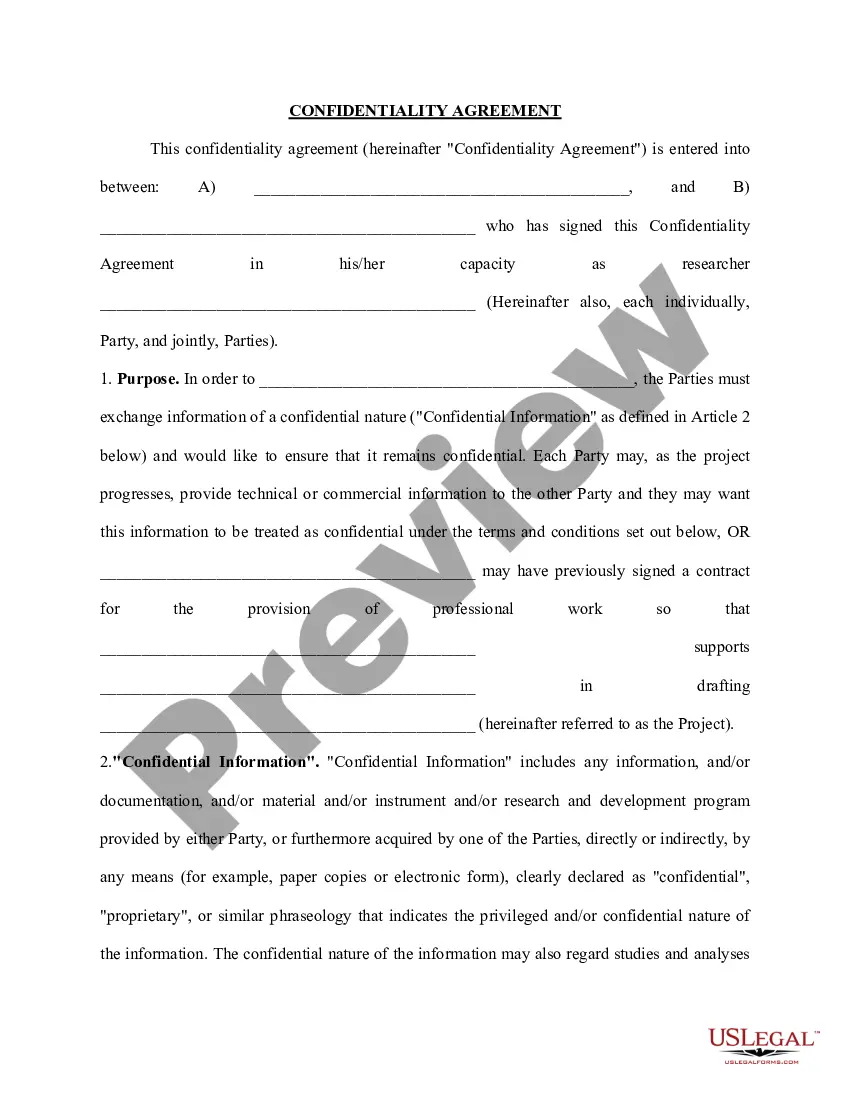
The Confidentiality Agreement for School District's Special Education Department is a legal document designed to protect the privacy of special education students and their records. It is specifically tailored for employees within the school district, including paraprofessionals, and outlines the responsibilities and limitations regarding the handling of sensitive student information. This form distinguishes itself from other privacy agreements by focusing exclusively on the needs and regulations pertaining to special education departments within school districts.
What’s included in this form
- Identification of the employing school district and department.
- Overview of the employee's obligation to maintain confidentiality.
- Prohibition against discussing student information with unauthorized individuals.
- Requirement to report any breaches of confidentiality.
- Guidelines for discussions about students with authorized personnel only.
- Signature line for employee acknowledgment and agreement.

When to use this form
This form should be used when hiring new employees within the Special Education Department of a school district. It is also essential for existing employees who have not yet signed a confidentiality agreement, as it provides clear expectations regarding the handling of sensitive student information. Additionally, this agreement should be revisited whenever there are changes in department policies or legal requirements related to student privacy.
Who should use this form
- Employees of the Special Education Department in a school district.
- Paraprofessionals who work directly with special education students.
- Administrators responsible for overseeing compliance with confidentiality laws.
- Any staff member who may have access to special education students' records.
Steps to complete this form
- Fill in the name of the school district and the specific department.
- Specify the employee's name and position within the district.
- Read through the confidentiality obligations outlined in the form.
- Sign and date the form to acknowledge understanding and agreement to the terms.
- Submit the completed form to the designated school administrator.
Notarization guidance
This form does not typically require notarization unless specified by local law. However, it is crucial to ensure that the form is signed in the presence of a witness or the appropriate administrator for added legitimacy.
Get your form ready online
Our built-in tools help you complete, sign, share, and store your documents in one place.
Make edits, fill in missing information, and update formatting in US Legal Forms—just like you would in MS Word.
Download a copy, print it, send it by email, or mail it via USPS—whatever works best for your next step.
Sign and collect signatures with our SignNow integration. Send to multiple recipients, set reminders, and more. Go Premium to unlock E-Sign.
If this form requires notarization, complete it online through a secure video call—no need to meet a notary in person or wait for an appointment.
We protect your documents and personal data by following strict security and privacy standards.

Make edits, fill in missing information, and update formatting in US Legal Forms—just like you would in MS Word.

Download a copy, print it, send it by email, or mail it via USPS—whatever works best for your next step.

Sign and collect signatures with our SignNow integration. Send to multiple recipients, set reminders, and more. Go Premium to unlock E-Sign.

If this form requires notarization, complete it online through a secure video call—no need to meet a notary in person or wait for an appointment.

We protect your documents and personal data by following strict security and privacy standards.
Common mistakes to avoid
- Failing to read the confidentiality obligations thoroughly before signing.
- Not reporting a suspected breach of confidentiality promptly.
- Discussing student information in public settings or with unauthorized personnel.
Benefits of completing this form online
- Conveniently download and complete the form at any time.
- Edit the template to suit specific district needs without legal complexities.
- Ensure compliance with legal standards through professionally drafted content.
Legal use & context
- The confidentiality agreement is enforceable under federal laws pertaining to student privacy.
- Violations of the agreement can lead to disciplinary actions or legal consequences.
- This form helps protect the rights of students by ensuring that personal information remains confidential.
Key takeaways
- The form protects sensitive student information in compliance with legal standards.
- All employees in the Special Education Department must adhere to confidentiality obligations.
- Proper completion and submission of the form is essential for protecting student rights.
Looking for another form?

Form popularity
FAQ
3 Student Privacy Laws Every Teacher Should Know The Family Educational Rights and Privacy Act (FERPA) The Children's Online Privacy Protection Act (COPPA) The Children's Internet Protection Act (CIPA) Conclusion.
Both HIPAA and FERPA are nationally mandated laws that protect information. HIPAA keeps medical records secure while FERPA keeps education records private. Failure to comply with either results in fines, penalties, or revocation of funding.
It may be a matter of keeping a student's name, password, or parent information private, or maybe assessment results and grades need to be kept confidential. Teachers should also prioritize student security when handling login information or passwords.
Except under certain specified circumstances, FERPA affords parents/guardians or eligible students the right to inspect and review the student's education records.
The Family Educational Rights and Privacy Act (FERPA) is a federal law enacted in 1974 that protects the privacy of student education records. FERPA applies to any public or private elementary, secondary, or post-secondary school.
A ?school official? includes a teacher, school principal, president, chancellor, board member, trustee, registrar, counselor, admissions officer, attorney, accountant, human resources professional, information systems specialist, and support or clerical personnel.
Failing to respect and protect the confidentiality of students and their families not only erodes public trust in the professionalism and ethics of the district and its employees, it puts the involved employee at grave risk of both disciplinary and legal action.
Reasons for confidentiality under FERPA: Confidentiality of student information protects embarrassing personal information from disclosure. This is particularly true where the wrongful release of information about children and families might also lead to discrimination or cause prejudicial treatment.
The Family Educational Rights and Privacy Act (FERPA) (20 U.S.C. § 1232g; 34 CFR Part 99) is a Federal law that protects the privacy of student education records.