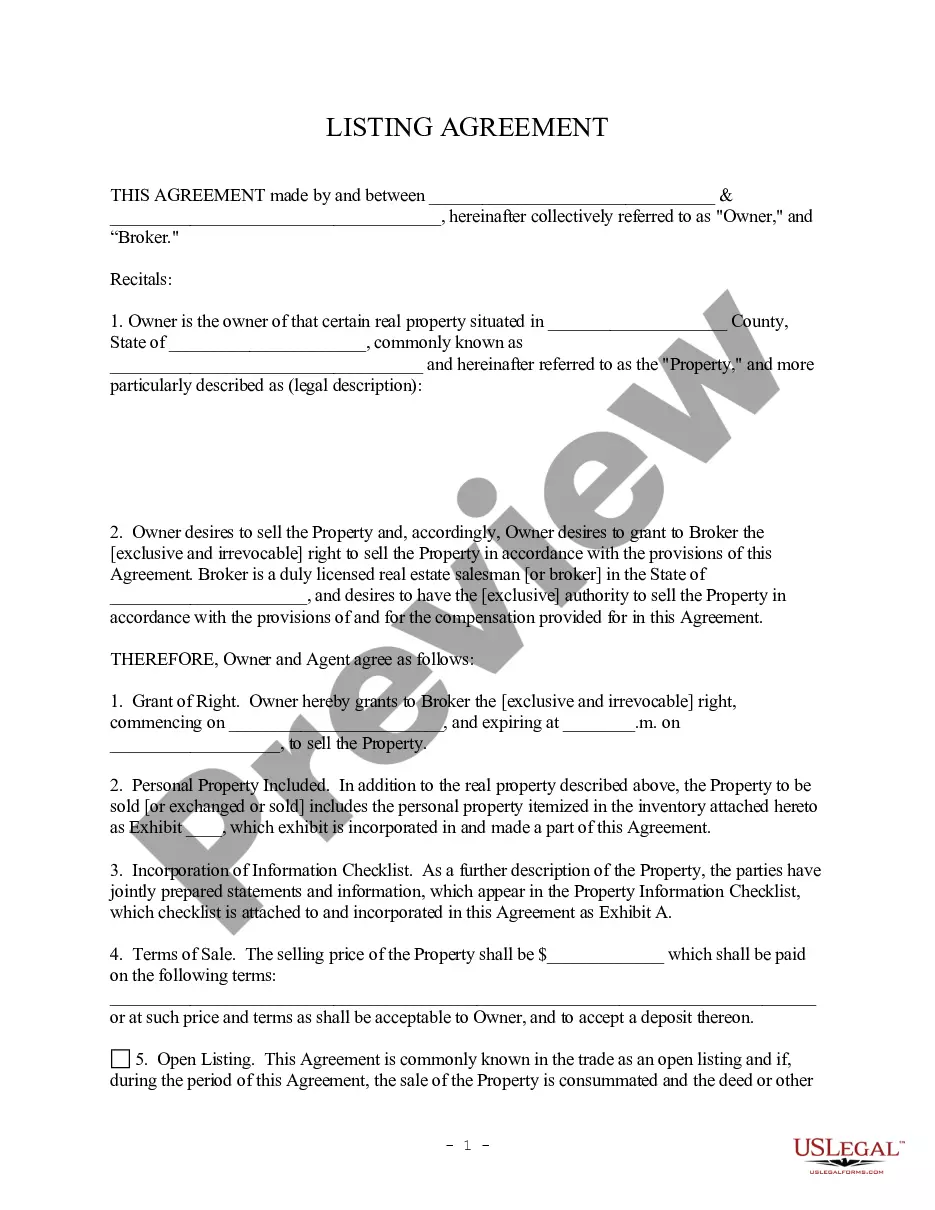
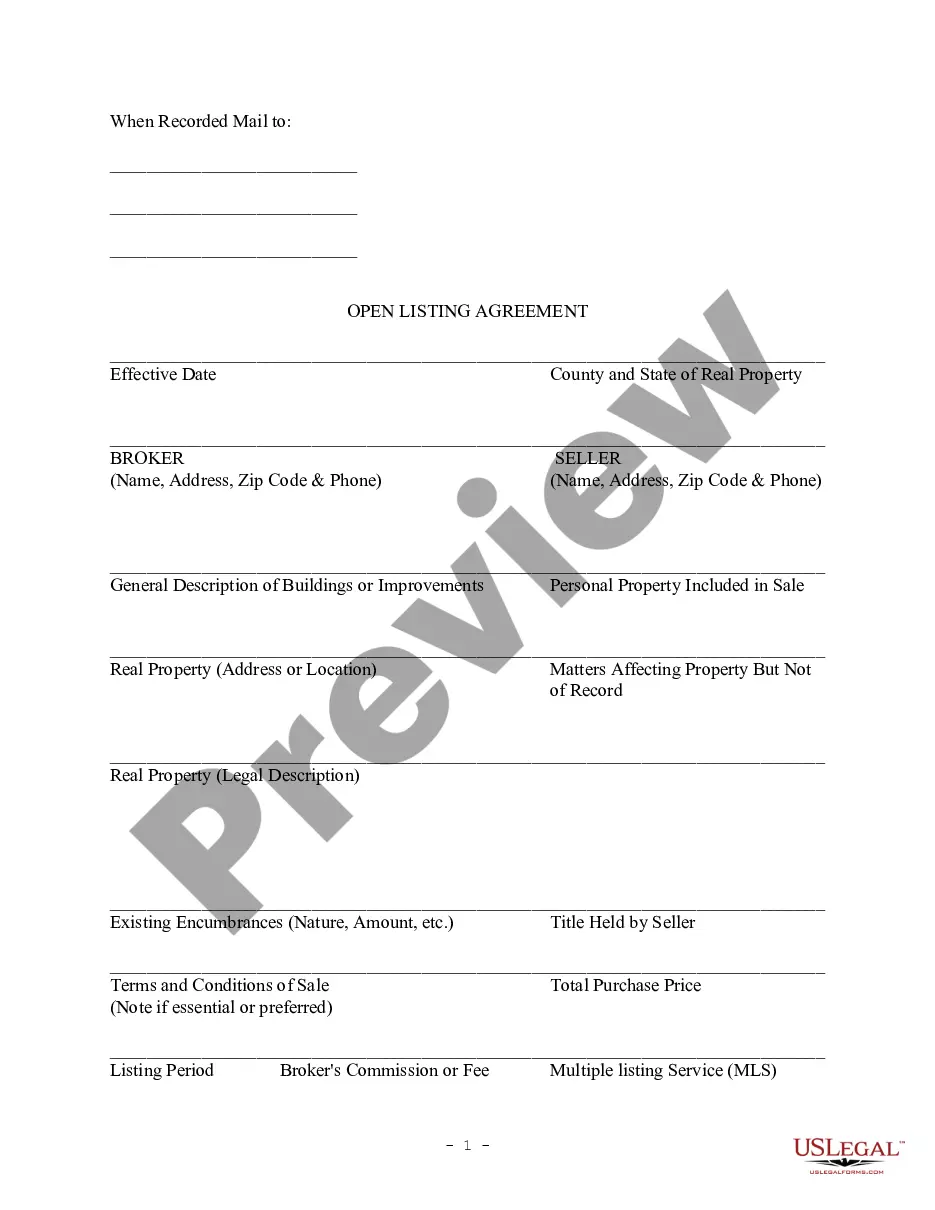
Listing Agreement Form With A Self-renewing Clause In Wake
Description

Get your form ready online
Our built-in tools help you complete, sign, share, and store your documents in one place.
Make edits, fill in missing information, and update formatting in US Legal Forms—just like you would in MS Word.
Download a copy, print it, send it by email, or mail it via USPS—whatever works best for your next step.
Sign and collect signatures with our SignNow integration. Send to multiple recipients, set reminders, and more. Go Premium to unlock E-Sign.
If this form requires notarization, complete it online through a secure video call—no need to meet a notary in person or wait for an appointment.
We protect your documents and personal data by following strict security and privacy standards.

Make edits, fill in missing information, and update formatting in US Legal Forms—just like you would in MS Word.

Download a copy, print it, send it by email, or mail it via USPS—whatever works best for your next step.

Sign and collect signatures with our SignNow integration. Send to multiple recipients, set reminders, and more. Go Premium to unlock E-Sign.

If this form requires notarization, complete it online through a secure video call—no need to meet a notary in person or wait for an appointment.

We protect your documents and personal data by following strict security and privacy standards.
Looking for another form?










Form popularity
FAQ
What does a carryover clause do? Protects the broker if the seller cancels the listing agreement. Allows an automatic six-month extension to the listing contract. Prevents the seller from doing a FSBO sale after the listing expires.
What is the purpose of a carryover clause? Protects the seller if the buyer cancels the sale. Allows a six-week extension to the listing contract. Allows the broker to collect a commission for some period of time after the listing expires.
Once this agreement expires, your real estate agent no longer represents you. It also means your listing will officially no longer be for sale, as it will be removed from platforms like Realtor®. It will also be removed from the multiple listing service, also called the MLS.
To extend the listing, submit these documents to the MLS Support Team: Amendment Form. To amend the Expiration Date of the Listing Contract. MLS Change Form: Complete the top section. Fill in the new date in the Expiration Date field.
"'Expired' means your home is off the market," explains Mary Beth Sales, a real estate agent in Beverly Hills, CA. But that's not all: An expired real estate agreement also means you're no longer tied to your real estate agent.
Self-renewing clauses, also known as "evergreen clauses," are generally not allowed in listing agreements. They can potentially lock a seller into a long-term contract with a broker, which may not be in the seller's best interest.
What does a carryover clause do? Allows the broker to collect a commission for some period of time after the listing expires.
What is the Holdover Period? The Holdover period is a length of time (in days) following a listing's expiration where the seller may owe commission to the listing agent if the property sells. There is no prescribed period of time for a holdover, and many listings have a 0 day holdover.
The clause should detail the renewal process, notification requirements, and any options to opt-out. Here's an example: “This Agreement shall automatically renew for successive one-year terms unless either party provides written notice of its intention not to renew at least 30 days before the end of the current term.
Most seasoned real estate agents encourage sellers to respond promptly as a sign of courtesy to potential buyers. Florida law has no provisions or rules requiring sellers to respond within a specific amount of time. In most cases, the ideal time threshold to respond is between 24 to 48 hours.