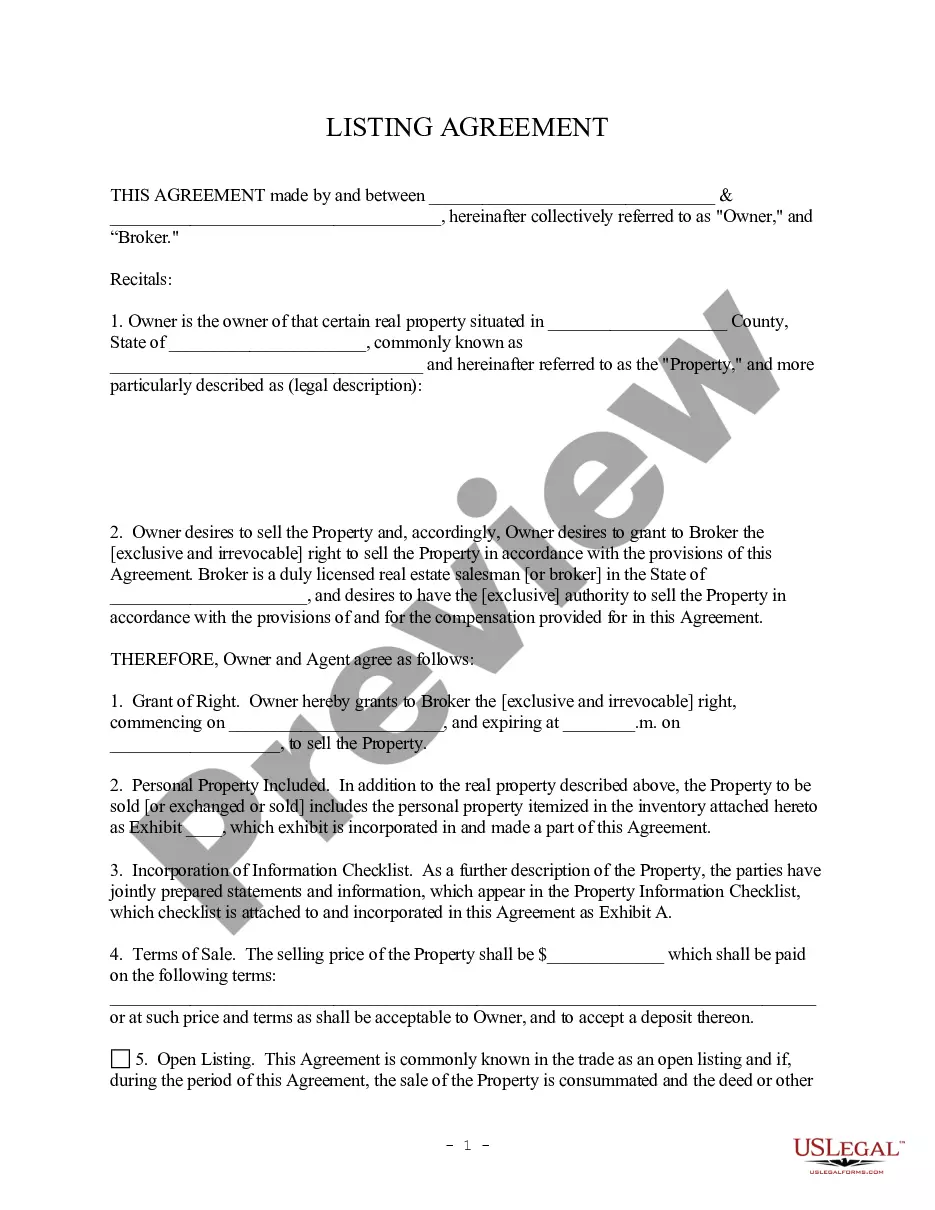
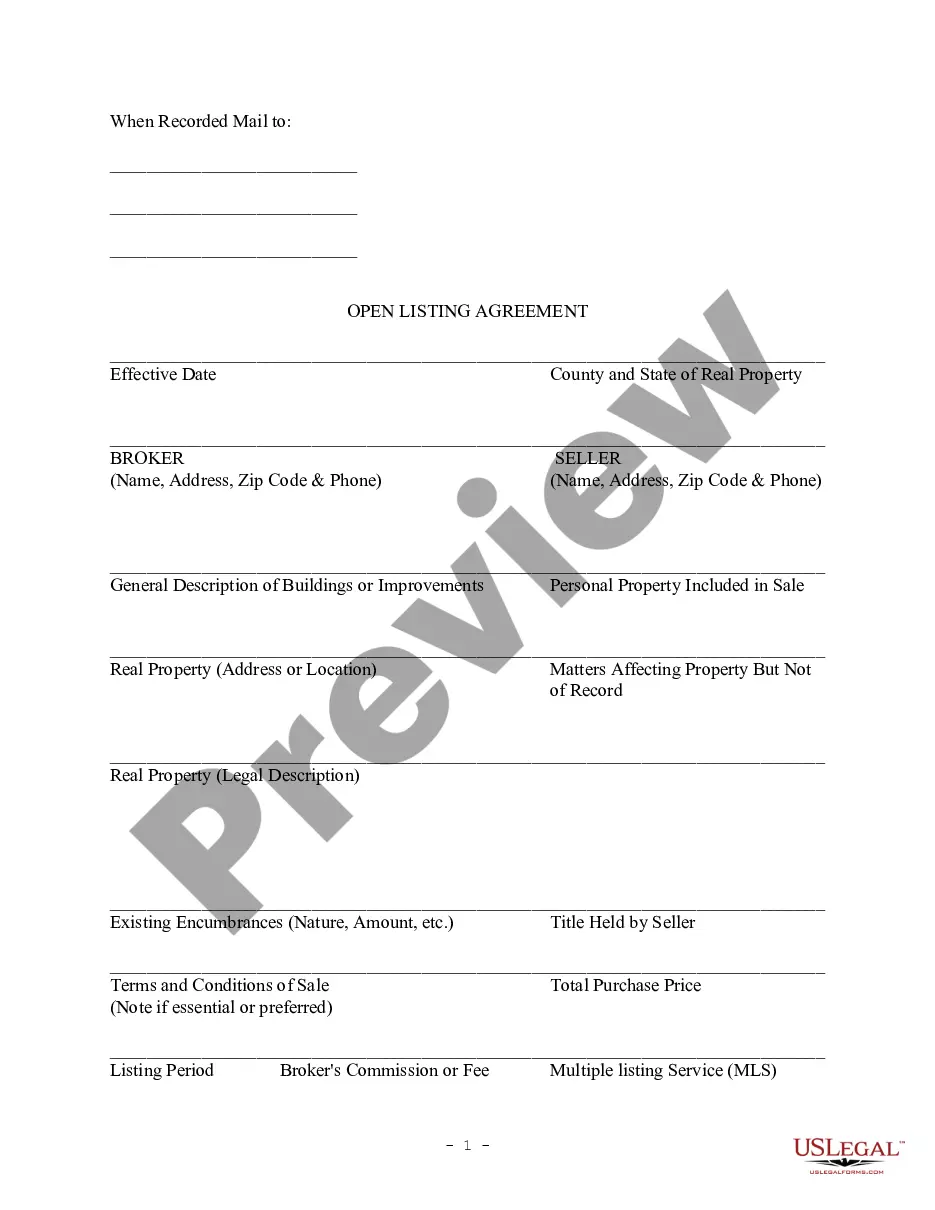
Listing Agreement Form For Condominium In Maryland
Description

Get your form ready online
Our built-in tools help you complete, sign, share, and store your documents in one place.
Make edits, fill in missing information, and update formatting in US Legal Forms—just like you would in MS Word.
Download a copy, print it, send it by email, or mail it via USPS—whatever works best for your next step.
Sign and collect signatures with our SignNow integration. Send to multiple recipients, set reminders, and more. Go Premium to unlock E-Sign.
If this form requires notarization, complete it online through a secure video call—no need to meet a notary in person or wait for an appointment.
We protect your documents and personal data by following strict security and privacy standards.

Make edits, fill in missing information, and update formatting in US Legal Forms—just like you would in MS Word.

Download a copy, print it, send it by email, or mail it via USPS—whatever works best for your next step.

Sign and collect signatures with our SignNow integration. Send to multiple recipients, set reminders, and more. Go Premium to unlock E-Sign.

If this form requires notarization, complete it online through a secure video call—no need to meet a notary in person or wait for an appointment.

We protect your documents and personal data by following strict security and privacy standards.
Looking for another form?

Form popularity
FAQ
The purpose of the resale certificate is to offer protection to both the buyer and the seller as well as the homeowners association. It gives sellers the opportunity to fully disclose their financial position with the HOA. At the same time, it reduces financial risk for the association.
The three types of real estate listing agreements are open listing, exclusive agency listing, and exclusive right-to-sell listing. The listing agreement is an employment contract rather than a real estate contract: The broker is hired to represent the seller, but no property is transferred between the two.
California law requires condo sellers to disclose all material facts and provide buyers with all governing HOA documents and one year's HOA meeting minutes.
When a condominium is sold, the seller must, upon request, provide to the buyer is "CC&Rs, bylaws and financial statements". The correct option is D that is all of the above. When a condominium is sold, the seller is generally required to provide the buyer with important information about the property.
Definition and Purpose of a Condominium Resale Certificate It is a comprehensive disclosure statement offering a snapshot of the condo's financial and legal status. Essentially, it provides potential buyers with a clear understanding of their purchasing property, allowing them to make informed decisions.
Typically, a Resale Certificate is a set of documents that a homeowners or condominium seller provides to a prospective buyer, usually after mutual acceptance. The certificate typically includes the homeowner's association budget, the Covenants, Conditions, and Restrictions (CC&Rs) for the association.
Four types of legal “governing documents” are typically associated with subdivisions such as condominiums and planned developments: the Declaration of Covenants, Conditions and Restrictions (or “CC&Rs”), the Bylaws, the Articles of Incorporation, and the Rules.
Maryland law requires HOAs to provide homeowners with a resale package when property changes hands, which includes key documents, such as the declaration, bylaws, rules and regulations, and a statement of outstanding fees or fines.
Articles of Incorporation The Articles bring the corporation into existence, and contain the outlines of its organizational structure. In California, homeowners associations are not required to be incorporated, and most smaller associations are not incorporated (and therefore have no Articles of Incorporation).
While homeowners' associations in Maryland are governed by the federal FDCPA, the state also has an additional legislature that regulates the collection of debt at the state level.
