Listing Agreement Form With Marisa In Los Angeles
Description
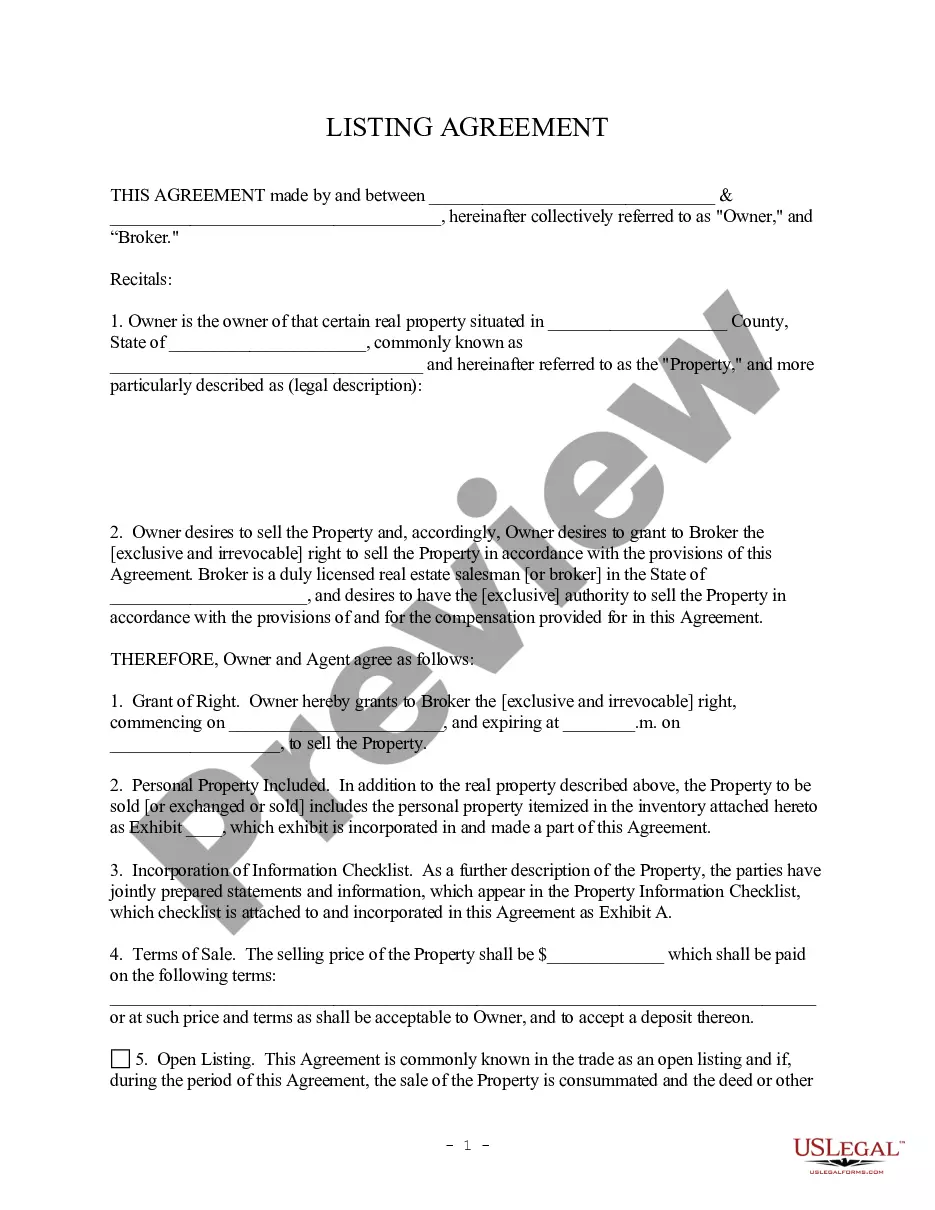
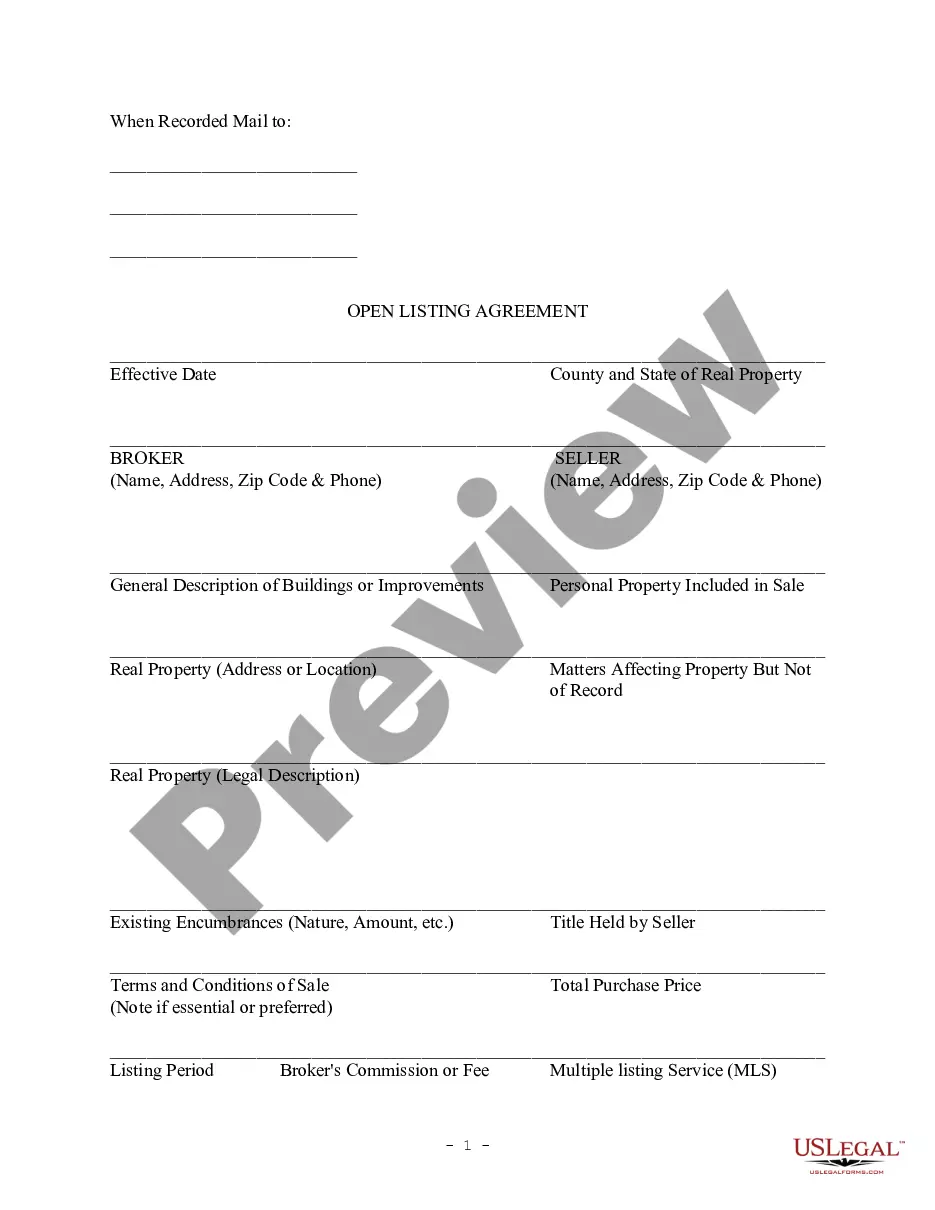
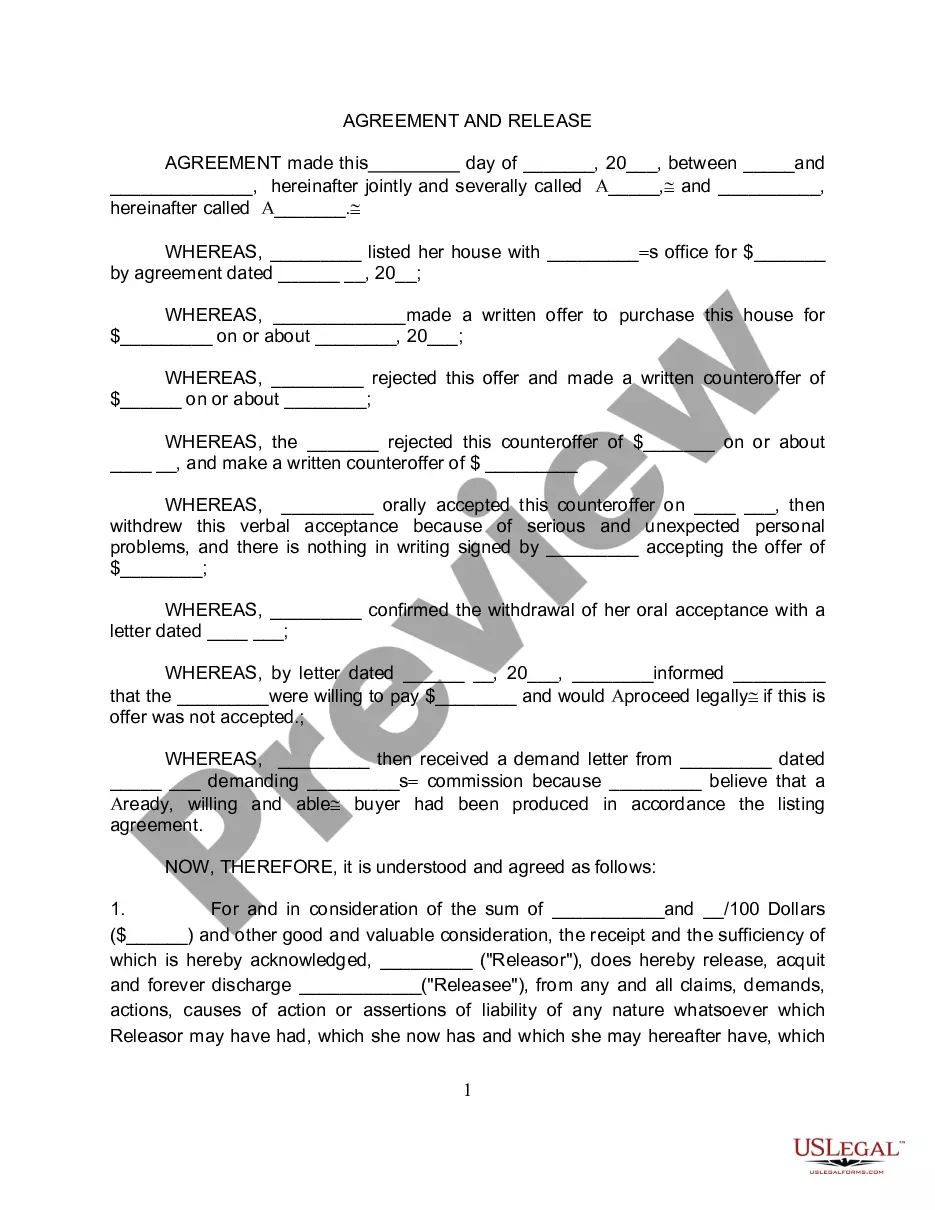
Get your form ready online
Our built-in tools help you complete, sign, share, and store your documents in one place.
Make edits, fill in missing information, and update formatting in US Legal Forms—just like you would in MS Word.
Download a copy, print it, send it by email, or mail it via USPS—whatever works best for your next step.
Sign and collect signatures with our SignNow integration. Send to multiple recipients, set reminders, and more. Go Premium to unlock E-Sign.
If this form requires notarization, complete it online through a secure video call—no need to meet a notary in person or wait for an appointment.
We protect your documents and personal data by following strict security and privacy standards.

Make edits, fill in missing information, and update formatting in US Legal Forms—just like you would in MS Word.

Download a copy, print it, send it by email, or mail it via USPS—whatever works best for your next step.

Sign and collect signatures with our SignNow integration. Send to multiple recipients, set reminders, and more. Go Premium to unlock E-Sign.

If this form requires notarization, complete it online through a secure video call—no need to meet a notary in person or wait for an appointment.

We protect your documents and personal data by following strict security and privacy standards.
Looking for another form?










Form popularity
FAQ
Under California Civil Code Section 1624, certain contracts – including marriage, real estate, broker, lender, debt repayment, sales agreement, and agreements that take over a year to complete – must be in writing.
The settlement required real estate licensees to have a written agreement with a buyer before showing properties listed on the Multiple Listing Service (MLS). AB 2992 expands this requirement to all properties, whether it is listed on an MLS or not, and also imposes several additional requirements.
You can indeed cancel a real estate listing agreement in California. Sellers might be asking themselves, “under what circumstances?” And the answer to that is: almost any. Maybe you changed your mind and you decided you don't want to sell your house after all.
This Practice Note considers the specific situations where a contract is required by law to be in writing: assignments, contracts for the sale of land, equitable mortgages, assents, transfers of shares, transfers of intellectual property rights, and guarantees.
Not all deals are required to be in writing. Often, smaller, less valuable transactions, or short-term services, may not require a written agreement at all. Depending on your comfort level, however, a written agreement can make sure both buyer and seller are on the same page.
"Exclusive right to sell listing agreement" means a listing agreement whereby the owner grants to a seller's agent, for a specified period of time, the exclusive right to sell, find, or obtain a buyer for the real property, and the seller's agent is entitled to the agreed compensation if, during that period of time, ...
The cancellation provisions are found in Paragraphs 14C (1) and (2), and in Paragraph 14E of the CA-RPA. Regardless of the reason, the seller must give some type of notice to the buyer, however (either a Notice to Perform or a Demand to Close Escrow) before the seller can cancel.
Legal Grounds for Termination These include: Mutual Agreement: The most straightforward path to termination is when both parties agree to end the agreement. This often occurs when both the seller and broker recognize that their objectives are not being met, or circumstances have changed.
The simplest way to terminate a listing agreement is through mutual consent. If both you and your agent agree to part ways, you can cancel the agreement without penalties. Make sure to document this agreement in writing, as it will serve as evidence in case of any disputes later on.
A listing agreement is a binding contract, but there are a number of ways to get out of one. Whether you change your mind about selling, have ethical or performance concerns about the agent, or you just don't find a buyer, you can get out of a listing agreement.

