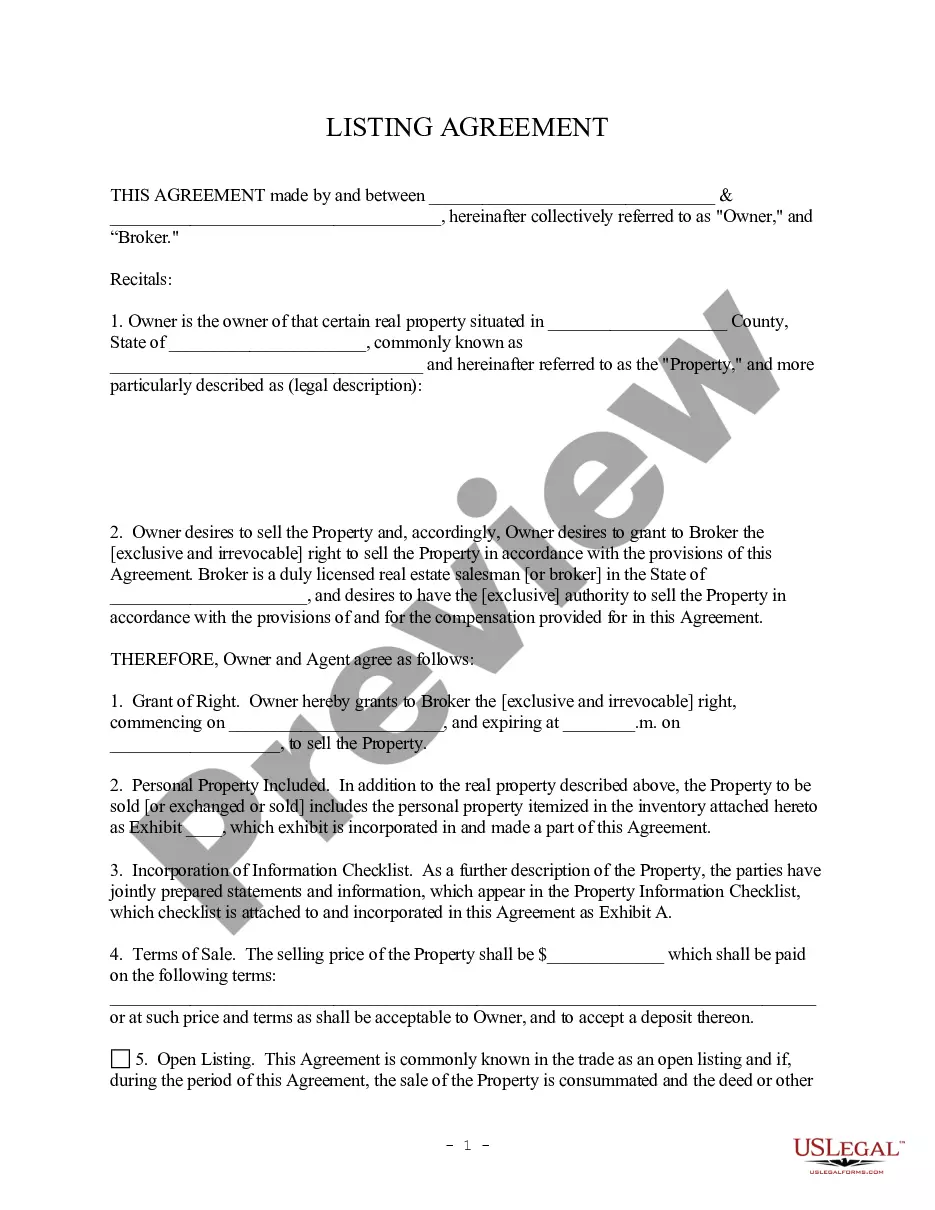
Listing Agreement Document For Lease In Collin
Description

Get your form ready online
Our built-in tools help you complete, sign, share, and store your documents in one place.
Make edits, fill in missing information, and update formatting in US Legal Forms—just like you would in MS Word.
Download a copy, print it, send it by email, or mail it via USPS—whatever works best for your next step.
Sign and collect signatures with our SignNow integration. Send to multiple recipients, set reminders, and more. Go Premium to unlock E-Sign.
If this form requires notarization, complete it online through a secure video call—no need to meet a notary in person or wait for an appointment.
We protect your documents and personal data by following strict security and privacy standards.

Make edits, fill in missing information, and update formatting in US Legal Forms—just like you would in MS Word.

Download a copy, print it, send it by email, or mail it via USPS—whatever works best for your next step.

Sign and collect signatures with our SignNow integration. Send to multiple recipients, set reminders, and more. Go Premium to unlock E-Sign.

If this form requires notarization, complete it online through a secure video call—no need to meet a notary in person or wait for an appointment.

We protect your documents and personal data by following strict security and privacy standards.
Looking for another form?







Form popularity
FAQ
LEGALLY, the landlord MUST provide you with a copy of the lease. Send a Certified Mail letter or an email to the landlord politely requesting a copy.
The lease listing agreement is a contract between a property owner and a property manager (or listing broker). This agreement grants the broker the exclusive right or authority to market the property for rent and find suitable tenants.
A listing agreement authorizes the broker to represent the seller and their property to third parties. The listing agreement is an employment contract rather than a real estate contract: The broker is hired to represent the seller, but no property is transferred between the two.
Here's a list of standard fields that you should include in your lease agreement: Tenant information. Include each tenant's full name and contact information. Rental property description. Security deposit. Monthly rent amount. Utilities. Lease term. Policies. Late fees.
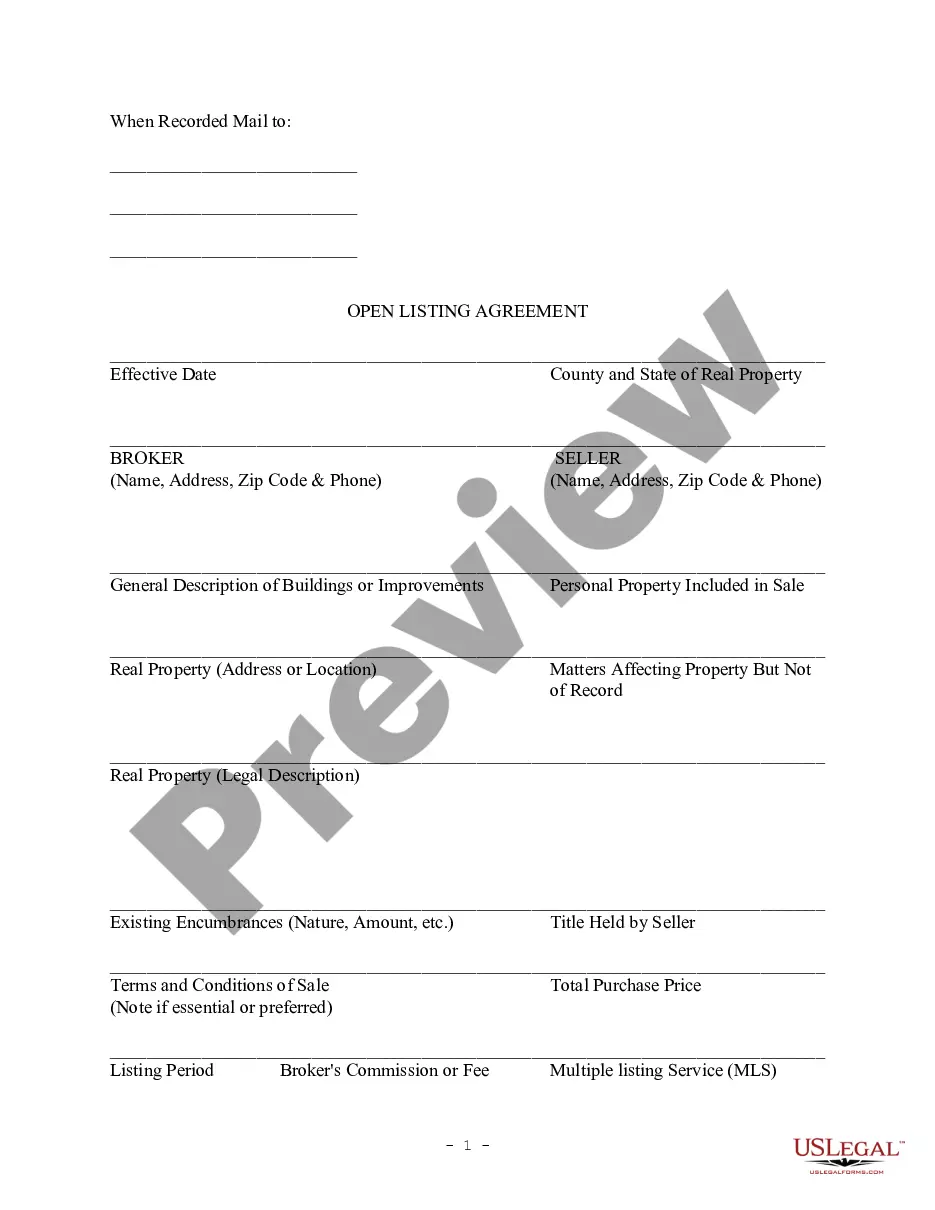
The three types of real estate listing agreements are open listing, exclusive agency listing, and exclusive right-to-sell listing.
An exclusive right to sell listing is the most widely-used listing agreement. Under this agreement, the broker has the exclusive right to market the property for a specified period of time.
State laws on leases and rental agreements can vary, but a landlord or property management company should provide you with a copy of your signed lease upon request. You should make your request in writing, so you have proof if there is a dispute later.
An exclusive right-to-sell listing is the most commonly used contract. With this type of listing agreement, one broker is appointed the sole seller's agent and has exclusive authorization to represent the property.
The most predominant listing agreement in California is the Exclusive Right to Sell Agreement. This agreement entitles the listing agent to a commission regardless of who finds the buyer, granting them exclusive marketing rights for the home. Other types of agreements exist but are less common.
An exclusive right-to-sell listing is the most commonly used real estate contract. With this type of listing agreement, one broker is authorized as the seller's sole agent and has exclusive authorization to represent the property.
