Mississippi Defendant's Response to Request for Admissions
About this form
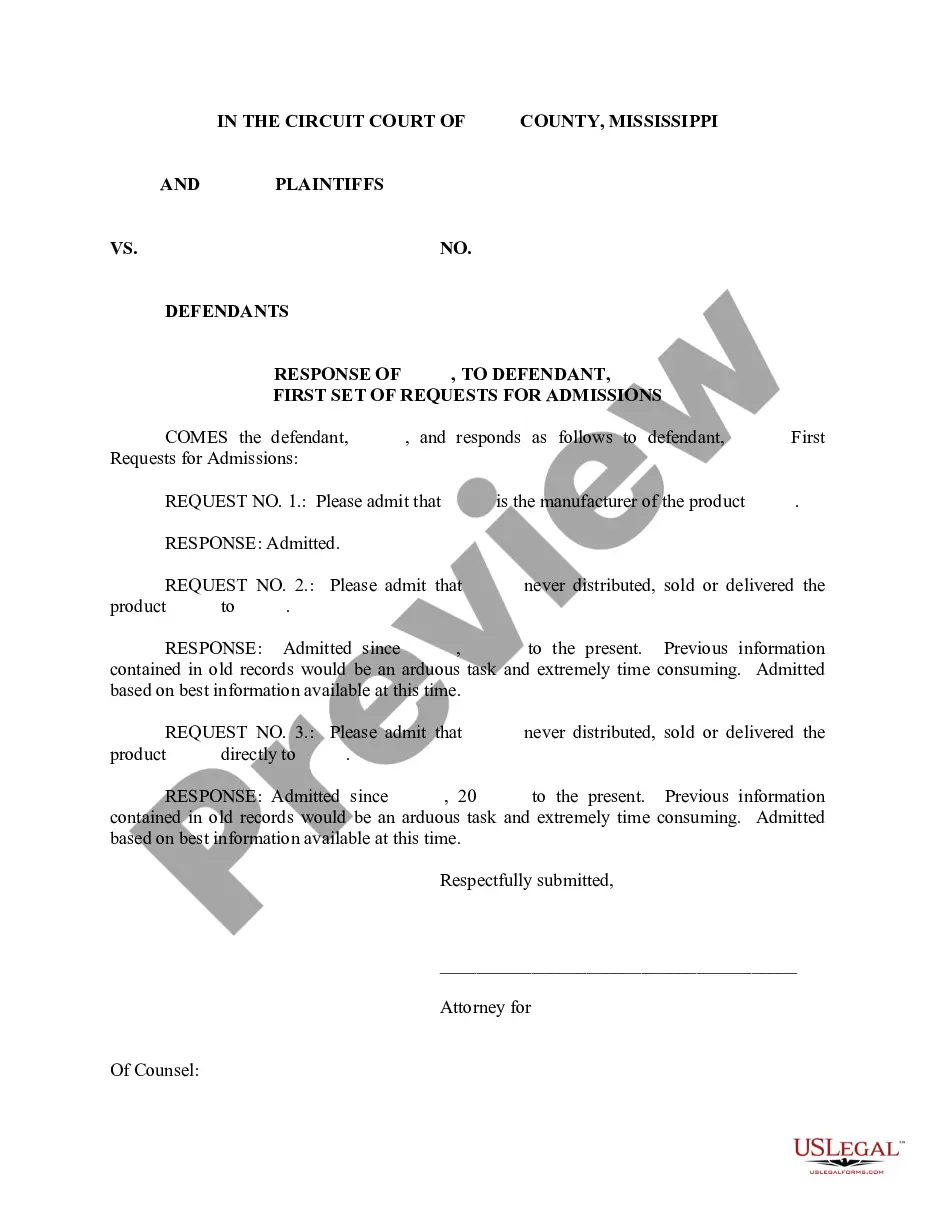
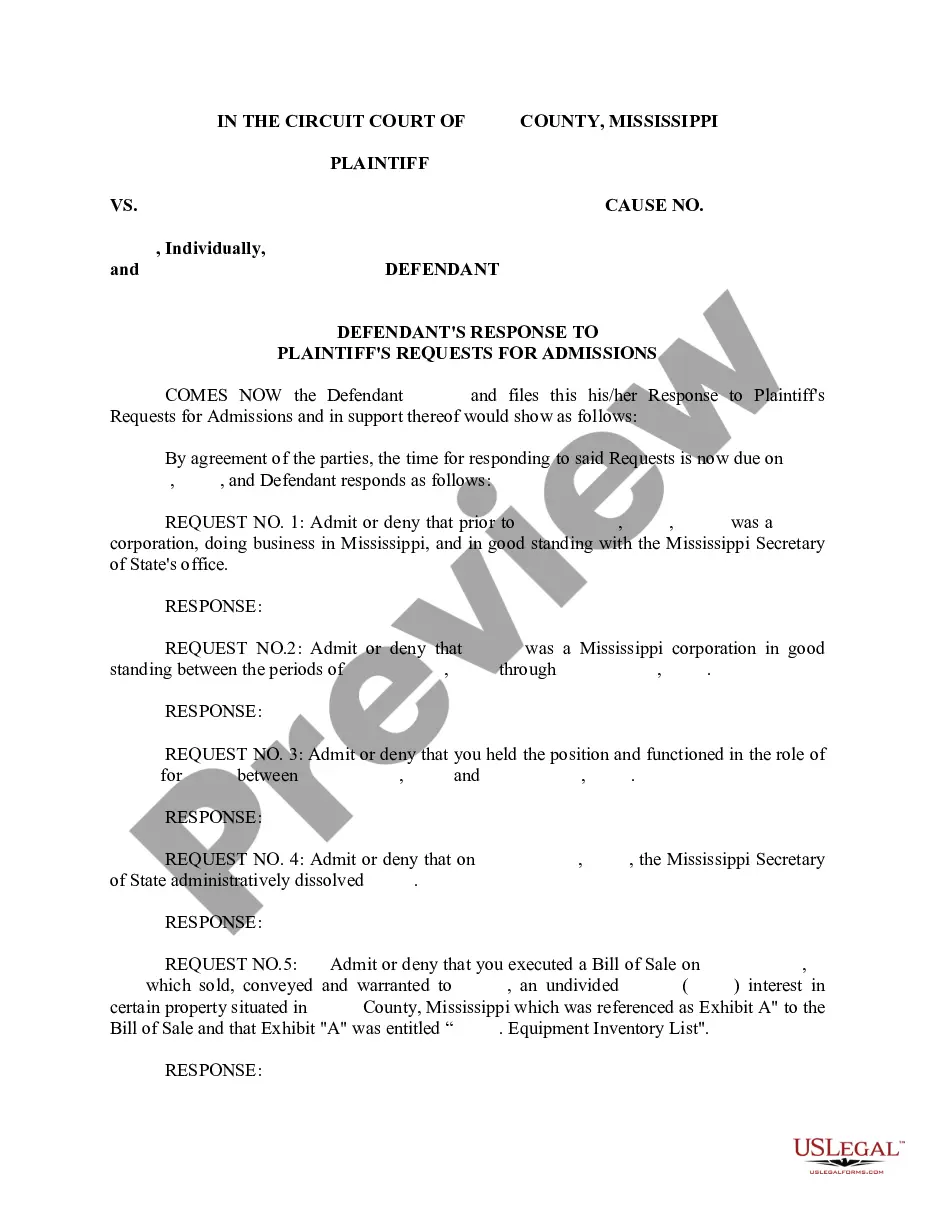
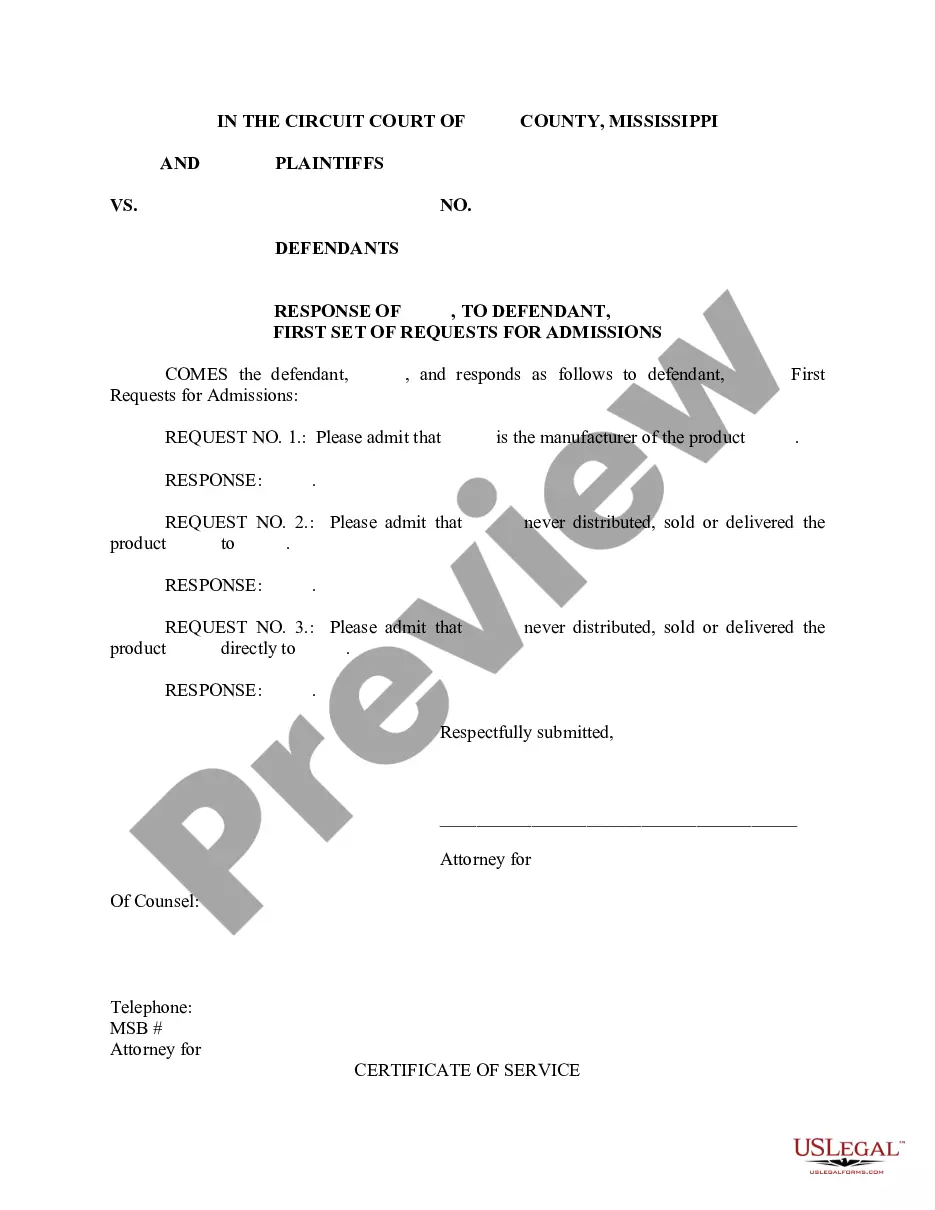
The Defendant's Response to Request for Admissions is a legal document used in civil litigation. This form allows a defendant to respond to specific statements made by the opposing party, agreeing or disagreeing with the claims presented. Unlike other response forms, this document focuses specifically on admissions, which can be crucial in narrowing down the issues for trial and potentially expediting the legal process.
Key parts of this document
- Caption: Includes case information such as the court name and parties involved.
- Response section: Fields for agreeing or disagreeing with each admission request.
- Signature block: Area for the defendant's signature and attorney's information, if applicable.
- Date: A section for the date when the response is executed.
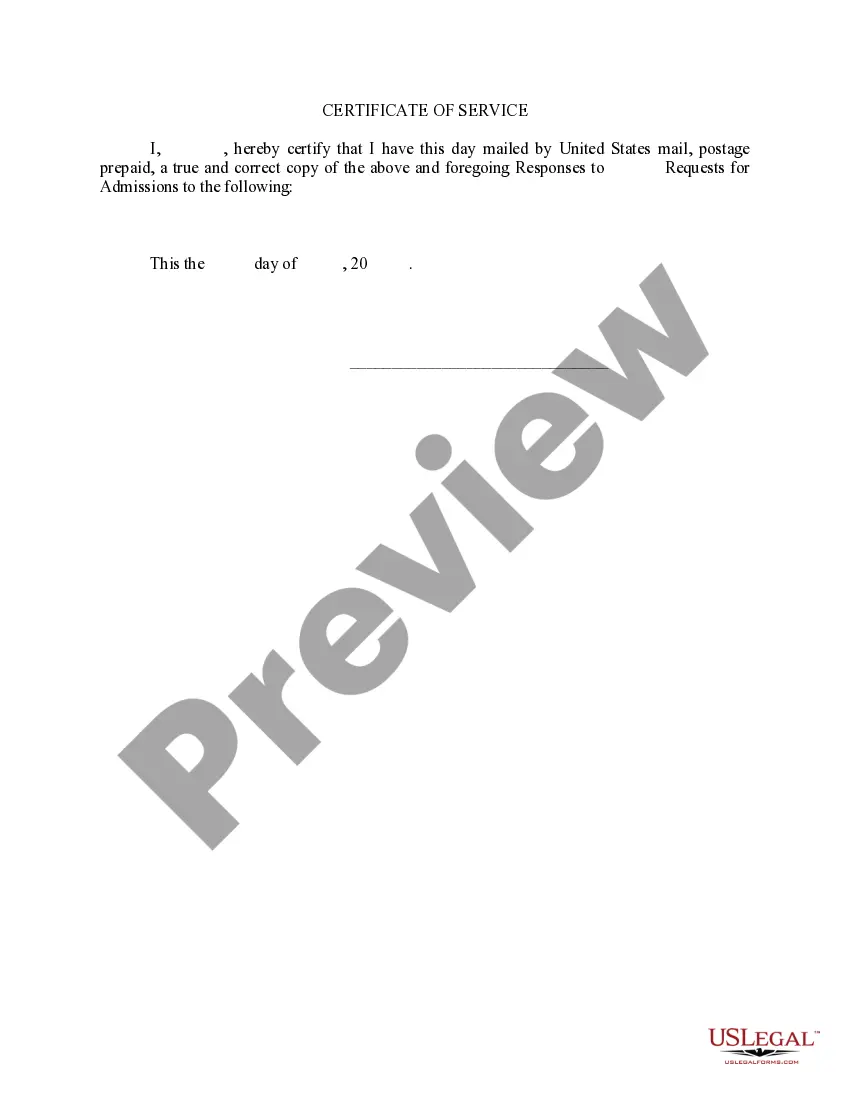
- Certificate of service: Indicates how the document was provided to the other party.

Common use cases
This form is utilized when you, as a defendant, receive a request for admissions from the opposing party in a civil lawsuit. It is typically used in preparation for trial to clarify the issues in dispute, allowing you to formally respond to specific claims made against you. Completing this document carefully can assist in streamlining the litigation process and potentially limit the scope of the trial.
Who this form is for
- Defendants involved in a civil lawsuit who have received a request for admissions from the plaintiff.
- Attorneys representing clients in civil litigation cases that require formal responses to admissions.
- Individuals or entities looking to assert their position regarding factual matters alleged by the opposing party in a legal proceeding.
How to complete this form
- Identify the parties involved: Make sure to include the correct names of the plaintiff and defendant.
- Review each request for admission: Carefully read all statements provided by the opposing party.
- Provide your responses: Mark each request as "admit" or "deny" and include explanations if necessary.
- Add your signature: Sign the document in the designated area, indicating your agreement with the responses.
- Date the form: Include the date of execution to formally complete the document.
Does this form need to be notarized?
This form does not typically require notarization unless specified by local law. It is important to review any additional requirements that may apply in your jurisdiction.
Get your form ready online
Our built-in tools help you complete, sign, share, and store your documents in one place.
Make edits, fill in missing information, and update formatting in US Legal Forms—just like you would in MS Word.
Download a copy, print it, send it by email, or mail it via USPS—whatever works best for your next step.
Sign and collect signatures with our SignNow integration. Send to multiple recipients, set reminders, and more. Go Premium to unlock E-Sign.
If this form requires notarization, complete it online through a secure video call—no need to meet a notary in person or wait for an appointment.
We protect your documents and personal data by following strict security and privacy standards.

Make edits, fill in missing information, and update formatting in US Legal Forms—just like you would in MS Word.

Download a copy, print it, send it by email, or mail it via USPS—whatever works best for your next step.

Sign and collect signatures with our SignNow integration. Send to multiple recipients, set reminders, and more. Go Premium to unlock E-Sign.

If this form requires notarization, complete it online through a secure video call—no need to meet a notary in person or wait for an appointment.

We protect your documents and personal data by following strict security and privacy standards.
Avoid these common issues
- Failing to address each request for admission separately.
- Not providing explanations for denials, which can lead to misunderstandings.
- Signing the form without proper review, potentially agreeing to claims or facts that could be disputed.
- Neglecting to file and serve the response according to court rules.
Benefits of completing this form online
- Convenience of downloading the form in multiple formats, such as PDF or Word.
- Editability allows you to personalize the response to fit your specific case details effectively.
- Reliability of having a form drafted by licensed attorneys ensures its adherence to legal standards.
What to keep in mind
- The Defendant's Response to Request for Admissions is crucial for responding to requests made by the opposing party in a lawsuit.
- Responses must be provided within a specified time frame to avoid automatic admissions.
- Accurate and clear responses are important for the integrity and outcome of the legal proceeding.
Looking for another form?
Form popularity
FAQ
Similar to responses to Requests for Production, responses to Requests for Admissions do not have to be verified.Cost of proof sanctions are available against a party who denies a Request for Admission and the matter is proven at trial.
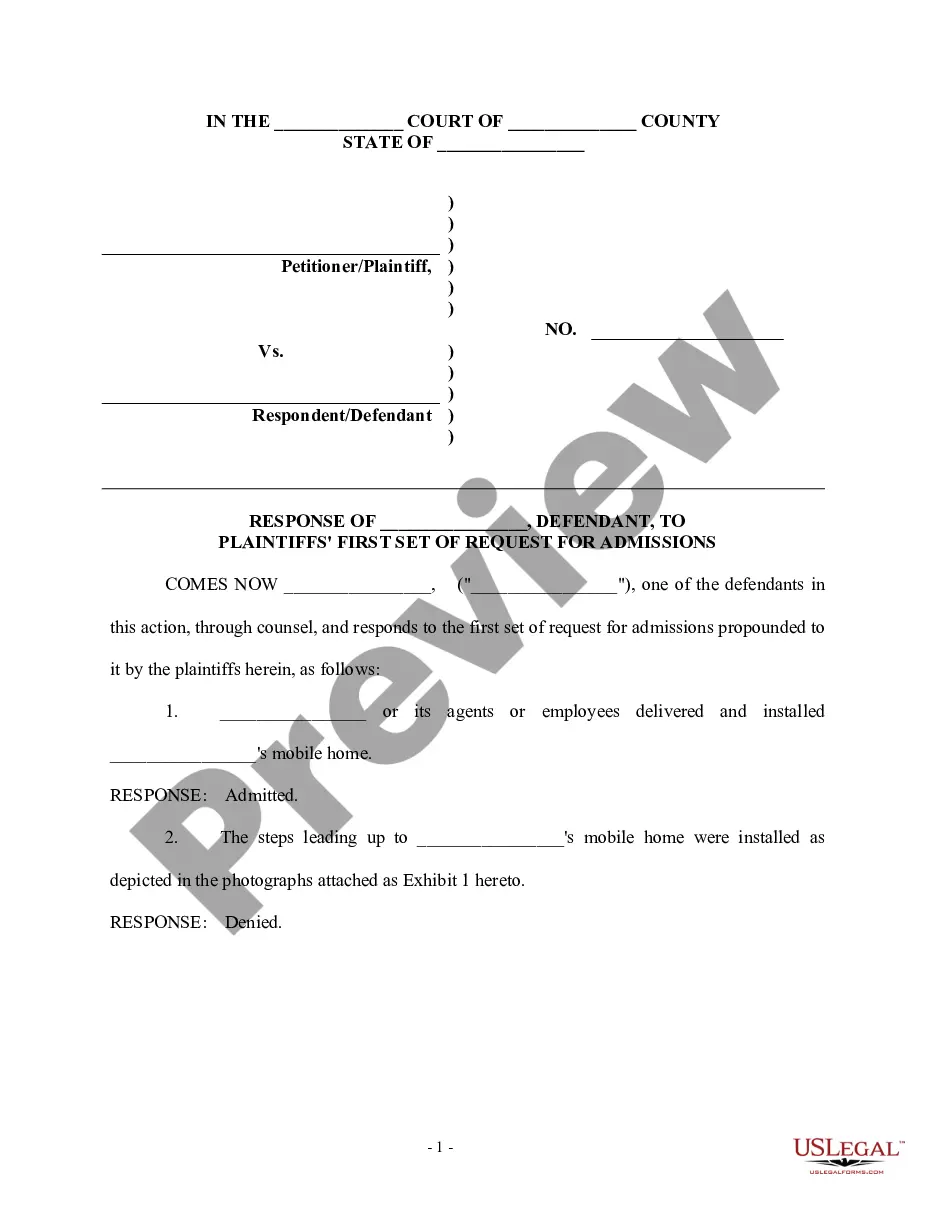
If you admit the request, write admit for your response. If you deny the request, write deny. If you have to qualify an answer or deny only a part, you must specify the part that is true and deny the rest.
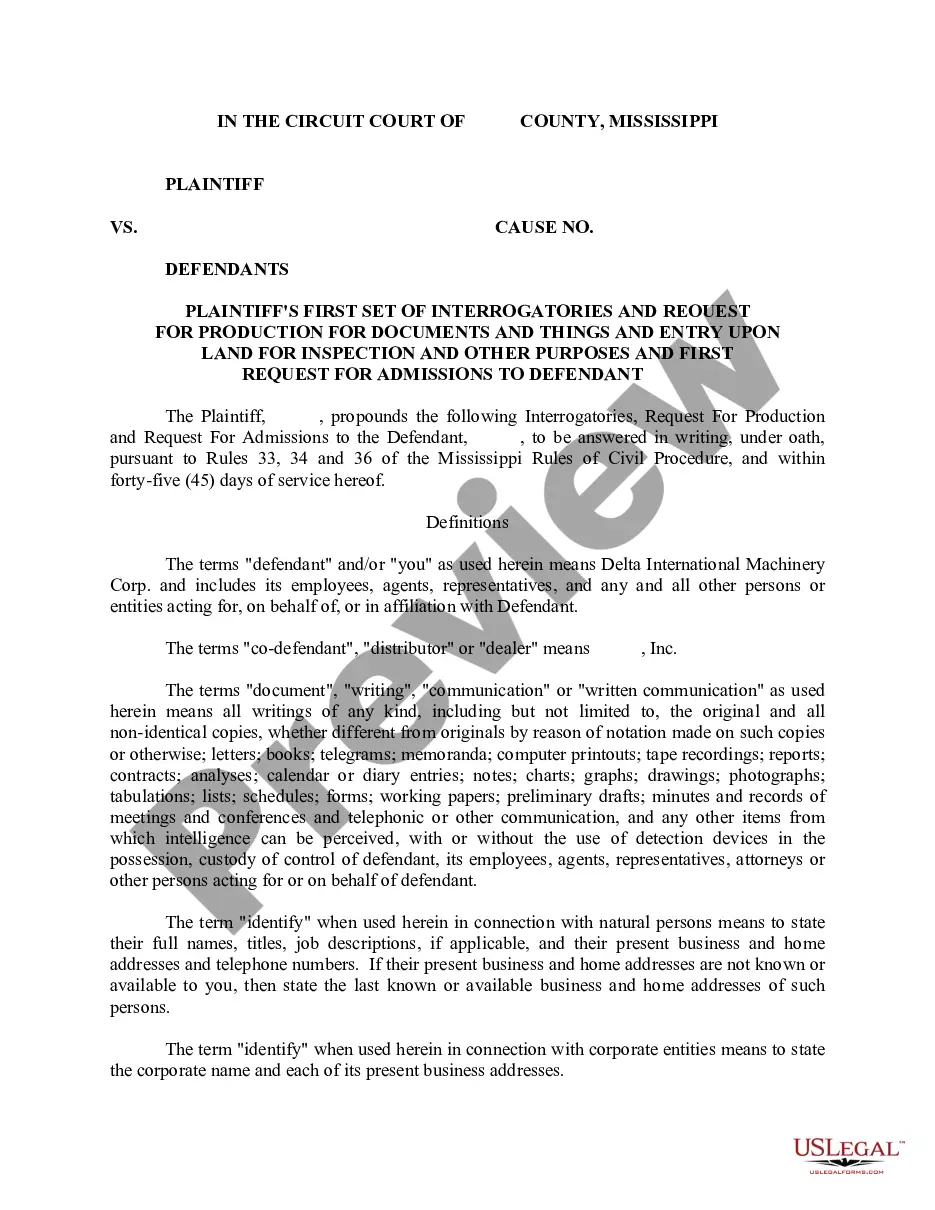
A request for admission (sometimes also called a request to admit) is a set of statements sent from one litigant to an adversary, for the purpose of having the adversary admit or deny the statements or allegations therein. Requests for admission are part of the discovery process in a civil case.
When responding to Requests for Admissions, remember to answer as follows: Admit: If any portion of the Request for Admission is true then you must admit to that portion of the request. You are also allowed to have a hybrid response admit the part of the request that is true while denying another part.
Each request must be numbered consecutively. The first paragraph immediately shall state he identity of the party requesting the admissions, the set number, and the identity of the responding party. Each request shall be separately set forth and identified by letter or number. C.C.P.