Mississippi Defendant's Response to Request for Admissions
What this document covers
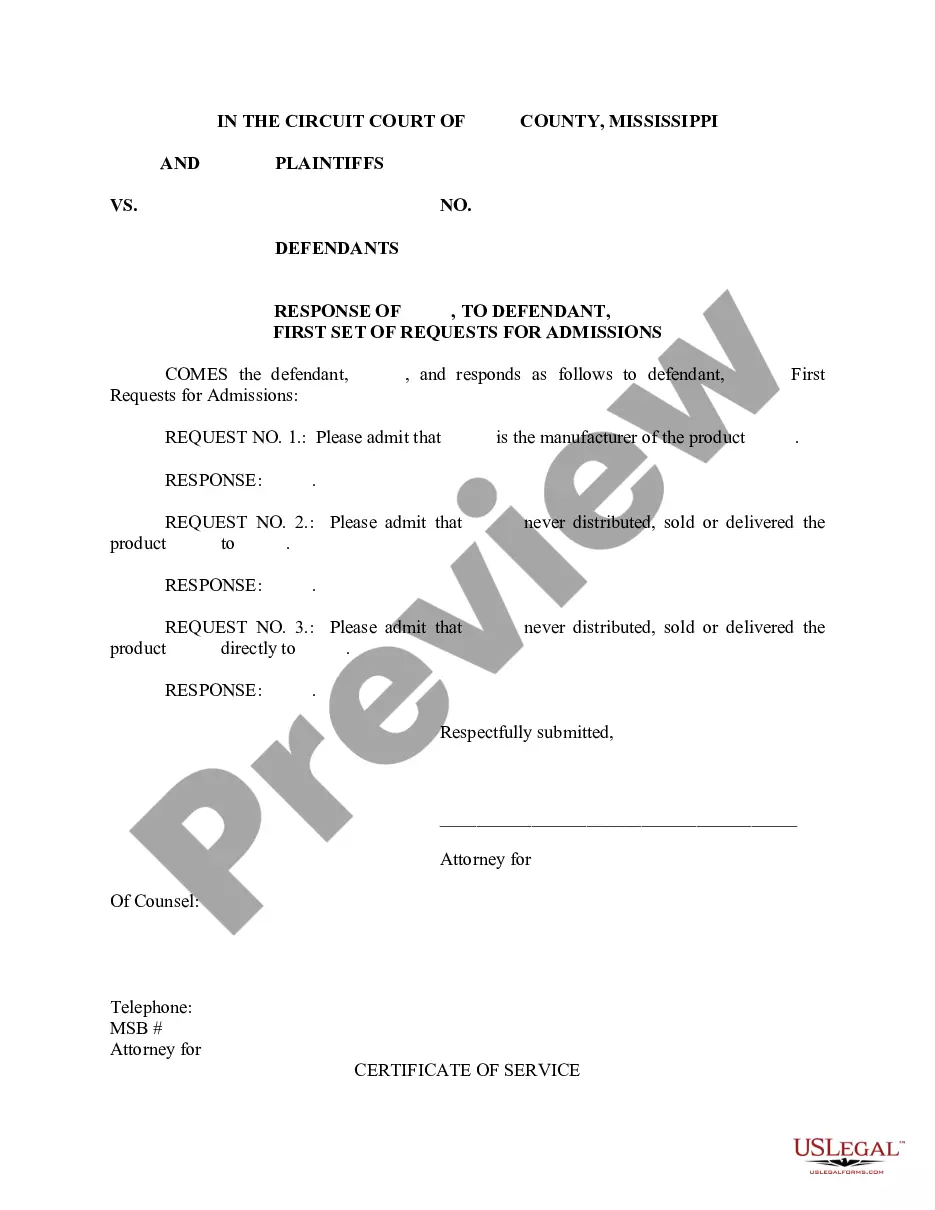
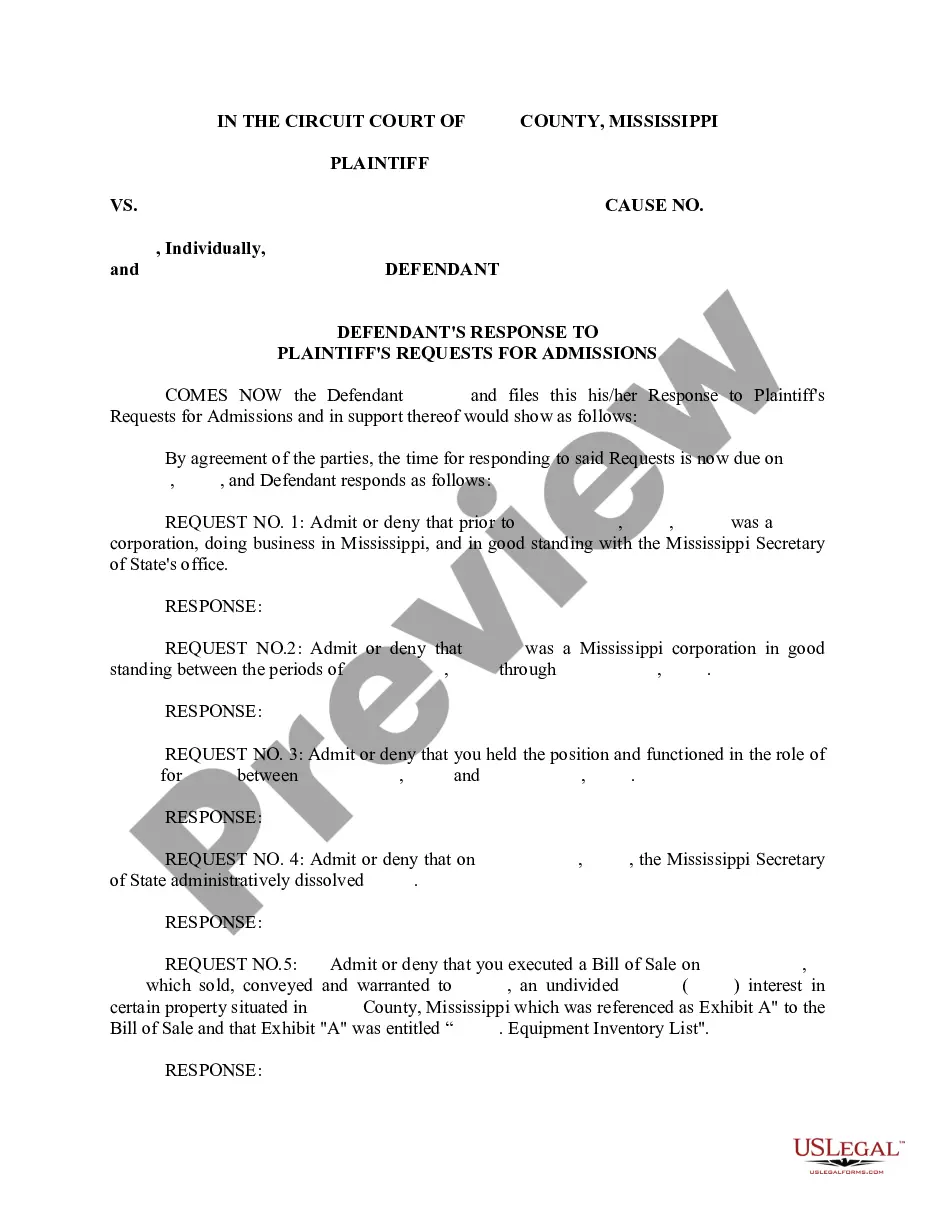
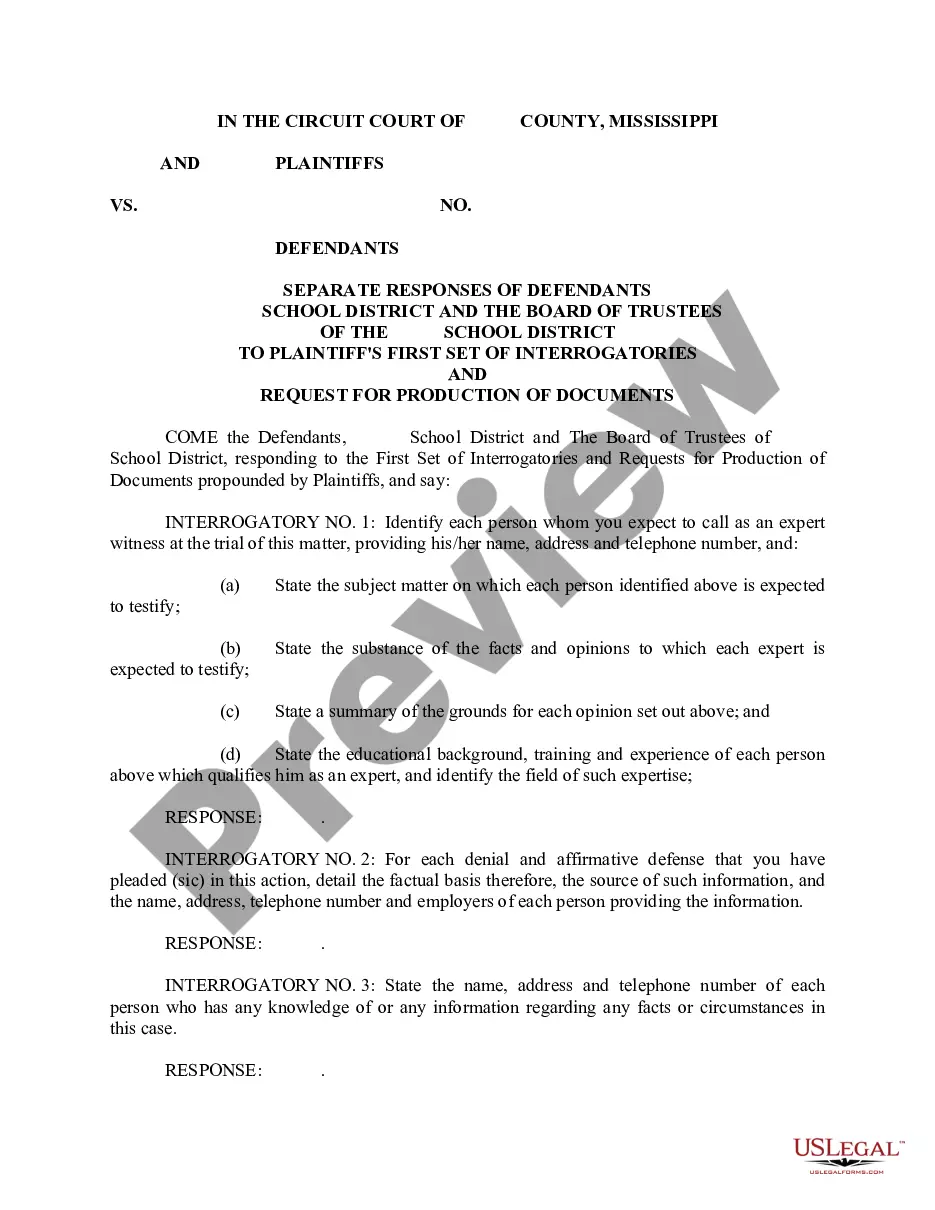
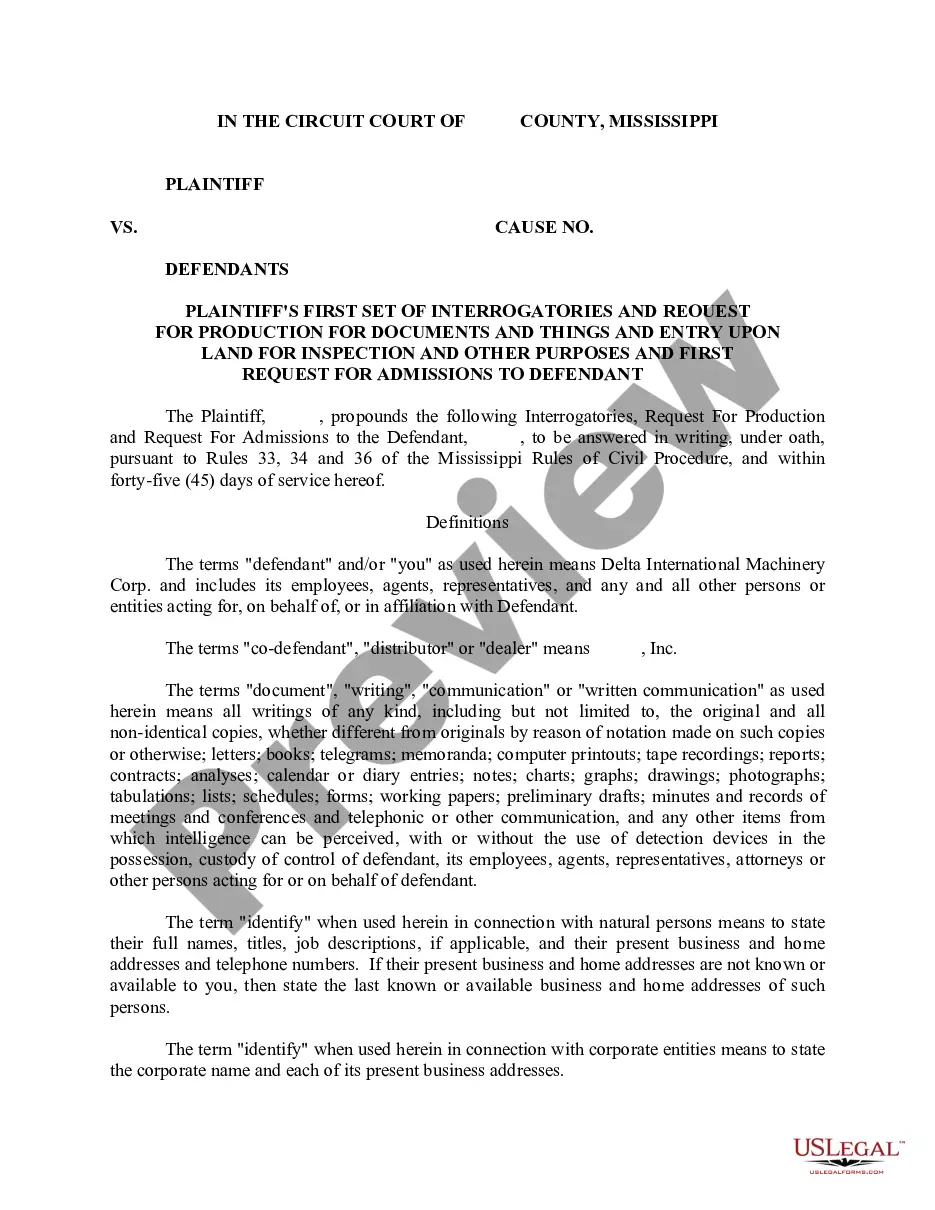
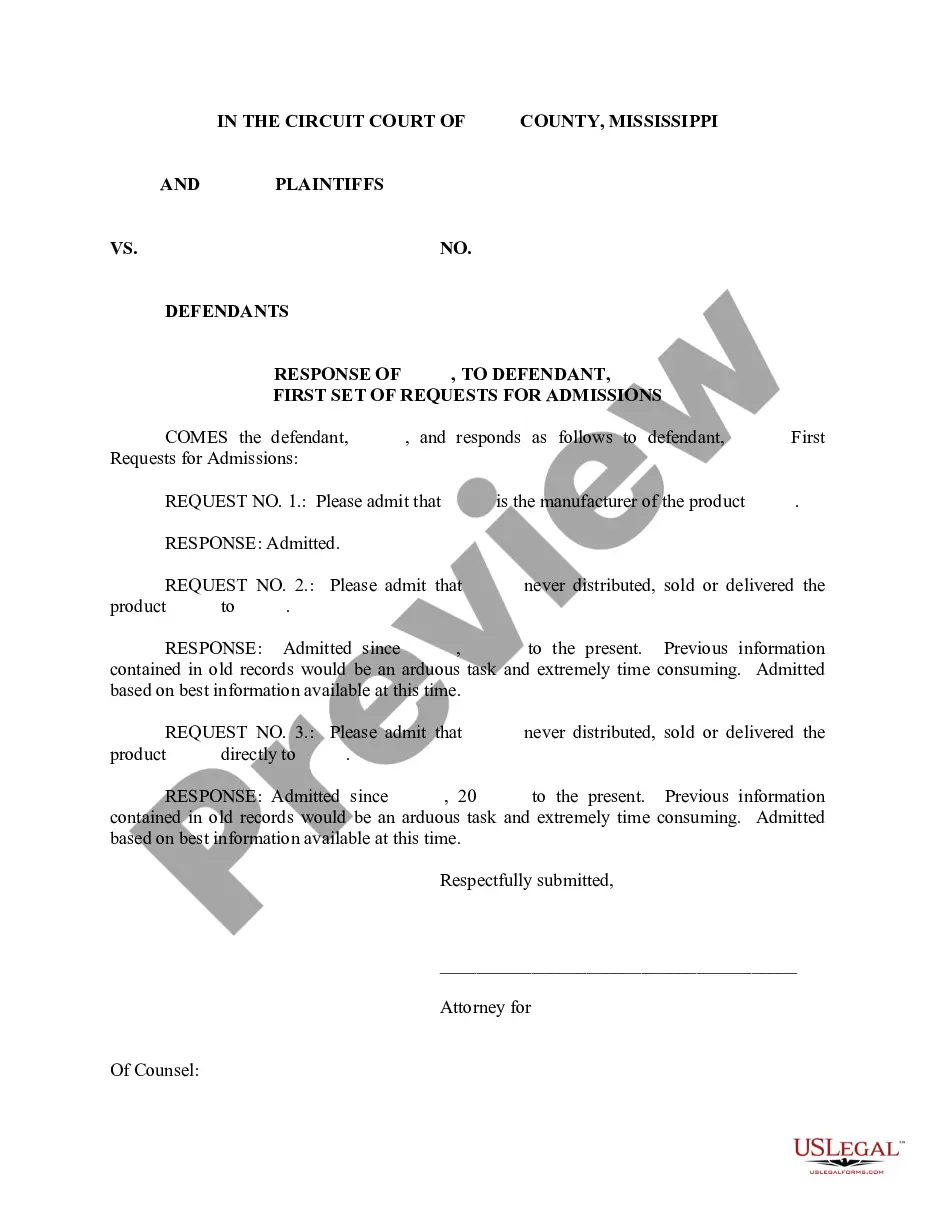
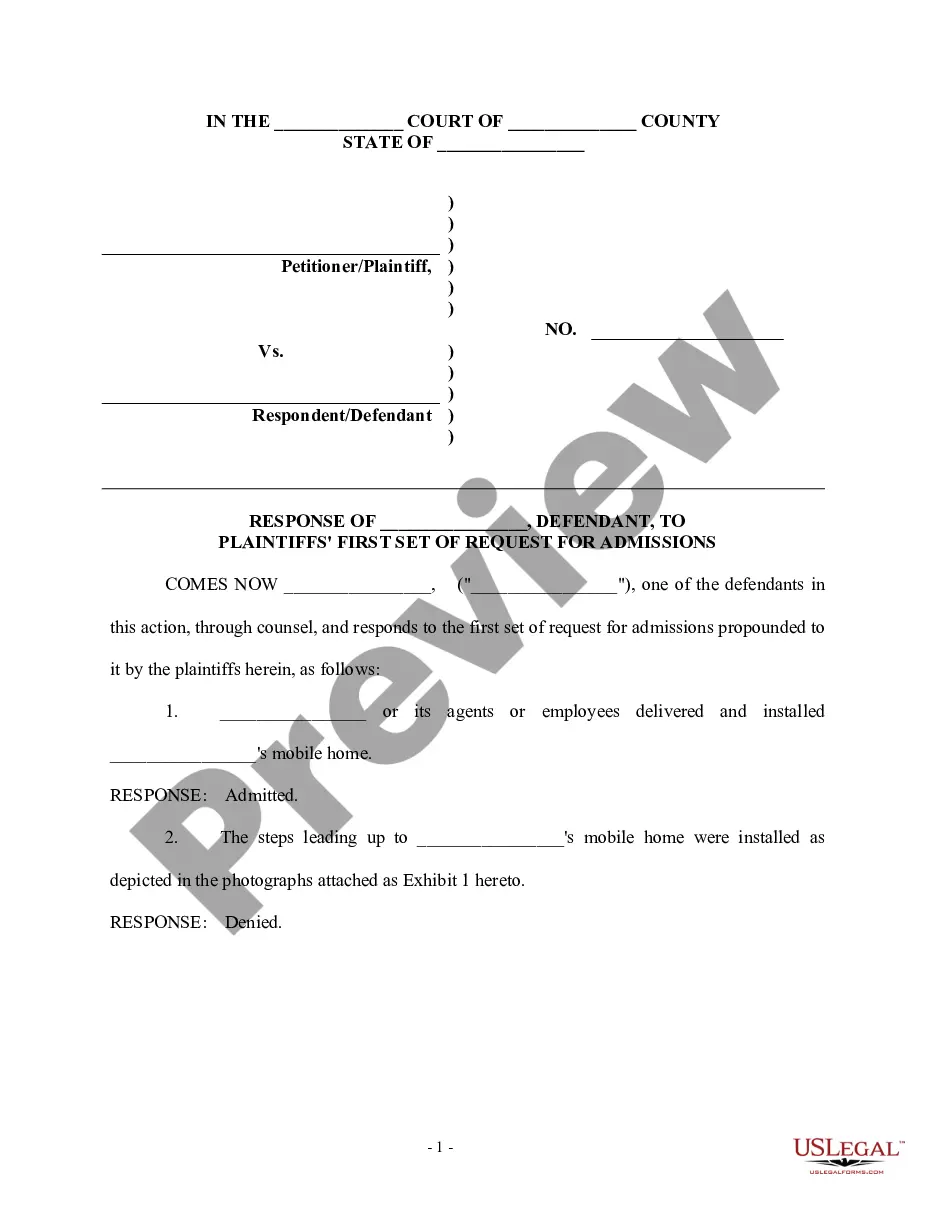
The Defendant's Response to Request for Admissions is a legal document used to respond to specific statements made by the opposing party in a civil lawsuit. This response form serves to admit, deny, or explain the truth of the statements presented. Unlike other forms of legal responses, this document is uniquely structured to address requests for admissions specifically, helping streamline the discovery process in litigation.
What’s included in this form
- Identification of the court and case number.
- List of admissions being responded to, with clear options to admit or deny each statement.
- Explanatory section for additional comments or qualifications regarding admissions.
- Signature section for the responding party and the date of submission.
Common use cases
This form should be used after receiving a Request for Admissions from the opposing party in a civil case. It is essential when you need to formally respond to claims made in the lawsuit, particularly when the opposing party seeks to establish certain facts as undisputed. Using this form can help clarify your stance and preserve your rights in the legal proceedings.
Who should use this form
This form is intended for:
- Defendants in civil lawsuits who have received a Request for Admissions.
- Individuals or entities seeking to protect their legal interests in litigation.
- Parties looking to respond accurately and formally to claims made by the opposing party.
How to complete this form
- Identify the court and full case number at the top of the form.
- Read each statement in the Request for Admissions carefully.
- Decide to admit or deny each statement, marking your response clearly.
- Provide any necessary explanations or clarifications in the designated section.
- Sign the document and date it before submitting it to the court and the opposing party.
Is notarization required?
Notarization is not commonly needed for this form. However, certain documents or local rules may make it necessary. Our notarization service, powered by Notarize, allows you to finalize it securely online anytime, day or night.
Get your form ready online
Our built-in tools help you complete, sign, share, and store your documents in one place.
Make edits, fill in missing information, and update formatting in US Legal Forms—just like you would in MS Word.
Download a copy, print it, send it by email, or mail it via USPS—whatever works best for your next step.
Sign and collect signatures with our SignNow integration. Send to multiple recipients, set reminders, and more. Go Premium to unlock E-Sign.
If this form requires notarization, complete it online through a secure video call—no need to meet a notary in person or wait for an appointment.
We protect your documents and personal data by following strict security and privacy standards.

Make edits, fill in missing information, and update formatting in US Legal Forms—just like you would in MS Word.

Download a copy, print it, send it by email, or mail it via USPS—whatever works best for your next step.

Sign and collect signatures with our SignNow integration. Send to multiple recipients, set reminders, and more. Go Premium to unlock E-Sign.

If this form requires notarization, complete it online through a secure video call—no need to meet a notary in person or wait for an appointment.

We protect your documents and personal data by following strict security and privacy standards.
Common mistakes
- Failing to respond to all statements submitted in the Request for Admissions.
- Not providing sufficient explanations for denied admissions.
- Missing deadlines for submitting the response.
- Overlooking the requirement to sign and date the form.
Why use this form online
- Easy access to legal forms at any time without the need to visit an attorney.
- Convenient download in various formats, making it easy to fill in and print.
- Forms drafted by licensed attorneys, ensuring legal compliance and reliability.
Legal use & context
- This form is an important component of the discovery process in civil litigation.
- Responses made using this form can impact the outcome of the case, as they help establish what facts are undisputed.
- Timely and accurate completion is essential to uphold your legal rights during litigation.
Summary of main points
- The Defendant's Response to Request for Admissions is crucial for defending against claims in civil lawsuits.
- Each statement must be carefully considered and responded to within the specified timeframe.
- Common mistakes can jeopardize your legal position, so ensure accuracy and completeness in your responses.
Looking for another form?
Form popularity
FAQ
Similar to responses to Requests for Production, responses to Requests for Admissions do not have to be verified.Cost of proof sanctions are available against a party who denies a Request for Admission and the matter is proven at trial.
If you admit the request, write admit for your response. If you deny the request, write deny. If you have to qualify an answer or deny only a part, you must specify the part that is true and deny the rest.
A request for admission (sometimes also called a request to admit) is a set of statements sent from one litigant to an adversary, for the purpose of having the adversary admit or deny the statements or allegations therein. Requests for admission are part of the discovery process in a civil case.
When responding to Requests for Admissions, remember to answer as follows: Admit: If any portion of the Request for Admission is true then you must admit to that portion of the request. You are also allowed to have a hybrid response admit the part of the request that is true while denying another part.
Each request must be numbered consecutively. The first paragraph immediately shall state he identity of the party requesting the admissions, the set number, and the identity of the responding party. Each request shall be separately set forth and identified by letter or number. C.C.P.