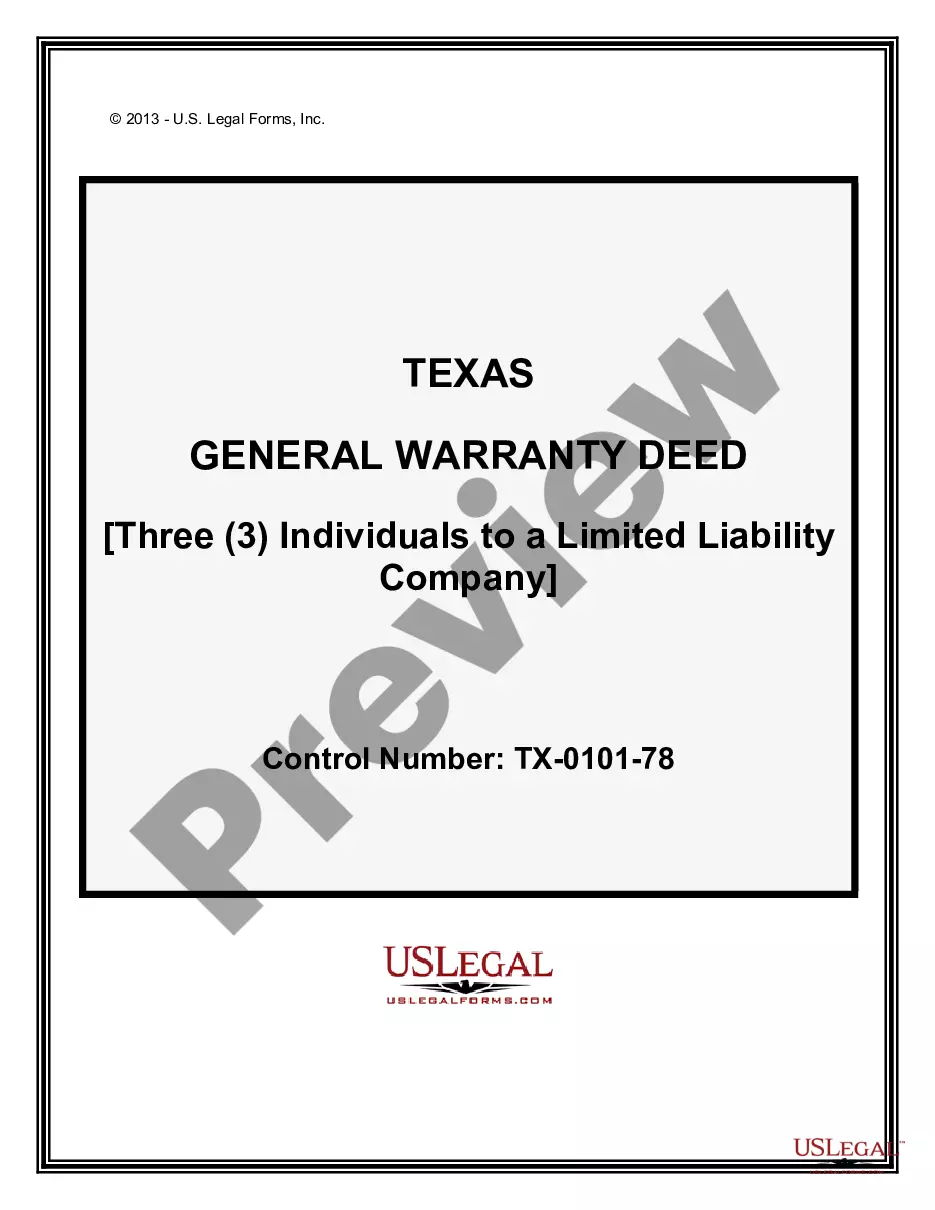
General Warranty Deed For Texas
Description
Get your form ready online
Our built-in tools help you complete, sign, share, and store your documents in one place.
Make edits, fill in missing information, and update formatting in US Legal Forms—just like you would in MS Word.
Download a copy, print it, send it by email, or mail it via USPS—whatever works best for your next step.
Sign and collect signatures with our SignNow integration. Send to multiple recipients, set reminders, and more. Go Premium to unlock E-Sign.
If this form requires notarization, complete it online through a secure video call—no need to meet a notary in person or wait for an appointment.
We protect your documents and personal data by following strict security and privacy standards.

Make edits, fill in missing information, and update formatting in US Legal Forms—just like you would in MS Word.

Download a copy, print it, send it by email, or mail it via USPS—whatever works best for your next step.

Sign and collect signatures with our SignNow integration. Send to multiple recipients, set reminders, and more. Go Premium to unlock E-Sign.

If this form requires notarization, complete it online through a secure video call—no need to meet a notary in person or wait for an appointment.

We protect your documents and personal data by following strict security and privacy standards.
Looking for another form?









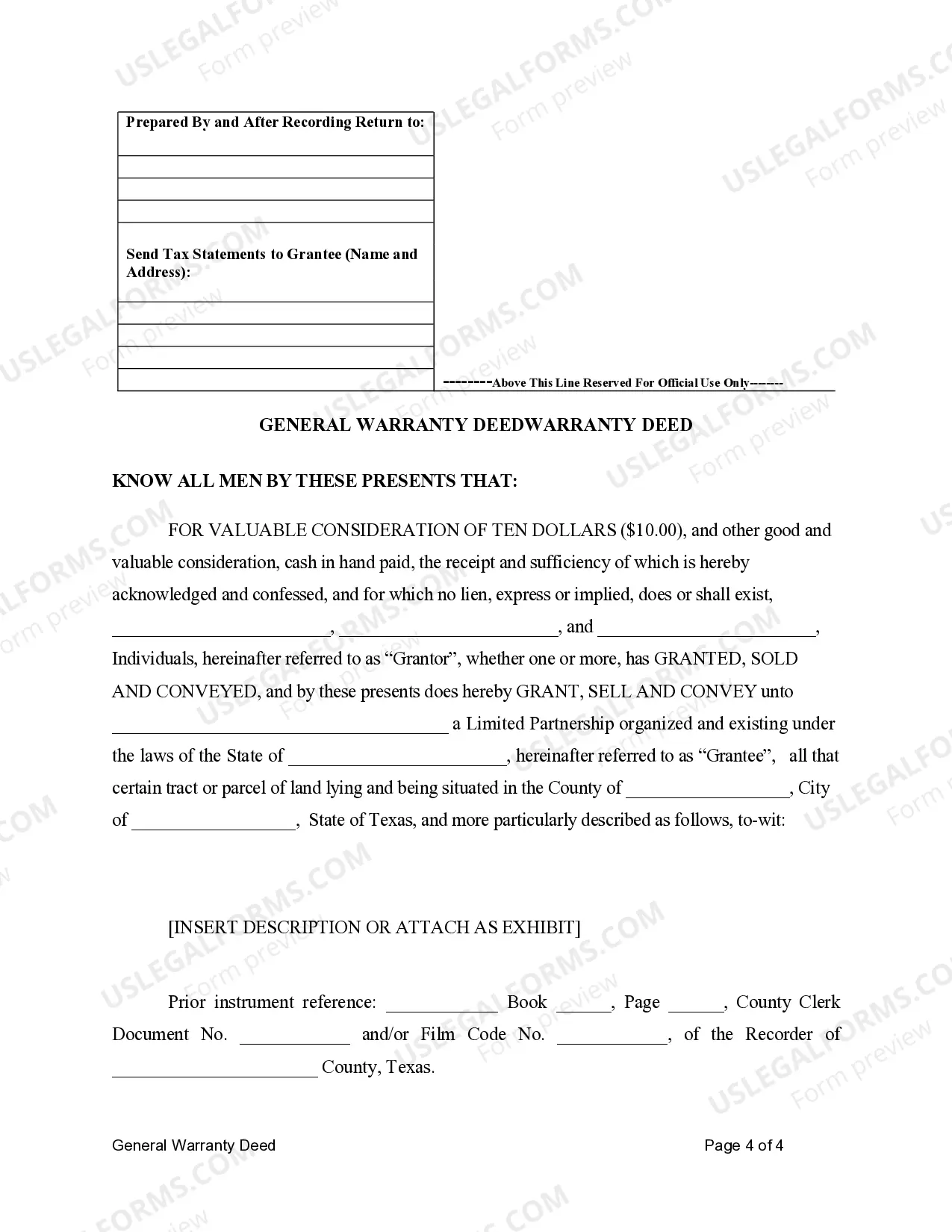
How to fill out Texas General Warranty Deed For Three Individuals To Limited Partnership?
- Log in to your US Legal Forms account if you’re a returning user, and ensure your subscription is active to access your document.
- If you are new, start by checking the Preview mode and descriptions of the available forms to ensure you select the one that matches your requirements.
- Utilize the Search tab to find alternative templates if needed, confirming they meet your jurisdiction's regulations.
- Purchase the document by clicking the Buy Now button and selecting your preferred subscription plan. You will need to create an account to unlock the full library.
- Complete your purchase using a credit card or PayPal to finalize your subscription.
- Once purchased, download the general warranty deed form to your device and access it anytime from the My Forms section of your profile.
In conclusion, US Legal Forms has streamlined the process of obtaining legal documents, empowering individuals and attorneys alike to execute paperwork efficiently. With an extensive collection of over 85,000 templates, you are sure to find exactly what you need.
Start today by visiting US Legal Forms to explore your options!
Form popularity
FAQ
In Texas, the general warranty deed must be signed by the property owner, also known as the grantor, who is transferring the property. If there are multiple owners, all must sign the deed for it to be valid. Additionally, the deed must be notarized and may require witnesses, depending on local laws.
To obtain a general warranty deed in Texas, you must ensure that all parties involved in the transaction agree to the terms. You can draft the deed yourself or have it prepared by an attorney or title company. Afterward, ensure that it is signed, notarized, and recorded at your county clerk's office to make it legally binding.
While you can complete the warranty deed process without a lawyer, seeking legal advice can be beneficial. A lawyer can ensure all legal requirements are met and help you avoid potential issues down the line. If you feel uncertain about the process, consulting with a professional is a wise choice.
Generally, the seller of the property retains the warranty deed until the sale is finalized. Once the transaction is complete and the property is transferred, the buyer will hold the warranty deed for their new property. To verify the current holder, check with the county clerk's office where the property is located.
In Texas, the warranty deed is typically prepared by a qualified attorney, a title company, or the seller of the property. It's essential that whoever prepares the deed understands Texas property law to ensure it complies with local regulations. Using a professional can save you time and stress in the long run.
To obtain your original warranty deed for Texas, start by checking with your county clerk's office. They maintain public records and can help you find your deed. If you can't locate it there, consider reaching out to a title company for assistance, as they often have copies of deeds on file.
The primary purpose of a general warranty deed is to protect buyers from future claims against their property ownership. It vouches for the seller's clear title and includes promises to defend the title against any previously undisclosed issues. This deed fosters trust in real estate transactions, ensuring that you can enjoy your property without concern. When dealing with property, understanding the general warranty deed for Texas becomes indispensable for your security.
In Texas, a warranty deed, including the general warranty deed, generally proves ownership of a property. However, the effectiveness of a deed can depend on fulfilling local laws and recording requirements. It’s vital to ensure all necessary steps are followed for the deed to be legally recognized. By choosing the general warranty deed for Texas, you secure stronger protections against potential disputes.
Yes, a general warranty deed serves as evidence of ownership when purchasing property. It contains important clauses that affirm the seller's right to sell and guarantees clear title. However, it's advisable to conduct thorough title research for added assurance. Utilizing resources like US Legal Forms can simplify this process when dealing with the general warranty deed for Texas.
A general warranty deed in Texas is a document that offers the highest level of protection for buyers. It assures you that the seller has full ownership of the property with no hidden claims against it. This type of deed protects you from any future disputes regarding the title. When purchasing real estate, knowing about the general warranty deed for Texas is essential to ensure peace of mind.